Tag: Pakistan

  • Bilawal Warns Sindh Division Could Trigger Uncontrollable Violence

    Bilawal Warns Sindh Division Could Trigger Uncontrollable Violence

    Pakistan Peoples Party (PPP) Chairman Bilawal Bhutto Zardari has warned that any attempt to divide Sindh against the wishes of its people could trigger violence beyond control, declaring that a referendum on the creation of new provinces outside the constitutional framework would be unconstitutional. He was addressing a “Meet the Press” programme at the Karachi Press Club on 17 November 2026, The News reported.

    Bilawal said no PPP worker would take up arms, but the situation could deteriorate to the point where violence spiralled beyond his control. He said the PPP supported the creation of new provinces in line with public aspirations and constitutional and legal procedures, but would firmly resist any attempt to impose such a decision through force or unconstitutional means.

    “If they resort to coercion, brothers will kill brothers in Sindh. Society will become divided, hatred will turn into enmity and ordinary people will take up arms. The bloodshed will not stop with one death. I cannot see such bloodshed,” he said, warning that the consequences would not be limited to Karachi but would also affect Hyderabad, Mirpurkhas, Tando Allahyar and Nawabshah.

    Referendum debate

    The PPP chairman questioned the constitutional basis of holding a referendum on new provinces, saying the Constitution already provided a procedure for creating new provinces and that looking for an alternative amounted to seeking an unconstitutional method. He said referendums in Pakistan’s history had been used to legitimise undemocratic actions, and challenged those advocating a referendum to first seek a similar exercise in their own provincial assembly. He added that the Sindh Assembly had repeatedly stated its position on the division of Sindh through resolutions.

    Bilawal said neither he nor President Asif Ali Zardari had been consulted on the creation of new provinces, and questioned the timing and intentions behind the renewed debate. He said the government’s responsibility was to defuse tensions rather than create new crises through controversial proposals, and that major decisions affecting the country’s constitutional and administrative structure could not be made without parliamentary debate and political consensus.

    Call for a political reset

    Defending his earlier criticism of the government, Bilawal challenged federal ministers to show the courage to listen to the truth rather than dismiss differing political opinions. “You may disagree with my suggestions, but at least listen. You should have the courage to listen to the truth,” he said. He said the PPP’s participation in the ruling coalition made him a major stakeholder in the political system and gave him the right to propose reforms, adding that the government itself had initiated the debate on a system reset and should now be prepared to discuss it through parliamentary and constitutional forums.

    He also criticised the government’s growing confrontation with political parties, warning that internal political disputes could undermine efforts to address the country’s economic and security challenges. He said Pakistan was already facing tensions with India, a near-war situation with Afghanistan and the continuing threat of terrorism. Federal Minister for Information Attaullah Tarar responded that a referendum was part of the Constitution and a constitutional procedure, and said talk of bloodshed over the issue was incomprehensible.
  • Austrian Ambassador Meets Sindh Assembly Speaker

    Austrian Ambassador Meets Sindh Assembly Speaker

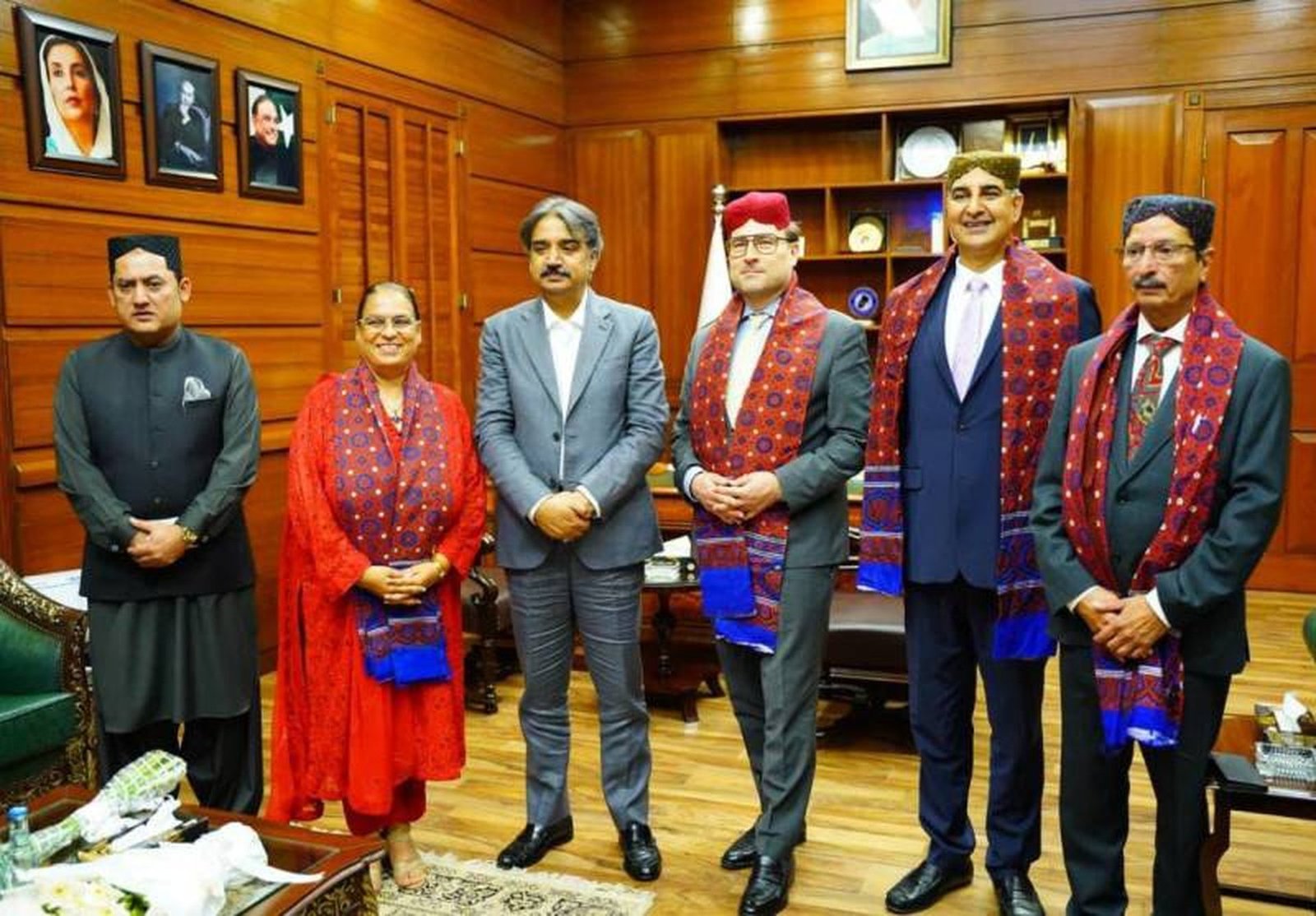
    The Ambassador of Austria to Pakistan, Wolfgang Oliver Kutschera, called on the Speaker of the Provincial Assembly of Sindh, Syed Awais Qadir Shah, at the Sindh Assembly in Karachi on 18 November 2026, 24NewsHD reported.

    The meeting focused on bilateral relations between Pakistan and Austria, parliamentary cooperation, cultural exchange, economic ties and the promotion of religious freedom and interfaith harmony.

    The ambassador was accompanied by Dr Hussain Islam, Honorary Consul of Austria in Karachi, Tushnamaity Patel and Cyrus Feroz Kanga, while Director General Media Irfan Ahmed Memon accompanied the Speaker.

    Both sides recalled their previous interaction at last year’s Austrian National Day celebrations. They appreciated the participation of Austrian artists in the ongoing World Culture Festival and commended the efforts of the Government of Sindh and the Arts Council of Pakistan for providing a platform for international cultural exchange.

    The ambassador emphasised the importance of strengthening people-to-people contacts. Referring to the existing Joint Committee on Economic Cooperation, he said the forum could help promote bilateral economic relations and facilitate Austrian companies in exploring investment opportunities in Pakistan.

    The Speaker invited the ambassador to visit different cities of Sindh, particularly Sukkur, and briefed him on the city’s historical and cultural significance, heritage sites and places of tourist interest. The ambassador expressed interest in visiting Mohenjo-daro, historical landmarks and the shrines of Sufi saints across the province.

    Assembly’s history and legislation

    Highlighting the historical significance of the Provincial Assembly of Sindh, the Speaker told the ambassador that the Assembly had passed the historic resolution in favour of a separate homeland for the Muslims of the subcontinent in 1943. He also recalled that Quaid-e-Azam Muhammad Ali Jinnah addressed the Assembly after the creation of Pakistan and that the national flag was hoisted there.

    The meeting also discussed legislative matters, including the Christian Marriage Law. The Speaker said considerable progress had been made and that Deputy Speaker Anthony Naveed was actively working on the matter. He expressed hope that the legislation would be passed through consensus and consultation with all stakeholders, including religious leaders, political parties and civil society.

    Exchanging views on religious freedom and interfaith harmony, the Speaker said religious minorities were an integral part of Pakistan and equal citizens. He said religious harmony, religious freedom guaranteed under the Constitution and the protection of equal rights for minorities remained among Sindh’s key priorities, adding that the PPP-led provincial government was committed to promoting an inclusive society where all citizens enjoyed equal rights and opportunities.

    Parliamentary cooperation

    The Speaker also recalled his visit to Vienna and the Austrian Parliament, appreciating its institutional arrangements, and referred to a Pakistani delegation’s training visit on the establishment and functioning of a Parliamentary Budget Office, stressing the value of international experience in strengthening parliamentary institutions.

    The possibility of establishing a Parliamentary Friendship Group between the Provincial Assembly of Sindh and the Austrian Parliament was also discussed, as a forum that could facilitate delegation exchanges, legislative cooperation, institutional capacity building and stronger people-to-people contacts. Highlighting provincial autonomy after the 18th Constitutional Amendment, the Speaker said devolution had given provincial assemblies greater opportunities to legislate according to their needs and to establish direct relations with parliaments around the world. Both sides expressed their commitment to further strengthening Pakistan-Austria relations.

  • PM Appoints Hammad Ghaznavi Information Commissioner

    PM Appoints Hammad Ghaznavi Information Commissioner

    Prime Minister Shehbaz Sharif has appointed Hammad Ghaznavi as information commissioner of the Pakistan Information Commission for a four-year term, 24NewsHD reported on 18 November 2026.

    The Establishment Division has issued a formal notification confirming the appointment. According to the notification, Ghaznavi has been appointed to the MP-I pay scale. His four-year tenure will commence from the date he assumes charge of the office, the notification said.

    The Pakistan Information Commission is the federal body that decides appeals when citizens are refused access to information held by public bodies. Under the Right of Access to Information Act, 2017, any citizen can ask a federal public body for records, and if the request is refused or not answered, the citizen can complain to the commission.

    The commission hears such complaints, can order public bodies to release information, and can take action against officials who withhold records without lawful reason. Its decisions are an important part of the public’s right to know how government departments work and spend public money.

    Role of the commission

    Information commissioners hear appeals from citizens, journalists and organisations seeking government records. The commission can summon records, examine them, and direct departments to provide information within a set time. It can also decide whether a department’s refusal to share information was justified under the exemptions in the law, such as national security or personal privacy.

    The appointment fills a seat on the commission, which works with a chief information commissioner and information commissioners. The notification did not give further biographical details about Ghaznavi or the reasons for the selection.

    In practice, an information commissioner spends much of the working day hearing appeals and weighing two competing interests: the public’s right to know against the lawful exemptions in the act. Each appeal turns on the record in question, whether the department gave a valid reason for refusing it, and whether the public interest in disclosure outweighs the reason for keeping it back.

    Appointments to the commission are made by the prime minister, and commissioners serve fixed terms so that the body can act independently of the government of the day. The four-year term for Ghaznavi will run from the day he takes charge of the office.

  • CDA Proposes Fire Safety NOC for Property Transfers

    CDA Proposes Fire Safety NOC for Property Transfers

    The Capital Development Authority (CDA) has proposed making fire and life safety no-objection certificates (NOCs) mandatory for the transfer of residential and commercial properties in Islamabad, 24NewsHD reported on 18 November 2026.

    According to an official letter issued on 12 November 2026, the CDA’s Building Emergency Audit Wing has recommended that no constructed residential or commercial property be transferred without obtaining fire and life safety clearance. The wing has sent a formal proposal to the CDA’s Land and Estate Wing, seeking the inclusion of fire safety NOCs in the authority’s one-window property transfer system.

    The letter said the existing property transfer procedure required NOCs from the Building Control and Revenue departments but did not include fire safety clearance. The Building Emergency Audit Wing said the issue had been raised repeatedly between 2011 and 2026, but the necessary measures had yet to be implemented.

    It warned that transferring ownership of buildings without verifying fire safety arrangements could expose occupants and property to serious risks. The wing recommended that the relevant CDA departments and Law Directorate review the proposed procedure and take the necessary legal steps for its approval and implementation.

    Proposal, not yet a rule

    Describing the matter as a serious safety concern, the wing urged the authorities to give immediate priority to making the fire and life safety NOC system operational. The proposal has been submitted for consideration, and the requirement has not yet been formally implemented.

    Fire safety in buildings covers measures such as working fire alarms, extinguishers, clear emergency exits, fire-resistant materials and access for fire tenders. In Islamabad, as in other Pakistani cities, buildings have sometimes been occupied or sold without these arrangements being checked, and fires in commercial plazas and residential blocks have caused loss of life in past years.

    Under the proposal, a property owner seeking to transfer a built property would first need clearance from the Building Emergency Audit Wing confirming that fire and life safety arrangements are in place. The clearance would sit alongside the existing NOCs from the Building Control and Revenue departments in the CDA’s one-window system, which is meant to let citizens complete transfers through a single office instead of visiting several departments.

    Whether the proposal becomes a rule will depend on the review by the CDA departments and the Law Directorate, and on formal approval by the authority. Until then, property transfers in Islamabad will continue under the existing procedure.

  • Cold Nights, Fog and Smog Forecast Across Punjab

    Cold Nights, Fog and Smog Forecast Across Punjab

    The Provincial Disaster Management Authority (PDMA) Punjab has forecast cold nights, dense fog and smog across Punjab over the next 24 hours, especially in upper and central Punjab.

    According to the forecast, Lahore will have a foggy night with smog persisting, with a minimum temperature of 9 degrees Celsius and a maximum of 24 degrees. Multan will see fog and smoke in the morning and at night, with temperatures ranging between 9 and 25 degrees.

    Rawalpindi and Islamabad will remain partly cloudy and cold, with a minimum of 5 degrees and a maximum of 21 degrees, while Murree will be cloudy and cold with light rain possible, and temperatures between 3 and 11 degrees.

    Bahawalpur will have a cold night with fog, with a minimum of 9 degrees and a maximum of 25 degrees. Faisalabad will be foggy in the morning and at night, with temperatures ranging between 9 and 24 degrees.

    Sargodha will remain cold and dry, with a minimum of 7 degrees and a maximum of 23 degrees, while Gujranwala is expected to see fog, with temperatures between 8 and 23 degrees. Sialkot will be cold with fog, with a minimum of 8 degrees and a maximum of 22 degrees.

    PDMA Punjab Director General Irfan Ali Kathia advised the public to take precautionary measures during fog and smog, use fog lights while driving, and avoid unnecessary travel, especially motorway travel at night.

    He also urged motorists using motorways to follow traffic instructions and drive carefully in low visibility. Visibility on motorways and national highways in upper and central Punjab could fall sharply during the night and early morning, when fog is usually at its densest. The authority said the cold and foggy conditions were expected to continue over the next day, with smog likely to persist in Lahore and other major cities of central Punjab.

    People with respiratory problems have been advised to take extra care during smog, while the public has been asked to keep warm as night temperatures fall across the province.

  • ASEAN Secretary General on Three-Day Visit to Pakistan

    ASEAN Secretary General on Three-Day Visit to Pakistan

    ASEAN Secretary-General Dr Kao Kim Hourn is paying a three-day official visit to Pakistan, which the Foreign Office said would run from November 18 to 20, at the invitation of Deputy Prime Minister and Foreign Minister Ishaq Dar.

    During the visit, the ASEAN secretary-general will call on Prime Minister Shehbaz Sharif and on Deputy Prime Minister and Foreign Minister Dar, according to the Foreign Office.

    Foreign Office spokesperson Tahir Andrabi said the discussions would cover Pakistan-ASEAN relations and cooperation in trade, investment, connectivity, tourism, culture, education, and science and technology, as well as regional and global issues of mutual interest.

    The statement added that Pakistan has been a Sectoral Dialogue Partner of ASEAN since 1993, and that the visit underscores Pakistan’s commitment to strengthening engagement with ASEAN and its member states and to further advancing the Pakistan-ASEAN partnership.

    The visit comes just days after the 49th ASEAN Summit and related summits, held in Manila in the Philippines from November 15 to 17, where Dr Kao Kim Hourn joined ASEAN leaders in meetings with youth representatives, the business community and parliamentarians. At the closing ceremony on November 17, the Philippines handed over the ASEAN chairmanship to Singapore, which will assume the chair on January 1, 2027.

    Pakistan has been seeking deeper engagement with the Southeast Asian bloc for years. Deputy Prime Minister Dar met Dr Kao Kim Hourn in July on the sidelines of the 33rd ASEAN Regional Forum, where the two sides reaffirmed the longstanding partnership between Pakistan and ASEAN and reviewed avenues to deepen cooperation in trade, connectivity, investment and people-to-people exchanges.

    According to reports, the visit is the first by a serving ASEAN secretary-general to Pakistan. Officials say it is expected to open new avenues for cooperation between Pakistan and the bloc’s member states, including in trade and investment.

    ASEAN, the Association of Southeast Asian Nations, groups the states of Southeast Asia, and Timor-Leste has joined the bloc as its 11th member. Pakistan’s engagement with ASEAN is also carried forward through the ASEAN Committee in Islamabad, which brings together the bloc’s ambassadors and high commissioners in the country.

    The Foreign Office said the visit would further advance the Pakistan-ASEAN partnership and strengthen Pakistan’s ties with the region’s economies at a time when Islamabad is working to expand its trade and diplomatic outreach in Asia.

  • Khawaja Asif Hits Back at Bilawal Over New Provinces

    Khawaja Asif Hits Back at Bilawal Over New Provinces

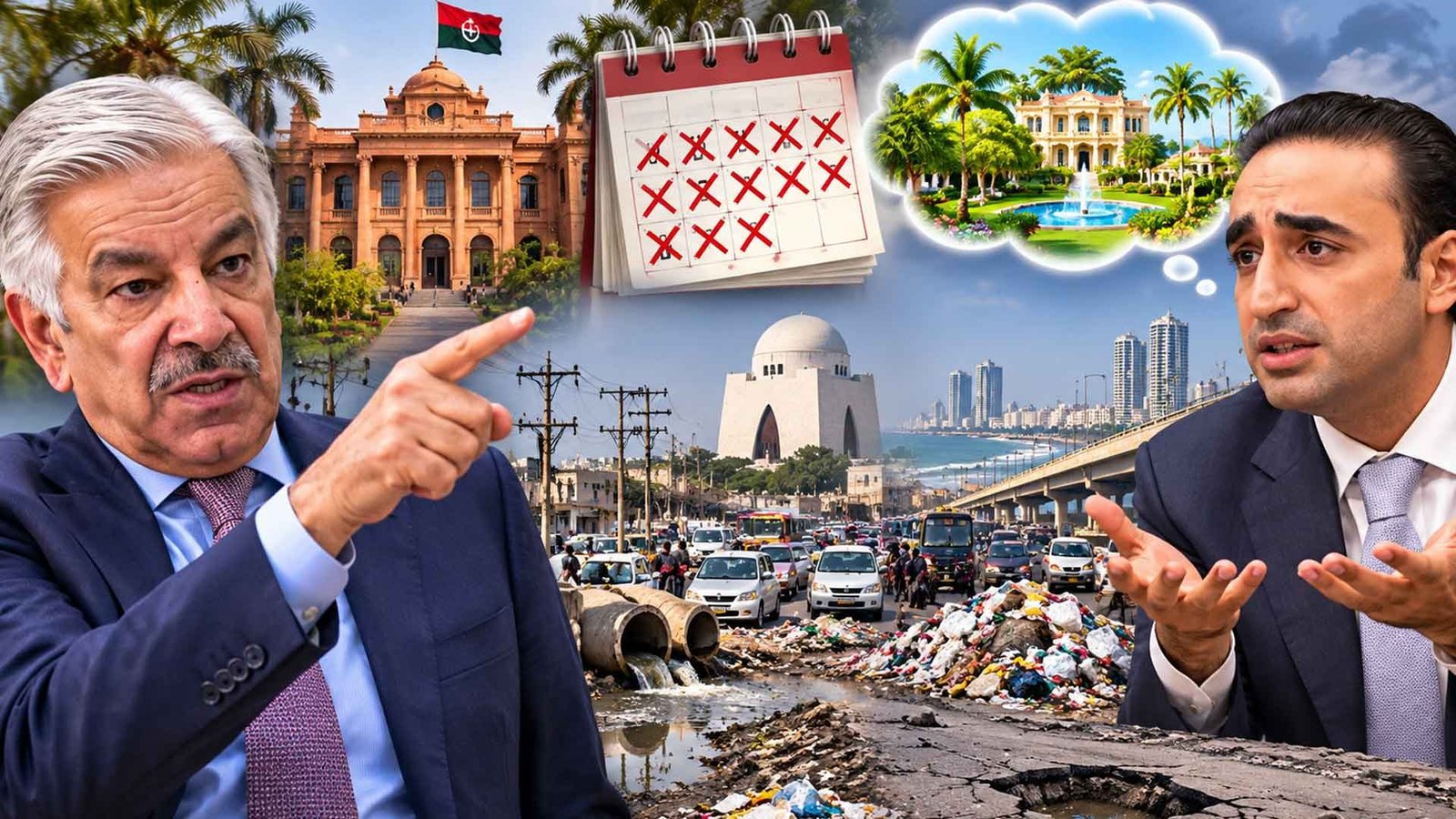
    Defence Minister Khawaja Asif has hit back at Pakistan Peoples Party (PPP) Chairman Bilawal Bhutto-Zardari over his opposition to the creation of new provinces, questioning the PPP’s 18-year rule in Sindh and its role in the federal government.

    In a post on X on Tuesday, Asif said no system could be reset without public support, responding to Bilawal’s call a day earlier for a political “reset” of the country’s system. He said politicians should not describe consulting the people as a “backdoor” process, and that Parliament could debate the issue while also taking public opinion into account.

    Asif questioned the PPP’s governance record in Sindh, where the party has ruled for 18 years, asking whether the province had “become paradise” and whether the state of Karachi was such that “the world envies” it. He said Bilawal had been a partner in government since 2020 and could not distance himself from the system’s shortcomings, while the PPP and the PML-N had governed together at the centre since 2022.

    The defence minister said holding politicians accountable was neither a new concept nor was any politician exempt from scrutiny. He added that the power of rulers was a trust of the people, not a personal inheritance, and that people’s rights had to be ensured in practice, not only in the text of the Constitution.

    Asif also backed a public referendum alongside parliamentary debate as a way to decide the issue of new provinces, saying the prime minister had the authority to hold a referendum. He claimed that despite receiving Rs22,000 billion over 17 to 18 years, Karachi remained difficult to live in.

    Bilawal had said on Tuesday at the Karachi Press Club that the PPP supported the creation of new provinces in line with the people’s wishes, the Constitution and the law, but would resist any move imposed through force. He warned that forcibly dividing Sindh could deepen social divisions and lead to bloodshed, and said neither he nor the president had been consulted on the matter.

    The PPP chairman also rejected the proposed referendum, saying referendums in Pakistan’s history had been used for undemocratic purposes, and that the Constitution already laid down a procedure for creating provinces.

    Rana Sanaullah also responds

    Adviser to the Prime Minister on Political Affairs Rana Sanaullah also reacted to Bilawal’s press conference, saying the PPP chairman was “disturbed” over the Sindh division issue and that his press conference was full of contradictions.

    Sanaullah said whether the number of provinces was 32 or 12 would be decided by consensus, and that it was not correct to say Parliament was not empowered. He said the debate on new provinces had so far only taken place at the level of seminars and had not yet come before the cabinet or Parliament, adding that all political parties would get a chance to present their positions when it did.

    The exchange has exposed growing differences between the two coalition partners over constitutional reforms and provincial boundaries, with the debate over smaller provinces gathering pace across the country.

  • Tarbela Tunnel: International Consultants to Probe Incident

    Tarbela Tunnel: International Consultants to Probe Incident

    The federal government has decided to hire international consultants to find out the causes of the tunnel incident at the Tarbela 5th Extension hydropower project, 24NewsHD and PakVoices reported on 18 November 2026.

    According to government sources, the federal government has contacted international consultants to investigate the incident and has informed them about the current status of the project. The sources said the consultants are likely to be hired soon, adding that it will take time to establish the root causes of the incident.

    The incident took place on 9 November, when a weak section of rock collapsed during the excavation of the second bench of the project’s connecting tunnel. Water from the intake pit entered the tunnel and the under-construction powerhouse, according to the Water and Power Development Authority (WAPDA).

    All workers, Pakistani and Chinese, were evacuated safely. WAPDA said there was no damage to the main tunnel, the powerhouse, the tailrace culvert or the switchyard, and no threat to the main dam. Reports on social media claiming that the dam had collapsed were false, and work at the site has been suspended while an inquiry is under way.

    Second failure at the same project

    The incident is the second serious failure at the Tarbela 5th Extension, known as T-5. An earlier inquiry into a cofferdam collapse in July 2026 held the Chinese contractor, the consultant and WAPDA jointly responsible. The project converts Tunnel 5, originally built as a low-level irrigation outlet, into a power tunnel with a new powerhouse of three 510-megawatt units, giving a total capacity of 1,530 megawatts.

    The cost of the project has climbed from about Rs82 billion to more than Rs316 billion, and completion has slipped to 2028 or later, according to reports. The project has received international financing, including a World Bank loan of $390 million and $300 million from the Asian Infrastructure Investment Bank, while the civil works contract was awarded to China’s PowerChina.

    The Ministry of Planning approved the revised cost of Rs316.41 billion on 2 November, only a week before the tunnel incident. Officials said the government wants the international experts to examine the technical causes of the incident and recommend measures to prevent such incidents in future.

  • Pakistan Tests Fatah-3 Supersonic Cruise Missile

    Pakistan Tests Fatah-3 Supersonic Cruise Missile

    Pakistan Army has successfully conducted the launch of the Fatah-3 supersonic cruise missile, marking another milestone in the country’s defence capabilities, the Inter-Services Public Relations (ISPR) said on Wednesday.

    According to the ISPR, the indigenously developed missile is equipped with advanced navigation and propulsion systems and is capable of engaging targets at long ranges with high precision and lethality at supersonic speed.

    The military’s media wing said the new weapon system will significantly enhance the operational flexibility and strike reach of the Pakistan Army’s Rocket Force Command, further strengthening the country’s overall conventional deterrence and defence posture.

    The launch was witnessed by the Commander Army Rocket Force Command and senior officers of the Pakistan Armed Forces, along with scientists and engineers involved in the development of the missile system.

    The President and the Prime Minister of Pakistan, the Chief of Army Staff and Chief of Defence Forces, and the Services Chiefs commended the successful launch and appreciated the dedication and commitment of the scientists and engineers behind the system, the ISPR said.

    What the test means

    Supersonic cruise missiles travel faster than the speed of sound, giving an adversary far less time to detect and intercept them than subsonic weapons. The ISPR said the Fatah-3’s advanced navigation systems allow it to strike distant targets with precision, adding a new long-range option to the Army’s Rocket Force Command.

    Pakistan has steadily expanded its missile programme in recent years, presenting each test as part of its conventional deterrence posture. The ISPR statement described the successful launch as a reflection of the country’s continued progress in advancing its national defence capabilities.

    Officials did not disclose the exact range of the missile or the location of the test launch. The announcement was carried by state and private media on Wednesday evening, hours after the launch took place.

    The Army Rocket Force Command, which operates Pakistan’s land-based missile systems, has been at the centre of the country’s recent missile testing programme. The ISPR has presented each of these tests as part of a deliberate effort to keep Pakistan’s conventional deterrent credible, and Wednesday’s launch continues that pattern of regular, publicly announced trials.

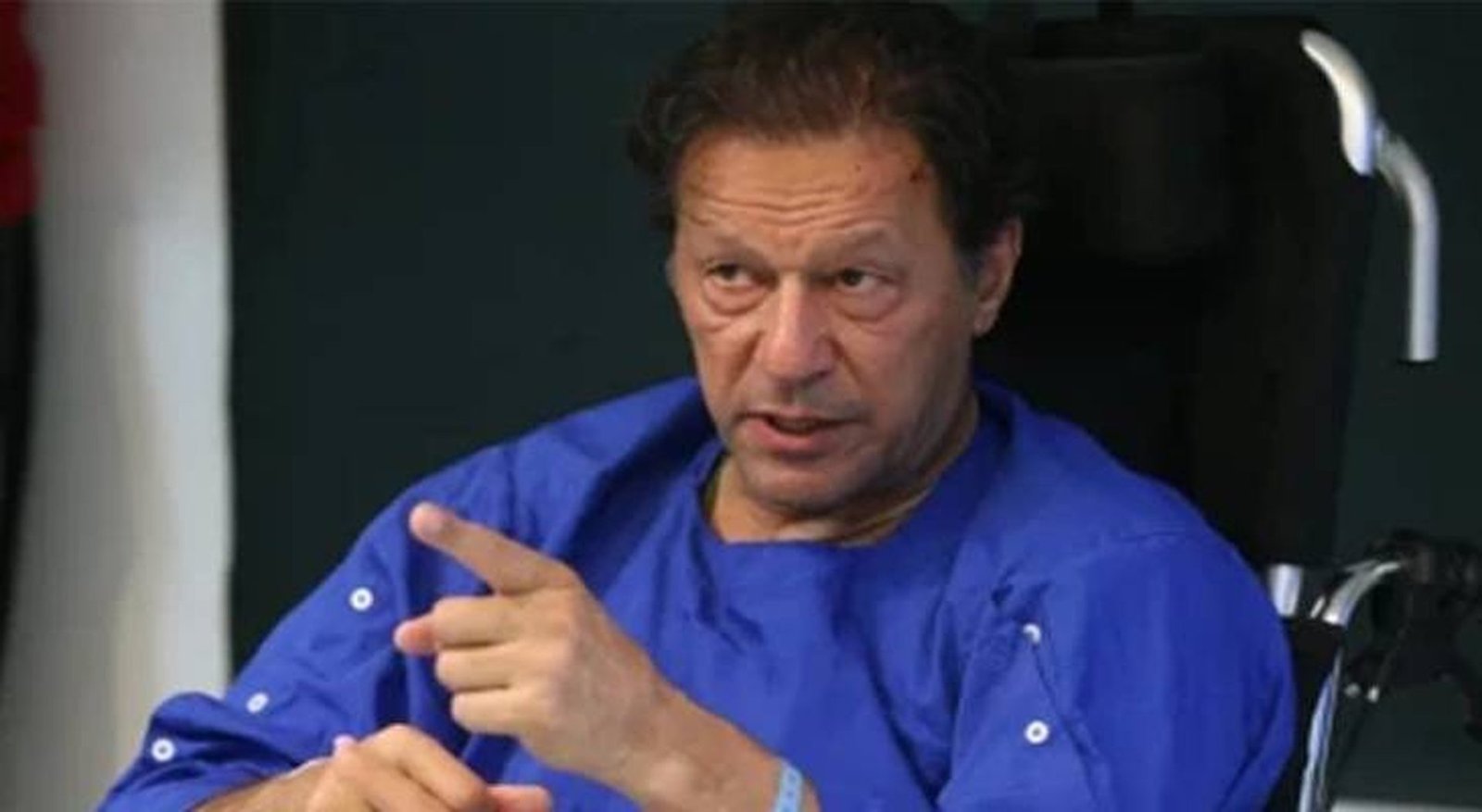
  • Imran Khan’s Lawyer Seeks Hospital Transfer in Legal Notice

    Imran Khan’s Lawyer Seeks Hospital Transfer in Legal Notice

    A lawyer for Pakistan Tehreek-e-Insaf (PTI) founder Imran Khan has sent a legal notice to the superintendent of Adiala Jail, demanding immediate implementation of court orders about the former prime minister’s medical treatment and prison facilities, 24NewsHD reported on Wednesday.

    Lawyer Khalid Yousaf Chaudhry said the notice expresses serious concern over Imran Khan’s reportedly deteriorating health and calls for his immediate transfer to Shifa International Hospital in Islamabad, in accordance with the court’s directions.

    Chaudhry has demanded compliance with the Supreme Court’s August 18 ruling, as well as orders issued by the Supreme Court and the Islamabad High Court, about the PTI founder’s treatment and the conditions of his detention.

    The notice states that international conventions guarantee prisoners the right to human contact, while United Nations standards prohibit solitary confinement. It further argues that security concerns cannot justify imposing a complete ban on communication and meetings.

    The lawyer has also demanded the restoration of Imran Khan’s meetings with family members and communication with his children. Other demands include providing him with daily access to outdoor walks and exercise, along with newspapers, magazines and reading material.

    The notice warns that failure to transfer the PTI founder to Shifa International Hospital would amount to a violation of court orders. It also raises concerns about potential threats to his health and life and calls for the protection of his fundamental rights and human dignity.

    Copies of the legal notice have also been sent to the Interior Secretary, the Inspector General of Prisons, the Islamabad Commissioner and Rawalpindi’s SP Sadar, Chaudhry said.

    Background to the dispute

    The notice follows an open letter from Imran Khan to the chief justices of the Supreme Court, the Federal Constitutional Court and the Islamabad High Court, released on Monday, in which he warned that his health was deteriorating and that his wife, Bushra Bibi, risked losing her eyesight in prison.

    In that letter, Khan said the Supreme Court had ordered on August 18 that he be transferred within two days to Shifa International Hospital and examined by a medical board, including heart and eye specialists, and allowed regular contact with his family. He said the order had not been implemented and that he had instead been taken to the government-run Pakistan Institute of Medical Sciences and returned to prison within hours.

    The government disputes his account. Parliamentary Affairs Minister Tariq Fazal Chaudhry has said specialist doctors regularly examine Khan, that he receives the care he needs, and that claims about the denial of medical facilities are contrary to the facts.

    The Islamabad High Court has separately ordered medical care for Bushra Bibi in jail amid concerns about her eyesight, and her lawyers have asked the court for her complete medical record and her transfer to a specialised hospital.