Tag: Pakistan

  • Hyderabad-Sukkur Motorway: Two Sections Approved Under PPP

    Hyderabad-Sukkur Motorway: Two Sections Approved Under PPP

    The Public Private Partnership Authority (P3A) board has approved the construction of two sections of the Hyderabad-Sukkur Motorway (M-6) under the public-private partnership model, ARY News reported on Wednesday.

    The board, in its 46th meeting, approved Sections I and II of the motorway, covering about 121 kilometres. The meeting was chaired by Muhammad Ali, Adviser to the Prime Minister on Privatisation and Chairman of the Privatisation Commission, who also heads the P3A board.

    Both sections will be given for construction under separate concession agreements. Private investors will develop and operate each section for 25 years and recover their investment through toll revenue, after which the motorway will be handed over to the National Highway Authority (NHA) in good condition.

    The government will provide Viability Gap Funding (VGF) only for Section I, to make the project commercially viable and keep tolls affordable for road users. The Asian Development Bank (ADB) is NHA’s transaction adviser for both sections, under which the NHA will invite bids from eligible local and foreign investors.

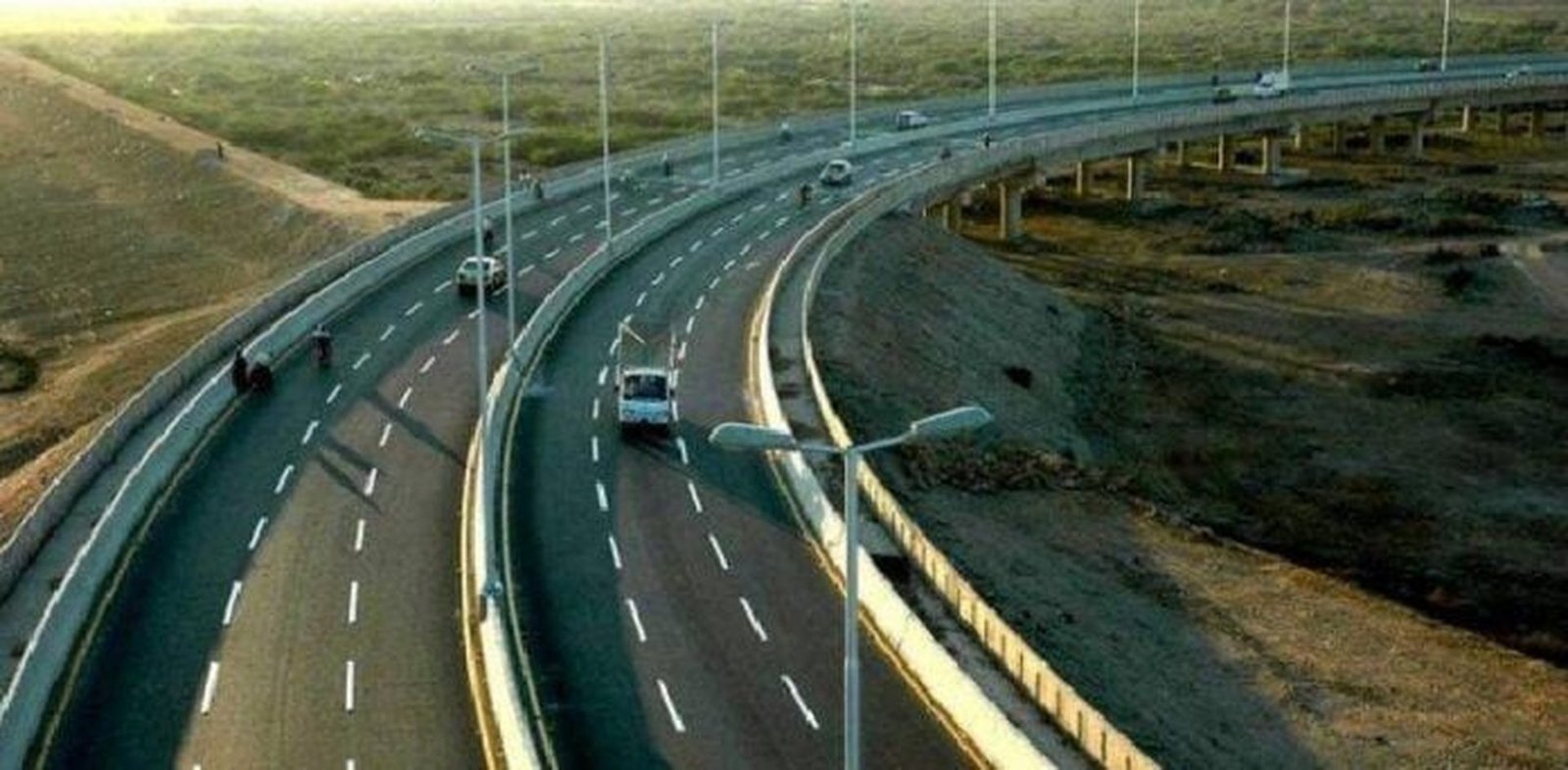
    The M-6 is a 306-kilometre, six-lane, access-controlled motorway to be built in five sections. Once complete, it will cut the journey between Hyderabad and Sukkur from about six hours to three hours. At present, all traffic between the two cities uses the N-5 National Highway, whose congested stretches pass through towns and settlements where heavy freight shares the road with local traffic.

    The remaining three sections, from Nawabshah to Sukkur, are being financed through sovereign loans from the OPEC Fund and the Islamic Development Bank and are currently in the procurement stage.

    Why the project matters

    Speaking after the meeting, Muhammad Ali said the M-6 is not just a road but completes an important link in Pakistan’s motorway network. He said the government wants to combine public-sector oversight with private capital and expertise, focusing on attracting credible investors, ensuring transparent procurement and taking projects from preparation to implementation.

    Officials expect the motorway to speed up cargo movement between Karachi’s ports and industrial centres, farming areas and markets further north. They say it will reduce logistics costs and open up business opportunities along the corridor in interior Sindh.

    The decision is part of the government’s wider effort to bring private capital into infrastructure, bringing privatisation and public-private partnership functions under a coordinated institutional framework. Officials said the PPP pipeline also covers projects in healthcare, water, aviation and tourism.

  • Petrol Price Cut by Rs3 to Rs325 per Litre in Pakistan

    Petrol Price Cut by Rs3 to Rs325 per Litre in Pakistan

    The Oil and Gas Regulatory Authority (OGRA) has reduced the price of petrol by Rs3 per litre, bringing it down to Rs325 per litre, while the price of high-speed diesel remains unchanged at Rs358 per litre.

    According to the notification issued by OGRA late on Tuesday, the revised prices came into effect on Wednesday, 18 November 2026. The regulator’s notification was reported by the Associated Press of Pakistan, Geo News, The News and 24NewsHD.

    Petrol, which is mainly used in private vehicles and motorcycles, will now sell at Rs325 per litre, down from Rs328. High-speed diesel, widely used in public transport, goods vehicles and agricultural machinery, stays at Rs358 per litre.

    Fuel prices directly affect the cost of transport and the prices of everyday goods, because transporters and traders pass on changes in fuel costs. A reduction in the petrol price is therefore likely to bring some relief to commuters and households, particularly those who rely on motorcycles and cars for daily travel.

    The latest revision follows the regular fortnightly review of petroleum prices, under which OGRA works out new prices on the basis of international oil prices, the exchange rate and applicable taxes and levies, and the federal government gives final approval.

    What changes for consumers

    For motorists, the Rs3 reduction means a small but direct saving on every litre of petrol. For a motorcycle tank of around 10 litres, the saving is about Rs30 per fill, while a car with a 40-litre tank saves about Rs120.

    Transport operators and goods carriers, however, will see no change in their fuel cost for now, because diesel prices have been left unchanged. Diesel is the main fuel for trucks, buses and tractors, so fares and freight charges are unlikely to move on the basis of this revision alone.

    Consumers are advised to buy fuel from licensed filling stations and to check that the price charged matches the notified rate. Any station charging more than the official price can be reported to the district administration or to OGRA.

    The next review of petroleum prices is expected in line with the regular schedule, and any further change will depend on movements in the international oil market and the rupee-dollar exchange rate.

  • Pakistan Receives Largest-Ever LPG Shipment at Port Qasim

    Pakistan Receives Largest-Ever LPG Shipment at Port Qasim

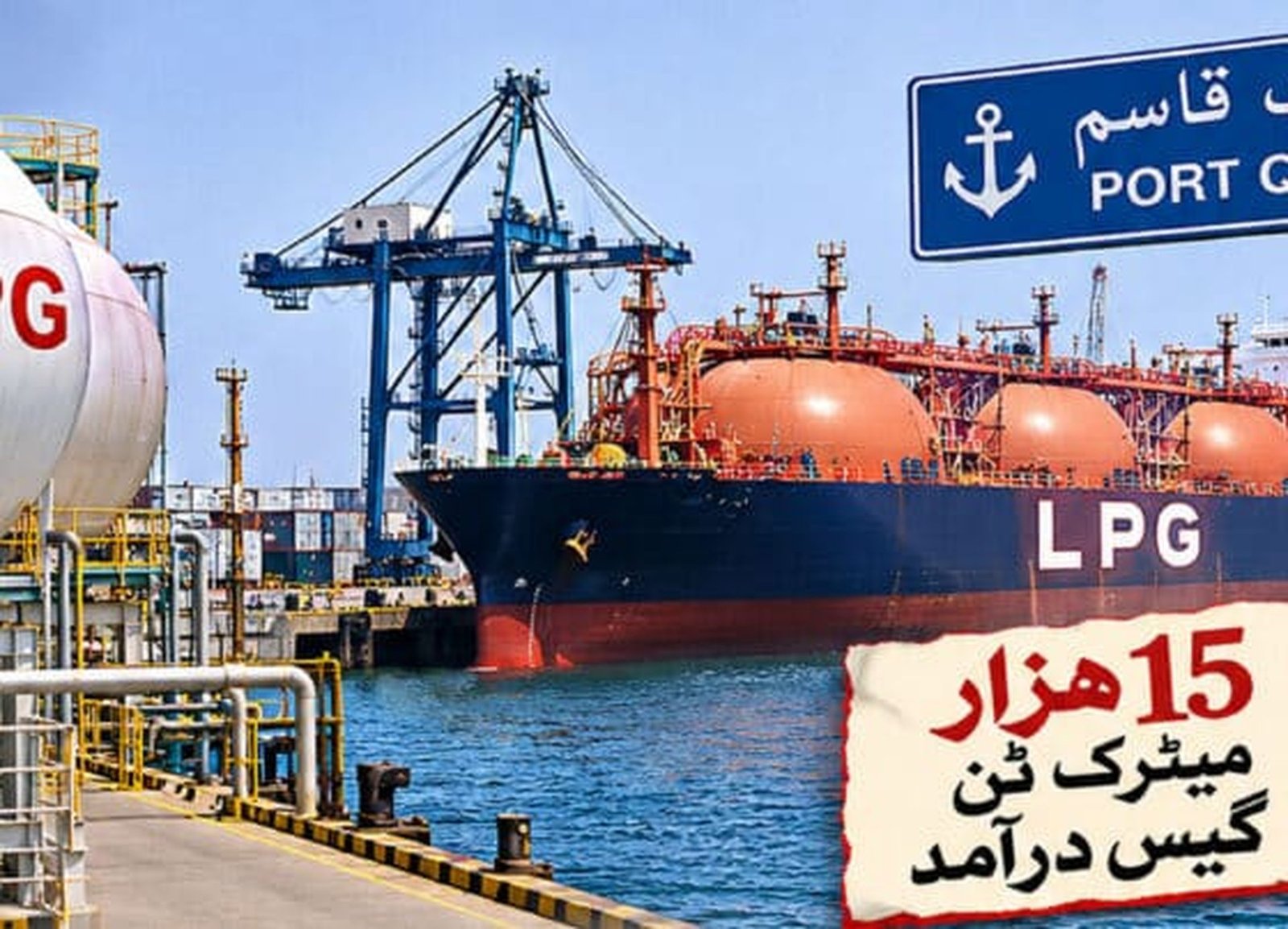
    Pakistan has received its largest-ever liquefied petroleum gas (LPG) shipment, with a vessel carrying 15,000 metric tonnes berthing at the Engro Vopak Terminal at Port Qasim, ARY News reported. Pakistan Observer also reported the arrival, describing the 15,000-tonne cargo as the biggest LPG shipment the country has received to date.

    The cargo is the first major shipment under a new import system, according to a statement from the Petroleum Division cited by ARY News. A ceremony was held at the port to mark the arrival, attended by Special Secretary Petroleum Mirza Nasiruddin Mashhood as chief guest.

    Officials quoted in the reports said further cargoes were expected in the coming weeks and hoped the additional supply would help meet winter demand, when household use of LPG rises sharply. Neither report gave figures for current stocks, import totals or expected price changes.

    Winter supply in focus

    LPG is widely used in Pakistan for cooking in homes without piped gas, as well as by commercial and industrial users, and imports rise in the colder months. The country has faced periodic LPG shortages and price increases in recent winters, making imported cargoes an important part of supply.

    Port Qasim, near Karachi, is the country’s main gateway for imported LPG, with Engro Vopak and the Sui Southern Gas Company operating terminals there. Recent weeks have seen a series of smaller LPG vessels arrive at the port, including two ships carrying a combined 7,603 tonnes in late October.

    LPG prices in Karachi fell by Rs20 per kilogram in early November after imported vessels reached Port Qasim, Abb Takk reported on 2 November, as fresh consignments eased supply constraints. The latest record cargo is the biggest single arrival since then, and officials hope it will help keep supplies steady through the winter months.

    ISN Media, which reviewed both reports, noted that neither outlet cited shipping records or official import figures, so the record claim rests on the two outlets’ reporting of the Petroleum Division statement and the port ceremony.

    The Petroleum Division statement described obstacles that had held back public-sector imports and said the new system was expected to clear the way for further shipments, ARY News reported. No dates or quantities were given for the next cargoes, and the reports did not name the importing company or the vessel.

  • Pakistan Condemns Israeli Attacks in Syria at UN

    Pakistan Condemns Israeli Attacks in Syria at UN

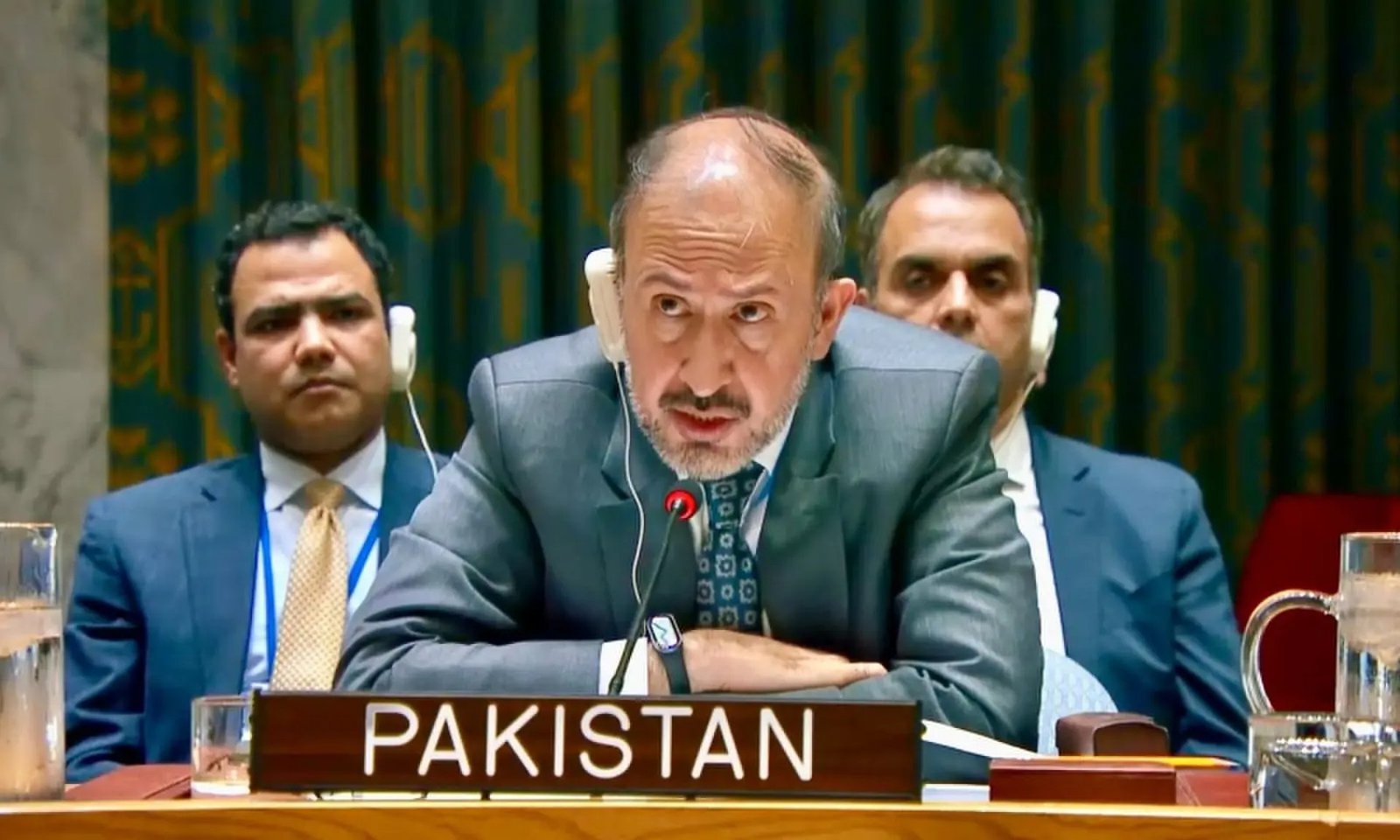
    Pakistan has strongly condemned Israel’s continued attacks and incursions into Syrian territory, calling for an immediate end to the violations, the withdrawal of Israeli forces from occupied areas, and full compliance with the 1974 Disengagement Agreement and relevant United Nations Security Council resolutions. The position was set out by Pakistan’s Permanent Representative to the United Nations, Ambassador Syed Haider Shah, at a Security Council briefing on the political and humanitarian situation in Syria on Monday, 16 November 2026.

    Addressing the Council, Ambassador Shah said the occupied Golan was Syrian territory under international law. “The occupied Golan is Syrian territory under international law,” he said, underlining Pakistan’s position that Syria’s sovereignty and territorial integrity must be respected.

    He said the continued Israeli violations undermined Syria’s security and obstructed its recovery at a time when the country was working to rebuild after years of conflict. Ambassador Shah reaffirmed Pakistan’s support for Syria’s political transition, its reconstruction, and its reintegration into the international economy following sanctions relief.

    Ambassador Shah told the Council that Israel must cease its attacks, withdraw from the territories occupied, and fully comply with the 1974 Disengagement Agreement and relevant Security Council resolutions. He called for an immediate end to the violations.

    Background

    The remarks come against the background of developments in Syria since the fall of the Bashar al-Assad regime on 8 December 2024. After the change of government, Israel declared the 1974 Separation of Forces Agreement collapsed and occupied the demilitarised buffer zone and other positions, including the Syrian side of Mount Hermon, known as Jabal al-Sheikh. Areas of southern Syria, particularly Quneitra and Daraa provinces, have since witnessed repeated Israeli military incursions, including raids, checkpoints, arrests and shelling.

    Pakistan’s position at the briefing was that Syria’s sovereignty and territorial integrity must be respected, and that an end to the violations of its territory was necessary for the country’s recovery and reconstruction. Ambassador Shah reaffirmed Islamabad’s backing for Syria’s political transition and reconstruction, and for its reintegration into the international economy following sanctions relief.

    The story was first reported by The Express Tribune on 17 November 2026, and was also carried by Dawn News English.

  • Gold Price Falls Below Rs400,000 Per Tola in Pakistan

    Gold Price Falls Below Rs400,000 Per Tola in Pakistan

    Gold prices in Pakistan fell sharply on Wednesday, 18 November 2026, with the All Pakistan Sarafa Gems and Jewellers Association (APGJSA) fixing 24-karat gold at Rs398,936 per tola, down Rs10,000 in a single day. The price has now fallen below the Rs400,000 per tola mark, Geo News reported.

    According to the association, the price of 10 grams of gold fell by Rs8,573 to Rs342,023. The decline follows a fall in international gold prices, which market trackers put near $3,790 an ounce on Wednesday, with the dollar trading at about Rs276.44.

    Spot-derived gold rates in Pakistan also fell by more than 2 per cent on the day, with 24-karat gold at about Rs390,000 to Rs393,000 per tola on live market trackers. Sarafa board rates usually sit above spot rates because they include the local premium charged by jewellers.

    The drop continues a slide in bullion prices over recent weeks. Market trackers show the 24-karat rate down more than 8 per cent over the past month, after trading as high as about Rs437,000 per tola in mid-October. The Rawalpindi-Islamabad sarafa benchmark has fallen from about Rs429,678 to around Rs402,500 per tola over the past 30 days.

    What it means for buyers

    Lower gold prices ease the cost of buying jewellery, which is a major purchase for households in Pakistan, especially around weddings. Jewellers, however, add making charges and their own margins on top of the quoted bullion rate, so retail prices vary from shop to shop.

    The association announces its official daily rate each morning, and prices can move during the day with the international market and the rupee-dollar rate. Buyers are advised to check the day’s official rate before making a purchase.

    Silver rates are announced separately by the association and were not part of this update.

    The association’s rate is the benchmark most jewellers quote across Pakistan, although prices can differ slightly from city to city because of local premiums and making charges. On Wednesday the rupee traded at about Rs276.44 to the dollar, according to market trackers, and the international gold price stood near $3,790 an ounce.

    Gold is traditionally seen as a safe store of value in Pakistan, and sharp moves in the world price are quickly reflected in the local sarafa market. Wednesday’s fall of Rs10,000 in a day follows several sharp moves in bullion prices in recent weeks.

  • Pakistan Committed to Stronger Ties with Bangladesh: Dar

    Pakistan Committed to Stronger Ties with Bangladesh: Dar

    Deputy Prime Minister and Foreign Minister Ishaq Dar on Wednesday said Pakistan is committed to further strengthening its ties with Bangladesh, as he addressed a delegation of 35 senior Bangladeshi civil servants in Islamabad on Wednesday, 18 November 2026.

    The delegation, headed by Muhammad Mustafa Zaman, is visiting Pakistan as part of an official programme. During its stay in the federal capital, the group visited the Ministry of Foreign Affairs, the National Assembly and the Ministry of Commerce, where officials briefed the visitors on Pakistan’s foreign policy, parliamentary system, trade policies and bilateral economic cooperation.

    At the Ministry of Foreign Affairs, the delegation was briefed on the working of Pakistan’s foreign policy, while the visit to the National Assembly gave the officers an introduction to the country’s parliamentary system. The briefing at the Ministry of Commerce focused on trade policies and on the scope for bilateral economic cooperation between Pakistan and Bangladesh.

    Rector of the National School of Public Policy Muhammad Saleh Ahmed Farooqi and Dean of its Executive Development Institute Dr Naveed Elahi accompanied the delegation during its engagements in the federal capital.

    According to officials, Foreign Office spokesperson Sajjad delivered a briefing at the Foreign Office, outlining Pakistan’s foreign policy priorities and the state of relations between the two countries.

    Learning from each other’s experience

    Addressing the delegation, Dar said both countries should benefit from each other’s experiences in the fields of education and climate change. He said Pakistan had always expressed good wishes for its neighbours and remained committed to building stronger relations with Bangladesh.

    The delegation described the interaction as constructive and useful, noting that the briefings had given them a clearer understanding of Pakistan’s institutions and policies.

    The Bangladeshi civil servants arrived in Islamabad on Sunday evening after a week-long programme in Lahore. They visited Murree on Monday and also attended a roundtable discussion at the Institute of Strategic Studies Islamabad (ISSI) during their stay in the capital.

    The visit comes as both countries continue efforts to deepen diplomatic, parliamentary and trade engagement, following the delegation’s briefings at the Foreign Office, the National Assembly and the Ministry of Commerce, with officials on both sides stressing the value of direct interaction between institutions and civil servants.

  • Pakistan IT Exports Hit Record $453m in October

    Pakistan IT Exports Hit Record $453m in October

    Pakistan’s information technology exports reached an all-time monthly high of $453 million in October 2026, setting a new record for the country’s technology sector, according to data from the State Bank of Pakistan reported by market researchers.

    The October figure was 17.4 per cent higher than the $386 million recorded in the same month last year and 4.1 per cent above the $435 million earned in September 2026. It also surpassed the previous monthly record of $437 million, set in December 2025, extending a run in which export earnings have risen in every month of the current fiscal year.

    According to data compiled by Topline Research, information technology exports during the first four months of fiscal year 2026-27, from July to October, reached about $1.7 billion, up from $1.445 billion in the same period a year earlier. On a trailing twelve-month basis, exports stood at $4.9 billion, about 20 per cent higher than the $4 billion recorded in the corresponding period last year.

    Net information technology exports, which take account of imports of related services, reached $373 million in October, an increase of 11 per cent compared with a year earlier. Information technology services accounted for about 11.7 per cent of Pakistan’s total exports during the month, underlining the sector’s growing weight in the country’s overall export basket.

    Reports also link the performance to a change by the State Bank of Pakistan that eases paperwork for exporters and freelancers. According to ProPakistani, the central bank has abolished the requirement for IT exporters and freelancers to submit Form R for every individual export transaction, with the form now required only for transactions above $25,000. Exporters may also retain 50 per cent of their export proceeds or $5,000 a month, whichever is higher.

    The record comes after exports reached $4.6 billion in fiscal year 2025-26, the highest annual total in the sector’s history, although that fell about $400 million short of the government’s $5 billion target. Slow internet speeds and frequent power outages have been cited as persistent constraints on growth. The Ministry of Finance projects exports of $5.5 billion in fiscal year 2026-27, while the Uraan Pakistan economic plan sets a longer-term target of $10 billion by fiscal year 2028-29.

    Whether the sector can sustain the current pace will depend on how effectively infrastructure and policy constraints are addressed, but the record October figure demonstrates strong overseas demand for Pakistani technology services and the growing importance of the industry to the national economy.

  • Pakistan Foreign Loans, Grants Jump 157% to $5.89bn

    Pakistan Foreign Loans, Grants Jump 157% to $5.89bn

    Pakistan secured $5.89 billion in foreign loans and grants during the first four months of the current fiscal year, July to October 2026, more than double the $2.29 billion received in the same period last year, according to the Economic Affairs Division (EAD).

    The figures, shared by the EAD on Tuesday, show loans of $5.8553 billion and grants of $36.1 million, taking the total to $5.891 billion — a rise of 157 per cent over the same period of the last financial year.

    October alone brought in $441.5 million, slightly less than the $471.2 million received in October 2025, the EAD data shows.

    The biggest contributions came from $3 billion raised through Eurobonds and $1.268 billion through Naya Pakistan Certificates, in conventional and Islamic financing instruments. Islamic NPCs generated $883.08 million, while conventional NPCs generated $385.72 million during the four months.

    China provided a guaranteed loan of $305.53 million, while bilateral donors disbursed $59.95 million — $42.15 million in loans and $17.8 million in grants. France disbursed $20 million, Germany $15 million, Saudi Arabia $14.1 million, Korea $5.02 million, Denmark $3.15 million, Japan $2.59 million, China $0.03 million and the United States $0.08 million.

    Multilateral creditors disbursed $1.007 billion in the four months. The Asian Development Bank provided $171 million and the Asian Infrastructure Investment Bank $27.61 million, while the World Bank’s concessional IDA funding stood at $427.57 million and its IBRD lending at $102.18 million. The Islamic Development Bank disbursed $238.44 million as short-term financing and released $31.5 million as a loan, while IFAD and the OPEC Fund disbursed $8.87 million and $1.19 million respectively.

    The report comes as Chinese banks have been reluctant to refinance a $1.3 billion commercial loan, according to The News. Top official sources confirmed that Islamabad repaid the loan around June 2026, expecting the consortium of Chinese banks to refinance it within a couple of months. The banks are now asking for an increased rate, and Islamabad does not seem ready to refinance at the higher rate.

    UBL Dubai raised $300 million in commercial foreign loans during the current fiscal year, while Pakistan raised $2.949 billion through Eurobonds. Taken together, multilateral and bilateral donors disbursed $1.067 billion in the first four months of FY27.

    The EAD data shows bond sales and Naya Pakistan Certificates accounted for the largest share of the inflows during the four-month period.

  • Pakistan, China Agree to Strengthen Strategic Partnership

    Pakistan, China Agree to Strengthen Strategic Partnership

    Pakistan and China have agreed to further strengthen their strategic partnership and deepen cooperation between their law enforcement agencies, following a meeting in Islamabad on Wednesday between Interior Minister Mohsin Naqvi and Chinese Ambassador Jiang Zaidong.

    Minister of State for Interior Talal Chaudhry also attended the meeting, where the two sides discussed the Pakistan-China strategic partnership, security cooperation and ways to enhance collaboration between law enforcement agencies. They agreed to make coordination between the agencies of the two countries more active and effective, in order to further strengthen bilateral security cooperation.

    It was decided during the meeting that Chinese instructors would soon visit Pakistan to provide Chinese language training to personnel of the Special Protection Unit, the force being set up for the security of foreign nationals, including Chinese citizens working in Pakistan.

    Ambassador Jiang assured Pakistan that China would continue to extend all possible support for the establishment of a Law Enforcement Centre in Islamabad, which is being developed on the Chinese model. The government had earlier said the planned centre would serve as a pilot project, bringing detention, investigation and summary trial procedures under one roof to speed up the disposal of minor cases.

    The ambassador appreciated Interior Minister Naqvi’s proactive role in extending full cooperation and ensuring the timely resolution of various issues. Federal Secretary Interior, Special Secretary Interior and the Director General of the National Cyber Crime Investigation Agency were also present at the meeting.

    The meeting reaffirmed the long-standing Pakistan-China relationship, which the two countries describe as an all-weather strategic cooperative partnership built on mutual trust. The two countries marked the 75th anniversary of the establishment of diplomatic relations in 2026, and cooperation has continued to expand across security, trade and development, including under the China-Pakistan Economic Corridor.

    Cooperation under the China-Pakistan Economic Corridor has also continued to expand into its second phase, with officials saying the focus is now on growth, skills, livelihoods, innovation and green development alongside infrastructure and energy.

    Officials on both sides have repeatedly stressed that the safety of Chinese nationals and joint projects in Pakistan remains a top priority, and that closer coordination between law enforcement agencies is central to that effort.

  • DRAP Makes Licensing Mandatory for Alternative Medicines

    DRAP Makes Licensing Mandatory for Alternative Medicines

    The Drug Regulatory Authority of Pakistan (DRAP) has launched an online licensing and registration system for alternative medicines and health products, bringing the manufacture, registration and sale of these products under formal legal control, 24NewsHD reported on Wednesday.

    DRAP announced the launch on 17 November 2026 under the Alternative Medicines and Health Products Rules, 2026. The rules were notified a day earlier through S.R.O. 2117(I)/2026, while the fee schedule for alternative medicines and health products was notified through S.R.O. 2118(I)/2026 on the same day.

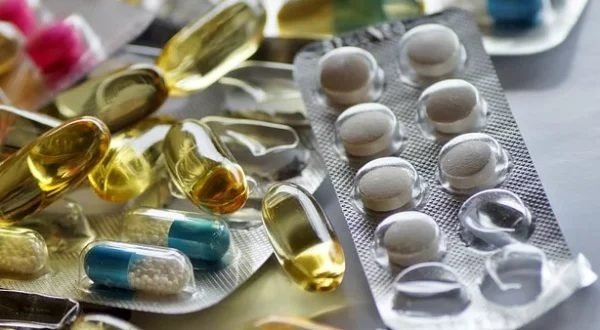
    The new system covers alternative medicines and health products, including herbal, homeopathic and nutraceutical products. Manufacturers and importers will now have to register their products and obtain licences through DRAP’s online portal before they can be made or sold in the country. DRAP has also published tutorials on its website to guide applicants through the online process.

    The move formalises oversight of a large and fast-growing market. Vitamins, minerals, herbal products and probiotics have fallen under DRAP’s enlistment rules since 2014, when the authority began requiring products to be enlisted before sale. In October, DRAP moved to bring eight categories of everyday health products — including vitamins and dietary supplements, medicated soaps and shampoos, and specialised infant milk — under tighter regulatory oversight, with mandatory registration, approval and quality-control checks.

    The tighter control is aimed at ensuring that products carrying medicinal or therapeutic claims meet prescribed standards of quality, safety and efficacy, and at curbing the sale of unregistered and substandard products. DRAP has also been expanding its wider regulatory net: since 9 October 2026, manufacturers and importers have been required to print a 2D barcode with a unique serial number on every pack of medicine under the pharmaceutical track and trace system, so that customers can check a product and its price through the authority’s Mehfooz Dawa app.

    DRAP regulates pharmaceutical products under the Drugs Act 1976 and the DRAP Act 2012. All drugs intended for manufacture, sale or export must be registered with the authority, and every manufacturing facility must hold a drug manufacturing licence issued after satisfactory good manufacturing practice inspection.

    The authority has not stated a deadline in its announcement for existing manufacturers and sellers of alternative medicines to complete their registration under the new rules.