Tag: Pakistan

  • Khawaja Asif: Joint Action Plan Vital for Global Peace

    Khawaja Asif: Joint Action Plan Vital for Global Peace

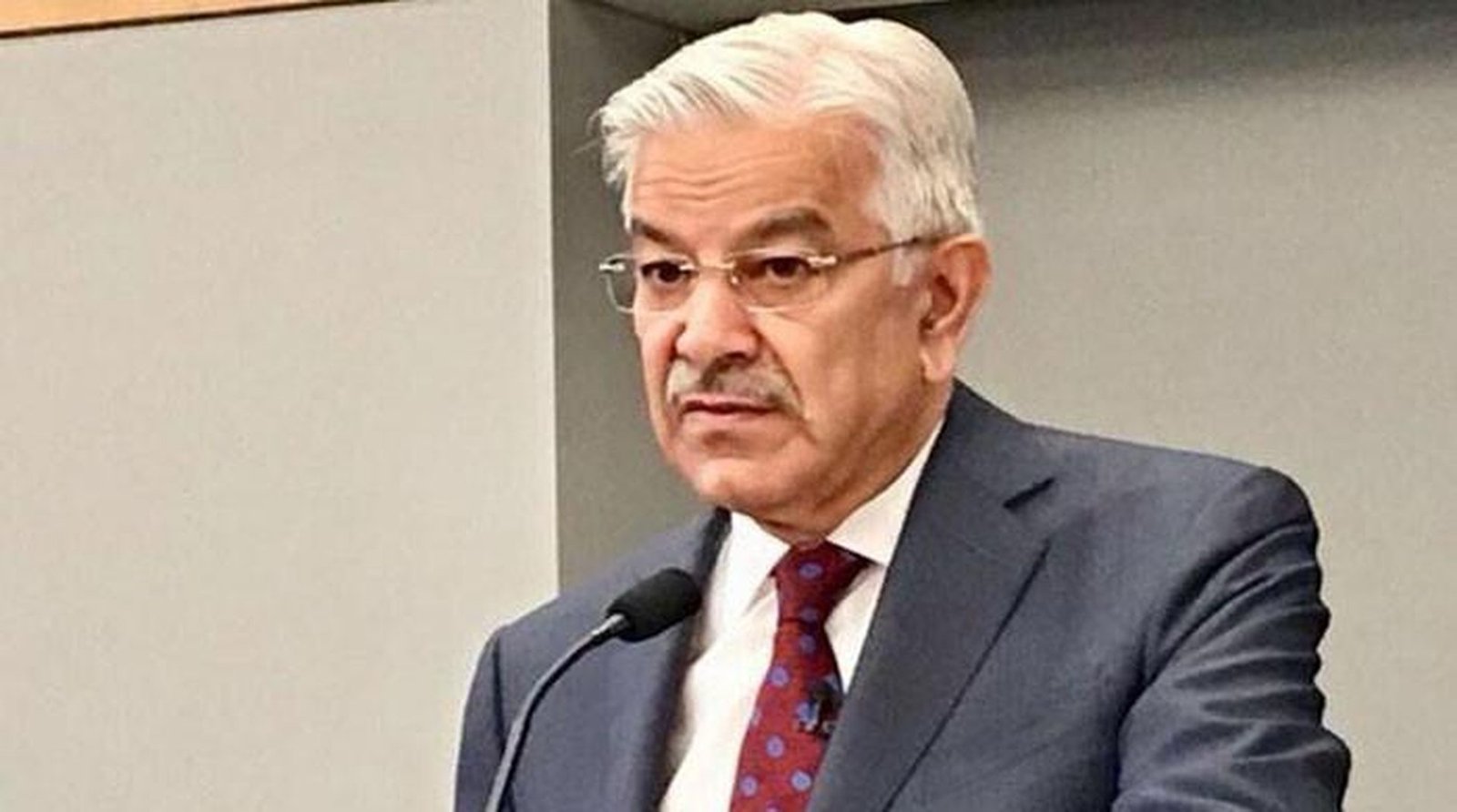
    Defence Minister Khawaja Asif has said that a joint action plan and a cooperative security policy are indispensable for global peace, adding that peace is not merely the absence of war and that human security must be prioritised for lasting stability.

    Addressing the Schuman Security and Defence Forum at the European Parliament in Brussels, Asif said the world needed shared planning and cooperation between states to meet common security challenges. He said lasting peace could only be achieved when the security of people, rather than only of states, was placed at the centre of policy.

    Asif said Pakistan had played a leading role in United Nations peacekeeping over the past seven decades. According to him, more than 237,000 Pakistani personnel have served in 48 UN peace missions, and 183 Pakistani personnel have lost their lives while serving in those missions.

    He warned that a sudden reduction in UN peace missions in conflict areas could increase risks to human security, saying that the withdrawal of peacekeepers from volatile regions could leave vulnerable populations exposed. He said the international community should think carefully before scaling back missions that protect civilians in conflict zones.

    The defence minister said climate change, food insecurity and economic weakness were fuelling conflicts around the world. He argued that these pressures were deepening instability in already fragile regions and that security policy could not ignore their effects on ordinary people.

    Asif said global peace required countries to work together rather than act alone, and that cooperative security arrangements offered the best way to respond to shared threats. He said Pakistan remained committed to multilateral cooperation and to the principles of the United Nations Charter.

    The Schuman Security and Defence Forum is the European Union’s annual gathering on peace, security and defence partnerships. Its third edition was held in Brussels on 17 and 18 November 2026, bringing together senior decision-makers from more than 85 partner countries, EU member states and international organisations, along with think tanks and academics, to discuss how partnerships can respond to current and future security threats.

    Pakistan has been one of the largest contributors to UN peacekeeping since the 1960s, and its troops have served in missions across Africa, Asia and the Middle East. Asif’s remarks in Brussels underlined Islamabad’s long-standing position that peacekeeping remains an essential tool for international stability, and that its value should be judged by the protection it provides to civilians in conflict areas.
  • Petrol Falls to Rs322, Diesel to Rs355 as OGRA Cuts Prices by Rs3

    Petrol Falls to Rs322, Diesel to Rs355 as OGRA Cuts Prices by Rs3

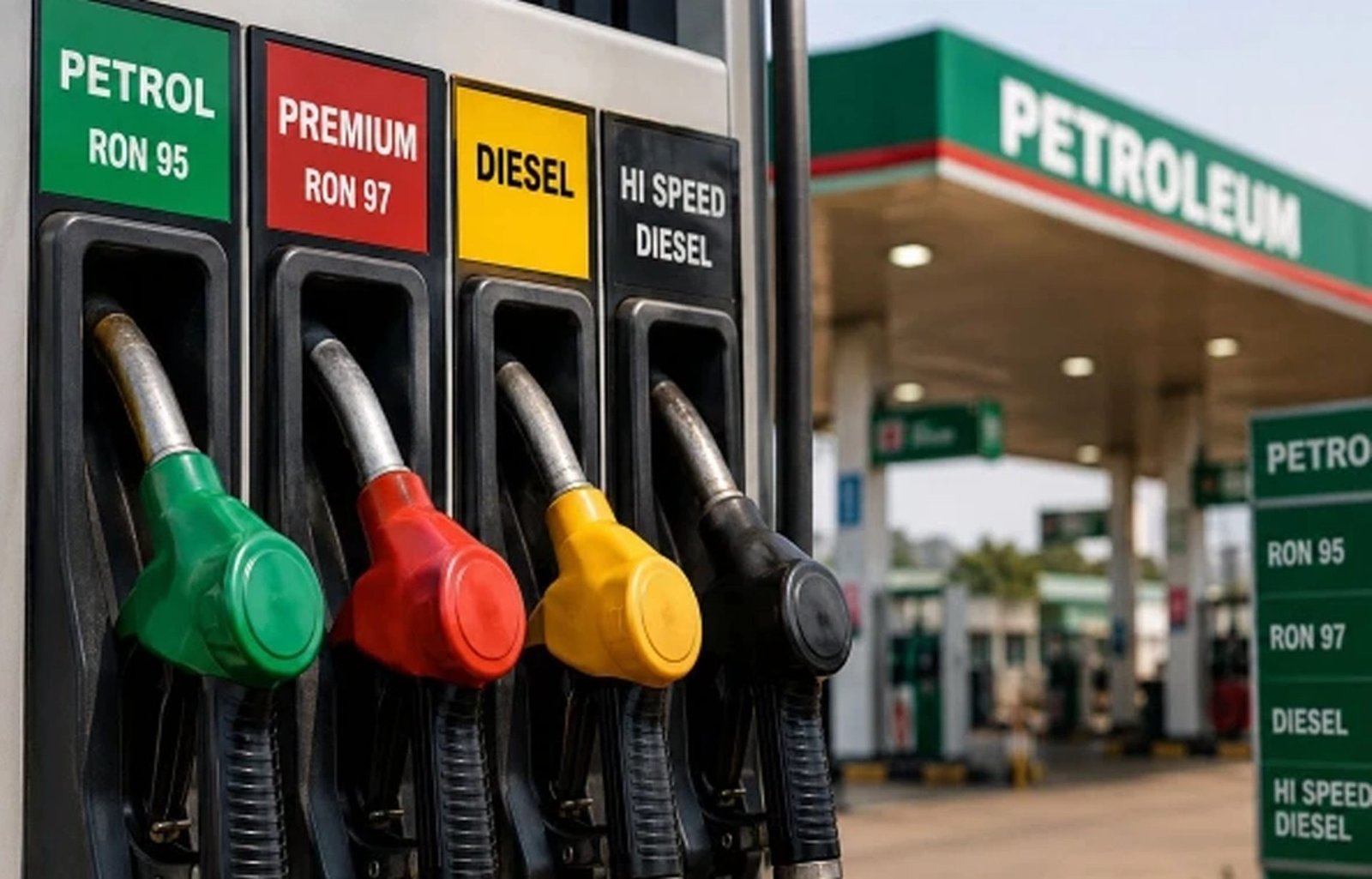
    The Oil and Gas Regulatory Authority (OGRA) has notified a reduction of Rs3 per litre in the prices of petrol and high-speed diesel (HSD), effective from 19 November 2026.

    Under the revised pricing, petrol has dropped from Rs325 to Rs322 per litre, while high-speed diesel has declined from Rs358 to Rs355 per litre. The cut marks the twelfth consecutive daily decrease in the price of petrol.

    OGRA issued the notification after approval under the petroleum products pricing mechanism approved by the federal government. The government continues to levy Rs114 per litre in taxes and duties on petrol and Rs100 per litre on diesel.

    The new rates apply for 19 November under the daily review mechanism, through which OGRA now decides fuel prices every day on the basis of international market trends, instead of waiting for a fortnightly announcement. OGRA has also begun publishing daily petroleum prices on its own website.

    Since 2 November, petrol has become cheaper by Rs52.51 per litre, falling from Rs374.51 to Rs322. Under an arrangement announced on 2 November, oil refineries are contributing to the petroleum levy by bearing a cumulative impact of Rs15 billion over 30 days.

    The government has also introduced a fuel relief scheme under which motorcycle and chingchi owners are being provided petrol at a relief of Rs100 per litre on up to 20 litres a month. Deputy Prime Minister Ishaq Dar had earlier highlighted the government’s proactive measures, including policy changes and structural reforms in petroleum policy, that have brought prices down from their peak in early April.

    The shift to daily price-setting is a break from the old fortnightly system, under which prices were revised twice a month. The government says the daily mechanism passes changes in international oil prices to consumers more quickly, and that publishing the notified rate each day improves transparency for motorists checking the price before filling up. The petroleum minister has said the cabinet and the prime minister decided to give OGRA the responsibility of deciding fuel prices daily on the basis of international market trends.

    For consumers, the latest cut continues a run of relief at the pump that began in early November. With petrol now at Rs322 a litre, the cumulative fall since 2 November stands at Rs52.51, and the government says the relief scheme for small vehicle owners is meant to ensure that the benefit of falling prices reaches daily commuters and the transport sector as well.

  • Murad Ali Shah: Attempts to Divide People in Sindh Unacceptable

    Murad Ali Shah: Attempts to Divide People in Sindh Unacceptable

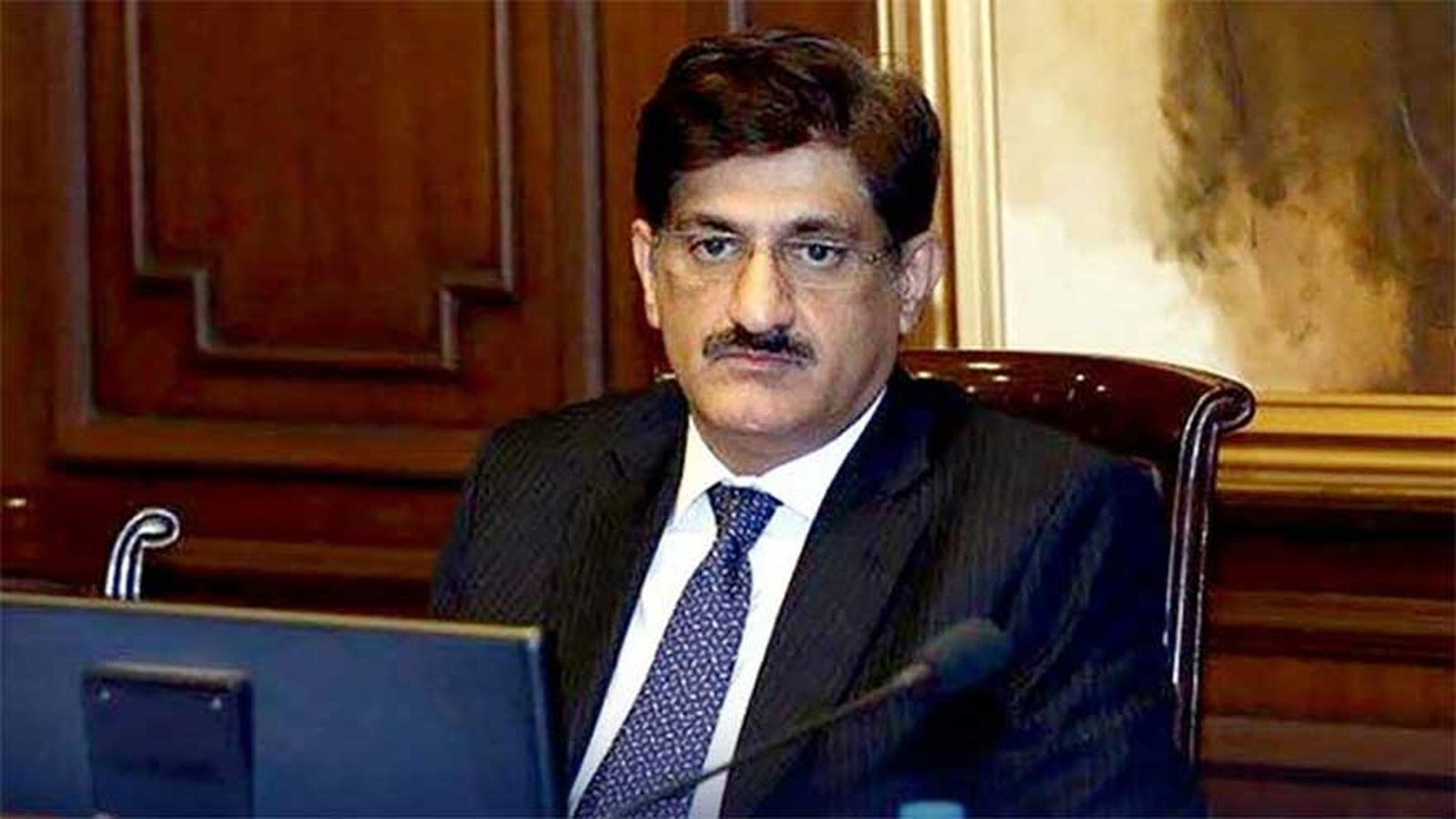
    Sindh Chief Minister Murad Ali Shah has rejected attempts to divide the people of Sindh, saying that efforts to create divisions among communities in the province are unacceptable.

    Speaking on the issue of creating additional provinces in Sindh, the chief minister said attempts had been made in the past to incite the people of Karachi against one another. He maintained that those advocating four provinces in Sindh would not achieve their objective, as creating a new province would require a two-thirds majority in the Sindh Assembly.

    Murad Ali Shah challenged Federal Minister for Planning Ahsan Iqbal to first become a member of the Sindh Assembly and then demonstrate how a new province could be created. The chief minister’s remarks add a new voice to the ongoing debate over new provinces, which has already drawn responses from several federal and provincial leaders in recent days.

    Meanwhile, Sindh Minister Saeed Ghani criticised federal ministers for reacting to Pakistan Peoples Party (PPP) Chairman Bilawal Bhutto Zardari’s recent statement. Ghani said one federal minister after another had spoken on the issue, while Bilawal Bhutto had not initiated the debate about restructuring the country’s system. He said the discussion about creating additional provinces had originated elsewhere.

    Commenting on the political situation in Sindh, Ghani accused the Muttahida Qaumi Movement (MQM) of attempting to create tensions between Sindhi and migrant communities. Referring to past violence in Karachi, he alleged that 50 people had been killed in a single day. Ghani questioned why Bilawal Bhutto was being held responsible for tensions, arguing that those who had instigated conflict should be held accountable.

    The debate over new provinces began after calls for additional administrative units as part of a governance overhaul, and has become politically sensitive in Sindh, where the PPP-led provincial government strongly opposes any move to divide the province. The Sindh Assembly has already passed a resolution rejecting any proposal to divide Sindh or alter its territorial limits, and the PPP maintains that the province’s unity is not negotiable. Under Article 239 of the Constitution, altering a province’s boundaries requires the consent of at least two-thirds of the concerned provincial assembly, along with approval by Parliament.

    Federal ministers have argued that the debate on administrative reform should continue, while the PPP leadership says the division of Sindh is a separate question from governance reform and will not be accepted.

  • JI Chief Calls for Education Overhaul, Restoration of Student Unions

    JI Chief Calls for Education Overhaul, Restoration of Student Unions

    Jamaat-e-Islami (JI) emir Hafiz Naeem-ur-Rehman has said that education has never been a priority for successive governments, and that the country’s education system is being destroyed with each passing day.

    Addressing a “National Dialogue in Education” organised by the Islamic Students’ Union of Pakistan in Islamabad, the JI chief congratulated the organisers for holding the dialogue and stressed the need for a serious improvement in the education system, equal educational opportunities for all, and positive political and democratic training for students.

    Hafiz Naeem-ur-Rehman said governments had banned student unions, adding that the issue of the ban was resolved after a decision by Justice Qazi Faez Isa in 2024. He argued that when student unions existed, there were almost no incidents of killing and vandalism in educational institutions, but by abolishing the unions, the nursery of politics had also been abolished.

    “Even today we stand at the same place where we were 30 years ago,” he said. “How a nation can be formed if five different education systems are prevalent in a country?” He said student representation in educational institutions and the restoration of unions should not be neglected.

    The JI emir said thousands of schools had been outsourced in Punjab and Khyber Pakhtunkhwa, and claimed that, according to him, 80 percent of the outsourced schools were not functioning in line with their objectives.

    Education has been a central theme of Hafiz Naeem-ur-Rehman’s public campaign. In an address in Swat in August 2025, he called for a single education system across the country, said 26.2 million children in Pakistan were out of school, including 5.5 million in Khyber Pakhtunkhwa alone, and described the outsourcing of schools as a sign of privatising education. He has also repeatedly termed the ban on student unions an attack on the intellectual, educational and democratic development of young people.

    He said the state must treat education as its central pillar, arguing that no nation can progress while its education system remains divided along class lines and its young people are denied a voice in their own institutions.

  • Ahsan Iqbal: Can’t Be in Government and Play Opposition

    Ahsan Iqbal: Can’t Be in Government and Play Opposition

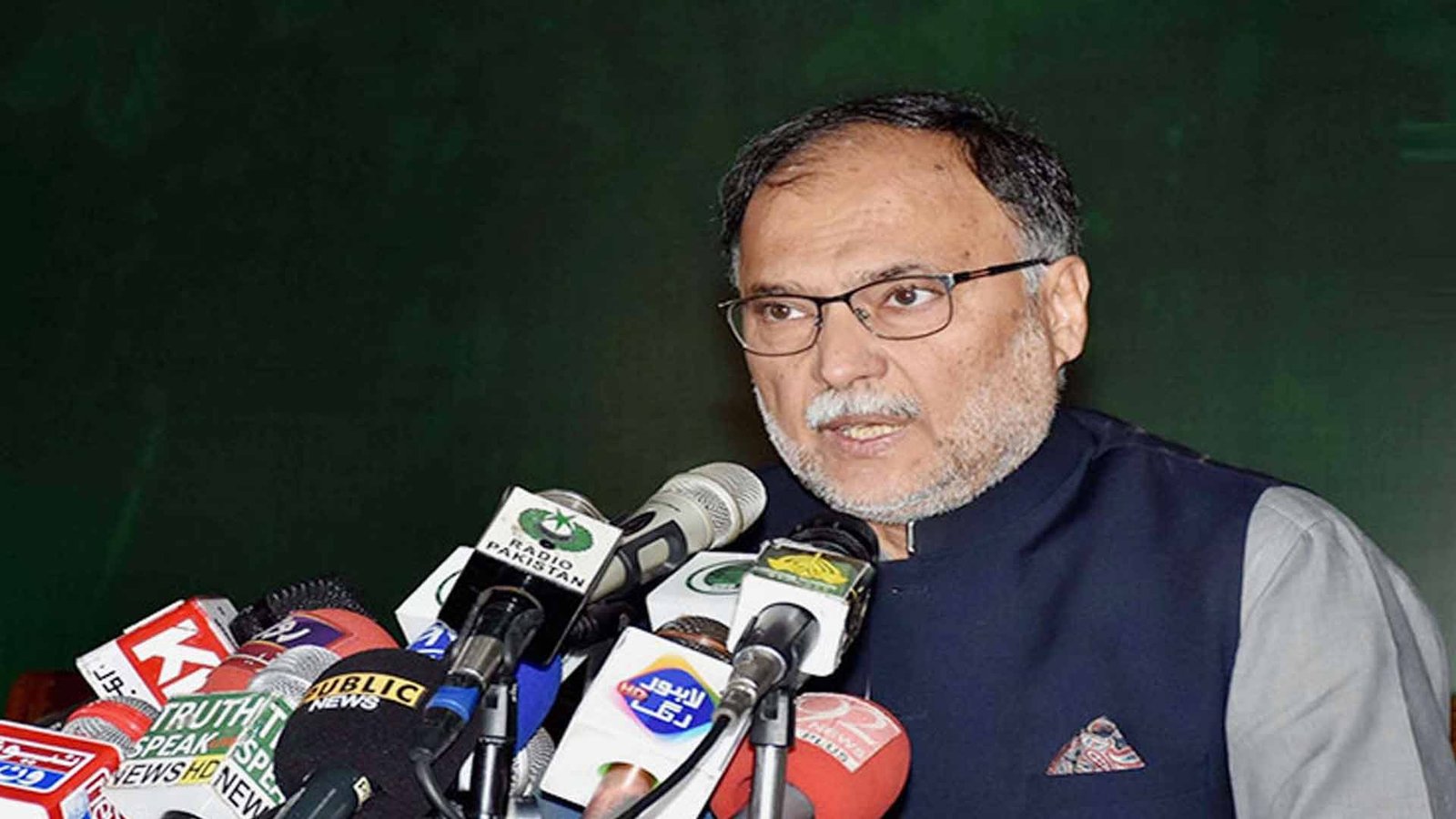
    Federal Minister for Planning Ahsan Iqbal has said that Pakistan Peoples Party (PPP) Chairman Bilawal Bhutto Zardari’s stance is full of contradictions, arguing that a party cannot enjoy the perks of government and play the role of the opposition at the same time.

    Reacting to Bilawal’s recent statement, Iqbal questioned why the PPP chairman was now criticising decisions of which he himself had been a part. He said that being part of the ruling coalition and criticising government decisions amounted to a double standard, and that parties in government must also accept responsibility for those decisions.

    The minister said coalition partners could not distance themselves from government decisions whenever they pleased. Being part of a government, he said, does not only mean sharing power or taking credit for good decisions; it also means accepting responsibility for difficult ones.

    Iqbal added that if a party is part of the governing coalition and its representatives also hold constitutional offices, it cannot separate itself from responsibility for government policies and decisions. His remarks underline the differences that have surfaced among coalition partners over policy decisions and political positions.

    The exchange follows Bilawal’s interview with a private television channel, in which he said the PPP could sit on the opposition benches if the government did not listen to its allies. Bilawal defended his recent remarks, saying he had spoken the truth, and reiterated his call for a political and democratic reset. He also opposed the proposal of a referendum on creating new provinces and warned against any forced attempt to divide Sindh.

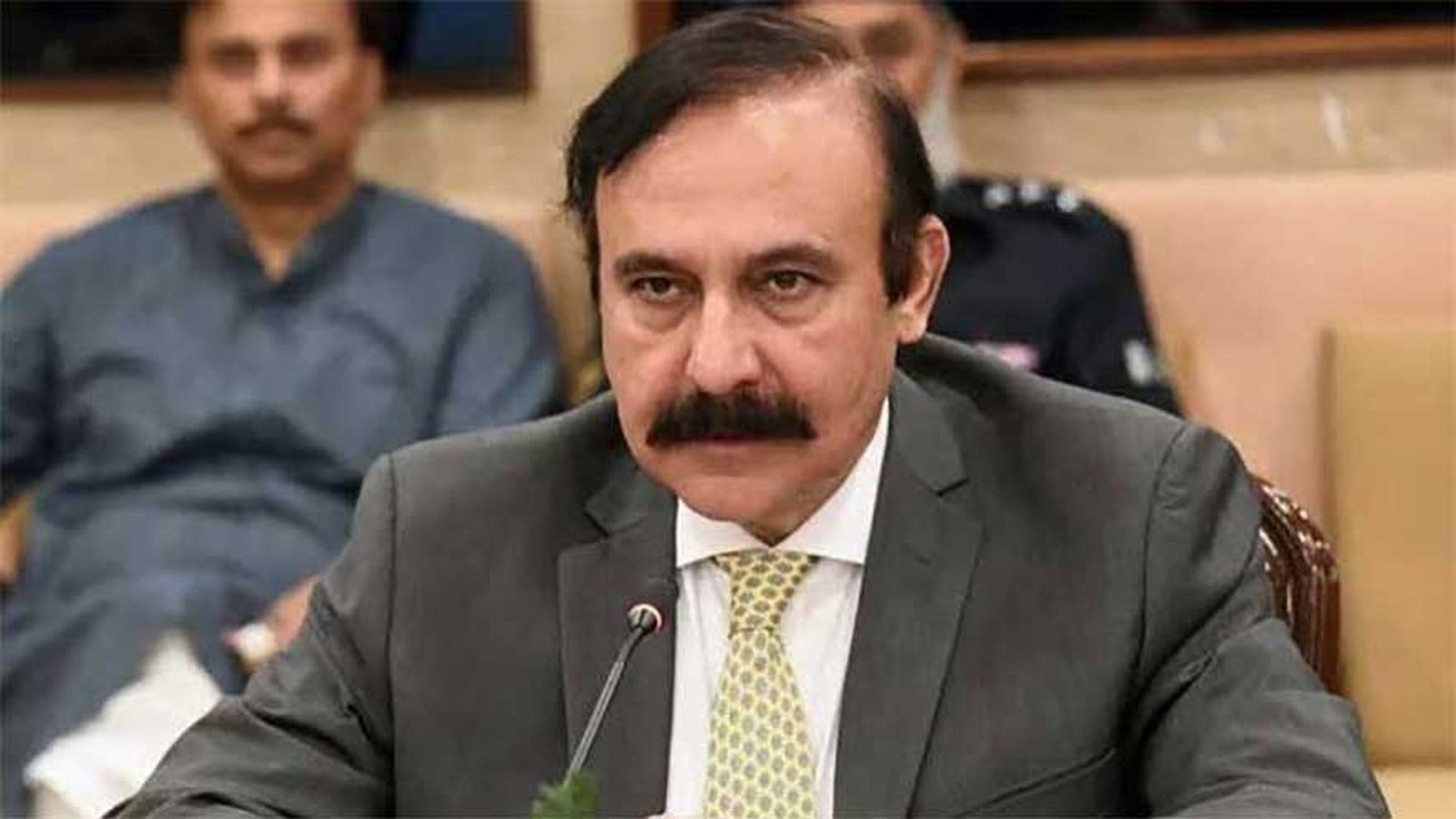
    Federal Information Minister Attaullah Tarar had earlier responded to Bilawal’s remarks by reminding the PPP chairman that they were part of the same government and inviting him to sit down and decide together for the betterment of the people and the country. Minister of State for Interior Talal Chaudhry also criticised Bilawal’s statement, saying the PPP chairman should raise his concerns within the coalition rather than in public.

    The debate over new provinces and the coalition’s internal differences has intensified in recent days, with several federal ministers and opposition leaders weighing in on the referendum proposal and on the future of the alliance.

  • Referendum on New Provinces Is Not Unconstitutional, Says Tariq Fazal

    Referendum on New Provinces Is Not Unconstitutional, Says Tariq Fazal

    Federal Minister for Parliamentary Affairs Dr Tariq Fazal Chaudhry has said that holding a referendum on the creation of new provinces is not an unconstitutional demand but a democratic option provided under the Constitution.

    Reacting to a statement by Pakistan Peoples Party (PPP) leader Saeed Ghani, the minister questioned why people should be deprived of their right to express their views on their future and on effective governance. He asked why any decision should be imposed before the public is given an opportunity to express its opinion, adding that a referendum provides a constitutional and democratic platform for seeking the people’s mandate.

    Chaudhry said the PPP also advocates the supremacy of democracy and the Constitution, and questioned why the party was reluctant to seek the people’s opinion. He maintained that the essence of democracy lies in making decisions in accordance with the wishes and aspirations of the people, respecting their views and accepting decisions made through public participation.

    The minister emphasised that giving priority to public opinion reflects democratic values and is an essential requirement of public politics, Dunya News reported.

    The remarks come amid a sharp political debate over the proposal to create new provinces. PPP Chairman Bilawal Bhutto Zardari said at the Karachi Press Club on 17 November that holding a referendum on the issue was unconstitutional, arguing that the Constitution already sets out the procedure for creating new provinces. Interior Minister Mohsin Naqvi has proposed a referendum to settle the matter, saying the people should have the final say, while Federal Minister Rana Sanaullah has said parliament will decide whether a referendum is held.

    Under the Constitution, a referendum on a matter of national importance can be held after approval by a joint sitting of parliament, under Article 48(6). However, a referendum on its own would not create a new province: any amendment altering a province’s boundaries must also be passed by two-thirds of the total membership of the affected provincial assembly, under Article 239(4).

    Chaudhry had earlier stressed, in remarks on a private television programme on 13 November, that parliament and the provincial assemblies could not be bypassed in the process of creating new provinces, and called for a national consensus built through debate in parliament, the cabinet and among political parties. His latest remarks are consistent with that position: a referendum, in his view, gauges the public will, while the final decision rests with parliament and the provincial assemblies.

    The debate over new provinces began in July, when Naqvi called for additional administrative units as part of a broader overhaul of the governance system, and has gathered pace in recent weeks, with the MQM-P demanding a referendum in December and several federal ministers and opposition leaders weighing in.

  • Ishaq Dar: Fuel Prices Down Rs133 a Litre Since April Peak

    Ishaq Dar: Fuel Prices Down Rs133 a Litre Since April Peak

    Deputy Prime Minister and Foreign Minister Ishaq Dar has said the government has significantly reduced petroleum prices, providing substantial relief to consumers, with petrol down Rs133 a litre and diesel down Rs162 a litre from their April peak.

    In a statement posted on his official X account on Wednesday, Dar said petrol and diesel prices had peaked at Rs458 and Rs520 per litre respectively on 3 April 2026, during the Iran-US conflict, and had now declined to Rs325 for petrol and Rs358 for diesel as of 18 November. The Associated Press of Pakistan reported his remarks.

    Dar attributed the decline to proactive measures taken by the government under the leadership of Prime Minister Shehbaz Sharif, including policy changes, structural reforms in petroleum policy and adjustments in international oil prices.

    The deputy prime minister also highlighted the government’s Fuel Subsidy Scheme, which provides relief to users of two-wheelers and three-wheelers, as well as four-wheelers with engine capacity of up to 800cc. He said the scheme had already crossed 16 million beneficiaries, with registrations continuing to increase.

    Dar reaffirmed that the government remained committed to taking all possible measures to ease the financial burden on ordinary citizens and provide relief amid prevailing global challenges.

    The 18 November rates followed a Rs3 per litre cut in petrol announced by the Oil and Gas Regulatory Authority, which brought petrol down from Rs328 to Rs325 per litre while diesel stayed unchanged at Rs358. A further Rs3 per litre cut in both fuels, taking petrol to Rs322 and diesel to Rs355, takes effect from 19 November.

    The latest revisions have come under the government’s daily fuel-pricing arrangement, under which OGRA announces the next day’s rate every evening in response to movements in international oil prices. The petrol reduction on 18 November was the eleventh consecutive decrease in the petrol rate, and the second cut took the run to twelve in a row. A day earlier, on Monday, the government had cut both petrol and diesel by Rs2 per litre, bringing petrol to Rs328 and diesel to Rs358.

    Consumers continue to pay substantial taxes and duties within the pump price. According to official figures reported with the latest revision, the government collects Rs114 per litre in taxes and duties on petrol and Rs100 per litre on diesel. Under an arrangement announced on 2 November, oil refineries are contributing to the petroleum levy by bearing a cumulative impact of Rs15 billion over 30 days.

    Dar said the combination of falling international prices and the government’s policy steps had brought relief to households that depend on motorbikes, cars and public transport, and that the subsidy scheme would keep expanding as more owners registered.

  • Four Terrorists Killed in Bannu Intelligence Operation

    Four Terrorists Killed in Bannu Intelligence Operation

    Security forces have killed four terrorists in an intelligence-based operation in the Gidar Camp area of Bannu district, Khyber Pakhtunkhwa, recovering a large quantity of weapons and ammunition, security sources said on Tuesday. The operation was carried out against Fitna al-Khawarij under the national Azm-e-Istehkam counterterrorism vision, Azaad Urdu reported.

    According to security sources, the targeted action followed credible intelligence confirming the presence of militants in the Gidar Camp area of Bannu district. Security sources said the operation was launched after intelligence reports confirmed that militants belonging to Fitna al-Khawarij were present in the area. Security forces moved in and targeted the militants, killing two of them in the initial action. Burak Digital, which also reported the operation, confirmed that four terrorists were killed during the intelligence-based operation in Bannu and that a large cache of weapons and ammunition was recovered.

    Two more killed in search operation

    Security sources said that during the search operation that followed, two wounded militants who had been hiding opened fire on the security forces. The troops retaliated effectively and killed both of them as well, bringing the total number of terrorists killed in the operation to four.

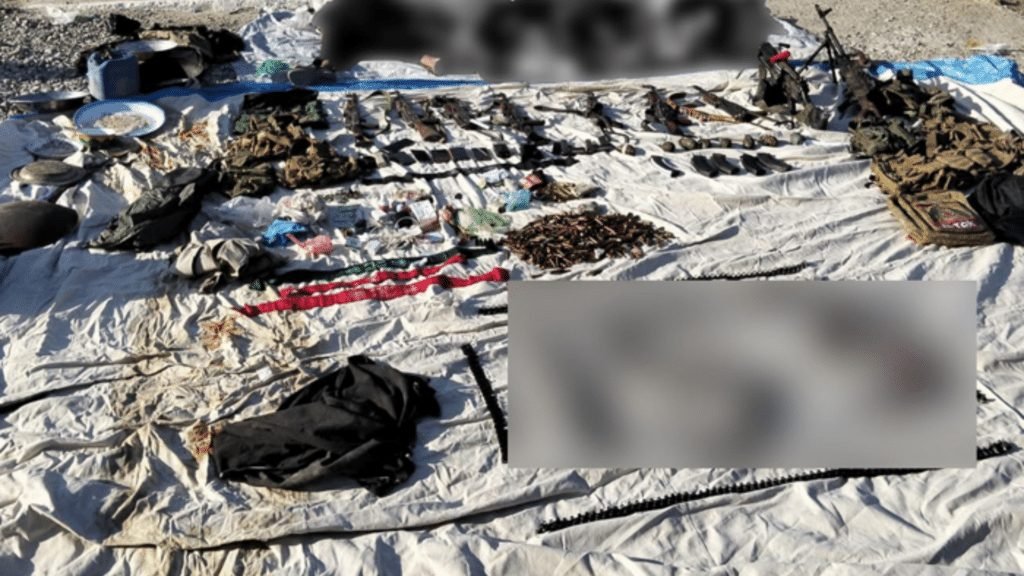
    According to the sources, the forces recovered two light machine guns, seven submachine guns, eight hand grenades and ammunition from the possession of the militants. A flag of the banned Tehreek-e-Taliban Pakistan, six mobile phones, gun belts and other equipment were also seized during the operation.

    Clearance operation under way

    Security sources said a clearance and search operation was continuing in the area to eliminate any other militants who might be present. They said the security forces would continue their operations until terrorism was completely eliminated from Khyber Pakhtunkhwa and lasting peace was established in the province.

    The operation is part of the continuing campaign of intelligence-based actions against Fitna al-Khawarij in Khyber Pakhtunkhwa under the Azm-e-Istehkam vision. Security sources said the decisive campaign against the militants would continue, and that the recovery of the weapons cache had removed a significant quantity of arms from the hands of the group.

  • Petrol, Diesel Prices Cut by Another Rs3 per Litre

    Petrol, Diesel Prices Cut by Another Rs3 per Litre

    The government has further reduced the prices of petrol and high-speed diesel (HSD) by Rs3 per litre each, bringing petrol down to Rs322 per litre and diesel to Rs355 per litre, with the revised rates taking effect from 19 November 2026. The Oil and Gas Regulatory Authority (OGRA) announced the new prices in a notification issued on Wednesday, 24NewsHD TV reported.

    Under the notification, the price of petrol has been cut from Rs325 to Rs322 per litre, while high-speed diesel has come down from Rs358 to Rs355 per litre. Aaj News, which also reported the OGRA notification, confirmed the same revised rates and said the new prices would apply from midnight on 19 November.

    Second cut in a single day

    The latest reduction follows a similar Rs3 per litre cut announced earlier on Wednesday, when petrol was brought down to Rs325 per litre while diesel was left unchanged at Rs358. That earlier revision, which took effect on 18 November, was reported by the Associated Press of Pakistan, Geo News, The News and 24NewsHD. With the second cut, motorists will now pay Rs322 per litre for petrol and Rs355 for diesel from Thursday.

    According to Aaj News, petrol has become cheaper by Rs52.51 per litre since 2 November, falling from Rs374.51 to Rs322, while the price of diesel has declined by Rs40.20 per litre over the same period, from Rs395.20 to Rs355. OGRA said the rates had been determined under the petroleum products pricing mechanism approved by the federal government.

    Relief for commuters and transporters

    Fuel prices directly affect the cost of transport and the prices of everyday goods, because transporters and traders pass on changes in fuel costs. A reduction in petrol and diesel prices is therefore likely to bring some relief to commuters and households, particularly those who rely on motorcycles and cars for daily travel, as well as to goods transporters and farmers who use diesel.

    OGRA revises petroleum prices under the regular fortnightly review, working out new rates on the basis of international oil prices, the exchange rate and applicable taxes and duties. The regulator said the latest notification followed that established mechanism, and the revised prices will remain in force until the next review.

  • Submarine Cable Fault May Disrupt Internet Services, PTA Warns

    Submarine Cable Fault May Disrupt Internet Services, PTA Warns

    The Pakistan Telecommunication Authority (PTA) has warned that internet users may experience intermittent connectivity problems and reduced service quality after a fault was detected in an international submarine cable system approximately 11 kilometres off Pakistan’s coast. The regulator issued the warning in a statement on 18 November 2026, Dawn reported.

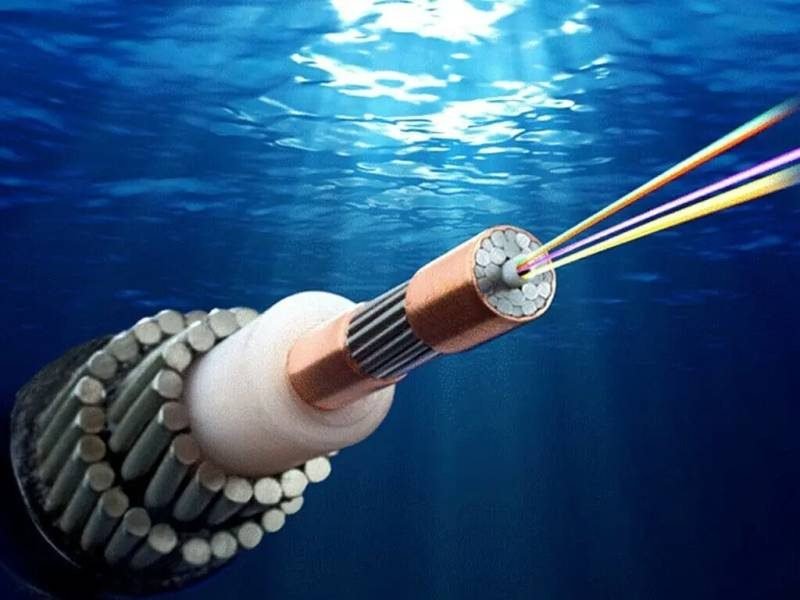
    The fault was identified in the SEA-ME-WE 5 (SMW5) submarine cable system, which provides international internet connectivity to Pakistan. The PTA said Transworld Associates (TWA) was coordinating with the SMW5 consortium to determine the cause of the fault and establish an estimated timeframe for restoring services.

    The regulator said internet traffic was being rerouted through alternative international submarine cable links to minimise disruptions and maintain service continuity. It said some users could still experience intermittent connectivity issues and deterioration in internet service quality while the fault remained unresolved.

    The PTA said it was maintaining close coordination with the relevant organisations and stakeholders and continuously monitoring the situation to ensure the earliest possible restoration of normal internet services across the country.

    What the fault means for users

    SMW5 is one of the international submarine cable systems that connect Pakistan to the global internet, so a fault in the system can slow browsing, video calls and downloads for some users even when alternative routes are available. The PTA’s statement did not give a restoration time, saying only that TWA and the consortium were working to identify the cause and the estimated time for repair.

    Internet users in Pakistan have faced similar disruptions in the past when faults developed in international cable systems, with services restored after repairs were completed. A similar fault in the same SMW5 system earlier this year was repaired within days, and the PTA confirmed on 3 July 2026 that the cable was fully operational and internet services had returned to normal. The PTA said it remained in close coordination with the concerned stakeholders and would continue to monitor the situation to facilitate the earliest possible restoration of normal internet services across the country.