Tag: Pakistan

  • The Mecca Pact Test: Is Pakistan Being Pulled Into Yemen’s War?

    The Mecca Pact Test: Is Pakistan Being Pulled Into Yemen’s War?

    An emergency huddle in Riyadh, a blunt Turkish red line, and Islamabad’s calculated silence — experts weigh in

    Rising clashes between Saudi Arabia and Yemen’s Houthi movement have dragged two key capitals — Islamabad and Ankara — into an uncomfortable debate: under the shadow of the Mecca defence pact, will Pakistan and Turkey become active parties to the conflict, or will their role stay confined to defence cooperation?

    The question gained urgency on October 5, when the Political and Defence Strategic Committee held an emergency session in Riyadh. Its joint statement stressed translating collective-defence obligations into action, expanding military capabilities, and the rapid deployment of forces within the framework of member states’ national laws.

    Turkey, however, drew a clear line the same week. Its foreign minister said the agreement was purely defensive in nature and that Ankara would not dispatch troops to attack another country.

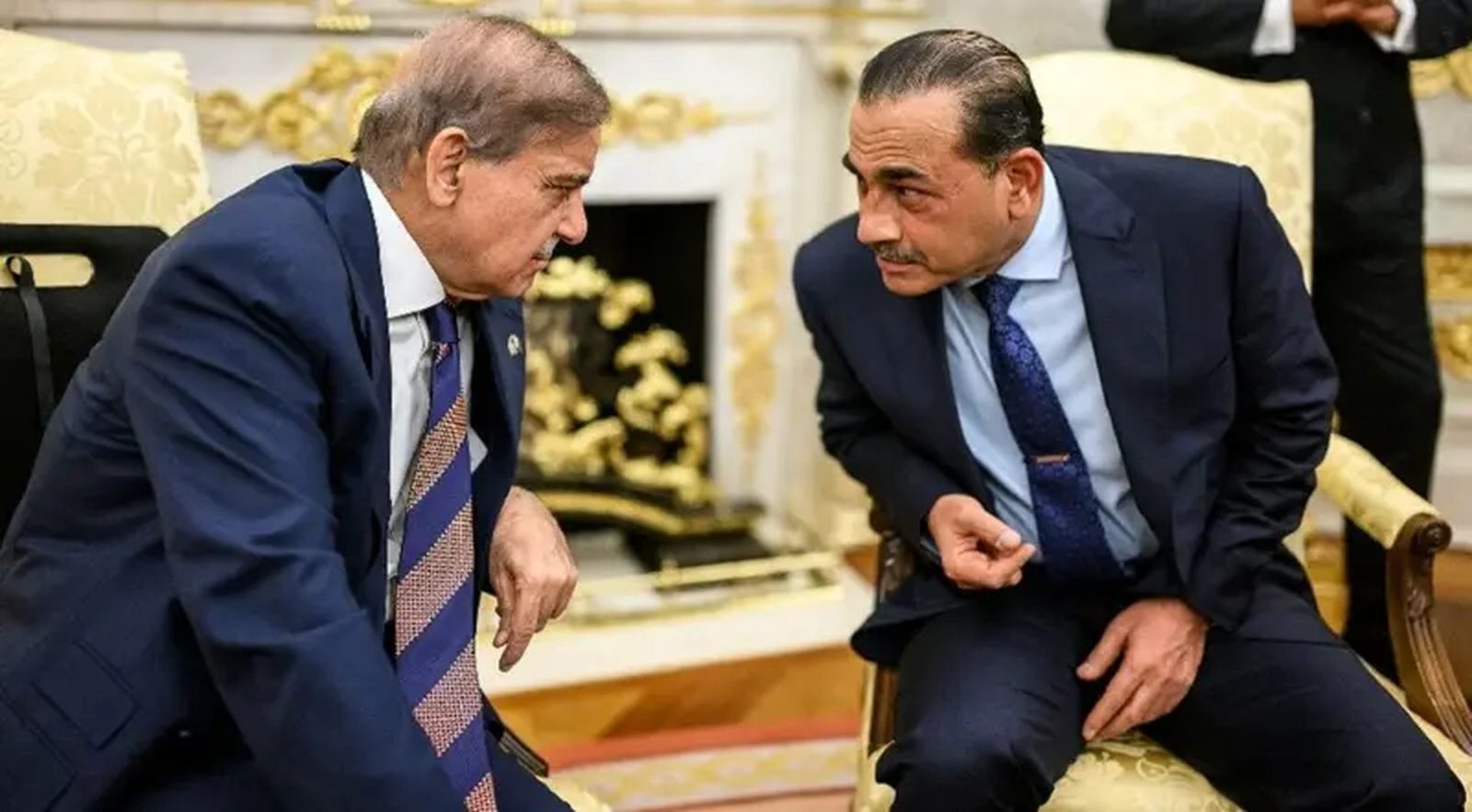
    Islamabad, for its part, has struck a cautious but committed tone. Pakistani officials describe the Mecca pact as now “operational.” Deputy Prime Minister and Foreign Minister Ishaq Dar confirmed he had discussed the matter with his Iranian counterpart Abbas Araghchi, adding that Tehran was distancing itself from the Houthis and Iraqi groups.

    What remains undisclosed is what Pakistan is actually doing for Saudi Arabia’s defence. Officials insist the pact’s operational details cannot be made public.

    In an interview with CNN, the Pakistan Army spokesperson did acknowledge that Pakistani contingents have been stationed in Saudi Arabia for decades. The Mecca alliance, he said, was no sudden development but a continuation of long-standing diplomatic, political and military ties between Pakistan, Saudi Arabia and Turkey.

    Meanwhile, The New York Times, citing a senior military source, claimed Pakistani fighter jets were being used in air operations against the Houthis. Pakistan’s information ministry dismissed the report as “false and fabricated,” urging the media to avoid speculative reporting and noting that any such deployment would be announced by the relevant authorities.

    On social media, the debate is heated. Many voices have cautioned the government against wading into Yemen’s war, drawing a distinction between protecting the holy sites and joining an offensive campaign.

    Against this backdrop, defence and diplomatic experts have offered their assessments. Umar Karim, a Middle East specialist associated with the University of Birmingham, argues that Saudi security is now inseparable from the Yemen conflict — so even without direct involvement, some degree of indirect Pakistani role is likely to persist. In his view, the government is keeping media coverage on a tight leash and will probably continue its policy of denials, though facts on the ground could take a different turn.

    It is worth recalling that in 2015, Pakistan’s parliament voted against joining the Yemen conflict. Former ambassador Maleeha Lodhi maintains that any decision must serve Pakistan’s national interest — not that of another country, however close — and, as in 2015, should follow parliamentary debate and approval.

    Karim, though, believes circumstances have changed since 2015. Given the current state of civil-military relations, he says, it is not hard to see where real authority lies; neither the bilateral agreement with Riyadh nor the trilateral Mecca pact was debated in parliament beforehand, making a meaningful parliamentary role unlikely this time either.

    Barbara Slavin of the Stimson Center, a US think tank, says Saudi Arabia feels cornered. According to her, the Trump administration has made it clear that beyond intelligence and limited technical support, Riyadh will have to rely on its own resources — a reality that raises the stakes for cooperation from Pakistan and Turkey.

    Lodhi warns that Pakistan is already stretched: border tensions with India and Afghanistan, plus internal militancy. Opening another front, she says, would not be wise.

    Former diplomat Mansoor Khan cautions that foreign military entanglements can haunt countries for decades, pointing to Afghanistan and Iraq. While the Mecca pact obliges Pakistan and Turkey to assist Saudi Arabia if it is attacked, he argues every effort must be made to avoid direct intervention in a third country. Diplomacy and negotiations, he says, are the better strategy. Pakistan could instead help Riyadh with strategic planning and stronger air and missile defences.

    Khan further warns that Pakistan — already battling the TTP, BLA, ISIS and Al-Qaeda along its western border, fuelling instability in Balochistan and Khyber Pakhtunkhwa — has every reason to avoid adding a Houthi dimension to its troubles.

    Karim offers a different lens: rather than a crude transaction, Pakistan is honouring sovereign commitments it freely undertook. The more visible its contribution, he notes, the clearer it will become what Islamabad expects from Riyadh regarding its own defence and security.

    The Iran angle matters too. Pakistan’s foreign minister says Iran’s president and foreign minister have disassociated themselves from the Houthis — yet experts note that a Pakistani role in Yemen could strain ties with Tehran and dent Islamabad’s credibility as a mediator between Iran and Washington.


  • Pakistan’s Tech Sector Secures 11 Honours at ASOCIO Digital and AI Awards in Jakarta

    Pakistan’s Tech Sector Secures 11 Honours at ASOCIO Digital and AI Awards in Jakarta

    Pakistan’s technology sector has won recognition in 11 categories at the Asian-Oceanian Computing Industry Organisation (ASOCIO) Digital and AI Awards 2026 in Jakarta, marking a significant milestone for the country’s growing digital and artificial intelligence industry.

    The awards were presented on October 6 at the ASOCIO Digital and AI Summit 2026 award night, held at the Swissôtel Jakarta PIK Avenue in Indonesia. According to the Pakistan Software Houses Association for IT and ITES (P@SHA), the event brought together technology organisations from 26 economies across the Asia-Oceania region.

    A P@SHA delegation led by chairman Dr Shoab A. Khan represented Pakistan at the ceremony. The delegation also included Muhammad Zohaib Khan, a P@SHA central executive committee member and ASOCIO vice chairman, and Zain Tariq, manager of special initiatives at P@SHA. The chairman welcomed the achievement, describing it as a major milestone for Pakistan’s IT sector.

    Winners across digital and AI categories

    Pakistani organisations were recognised for work ranging from digital government and talent development to artificial intelligence applications in cybersecurity, education, healthcare, agriculture, financial services and manufacturing.

    The Khyber Pakhtunkhwa Information Technology Board (KPITB) received the Digital Government Award, while REMIRE won the Talent Development Award. Symmetry Group Limited secured the Global Business Service Award.

    In the artificial intelligence categories, SECUREBEANS received the AI in Cybersecurity Award, while PlanetBeyond Pakistan won the AI for Public Good Award. The Centre for Advanced Research in Engineering (CARE) was recognised for AI in Education, and DxVision AI won the AI in Healthcare Award.

    Sybrid Private Limited received the AI in Smart Agriculture Award, and Unikrew Solutions (Private) Limited won the AI in Financial Services Award. Geekinn (Private) Limited was recognised for AI in Workforce and Future Skills, while SMART IS (Private) Limited received the AI in Manufacturing and Supply Chain Award.

    During the ceremony, the awards for Symmetry Group, SECUREBEANS and Geekinn were received on behalf of the organisations by Dr Shoab Khan, Muhammad Zohaib Khan and Zain Tariq respectively.

    A regional endorsement of Pakistan’s tech ecosystem

    According to P@SHA, the recognition demonstrates the breadth of innovation and digital transformation taking place within Pakistan’s technology ecosystem. The association highlighted the country’s growing capabilities in applied artificial intelligence across public services, education, healthcare, agriculture, financial services and workforce development.

    ASOCIO is a federation of ICT industry associations representing economies across Asia and Oceania. Its annual awards recognise digital innovation, technological advancement and the adoption of information technology across the region. The strong showing in Jakarta comes at a time when Pakistan is working to expand its IT exports and deepen its presence in global technology markets.

  • Pakistan showcases AI products at Abu Dhabi’s AI Everything Global 2026

    Pakistan showcases AI products at Abu Dhabi’s AI Everything Global 2026

    ABU DHABI: Pakistan is showcasing its artificial intelligence (AI), information technology and advanced technology capabilities at AI Everything Global 2026, a two-day exhibition being held in Abu Dhabi on October 6 and 7, featuring products and services developed in Pakistan.

    The Pakistan Pavilion, established under the Pakistan Software Export Board (PSEB), was inaugurated by Pakistan’s Ambassador to the UAE, Shafqat Ali Khan. Five Pakistani technology companies are presenting AI, data intelligence, monitoring and sales solutions, alongside other technology products and services, at the pavilion.

    AI Everything Global 2026 brings together more than 500 exhibitors and 150 investors from 70 countries, with companies, start-ups, investors and technology experts showcasing AI and its applications across different industries.

    According to Pakistani officials, Pakistan’s IT exports to the United Arab Emirates rose 42 per cent to $536 million in the 2025-26 financial year from $376 million in 2024-25. Pakistan is seeking to further expand its technology exports and promote “Made in Pakistan” and “Developed in Pakistan” products in international markets.

    The national pavilion at a major AI event reflects a broader official push to position Pakistan as a producer of technology rather than merely a destination for outsourced work. With the Gulf region emerging as one of the world’s fastest-growing markets for AI investment and deployment, visibility at such exhibitions offers Pakistani firms a chance to reach buyers and partners actively scouting for AI solutions.

    The UAE has become a particularly important market for Pakistani technology exporters, with the strong year-on-year growth in IT exports to the country underscoring the commercial stakes of a presence at Abu Dhabi’s showcase.

    For Pakistan’s participating software houses, the pavilion offers more than display space. In a market where buyers increasingly expect finished, deployable products rather than raw outsourcing capacity, the chance to demonstrate AI and data-intelligence solutions before a global audience is a commercial opening that smaller firms rarely get on their own. A strong showing in Abu Dhabi can translate into partnerships and contracts that would take years to build through remote outreach alone.

    The deeper test, however, will be conversion — turning visibility into export revenue. Pakistan’s IT exports have been on an upward trajectory in recent years, and officials are clearly betting that a “Developed in Pakistan” identity can command a premium over the country’s traditional image as a back-office destination. Whether buyers agree will be decided by the quality of the products on show, and by how quickly Pakistani firms can move from demonstration to delivery.

  • Pakistan unveils first national housing policy in nearly 25 years

    Pakistan unveils first national housing policy in nearly 25 years

    ISLAMABAD: Pakistan on Monday unveiled the National Housing Policy 2025, the country’s first national housing policy update in nearly 25 years, as officials acknowledged a staggering shortage of approximately 13 million housing units. The launch ceremony was held at the National University of Science and Technology (Nust), where Federal Minister for Housing and Works Mian Riaz Hussain Pirzada formally unveiled the policy draft.

    The policy was prepared by the Ministry of Housing and Works in collaboration with UN-Habitat Pakistan, and its launch coincided with World Habitat Day 2026, observed globally on October 5 under the theme ‘Adequate Housing for All’. According to the housing ministry, the policy reaffirms the national commitment to adequate, affordable and sustainable housing for all, providing an updated framework to respond to Pakistan’s evolving housing and urban development needs.

    Addressing the ceremony, Housing Minister Pirzada stressed the importance of translating the policy into tangible results. He said its objectives included increasing the supply of affordable housing, enhancing land tenure security, expanding access to housing finance and upgrading informal settlements.

    Federal Minister for Climate Change and Environmental Coordination Dr Musadik Masood Malik said the country needed around 500,000 houses annually but only about 300,000 were being built, adding that around 10 to 12.5 million people were currently living without adequate shelter. He said the policy had been framed to address the shortage of housing finance, noting that banks provided only a small proportion of the financing required for house purchases in Pakistan.

    Under the ‘Apna Ghar’ financing scheme, he said, an applicant would contribute 10 per cent of the cost while banks would provide 90 per cent financing at a fixed rate of 5 per cent for 10 years. According to the minister, a loan of Rs2.5 million would carry a monthly instalment of around Rs16,500, while a Rs5 million loan would entail an instalment of around Rs30,000 to Rs31,000. ‘The idea is that if you are paying Rs16,000 to Rs30,000 in rent throughout your life, you should now be able to use that amount to own your own house,’ he said.

    The minister said the policy also aimed to protect low-income settlements, particularly those where families had lived for generations, from demolition. He described the government’s new housing finance policy as comparatively more supportive than similar initiatives in neighbouring countries, with up to 90 per cent financing support significantly improving access to home ownership for low- and middle-income groups.

    Pirzada also highlighted the Wazir-i-Azam Apna Ghar Programme, the prime minister’s flagship initiative, under which Rs65 billion had so far been disbursed to first-time home buyers across the country. He said the prime minister was personally monitoring its implementation as a key part of the policy’s action plan.

    Speaking on ‘Adequate Housing for All — From Global Commitment to National Action’, UN-Habitat Pakistan’s Country Programme Manager Waqar Syed said adequate housing was more than a roof over one’s head. He said it was a foundation for dignity, opportunity and resilient communities, adding that UN-Habitat remained committed to supporting the government in strengthening institutions and advancing housing solutions that leave no one behind.

  • UN Chief Guterres Arrives in Pakistan for Three-Day Official Visit

    UN Chief Guterres Arrives in Pakistan for Three-Day Official Visit

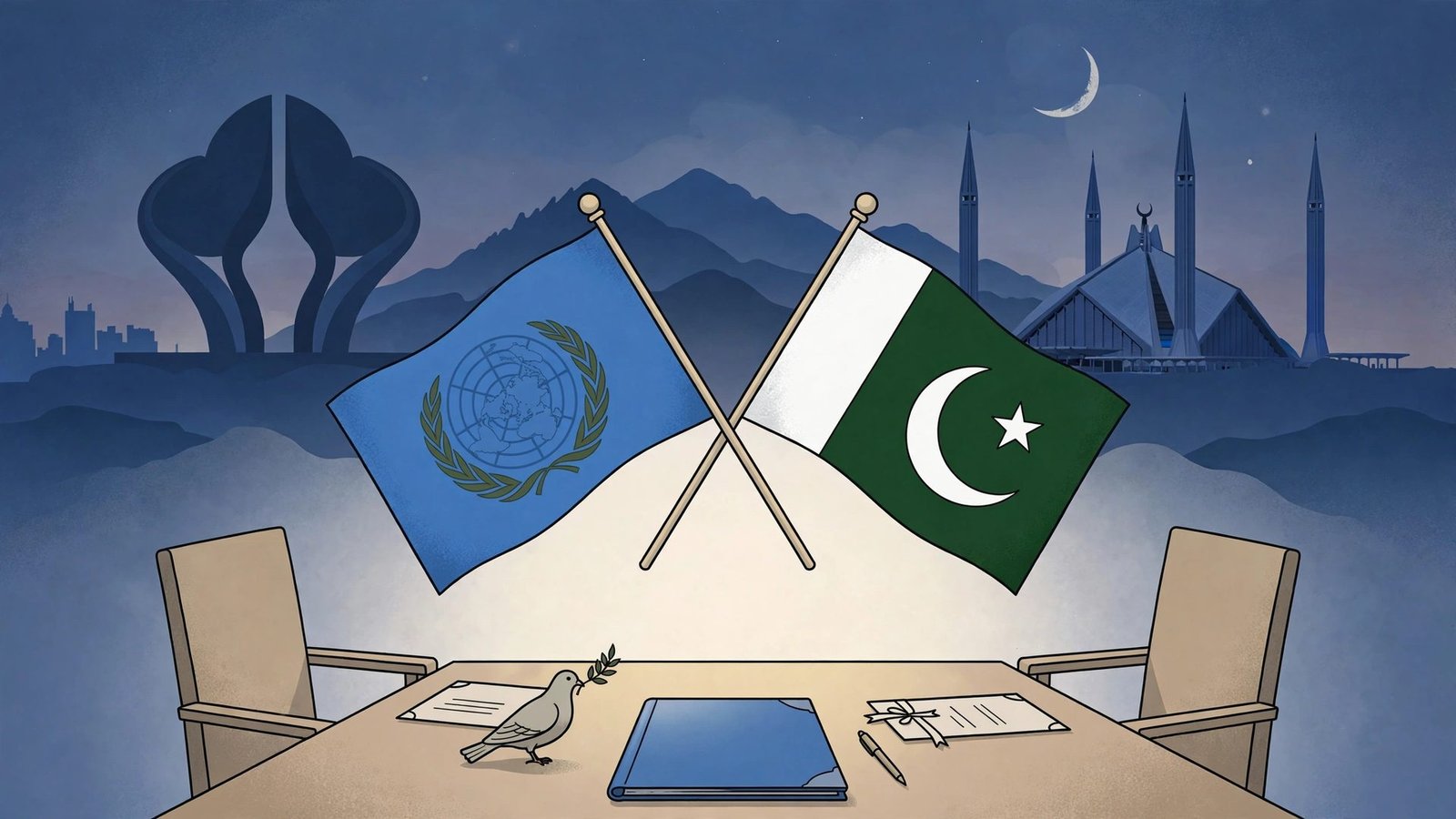
    United Nations Secretary-General Antonio Guterres arrived in Islamabad on Tuesday for a three-day official visit to Pakistan, during which he is scheduled to meet the country’s top leadership and discuss regional and international developments, the Foreign Office said.

    Guterres is undertaking the visit from October 6 to 8 at the invitation of Deputy Prime Minister and Foreign Minister Ishaq Dar. The Foreign Office had announced the visit a day earlier, saying the secretary-general would hold wide-ranging discussions on peace, security, multilateralism and disaster preparedness.

    Upon his arrival, the UN chief was received by Acting Foreign Secretary Ambassador Nabeel Munir, according to the Foreign Office.

    During the visit, the secretary-general is expected to hold meetings with President Asif Ali Zardari, Prime Minister Shehbaz Sharif, Deputy Prime Minister Dar, and Chief of Defence Forces and Chief of Army Staff Field Marshal Asim Munir.

    Engagements beyond Islamabad

    In addition to the political meetings, Guterres will visit the headquarters of the United Nations Military Observer Group in India and Pakistan (UNMOGIP) and attend a briefing at the National Disaster Management Authority (NDMA) Pakistan, the Foreign Office said.

    According to the statement, the visit will also feature other engagements at which Pakistan’s efforts towards strengthening multilateralism and international peace and security, as well as its progress in disaster preparedness and early warning systems, will be highlighted.

    Multilateralism at the core

    The Foreign Office said the visit offers an important opportunity to reiterate Pakistan’s longstanding cooperation with the United Nations and to exchange views on regional and international developments.

    The statement added that the forthcoming visit reflects Pakistan’s unwavering support for multilateralism with the United Nations at its core, and its commitment to the purposes and principles of the UN Charter.

    The visit is also expected to provide an opportunity to acknowledge the secretary-general’s leadership and his contributions to international peace and development, according to the Foreign Office.

    Officials said the agenda would give both sides an opportunity to review Pakistan’s engagement with the United Nations across the peace and security, development and humanitarian tracks.

    During the visit, the secretary-general is expected to hold meetings with President Asif Ali Zardari, Prime Minister Shehbaz Sharif, Deputy Prime Minister Dar, and Chief of Defence Forces and Chief of Army Staff Field Marshal Asim Munir.

    Engagements beyond Islamabad

    In addition to the political meetings, Guterres will visit the headquarters of the United Nations Military Observer Group in India and Pakistan (UNMOGIP) and attend a briefing at the National Disaster Management Authority (NDMA) Pakistan, the Foreign Office said.

    According to the statement, the visit will also feature other engagements at which Pakistan’s efforts towards strengthening multilateralism and international peace and security, as well as its progress in disaster preparedness and early warning systems, will be highlighted.

    Multilateralism at the core

    The Foreign Office said the visit offers an important opportunity to reiterate Pakistan’s longstanding cooperation with the United Nations and to exchange views on regional and international developments.

    The statement added that the forthcoming visit reflects Pakistan’s unwavering support for multilateralism with the United Nations at its core, and its commitment to the purposes and principles of the UN Charter.

    The visit is also expected to provide an opportunity to acknowledge the secretary-general’s leadership and his contributions to international peace and development, according to the Foreign Office.

  • Pakistan Reports Sixth Polio Case of 2026 as Virus Re-emerges in Khyber District

    Pakistan Reports Sixth Polio Case of 2026 as Virus Re-emerges in Khyber District

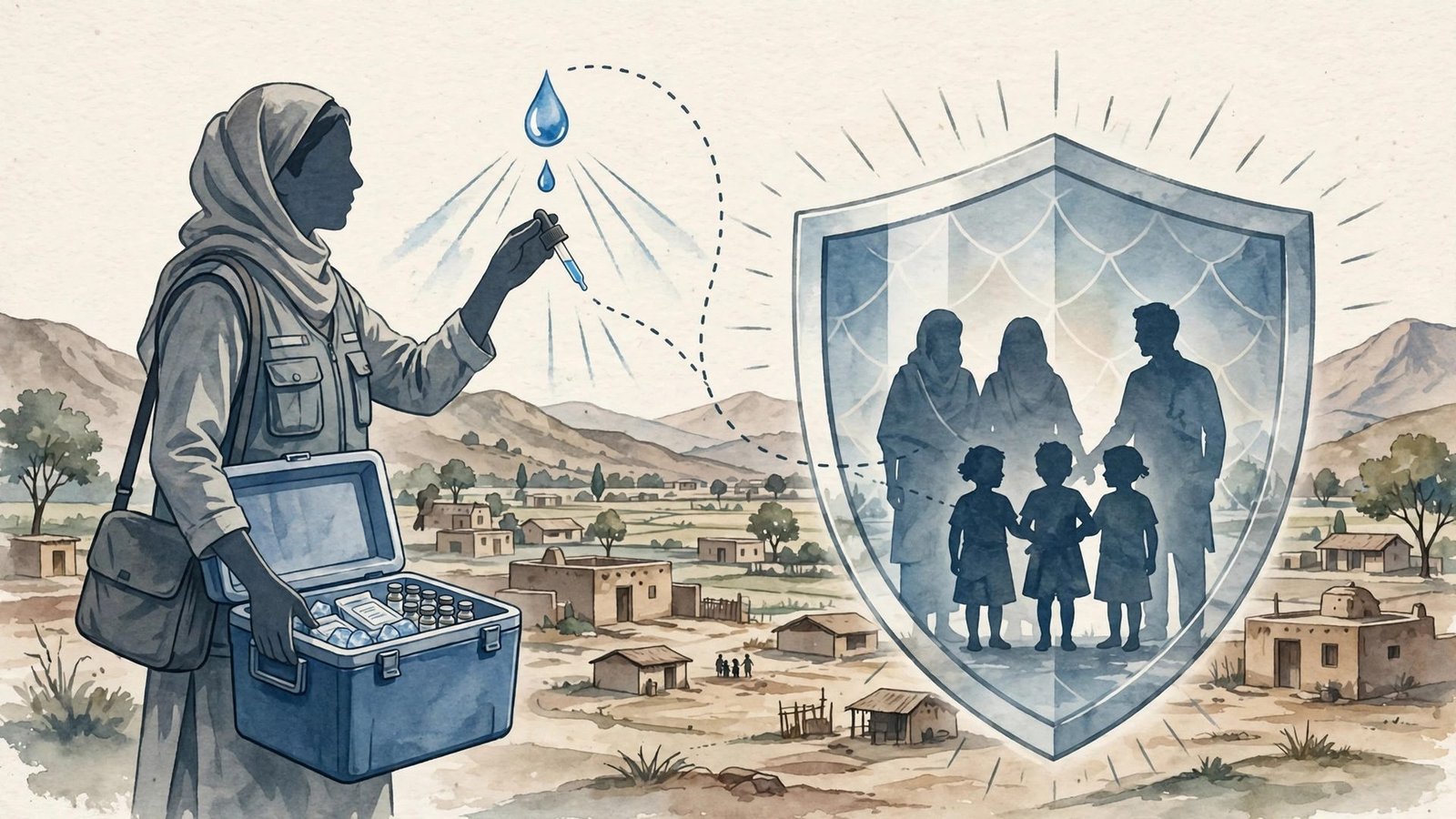
    Pakistan has reported its sixth polio case of 2026, with health authorities confirming that a seven-year-old boy in Khyber district of Khyber Pakhtunkhwa has tested positive for the virus, the National Emergency Operations Centre (NEOC) for Polio Eradication said on Monday.

    The affected child is from Union Council Ghundi-A in Jamrud tehsil, according to a NEOC statement. District authorities described the case as the first polio infection reported in Khyber district since 2019, a concerning development for a region that had kept the virus at bay for seven years.

    The Pakistan Polio Eradication Initiative has launched a comprehensive investigation into the case. Officials said additional response measures are being planned to reach and protect children, including a vaccination campaign administering both oral and injectable polio vaccines for older children, alongside efforts to strengthen routine immunisation.

    Khyber Pakhtunkhwa remains the hardest hit

    Five of Pakistan’s six polio cases in 2026 have been reported from Khyber Pakhtunkhwa, with four of them emerging from the Bannu division. The latest case surfaced less than a week after this year’s fifth case was detected on September 29, pointing to persistent transmission in parts of the northwest.

    The developments come just as a weeklong sub-national polio campaign concluded on September 27, during which more than 28.2 million children were vaccinated across the country. Despite the massive turnout, officials acknowledge that severe security challenges continue to threaten eradication efforts in the northwest, and Bannu district remains a critical vulnerability where vaccinators struggle to reach every child.

    Health experts stress that polio is a highly contagious and incurable disease that can cause lifelong paralysis and, in some cases, death — but it can be prevented through safe and effective vaccines. Pakistan and Afghanistan remain the only two countries in the world where polio is still endemic.

    Provincial health authorities said a special vaccination drive would be launched in high-risk areas of Khyber following confirmation of the case, with teams focusing on children who may have missed doses during earlier campaigns. Routine immunisation strengthening, officials said, will remain central to the response.

    Public health specialists note that each confirmed case is a reminder that the virus continues to circulate, and that consistent, full coverage of every child with multiple doses is the only way to stop transmission. The new case in a district untouched since 2019 underscores how quickly the virus can re-emerge where immunity gaps exist.

    Parents are urged to ensure their children receive polio drops during every campaign, as repeated doses build the immunity needed to protect communities. Authorities have appealed for public cooperation with vaccination teams, particularly in areas facing security and access challenges.

  • Pakistan’s Cotton Arrival Growth Slows to 5%, Raising Price Concerns

    Pakistan’s Cotton Arrival Growth Slows to 5%, Raising Price Concerns

    Pakistan’s cotton arrivals have slowed sharply, with year-on-year growth falling to just 5 percent by the end of September — down from 27 percent about a month earlier — raising concerns over domestic crop output.

    The deceleration suggests the early momentum of the cotton season has faded, prompting worries among ginners and textile manufacturers about the availability of domestic lint in the months ahead. A weaker domestic crop typically translates into higher cotton prices at home and greater reliance on imported cotton to keep mills running.

    Cotton remains the backbone of Pakistan’s textile industry, which is the country’s largest export earner and a major employer. Any shortfall in domestic production directly affects the cost structure of spinning mills and, downstream, the competitiveness of textile exports in international markets.

    Analysts say the slowdown warrants close monitoring of arrivals data through October, traditionally a critical month for the crop. Weather patterns, pest pressure and water availability in the cotton belt are among the factors that will determine whether the current weakness proves temporary or extends through the season.

    If domestic output disappoints, import demand could rise at a time when global cotton markets remain sensitive to supply shifts — a combination that would squeeze mill margins and potentially feed into broader inflationary pressures.

    The Pakistan Cotton Ginners Association and other industry bodies publish fortnightly arrival figures, and traders will be watching the next releases closely for signs of stabilisation. A sustained slowdown could force spinning mills to step up import bookings, adding to the country’s import bill at a challenging time.

    Globally, cotton prices have been influenced this year by weather disruptions in major producing countries and shifting demand from textile manufacturers. For Pakistan, which competes with regional rivals in garment exports, the cost and availability of raw cotton is a critical determinant of export performance.

    Exporters warn that any sustained weakness in arrivals could erode Pakistan’s edge in key garment markets, where buyers are quick to shift orders to competing origins. The coming fortnightly data will show whether the September slowdown was a blip or the start of a difficult season.

    Industry stakeholders are expected to press for a clearer official assessment of the crop as the season progresses, so that procurement and import planning can be adjusted in time.

  • Pakistan launches National Mental Health Policy 2026-2035

    Pakistan launches National Mental Health Policy 2026-2035

    Islamabad: The government has launched the National Mental Health Policy 2026-2035, aimed at expanding access to mental health services for more than 32.4 million people estimated to need care across the country.

    Federal Health Minister Syed Mustafa Kamal launched the policy during the Pakistan Global Mental Health Summit in Islamabad. The two-day summit brought together around 800 participants, including health professionals, policymakers, academics and development partners.

    According to World Health Organization estimates, about 32.4 million people in Pakistan require mental health care, while only around five percent currently have access to services. The policy was developed with the Ministry of National Health Services, the WHO, UNICEF and the Global Institute of Human Development.

    Officials said the plan focuses on evidence-based measures, stronger primary-care and community services, and reducing the shortage of trained mental health professionals.

  • Pakistan, IMF move toward staff-level agreement as review talks advance

    Pakistan, IMF move toward staff-level agreement as review talks advance

    Islamabad: Pakistan’s economic review talks with the International Monetary Fund have moved toward negotiations on a staff-level agreement after the Fund shared the first draft of the Memorandum of Financial and Economic Policies.

    The IMF review mission is expected to remain in Islamabad until around the middle of next week. An agreement could be reached if both sides agree on the memorandum, while unresolved issues could continue to be discussed virtually.

    The power sector remained a key issue. The Fund flagged the breach of the circular debt target, with the stock reaching Rs1.675 trillion by the end of June 2026. The government has budgeted Rs830 billion in power-sector subsidies for FY27, while the IMF has asked for cross-subsidies on electricity use up to 200 units to be replaced with targeted support through the Benazir Income Support Programme from January 2027.

    The Federal Board of Revenue’s annual tax target remains unchanged at Rs15.264 trillion after the authority exceeded its first-quarter target by Rs27 billion. The IMF has also pushed for a higher current account deficit projection of up to $4 billion for FY27, compared with the Finance Ministry’s estimate of about $2.7 billion.