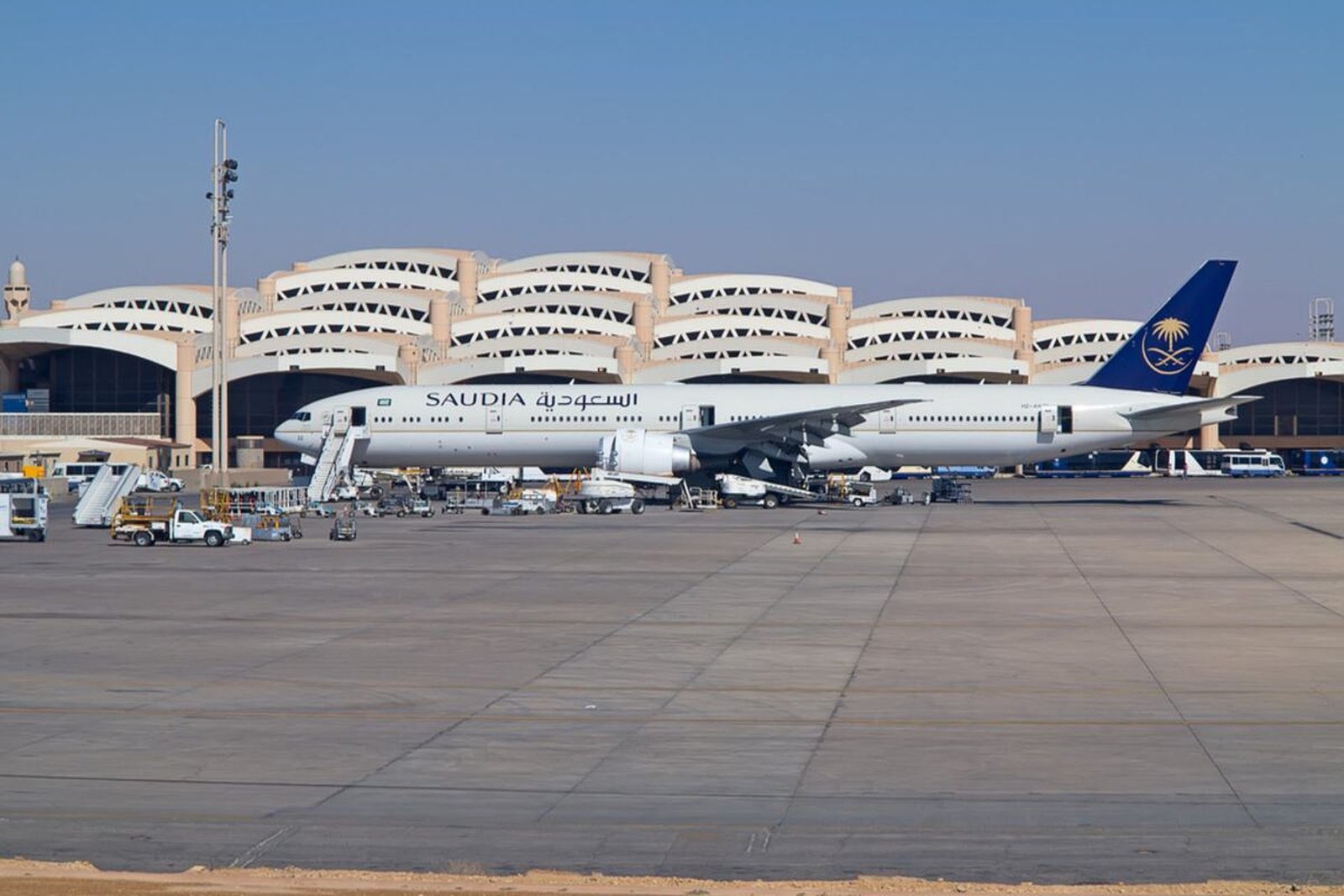
At least 12 people were killed and 309 wounded on Saturday in a Houthi attack on King Khalid International Airport in Riyadh, Saudi Arabia’s civil aviation authority said, marking the third strike on the airport in a week and what Reuters described as the deadliest attack inside the kingdom in more than a decade.
The dead included four Saudis, two people from Bangladesh and one person each from the United States, Jordan, Palestine, Syria, Sudan and Egypt, the authority said. Hospitals were flooded with the wounded, some of them in critical condition, and property damage was still being assessed.
Reuters reported that the attack came without warning, with no alert issued by Saudi Arabia’s threat-warning system. Flights to and from Riyadh were diverted or cancelled, and operations at the airport serving a city of roughly 8 million were temporarily suspended. Two earlier attacks this week killed four people and heavily damaged a passenger plane parked on the tarmac, according to Saudi authorities.
The head of the Houthi media office said on X that the group had “shut down Riyadh international airport”, and the Houthis warned airlines to avoid Saudi airspace. The Saudi-led coalition vowed to respond to what it called a “terrorist act”; spokesman Maj Gen Turki Al-Maliki said the strike on a passenger terminal was a war crime under international humanitarian law. The coalition also said it destroyed a drone over the Eastern Region, intercepted a Houthi ballistic missile at Al-Kharj, and that a “projectile” fell near Dammam’s airport.
Global condemnation
UN Secretary-General Antonio Guterres said he was “deeply shocked” and strongly condemned the “lethal attack by the Houthis”, adding that attacks on civilians and civilian infrastructure violated international law and “must cease immediately”. UN Yemen envoy Hans Grundberg called the strikes a “dangerous escalation” and “a grave threat to regional security”. Qatar “strongly condemned” the attack, and Gulf Cooperation Council secretary-general Jasem al-Budaiwi denounced it as “treacherous terrorist attacks”.
Pakistan stands with Riyadh
Prime Minister Shehbaz Sharif called the attack “heinous”, reaffirming Pakistan’s commitment to Saudi Arabia’s sovereignty, territorial integrity and security, and said attacks on civilians and critical infrastructure were “completely unacceptable”. At the UN Security Council, Pakistan’s envoy Ambassador Asim Iftikhar Ahmad said Pakistan would stand “shoulder to shoulder” with the kingdom, invoked the Makkah Joint Defence Agreement, warned of an intensifying Houthi offensive along Yemen’s western coast and around the Bab al-Mandeb strait, and urged the Houthis to halt attacks on commercial shipping and release detained UN and humanitarian personnel.
Washington weighs a response
US President Donald Trump told reporters the attack was “not acceptable” and said the United States would “take a look” at joining Saudi Arabia in striking the Houthis, adding that he planned to call Crown Prince Mohammed bin Salman. Secretary of State Marco Rubio said Washington strongly condemned the attacks, and the US embassy urged Americans to avoid the airport area. The strikes come amid a wider confrontation: Reuters reported that a 2022 ceasefire broke down over the summer as Houthi forces advanced toward the Bab el-Mandeb strait, while Riyadh now conducts an air campaign backing a Yemeni government ground offensive.
Leave a Reply