Category: World

World news in English — global headlines and analysis. دنیا بھر کی خبریں۔

  • Biden: ‘Absurd’ to Say I Hid My Stage 4 Cancer

    Biden: ‘Absurd’ to Say I Hid My Stage 4 Cancer

    Former United States President Joe Biden has broken his silence on the stage 4 cancer diagnosis he received last year, rejecting suggestions that he concealed the illness while he was still in office.

    In excerpts from his memoir, “Promise Me, America”, published by MS NOW on Tuesday, 10 November 2026, Biden wrote that the idea he would have hidden a cancer “ravaging” his body was “absurd”. “There isn’t anyone in this world with stage 4 cancer who doesn’t wish it had been caught sooner,” he wrote, according to the excerpts.

    Biden was diagnosed in May 2025 with an aggressive form of prostate cancer that had spread to his bones. Doctors gave the disease a Gleason score of 9, a measure that indicates a fast-growing and aggressive cancer. The diagnosis came months after he had left the White House, and it quickly became the subject of intense public and political debate.

    In the memoir, which is due to be published on 17 November, Biden argued that the timing of the diagnosis should not have come as a surprise. He wrote that it is “standard medical protocol” to stop testing men for prostate cancer after the age of 70, a point he presented as an explanation for why the disease was not detected earlier.

    Biden completed his treatment in October 2025. He said on Sunday that the illness has not stopped him, but that it sometimes slows him down, and that as a result he will take part in fewer conversations and events to promote the book than he had originally hoped. “I’m hopeful the words on the page speak for themselves,” he said.

    His wife, Jill Biden, has said he will live with stage 4 cancer for the rest of his life, a reality the former president has acknowledged as he prepares to discuss the book in public.

    The memoir looks back over Biden’s four years in the White House, including the Covid-19 pandemic, the aftermath of the 6 January 2021 attack on the US Capitol, his domestic legislation and his foreign policy, as well as the deliberations that led him to end his re-election campaign in 2024. The cancer passages are among its most personal sections, and they are likely to be among the most closely read when the book appears next week.
  • Jim Jordan Wins House GOP Leadership Race 106-73

    Jim Jordan Wins House GOP Leadership Race 106-73

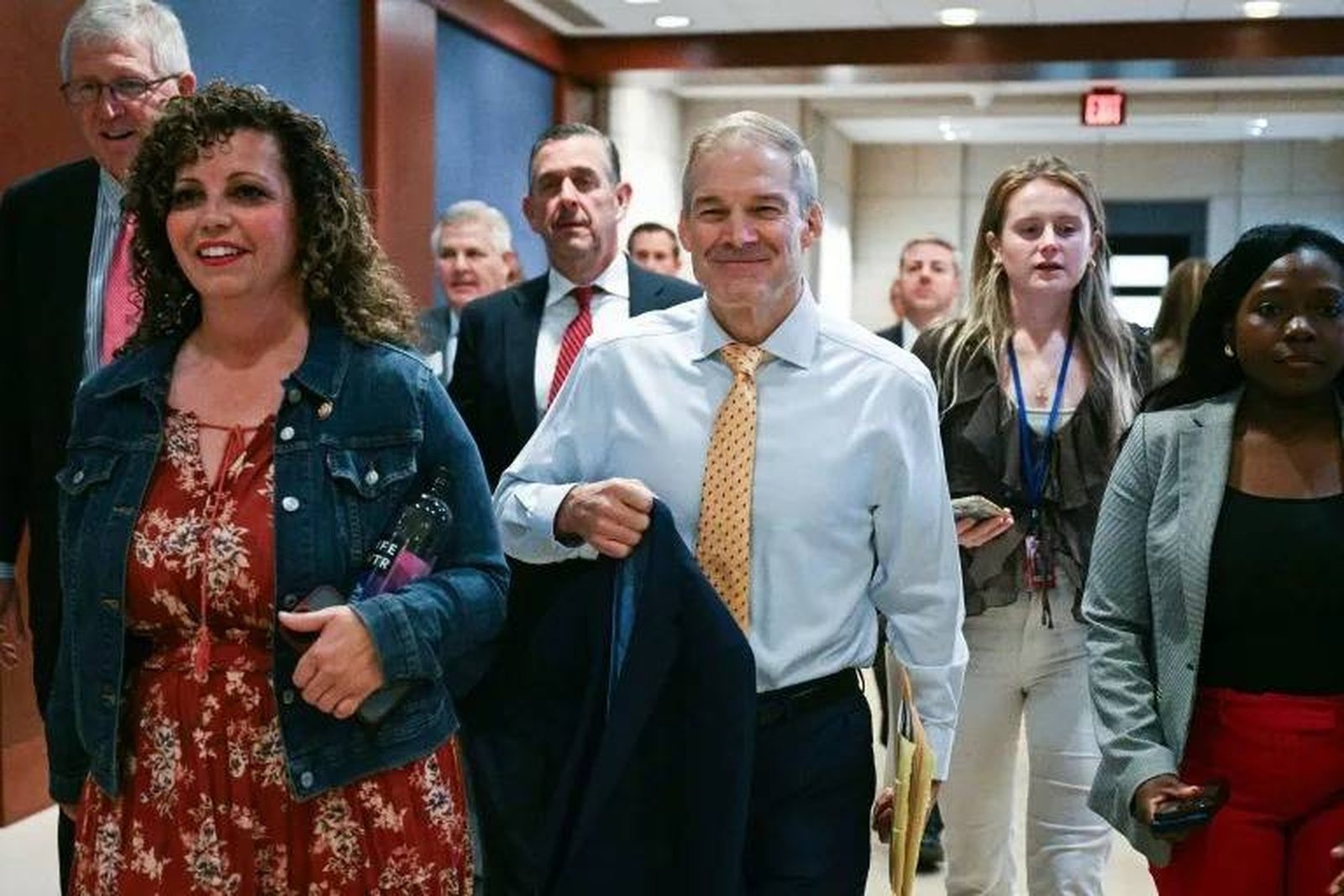
    House Republicans have elected Jim Jordan of Ohio to lead their party in the next Congress, choosing one of President Donald Trump’s closest allies to guide a diminished conference into the minority. Mr Jordan defeated Steve Scalise of Louisiana, the outgoing House majority leader, by 106 votes to 73 in a closed-door secret ballot on Tuesday.

    The contest was called after Republicans lost control of both chambers of Congress in the midterm elections on 3 November, a defeat that cost the party more than 40 House seats, according to US media reports. Speaker Mike Johnson, also of Louisiana, decided not to seek the minority leader’s post after the losses, leaving the race to Mr Jordan and Mr Scalise.

    Mr Jordan, 62, is the chairman of the House Judiciary Committee and a co-founder of the ultraconservative House Freedom Caucus, which he led as its first chairman. He has served in the House since 2007 and built his reputation as one of the most combative figures in the Republican Party, frequently clashing with Democratic administrations and party leaders alike.

    Mr Scalise, 61, has held senior Republican leadership posts since 2014, serving first as party whip and then as majority leader since 2023. He was widely praised by colleagues, including by Mr Trump, after recovering from serious injuries sustained in a shooting at a congressional baseball practice in 2017. The two men had faced each other before, when both sought the speakership after Kevin McCarthy was removed from the post a little more than three years ago.

    Mr Trump said he was staying out of the leadership race. Mr Jordan’s victory is nevertheless seen as a sign that the party’s base wants a confrontational approach as Democrats prepare to take control of the House in January and to investigate the Trump administration during the president’s final two years in office.

    Republicans also elected Tom Emmer of Minnesota as whip, the number two position in the party’s House leadership. Democrats are due to hold their own leadership elections next week. Hakeem Jeffries of New York, the current Democratic leader, is expected to become the next Speaker, with Democrats holding 258 confirmed seats.

    Mr Jordan will inherit a historically small Republican conference that is only beginning to come to terms with its loss of power. His central task will be to hold the party together in opposition and to lead the effort to win back the House majority in the 2028 elections, a steep climb given the scale of the Democratic victories in the midterms.

  • Israeli Fire Kills 7 in Gaza, Including Father and Son

    Israeli Fire Kills 7 in Gaza, Including Father and Son

    Israeli forces killed at least seven Palestinians in the Gaza Strip on Tuesday, local health officials said, including a father and his 13-year-old son in an airstrike on a displacement shelter in Gaza City.

    Medics said Fadi Rajab and his son Abubakr were killed when an airstrike hit the roof of a building sheltering displaced people in the Zeitoun neighbourhood of Gaza City. His wife was moderately injured in the same strike. A third Palestinian was killed in an Israeli airstrike near a school in Gaza City’s Daraj neighbourhood, health officials added.

    In Khan Younis, in southern Gaza, Israeli gunfire killed a man, medics said. Later on Tuesday, an Israeli airstrike hit a metal foundry in the Sabra neighbourhood of Gaza City, killing three people, medics said, taking the day’s death toll to at least seven.

    The Israeli military said it had struck militants in both areas of Gaza City, without giving further details. It did not immediately comment on the incidents in Khan Younis or in the Sabra neighbourhood.

    The deaths came despite a US-brokered ceasefire between Israel and Hamas that took effect in October. Violence has continued in the territory since the truce began, with both sides accusing each other of violations. According to Gaza’s health officials, at least 1,600 Palestinians have been killed in Israeli attacks in Gaza since the ceasefire agreement, while Israel says four of its soldiers have been killed.

    Separately, Palestinian officials said a 14-year-old boy was killed on Tuesday during an Israeli military operation in the village of Burqa, north-west of Nablus in the occupied West Bank. The Palestinian health ministry identified the boy as Moataz Iyad and said Israeli authorities were withholding his body. Two other teenagers, aged 17 and 19, were wounded by Israeli gunfire in the same operation.

    The United Nations humanitarian office has documented more than 2,060 settler attacks resulting in Palestinian casualties or property damage across about 300 West Bank communities between 1 January and 12 October 2026, according to figures cited in reports of Tuesday’s incidents.

    Casualty figures from Gaza could not be independently verified. Media restrictions and limited access to the territory have prevented news agencies from independently confirming the toll or freely covering the fighting. Gaza’s civil defence agency, which operates as a rescue force under the Hamas authorities, reported the strikes, and the territory’s health ministry, which also operates under Hamas authority, is the source for the overall toll since the ceasefire.

  • Epstein Report Blasts DOJ Failures, Urges New Interviews

    Epstein Report Blasts DOJ Failures, Urges New Interviews

    Republicans on the House Oversight Committee have released a final report accusing federal investigators and prosecutors of mishandling the criminal cases against Jeffrey Epstein and his associate Ghislaine Maxwell over decades, and have urged the Justice Department to pursue lines of inquiry they say were never properly followed up.

    The 137-page report, published on Tuesday after a 15-month investigation, concludes that crimes Epstein committed after 2005 could have been prevented if federal authorities had acted differently. The inquiry drew on 19 transcribed interviews and seven depositions, together with government files and financial records.

    “The federal government has failed the survivors of Jeffrey Epstein and Ghislaine Maxwell’s horrific crimes for decades,” said James Comer, the Kentucky Republican who chairs the committee. “Epstein operated with impunity, shielded and enabled by powerful connections and a justice system that repeatedly failed his victims.”

    The most serious failure identified in the report concerns Florida. Rather than fully investigating allegations in other states, the US Attorney’s Office for the Southern District of Florida entered a non-prosecution agreement with Epstein in 2007 that allowed him to avoid a federal indictment in exchange for a guilty plea to lesser state charges in Florida. The report says federal prosecutors showed poor judgment and were influenced by Epstein’s wide-reaching connections.

    The committee also faulted financial institutions that it said missed or ignored warning signs of trafficking, and some of Epstein’s closest employees, including his former assistant Lesley Groff, whose testimony the committee described as not credible. It urged the Justice Department to investigate several people that another former Epstein assistant, Sarah Kellen, had accused of abuse.

    The report further criticised the Justice Department’s handling of records released under the Epstein Files Transparency Act, the law passed after public backlash to a joint Justice Department and FBI memo last year. It said the department had failed to comply with the law’s requirements, had improperly released sensitive information about victims, and had prevented victims from having full access to the files.

    Democrats on the committee sharply rejected the report. Robert Garcia of California, the panel’s top Democrat, called it the product of an incomplete investigation with no public hearings, and accused the Justice Department of withholding more than 2.5 million pages of documents. Democrats have vowed to continue the investigation when they take control of the committee in the new Congress, with Mr Garcia set to become its chairman.

    The report notably says it found no documents implicating President Donald Trump in criminal activity related to Epstein. Mr Trump has long denied any wrongdoing in connection with Epstein, who died in a New York prison in 2019. The committee attributed his death to institutional failures, including staffing shortages, poor recordkeeping and lax security. Mr Comer, who will soon give up the chairmanship, said there was still a great deal of work to be done on the case.

  • Houellebecq Charged in France Over Remarks on Muslims

    Houellebecq Charged in France Over Remarks on Muslims

    French writer Michel Houellebecq has been charged in France over remarks about Muslims made in a magazine interview four years ago, in a case that revives the country’s long-running debate over free speech and hate-speech law.

    Mr Houellebecq was indicted on Tuesday by an investigating judge in Nanterre, in the Paris region, for complicity in incitement to discrimination, hatred or violence against a group of people on account of their origin, ethnicity, nationality, race or religion, the French newspaper Le Monde reported.

    The case dates back to an interview published on 20 November 2022 in Front Populaire, a magazine founded by the philosopher Michel Onfray. In the interview, Mr Houellebecq spoke about Muslims and the possibility of acts of violence in France, saying among other things that some of them should leave, and describing the so-called great replacement as a fact rather than a theory, according to reports of the case.

    The remarks caused fierce controversy at the time. Complaints were filed by the Union of Mosques of France and the Movement against Racism and for Friendship between Peoples, known as MRAP. The rector of the Grand Mosque of Paris, Chems-Eddine Hafiz, also filed a complaint but later withdrew it after meeting the writer in January 2023.

    Mr Houellebecq disputes the charge. His lawyers argue that the remarks contain no incitement to violence, not even implicitly, and therefore fall within the bounds of freedom of opinion and expression. He published a book in May 2023, titled Quelques mois dans ma vie, in which he corrected some of the remarks he had made, describing them as clumsy, in order to clarify his thinking.

    If convicted, the writer faces up to one year in prison and a fine of 45,000 euros. The charge of complicity in incitement is one of the most serious in French hate-speech law, and cases of this kind against prominent authors are rare.

    Mr Houellebecq, 70, is one of France’s best-known living novelists, the author of Atomised and Platform, and a winner of the Prix Goncourt, France’s most prestigious literary prize. He has long been a controversial figure, and his books and public statements have repeatedly divided French opinion.

    This is not the first time his remarks about Islam have brought him before the courts. In 2002 he was tried, and acquitted, after calling Islam the stupidest religion in an interview about his novel Platform. The court then ruled that while he had expressed hostility towards Islam as a religion, he had not expressed hatred towards Muslims or encouraged others to act against them. The new case, which concerns remarks made two decades later, will test whether French courts draw the same line today.

  • خلیج ممالک کا کویت میں مشترکہ فوجی کمان قائم کرنے کا فیصلہ

    خلیج ممالک کا کویت میں مشترکہ فوجی کمان قائم کرنے کا فیصلہ

    خلیج تعاون کونسل (جی سی سی) کے رکن ممالک نے کویت میں اپنے متحدہ فوجی کمان کا جدید مرکز قائم کرنے کی منظوری دے دی ہے۔ منگل کو بحرین کے دارالحکومت منامہ میں ہونے والے مشترکہ دفاعی کونسل کے 23 ویں اجلاس میں یہ فیصلہ کیا گیا۔ کونسل کے سیکریٹری جنرل جاسم محمد البدیوی نے اعلان کیا کہ مرکز کے ساتھ مناسب فوج بھی تعینات کی جائے گی۔

    اجلاس کی صدارت بحرین کے وزیر دفاع لیفٹیننٹ جنرل عبداللہ بن حسن النعیمی نے کی، جس میں چھوں رکن ممالک کے وزرائے دفاع شریک ہوئے۔ البدیوی نے کہا کہ یہ فیصلہ گزشتہ اپریل میں جدہ میں ہونے والے خلیج رہنماؤں کے غیر معمولی اجلاس میں جاری کردہ ہدایات پر عمل درآمد کے طور پر کیا گیا ہے۔ ان کے بقول، کسی ایک رکن ملک کی سلامتی تمام رکن ممالک کی سلامتی سے الگ نہیں ہے۔

    متحدہ فوجی کمان دسمبر 2013 میں کویت میں ہونے والے خلیج سربراہ اجلاس میں قائم کی گئی تھی، جس کا مقصد مشترکہ فوجی کارروائیوں کی منصوبہ بندی اور رکن ممالک کی علاقائی، فضائی اور سمندری حدود کے دفاع کو مضبوط بنانا تھا۔ نیا مرکز اسی کمان کے تحت کام کرے گا، لیکن اس کے حجم، مقام یا فوج کی تعداد کے بارے میں فوری طور پر کوئی تفصیل جاری نہیں کی گئی۔

    یہ فیصلہ ایسے وقت میں سامنے آیا ہے جب خطے میں کشیدگی عروج پر ہے۔ 28 فروری کو ایران پر امریکہ اور اسرائیل کی جنگ شروع ہونے کے بعد سے خلیجی ممالک کو ایرانی میزائل اور ڈرون حملوں کا سامنا کرنا پڑا ہے۔ خلیجی ممالک کی اکثریت میں امریکہ کے بڑے فوجی اڈے قائم ہیں، اور ایران نے خبردار کیا ہے کہ علاقائی ممالک اپنی سرزمین یا سہولیات کو ایران کے خلاف حملوں کے لیے استعمال نہ ہونے دیں۔

    البدیوی نے ایران کے حالیہ حملوں اور سعودی عرب پر حوثیوں کے حملوں کی مذمت بھی کی۔ خلیج تعاون کونسل میں سعودی عرب، متحدہ عرب امارات، قطر، کویت، بحرین اور عمان شامل ہیں۔ کونسل کا کہنا ہے کہ نیا مرکز مشترکہ دفاعی تعاون، آپریشنل رابطے اور اجتماعی سلامتی کو مزید مضبوط بنائے گا، اور اس کا مقصد مشترکہ خطرات کا تیزی سے جواب دینا ہے۔

  • Trump Approval Stuck at 32%, Near Career Low

    Trump Approval Stuck at 32%, Near Career Low

    President Donald Trump’s approval rating has held at 32 percent, near the lowest level of his political career, according to a new Reuters/Ipsos poll completed on Monday. The rating was unchanged from two earlier Reuters/Ipsos polls conducted between late October and early November, and stood just one point above the 31 percent recorded in mid-October, the lowest of his career.

    The poll, conducted online across the United States from 6 to 9 November, gathered responses from 1,705 adults and had a margin of error of about two percentage points. It found deep public concern about rising prices, which the report said had damaged Mr Trump’s Republican Party in last week’s midterm elections.

    On 3 November, Republicans lost control of both chambers of Congress in the midterm elections. Democrats scored their biggest victory in the House of Representatives since at least 2008 and flipped Senate seats in traditionally conservative states, including Kansas, South Carolina and Texas, although some races were still undecided when the poll was published.

    The poll showed just 21 percent of Americans approving of Mr Trump’s handling of the cost of living. His rating on economic stewardship stood at 25 percent, considerably lower than the 38 percent who approved of his immigration policy. The war he launched on Iran in February has raised fuel prices sharply and weighed on household finances, according to the report, and his low rating on living costs has also hurt his allies in Congress.

    Among Republicans, 81 percent supported Mr Trump’s approach to immigration, compared with 50 percent who backed him on the cost of living. Since returning to the White House in January 2025, Mr Trump has sharply increased deportations of immigrants, and last week he promoted Stephen Miller, a key architect of those policies, to White House chief of staff.

    The findings underline how far the cost of living has come to dominate voters’ judgment of the president. Immigration, long his strongest issue, still draws far more support than his handling of the economy, but the gap has not been enough to lift his overall standing, which has now been flat across three consecutive national polls.

  • Türkiye Steel Blast Kills 18, Plant Chief Detained

    Türkiye Steel Blast Kills 18, Plant Chief Detained

    An explosion and fire tore through a steel plant in western Türkiye on Monday, killing 18 workers and injuring 12 others, in one of the country’s deadliest industrial accidents in recent years. The blast struck the HABAŞ Demir Çelik iron and steel plant in Aliağa, a heavily industrial district about 60 kilometres north of the port city of İzmir.

    According to the İzmir governor’s office, the explosion happened at around midday local time, when an overhead crane collapsed and fell into an electric arc furnace during the casting of liquid steel. The impact damaged a natural gas line and set off a powerful blast, followed by a fire that engulfed part of the plant. Footage posted online showed a huge cloud of thick smoke rising over the site, and witnesses said the explosion shook the ground so violently that some thought an earthquake had struck.

    The death toll climbed through Monday and Tuesday as rescue teams searched the wreckage. President Recep Tayyip Erdoğan said after a cabinet meeting on Monday that 16 people had been killed and 13 injured. The health minister later said one of the critically injured workers had died in hospital, taking the toll to 17. On Tuesday, search teams recovered the body of another worker who had been missing since the blast, raising the toll to 18. The missing worker was identified in Turkish media reports as Güner Gökçe. Officials said 12 people were injured, one of them critically, and that the victims had died from severe burns.

    Prosecutors in the nearby town of Menemen opened a judicial investigation within hours of the blast and assigned four prosecutors to the case. Detention warrants were issued for 11 people, including the plant’s board chairman, Mehmet Rüştü Başaran, along with senior managers and technical staff. Mr Başaran was detained in Istanbul’s Kartal district on Tuesday and was expected to be taken to İzmir for questioning. A local court imposed a temporary ban on reporting about the incident while the investigation continues.

    The disaster has set off protests and a wider debate about workplace safety in Türkiye. Workers and residents gathered in Aliağa on Tuesday evening to demand answers, while labour groups pointed to figures showing that at least 1,736 workers died in work-related incidents across the country in the first nine months of 2026. The HABAŞ plant itself had seen two other fatal incidents in recent weeks: a 55-year-old worker died on 21 October after falling about eight metres, and a 20-year-old worker was killed on 5 November when a heavy vehicle tyre exploded as it was being inflated.

    The labour minister said earlier inspections had found no serious safety problems at the plant and that inspectors would now examine whether negligence played a part. HABAŞ said the explosion happened during scheduled maintenance on one of its electric arc furnaces and that its safety management system was regularly inspected. The company is one of Türkiye’s largest steel producers, and its Aliağa plant produces about 4.5 million tonnes of steel a year.

  • Trump, Putin, Xi Eye Historic Nuclear Talks in Shenzhen

    Trump, Putin, Xi Eye Historic Nuclear Talks in Shenzhen

    The leaders of the world’s three largest nuclear powers could sit down together in China next week, in a meeting that would have no modern precedent. US President Donald Trump is pushing for a three-way summit with Russian President Vladimir Putin and Chinese President Xi Jinping in Shenzhen, with the future of nuclear weapons at the top of the agenda.

    US Secretary of State Marco Rubio confirmed on Tuesday that Washington was working to arrange the meeting during Mr Trump’s visit to China. He said officials were still organising the session and shaping it in the right way, and that an announcement could follow fairly soon. No final decision has been made, and neither Beijing nor Moscow has confirmed that the meeting will go ahead.

    According to the Associated Press, Mr Trump wants the three leaders to discuss nuclear weapons and the growing dangers of proliferation. Mr Rubio said the president believed the countries should confront the state of the world’s nuclear arsenals at a time of rising global tension.

    The gathering would take place on the sidelines of the Asia-Pacific Economic Cooperation leaders’ summit, which is scheduled for 18 and 19 November in Shenzhen. Mr Trump told reporters on Sunday, before flying back to Washington from Florida, that he expected one of his meetings there to bring Mr Putin and Mr Xi together, and that nuclear disarmament would be among the subjects discussed. Reports by Reuters also say he wants the talks to cover the war in Iran.

    The idea has been building for weeks. Mr Trump said in October that he was open to three-way talks on nuclear disarmament, and the Kremlin said on 21 October that a first-of-its-kind trilateral meeting was being prepared. The Wall Street Journal has reported that Mr Putin first suggested the idea to Mr Trump in a phone call on 9 October.

    But serious obstacles remain. The Wall Street Journal has reported that American, Chinese and Russian officials have yet to agree on the format or the agenda, with Washington seeking an open exchange and Beijing favouring a tightly scripted session. China’s foreign ministry has said it is in contact with the relevant parties about a meeting, without committing to one, and Beijing has long resisted joining trilateral talks on nuclear arms control.

    The stakes are high. The last treaty between Russia and the United States limiting strategic offensive arms, New START, expired in February 2026, according to reports, and China has never been part of such an agreement. Bringing all three nuclear powers into one negotiation would mark a sharp break with decades of two-way arms control.

    Foreign policy experts have questioned whether the three leaders could reach anything substantive in Shenzhen, given their competing interests — above all Russia’s war in Ukraine and the deep rivalry between Washington and Beijing. For now, the meeting remains a possibility rather than a certainty, with further details expected in the days before Mr Trump travels to China. If it does happen, it would be the first time the three leaders have met together to talk about the world’s most dangerous weapons.

  • Ukraine Strikes Cut Russia’s Oil Refining by 30%

    Ukraine Strikes Cut Russia’s Oil Refining by 30%

    Ukraine’s renewed drone campaign against Russian oil refineries has cut about 30 percent of Russia’s oil refining capacity, according to two industry sources cited by Reuters, in the sharpest blow yet to Moscow’s fuel sector since the attacks stepped up late last month.

    The strikes have disrupted operations and caused emergency situations at nine of Russia’s 35 major refineries over the past week, the sources said. The plants hit since late October, including three large facilities in central Russia, have a combined nameplate capacity of around 300,000 metric tons of crude a day, or about 2.2 million barrels, against Russia’s total primary refining capacity of roughly 930,000 tons a day.

    That headline figure does not translate directly into lost output, because refineries rarely run at full capacity. The sources estimated that the actual fall in crude processing could reach up to 200,000 tons a day. At the end of October, Russian refineries were processing about 700,000 tons, or five million barrels, of crude daily.

    Key plants hit across central Russia

    Among the facilities affected are refineries in Ryazan, Yaroslavl and the Volga region. On Monday, a Ukrainian drone struck the Kirishi refinery, Russia’s second largest, in an overnight attack that set the plant on fire, the governor of the Leningrad region said, adding that one woman had been killed in the attack.

    Ukraine has stepped up strikes on Russian refineries since the end of October, when a ceasefire on attacks against energy facilities announced by US President Donald Trump failed to take hold. Kyiv has said it is continuing to target assets linked to Russia’s oil sector, while Russia has kept up its own strikes on Ukraine’s power grid and cities.

    The damage is adding to Moscow’s difficulties in keeping fuel supplies flowing at home. Russia has extended a temporary ban on exports of petrol, diesel and other fuels until 31 January 2027, and major energy companies have restricted domestic fuel sales as shortages bite in some regions.

    The diplomatic fallout continued on Tuesday, when Russian Foreign Minister Sergei Lavrov wrote in the Russian newspaper Kommersant that Ukraine was ignoring Mr Trump’s calls to stop striking energy targets. Ukrainian President Volodymyr Zelenskiy said last week that Kyiv would keep hitting targets associated with Russia’s oil industry.

    With winter approaching and both sides still trading blows against energy infrastructure, the refinery campaign has become one of the most consequential fronts of the war, hitting Russia’s revenues and its ability to supply its own motorists at the same time.