Category: World

World news in English — global headlines and analysis. دنیا بھر کی خبریں۔

  • Fog Turns Bulgarian Motorway Into a Death Trap: 12 Killed in 50-Vehicle Pile-Up

    Fog Turns Bulgarian Motorway Into a Death Trap: 12 Killed in 50-Vehicle Pile-Up

    Dense fog turned a busy Bulgarian motorway into a scene of devastation on Tuesday morning, when two chain-reaction pile-ups involving about 50 vehicles left at least 12 people dead and dozens more injured.

    The crashes happened on opposite carriageways of the Trakia Motorway, the A1 road linking the capital Sofia with the eastern city of Burgas, near the Zimnitsa junction outside Yambol in south-eastern Bulgaria. One pile-up struck near kilometre 289 on the carriageway heading towards Burgas, and the second near kilometre 294 in the direction of Sofia. The first emergency call came in at about 7:10 in the morning, local time.

    The death toll rose through the day as rescue teams worked through the wreckage. Early reports, citing the regional governor, put the number of dead at 10. Prime Minister Rumen Radev later said 11 people had died, and Health Minister Katya Ivkova then put the figure at 12, saying 10 people had died at the scene and two more had died while being taken to hospital. Around 50 people were hurt, according to the interior ministry, while the health minister said 46 people had been taken to medical facilities, many of them with multiple injuries, including severely broken limbs. Local media reported that several of the injured were in a serious condition.

    Fog blamed as rescuers cut trapped drivers free

    Officials said dense fog was the likely cause of the disaster. Lyubomir Nikolov, general secretary of the interior ministry, told reporters at the scene that the chain of collisions appeared to have started with a crash between a bus and a truck on the Burgas-bound side of the motorway. A regional road official also pointed to the wet road surface and driving speeds that did not match the conditions.

    Chief Inspector Todor Mishinev, from the Yambol regional police, told local television that some people were still trapped inside their vehicles hours after the crashes. He said rescue work came first, and that the formal investigation would follow once everyone had been freed. Images from local media showed cars and trucks piled up across six lanes of highway, many of them crushed, overturned or forced off the road.

    Prime Minister Radev described the accident as a tragedy and said government aircraft had been sent to help move the injured to hospital. He said he planned to visit the scene. European Commission President Ursula von der Leyen, who was visiting Bulgaria when the crash happened, said she would cut her trip short. She offered her condolences and paid tribute to the rescue teams working at the site.

    The motorway was closed in both directions between the Zimnitsa and Kabile junctions, with traffic diverted onto other roads. Bulgaria’s Road Infrastructure Agency said the closure would last for some time because of the heavy vehicles involved and the investigation that must follow. Police said the identities of the victims had not yet been released.

    The crash has thrown a fresh spotlight on road safety in Bulgaria, where motorways are ranked among the most dangerous in the European Union. In 2025, the country recorded 71 road deaths per million inhabitants, the highest rate in the EU, according to figures from the European Commission.

  • 9 Seriously Hurt as Bus Smashes Into 32 Vehicles in Korea

    9 Seriously Hurt as Bus Smashes Into 32 Vehicles in Korea

    A public bus ploughed into dozens of vehicles during the morning rush hour in South Korea on Wednesday, leaving nine people seriously injured and 48 others with minor injuries, according to the country’s National Fire Agency.

    The crash happened in the Bundang district of Seongnam, a city just south of the capital Seoul, at around 7:34 in the morning. The bus struck vehicles waiting at a traffic light before crashing into the barrier in the middle of the road, the fire agency said, citing a witness account.

    In total, 32 vehicles were caught up in the pile-up, including four buses, a truck and 27 passenger cars. Photographs from the scene showed the mangled front of the bus resting against the central barrier, surrounded by damaged cars.

    Large emergency response

    The fire agency said it sent 88 personnel and 33 vehicles to the scene and set up an emergency medical station to treat the injured. The nine people with serious injuries were taken to hospital, along with dozens of others who suffered lighter injuries.

    The bus driver was also hurt in the crash and had to be freed from the vehicle before being taken to hospital, according to the broadcaster KBS. No deaths had been reported by the time officials gave their update.

    Bundang is a large residential district in Seongnam, just south of Seoul, and its roads carry heavy commuter traffic into the capital each weekday morning. The crash happened at one of the busiest times of the day, when many of the vehicles on the road were carrying workers and schoolchildren.

    Emergency crews worked at the scene for hours, treating the injured at a medical station set up beside the road before moving the more seriously hurt to nearby hospitals. Traffic in the area was badly disrupted while wreckage was cleared and the damaged bus was removed from the barrier.

    Investigation under way

    Police said they would investigate the cause of the crash, including by examining black box recording data from the damaged bus and footage from nearby CCTV cameras, the broadcaster SBS reported.

    Officials have not yet said what caused the driver to lose control of the bus. The crash brought traffic in the busy commuter district to a standstill while emergency crews cleared the wreckage and treated the injured at the roadside.

  • Baby Buried Alive for 24 Hours Found Alive in Woods

    Baby Buried Alive for 24 Hours Found Alive in Woods

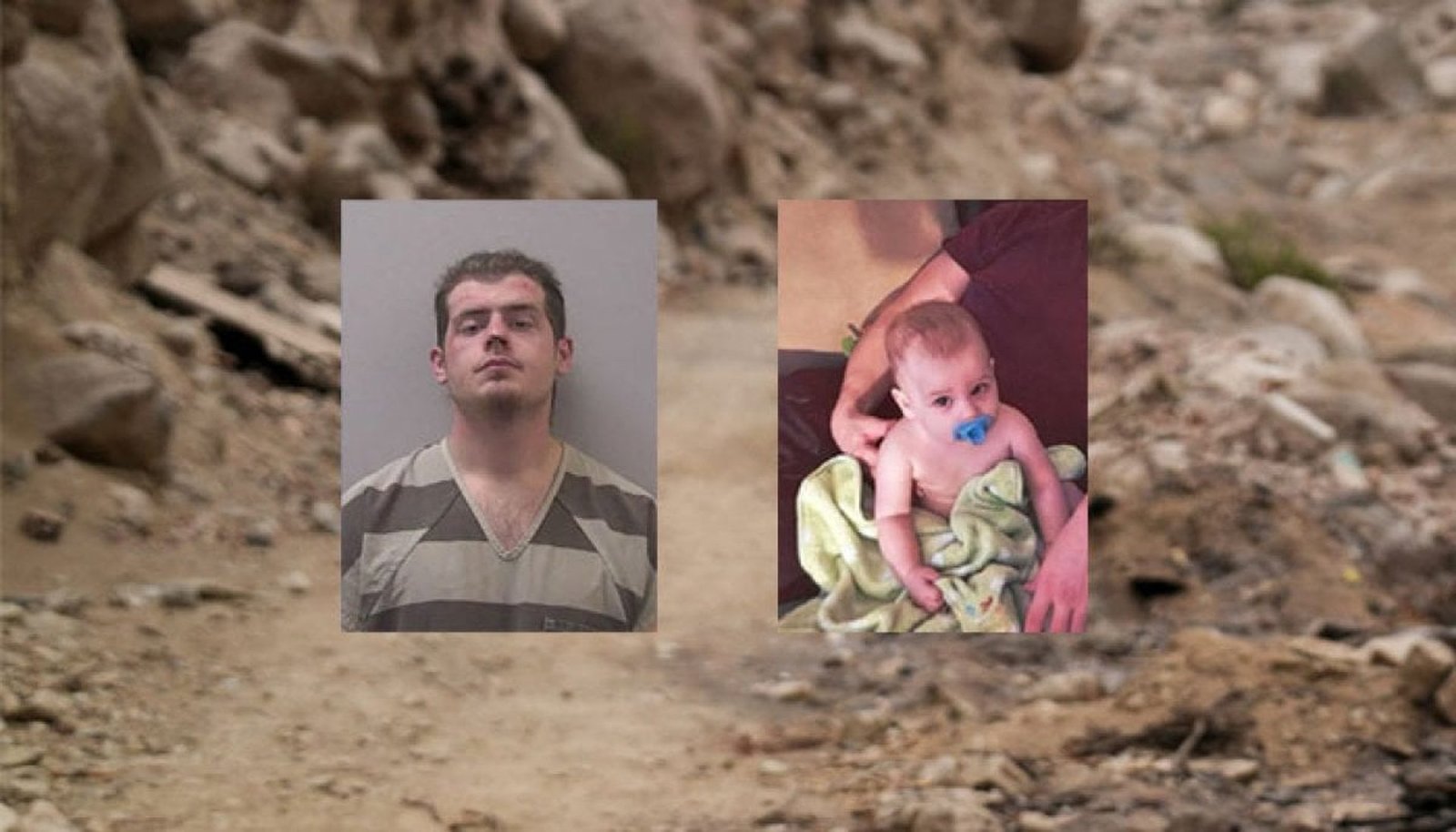
    An 11-month-old baby who spent around a day buried underground in the woods of South Carolina has been found alive, in a rescue that the local sheriff described as nothing short of a miracle.

    The infant, Koah Sharpe, was discovered on Tuesday afternoon wrapped in a towel inside a wire dog crate, buried beneath shallow earth in a wooded area of Lexington County. According to the Lexington County Sheriff’s Department, the child had been missing since Monday and was believed to have been underground for about 24 hours.

    Sheriff Jay Koon told reporters that search teams heard the baby crying beneath the ground, a sound he called the most joyful he had ever heard. He said the infant was found alive and clinging to life, and was taken to hospital, where doctors hope he will make a full recovery.

    How the baby was found

    Koah went missing on Monday after being left in the care of his father at his mother’s home while she went out on an errand, the sheriff said. When the family realised the child was gone, they reported him missing and the authorities launched a wide search across the area.

    The breakthrough came when members of a search party noticed freshly disturbed dirt in the woods, about 50 yards from the home of the boy’s grandfather. Digging at the spot, they uncovered the small crate, measuring around two feet by two feet, hidden under roughly a foot of soil.

    Investigators from the sheriff’s department are now working with the South Carolina Law Enforcement Division and the FBI to examine the scene and establish exactly what happened in the hours before the child was found.

    Father arrested

    The baby’s father, Michael Comer, was arrested on Monday night on charges of burglary and resisting arrest, Sheriff Koon said. The sheriff’s department is working with the solicitor’s office to decide what further charges may follow as the investigation continues.

    Officials have not yet said what they believe led to the child being buried, and the investigation remains under way. The sheriff’s department said more information would be shared as it becomes available, while the infant continues to receive hospital care.

  • Thune Re-Elected Senate GOP Leader After Midterm Rout

    Thune Re-Elected Senate GOP Leader After Midterm Rout

    Senate Republicans have re-elected John Thune as their leader, tapping the South Dakota senator for a second two-year term on Tuesday despite the party’s heavy losses in last week’s midterm elections.

    Thune, 65, drew no opposition and was elected by acclamation, with no ballots cast against him, according to his spokesman. Before choosing a leader, the conference voted 31–15 to press ahead with the election rather than postpone it, after hours of closed-door meetings that stretched across the day.

    Thune has led Senate Republicans since January 2025, when he succeeded longtime leader Mitch McConnell. He will now lead the party as minority leader when the new Congress convenes on 3 January, after Democrats flipped at least seven Republican-held seats in the midterms and took control of the chamber.

    A smaller, harder job ahead

    Republicans will hold a minority of no more than 46 seats in the next Senate. Democrats flipped seats in Iowa, Kansas, Maine, North Carolina, Ohio, South Carolina and Texas, while two further races, in Alaska and Mississippi, remained uncalled when the leadership vote took place.

    Thune had made clear before the meeting that he wanted a full and frank discussion about the party’s future, telling colleagues they would have a robust conversation about where to go from here and then see what the consensus was. Senators emerged from the morning session after two hours with no resolution, and the conference reconvened in the afternoon before finally re-electing him.

    President Donald Trump, who hosted Thune and his family at the White House in October, called him a very fine man on Monday, while adding that the choice was up to the Senate. Thune has spent much of his first two years as leader navigating a sometimes difficult relationship with the president, who has often been at odds with the chamber.

    No senator publicly challenged Thune for the post, and he remains popular among his colleagues. His task now is to hold together a diminished minority and rebuild after an election that cost his party control of both chambers of Congress.

  • Rubio Rejects Iran’s Reparation Demand as ‘Absurd’

    Rubio Rejects Iran’s Reparation Demand as ‘Absurd’

    United States Secretary of State Marco Rubio has rejected Iran’s demand for reparations and said there is no need to resume major military strikes against Tehran while negotiations are still under way.

    Speaking to reporters in Paris on Tuesday, on the sidelines of a meeting of G7 foreign ministers, Rubio said Iran’s conditions for a deal were simply unacceptable and, in some cases, outrageous and ridiculous. He said the talks so far had not been very productive and that he would not say the two sides were on the verge of a breakthrough.

    Rubio was blunt about the demand for compensation. “Iran is demanding reparations. They should be the ones paying reparations because they’re the ones that have destabilised the region for long periods of time,” he said, adding that Washington would not take on Tehran’s proposals as the basis for negotiations.

    Economic pressure instead of strikes

    According to Rubio, the United States sees no immediate need for major combat operations against Iran, because sanctions and a naval blockade are already placing severe pressure on Tehran’s economy. He said that pressure would intensify over the coming months and that Iran’s remaining oil revenues would dry up as sanctions took hold.

    Iran has put forward a plan under which it would reopen the Strait of Hormuz if the United States ends its blockade of Iranian ports, lifts some sanctions and halts its bombing campaign. Tehran has set out seven conditions, including the return of its frozen funds, and its foreign ministry spokesman, Esmaeil Baghaei, has described the plan as the most reasonable proposal anyone has put forward.

    Washington and Tehran have signed a preliminary agreement to halt the conflict and have opened a 60-day negotiation period covering sanctions relief, Iran’s nuclear programme and the future of the strait. But Rubio made clear that the gap between the two sides remains wide, and President Donald Trump said on Monday that the conflict was effectively over from a military standpoint.

    Rubio said the administration still prefers diplomacy and would explore any real chance of a deal. For now, though, the message from Paris is that the United States will keep squeezing Iran’s economy rather than return to large-scale strikes, while rejecting the conditions Tehran has attached to talks.

  • House Kills Hegseth Impeachment Bid in 211–204 Vote

    House Kills Hegseth Impeachment Bid in 211–204 Vote

    The United States House of Representatives has killed the attempt to impeach Defence Secretary Pete Hegseth, voting 211–204 on Tuesday to refer the charges to the House Judiciary Committee, a step that effectively ends the push to remove him from office.

    The vote came after Republican congressman Thomas Massie of Kentucky, who filed eight articles of impeachment against Hegseth in September, forced the House to act on his resolution when lawmakers returned from the midterm elections. Massie was the only Republican to vote against sending the resolution to committee, joining Democrats who opposed the referral. Eleven Democrats and seven Republicans did not vote at all.

    The articles accused Hegseth of abusing the powers of the Department of Defence, principally by ordering strikes on Iran without congressional authorisation. The resolution also raised his role in military operations in Yemen and Venezuela. Hegseth has rejected the accusations, calling the impeachment attempt a farce at a news conference earlier on Tuesday, and Vice President JD Vance described the idea that he had committed impeachable offences as absurd.

    Why the vote matters

    President Donald Trump has stood by his defence secretary, saying he is doing a very good job and ruling out replacing him. House Speaker Mike Johnson led the effort to shelve the resolution, and every Republican except Massie backed sending it to committee, where it is expected to go no further.

    The vote was the first real test of Hegseth’s standing since the midterm elections on 3 November, in which Democrats won control of both chambers of Congress. Democrats are due to take control in January, when the new Congress convenes, and could revisit the matter then. But the current articles expire when the present Congress ends on 3 January 2027, so any fresh effort would have to start from scratch.

    Massie, who lost his primary this year to a Trump-backed challenger, leaves Congress at the end of the year. His resolution had been filed as a privileged measure, forcing the House to deal with it, after Republican leaders cancelled votes and sent members home for a seven-week recess in September rather than allow a vote before the election.

    For now, the immediate danger to Hegseth is over and he keeps his job. The argument over the war secretary’s conduct, however, is far from settled, and with a Democratic majority arriving in January, the fight is likely to return in a new form.

  • Trump Picks Top Justice Dept Lawyer for Texas Judgeship

    Trump Picks Top Justice Dept Lawyer for Texas Judgeship

    United States President Donald Trump has announced the nomination of a senior Justice Department lawyer, Elliot Gaiser, to serve as a federal judge in Texas, a move that could open another senior vacancy inside the department just days after the country’s midterm elections.

    According to The News, Trump said on social media that he was pleased to nominate Gaiser to the United States District Court for the Northern District of Texas. In his post, the president praised the nominee’s record, writing: “Texas will appreciate having such a talented and intelligent Judge on their Federal Bench.”

    Gaiser currently serves as assistant attorney general in charge of the Department of Justice’s Office of Legal Counsel, the office that advises the president and the executive branch on difficult questions of constitutional and government law. He was sworn into the role on August 4, 2025, after being confirmed by the Senate, according to the Justice Department.

    Before joining the department, Gaiser served as solicitor general of Ohio, where he represented the state before the Supreme Court and other courts. He is a graduate of the University of Chicago Law School and Hillsdale College, and he has clerked for Supreme Court Justice Samuel Alito and two federal appeals court judges, Neomi Rao and Edith Jones.

    The nomination comes at a moment of change inside the Justice Department. The News reported that several senior officials have left the department over the past week, including three division leaders based at its Washington headquarters. If the Senate confirms Gaiser, he would leave his current post to take up the judgeship, adding to the department’s list of senior vacancies.

    Under Gaiser’s leadership, the Office of Legal Counsel has examined major issues, including gun rights and the United States military operation that removed former Venezuelan President Nicolas Maduro from power, according to The News.

    The nomination will now go before the Senate, where it must be confirmed before Gaiser can take his seat on the bench. No date has been announced for a confirmation hearing.

    The Northern District of Texas covers a large part of the state, including Dallas and Fort Worth, and its judges hear a wide range of federal civil and criminal cases.

  • Rubio: Russia-Ukraine Abu Dhabi Talks ‘Very Productive’

    Rubio: Russia-Ukraine Abu Dhabi Talks ‘Very Productive’

    The first direct talks between Russia and Ukraine in nine months have ended their opening day in Abu Dhabi with cautious encouragement from Washington and Kyiv, as United States Secretary of State Marco Rubio described the session as “very productive” while warning that much work still lies ahead.

    The trilateral talks, mediated by the United States, lasted nearly four hours on Tuesday and are scheduled to continue for a second day on Wednesday, according to the Associated Press. They are the first such meeting since February in the war that followed Russia’s full-scale invasion of Ukraine nearly five years ago.

    Speaking in Paris at a meeting of Group of Seven foreign ministers, Rubio said: “It looks like the talks in Abu Dhabi were very productive.” He urged patience, however, adding: “There’s a lot of work to be done in that regard. It’s not like something that’s on the verge of being solved in the next 24 hours or anything like that.”

    According to Reuters, Rubio said Washington hoped that the negotiations could eventually be widened to include other European representatives. Neither Rubio nor Ukrainian President Volodymyr Zelenskyy attended the talks in person, the Associated Press reported.

    Zelenskyy, speaking during a visit to Denmark, also welcomed the first day of discussions, calling the meeting “constructive and quite substantive”. He said negotiators had discussed humanitarian issues, including prisoner exchanges and the return of Ukrainian civilians held in captivity and children taken from the country, alongside security guarantees.

    “The trilateral format was constructive and quite substantive,” Zelenskyy wrote on X, adding that he had instructed Ukrainian negotiators to continue discussions with Russian and American representatives.

    The Ukrainian president met Nordic leaders in Copenhagen to discuss military assistance, air defence systems and protecting Ukraine’s energy infrastructure from Russian attacks. Denmark announced an additional $720 million in military assistance, although details of the equipment and the delivery schedule were not disclosed.

    According to reports, US envoys Steve Witkoff and Jared Kushner took part in the Abu Dhabi session. No peace agreement has been announced, and fighting has continued while the talks are under way. Officials on both sides have said the discussions will resume on Wednesday, with humanitarian questions expected to remain at the centre of the agenda.

  • Macrons Sue Candace Owens in Tennessee Over 88 Claims

    Macrons Sue Candace Owens in Tennessee Over 88 Claims

    French President Emmanuel Macron and his wife, Brigitte Macron, have opened a new front in their legal battle with American podcaster Candace Owens, filing a fresh defamation case against her in a federal court in Tennessee.

    According to court records, the complaint was filed on 4 November 2026 in the United States District Court for the Middle District of Tennessee, in Nashville. The document runs to 409 pages and brings 88 separate counts, including defamation, false light and defamation by implication.

    At the heart of the case is a claim Owens has repeated about the French first lady — that Brigitte Macron was born male. The Macrons say the claim is false and that Owens has spread it as part of what they have previously described as a sustained campaign against them. Owens has not been found liable, and the allegations in the new complaint have not yet been tested in court.

    What the Macrons are asking the court for

    The couple are seeking monetary and punitive damages, as well as their legal costs. They are also asking the court for an injunction that would stop Owens from republishing statements a court finds to be defamatory.

    According to excerpts of the filing shared by Owens herself, the complaint also takes issue with her use of a doll made to resemble Brigitte Macron, which the Macrons described as grotesque and said was used as a prop to ridicule the first lady’s appearance.

    Owens confirmed the new lawsuit in a post on X on Monday 9 November, writing that it contained 88 claims in total. An official from Mr Macron’s office also confirmed that the presidential couple had filed the case, while referring questions to their personal lawyer in the United States, who did not immediately respond to a request for comment.

    Why the case moved from Delaware to Tennessee

    The Macrons first sued Owens in Delaware in July 2025, naming her and two businesses linked to her. But on 27 October 2026, a Delaware judge ruled that the court there did not have personal jurisdiction over Owens herself, because she lives in Tennessee. The Delaware case continues against her companies, Candace Owens LLC and GeorgeTom Inc.

    The new Tennessee case, listed as Macron v. Owens, No. 3:26-cv-01765, has been assigned to Judge Waverly D. Crenshaw Jr. A summons in the case was issued on 5 November.

    The filing sets up another high-profile courtroom clash between a sitting head of state and one of America’s most prominent online commentators, with the central questions now to be decided by a judge and jury in Nashville.

  • Ben-Gvir Heckles Arab Lawmaker as New Knesset Sworn In

    Ben-Gvir Heckles Arab Lawmaker as New Knesset Sworn In

    Israel’s 26th Knesset was sworn in on Tuesday, 10 November 2026, in a ceremony marked by shouting, walkouts and open hostility between rival camps, underlining how deeply divided the country’s politics remain after an election that produced no clear winner.

    The loudest confrontation came as Yousef Jabareen, chairman of the Arab-majority Joint List, stood to take his oath of allegiance. As he began the formal words, National Security Minister Itamar Ben-Gvir shouted across the chamber: “Who is he pledging allegiance to, Hamas?” The outburst, reported by France24 and other outlets, drew angry responses from lawmakers around him and set the tone for a tense afternoon.

    The disruption did not stop there. Arab members of the Knesset walked out of the plenum during the singing of Hatikva, the national anthem, in a protest that drew further shouting from the floor. Knesset Speaker Amir Ohana warned that lawmakers who disrupted proceedings would be thrown out of the chamber, as he struggled to keep order during the opening session.

    Caretaker Prime Minister Benjamin Netanyahu used the occasion to attack the idea of a government that would depend on the support of Arab parties, and he called instead for a national unity government. His remarks were sharply criticised by opposition leader Gadi Eisenkot, who has been mandated to try to form the next government and who described the speech as divisive.

    The opposition has already moved to challenge the leadership of the parliament itself, submitting 67 signatures in support of replacing Speaker Ohana with Matan Kahana. The move is an early sign of how the new balance of power in the Knesset could be used by parties opposed to Netanyahu.

    The numbers behind the deadlock explain the tension. The two Arab-led alliances won a record 19 seats between them, giving Arab parties their strongest representation in the Knesset’s history. Eisenkot’s four-party bloc won 48 seats, while Netanyahu’s bloc took 53. In a 120-seat parliament, neither side holds the 61 seats needed for a majority, leaving the country without a government and the coalition talks still open.

    With no side able to govern alone, the coming weeks are likely to decide whether Eisenkot can assemble a working coalition, whether Netanyahu can block him, or whether Israel faces yet another round of elections. The scenes in the chamber on Tuesday suggested that whatever path is chosen, it will be fought over fiercely.