Blog

  • KSE-100 Soars 4.5% in a Week as Oil Falls, Rupee Steadies

    KSE-100 Soars 4.5% in a Week as Oil Falls, Rupee Steadies

    The Pakistan Stock Exchange enjoyed its strongest week in months, with the benchmark KSE-100 Index jumping 4.5 percent to close at 173,887 points for the week ended 6 November.

    The index gained 7,477 points over the week from 166,409, rebounding sharply on positive global cues after the Democrats’ victory in the United States midterm elections and a steep fall in international crude oil prices. The rally added Rs520.26 billion to investors’ wealth, taking total market capitalisation to Rs18,909 billion, or about $68 billion.

    Trading activity picked up strongly. Average daily traded volume surged 43 percent to 856 million shares, while average daily traded value rose 24 percent to $103 million. On 6 November alone, some 1,480 million shares changed hands, though the index slipped 1,493 points that day as investors booked profits after the week’s gains.

    Banks and cement led the rally

    Banks were the biggest contributors to the weekly gain, adding 2,659 points to the index, followed by cement with 1,266 points, fertiliser with 988 points, power generation with 545 points and investment banks with 535 points. The refinery sector was the main drag, losing 238 points amid weak refining margins.

    Among individual stocks, Fauji Fertilizer Company contributed the most, adding 613 points, followed by Lucky Cement with 564 points, Engro Holdings with 519 points, United Bank Limited with 491 points and Meezan Bank with 480 points. Attock Refinery and Cnergyico were the biggest drags, while Cnergyico was also the week’s most traded stock, with average volume of 75.8 million shares.

    Pak Suzuki Electric led the weekly gainers, rising 26.7 percent, while Pioneer Cement and D.G. Khan Cement both climbed 12.5 percent. Cnergyico fell 11.3 percent and Attock Refinery dropped 9.8 percent, the week’s sharpest declines among index stocks.

    Cooling inflation and cheaper fuel helped

    The rally was backed by improving economic numbers. Inflation eased to 9.6 percent year-on-year in October, down from 10.3 percent in September, according to official data cited by brokerage research. The government raised Rs385.6 billion in a Treasury bill auction against a target of Rs350 billion.

    Cheaper fuel also lifted sentiment. Petrol prices fell to Rs352.59 a litre from Rs377.91, and diesel to Rs382.25 from Rs402.96, after the drop in global oil prices. Pakistan’s trade deficit stood at $3.9 billion in October, with exports rising 2.8 percent to $2.9 billion and imports up 11.8 percent to $6.8 billion.

    The rupee was steady, closing marginally firmer at Rs276.66 to the dollar. Analysts expect the market to stay sensitive to developments in the US-Iran talks and to oil prices, with the MSCI index review due on 11 November also in focus. The KSE-100 is currently trading at a price-to-earnings ratio of 7.3 times, offering a dividend yield of 6.8 percent.

  • Petrol Falls to Rs346 a Litre in Fifth Straight Cut

    Petrol Falls to Rs346 a Litre in Fifth Straight Cut

    Petrol in Pakistan now costs Rs346 a litre and high-speed diesel Rs378, after the Oil and Gas Regulatory Authority (OGRA) cut prices for the fifth day in a row, bringing a week of steady relief at the pump for motorists and transporters.

    OGRA’s notification, issued on Friday, reduced the price of petrol by Rs6.59 a litre, from Rs352.59 to Rs346.00, and high-speed diesel by Rs4.25 a litre, from Rs382.25 to Rs378.00. The new rates took effect on Saturday, 7 November, and will remain in force until Tuesday, 10 November, because Monday, 9 November, is a public holiday.

    The latest cut caps a remarkable week for fuel prices. Petrol has fallen by Rs31.91 a litre since 31 October, when it stood at Rs377.91, a drop of about 8.4 per cent. Diesel has come down by Rs24.96 a litre over the same period, from Rs402.96 to Rs378.00. The cuts have arrived almost every day: petrol was reduced by Rs3.40 on 3 November, Rs5.45 on 4 November, Rs7.06 on 5 November and Rs9.41 on 6 November, before Friday’s Rs6.59 cut.

    Why prices are falling

    The relief is driven by two factors. World crude oil prices have softened, and the federal government has moved to a daily pricing system, with the cabinet and the prime minister entrusting OGRA to set fuel prices each day on the basis of international market conditions, rather than waiting for the old fortnightly cycle.

    The current round of relief is also supported by a 30-day arrangement under which oil refineries contribute to the petroleum levy, absorbing a cumulative impact of about Rs15 billion. That deal runs for the rest of the month, which is one reason officials describe the daily cuts as temporary rather than permanent.

    It is important to note that the latest cut is not a tax cut. Taxes and duties inside the pump price have not changed. Petrol still carries about Rs114 a litre in taxes, and diesel about Rs100 a litre, according to official pricing data.

    What it means for households

    For a motorist filling a 40-litre tank, the week’s slide has taken the cost of a full tank of petrol down by nearly Rs1,280 compared with the end of October. Transporters, who run on diesel, have seen a similar saving, and lower diesel prices usually ease pressure on the cost of moving goods, including food, across the country.

    The next revision is expected after the 9 November public holiday, when OGRA will publish fresh prices. Whether the run of daily cuts continues will depend on two things: world oil prices and the refinery levy arrangement. For now, motorists have until 10 November to enjoy the lowest petrol price in months.

  • Forest Stun Man City 3-1 as Delap Double Ends Winning Run

    Forest Stun Man City 3-1 as Delap Double Ends Winning Run

    Nottingham Forest produced the shock of the Premier League season so far, beating Manchester City 3-1 at the City Ground on Saturday and handing the champions a third defeat in a row.

    Forest struck twice inside the first 18 minutes. Jair Cunha opened the scoring in the sixth minute, and Liam Delap doubled the lead 12 minutes later with a powerful finish after breaking through the City defence. The former City academy striker, who had managed only one goal in his previous eight league games, was the difference on the night.

    City improved after the break and pulled one back in the 52nd minute, when Rayan Cherki beat goalkeeper Matz Sels with a superb half-volley. But Forest held firm, and Delap settled the contest in the 73rd minute, finishing a swift counter-attack involving Morgan Gibbs-White with an angled strike into the far corner.

    Ryan Yates struck the crossbar for Forest before Delap’s second goal ended the contest.

    A season turned upside down

    The result caps a remarkable reversal for both clubs. City won their first seven league games of the campaign, but have now lost three in a row, having been beaten by Aston Villa and Brighton before this trip to Nottingham. They are only the second team in English top-flight history to win their opening seven matches of a season and then lose the next three, after Sheffield Wednesday in 1904-05.

    For Forest, the win brought their first home league victory of the season and their first home goals of the campaign. Delap is only the second player to score twice in a Premier League match against City after previously playing for them, after Nicolas Anelka for Bolton Wanderers in December 2006. It lifted Oliver Glasner’s side to 16th place on nine points, out of the relegation zone, and the Forest coach sprinted down the touchline to celebrate Delap’s second goal.

    What it means at the top

    Arsenal remain top of the table on 27 points after 10 games, following their 1-0 win over Hull City earlier on Saturday. City stay second on 21 points, six behind the leaders, with their title challenge now under serious pressure.

  • KP Police Get Rs70bn Plan: 17,000 Jobs to Be Filled

    KP Police Get Rs70bn Plan: 17,000 Jobs to Be Filled

    The Khyber-Pakhtunkhwa government has drawn up a plan to spend about Rs70 billion on rebuilding its police force, filling 17,000 vacant posts and setting up faceless anti-terrorism courts, as the province rebuilds a force stretched thin by militancy.

    Under the plan, Rs59.8 billion will go to police infrastructure and Rs10.3 billion to the Counter-Terrorism Department (CTD), officials said at a high-level briefing on the law and order situation in Peshawar. The briefing was attended by Governor Faisal Karim Kundi, the chief secretary, secretaries of all departments and senior police officers.

    The province aims to raise the CTD’s capacity from 12 per cent to 37 per cent and overall police capacity to 75 per cent. The CTD currently has 638 personnel, and officials told the meeting that although Rs6.4 billion had been approved for the department, only Rs1 billion was released. An allocation of Rs12 billion announced earlier for improving police infrastructure was likewise not released, the briefing heard.

    Faceless courts and Safe Cities

    One of the most striking decisions is the creation of faceless Anti-Terrorism Courts for the trial of terrorism suspects. Under the proposed system, the identities of judges, witnesses, police personnel and others involved in a case will stay confidential during hearings, to protect them from threats by terrorists or their networks. Legislation is being introduced, and appeals to the High Court will still be allowed.

    Several cities, including Dera Ismail Khan, Bannu and Lakki Marwat, are being converted into Safe Cities with modern surveillance and anti-drone technology. Special centres will be set up in 10 districts, 400 police facilitation smart desks will help citizens reach police services and register complaints, and Dispute Resolution Councils and liaison committees in tribal areas will be strengthened, with the jirga system promoted.

    Intelligence-based operations will be stepped up, and action will be taken not only against terrorists but also against their facilitators and supporters, officials said. The Rapid Response Force will be modernised, police training improved, and drone and anti-drone capacity strengthened.

    The scale of the challenge

    The briefing laid out how thin the force has become. In the past, only 3.2 per cent of the provincial budget was allocated to the police, which officials said was far too little given the terrorism threat. The police’s drone protection capability stands at only 12 per cent, while the availability of operational transport is 36 per cent.

    Home Secretary Amjad Ali Khan told the meeting that over the past two years, 1,003 military personnel, 627 police personnel and 808 civilians had been martyred in the war against terrorism in the province, while 3,788 terrorists were killed during security operations. Additional Inspector General Abbas Ahsan said the decision to fill 17,000 vacant positions had been taken to overcome the shortage of manpower.

    Addressing the briefing, Governor Kundi promised that all the police’s requirements would be met and that the gaps previously existing between the federal and provincial governments on security matters had been eliminated. He said the two governments would follow a joint policy against terrorism, with the political leadership taking full ownership of the fight. He added that there would be no negotiations with terrorists, that intelligence-based operations would be conducted on credible intelligence, and that the police welfare package had been improved, with special allowances and salary increases under consideration.

  • Houthis Claim 6 Strikes on Riyadh Airport, Aramco Sites

    Houthis Claim 6 Strikes on Riyadh Airport, Aramco Sites

    Yemen’s Houthi rebels say they launched six missile and drone operations against Saudi Arabia on Saturday, naming Riyadh’s international airport, Aramco oil facilities and a National Guard camp among the targets — claims Saudi Arabia has not confirmed.

    Houthi military spokesman Yahya Saree said the operations used a large number of ballistic missiles, cruise missiles and drones. In a statement, he said the first attack targeted King Khalid International Airport in Riyadh, along with Aramco oil storage tanks and a distillation tower in the Saudi capital.

    He said further strikes hit an Aramco facility near the Khurais oil field in Saudi Arabia’s Eastern Province, a pumping station in the Dawadmi area west of Riyadh, and a National Guard camp in Najran province. Saree claimed the operations had achieved their objectives.

    The Houthis said the attacks were retaliation for Saudi airstrikes on a market in Taiz province, which they alleged killed and wounded dozens of civilians, including vendors and shoppers. Saudi Arabia did not immediately confirm the reported attacks or the extent of any damage, and the Houthis’ claims have not been independently verified.

    Saudi defences report intercepts

    Separately, the Saudi-led coalition said its air defences intercepted and destroyed a Houthi cruise missile aimed at the Riyadh region, and reported a separate drone interception in the same region. The coalition gave no casualty or damage figures.

    The Houthis have stepped up attacks on neighbouring Saudi Arabia in recent months, with airports and oil facilities among the main targets in the kingdom. The latest claims come as fighting in Yemen has intensified, with each side blaming the other for deadly strikes on civilian areas.

    Houthi health officials said at least 27 people were killed and 36 wounded in strikes on homes in al-Shariya, blaming Saudi Arabia. There was no immediate comment from Saudi Arabia on those claims either.

    The renewed exchange underlines how the Yemen conflict continues to spill across the border, putting some of the world’s most important oil and aviation infrastructure in the firing line. Analysts say the claims show the Houthis can still threaten Saudi cities and energy sites despite years of war and repeated Saudi-led bombing in Yemen.

  • America’s Measles Crisis: 5,182 Cases, Worst Since 1991

    America’s Measles Crisis: 5,182 Cases, Worst Since 1991

    The United States has recorded 5,182 confirmed measles cases in 2026, the highest annual total since 1991, according to data published by the Centers for Disease Control and Prevention (CDC) — and three deaths in a single week have sharpened warnings about falling vaccination coverage.

    The CDC figures, updated on 6 November, show cases have already reached more than double the 2,289 reported in all of 2025, with 330 new cases — a rise of 6.8 per cent — added in the latest week alone. Cases have been reported in 47 jurisdictions, and 96 per cent of them are linked to outbreaks.

    State health departments reported three measles-associated deaths between 2 and 5 November. On 2 November, officials in New York announced the death of a child linked to the outbreak in the rural north of the state, where 178 cases have been confirmed this year. Governor Kathy Hochul declared a state disaster emergency in October as case numbers rose.

    Pennsylvania reported its sixth measles-associated death of 2026 on 4 November — an unvaccinated 21-year-old woman from Jefferson County who tested positive for measles and died after postpartum complications. The state is managing the largest measles outbreak in the country.

    A day later, Wisconsin announced the death of an infant, the state’s first measles death since 1990. The local coroner listed measles as the immediate cause of death. Wisconsin has recorded 431 cases across 13 counties this year, with nine hospitalisations, in its largest outbreak in more than three decades.

    Vaccination advice

    In response, Wisconsin’s health department now recommends an early MMR dose for some infants aged six to 11 months who face a higher risk of exposure. Two doses of the MMR vaccine are 97 per cent effective at preventing measles, officials said.

    State health departments have now reported eight measles-associated deaths across the country in 2026, although the CDC’s official count stands at four, because the agency no longer automatically adds state-confirmed deaths to its national tally. Measles was declared eliminated in the United States in 2000.

    Health officials say the figures underline the importance of routine childhood vaccination, with most cases occurring in communities where coverage has slipped. The CDC data covers only confirmed cases notified by jurisdictions, so the true total may be higher.

  • 23.4 Million Children Vaccinated in 5 Days in Polio Drive

    23.4 Million Children Vaccinated in 5 Days in Polio Drive

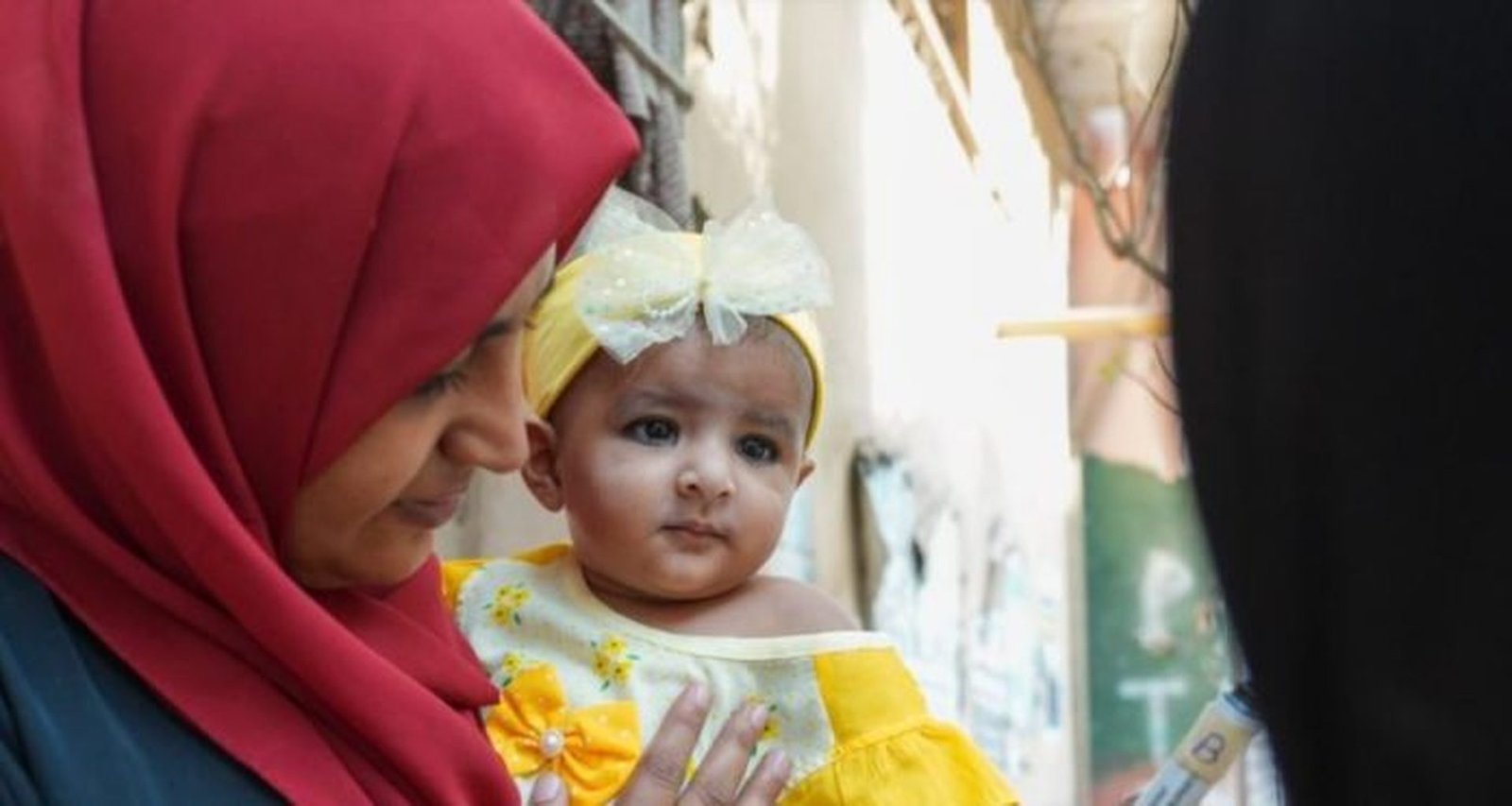
    More than 23.4 million children have received polio drops in the first five days of Pakistan’s latest sub-national immunisation drive, health officials said on Saturday, putting the campaign within reach of its target of about 24 million children under five.

    The National Emergency Operations Centre (NEOC) said the drive is running in 97 selected districts across the country, with more than 200,000 frontline workers going door to door. The sixth day of the campaign was under way on Saturday, and vaccination is scheduled to continue until 8 November.

    Punjab has vaccinated the largest number so far — more than 9.025 million children in 13 districts — followed by Sindh with over 6.856 million in 20 districts. In Khyber Pakhtunkhwa, more than 4.624 million children were covered in 27 districts, while Balochistan reached 2.169 million in 31 districts.

    In the federal capital, more than 450,000 children received drops, while Gilgit-Baltistan covered over 161,000 children in three districts and Azad Jammu and Kashmir vaccinated about 192,000 children in two districts.

    The campaign is running at the same time in Pakistan and Afghanistan as part of a coordinated regional effort to stop the virus spreading across the border and to protect children from the crippling disease, the NEOC said.

    Only vaccination can prevent polio

    The centre warned that the threat of the poliovirus persists across the country. Polio has no cure, it said, and vaccination remains the only effective protection against it.

    Parents and caregivers were urged to cooperate fully with vaccination teams and to make sure every child below five receives the drops during the drive. Families were also advised to complete children’s routine immunisation on schedule to guard against other vaccine-preventable diseases.

    The NEOC said sustained vaccination, community participation and public cooperation are essential if Pakistan is to become polio-free. With the campaign entering its final day, officials will be watching whether the remaining children in the target districts are reached before it closes on Sunday. Health workers will continue the door-to-door drive through Sunday, and officials have asked families to keep children at home when teams visit so that no child is missed.

  • Visa If He Wishes: Pakistan’s Offer to Bhagwant Mann

    Visa If He Wishes: Pakistan’s Offer to Bhagwant Mann

    Pakistan has said it would consider issuing a visa to Indian Punjab Chief Minister Bhagwant Mann if he wishes to visit the country for a Punjabi cultural conference in Lahore later this month.

    Foreign Office spokesperson Sajjad Haider Khan made the remarks at his weekly briefing on Friday, responding to a question about Mann’s possible visit to attend the World Punjabi Conference, scheduled to be held in Lahore from 27 to 29 November.

    Mann, who leads the Aam Aadmi Party government in Indian Punjab, disclosed the invitation on 23 October and questioned whether he would be allowed to travel to Pakistan. Khan said a visa could be granted “if he wished to visit the country”.

    The spokesperson was careful to add that whether the Indian government permits the travel is “an entirely separate matter”. No visa has been issued and no travel arrangements have been finalised.

    The invitation came from Pakistani Punjabi poet Baba Bashir Husain Najmi and Punjab minister Ramesh Singh Arora.

    Visas for pilgrims

    At the same briefing, Khan said Pakistan issued more than 9,000 visas to Indian religious pilgrims in 2025 and over 4,000 to Sikh pilgrims in the first six months of 2026. Movement of pilgrims through the Kartarpur Corridor has been suspended since 7 May 2025.

    The conference invitation has drawn attention because high-level political visits between the two countries are rare, and any trip by a sitting Indian chief minister to Lahore would carry symbolic weight beyond the cultural programme.

    Punjabi language and culture are shared across the border, and cultural exchanges have long been seen as one of the few channels that keep people-to-people contact alive even when official relations are strained. The World Punjabi Conference is part of that tradition.

    For now, the ball is in Mann’s court — and in New Delhi’s. Islamabad has signalled the door is open; whether the visit happens will depend on the Indian chief minister’s decision and his government’s clearance. If the visit goes ahead, Mann would be among the most senior Indian politicians to travel to Pakistan in recent years, underlining how unusual the trip would be.

  • Iran Drops Its 2,000 km Missile Range Limit

    Iran Drops Its 2,000 km Missile Range Limit

    Iran’s Revolutionary Guard has said it has lifted a self-imposed limit of about 2,000 kilometres on the range of its ballistic missiles, raising the prospect of Tehran developing weapons able to reach more distant targets.

    Brigadier General Hossein Mohebbi, the Guard’s spokesman, told a press conference in Tehran on Saturday, held to mark Aerospace Week, that the restriction “has been lifted for us”, according to state-linked outlets including Tasnim and Mehr.

    The 2,000 km ceiling dated from 2017 and was intended to keep Iran’s missiles regional in reach. Its removal suggests Tehran may now seek longer-range capability, although no evidence was presented of operational missiles able to fly beyond the former limit.

    Mohebbi cautioned that Iran must demonstrate the expanded capability in practice rather than merely announce it. “Our duty is to show our capabilities on the battlefield,” he said.

    Wider military signals

    The remarks followed comments by the supreme leader ordering an immediate and effective response to any threat without geographical limits, alongside a broader update of military target lists covering US and Israeli assets.

    Mohebbi also said Iran would prepare for a shift in nuclear doctrine if ordered — a conditional statement, not a decision to change doctrine or to build a weapon.

    He further claimed advances in air defences and underground missile production after recent fighting, including the downing of enemy aircraft and drones. Those claims could not be independently verified.

    The announcement comes as talks between the United States and Iran remain stalled and fears of renewed strikes grow across the region, days after US strikes on Qeshm Island. Any move to field longer-range missiles would mark a significant escalation in the military standoff.

    The Guard’s statement is likely to draw close attention in Washington, Tel Aviv and European capitals, where officials have long treated the 2,000 km limit as an informal red line. For years, Tehran presented the ceiling as proof that its missile programme was defensive and regional. Removing it signals a different posture — even if, for now, the longer-range capability itself remains unproven.

  • Balochistan to Shut Down on 19 November, Parties Announce

    Balochistan to Shut Down on 19 November, Parties Announce

    Political parties in Balochistan have announced a province-wide shutdown strike on 19 November, with demonstrations at all district headquarters, accusing the government of failing to address the province’s worsening political, security and economic crises.

    The decision was taken at an all-parties conference organised by the Awami National Party (ANP) at the Quetta Press Club and chaired by ANP provincial president Asghar Khan Achakzai, according to The Express Tribune.

    Representatives of the National Party, Jamiat Ulema-e-Islam, the Pashtunkhwa National Awami Party and other political groups attended the gathering. In a joint declaration, the leaders described the situation in the province as alarming and unacceptable.

    The declaration pointed to persistent insecurity, terrorism, extremism, armed group activity, targeted killings and kidnappings for ransom. It also raised the unresolved issue of missing persons and growing unemployment across the province.

    Economic grievances featured heavily. The leaders blamed the closure of trade and transit routes with Afghanistan and Iran for severely disrupting economic activity, and highlighted soaring inflation, prolonged electricity and gas outages, petroleum levies and restrictions on essential agricultural supplies, including urea fertiliser.

    Next steps

    The parties said these measures have damaged agriculture, trade, industry and employment across the province. They accused the provincial and federal governments of failing to protect citizens, maintain law and order, safeguard natural resources and restore economic stability.

    The conference agreed to turn the joint political and democratic struggle into a coordinated movement. A provincial-level meeting will be held on 26 November to decide the next phase of the campaign, and an all-parties conference will be convened in the first week of December to present Balochistan’s concerns to the national leadership.

    The shutdown call comes as Balochistan continues to face a complex mix of militancy, economic strain and political discontent. Whether the 19 November strike draws broad support across the province’s districts will be an early test of the unity the parties displayed in Quetta — and of how far their joint campaign can carry public pressure on Islamabad. The parties also agreed to keep their coordination going after the strike, with the December conference expected to set out a shared charter of demands for the province.