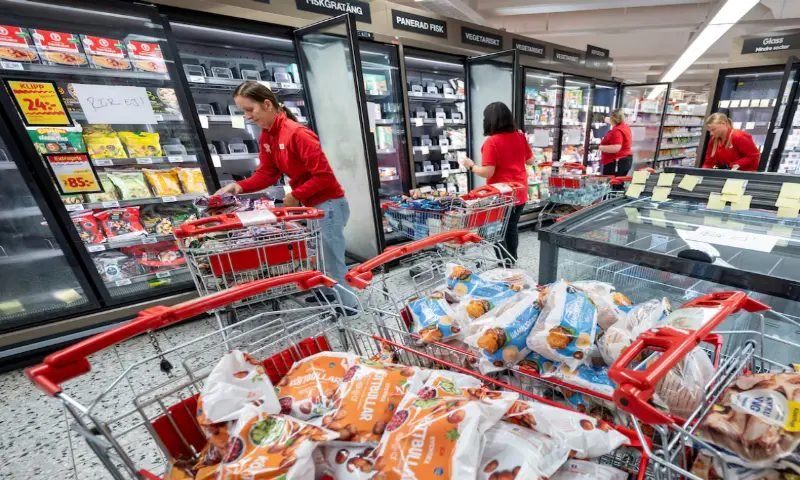
Fridges and freezers at more than 100 supermarkets across several European countries were left running hot on Monday after a hacking attack struck refrigeration systems from Sweden to Belgium, forcing stores to throw away spoiled food and pull chilled products from sale. Retailers across the continent reported the same pattern: cooling units that stopped working properly overnight, with some companies directly blaming a cyberattack.
Dutch supermarket operator Ahold Delhaize said an overnight IT incident affected fridges and freezers at dozens of Delhaize stores in Belgium and Luxembourg, after a temperature rise was detected in its cooling systems on Monday. French retailer Carrefour said about 15 of its 700 Belgian locations were hit by refrigeration problems, while the Colruyt Group, which runs Spar stores in Belgium as franchises, confirmed that five of its shops had their fridge systems attacked.
In Sweden, Coop said cooling systems at seven of its 800 stores were affected, with disruption ranging from complete shutdowns to partial operation, and confirmed that the incident involved unauthorised tampering with the cooling systems. Privately held ICA in Sweden said a limited number of its stores were affected by an overnight incident hitting refrigeration and freezer systems, and Irish wholesaler Musgrave said a cyber incident had affected refrigeration at 13 of its SuperValu stores, forcing it to remove some chilled and frozen products from sale.
The damage at individual shops was stark. A butchery chain in Hove, south of Antwerp, found its fridges turned up as high as 18 degrees Celsius, ruining about 15,000 euros worth of meat, according to its founder. Other stores were forced to discard food that could no longer be kept safely chilled, turning a digital intrusion into immediate, visible waste on shop floors.
The attack echoed a similar incident in France last month, when refrigeration units were heated to as much as 50 degrees Celsius, causing fires and spoiling food. That earlier episode had already raised questions about how exposed everyday infrastructure, far from banks or government networks, can be to remote tampering with industrial control systems.
Italy’s government said on Tuesday that the domestic impact of the latest attack had been extremely limited and posed no public health risk from thawing food products. A senior undersecretary, Alfredo Mantovano, chaired a meeting with the intelligence services and the cybersecurity agency, after which officials said only a small number of commercial outlets in Italy had been affected, mostly those still relying on outdated security systems.
Italian police have launched an investigation into cyberattacks that affected supermarkets in the southern region of Sicily and in the northern Emilia-Romagna region, according to the Ansa news agency. The government said the vast majority of the food distribution chain was equipped with up-to-date protection systems capable of repelling malicious intrusions, which limited the spread inside Italy.
Retailers across the affected countries are still investigating how the attackers reached the refrigeration controls and whether the incidents are linked. For shoppers, the episode was a reminder that a cyberattack does not have to target a website or a bank account to be felt directly: it can show up as empty chilled shelves, discarded food and a familiar supermarket suddenly unable to keep its products cold.
Leave a Reply