Category: World

World news in English — global headlines and analysis. دنیا بھر کی خبریں۔

  • £5.1bn prize as UK-EU draft food deal agreed

    £5.1bn prize as UK-EU draft food deal agreed

    Britain and the European Union have agreed a draft deal that would remove most post-Brexit border checks on food and farm goods, in what is being described as the most significant part of the wider reset in relations between London and Brussels. The UK government estimates the deal will eventually be worth £5.1 billion a year to the economy.

    According to the BBC, which first reported the agreement, a draft text of around 200 pages covering sanitary and phytosanitary rules has been circulated to EU member states for consideration at a meeting of EU ambassadors on Wednesday. The rules govern animal health, plant health and food safety in trade.

    For exporters, the practical change would be sweeping. The draft would remove the need for export health certificates costing around £200 each, phytosanitary certificates priced at about £25, and a range of related charges including inspector fees, organic certification costs, some port fees and sampling fees. Checks that have slowed shipments since Britain left the EU’s single market would fall away for trade in both directions.

    Several product lines blocked since the new border regime took effect would be able to resume. Under the draft, UK exports of fresh sausages and burgers, shellfish from domestic waters and seed potatoes to the EU could restart. The agreement would also bring back pet passports for animals travelling from Britain into the EU, ending a system that has required fresh veterinary documents for each trip.

    In return, Britain would commit to following and adapting to existing EU rules on plant, animal and food trade standards, a system known as dynamic alignment. The King’s Speech in May 2026 announced a European Partnership Bill to give ministers the powers to do so, and a Commons committee report expects the food and carbon deals to be running by mid-2027.

    The food deal has particular significance for Northern Ireland, whose post-Brexit arrangement kept it inside the EU’s single market for goods. Food products from elsewhere in the UK currently need paperwork and some physical checks when they arrive at Northern Irish ports, and the new agreement would radically reduce that burden.

    The draft sits alongside separate texts on linking emissions trading systems and on a youth travel and work scheme, plus a draft joint statement for leaders. The next checkpoint is Wednesday’s meeting of EU ambassadors, and the wider reset will be tested at leader level at a UK-EU summit later this month.

    Business groups have broadly welcomed the direction of travel, arguing that the paperwork costs of the current system fall hardest on small exporters. The deal is not yet final, and the details published so far are subject to negotiation, but if it clears the ambassador stage and the summit, it would mark the biggest easing of post-Brexit food trade barriers since Britain left the single market.
  • Storm Agneta sweeps 60 cars away on Rhodes

    Storm Agneta sweeps 60 cars away on Rhodes

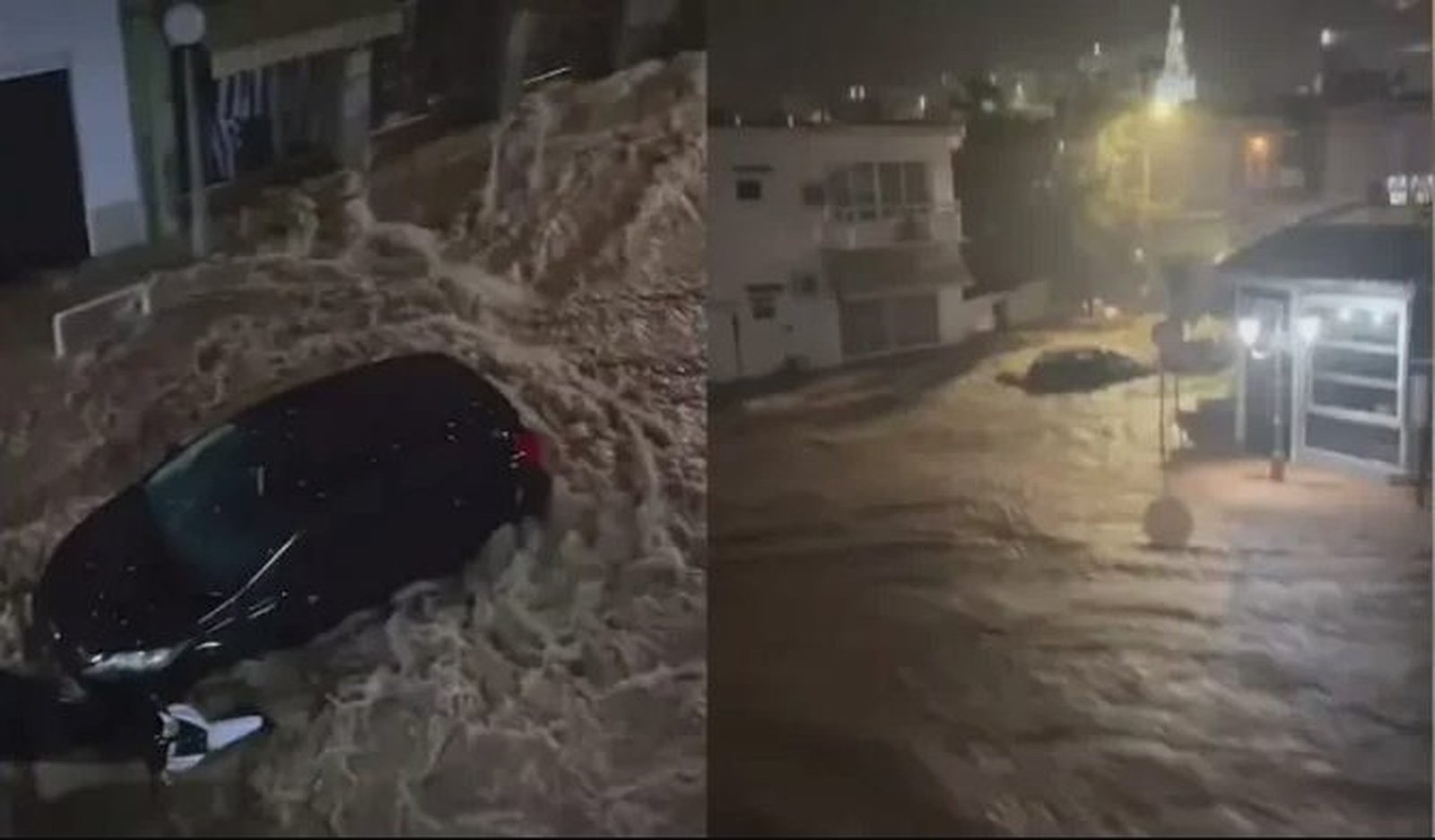
    Severe flooding on the Greek island of Rhodes has swept away at least 60 vehicles, inundated homes and businesses, and forced schools to close in four municipal districts, after Storm Agneta brought torrential rain to the southeastern Aegean island. Authorities sent an emergency alert to residents and visitors at about 3:30am, urging them to limit their movements.

    The worst damage was reported in Archangelos, a village on the island’s eastern coast, where an overflowing river turned streets into torrents, sweeping away cars and flooding properties. Roads were also flooded in Afantou, another town on the eastern coast, and in villages in southern Rhodes, according to local reports carried by Ekathimerini.

    The storm hit in the early hours of Monday after around 17 hours of continuous rainfall in the worst-affected areas, local media reported. Conditions in Archangelos were compared to flooding in January 2011, when the area was also badly hit. Although rainfall had eased by Monday morning, further showers and thunderstorms remained possible.

    Greece’s 112 emergency number sent the alert as water levels rose, warning people on Rhodes to stay off the roads and follow civil protection guidance. Firefighters responded to dozens of calls across Rhodes, Kalymnos, Samos and the Volos area, pumping water from flooded properties, cutting down fallen trees and moving two people to safety on Rhodes.

    The storm also caused damage on Kalymnos, another island in the Dodecanese, where a large boulder broke loose from a hillside and crashed into a garage containing a parked car. Flights at Rhodes airport were so far unaffected, according to travel reports.

    The flooding came just weeks after a 62-year-old worker died near Stegna on October 14 after being swept away by floodwaters, a reminder of how dangerous sudden Mediterranean downpours can be. The Hellenic National Meteorological Service had issued an orange-level severe weather bulletin for Rhodes and parts of the eastern Aegean, warning of heavy rain, thunderstorms and possible hail.

    With more bad weather forecast, the municipality of Rhodes advised residents to limit travel to what was strictly necessary, and the mayor confirmed schools would stay shut. The national weather service warned that violent thunderstorms and heavy rain could continue into Tuesday across western and northern Greece and the eastern Aegean islands.

    For an island that depends heavily on tourism, the storm is an unwelcome start to November. The immediate task is clearing vehicles swept away by floodwaters, unblocking drains and restoring streams, before the next band of rain arrives.

  • Iran claims three US drones downed near Hormuz

    Iran claims three US drones downed near Hormuz

    Iran’s Islamic Revolutionary Guard Corps has claimed that its forces shot down three United States drones near the Strait of Hormuz. The claims were carried by Iranian state media and reported by international outlets on Tuesday, November 3, 2026.

    According to the IRGC Aerospace Force, two US MQM-170 reconnaissance drones were brought down south of Qeshm Island using electronic warfare systems. The force said the two aircraft brought to four the total number of drones of that type it had seized.

    In a separate statement, the IRGC said its Aerospace Force had tracked and destroyed a US MQ-9 drone east of the Strait of Hormuz using a newly developed air defence system. The statement described the aircraft as the 55th MQ-9 its forces had brought down, operating under what it called the country’s unified air defence network.

    The claims came as Iranian state news agency IRNA reported five explosions heard in rapid succession on Qeshm Island, in southern Iran near the strategically important Strait of Hormuz. Witnesses also reported aircraft in the sky over the island, and blasts were reported in the nearby city of Bandar Lengeh.

    The United States military had not confirmed the Iranian claims at the time of reporting. The claims could not be independently verified, and no wreckage or other evidence was publicly presented alongside the statements.

    Separately, a US official told the Associated Press that American forces had carried out what were described as limited defensive strikes against Iranian targets in the Strait of Hormuz, after Iranian forces used surface-to-air missiles against US assets. US media reports said the strikes targeted assets involved in launching missiles at American military hardware.

    The Strait of Hormuz is one of the world’s most important shipping chokepoints, carrying a large share of global oil trade between the Gulf and the open sea. Tensions in the waterway have repeatedly raised concerns about the safety of commercial shipping and the risk of a wider confrontation.

    The competing accounts underline how difficult it is to establish facts quickly in a fast-moving military standoff. Iran’s claims rest on statements from its own armed forces, while the US account, as reported, focuses on defensive strikes rather than on the fate of any aircraft. Until independent evidence emerges, the downing claims remain claims, not confirmed events, and the situation around Qeshm Island will continue to be watched closely by governments and shipping operators alike.

  • North Korea’s cluster warhead test can wipe out 12 hectares

    North Korea’s cluster warhead test can wipe out 12 hectares

    North Korea has tested a new cluster warhead for its tactical ballistic missiles, according to its state news agency, in a trial that Pyongyang says proved the weapon can devastate a wide area in a single strike.

    The Korean Central News Agency reported on 1 November that the country’s Missile Administration carried out the test on 31 October to assess how effectively the warhead works in combat. The agency said the test confirmed that the Standard Type 2 cluster warhead can destroy a target area of 12 to 13 hectares at its highest density of fire.

    A cluster warhead opens in mid-air and scatters many smaller munitions over a wide area, rather than striking a single point. That design makes it effective against dispersed targets such as troops, vehicles, artillery positions and airfields, according to defence analysts who have described how such weapons work.

    South Korea’s Joint Chiefs of Staff said it had detected a missile fired from the Jongju area in North Pyongan Province toward the West Sea, also known as the Yellow Sea. The South Korean military said it had been tracking related activity in close cooperation with the United States before the launch and maintained a readiness posture.

    According to Yonhap News Agency, South Korea’s military did not announce the launch on the day it happened, a break from its usual practice of reporting North Korean ballistic missile launches in real time. Yonhap reported that the military wanted to complete its analysis first, because the missile appeared to have flown a short range at a low altitude for a warhead test.

    The test was overseen by Full General Kim Jong Sik, a member of the Central Military Commission of the ruling Workers’ Party of Korea, according to the state media report. The Ballistic Missile System Institute and the Warhead Institute of the Missile Administration were reported to have taken part in assessing the result.

    North Korea’s Missile Administration said four types of cluster warheads will be available for its military units to use before the end of the year, depending on their operational needs and the nature of their targets. State media did not give the missile’s flight distance, launch site or time, and leader Kim Jong Un was not reported to have attended the test.

    Shin Jong-woo, secretary-general of the Seoul-based Korea Defence and Security Forum, was reported as identifying the missile as the Hwasong-11Na, known as KN-24 and described as North Korea’s version of the United States ATACMS system. Photos released by state media showed the missile launching, the warhead bursting in mid-air and explosions across a target area, according to Yonhap.

    The test follows an earlier trial in April, when North Korea said it had tested cluster munitions mounted on a Hwasong-11 Ra tactical ballistic missile. It also came days after North Korea fired around 10 short-range ballistic missiles from its east coast toward the sea, in a demonstration linked to a drone exhibition.

    The test was reported as South Korea, the United States and Japan reaffirmed their commitment to the complete denuclearisation of the Korean Peninsula.

  • North Korea rejects FBI blame for $6.3bn Binance heist

    North Korea rejects FBI blame for $6.3bn Binance heist

    North Korea has rejected claims by the FBI and other United States intelligence agencies linking state-backed hackers to the record-breaking $6.3 billion breach at cryptocurrency exchange Binance. In a statement issued through the official Korean Central News Agency, Pyongyang dismissed the accusations as absurd rhetoric and a complete fabrication.

    The breach has been described as the largest digital asset theft of its kind, and US intelligence attributions have pointed to North Korea’s military hacking units as being behind it. Those claims have now been met with a sharp denial from Pyongyang, which insists it had no involvement in the incident and rejects the attribution outright.

    The exchange of claims and denials reflects a familiar pattern in disputes over major cyberattacks. American agencies have repeatedly attributed large-scale hacking operations to North Korean state-backed groups, while Pyongyang has routinely denied any role. In this case, the scale of the reported loss, $6.3 billion in digital assets, has made the attribution especially high profile.

    For the cryptocurrency industry, the dispute matters beyond the politics. A breach of this size raises questions about the security of large exchanges, the protection of customer assets, and the ability of authorities to trace and recover stolen funds. When the alleged perpetrators are said to be state-backed, those questions become harder still, because recovery and enforcement across borders are far more complex.

    North Korea’s statement, carried by its state news agency, did not accept any part of the US account. Instead, it framed the accusations as fabricated, a position that leaves the two sides’ accounts directly opposed. No independent adjudication of the competing claims has been presented in the reporting of the denial.

    The disagreement is likely to continue, as both Washington and Pyongyang have strong reasons to hold their positions. For now, what is confirmed is the denial itself, the scale of the breach as reported, and the fact that the attribution remains contested rather than settled.

    Attribution in major cyber incidents is often disputed in this way. Governments typically base their claims on technical evidence and intelligence assessments, while the accused party may reject those findings outright, leaving the public with two conflicting accounts. In cases involving very large sums, that dispute tends to attract even more attention, because exchanges, investors and regulators all want to know how the breach happened and whether stolen assets can be traced or recovered.

  • Hackers send fake nuclear alerts to phones across Ukraine

    Hackers send fake nuclear alerts to phones across Ukraine

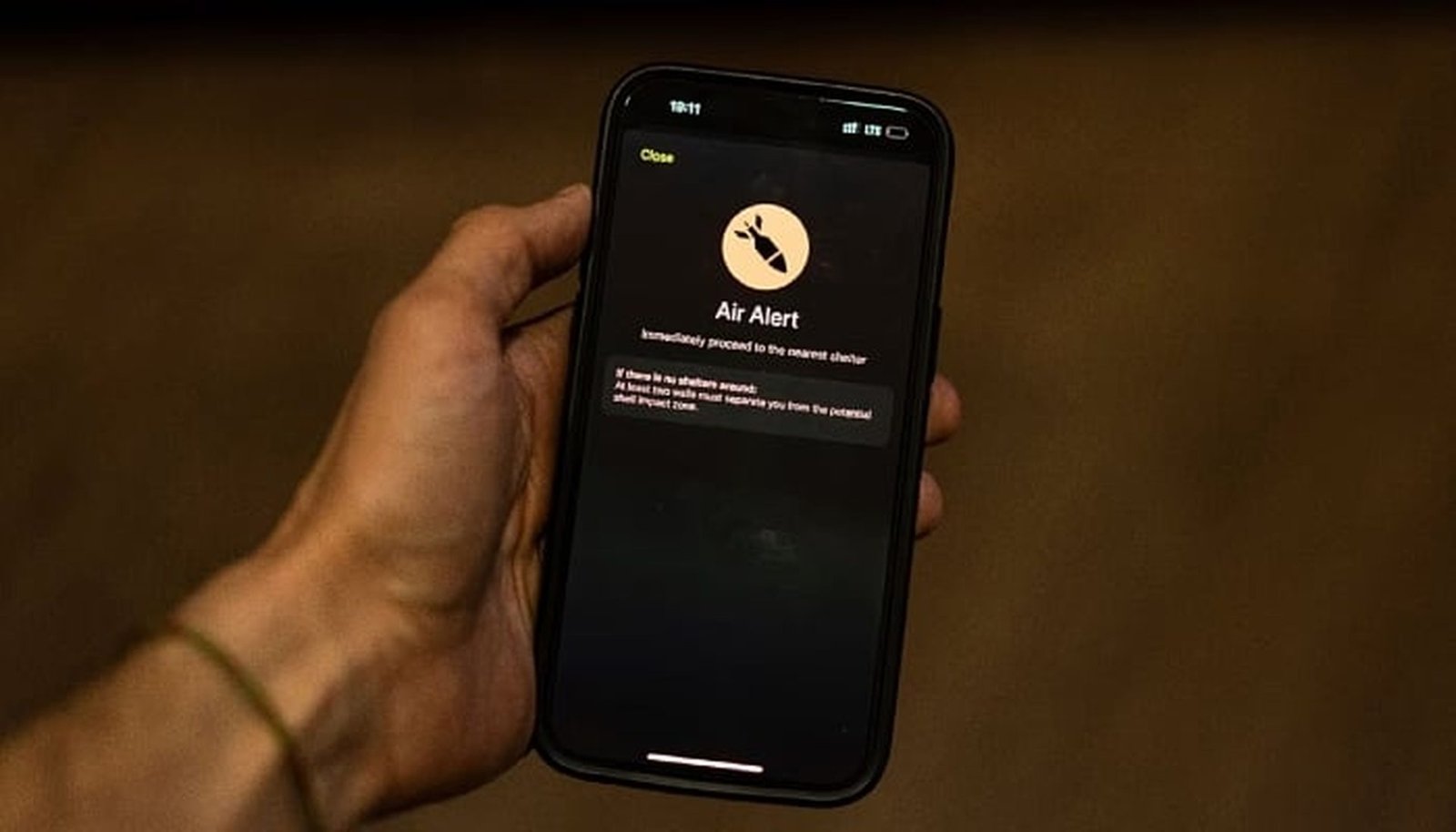
    Hackers broke into Ukraine’s nationwide air raid alert app on Sunday night and sent false warnings of nuclear and chemical attacks to people across the country, causing alarm in Kyiv and other cities before the service was suspended.

    The false alerts began shortly before eleven o’clock local time on Sunday 1 November. Users received a warning of a radiation threat in Kyiv, followed by messages in Russian claiming a nuclear alert would cover all of Ukraine and referring to the Oreshnik missile. Further alerts warned of a chemical attack on Kyiv and of street fighting in the capital, telling people not to go outside.

    Ukraine’s air force said on Telegram that the application had probably been subjected to hostile interference, telling users there was no radiation threat and urging them to stay calm and follow official updates. The app’s team later said third parties had carried out unauthorised interference, and it disabled push notifications and temporarily suspended the service. In the western Lviv region, a radiation hazard signal was briefly played on loudspeakers because of the app, although officials confirmed there was no radiation danger.

    The app is a lifeline for Ukrainians, warning them in real time of incoming missile and drone attacks and often giving them only minutes to reach shelter. Its temporary shutdown therefore carried serious risks, and officials urged people to rely on sirens, loudspeakers and official channels while it was being restored. The service was gradually brought back during Monday, according to the project’s team.

    Ukraine’s Centre for Strategic Communications blamed Russia for the hack, but responsibility has not been independently established. A hacking group calling itself Hitcore was reported to have claimed responsibility, though that claim could not be verified. Ukraine’s emergency services said there were no reports of casualties or damage from the false alerts, and an investigation is under way.

    Hours later, Russia’s own emergencies ministry said its mobile app had also suffered a massive cyberattack, sending false information to users in thirty-three regions. It said the app’s full functionality would be restored by the end of Monday. It is not clear whether the two attacks were linked, and neither side’s claims about the incidents have been independently confirmed.

    The episode has raised fresh questions about the safety of the digital systems civilians depend on during wartime. Air force spokesman Yurii Ihnat told Ukrainian television that the cyberattack had no impact on Ukraine’s security and defence operations, because the alert app is separate from military command systems.

  • UK doubles settlement wait to 10 years for most migrants

    UK doubles settlement wait to 10 years for most migrants

    Most migrants in Britain will now have to wait ten years before they can apply for permanent settlement, double the previous five-year wait, under a major overhaul confirmed by Home Secretary Shabana Mahmood in Parliament on Monday 2 November.

    The new system, called earned settlement, replaces the long-standing arrangement under which indefinite leave to remain followed almost automatically after five years of lawful residence. Instead, the government says settlement must be earned through contribution, good conduct and language ability, and decisions will be based on what applicants give to the country rather than simply on time spent there.

    Under the plan, ten years becomes the standard qualifying period for most migrants. People earning above about fifty thousand pounds a year, along with doctors, nurses, teachers and similar public service workers, can still qualify after five years. The fastest route, three years, is reserved for top earners on more than about one hundred and twenty-five thousand pounds and for people on the highest talent schemes.

    Everyone will also have to pass baseline tests, according to summaries of the sixty-two-page policy document, including a clean criminal record, high-level English, no debts to the taxpayer and at least three years of National Insurance contributions. Care workers who entered or switched into the relevant visa route before May 2025 will keep their five-year pathway, the government has confirmed.

    The wait could stretch far longer for people who break the law, with reports of the plan putting settlement back by many years in cases of criminality. Refugees will no longer receive automatic indefinite leave; their stay will be reviewed regularly, and permanent settlement would come only after a much longer period. Low-skilled workers will no longer have a route to settlement at all, and a new eighteen-month temporary protection status is planned for people refused asylum.

    The announcement has drawn criticism from both sides. Labour MP Nadia Whittome described the plan as a race to the bottom, while some Labour MPs also criticised it. The Conservatives, meanwhile, dismissed it as a watered-down version of their own proposals. Ministers say the changes are needed to bring immigration levels down after the post-Brexit surge in arrivals, while business groups have warned that tougher rules could deter workers Britain still needs.

    The government has confirmed the policy framework, but detailed immigration rules, implementation dates and further guidance have yet to be published, so migrants already on the path to settlement are waiting for clarity on exactly how the new system will apply to them.

  • Turku refuses 2028 junior hockey event if Russia plays

    Turku refuses 2028 junior hockey event if Russia plays

    The Finnish city of Turku has said it will not host the 2028 world junior ice hockey championship if Russia is allowed to take part in the tournament. The position was set out by the city’s mayor, Piia Elo, in comments reported on Monday, and it places a clear condition on Turku’s role as a host city for one of ice hockey’s showcase youth events.

    According to the reports, the mayor linked the stance to Russia’s war in Ukraine, to security concerns, and to the values the city wants to uphold when it stages a major international event. The argument, in essence, is that hosting is not a neutral act: a host city lends its name, its venues and its public spaces to a tournament, and Turku does not want to do that for an event that includes Russia while the war continues.

    The city cannot settle the question on its own, however. The final decision on which teams are allowed to take part rests with the International Ice Hockey Federation, the sport’s world governing body. Turku’s statement is therefore best understood as a condition attached to its hosting, rather than as a ruling on eligibility itself. If the federation were to readmit Russia, Turku has signalled that it would step back from the event.

    Russia and Belarus have been excluded from international ice hockey since 2022, following the full-scale invasion of Ukraine. That exclusion has kept Russian teams out of world championships and other federation events for several years. The reports note that the federation was expected to revisit the issue, which is why the question of a possible return has come back into focus ahead of the 2028 junior tournament.

    For a city like Turku, the junior championship is a major undertaking. The world junior tournament draws young players who are often on the verge of professional careers, along with fans, media and visiting teams from around the hockey world. Hosting it brings attention and visitors, but it also brings responsibility for security, organisation and the public image of the event. A dispute over participation therefore touches the practical side of hosting as well as the political side.

    The episode also shows how closely sport and international politics remain linked. Governing bodies in several sports have faced the same dilemma since 2022: whether to keep Russian teams out, under what conditions they might return, and how host cities and other competing nations would react to a change. Each sport has handled the question differently, and each decision has been watched closely by governments, fans and athletes.

    What happens next will depend on the federation’s decision and on how Turku responds to it. If Russia remains excluded, the city’s condition would not stand in the way of the tournament going ahead there. If the federation moves towards readmission, Turku’s statement suggests the 2028 event would need a different host, or a different arrangement, unless the position changes.

    For now, the message from Turku is unambiguous. The city is willing to host the world’s best young ice hockey players, but not, on its own terms, in a tournament that also includes Russia. That clarity may itself shape the debate, because it forces the federation and other stakeholders to weigh the practical consequences of any change in policy, not just the principle behind it.

  • Ryanair Warns of Pay Freeze as Fuel Bill Jumps €2bn

    Ryanair Warns of Pay Freeze as Fuel Bill Jumps €2bn

    Europe’s largest airline by passenger numbers is preparing its staff and passengers for a difficult year. Ryanair has said it is considering a pay freeze as it faces a sharp rise in fuel costs, with its fuel bill expected to increase by about €2 billion in the next financial year, which begins on 1 April 2027.

    The warning was reported alongside the airline’s half-year results, and it was attributed to chief executive Michael O’Leary. According to the report, higher ticket prices alone would not be enough to absorb an increase of that size, which is why the company is looking at holding pay steady as one of its options for controlling costs.

    Why fuel costs have jumped

    Airlines usually buy much of their fuel in advance to protect themselves from sudden price swings. In Ryanair’s case, most of its fuel for the coming period was reported to have been bought at around $67 a barrel. The problem, according to the report, is the remaining fuel, which has roughly doubled in price. That gap between hedged fuel and fuel bought at current market prices is a major reason for the higher bill.

    Fuel is one of the largest costs for any airline, alongside staff, aircraft leasing and airport charges. When fuel prices rise sharply, airlines have only a few choices: raise fares, cut routes, reduce other spending, or accept lower profits. Ryanair’s discussion of a pay freeze shows it is weighing the spending side, even though such a step would be unwelcome news for its workforce.

    What it could mean for travellers

    For passengers, a pay freeze does not directly change ticket prices, but it is a signal of pressure inside the business. If fuel costs stay high, airlines often pass part of the increase to travellers through higher fares or extra charges, while also looking for savings elsewhere. Ryanair is known for its low-cost model, built on high aircraft use, quick turnarounds and tight control of costs, so any change in that model is watched closely by competitors and customers alike.

    The airline’s size makes the story relevant well beyond Ireland, where it is based. Ryanair carries tens of millions of passengers a year across Europe, and its pricing decisions can influence fares on many popular routes. A €2 billion rise in one cost line is therefore not only a company problem; it is a sign of how energy prices are feeding through the whole travel industry.

    Staff groups are likely to respond carefully to the pay-freeze suggestion. Airline workers have faced years of disruption, from pandemic shutdowns to rapid rehiring as travel recovered, and pay has been a sensitive issue across the sector. Any formal proposal would need negotiation, and it could affect morale at a time when airlines are also trying to keep experienced crews and ground staff.

    For now, the pay freeze remains a consideration rather than a confirmed decision, according to the report. The coming months will show whether fuel prices ease, whether fares can cover more of the gap, and whether Ryanair finds other savings. What is already clear is that the airline expects the next financial year to be much more expensive to operate, and it is preparing the ground for tough choices ahead.

  • Western Sahara UN Mission Ends After 35 Years

    Western Sahara UN Mission Ends After 35 Years

    The United Nations peacekeeping mission in Western Sahara has come to an end after 35 years, after the Security Council failed to renew its mandate. The mission, known as MINURSO, entered what the United Nations described as a liquidation phase on 1 November, with its assets to be transported back to troop-contributing countries.

    UN Secretary-General Antonio Guterres confirmed the end of the mission in a statement on Sunday, following the expiry of its mandate without a renewal. The mission had been in place since a UN-brokered ceasefire in 1991, and its observers monitored developments in a territory whose status has remained disputed for decades.

    Morocco, which claims Western Sahara as its own territory, welcomed the decision. The Algeria-backed Polisario Front, which has sought an independent state in the territory since former colonial power Spain left in 1976, expressed concern at the end of the mission, according to reports of the reactions.

    How the mandate expired

    The end of the mission follows a year in which the Security Council adopted a US-drafted resolution accepting Rabat’s plan to give the territory autonomy under Moroccan sovereignty. That resolution shaped the diplomatic backdrop to the latest round of voting, but it did not itself settle the mission’s future.

    In the most recent round, Russia, which had abstained in last year’s vote, vetoed another US-backed resolution that would have cemented the UN’s preference for the Moroccan plan while scaling back the peacekeeping force. The Security Council then defeated a competing Russian resolution, leaving the mission to expire without a new mandate.

    The sequence of votes meant that neither proposal secured the support needed to continue the mission, and the mandate simply ran out. The United Nations has said the liquidation phase will involve the orderly return of equipment and personnel, a process that typically takes time for a mission of this size and age.

    What MINURSO did

    MINURSO was established to monitor the ceasefire agreed in 1991, and its observers reported on developments on the ground. Over 35 years it became one of the United Nations’ longest-running peacekeeping operations, operating in a remote desert environment where monitoring depended on patrols and observation posts.

    The mission’s closure removes the UN’s on-the-ground monitoring presence in the territory at a moment when the political process remains unresolved. Supporters of the autonomy plan argue that it offers a realistic path forward, while the Polisario Front and its backers maintain that the people of the territory should decide their own future.

    Diplomats will now watch whether the end of the mission changes the dynamics of the dispute, or whether political negotiations continue through other channels. For now, the immediate practical task is the winding down of a mission that has been part of the landscape of Western Sahara for more than three decades.