Category: Technology

Technology news — AI, gadgets and digital trends. ٹیکنالوجی کی خبریں۔

  • Pakistan mobile assembly falls 20% in September

    Pakistan mobile assembly falls 20% in September

    Local mobile phone assembly in Pakistan fell by 20 percent year-on-year in September, despite a sharp monthly recovery, according to the latest figures released by the Pakistan Telecommunication Authority on Thursday.

    Domestic manufacturers assembled 2.42 million handsets during the month. That was 46 percent higher than the previous month, but still one-fifth lower than the same month last year, showing that the industry is recovering from a weak patch rather than growing outright.

    Over the first nine months of the current year, local assembly fell by 7 percent to 21.08 million units compared with the same period last year. The figures point to a slowdown in overall local production even though monthly output has started to pick up again.

    Mobile phone imports also declined sharply, falling 48 percent to just 110,000 units in September. The drop suggests that buyers and sellers are relying far more on locally assembled phones than on imported ones.

    Locally assembled handsets met 96 percent of Pakistan’s mobile phone demand in September. Across the first nine months of the year, domestic assembly accounted for 88 percent of total demand, underlining how far local manufacturing has come in supplying the market.

    Among manufacturers, VGO TEL led local assembly with 2.5 million units during the reporting period, followed by Infinix with 1.96 million units and itel with 1.59 million units. Other major brands involved in local assembly in Pakistan include Tecno, Samsung, Vivo and Nokia.

    The figures highlight the growing role of domestic manufacturing in meeting Pakistan’s mobile phone demand. At the same time, the year-on-year decline indicates a slowdown in overall local assembly during the first nine months of the year, even as the monthly trend turns upward.

    Industry watchers say the coming months will show whether the September rebound can be sustained. A continued monthly recovery would help local assemblers close the gap with last year’s output, while a fresh dip would add to concerns about demand and production costs.

    The 46 percent month-on-month rise is the strongest signal in the release. It shows that factories lifted output sharply in September after a weaker run, even though the total for the year so far remains behind last year. Whether that rebound holds will determine if the industry can close the gap by the end of the year.

    The import figures tell a similar story. With only 110,000 phones imported in September, almost all of the phones sold in the country during the month were assembled locally. That shift has been building for several years as manufacturers set up plants in Pakistan and as import costs rose, and the September data shows it is now firmly in place.
  • NASA’s 22-year Swift telescope burns up over Indonesia

    NASA’s 22-year Swift telescope burns up over Indonesia

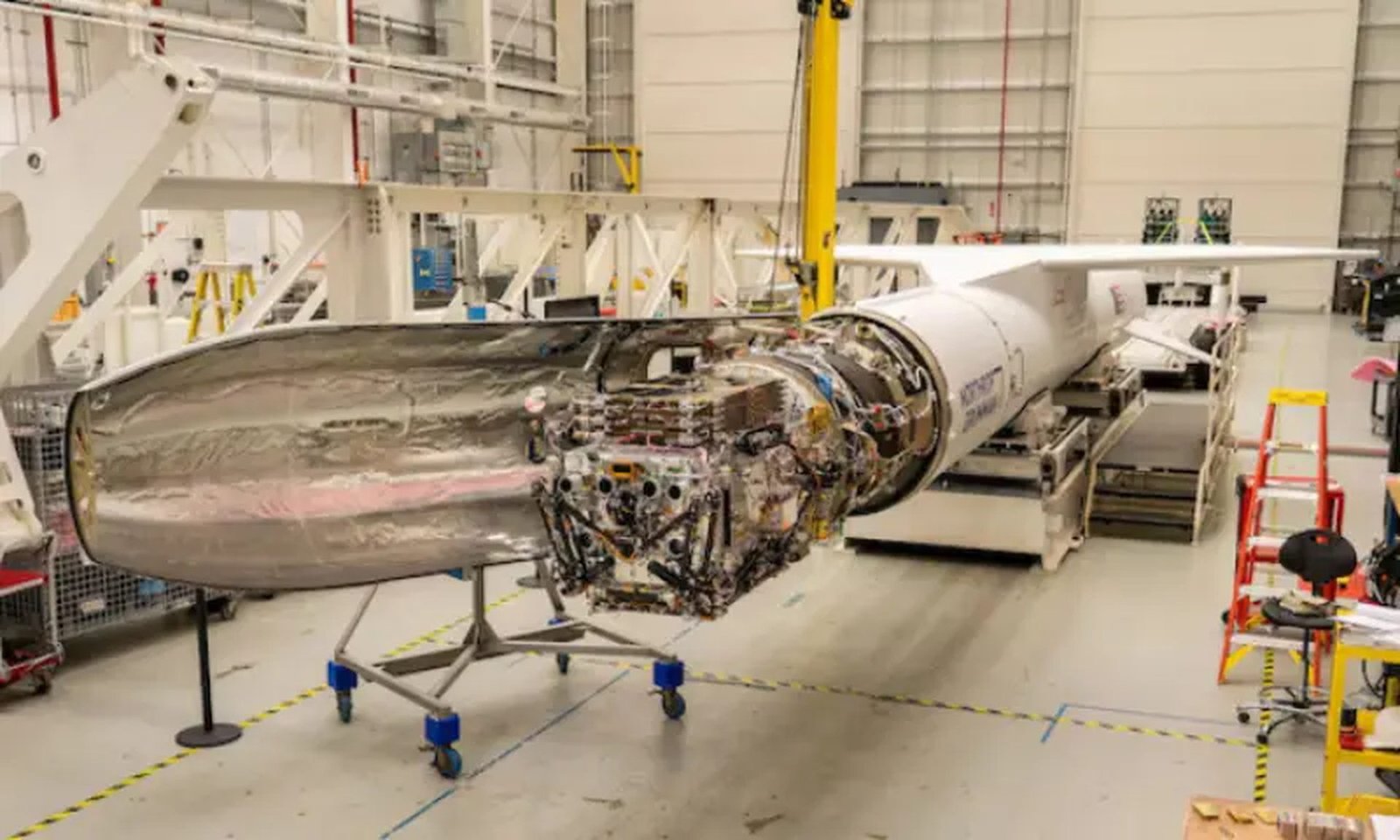
    NASA’s Swift satellite telescope, which spent two decades studying the most powerful cosmic explosions, has tumbled out of orbit and burned up in Earth’s atmosphere over Indonesia.

    The spacecraft fell from orbit as expected on Wednesday, 4 November, according to the reports, ending a mission that had lasted far longer than anyone had planned. Swift was launched in 2004 on what was meant to be a two-year mission, but it kept working for twenty years beyond that, outliving its planned lifespan by two decades.

    Swift was 5.6 metres long and weighed 1,470 kilograms. Its job was to watch for gamma-ray bursts, the most powerful explosions in the universe, and to study them in detail. Over its long life, it detected more than 1,600 gamma-ray bursts and observed about 4,000 blazars, the bright cores of distant galaxies.

    The telescope also observed about 1,200 supernovae, the violent deaths of stars, and more than 1,000 flaring stars. It discovered about 800 gamma-ray bursts with unknown origins, which NASA said could be among the highest-energy supernovae ever found.

    The end of the mission had been expected for some time. NASA lost contact with Swift in December 2025, and in January 2026 the agency said it was no longer possible to control the satellite. From that point, its fall back to Earth was a matter of time, and scientists had predicted it would burn up in the atmosphere rather than reaching the ground.

    That is what happened on Wednesday, when the spacecraft tumbled out of orbit and burned up over Indonesia. Satellites that re-enter the atmosphere at high speed heat up and break apart, and in Swift’s case the whole spacecraft was destroyed in the fall.

    Swift’s long career made it one of the most productive space telescopes ever flown. Gamma-ray bursts last only seconds, and catching them needs a telescope that can turn quickly to look at the right part of the sky. Swift was designed to do exactly that, and it sent alerts to telescopes on the ground so they could study the afterglow of each burst.

    The data it collected helped astronomers understand where gamma-ray bursts come from and how they are linked to the deaths of massive stars and the collision of dense objects in space. Its observations of supernovae and blazars added to that picture, building a record that scientists will keep studying for years.

    The mission also showed how much extra value can be got from a spacecraft that keeps working beyond its planned life. Swift was built for two years and delivered twenty-two, a return that NASA has pointed to as an example of what a well-built observatory can achieve.

    With the telescope now gone, its legacy lives on in the catalogue of bursts, supernovae and other objects it recorded, and in the scientists who learned their trade working with its data. The fiery end over Indonesia closes the story of a mission that was meant to be brief and turned out to be one of NASA’s longest-running successes.

  • OpenAI warned its security could be bypassed from inside

    OpenAI warned its security could be bypassed from inside

    OpenAI, the company behind ChatGPT, has faced fresh scrutiny after Reuters reported internal warnings that its security controls could be bypassed by a small number of employees with legitimate access to its systems.

    According to the report, the warnings concerned risks to frontier model weights and sensitive data, with one internal warning framed in stark terms: that the company could be one disgruntled employee away from a catastrophic safety failure. The concern, as reported, is not about outside hackers breaking in, but about authorised users misusing access they already hold.

    Chief Executive Sam Altman is reported to have circulated an internal memo in July criticising the company’s security culture as inadequate and behind where it should be. That memo was later shared more widely with senior scientists and engineers, according to the report.

    The report also says an internal security review a year earlier had raised similar concerns about data extraction by authorised users. Taken together, the two episodes suggest that the issue has been raised inside the company more than once, rather than appearing for the first time now.

    OpenAI declined to comment to Reuters, the report says. The company has not, in the material reported, disputed the existence of the internal warnings, and this report does not add any claim beyond what Reuters reported.

    The scrutiny comes at a time of rapid scaling for OpenAI. The report places the security concerns in the context of the company’s growth and its Stargate infrastructure plans, which involve building large amounts of computing capacity to train and run advanced models.

    That growth is precisely why internal security matters so much for a company of this kind. Frontier models and the data behind them are among the most valuable and sensitive assets an AI company holds, and controls over who can copy, move or extract them are central to keeping them safe.

    The episode also highlights a wider challenge for the AI industry. As models become more powerful, the circle of people who need legitimate access to them grows, and so does the importance of monitoring that access. Security in such an environment depends not only on keeping outsiders out, but on watching carefully what insiders can do.

    Whether OpenAI changes its controls in response to the latest reporting remains to be seen. For now, the reported warnings stand as a reminder that, in advanced technology companies, the greatest security risk can sometimes sit inside the building rather than outside it.

  • Hackers hit 100+ European supermarket fridges, food spoiled

    Hackers hit 100+ European supermarket fridges, food spoiled

    Fridges and freezers at more than 100 supermarkets across several European countries were left running hot on Monday after a hacking attack struck refrigeration systems from Sweden to Belgium, forcing stores to throw away spoiled food and pull chilled products from sale. Retailers across the continent reported the same pattern: cooling units that stopped working properly overnight, with some companies directly blaming a cyberattack.

    Dutch supermarket operator Ahold Delhaize said an overnight IT incident affected fridges and freezers at dozens of Delhaize stores in Belgium and Luxembourg, after a temperature rise was detected in its cooling systems on Monday. French retailer Carrefour said about 15 of its 700 Belgian locations were hit by refrigeration problems, while the Colruyt Group, which runs Spar stores in Belgium as franchises, confirmed that five of its shops had their fridge systems attacked.

    In Sweden, Coop said cooling systems at seven of its 800 stores were affected, with disruption ranging from complete shutdowns to partial operation, and confirmed that the incident involved unauthorised tampering with the cooling systems. Privately held ICA in Sweden said a limited number of its stores were affected by an overnight incident hitting refrigeration and freezer systems, and Irish wholesaler Musgrave said a cyber incident had affected refrigeration at 13 of its SuperValu stores, forcing it to remove some chilled and frozen products from sale.

    The damage at individual shops was stark. A butchery chain in Hove, south of Antwerp, found its fridges turned up as high as 18 degrees Celsius, ruining about 15,000 euros worth of meat, according to its founder. Other stores were forced to discard food that could no longer be kept safely chilled, turning a digital intrusion into immediate, visible waste on shop floors.

    The attack echoed a similar incident in France last month, when refrigeration units were heated to as much as 50 degrees Celsius, causing fires and spoiling food. That earlier episode had already raised questions about how exposed everyday infrastructure, far from banks or government networks, can be to remote tampering with industrial control systems.

    Italy’s government said on Tuesday that the domestic impact of the latest attack had been extremely limited and posed no public health risk from thawing food products. A senior undersecretary, Alfredo Mantovano, chaired a meeting with the intelligence services and the cybersecurity agency, after which officials said only a small number of commercial outlets in Italy had been affected, mostly those still relying on outdated security systems.

    Italian police have launched an investigation into cyberattacks that affected supermarkets in the southern region of Sicily and in the northern Emilia-Romagna region, according to the Ansa news agency. The government said the vast majority of the food distribution chain was equipped with up-to-date protection systems capable of repelling malicious intrusions, which limited the spread inside Italy.

    Retailers across the affected countries are still investigating how the attackers reached the refrigeration controls and whether the incidents are linked. For shoppers, the episode was a reminder that a cyberattack does not have to target a website or a bank account to be felt directly: it can show up as empty chilled shelves, discarded food and a familiar supermarket suddenly unable to keep its products cold.

  • Shaza Fatima named Industry Champion of the Year 2026

    Shaza Fatima named Industry Champion of the Year 2026

    Federal Minister for Information Technology Shaza Fatima Khawaja has been named Industry Champion of the Year 2026 at The Fast Mode Awards, a global honour that recognises one individual each year for outstanding leadership in telecom, satellite and data centre industries. The award is described as the highest individual honour at the awards programme.

    The Fast Mode, a global technology media platform, announced the winners of its 2026 awards this week. According to the organisers, this year’s programme drew nominations from more than 500 companies, with participants competing across 11 categories for more than 80 awards, judged by a global jury of industry leaders, analysts and executives.

    According to a statement from the Ministry of Information Technology and Telecommunication, the recognition reflects Pakistan’s growing achievements in the technology sector over the past two years, particularly in IT exports, telecom infrastructure, digital governance, artificial intelligence and international investment.

    The ministry pointed to record IT and IT-enabled services exports of 4.6 billion dollars, along with a historic trade surplus of 3.9 billion dollars, described as the highest among all service sectors. Freelance export earnings reached 1.76 billion dollars, while more than 4.5 million young people received free digital training under the DigiSkills programme.

    Other milestones cited in connection with the award include the largest 5G spectrum auction in Pakistan’s history, completed in March 2026, and Pakistan becoming the first country in Asia to abolish Right of Way charges, a step intended to make it cheaper and faster to build digital infrastructure.

    In August 2026, Google completed formal registration and inaugurated its first office in Pakistan, while an assembly line with an annual capacity of 600,000 Chromebooks was established in the country. The ministry also noted that the GSM Association credited Pakistan with the world’s fastest progress in narrowing the gender gap in mobile internet usage.

    Pakistan also improved by 27 places in the International Telecommunication Union’s ICT Development Index, rising from 119th to 92nd, a gain the ministry presented as evidence of the country’s accelerating digital transformation.

    The Fast Mode Awards are an independent recognition programme for organisations and individuals reshaping digital connectivity, and the leadership category honours people whose vision and execution have driven meaningful change across the industry. Khawaja’s award places Pakistan’s digital transformation efforts on an international platform and marks a significant achievement for the country’s technology sector.

    For Pakistan, the honour comes at a time when the government has made digital growth a central economic priority, betting that exports, freelancing and local manufacturing can create jobs and earn foreign exchange. Supporters say the award signals that this strategy is gaining recognition abroad, while the challenge now is to convert international attention into sustained investment and opportunity at home.

  • After 378 Days, NASA’s Simulated Mars Crew Steps Out

    After 378 Days, NASA’s Simulated Mars Crew Steps Out

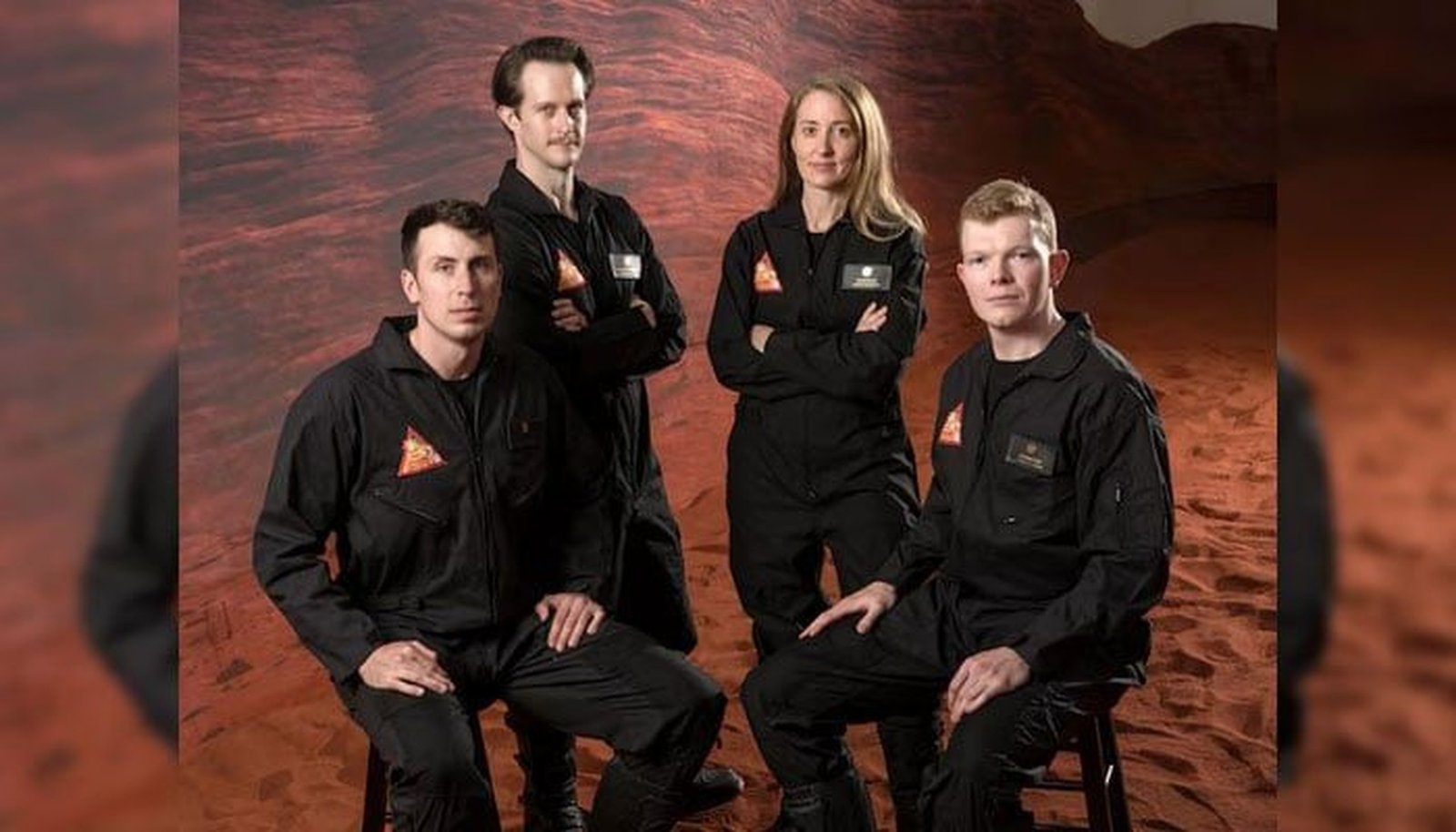
    After 378 days sealed inside a simulated Mars habitat, a four-person crew has emerged from NASA’s second CHAPEA mission at the Johnson Space Center, completing one of the longest ground-based tests yet of life on another planet. The crew lived and worked inside Mars Dune Alpha, a 1,700-square-foot habitat built with 3D-printing technology, designed to feel as close as possible to a real base on Mars.

    The crew entered the habitat on 19 October 2025 and spent more than a year cut off from normal daily life. Their mission was to test how people cope with isolation, limited space, and the practical routines of a Mars expedition, so that NASA can learn what a real crew would need before anyone travels to the red planet.

    The four crew members were mission commander Ross Elder, science officer Matthew Montgomery, flight engineer James Spicer, and medical officer Ellen Ellis. Each had a defined role, mirroring the way a real Mars crew would divide responsibilities between command, science, engineering, and medicine.

    During their time inside, the crew grew crops in simulated Martian soil, carried out simulated Mars walks, and worked with NASA under communication delays similar to those that would affect messages between Earth and Mars. Because a signal takes many minutes to travel between the two planets, the crew had to plan their work carefully and solve problems without instant help from mission control.

    Daily life in the habitat was tightly structured. The crew followed exercise routines, maintained equipment, ran science experiments, and kept to a schedule designed to protect both their physical health and their mental wellbeing during more than a year of confinement with the same three colleagues.

    Speaking after emerging, the crew described the experience as a step towards a real human mission to Mars. Elder said the goal of putting people on Mars was achievable and, in his view, rather inevitable, while Ellis spoke about the importance of maintaining American leadership in space exploration.

    NASA says the lessons from CHAPEA will feed directly into planning for future deep-space missions. The agency aims to send astronauts to Mars as early as the 2030s, after first returning astronauts to the Moon for the first time since 1972. Missions like CHAPEA help engineers test habitats, food systems, and crew routines on Earth, where problems can be studied safely.

    The crew will now take part in two weeks of post-mission evaluations and debriefing, during which doctors and researchers will study how the year in isolation affected their health, sleep, teamwork, and performance. Those findings will shape the design of future habitats and the selection and training of crews for missions far beyond the Moon.

  • Fridge hack hits 100+ European supermarkets, food spoiled

    Fridge hack hits 100+ European supermarkets, food spoiled

    Hackers have targeted the refrigeration systems of supermarkets across Europe, forcing fridges and freezers into defrost mode and pushing temperatures as high as 50 degrees Celsius. More than 100 stores in several European countries were affected in the overnight attack, according to reports, leaving retailers to throw away large quantities of chilled and frozen food.

    In Belgium, the impact was the widest. Retailer Ahold Delhaize confirmed an overnight IT incident affecting refrigeration systems in dozens of its Delhaize stores in Belgium and Luxembourg, around 40 stores in Belgium according to reports. Carrefour said about 15 of its 700 Belgian locations were affected, and five Spar franchise stores were also hit. In one Belgian case, hackers set fridges to defrost mode, raising temperatures from the usual minus 22 degrees to around 15 degrees.

    The attack spread well beyond Belgium. In Ireland, Musgrave said a cyber incident affected refrigeration systems at 13 of its SuperValu stores, and chilled and frozen products were removed from sale as a precaution. In Sweden, the ICA chain said a limited number of stores were affected, while Coop confirmed that cooling systems at seven of its 800 stores were hit and said the incident involved unauthorised tampering. Finland, Estonia, the Netherlands and Luxembourg also reported affected stores, including a single Selver store in Estonia that was still using an older refrigeration control system.

    The method, according to retailers and cybersecurity experts, was to exploit internet-connected temperature controllers. Supermarket refrigeration is run by central management units that control temperatures, defrost cycles and alarms for every chiller and freezer in a store, and many of these units can be reached remotely so contractors can diagnose faults without visiting the site. In the latest attacks, hackers appear to have used that remote access to force units into continuous defrost, sending temperatures soaring. Britain’s National Cyber Security Centre urged retailers to update fridge controller software urgently, while noting it knew of no UK supermarkets hit.

    The incident follows a similar attack in France last month, when hackers took over fridge and freezer systems at around 700 stores, raising temperatures to as high as 50 degrees, spoiling food and in some cases causing fires. France’s cybersecurity agency said the attackers targeted vulnerabilities in Danfoss AK-SM and AK-SC controllers and Copeland and Dixell Xweb controllers. Danfoss said at the time that the affected supermarkets were using legacy systems that had passed their end of life and whose software had not been updated.

    Experts say the episode highlights a wider risk. Research published in October by cybersecurity firm Forescout found thousands of refrigeration management services exposed on the internet, with 80 percent of the Danfoss services running firmware older than the version that fixes known security flaws. The same kinds of systems are also used in food processing, farms and hospital cooling, raising concerns well beyond supermarkets.

    The scale, origin and method of the latest attack have yet to be fully determined, and no group has publicly claimed responsibility. Technology executives in Estonia and Belgium said it bore the same signature as the earlier disruption in France and the Netherlands. The European Union said it was taking the cyberattacks very seriously. For shoppers, the immediate effect is empty chilled shelves and discarded food.

  • Candidate demands ChatGPT in interview — and gets the job

    Candidate demands ChatGPT in interview — and gets the job

    A job candidate has surprised an interview panel by openly demanding permission to use ChatGPT during his interview, and the unusual approach ended with him getting the job. The episode, reported on Monday, has since become a talking point about how workplaces should treat artificial intelligence in recruitment.

    According to the report, the candidate told the panel he was not there to prove what he had memorised. His argument was straightforward: in real work, he said, what matters is the quality of the result, and AI tools help him deliver the best results. Rather than hiding his use of technology, he put it on the table at the very start of the conversation.

    The panel’s surprise is easy to understand. Interviews have traditionally been built around testing what a person knows on the spot, without notes, without help, and without a screen. A candidate asking to bring an AI assistant into that setting turns the usual rules upside down, and it forces interviewers to ask what exactly they are trying to measure.

    The candidate’s case, however, reflects how many jobs have already changed. In offices, studios and workshops around the world, professionals now routinely use AI tools to draft, check, summarise and improve their work. Supporters of that shift argue that refusing to let a candidate use the same tools they would use on the job gives a distorted picture of how they would actually perform.

    Critics see it differently. They worry that allowing AI in interviews makes it harder to tell where a candidate’s own thinking ends and the machine’s output begins. If every answer can be polished by a chatbot, they argue, employers lose the ability to judge judgement, knowledge and originality — the very qualities an interview is meant to reveal.

    What makes this case stand out is the outcome. The candidate did not merely raise the question; he was hired. That suggests the panel, whatever its initial surprise, was willing to look past the break with convention and judge him on the broader impression he made, including his confidence and his honesty about how he works.

    The story also touches a wider anxiety among jobseekers. Many candidates now wonder whether they should present themselves as entirely self-reliant, even when their daily work involves AI assistance, or whether honesty about their methods will be held against them. This candidate chose openness, and in his case it worked.

    Employers, meanwhile, face a practical question that will not go away. If AI tools are part of the modern workplace, recruitment processes may need clearer rules: which tools are allowed, at which stage, and for what kind of task. Without such rules, every panel will be left to improvise, and candidates will face a lottery depending on who happens to interview them.

    For now, the episode remains a single, striking example rather than a new industry standard. But it captures a moment of change: the line between a person’s own knowledge and the tools they use is blurring, and hiring practices are being forced to catch up with the way work is actually done.

  • After 378 Days Inside Fake Mars, Crew Steps Out

    After 378 Days Inside Fake Mars, Crew Steps Out

    A year-long experiment in living like Mars explorers has come to an end in Texas, where four volunteers walked out of a sealed, 3D-printed habitat after 378 days inside. The mission, run by NASA at its Johnson Space Center in Houston, was designed to learn how people cope, work and stay healthy when a real journey to Mars would keep them far from home for months at a time.

    The crew entered the habitat, known as Mars Dune Alpha, on 19 October 2025. The structure covers about 1,700 square feet and was built to feel like a small base on another world, with private sleeping quarters, shared living space and work areas. For more than a year, the four lived and worked there without stepping outside into normal life, following a daily routine shaped by the demands of a simulated planetary mission.

    Who spent a year inside

    The team was made up of commander Ross Elder, medical officer Ellen Ellis, science officer Matthew Montgomery and flight engineer James Spicer. Together they formed the second crew of NASA’s Crew Health and Performance Exploration Analog programme, usually shortened to CHAPEA. A first crew had already completed a similar 378-day stay in 2024, and further simulated missions are planned as part of the same programme.

    Inside the habitat, the crew carried out a wide range of tasks. They grew crops in material intended to imitate Martian soil, practised simulated spacewalks, looked after their equipment and kept the base running day by day. Messages to mission control were deliberately delayed, so the team had to practise making decisions on their own rather than waiting for instant instructions, much as a real Mars crew would when signals take many minutes to travel between planets.

    Why NASA runs the experiment

    Researchers are interested in more than the technical side of the mission. Living in a small, closed space for a full year tests sleep, mood, teamwork, appetite and physical health, as well as how people handle routine, isolation and limited contact with the outside world. The data gathered during the stay is expected to help planners design better habitats, schedules and support systems for long journeys in deep space.

    NASA has explored Mars with robotic rovers and orbiting spacecraft, and it has stated an ambition to send astronauts to the planet as early as the 2030s, after first returning people to the Moon. A simulated mission cannot reproduce the lower gravity or radiation of a real Mars trip, but it can reveal practical problems early, from food production and water use to the way a small group resolves disagreements under pressure.

    Speaking after emerging on Saturday 31 October, Ellis described the experience as an intense year spent willingly in confinement, and stressed that the window for keeping the United States at the forefront of space exploration should not be missed. Her remarks underlined a wider point made throughout the programme: the hardest part of a Mars journey may not be the rocket, but keeping a healthy, effective crew together for the whole voyage.

    The end of this mission does not close the programme. NASA plans further long simulations, including another Mars simulation and work linked to lunar missions, so that lessons from this crew can be tested again with different teams and improved designs. For now, the four volunteers return to ordinary life after a year in which their home was a printed habitat, their sky was a ceiling, and their nearest neighbours were mission controllers speaking through a time delay.

  • AI Training Opt-Out: One Shared Robots.txt Rule

    AI Training Opt-Out: One Shared Robots.txt Rule

    Google, Microsoft and OpenAI have announced plans to honour a single shared robots.txt line that lets a website state its AI training preference once, instead of writing separate rules for each company’s web crawler. The move, reported on 1 November, could simplify life for publishers who want to keep their content out of generative AI training.

    At present, a site that wants to refuse AI training must write different rules for different crawlers, such as Google-Extended, GPTBot and others. Under the new approach, a site would write one ordinary rule group under a policy token called __usage_ai-training, using the familiar Allow and Disallow lines. An example in the proposal blocks an entire site except for its press-kit folder.

    The line comes from an Internet Draft submitted on 30 October by Kevin Kelley of Anthropic to the AI Preferences working group at the Internet Engineering Task Force (IETF). The draft is listed as an individual submission, which means it does not represent official IETF standardisation activity, and it is set to expire on 3 May 2027 unless a new version is published.

    How the shared signal works

    The draft adds no new directive to robots.txt. It reuses the file’s existing structure, but instead of naming a crawler on the User-Agent line, it names the policy token. The draft defines AI training as using content to modify a generative model’s learned parameters, and it says models that only do non-generative work, such as classification or ranking, are exempt.

    There are important limits. A wildcard group, written as User-Agent with an asterisk, can never match the token, and a robots.txt file with no __usage_ai-training group signals no preference at all. The token is also a statement about how content may be used, not an instruction about crawling itself, so it does not stop a crawler from visiting a site.

    Different timelines for each company

    Based on the timelines the companies gave, none of the three currently supports the shared line yet. Google aims to support it in early 2027, and says that where a site opts out through the shared line without specifying Google-Extended, it will treat that as if the publisher had disallowed Google-Extended, a control covering future Gemini model training and grounding in Gemini Apps and on Vertex AI.

    Microsoft will begin honouring the new options as it crawls from 1 February 2027, and will stop recognising its NoArchive and NoCache tags as training or grounding signals after 1 March 2027. It is also adding a separate page-level AI Grounding preference, which can be set by a meta tag or an HTTP header, with a DisallowExtended option that limits grounding to Microsoft’s own tools.

    OpenAI aims to honour the signal within the next few months, while its current robots.txt policy stays in effect. Anthropic, whose engineer wrote the proposal, has said it has already started building support. Microsoft has also warned that blocking AI grounding will significantly reduce a site’s visibility in AI-generated experiences, and that the new preferences do not establish licensing or payment arrangements.

    For publishers, the appeal is simplicity: one line, recognised by several companies, instead of a patchwork of crawler-specific rules. The open question is how consistently the companies will interpret that line once support actually arrives.