Category: Technology

Technology news — AI, gadgets and digital trends. ٹیکنالوجی کی خبریں۔

  • Anthropic IPO Roadshow Nears as Valuation Falls

    Anthropic IPO Roadshow Nears as Valuation Falls

    Anthropic is expected to begin the roadshow for its initial public offering next week, but investors are now discussing a lower valuation for the artificial intelligence company after a sharp sell-off in technology stocks.

    According to reports from the Financial Times, Anthropic is seeking to raise between 80 billion and 100 billion dollars in the offering, at a valuation of between 1.25 trillion and 1.75 trillion dollars, with a target of about 1.5 trillion dollars. That is below the 2 trillion dollar figure that its most bullish backers had sought earlier.

    CNBC reported on 6 November that some investors were lowering their expectations further, with one putting a more likely range at 1 trillion to 1.25 trillion dollars. Bloomberg reported the same day that prospective buyers were discussing 1.2 trillion to 1.3 trillion dollars, with some as low as 1.1 trillion dollars. The estimates could still change with market conditions, and Anthropic declined to comment on the reports.

    The Information reported that Anthropic will proceed with the roadshow next week and is targeting a listing during the week of 16 November, ahead of the Thanksgiving holiday on 26 November. Reuters, however, reported that some investors doubt whether the roadshow can start on time and still allow a November listing after the recent market falls.

    Anthropic, the maker of the Claude chatbot, announced on 26 October that it had filed the registration statement for its proposed offering of Class A common stock. Its amended prospectus, filed on 2 November, records an application to list the shares on the Nasdaq Global Select Market. The filing leaves the share count and price range undetermined, and the securities cannot be sold until the registration statement becomes effective.

    The prospectus reports 17.0 billion dollars of revenue for the three months ended 30 September 2026, with year-over-year revenue growth of 1,127 percent. As of the same date, Anthropic had raised an aggregate 141.1 billion dollars of capital and held 95.6 billion dollars in cash and cash equivalents, along with 36.3 billion dollars in short-term investments.

    The company’s last confirmed private valuation was 965 billion dollars, from a 65 billion dollar Series H round announced on 28 May 2026. Even at the lower end of the reported ranges, the public listing would therefore be priced well above that private round.

    CNBC also reported that the planned offering faces a backlash against artificial intelligence and data centres after recent midterm election results, which the outlet described as a rebuke of data centre expansion. That political mood, combined with the wider technology sell-off, has weighed on valuation discussions in recent days.

    If the roadshow goes ahead as planned, it will be one of the largest public offerings ever attempted, and a key test of investor appetite for artificial intelligence companies after a period in which their valuations rose very fast. The final price will only be known when Anthropic files a price range, which it has not yet done.

    For now, the company is pressing ahead with its preparations, while investors wait to see whether the market steadies enough for the listing to proceed on the timetable reported this week.

  • Pakistani Astronaut to Fly to China’s Space Station

    Pakistani Astronaut to Fly to China’s Space Station

    A Pakistani astronaut will join the crew of China’s Shenzhou-24 spacecraft on a mission that would make him the first foreign national to board China’s Tiangong space station, the China Manned Space Agency announced on Saturday, 7 November.

    According to the agency, the Pakistani astronaut will serve as a payload specialist, complete a short stay in orbit and then return to Earth aboard the Shenzhou-23 spacecraft. The mission would mark the first joint flight involving Chinese and foreign astronauts in the history of China’s manned space programme, China’s official news agency Xinhua reported.

    Two Pakistani candidates, pilots Muhammad Zeeshan Ali and Khurram Daud, have been training in China alongside their Chinese counterparts, and the plan is for one of them to be selected for the short-term spaceflight. The agency has not said which of the two will fly, and it has not announced a launch date. The training has focused on hands-on operational capabilities and has also involved intensive Chinese language instruction, Xinhua reported.

    The flight is part of an agreement on astronaut cooperation signed by China and Pakistan in February 2025, under which Pakistan became the first country to send an astronaut to China’s space station under the programme. The selection and training of the Pakistani candidates has been carried out jointly by the China Manned Space Agency and Pakistan’s space agency, SUPARCO.

    A first for China’s space station

    Since Tiangong began operations, every crew member aboard has been Chinese. The arrival of a Pakistani astronaut would therefore be a milestone for the station, which China operates as an alternative to the International Space Station. China is also preparing for its first crewed lunar landing by 2030, while the United States, seen as China’s top space rival, aims to land astronauts on the Moon’s surface in 2028.

    For Pakistan, the mission is a landmark moment in its space programme, which has grown steadily in recent years through cooperation with China. The country’s first satellite launches and its lunar CubeSat, carried aboard China’s Chang’e-6 mission in 2024, were earlier steps on the same path. A Pakistani flag flying aboard Tiangong would put the country among the small group of nations whose citizens have lived and worked in orbit.

    The space agency said only that the flight would take place by the end of the year. Until the crew is named, the two candidates will continue their preparations in China, with one of them set to make history as the first Pakistani, and the first foreigner, to visit the Chinese space station.

  • Google’s Gemini Omni 1.2 Flash Makes 15-Second AI Videos — and Cuts the Price 30%

    Google’s Gemini Omni 1.2 Flash Makes 15-Second AI Videos — and Cuts the Price 30%

    Google has made its newest AI video model, Gemini Omni 1.2 Flash, generally available — and the headline upgrade is simple: clips can now run for 15 seconds instead of 10, while costing 30 percent less than the model it replaces.

    The model was announced on 5 November by Google DeepMind and is available through the Gemini API and Gemini for business on Google Cloud. It creates and edits video with native sound, and users can pick any whole-second length from 3 to 15 seconds, giving creators room to tell a complete story, make a product explainer or build a full social-media advert in a single generation.

    Price is the other big change. Google has cut the cost to $0.07 per second for 720p video, down 30 percent from Omni 1.1. Creators can draft quickly at lower resolutions, fix details with a follow-up edit instead of starting again, and then upscale their best work to 1080p or 4K.

    Editing in conversation, not from scratch

    Omni 1.2 Flash also brings multi-turn conversational editing. Instead of regenerating a whole clip, users can refine the same one turn by turn — swapping a background, changing the lighting or weather, or switching the aspect ratio — while the characters, framing and action stay in place.

    Google says the model follows references far more closely than before. It can work from character, product or style images, short motion clips of up to three seconds and audio cues, keeping faces, clothing, packaging and brand colours consistent across camera angles and cuts. That makes it suited to virtual try-on clips, catalogue spins and branded video adverts built from existing product photography.

    Speech is another focus. The model produces more fluid, natural-sounding dialogue with clearer lip-sync and distinct voices for different characters in the same scene, and it can direct sweeping camera moves — from first-person flythroughs to dramatic zoom-outs — with fewer unwanted jump cuts, according to Google.

    The model is rolling out across Google’s products. Developers can use it in Google AI Studio and the Gemini API, businesses through the Google Cloud console, and consumers in Flow, Google Vids — where 15-second clips are available at no additional cost — the Gemini app for Google AI Ultra subscribers, and Google Ads. Outputs carry an imperceptible SynthID watermark so AI-generated video can be identified.

    Google says work is still under way on fast sports action, rapid script changes and complex physics, but for businesses, developers and creators producing video at scale, the longer clips and lower price make Omni 1.2 Flash the company’s main video model going forward. From 3 December, requests sent to the older 1.1 model will automatically be routed to 1.2.

  • 18 Million Stories Go Dark After Fan-Fiction Site Hack

    18 Million Stories Go Dark After Fan-Fiction Site Hack

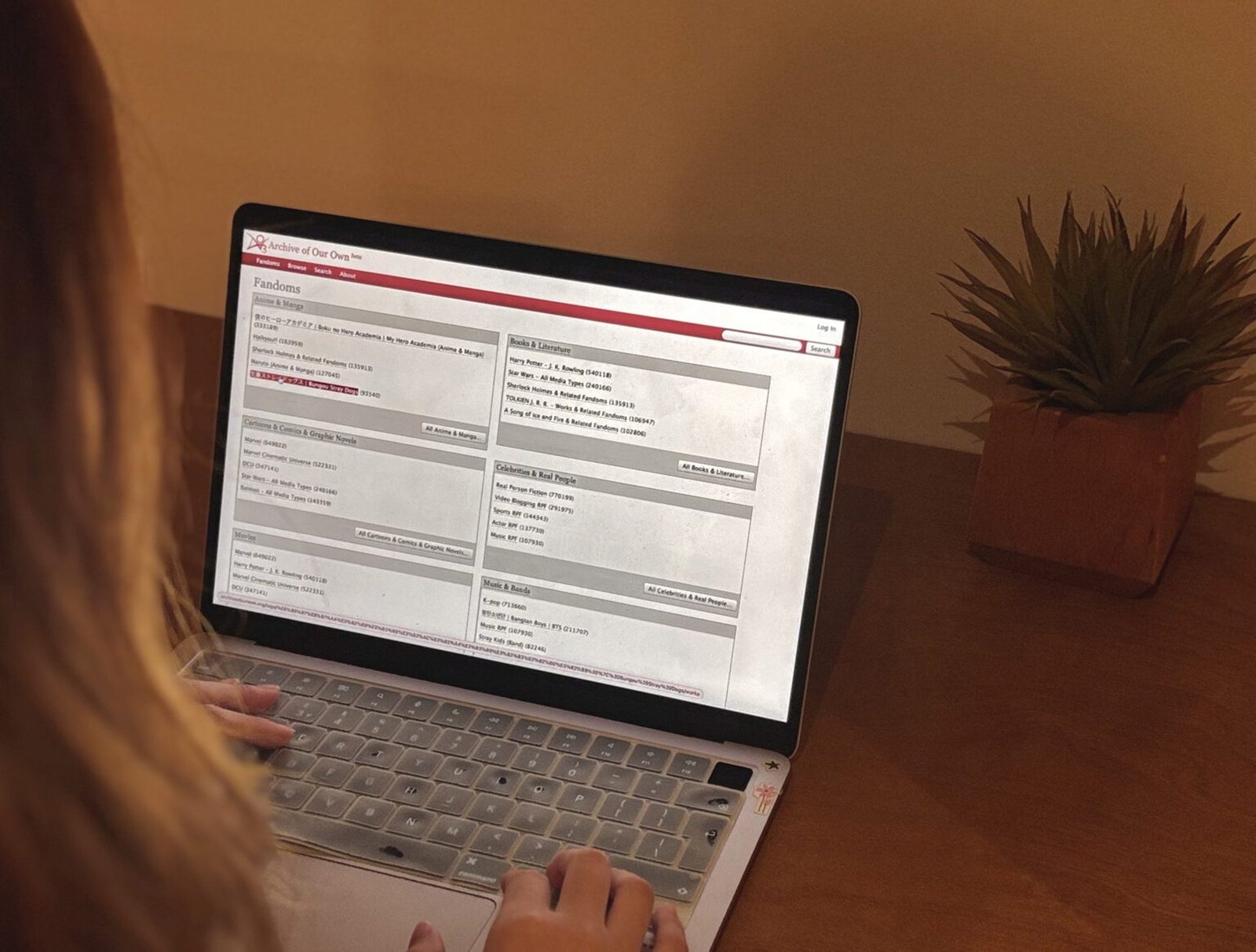
    One of the world’s most popular fan-fiction libraries has been dark for more than a week after a cyberattack forced it offline, leaving millions of readers and writers without access to their favourite stories. Since October 29, anyone trying to reach Archive of Our Own, known to its users as AO3, has been met with a message saying the site is down for maintenance.

    What was first expected to last about twelve hours has turned into a much longer outage. An update posted hours after the site went down estimated that restoring full service would instead take two weeks, or potentially up to four. The non-profit that runs the site says it now hopes to have things running again within a month.

    AO3 is the main home of fan fiction, stories written by amateur authors using characters and worlds from books, films, television shows and games. The archive holds nearly 18 million works and has more than 11 million registered users, with large and dedicated communities reworking figures from sources including Marvel, Harry Potter and the Japanese manga series My Hero Academia.

    The Organization for Transformative Works, the non-profit that operates the site, says the outage was caused by a security breach that is still under investigation. It says no stories, bookmarks or Kudos, the site’s version of likes, were deleted in the attack. It also says it does not believe the user database, which holds usernames, email addresses and encrypted passwords, was stolen, but it cannot rule that out.

    A volunteer-run site under strain

    Naomi Novik, one of AO3’s co-founders, said she felt a sense of resignation when she learned of the hack. She noted that dealing with security breaches is harder for a volunteer-run operation like AO3 than for a large commercial company, and said the team has confirmed that the stories posted to the site have not been deleted.

    Users have been distraught at the prospect of a month without reading, or adding to, the archive’s vast collection. In the days after the site went down, several copycat platforms appeared with near-total copies of the archive, including, some users said, stories that had never been published and others that had been deleted. One such site, called AO3.life, appeared on November 1, three days after the hack.

    For many readers and writers, the outage has underlined how much of their creative life depends on a single non-profit platform. The operators say there is no data loss and they look forward to restoring the site as soon as possible. Until then, millions of fans are waiting for the library that holds their stories to come back online.

  • اینویڈیا کی پرانی عمارتیں اے آئی ڈیٹا سینٹر بنانے کی تجویز

    اینویڈیا کی پرانی عمارتیں اے آئی ڈیٹا سینٹر بنانے کی تجویز

    چپ بنانے والی معروف امریکی کمپنی اینویڈیا نے پرانی ٹیلی کام عمارتوں کو چھوٹے اے آئی ڈیٹا سینٹروں میں تبدیل کرنے کی تجویز دی ہے، تاکہ مصنوعی ذہانت کے لیے درکار کمپیوٹنگ طاقت تیزی سے حاصل کی جا سکے۔

    رپورٹ کے مطابق اینویڈیا نے نجی سرمایہ کاری کی فرم اپولو گلوبل مینجمنٹ سے رابطہ کیا ہے، اور برائٹ اسپیڈ کی 130 سے زائد ٹیلی کام عمارتوں کو استعمال کرنے کی تجویز پیش کی ہے۔ برائٹ اسپیڈ اپولو کی ملکیت والی براڈ بینڈ کمپنی ہے، جو پہلے آواز اور ڈیٹا کی ٹریفک سنبھالنے کے لیے استعمال ہونے والی عمارتوں کی مالک ہے۔

    یہ خبر 5 نومبر 2026 کو دی انفارمیشن نے شائع کی، جس نے اس معاملے سے براہ راست واقف دو افراد کے حوالے سے رپورٹ دی۔ رپورٹ کے مطابق اینویڈیا نے برائٹ اسپیڈ کو تحریری تجویز بھیجی ہے، اور کئی مقامات کی تکنیکی معلومات اور دورے کی درخواست کی ہے۔

    تجویز کے مطابق یہ چھوٹے ڈیٹا سینٹروں کا نیٹ ورک امریکہ کی 20 ریاستوں تک پھیل سکتا ہے۔ رپورٹ میں جن مقامات کا ذکر ہے ان میں الاباما کا ڈوتھن، ٹیکساس کا کلین اور اوہائیو کا مینزفیلڈ شامل ہیں، حالانکہ یہ واضح نہیں کہ اینویڈیا کتنی عمارتوں کو تبدیل کرنا چاہتی ہے۔

    ایک گیگا واٹ بجلی کا اندازہ

    اینویڈیا کے اندازے کے مطابق ان عمارتوں میں تقریباً ایک گیگا واٹ بجلی دستیاب ہو سکتی ہے۔ یہ اندازہ کمپنی کا اپنا ہے، اور ابھی تک اس کی تصدیق سائٹوں کے معائنے یا بجلی کی فراہمی کے معاہدوں سے نہیں ہوئی ہے۔

    یہ عمارتیں اس لیے دلچسپی کا مرکز ہیں کہ ان میں پہلے سے بجلی، فائبر کنکشن اور ضروری اجازتیں موجود ہیں۔ بڑے ڈیٹا سینٹروں کی نئی تعمیر کے خلاف کئی علاقوں میں مخالفت بڑھ رہی ہے، اور امریکہ میں حالیہ انتخابات میں کامیاب ہونے والے بعض امیدواروں نے نئے ڈیٹا سینٹروں پر پابندی کا مطالبہ بھی کیا ہے۔

    برائٹ اسپیڈ 2022 میں اس وقت بنی تھی جب اپولو نے لومن ٹیکنالوجیز کے مقامی ٹیلی فون اور براڈ بینڈ کاروبار کے کچھ حصے 7.5 ارب ڈالر میں خریدے تھے۔ رپورٹ کے مطابق کمپنی مالی مشکلات کا شکار ہے، اور اس کے دیوالیہ ہونے کے قریب ہونے کی اطلاعات ہیں، تاہم یہ دیوالیہ ہونے کی درخواست کی تصدیق نہیں ہے۔

    اینویڈیا نے ان مجوزہ سہولیات کو ایک انفرنس نیٹ ورک قرار دیا ہے، یعنی یہ پہلے سے تربیت یافتہ اے آئی ماڈلز کو چلانے کے لیے استعمال ہوں گے، نئے ماڈلز کی تربیت کے لیے نہیں۔ چھوٹی سائٹیں بڑے ڈیٹا سینٹر کیمپس پر انحصار کیے بغیر بجلی کی دستیاب گنجائش سے فائدہ اٹھا سکتی ہیں۔

    عملی مشکلات بھی موجود ہیں

    اس منصوبے کے راستے میں عملی مشکلات بھی ہیں۔ پرانی ٹیلی کام عمارتوں کو جدید اے آئی سرورز کے لیے مخصوص کولنگ نظام اور بجلی کے اپ گریڈ کی ضرورت پڑ سکتی ہے۔ ان کاموں کے لیے مقامی اجازتیں بھی درکار ہو سکتی ہیں، حالانکہ رپورٹ کے مطابق یہ نئی تعمیر کے مقابلے میں کم رکاوٹیں پیدا کر سکتی ہیں۔

    اے آئی نیٹ ورکنگ کمپنی ڈیٹم کے چیف ایگزیکٹو زیک اسمتھ نے دی انفارمیشن کو بتایا کہ پرانی ٹیلی کام عمارتیں کم استعمال شدہ بجلی کو کام میں لا سکتی ہیں، لیکن انہوں نے خبردار بھی کیا کہ پرانے برقی آلات کی وجہ سے ان کا چلانا بعض اوقات زیادہ مہنگا بھی ہو سکتا ہے۔

  • EU Tells TikTok: Fix ‘Harmful’ For You Feed or Face 6% Fine

    EU Tells TikTok: Fix ‘Harmful’ For You Feed or Face 6% Fine

    The European Union has told TikTok to change the design of its personalised For You feed or risk a fine of up to 6 percent of its worldwide annual turnover, after finding that the platform’s recommendation system can trap users in harmful streams of similar videos.

    The European Commission announced preliminary findings on Friday, November 6, concluding that TikTok had breached the bloc’s Digital Services Act over the so-called rabbit-hole effect. Under the act, large online platforms must assess and limit the risks their systems pose to users, and the Commission said TikTok had failed to do so adequately for its recommendation algorithm.

    According to the Commission, the more a user interacts with a certain type of content, the more the For You feed recommends similar videos. The regulator warned that this endless and repeated exposure can be harmful when it involves content about sadness, isolation or body image, and that children and vulnerable people are most at risk.

    The Commission said TikTok had put some measures in place, such as a not interested button, but found them ineffective at reducing how often harmful content is recommended. It said the platform needs to change the design of the feed, including giving more weight to users’ explicit preferences, stopping the use of viewing time as an indicator for recommending content, and making user controls more accessible and easier to use.

    TikTok rejected the findings. The company said the Commission’s conclusions were fundamentally inaccurate and distorted its platform’s architecture and its commitment to user safety. TikTok will now have the chance to examine the Commission’s investigation file and reply in writing before any final decision is taken.

    The findings are preliminary and do not prejudge the outcome. The European Board for Digital Services is being consulted in parallel, and if the Commission confirms its views, it could adopt a formal non-compliance decision carrying a fine of up to 6 percent of the provider’s total worldwide annual turnover.

    Henna Virkkunen, the Commission’s executive vice-president for tech sovereignty, said the regulator had preliminarily found TikTok in breach of the Digital Services Act for the rabbit-hole effect of its recommender system. She said every interaction with a video can cause the algorithm to recommend more of the same, drawing users into sequences that are difficult to escape.

    The case is part of a wider investigation into TikTok that the Commission opened in February 2024, which has already produced earlier preliminary findings on other aspects of the platform. It is the first case under the Digital Services Act to focus directly on the design of a recommendation system, and it is being watched closely across the technology industry.

    The Digital Services Act is the EU’s wide-ranging rulebook for large online platforms, requiring them to do more to tackle harmful and illegal content and to protect users, particularly children. Regulators have stepped up enforcement in recent years, opening investigations into several of the world’s biggest platforms.

    For TikTok, which is owned by China’s ByteDance, the case adds to regulatory pressure in Europe. The company says it has invested heavily in safety features, but the Commission’s message is that design choices themselves, not just individual pieces of content, can breach the rules when they systematically expose users to harm.

  • PTA, Meta Block 176,000 WhatsApp Accounts in Fraud Crackdown

    PTA, Meta Block 176,000 WhatsApp Accounts in Fraud Crackdown

    The Pakistan Telecommunication Authority (PTA), working with Meta, has blocked 176,000 WhatsApp accounts registered against recycled mobile numbers, as part of a widening crackdown on online fraud, identity theft and financial scams.

    The figures were shared by PTA Chairperson Major General (retd) Hafeez ur Rehman at the second meeting of the regulator’s Advisory Committee on Digital Fraud in Islamabad, which he chaired. The committee reviewed action against mule accounts, a secure mobile registration system, protection of personal data and the prevention of illegal SIM activation.

    Recycled numbers are mobile numbers that were disconnected by their previous owners and later issued to new customers. Fraudsters have exploited WhatsApp accounts still linked to such numbers to impersonate the previous owners, run scams and gain access to digital accounts. PTA has shared around 10 million recycled numbers with Meta for verification, and under a continuing arrangement it will share 5,000 more recycled numbers every month so the associated accounts can be identified and deactivated in phases.

    Telecom operators in Pakistan hold around 16 million recycled numbers, according to officials, making the issue a significant risk for mobile users across the country.

    The crackdown goes beyond WhatsApp. The PTA said 7.3 million grey-traffic SIMs have been suspended, 1.5 million web addresses have been blocked since 2023 in collaboration with Meta, and 45,000 websites identified as online gambling platforms have been shut down. Around 1,700 people have been arrested in operations against illegal SIM activation and 700 cases have been registered.

    Meta resolved 82 percent of the complaints forwarded by the regulator over the previous year, officials said, reflecting the close working relationship between the two sides on digital safety.

    Grey-traffic SIMs are SIM cards used to route international calls through illegal channels, bypassing the licensed gateways, while mule accounts are accounts used by criminals to receive and move money from fraud. Both have been a focus of the PTA’s enforcement work, alongside the crackdown on illegally activated SIMs.

    The committee also discussed raising public awareness through SMS alerts so that mobile users can recognise fraud attempts. Officials say the permanent data-sharing system with Meta is designed to keep catching accounts linked to recycled numbers as they appear, rather than relying on one-off crackdowns.

  • AI Cyberattacks Threaten Pakistan’s Banks, National CERT Warns

    AI Cyberattacks Threaten Pakistan’s Banks, National CERT Warns

    Pakistan’s National Cyber Emergency Response Team (National CERT) has issued a comprehensive security advisory warning of escalating artificial intelligence-driven cyber threats targeting financial institutions and critical national infrastructure.

    According to the advisory issued by the Cabinet Division in Islamabad, malicious actors are increasingly using advanced AI tools, automated bots, botnets and agentic systems to increase the speed and sophistication of their attacks.

    Core banking networks, digital payment platforms and customer mobile applications face heightened risks of severe cyber disruption. Technical experts warned that unauthorised manipulation of displayed account balances could trigger widespread public anxiety and financial instability, and national regulatory authorities are instructing all financial organisations to enforce immediate security countermeasures.

    The advisory highlights that critical utility infrastructure beyond the banking sector is also exposed to automated cyberattacks. Oil and gas installations, water management utilities, power generation plants and electrical distribution networks are listed as primary high-value targets.

    Major industrial manufacturing hubs and national transportation management systems are also vulnerable to sophisticated digital intrusion. Security analysts emphasise that successful breaches of operational technology could disrupt essential public services and compromise economic activity, and infrastructure operators have been asked to audit network access protocols and isolate mission-critical management systems.

    To counter the emerging risks, National CERT recommended strict operational monitoring across all corporate network interfaces and customer-facing application programming interfaces. Security teams must actively track automated login attempts, repeated authentication failures, credential stuffing campaigns and abnormal API requests.

    The advisory cited recent cyber incidents in Europe, where attacks compromised refrigeration and cooling systems across several major supermarket chains. Those breaches caused tangible commercial damage and physical inventory loss, showing the real-world impact of infrastructure hacking. Formal investigations have not confirmed that AI was involved in those European incidents, but the pattern has put authorities on alert.

    Pakistani cybersecurity authorities are urging local infrastructure operators to prepare for physical operational consequences stemming from digital breaches. Cross-sector threat intelligence sharing remains crucial for detecting coordinated global cyber campaigns.

    National CERT urged all public and private entities to conduct immediate readiness assessments against bot-driven AI cyberattack vectors. Organisations are advised to implement independent transaction verification mechanisms to detect altered banking requests or unauthorised transfers, establish redundant data backups and upgrade encryption standards across core communications channels.

  • NASA’s Swift Telescope Burns Up After 22 Years in Space

    NASA’s Swift Telescope Burns Up After 22 Years in Space

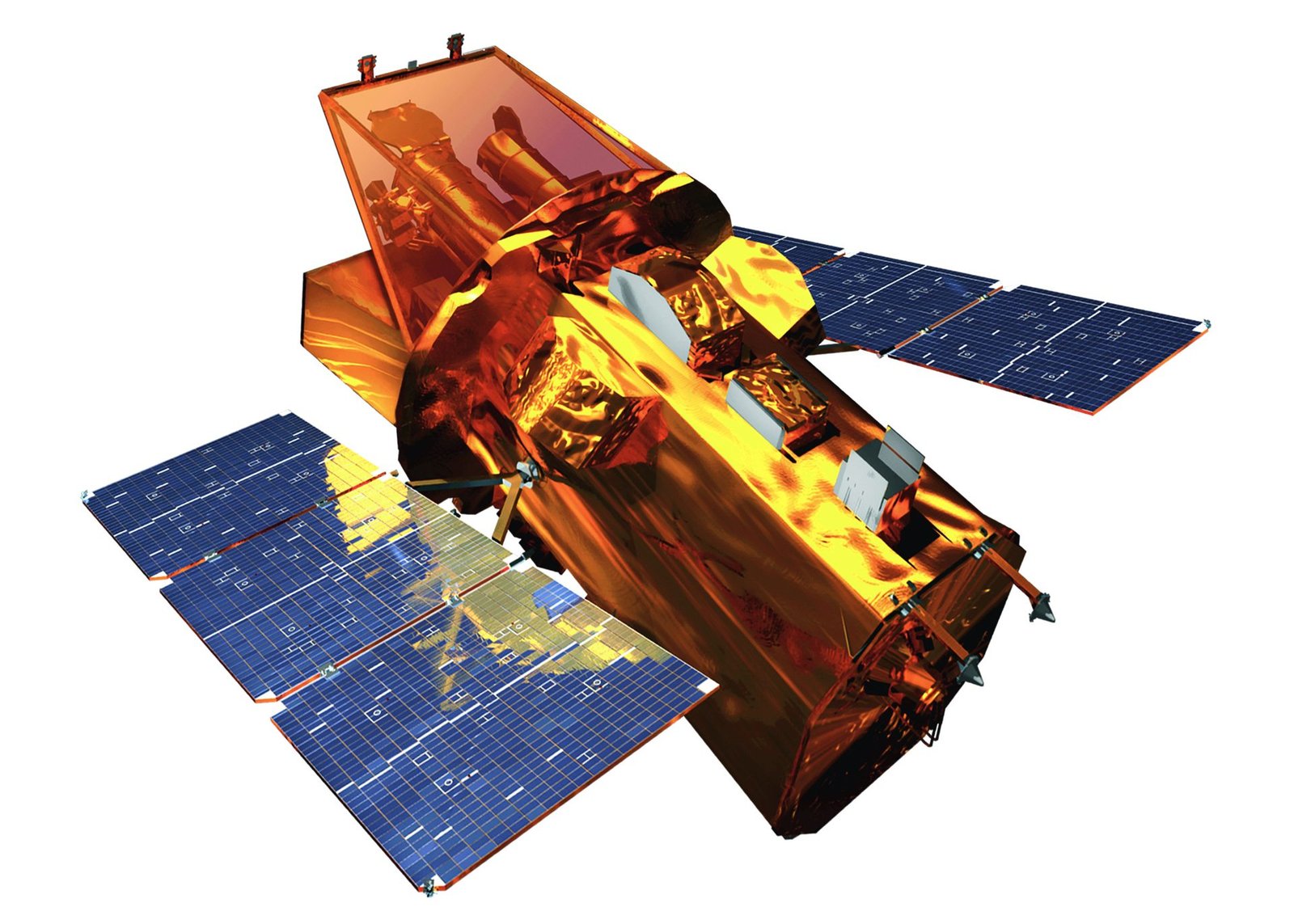
    After 22 years of watching the most violent explosions in the universe, NASA’s Swift space telescope has met a fiery end of its own. The observatory tumbled out of orbit on Wednesday and burned up in Earth’s atmosphere above Indonesia, bringing down the curtain on a mission that was only ever meant to last two years.

    The United States Space Force confirmed that Swift re-entered the atmosphere at 7:39 in the morning Eastern time, streaking across the sky at about 22 times the speed of sound over North Sumatra province, roughly 200 miles north of the equator. NASA said most of the 3,200-pound spacecraft would have been incinerated by the heat of re-entry, and no damage or injuries on the ground were reported.

    Swift, formally known as the Neil Gehrels Swift Observatory, was launched in November 2004 to study gamma-ray bursts, the most intense blasts of energy known in the cosmos. Fitted with three telescopes working across different wavelengths, the 500-million-dollar spacecraft was designed to spot these fleeting explosions within seconds and alert telescopes on the ground. It went on to detect thousands of cosmic events and reshape astronomers’ understanding of how stars die.

    The beginning of the end came as the ageing observatory began falling from orbit faster than expected. Unusually strong solar activity in late 2024 thickened the upper atmosphere, increasing drag on the spacecraft and pulling it steadily downward. By the time it made its final observation on October 20, its orbit had dropped so low that continued operations were impossible.

    NASA made one last attempt to save it. A rescue spacecraft built by Arizona-based company Katalyst Space Technologies was launched in July to grab hold of Swift with robotic arms and lift it back into a higher orbit. The first-of-its-kind mission failed, however, when the rescue craft suffered problems with its orientation control system and other malfunctions.

    Space officials had calculated the risk to people on the ground as very low, putting the odds of anyone being harmed by falling debris at one in 2,100. While most of Swift burned away high above Earth, experts expected a small fraction of its toughest components to survive the plunge, most likely falling into the ocean. Its re-entry zone stretched in a broad band around the tropics, taking in parts of Africa, Australia, India, Southeast Asia and the Americas. For astronomers, the loss closes a remarkable chapter: a spacecraft built for two years that kept watch over the sky for more than two decades.

  • OpenAI Launches GPT-6 Cyber for Approved Security Teams

    OpenAI Launches GPT-6 Cyber for Approved Security Teams

    OpenAI has released GPT-6 Cyber, a specialised cybersecurity model designed to find, validate and help fix exploitable software vulnerabilities while staying inside the scope that researchers authorise. The company announced the model on Thursday, 5 November, and is initially limiting access to a select group of approved security customers.

    GPT-6 Cyber is a cyber-specialised variant of OpenAI’s GPT-6 Astra model. According to OpenAI, it scored 48.5 percent on ExploitGym, a benchmark that tests whether a model can exploit a specified vulnerability in a remote target. That compares with 32.1 percent for GPT-5.6 Cyber and 42.4 percent for GPT-6 Astra.

    The model powered the Linux kernel research OpenAI published a day earlier, on 4 November. In that controlled research run, a prototype pipeline analysed 2,308 candidate findings, dynamically reproduced 1,724 vulnerabilities and produced 948 working local privilege escalation exploits, each capable of giving an unprivileged local user root access. OpenAI said the run cost about 1.2 million dollars in API credits.

    OpenAI’s own security researchers reviewed the exploits and fixes before anything was sent to kernel maintainers, and the company stressed that the patches are candidates for maintainer review rather than fixes that have already shipped. The model also found 81 previously unknown Firefox vulnerabilities that Mozilla rated high severity, and Mozilla has shipped fixes for many of them.

    OpenAI classifies GPT-6 Cyber as Critical for cybersecurity, the highest tier in its Preparedness Framework, up from High for GPT-5.6 Cyber. The classification reflects the model’s capability rather than an expectation that it will be widely available: the company says the model is not being offered as an unrestricted public model.

    Access starts through OpenAI’s API and Codex for a select group of customers approved for Daybreak Red, the tier of its Daybreak programme for offensive-style authorised security work such as penetration testing and red teaming. Applicants face identity and eligibility checks, and organisations must meet requirements including single sign-on, multi-factor authentication, managed devices and API IP allowlisting by default. OpenAI says access will expand to all Daybreak Red customers over the coming weeks.

    Staying within authorised scope was a central focus of the work, according to OpenAI. In its ExploitGym Honeypot test, which deliberately leaves out-of-scope services easy to attack, the model exploited off-limits services in 0.07 percent of runs without deployment safety instructions, compared with 5.51 percent for GPT-5.6 Cyber. The company says it has added safeguards for industrial controls, essential services, election systems and other high-risk targets.

    OpenAI is also opening GPT-5.6 Cyber to every customer in the Daybreak Red tier, widening Daybreak Blue alpha access to GPT-6 Astra for more organisations and individual security researchers, and forming a Daybreak Red group for approved critical infrastructure defenders. Access for frontline defenders is being subsidised through its 1 billion dollar Daybreak for Frontline Defenders grant programme.

    The launch underlines how quickly AI security tools are advancing, and why their makers are pairing new capabilities with tight controls. For defenders, a model that can reproduce vulnerabilities and propose patches at scale could shorten the time between discovery and repair. For everyone else, the restricted rollout is a reminder that the most powerful cybersecurity models are, for now, staying behind a vetting process.