Tag: Pakistan

  • Khawaja Asif Calls for New Provinces in Pakistan

    Khawaja Asif Calls for New Provinces in Pakistan

    Defence Minister Khawaja Asif has called for the creation of new administrative units in Pakistan, saying the move would benefit the provinces and bring government closer to the people. He made the remarks while speaking in Sialkot at an event organised by Anjuman Tariq-e-Ahmadiya, where he argued that smaller administrative units would make the public more prosperous and allow problems to be resolved at people’s doorsteps.

    Asif pointed to India as an example, saying that small provinces formed there on an administrative basis, rather than a linguistic one, had achieved progress and prosperity. He said Pakistan could expect similar gains if new provinces were created on the same principle, with administration organised around the practical needs of governance rather than language.

    The distinction Asif drew was between units drawn on administrative grounds and units drawn on linguistic grounds. Administrative units, in his telling, are shaped by the practical work of governing — how services are delivered, how far people must travel, and how quickly decisions can be taken — while linguistic divisions follow the lines of language. His argument was that the first approach had delivered results where it had been tried, and that Pakistan should follow it.

    The defence minister said the country’s population had increased manyfold since the existing administrative structure was put in place, and that this growth alone made more administrative units inevitable. As the population grows, he argued, the distance between the citizen and the administration grows with it, and new units are needed to close that gap.

    Asif also spoke about the pressures facing the country, saying Pakistan is currently facing threats from two fronts, on both sides. He placed his call for administrative reform against that backdrop, presenting stronger and more responsive local administration as part of the answer to the challenges confronting the country.

    He urged the nation to trust the current leadership, describing it as including wise and capable figures. The people, he said, must have confidence in those at the helm, and that confidence would help the country navigate the difficulties it faces.

    In his remarks, Asif returned repeatedly to the idea that administration should reach the citizen rather than the citizen having to reach the administration. New provinces, in his argument, would shorten that distance: local issues would be settled locally, public services would be closer at hand, and the people of each area would feel the presence of government in their daily lives. That, he said, is what would make them more prosperous.

  • India Invites Pakistan to SCO Summit in New Delhi

    India Invites Pakistan to SCO Summit in New Delhi

    Islamabad: Pakistan has received an invitation from India to attend the Shanghai Cooperation Organisation (SCO) summit in New Delhi, the Foreign Office confirmed on Friday, saying a decision on participation will be taken by the country’s leadership after consultations.

    The Foreign Office spokesperson confirmed at the weekly briefing in Islamabad that the summit, the SCO Civilisational Dialogue Forum, will be held in the Indian capital from November 20 to 22. He said the decision on Pakistan’s participation would follow institutional consultations and the completion of established procedures.

    India formally invited all ten SCO member states to the forum on October 28. The event is being organised jointly by India’s Ministry of External Affairs and its Ministry of Culture, and aims to deepen cultural engagement, encourage people-to-people contact and promote greater mutual understanding among member countries.

    According to reports, Pakistan’s Minister for National Heritage and Culture, Aurangzeb Khan Khichi, has been invited to attend the forum. If Pakistan accepts, it would be one of the highest-level Pakistani visits to India since the confrontation between the two countries in May 2025, when India launched Operation Sindoor following the Pahalgam attack.

    First formal outreach since May 2025

    The invitation has drawn attention because it marks the first formal outreach from New Delhi to Islamabad since the May 2025 confrontation. Indian officials have clarified, however, that all ten SCO member states received invitations and that the arrangement is a multilateral initiative which should not be confused with India-Pakistan bilateral relations.

    The concept of the forum was put forward by Indian Prime Minister Narendra Modi at the SCO summit in Tianjin in 2025 and subsequently endorsed by the organisation. The forum was announced by Indian Defence Minister Rajnath Singh during the SCO Council of Heads of Government meeting in Dushanbe, Tajikistan, on October 20.

    Pakistan currently holds the rotating chairmanship of the SCO Council of Heads of State for the 2026-27 term, having assumed the position on September 1 following the summit in Bishkek. Pakistan is scheduled to host the SCO summit in Islamabad in 2027.

    Kartarpur Corridor and Sikh pilgrims

    At the same briefing, the Foreign Office spokesperson said Pakistan had not imposed any visa restrictions on Indian citizens and had issued visas to an additional 4,000 Sikh pilgrims during the first six months of 2026. In 2025, Pakistan granted 9,318 visas to Indian pilgrims, while 9,000 Sikh and 248 Hindu pilgrims visited the country.

    He said India had kept pilgrim movement through the Kartarpur Corridor suspended since May 2025, adding that Pakistan was ready to welcome and facilitate Sikh pilgrims as soon as India lifted the restrictions. Islamabad was also looking forward to receiving Sikh pilgrims for celebrations marking the 557th birth anniversary of Baba Guru Nanak Dev Ji.

    The spokesperson also discussed Pakistan’s diplomatic efforts to promote regional stability, particularly its role in facilitating dialogue between Iran and the United States. He said Pakistan had acted as a sincere mediator in the Iran-US dispute, bringing two countries that had not held direct talks for 47 years to the negotiating table under one roof, and that Pakistan would continue its efforts to promote peace and stability in the region.

  • Pakistan, Sudan Agree to Boost Security, Cybercrime Ties

    Pakistan, Sudan Agree to Boost Security, Cybercrime Ties

    Pakistan and Sudan have agreed to enhance bilateral cooperation in various fields, including security, internal affairs, cybercrime, police training and institutional cooperation, officials said on Saturday.

    Sudanese Interior Minister Lt-General (Police) Babiker Samra Mustafa Ali met Interior Minister Mohsin Naqvi and Minister of State for Interior Talal Chaudhry in Islamabad on Saturday. Both interior ministers also led delegation-level talks at the Interior Ministry.

    During the bilateral meeting, it was decided to sign a memorandum of understanding to enhance cooperation in the field of cybercrime. The Sudanese interior minister said he wanted to benefit from Pakistan’s expertise and experience in the field of cybercrime, and Naqvi said Pakistan was ready to provide professional training to Sudanese police officers.

    Naqvi said Pakistan was ready to provide all kinds of support to the peace and reconstruction process in Sudan. He also highlighted the role of Pakistan’s National Database and Registration Authority (NADRA) in Sudan’s civil registration system, saying that with NADRA’s cooperation, 36 million citizenship cards, 9 million national identity cards, 18 million birth certificates and 500,000 death certificates had been issued in Sudan. He added that NADRA was always ready to cooperate in the civil registration process in future.

    On the inquiry of the Sudanese interior minister, Naqvi also issued orders to immediately resolve the visa issues of married Sudanese women residing in Pakistan. He said Sudanese citizens could benefit from medical facilities in Pakistan and would be provided with every possible facility in the health sector.

    The Sudanese interior minister said Pakistan was a brotherly country and that Sudan attached great importance to cooperation with Pakistan in all sectors. He expressed his desire to promote bilateral cooperation in various sectors and thanked Pakistan for its cooperation.

    The Sudanese minister also called on Field Marshal Syed Asim Munir, Chief of Army Staff and Chief of Defence Forces, at General Headquarters in Rawalpindi. According to the military’s media wing, the two sides discussed matters of mutual interest, evolving regional and global security dynamics and opportunities to enhance bilateral cooperation, with particular emphasis on security, counterterrorism and institutional cooperation.

    The meeting was also attended by the Federal Secretary Interior, Special Secretary and Additional Secretaries Interior, Chairman NADRA, the directors general of the FIA, Anti-Narcotics Force, National Forensic Agency, National Cyber Crime Investigation Agency and Immigration and Passports, the Inspector General of the Federal Constabulary, the Commandant of the National Police Academy, the Chairman of the Social Media Regulatory Authority, and the Chief Commissioner and Inspector General of Islamabad Police.

  • Half of Pakistan’s Polio Cases Linked to Afghanistan

    Half of Pakistan’s Polio Cases Linked to Afghanistan

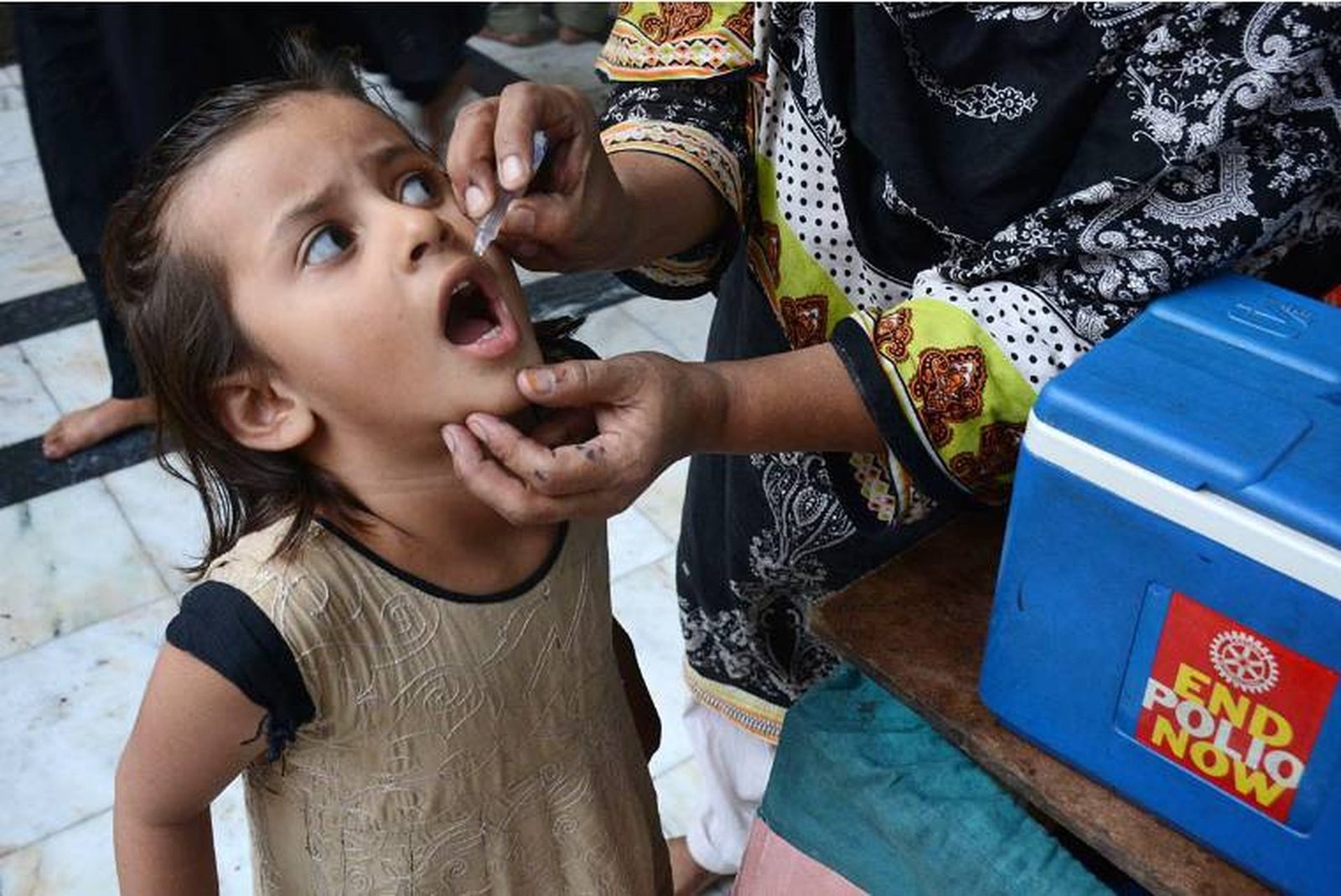
    The spread of poliovirus from Afghanistan into Pakistan has raised fresh concerns among health authorities, with officials warning that cross-border transmission is keeping the virus in circulation in Pakistan.

    According to health authorities, between 40 and 50 per cent of the polio cases reported in Pakistan over the past two months have been genetically linked to Afghanistan. The Pakistan Polio Eradication Initiative said the share of Afghan-linked detections stood at about 50 per cent in September and 40 per cent in October.

    Afghanistan has reported 50 polio cases this year, against nine in Pakistan. The World Health Organization describes the two countries as a single epidemiological block, meaning transmission in one country puts the other at risk. Pakistan and Afghanistan remain the only two countries in the world where wild poliovirus transmission has never been interrupted.

    Pakistan’s ninth case of 2026 was confirmed this week in a seven-month-old boy from the Bara tehsil of Khyber district. Genetic testing showed the virus was linked to strains circulating in Afghanistan. All three cases reported from Khyber district this year have the same Afghan link.

    Of Pakistan’s nine cases this year, seven are from Khyber Pakhtunkhwa — three each from Khyber and Bannu districts and one from North Waziristan — while two are from Sindh, in Karachi East and Sujawal. Afghanistan’s cases are spread across 12 provinces, with Hilmand reporting 12, Kandahar 11 and Nangarhar 10.

    Officials have identified the return of deported Afghan nationals through illegal crossing points as a major risk factor. They say large numbers of people are returning through sporadic crossing points in Balochistan and Khyber Pakhtunkhwa and moving across the country, making undocumented movement one of the biggest concerns for the eradication effort.

    Health officials also revealed that poliovirus originating in Afghanistan has been detected in 29 sewage samples collected across Pakistan, including in Karachi, Jamshoro, Rawalpindi and Multan. The findings indicate the virus continues to circulate and highlight the challenges facing vaccination and surveillance programmes.

    Pakistan’s figures show steady progress overall. Cases fell from 74 in 2024 to 31 in 2025 and nine so far this year, and the country has cut polio cases by 99.8 per cent from an estimated 20,000 a year in the early 1990s. A nationwide vaccination drive is under way from November 2 to 8, targeting about 24 million children under five across 97 districts, and is being run at the same time in both countries.

  • ایف پی ایس سی: وفاقی محکموں میں گریڈ 16 تا 20 کی سرکاری نوکریاں، درخواست کی آخری تاریخ 16 نومبر

    ایف پی ایس سی: وفاقی محکموں میں گریڈ 16 تا 20 کی سرکاری نوکریاں، درخواست کی آخری تاریخ 16 نومبر

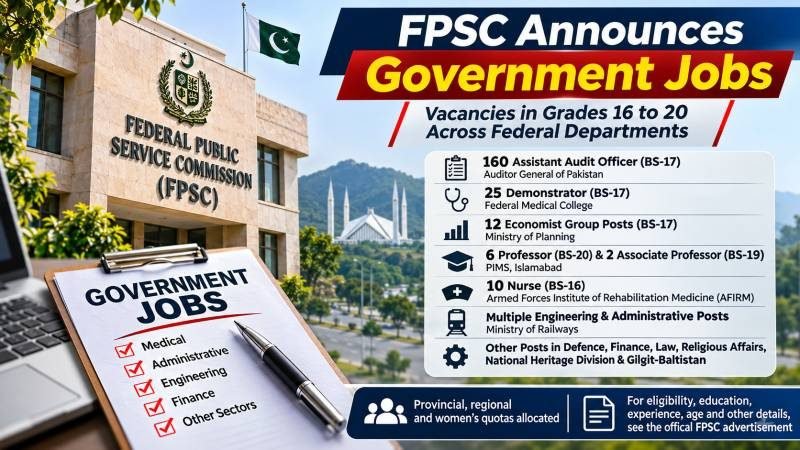
    فیڈرل پبلک سروس کمیشن (ایف پی ایس سی) نے وفاقی حکومت کے 13 وزارتوں اور محکموں میں گریڈ 16 تا 20 کی آسامیوں کے لیے درخواستیں طلب کر لی ہیں۔ امیدوار 16 نومبر 2026 تک ایف پی ایس سی کی ویب سائٹ کے ذریعے آن لائن درخواست دے سکتے ہیں۔

    یہ آسامیاں کمیشن کے مشترکہ اشتہار نمبر 01/2026 کے تحت مشتہر کی گئی ہیں، جو 29 اکتوبر 2026 کو شائع ہوا تھا۔ اشتہار میں مختلف شعبوں کی آسامیاں شامل ہیں، جن میں آڈٹ، صحت، تعلیم، منصوبہ بندی اور انجینئرنگ شامل ہیں۔

    سب سے زیادہ آسامیاں پاکستان آڈٹ اینڈ اکاؤنٹس سروس کے لیے اسسٹنٹ آڈٹ آفیسر (بی ایس 17) کی ہیں، جن کی تعداد 160 ہے۔ اس کے علاوہ ڈیمانسٹریٹر (بی ایس 16) کی 25 آسامیاں ہیں۔

    وزارت منصوبہ بندی، ترقی و خصوصی اقدامات کے لیے اکانومسٹ (بی ایس 17) کی 12 آسامیاں مشتہر کی گئی ہیں۔ ہیلتھ سروسز اکیڈمی کے لیے پروفیسر (بی ایس 20) کی 6 اور ایسوسی ایٹ پروفیسر (بی ایس 19) کی 2 آسامیاں شامل ہیں، جبکہ فیڈرل گورنمنٹ پولی کلینک کے لیے نرس (بی ایس 16) کی 10 آسامیاں ہیں۔

    ان کے علاوہ وزارت اطلاعات و نشریات، وزارت داخلہ و انسداد منشیات، وزارت توانائی، وزارت دفاع، وزارت ہاؤسنگ و تعمیرات، وزارت صنعت و پیداوار اور وزارت قومی صحت خدمات میں انجینئرنگ اور انتظامی عہدوں کی آسامیاں بھی شامل ہیں۔

    دلچسپی رکھنے والے امیدواروں کو مشورہ دیا جاتا ہے کہ وہ درخواست دینے سے قبل اشتہار میں دی گئی اہلیت، عمر کی حد اور تجربے کی شرائط غور سے پڑھ لیں، تاکہ ان کی درخواست مسترد نہ ہو۔

    سرکاری ملازمتوں کے لیے ایف پی ایس سی کا اشتہار ہر سال ہزاروں نوجوانوں کی توجہ کا مرکز ہوتا ہے، کیونکہ وفاقی محکموں میں مستقل ملازمت کو روزگار کا محفوظ ذریعہ سمجھا جاتا ہے۔ اس بار بھی بڑی تعداد میں درخواستوں کی توقع ہے۔

    آخری تاریخ قریب آتے ہی ویب سائٹ پر رش بڑھ سکتا ہے، اس لیے امیدواروں کو چاہیے کہ وہ اپنی درخواست آخری دن کا انتظار کیے بغیر جلد جمع کرائیں اور درخواست کی رسید محفوظ رکھیں۔

  • AI Cyberattacks Threaten Pakistan’s Banks, National CERT Warns

    AI Cyberattacks Threaten Pakistan’s Banks, National CERT Warns

    Pakistan’s National Cyber Emergency Response Team (National CERT) has issued a comprehensive security advisory warning of escalating artificial intelligence-driven cyber threats targeting financial institutions and critical national infrastructure.

    According to the advisory issued by the Cabinet Division in Islamabad, malicious actors are increasingly using advanced AI tools, automated bots, botnets and agentic systems to increase the speed and sophistication of their attacks.

    Core banking networks, digital payment platforms and customer mobile applications face heightened risks of severe cyber disruption. Technical experts warned that unauthorised manipulation of displayed account balances could trigger widespread public anxiety and financial instability, and national regulatory authorities are instructing all financial organisations to enforce immediate security countermeasures.

    The advisory highlights that critical utility infrastructure beyond the banking sector is also exposed to automated cyberattacks. Oil and gas installations, water management utilities, power generation plants and electrical distribution networks are listed as primary high-value targets.

    Major industrial manufacturing hubs and national transportation management systems are also vulnerable to sophisticated digital intrusion. Security analysts emphasise that successful breaches of operational technology could disrupt essential public services and compromise economic activity, and infrastructure operators have been asked to audit network access protocols and isolate mission-critical management systems.

    To counter the emerging risks, National CERT recommended strict operational monitoring across all corporate network interfaces and customer-facing application programming interfaces. Security teams must actively track automated login attempts, repeated authentication failures, credential stuffing campaigns and abnormal API requests.

    The advisory cited recent cyber incidents in Europe, where attacks compromised refrigeration and cooling systems across several major supermarket chains. Those breaches caused tangible commercial damage and physical inventory loss, showing the real-world impact of infrastructure hacking. Formal investigations have not confirmed that AI was involved in those European incidents, but the pattern has put authorities on alert.

    Pakistani cybersecurity authorities are urging local infrastructure operators to prepare for physical operational consequences stemming from digital breaches. Cross-sector threat intelligence sharing remains crucial for detecting coordinated global cyber campaigns.

    National CERT urged all public and private entities to conduct immediate readiness assessments against bot-driven AI cyberattack vectors. Organisations are advised to implement independent transaction verification mechanisms to detect altered banking requests or unauthorised transfers, establish redundant data backups and upgrade encryption standards across core communications channels.

  • 27 Bottled Water Brands Unsafe, PCRWR Warns Consumers

    27 Bottled Water Brands Unsafe, PCRWR Warns Consumers

    Pakistan Council of Research in Water Resources (PCRWR) has declared 27 commercially available bottled and mineral water brands unsafe for human consumption after finding microbiological and chemical contamination in them.

    The findings come from the council’s quarterly monitoring for the third quarter of 2026, covering July to September. On the government’s directives, PCRWR collected 223 samples of bottled water brands from 20 major cities across the country to check whether they met the quality standards set by the Pakistan Standards and Quality Control Authority (PSQCA).

    According to the test results, three brands, Aab-e-Haram, AB-Blue Water and HR Water Healthy Life, were found to contain excessive sodium levels ranging from 94 to 164 parts per million, against the permissible limit of 50 parts per million.

    Aab-e-Haram was also found to have a total dissolved solids level of 680 parts per million, above the prescribed limit of 500 parts per million. Fresh Smart Pure Water contained potassium at 20 parts per million, double the permissible limit of 10 parts per million.

    Two brands, Akwafine Bottled Drinking Water and Premium Safa Purified Water, were found to contain excessive arsenic levels ranging from 13.5 to 23.2 parts per billion, against the permissible limit of 10 parts per billion.

    The report further revealed that 22 brands were contaminated with bacteria, making them unsafe for drinking. These included Aab-e-Haram, Douro, Aab-e-Makuran, Water Verse Purified, Jel Bottled Drinking Water, Sip Bottled Drinking Water, Safi Bottled Drinking Water, Pure Aqua Tech Bottled Drinking Water, Aqua Grain Bottled Drinking Water, Water Time Bottled Drinking Water and Al Saha Drinking Water, among others.

    PCRWR has urged consumers to consult the detailed quarterly report before buying or drinking bottled water, so that they can make informed choices and protect their health. The complete report is available on the council’s website at www.pcrwr.gov.pk.

    The quarterly exercise is a regular check on the bottled water sold in markets across the country. Brands that fail the PSQCA standards on sodium, dissolved solids, potassium, arsenic or bacterial presence are flagged as unsafe, and the council publishes the names so that buyers can avoid them.

    Health experts have long warned that contaminated bottled water can carry serious risks, particularly for children and people with weak immunity. The latest results are a reminder for households to check the brand they buy against the PCRWR list before use.

  • پٹرول 9 روپے 41 پیسے سستا، نئی قیمت 352 روپے 59 پیسے

    پٹرول 9 روپے 41 پیسے سستا، نئی قیمت 352 روپے 59 پیسے

    اسلام آباد: وفاقی حکومت نے پٹرولیم مصنوعات کی قیمتوں میں ایک اور نمایاں کمی کا اعلان کر دیا ہے۔ پٹرول کی قیمت میں 9 روپے 41 پیسے فی لیٹر کمی کی گئی ہے جس کے بعد نئی قیمت 352 روپے 59 پیسے فی لیٹر مقرر ہو گئی ہے، جبکہ ہائی اسپیڈ ڈیزل 5 روپے 56 پیسے سستا ہو کر 382 روپے 25 پیسے فی لیٹر ہو گیا ہے۔ نئی قیمتیں 6 نومبر 2026 سے نافذ العمل ہوں گی۔

    پیٹرولیم ڈویژن کی جانب سے جمعرات کو جاری کردہ نوٹیفکیشن کے مطابق یہ مسلسل چوتھے روز ایندھن کی قیمتوں میں کمی ہے۔ پیر سے اب تک پٹرول کی قیمت میں مجموعی طور پر 25 روپے 32 پیسے فی لیٹر اور ڈیزل کی قیمت میں 20 روپے 71 پیسے فی لیٹر کمی ہو چکی ہے، جو صارفین کے لیے ایک بڑی ریلیف ہے۔

    اس سے قبل بدھ کو بھی حکومت نے 5 نومبر کے لیے پٹرول کی قیمت میں 7 روپے 6 پیسے اور ڈیزل کی قیمت میں 3 روپے 71 پیسے فی لیٹر کمی کی تھی۔ اس طرح رواں ہفتے کے دوران قیمتوں میں کمی کا سلسلہ مسلسل جاری ہے، جس سے عوام اور کاروباری طبقے کو نقل و حمل اور دیگر اخراجات میں کچھ حد تک ریلیف ملنے کی توقع ہے۔

    روزانہ قیمتوں کا نیا نظام

    پاکستان میں 17 جولائی سے پٹرولیم مصنوعات کی قیمتوں کا روزانہ جائزہ لینے کا نظام نافذ ہے، جس نے ہفتہ وار جائزے کے پرانے طریقہ کار کی جگہ لی ہے۔ اس نظام کا مقصد عالمی منڈی میں تیل کی قیمتوں میں تبدیلی کا فوری جواب دینا ہے تاکہ ملکی صارفین کو بروقت ریلیف یا قیمتوں میں تبدیلی سے آگاہ کیا جا سکے۔

    حکام کے مطابق عالمی منڈی میں تیل کی قیمتوں میں اتار چڑھاؤ کے باوجود حکومت صارفین کو ریلیف دینے کی کوشش کر رہی ہے۔ اس ہفتے کے آغاز میں حکومت نے بتایا تھا کہ تیل کی ریفائنریز ملکی سطح پر پٹرول کی قیمت کو عالمی منڈی سے تقریباً 15 روپے فی لیٹر کم رکھنے کے لیے ماہانہ تقریباً 15 ارب روپے کا مالی بوجھ برداشت کریں گی۔

    ایندھن سبسڈی اسکیم

    وزیراعظم شہباز شریف نے 13 ستمبر کو ایندھن سے متعلق ایک ہدفی ریلیف اسکیم کا اعلان کیا تھا جس کے تحت موٹر سائیکلوں، تین پہیوں والے رکشوں اور 800 سی سی تک کی گاڑیوں کو 100 روپے فی لیٹر سبسڈی دی جا رہی ہے۔ اس اسکیم سے تقریباً ایک کروڑ 18 لاکھ افراد مستفید ہونے کی توقع ہے، جن میں ایک کروڑ موٹر سائیکل صارفین، آٹھ لاکھ رکشہ صارفین اور دس لاکھ چھوٹی گاڑیوں کے مالکان شامل ہیں۔

    ماہرین کا کہنا ہے کہ ایندھن کی قیمتوں میں مسلسل کمی سے مہنگائی پر قابو پانے میں بھی مدد مل سکتی ہے کیونکہ نقل و حمل کی لاگت میں کمی سے اشیائے ضروریہ کی قیمتوں پر دباؤ کم ہوتا ہے۔ تاہم ان کا یہ بھی کہنا ہے کہ عالمی منڈی کی صورتحال اور خطے میں جاری کشیدگی کے باعث آئندہ دنوں میں قیمتوں کا رجحان تبدیل بھی ہو سکتا ہے۔

    صارفین اور ٹرانسپورٹرز نے قیمتوں میں کمی کا خیر مقدم کیا ہے اور امید ظاہر کی ہے کہ یہ سلسلہ جاری رہے گا۔

  • Lahore world’s most polluted city again as AQI hits 338

    Lahore world’s most polluted city again as AQI hits 338

    Lahore has once again ranked as the world’s most polluted city, as smog conditions across the city worsened and the average air quality index (AQI) climbed to 338.

    According to the Environment Department, Lahore’s average AQI has reached 338, a level that is considered hazardous for health. The city has topped global pollution rankings repeatedly during the smog season, and the latest reading puts it back at the top of the list.

    The average figure hides even worse readings in some neighbourhoods. In Paragon Society, the AQI was recorded at 548, while FC College recorded 508 and Model Town recorded 414. All three readings fall in the hazardous range, where the air is considered dangerous to breathe even for healthy people.

    Smog in Lahore is a recurring problem in the winter months, when cold air traps vehicle exhaust, industrial emissions, dust and smoke from crop burning close to the ground. The thick haze reduces visibility, irritates the eyes and throat, and makes breathing difficult, particularly for children, older people and those with asthma or other lung conditions.

    Experts have advised residents to avoid unnecessary outdoor activities while the smog persists and to wear masks when they do go outside. People with breathing problems have been urged to take extra care and to seek medical help if their symptoms worsen.

    The Meteorological Department has forecast a minimum temperature of 17 degrees Celsius and a maximum of 30 degrees Celsius in Lahore over the next 24 hours. The weather is expected to remain dry, which means the smog is unlikely to clear quickly on its own.

    For the city’s residents, the return of hazardous air is a familiar frustration. Schools, offices and daily routines are all affected when the air quality deteriorates, and many people report coughing, sore throats and eye irritation during the worst days.

    Health experts say the most important step is to limit exposure, especially during the morning and evening hours when the smog tends to be thickest. Wearing a proper mask, keeping windows closed and avoiding exercise outdoors are among the precautions recommended during severe smog.

    The authorities have in past smog seasons announced measures such as restrictions on certain vehicles and industrial activity, as well as awareness campaigns urging people to protect themselves. Whether any fresh measures will be announced this time remains to be seen.

    For now, the confirmed facts are the average AQI of 338, the area readings that are far higher still, and the advice from experts to stay indoors where possible and to wear masks outside. Residents will be watching the daily readings closely in the coming days to see whether the air improves or worsens further.

    Lahore’s position at the top of the world’s pollution ranking is a reminder of how serious the city’s air quality problem has become, and how much it affects the daily lives of millions of people who live there.

  • ECP defers KP local body polls scheduled for February

    ECP defers KP local body polls scheduled for February

    The Election Commission of Pakistan (ECP) has deferred local body elections in Khyber Pakhtunkhwa, announcing on Thursday that the polls cannot go ahead for now.

    According to the commission, the elections could not be held after the suspension of Article 140-A, the constitutional provision that deals with local government. The ECP said the polls would be held soon after the restoration of Article 140-A and following a formal notification.

    The decision puts on hold a process that had been moving towards polling day. The KP local body elections had been scheduled for February 2027, under a schedule announced in April this year.

    Under that schedule, candidates were to submit their nomination papers between 10 and 20 December, with scrutiny of the papers set for 11 to 14 December. Appeals against the rejection of nomination papers could be filed from 15 to 19 December, and the appellate tribunals were to decide those appeals by 23 December.

    Candidates would then have had until 26 December to withdraw their names, and election symbols were to be allotted on 27 December. Polling day itself had been set for 4 January.

    That timetable will now not be followed, and no new date has been announced. The commission has said only that the elections will be held once the constitutional position is restored and the notification is issued.

    Local body elections decide who runs district, tehsil and village-level governments, and they are the tier of government closest to people’s everyday problems, from water and sanitation to local roads and markets. A delay therefore leaves local councils without elected representatives for longer.

    Khyber Pakhtunkhwa has seen repeated delays and disputes over local government elections in the past, and the latest postponement will be watched closely by political parties in the province, which have been preparing their candidates and campaigns.

    For the parties, the uncertainty over timing makes planning difficult. Candidates who had been organising their campaigns around the December nomination dates will now have to wait for a fresh announcement before they can file their papers.

    The commission has not named any official spokesperson in connection with the announcement, and the statement was reported by the news desk of the outlet that carried it. Further detail is expected when the commission issues its formal notification.

    What is clear for now is that voters in Khyber Pakhtunkhwa will not be going to the polls for their local bodies on the timetable announced earlier this year. The next step depends on the restoration of Article 140-A and the commission’s formal notification, after which a new schedule will have to be announced.

    Until then, the province’s local government system remains in limbo, with the elected tier absent and administrative arrangements continuing in its place. Political parties and voters alike will be waiting for the commission’s next move.