Tag: Iran

  • Iranian FM Araqchi Arrives in Pakistan for ECO Meeting

    Iranian FM Araqchi Arrives in Pakistan for ECO Meeting

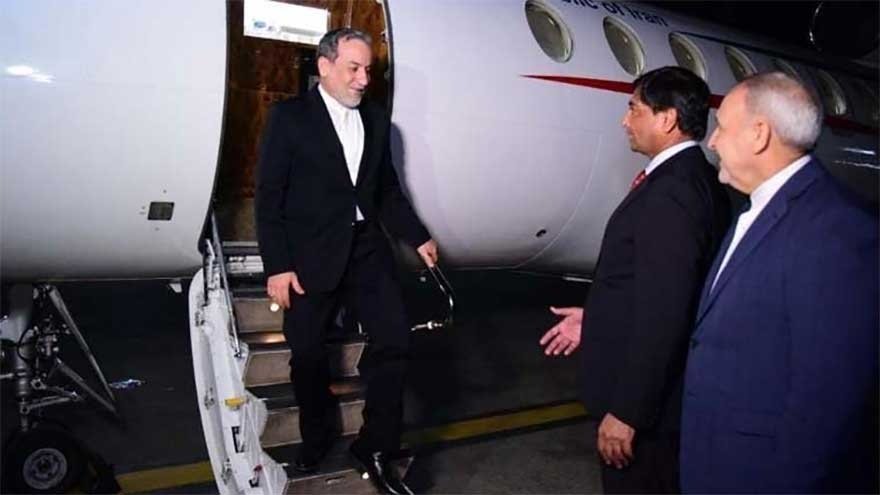
    Iranian Foreign Minister Abbas Araqchi has arrived in Pakistan to attend the Economic Cooperation Organization (ECO) ministerial meeting in Islamabad, Dunya News reported.

    Araqchi was welcomed on his arrival by Iranian Ambassador to Pakistan Reza Amiri, officials from the Iranian Embassy and representatives of Pakistan’s Foreign Office. An Iranian delegation has accompanied the foreign minister on his visit, the report said.

    A delegation of 35 to 40 Iranian journalists has also arrived in Islamabad alongside the foreign minister to cover the visit and related engagements, according to Dunya News.

    Diplomatic sources said Araqchi is expected to meet Prime Minister Shehbaz Sharif during his stay in Islamabad. The meeting is likely to cover key matters, including bilateral relations and the prevailing regional situation.

    Araqchi is in Islamabad for the 30th Meeting of the ECO Council of Ministers, being held on November 15 and 16. Pakistan is hosting the two-day gathering and holds the ECO chairmanship for 2026-27 under the theme of reviving regionalism for a resilient ECO.

    The meeting is being chaired by Deputy Prime Minister and Foreign Minister Ishaq Dar. Foreign ministers and heads of delegations from the ECO member states are attending the session, along with representatives of the ECO Secretariat and other international organisations.

    The ministerial meeting opened on Sunday, and its first day concluded in Islamabad. The foreign ministers attending the meeting are also expected to meet the prime minister, who will host a luncheon in their honour.

    The ECO brings together ten member states, and the Islamabad meeting is discussing regional trade, economic cooperation, energy, transport and connectivity, including prospects for connecting Central Asia to global markets.

    After completing his visit to Pakistan, Araqchi is scheduled to depart Islamabad for Oman, where he will hold talks with his Omani counterpart in Muscat, according to Dunya News and Iran’s Press TV.

    Pakistan is hosting the ECO foreign ministers’ meeting for the third time. The gathering is seen as an opportunity for the member states to strengthen economic and diplomatic coordination at a time when regional countries are seeking closer cooperation on trade and connectivity.

    Further details about Araqchi’s engagements in Islamabad, including his meeting with the prime minister and his address to the ECO session, are awaited.

  • Two Supertankers Carrying 4 Million Barrels of Oil Explode in Strait of Hormuz

    Two Supertankers Carrying 4 Million Barrels of Oil Explode in Strait of Hormuz

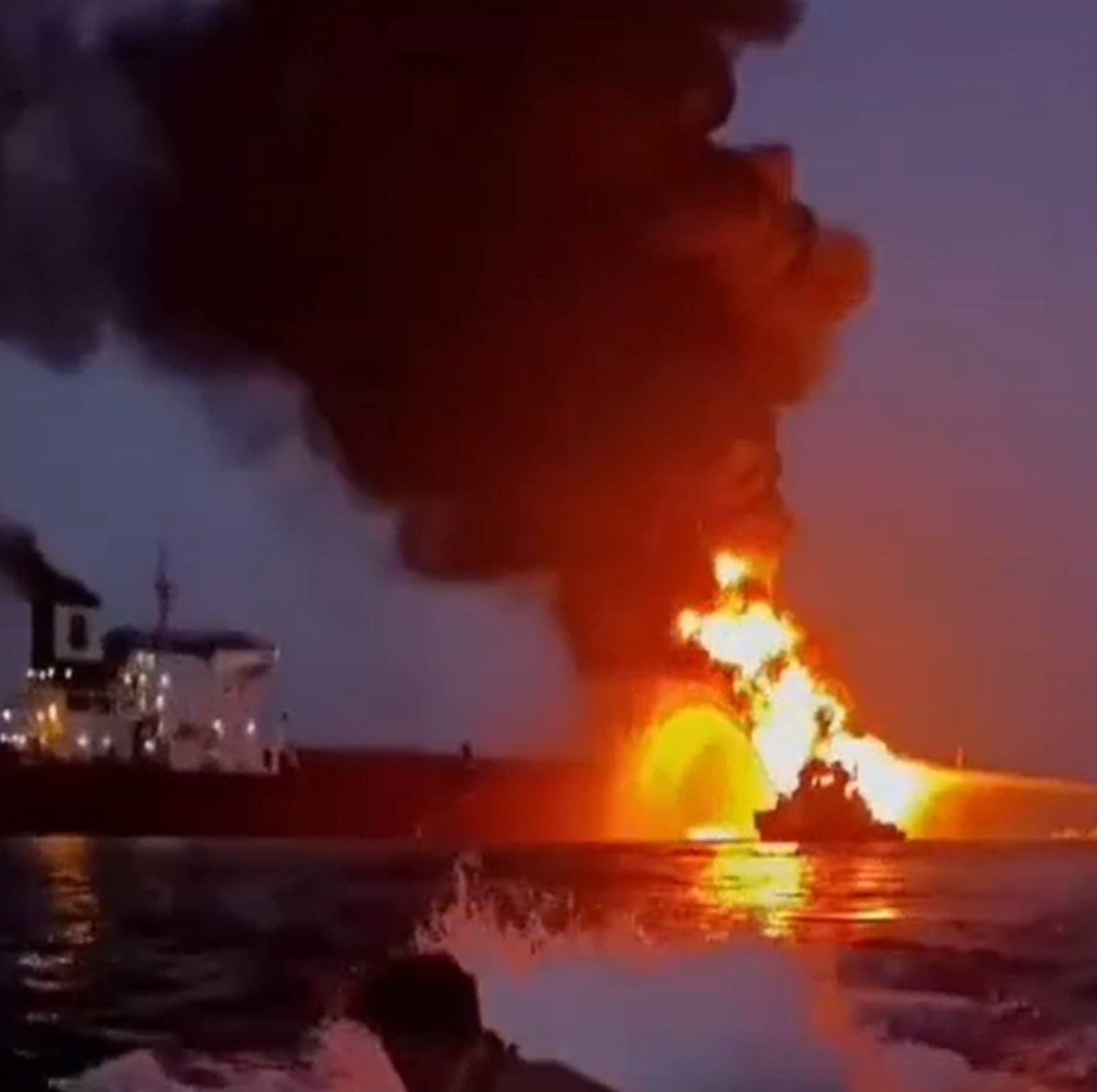
    Two supertankers carrying more than four million barrels of oil between them have been disabled by massive explosions in the Strait of Hormuz, Iran’s Revolutionary Guards Navy said on Thursday. The vessels were left burning after the blasts on Wednesday night, in the latest escalation in the eight-month war between the United States, Israel and Iran.

    According to the Guards, the two tankers were sailing through what Tehran calls an unauthorised southern route when the incident happened. The statement said the vessels had ignored repeated warnings from the Guards’ traffic control centre that the route was not authorised and was unsafe, and that the incident ended in what it described as a violent explosion.

    Iranian state media later said the tankers had exploded after hitting naval mines, although the Guards’ own statement did not specify the cause of the explosions. No independent confirmation of what caused the blasts was available, and the names, flags and crews of the two tankers had not been publicly identified.

    A strait under tight control

    Since the war began in February, Tehran has heavily restricted traffic through the strategic waterway, insisting that vessels use only routes it has approved. Iran has declared the southern shipping lanes of the strait, near Omani waters, off limits and mined, confining safe passage to designated northern corridors that require prior authorisation from its forces.

    The United States has responded by imposing a naval blockade on Iranian ports and helping tankers travel through the strait, which normally carries about one-fifth of the world’s oil. The Guards blamed the incident on what it called blind trust in the American military, a claim that has not been independently verified.

    Iranian forces have made several announcements in recent weeks of ships catching fire while attempting to use routes that Tehran considers off limits. Tehran has often said the vessels struck mines, but the US military recently claimed that all mines had been cleared from the strait. In several cases, the United Kingdom Maritime Trade Operations agency has said tankers in the strait were struck by unknown projectiles.

    The incident underlines how dangerous one of the world’s most important shipping routes has become. With the strait carrying such a large share of global oil supplies, any disruption there carries consequences far beyond the region, and the conflicting accounts of what happened to the two tankers show how hard it has become to establish the facts in the middle of an active conflict.

  • Oil prices drop over $1 as peace talks lift hopes

    Oil prices drop over $1 as peace talks lift hopes

    Oil prices fell by more than $1 a barrel on Thursday as hopes for progress in peace talks over the Middle East and the war in Ukraine eased concerns about supply, Reuters reported.

    Brent crude futures lost $1.14, or 1.2 percent, to $91.62 a barrel by 0141 GMT, while US West Texas Intermediate crude fell $1.04, or 1.2 percent, to $85.49 a barrel.

    Traders were encouraged by signs of movement on two fronts. In Abu Dhabi, negotiators at two days of US-mediated talks between Russia and Ukraine agreed a major prisoner exchange before the sessions ended on Wednesday, although American mediators cautioned that deep differences remained on other issues, including territory. US envoys Jared Kushner and Steve Witkoff are now taking the framework to separate capitals to brief the Russian leadership and coordinate further steps with Ukrainian and European partners.

    Hiroyuki Kikukawa, chief strategist at Nissan Securities Investment, told Reuters that markets were falling on expectations that behind-the-scenes efforts were under way to secure a ceasefire between Russia and Ukraine, and that the war in Iran was unlikely to escalate ahead of a US-China summit next week.

    In the Middle East, Iranian security chief Mohsen Rezaei has said he will not allow even a single particle of enriched nuclear material to leave the country, and warned there would be consequences if the United States launched new strikes. Washington, for its part, says nuclear issues must be part of any initial negotiations with Iran, while US officials have played down the need for further military action.

    Russia’s chief negotiator, Vladimir Medinsky, said mutual understanding had been reached on some issues, including groundwork for a prisoner exchange involving more than 1,000 captives from each side, while stressing that major differences remained. Moscow has also questioned the need for an immediate European role in the talks, while Kyiv and its European allies insist Europe must have a seat at every stage of real diplomacy.

    The fall followed gains in the previous session, when Brent rose about 1.4 percent and WTI about 0.6 percent. Official stockpile data from the US Energy Information Administration is due later on Thursday, delayed by a day because of a US national holiday on Wednesday.

  • Shehbaz Urges Iran-US Calm in Pezeshkian Meeting

    Shehbaz Urges Iran-US Calm in Pezeshkian Meeting

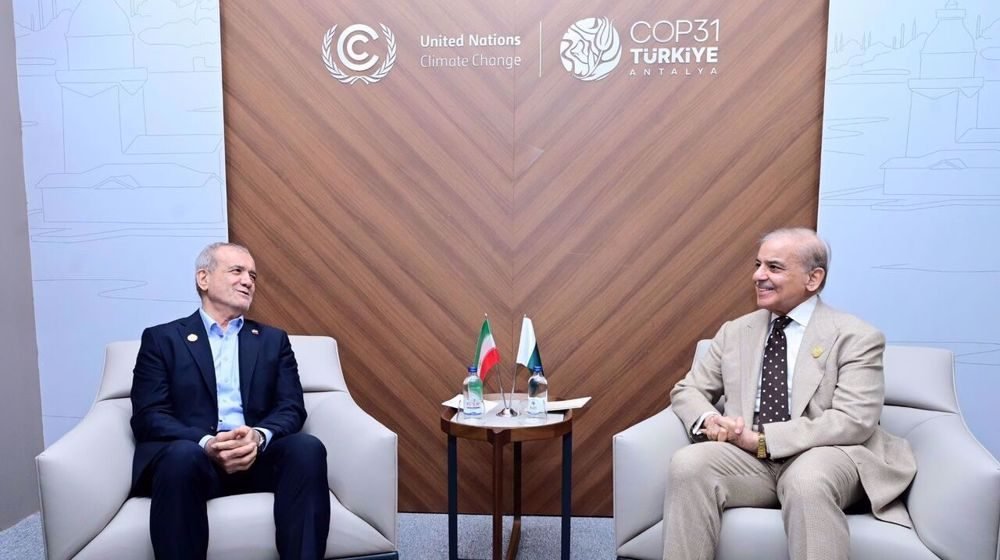
    On the sidelines of the COP31 climate summit in the Turkish resort city of Antalya, Pakistan’s prime minister sat down with Iran’s president on Wednesday for talks dominated by the confrontation between Iran and the United States. The meeting brought together two neighbours whose diplomacy has become central to efforts to keep the region from sliding into a wider war.

    Prime Minister Shehbaz Sharif and Iranian President Masoud Pezeshkian met in what the Prime Minister’s Office described as a warm and cordial atmosphere, according to statements issued after the talks. The two leaders reviewed bilateral relations and the evolving regional situation, with the standoff between Iran and the United States at the top of the agenda.

    According to the Prime Minister’s Office, Mr Sharif expressed deep concern over the continued military confrontation between Iran and the US. He stressed the need for restraint, dialogue and sustained diplomatic engagement to ease tensions and achieve lasting peace and stability in the region.

    The prime minister said Pakistan was ready to play an honest and constructive role in efforts to implement the Islamabad Memorandum of Understanding, an agreement signed between Iran and the US in June aimed at permanently ending the conflict. He underscored the importance of building on the understandings reached under that memorandum, describing it as a pathway towards enduring peace.

    The Iranian presidency said in its own statement that the two leaders had discussed initiatives to strengthen economic and political ties. It said Mr Pezeshkian and Mr Sharif had stressed the need to expand economic and trade relations between Iran and Pakistan as part of efforts to safeguard their mutual interests, including security.

    President Pezeshkian appreciated Pakistan’s continued diplomatic support for Iran and its efforts to promote regional peace and security, according to the Pakistani statement. He said Iran was seriously interested in expanding its relations with Pakistan across a wide range of fields.

    Pakistan has acted as a mediator in the standoff between Iran and the United States, and the Antalya meeting was the latest in a series of contacts between the two leaders on the issue. The talks took place as world leaders gathered in Antalya for the COP31 Leaders’ Summit, where nearly 200 countries are discussing climate action.

    During the summit, Mr Sharif also held meetings with the prime ministers of Kuwait and Bangladesh, Saudi Arabia’s energy minister, the World Bank president and the secretary-general of the Organisation of Islamic Cooperation, according to reports from the conference.

    The two leaders reaffirmed the close and longstanding ties between Pakistan and Iran and agreed on the need to further strengthen bilateral relations in all areas. Both sides expressed hope that Pakistan and Iran would continue working together to promote peace, stability and understanding in the region and contribute to de-escalating tensions.

  • Iran Warns It Will Hit Distant US Bases, Even in Europe

    Iran Warns It Will Hit Distant US Bases, Even in Europe

    Iran’s top security official has warned that Tehran would strike American military bases far beyond the Middle East if the United States attacks Iran again, including bases in European countries and on distant islands that Washington believes are out of range of Iranian missiles.

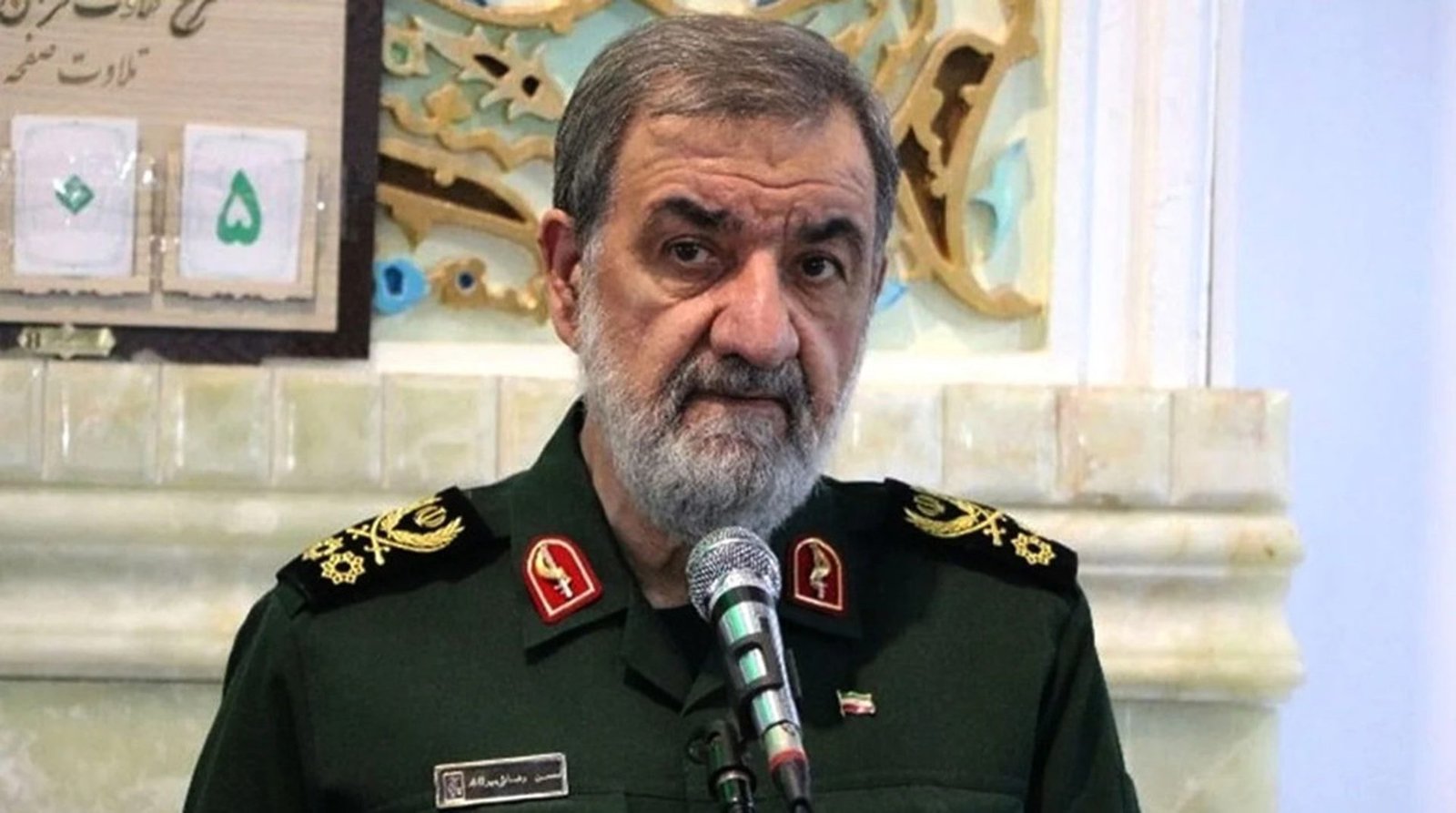
    Major General Mohsen Rezaei, secretary of Iran’s Supreme National Security Council, made the warning in an interview with Lebanon-based Al Mayadeen television on Wednesday. According to Iranian news agency ISNA, he said Iran would no longer limit any response to American installations in the region.

    “If the Americans make a mistake and attack us, we will not only target nearby bases; we will target all nearby bases, and we will also attack distant American bases,” he said. “We may also target some islands that they think our missiles cannot reach. We may even target some American military bases in European countries; if American planes take off from a distant military base and come to this country to bomb Iran, we will also target that base.”

    Mr Rezaei did not name any specific base. Some reports have suggested the reference to distant islands could point to Diego Garcia, the Indian Ocean base used by the United States, though no such target was identified in the interview itself. He warned countries hosting American forces not to assist any renewed offensive.

    Uranium stays in Iran, Hormuz stays shut

    Mr Rezaei also ruled out sending any of Iran’s enriched nuclear material abroad, saying the entire stockpile would remain in the country for domestic use, including nuclear-powered vessels and small modular reactor power plants. “Not a single particle, however insignificant, of the enriched material will leave Iran, and all of this material will remain in our own possession,” he said.

    On diplomacy, he said Iran was waiting for a clear American response to seven conditions it has set for further talks, and rejected reports that negotiations between the two countries were already under way. According to Al Jazeera, the conditions include lifting economic sanctions imposed after a recent memorandum of understanding, ending the US naval blockade, unfreezing restricted assets, and drawing down the regional American military footprint.

    He linked the talks to the Strait of Hormuz, saying Iran would not reopen the strategic waterway until its conditions are met. “We have announced our seven conditions, which are the rights of the Iranian nation. Until these conditions are implemented, the Strait of Hormuz will not open,” he said.

    On the same day, General Ali Abdollahi, chief of staff of Iran’s armed forces, also warned the United States and Israel against further military action, saying any entity threatening Iran would become a direct target of asymmetric operations.

    The warnings come as G7 foreign ministers, meeting in Paris on Wednesday, condemned Iran’s attacks against neighbouring countries and the disruption of trade and energy security caused by the obstruction of the Strait of Hormuz, calling on Tehran to stop what they described as persistent attacks on civilian vessels in the strait.

    Meanwhile, Iranian President Masoud Pezeshkian arrived in Turkey on Wednesday to attend the COP31 climate conference in Antalya, where he accused Washington of threatening global peace and security. The conflict began in late February 2026 after US and Israeli strikes on Iran, and tensions have remained high since.

  • Trump: US Won Iran War, Wants ‘Total Victory’

    Trump: US Won Iran War, Wants ‘Total Victory’

    President Donald Trump has declared that the United States has already won its war with Iran, but has insisted he will accept nothing less than what he called a total victory. Speaking at Arlington National Cemetery on Veterans Day, he told veterans and military families that the end of the conflict was now a matter of timing.

    “We won,” Mr Trump said during his address at the Memorial Amphitheater, after laying a wreath at the Tomb of the Unknown Soldier. “We want to make sure we have a total victory, not a 93% victory. It’s just a question of when we want to end it.”

    The president, who was joined by First Lady Melania Trump, Vice President JD Vance and Defence Secretary Pete Hegseth, recast the origins of the conflict, which began in February. “America did not start a war with Iran,” he said. “Iran has been waging war on America since 1979. This should have been taken care of a long time ago.”

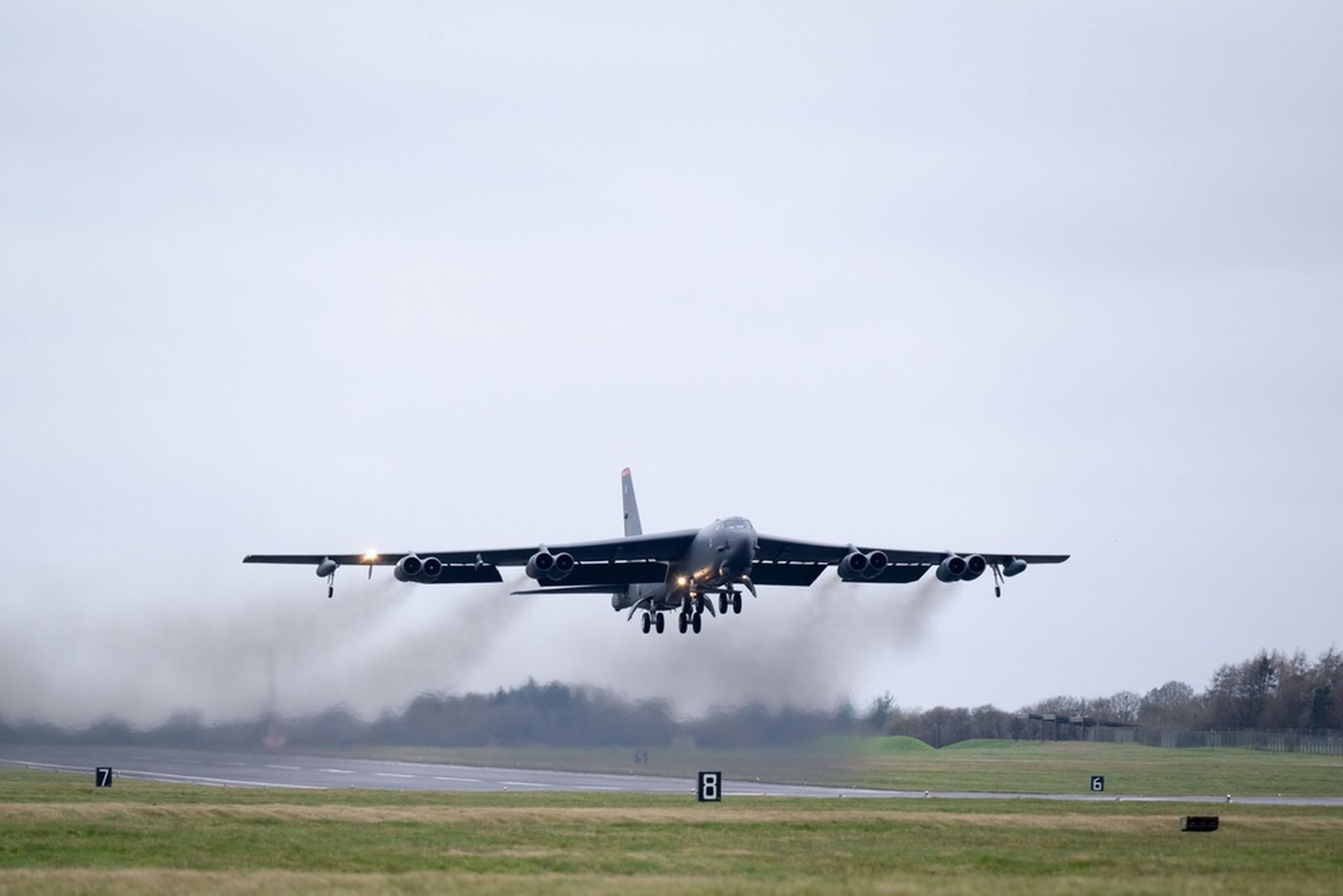
    Mr Trump said American forces had inflicted heavy damage on Iran, claiming it would take Tehran 25 years to rebuild what had been destroyed, and said he hoped no further destruction would be needed. He said the operation had begun seven months ago and credited B-2 bombers with preventing Iran from obtaining a nuclear weapon.

    He also put the American death toll at 18 service members, a figure reporters have described as disputed, and compared it with the far higher losses of the Korean, Vietnam, Iraq and Afghanistan wars.

    Veterans honoured at Arlington

    Much of the speech was devoted to the veterans in the audience. Mr Trump honoured Marine veteran Dale Garner, a survivor of the 1983 bombing of a Marine barracks in Beirut that killed 241 American service members, an attack a US court later found Iran responsible for. He also recognised Jack Myers, 103, a Second World War gunner who fought in the Battle of the Bulge, and Colonel Douglas Moore, a Vietnam medevac pilot credited with 1,874 missions.

    Turning to veterans’ care, the president said his administration had cut the Department of Veterans Affairs claims backlog by 71% in less than two years and secured housing for nearly 100,000 homeless veterans, and he pledged to end veteran homelessness.

    Venezuela and the triumphal arch

    Mr Trump also pointed to the recent operation in Venezuela, saying the United States had won the war in 48 minutes, and repeated his claim that American forces had captured the country’s leader, Nicolás Maduro, who is now in custody in New York. “To the victor belong the spoils,” he said.

    Near the close of his address, he returned to his plan for a triumphal arch honouring the armed forces, saying it would soon be dedicated to veterans. The 250-foot gilded arch planned near the Lincoln Memorial has been approved by a planning body but is frozen by a temporary court order, with lawsuits pending, including one brought by the Kennedy family.

    The speech came a week after midterm elections in which Vice President Vance said the Iran conflict had contributed to Republican losses, a view Mr Trump did not dispute. He closed by promising veterans their service would be remembered. “And the nation you served, we will never, ever let it fail,” he said.

  • US Charges Three Over 20 Terror Plots, RAF Fairford Plan

    US Charges Three Over 20 Terror Plots, RAF Fairford Plan

    The United States has charged three men with plotting nearly 20 terrorist attacks across Europe and America, including a foiled plan to drive vans loaded with fuel into a British airbase used by American forces. The Justice Department unsealed an eight-count indictment on Tuesday, naming the men as Mohammad Baqer Saad Dawood al-Saadi, Mohsen Mohajeri and Mohammad Ali al-Hassani, and accusing them of acting in support of Kataib Hezbollah and Irans Islamic Revolutionary Guard Corps, both designated as terrorist organisations by Washington.

    The most serious allegation concerns RAF Fairford in Gloucestershire, a base that houses United States military aircraft and personnel. Prosecutors say al-Hassani, a 35-year-old Iraqi national, directed and paid associates in Britain to prepare the attack from August onwards. They carried out surveillance of the base, bought vans and barrels of fuel, researched chemical accelerants and metal objects that could be used as shrapnel, and fitted the vans with fake logos to make them look like vehicles from a fuel delivery firm and a swimming pool supply business.

    On 26 September, the indictment says, al-Hassani told the drivers to take three vans towards the base. At least two of them were stopped at a security roadblock before they could reach the perimeter. In the early hours of the following morning, British police recovered three white vans carrying barrels of fuel and arrested the people inside them. After the threat, the United States removed its bomber aircraft from RAF Fairford, according to the BBC.

    The indictment links the three men to a wider campaign of violence in the spring of this year. Prosecutors say about 18 attacks in Europe were claimed in the name of a front group calling itself Harakat Ashab al-Yamin al-Islamiya, including seven in the United Kingdom. The attacks involved arson and explosives, and one near-fatal stabbing in London of two Jewish men, one of them a dual American-British citizen. Al-Saadi was first charged in May over his alleged role in those attacks and in an attempt to bomb a synagogue in New York.

    One striking detail in the case is how the plot was allegedly coordinated. Al-Saadi, 32, has been in federal custody in New York since he was arrested abroad on 1 May and transferred to the United States. Prosecutors say he passed coded messages to his co-defendants through phone calls with his family in Iraq, using words such as work to describe terrorist activity. His co-defendants, Mohajeri, 48, and al-Hassani, are not in custody, according to reports citing people familiar with the case.

    Attorney General Todd Blanche said anyone who plans a terrorist plot on a military base housing American service members will be prosecuted by the United States government. FBI Director Kash Patel said the case showed the determination of Iran to commit terrorist attacks in Europe and the United States. The charges include conspiracy to provide material support to terrorist organisations and conspiracy to bomb a place of public use, which carries a maximum sentence of life in prison. The Iranian embassy in London has rejected the allegations. An indictment is only an allegation, and all three men are presumed innocent until proven guilty in court.

  • Hormuz Tankers Still Burning Despite Talk of Calm

    Hormuz Tankers Still Burning Despite Talk of Calm

    Oil tankers are still catching fire in the Strait of Hormuz, even as financial markets bet that the war involving Iran may be easing. Fresh evidence gathered over the past few days points to more strikes on ships passing through the narrow waterway, along with attacks on energy facilities elsewhere in the region, according to a report by Reuters on Tuesday, 10 November.

    Videos posted on social media on Sunday and verified by Reuters showed a tanker managed by Navig8, a shipping company majority owned by ADNOC Logistics and Services, burning near the coast of Oman. A satellite image taken by the European Union’s Copernicus Sentinel-2 satellite on the same day showed a large cloud of black smoke at the same location. Iranian state broadcaster IRIB, citing the Islamic Revolutionary Guard Corps Navy, reported that it was one of three tankers hit on Sunday for using what Iran calls unauthorised routes through the strait.

    The attacks did not stop there. Another tanker was struck northeast of Lima, a port town in Oman’s Musandam region, on Tuesday, according to the United Kingdom Maritime Trade Operations agency, which did not say who carried out the strike. In a separate statement, the Revolutionary Guards Navy said two tankers caught fire after hitting naval mines on the unauthorised route.

    The scale of the campaign at sea is striking. Thirty-seven ships were attacked in October, the highest monthly total since the conflict began in late February, according to data from the Washington Institute for Near East Policy. The International Maritime Organization has confirmed 130 incidents, most of them attacks, in the region since the fighting started, with at least 25 seafarers killed.

    The strikes are also causing environmental damage. Oil has been leaking from damaged tankers, and a video shared on Monday and verified by Reuters showed oil reaching the shores of Oman, while satellite images showed spills off the coasts of Oman and the United Arab Emirates. The Omani government did not respond to a Reuters request for comment on the video.

    Energy infrastructure on land has come under attack as well. Video verified by Reuters showed damage to an office building belonging to Saudi Aramco, the world’s largest oil company, in Riyadh, following missile strikes claimed by Yemen’s Houthis on 8 November. The Saudi Energy Ministry said the building had been targeted in an attempted attack, with debris causing limited damage and no injuries or deaths.

    At the same time, United States forces have continued to enforce a naval blockade of Iranian ports. In the latest incident, an American military aircraft fired on and disabled a cargo vessel flying the flag of St Kitts and Nevis that tried to leave regional waters after visiting an Iranian port on Saturday, according to US Central Command.

    Despite the violence at sea, crude oil prices fell to two-month lows on Tuesday after US officials played down the need for further military action against Iran. Analysts noted that President Donald Trump has struck a more conciliatory tone since the Republicans’ defeat in the 3 November midterm elections. For shipping crews and insurers, however, the message from the strait is unchanged: the world’s most important oil chokepoint remains dangerous, and the attacks show little sign of stopping.

  • Rubio Rejects Iran’s Reparation Demand as ‘Absurd’

    Rubio Rejects Iran’s Reparation Demand as ‘Absurd’

    United States Secretary of State Marco Rubio has rejected Iran’s demand for reparations and said there is no need to resume major military strikes against Tehran while negotiations are still under way.

    Speaking to reporters in Paris on Tuesday, on the sidelines of a meeting of G7 foreign ministers, Rubio said Iran’s conditions for a deal were simply unacceptable and, in some cases, outrageous and ridiculous. He said the talks so far had not been very productive and that he would not say the two sides were on the verge of a breakthrough.

    Rubio was blunt about the demand for compensation. “Iran is demanding reparations. They should be the ones paying reparations because they’re the ones that have destabilised the region for long periods of time,” he said, adding that Washington would not take on Tehran’s proposals as the basis for negotiations.

    Economic pressure instead of strikes

    According to Rubio, the United States sees no immediate need for major combat operations against Iran, because sanctions and a naval blockade are already placing severe pressure on Tehran’s economy. He said that pressure would intensify over the coming months and that Iran’s remaining oil revenues would dry up as sanctions took hold.

    Iran has put forward a plan under which it would reopen the Strait of Hormuz if the United States ends its blockade of Iranian ports, lifts some sanctions and halts its bombing campaign. Tehran has set out seven conditions, including the return of its frozen funds, and its foreign ministry spokesman, Esmaeil Baghaei, has described the plan as the most reasonable proposal anyone has put forward.

    Washington and Tehran have signed a preliminary agreement to halt the conflict and have opened a 60-day negotiation period covering sanctions relief, Iran’s nuclear programme and the future of the strait. But Rubio made clear that the gap between the two sides remains wide, and President Donald Trump said on Monday that the conflict was effectively over from a military standpoint.

    Rubio said the administration still prefers diplomacy and would explore any real chance of a deal. For now, though, the message from Paris is that the United States will keep squeezing Iran’s economy rather than return to large-scale strikes, while rejecting the conditions Tehran has attached to talks.

  • Iran Rules Out US Talks, Hormuz Stays Shut

    Iran Rules Out US Talks, Hormuz Stays Shut

    Iran’s top security official has said there are currently no negotiations taking place between Tehran and Washington, rejecting American claims that talks are continuing through Qatari mediators. Major General Mohsen Rezaei, secretary of Iran’s Supreme National Security Council, made the remarks in an interview with Al-Mayadeen, a broadcaster close to Tehran’s allies, on Tuesday.

    General Rezaei said the Americans were fabricating claims about continuing negotiations or a meeting in Qatar, describing them as “pure lies” aimed at easing economic pressure and lowering global oil prices. “I emphasize that at the present moment, we are not conducting any negotiations with the Americans, and there are no negotiations between us and Washington,” he said.

    He said Iran had set out seven conditions in a June interim agreement and had asked the United States for a “clear and explicit” response, but had not yet received one. Until those conditions are fully met, he said, the Strait of Hormuz will not be reopened. The strait carries about one-fifth of the world’s oil under normal conditions and has been largely closed to commercial shipping since Iran declared it shut in late October.

    Iran’s foreign minister, Abbas Araghchi, also dismissed reports that General Rezaei could meet US Vice President JD Vance, calling them “baseless speculations”. “These speculations and media reports are entirely baseless, and there are no plans to hold such a meeting,” he told the state news agency IRNA on Tuesday.

    The Iranian statements came a day after President Donald Trump met Qatar’s prime minister, Mohammed bin Abdulrahman Al Thani, in Washington. Mr Trump said on Monday that the war on Iran was “effectively over” and that a resumption of American strikes was unlikely, although he warned that US forces remained ready to act if needed. The Qatari prime minister had expressed optimism about discussions aimed at restoring regional peace.

    Iran has put forward a two-day proposal, conveyed through Qatari mediators, that calls for reopening the strait to commercial shipping within 48 hours of Washington meeting Tehran’s conditions. For now, though, the two sides are describing the situation very differently. Pakistan’s military said last week it was “cautiously optimistic” about mediation efforts, after its army chief visited Tehran twice this month alongside Saudi and Turkish officials.