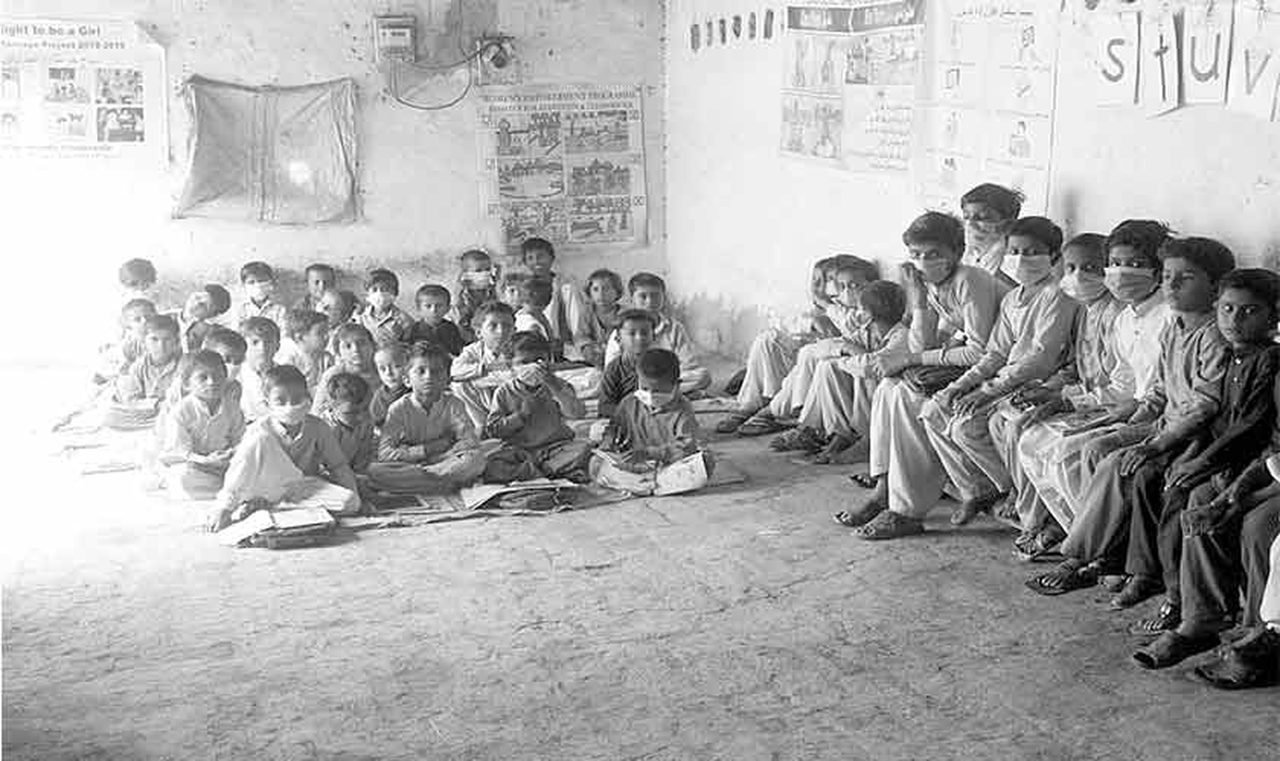
An estimated 7.4 million children aged between five and 16, roughly 44 per cent of that age group, are out of school in Sindh, according to official and international figures cited in reports.
The figures were highlighted in a report published on Wednesday, which said the province’s education system had failed to deliver on the promise of free and compulsory schooling despite large budget allocations over the years. According to the report, more than Rs15 trillion has been allocated to education in Sindh over the past 18 years.
The 7.4 million figure is consistent with figures cited by other sources. The News reported in September 2026 that an estimated 7.4 million children in the five-to-16 age group were out of school in Sindh, while a Pakistan Institute of Education report put the figure at 7.63 million. The province’s education minister has used a lower figure of 4.1 million, and official counts vary.
Girls have borne the worst of the crisis. According to the report, more than four million girls in Sindh are out of school, and female literacy in rural parts of the province is extremely low. UNICEF figures cited in reports say Pakistan has the second-largest out-of-school population in the world after Nigeria, with an estimated 25.1 million children aged five to 16 outside any classroom, and that 53 per cent of them are girls.
The report also pointed to the state of school buildings. According to education department documents presented before the Sindh cabinet, 5,922 government schools in the province lack basic facilities such as boundary walls, toilets, electricity and clean drinking water. The same figure has been cited in a United Nations document on education conditions in Sindh.
Thousands of schools are operating without proper buildings. According to the reports, 4,364 schools in the interior of Sindh are without shelter, while 10,516 schools are operating from a single room. The Annual School Census 2023-24 records nearly 41,000 public schools in Sindh, including 36,225 primary schools.
Critics quoted in the report have demanded a complete forensic audit of the education budget, saying the public needs to know where the money allocated for children’s education has gone. They argue that despite the allocations, the results on the ground have not improved, and that ghost schools, ghost teachers and paper projects have absorbed large sums.
The Sindh government, for its part, raised its education budget by 25 per cent for the fiscal year 2025-26, allocating Rs613.36 billion, according to The News. Even so, the province’s gross primary enrolment rate stands at 71 per cent against a national average of 84 per cent, according to the Economic Survey FY2025. The Annual Status of Education Report 2023 found that only 22 per cent of Grade 5 students could read a basic English sentence and only 27 per cent could perform division.
Education experts say the crisis in Sindh is structural rather than a matter of money alone, pointing to weak governance, teacher absenteeism, poverty that pulls children into work before they finish primary school, and communities that have never been persuaded that schooling repays the cost of sending a child. They say rebuilding damaged schools, fixing the missing basics of water, power, toilets and boundary walls, and measuring success by what children learn rather than by what is spent are all long overdue.
Leave a Reply