Tag: Sindh

  • One million flood-hit families get new homes in Sindh

    One million flood-hit families get new homes in Sindh

    Sindh has completed the construction of one million houses for families affected by the floods, Chief Minister Syed Murad Ali Shah announced on Tuesday, describing the milestone as the fulfilment of a promise made to displaced families across the province.

    Addressing a ceremony in Karachi, the chief minister said the floods had caused massive destruction and left thousands of people homeless, and that rehabilitating affected families had posed serious challenges for the provincial government. He said the completion of one million homes under the Sindh Peoples Housing Programme marked a historic step in the recovery effort.

    According to the chief minister, the programme now aims to build 2.1 million climate-resilient houses for flood-affected families across 23 districts of the province. He said every completed house had been verified through geotagging and digital monitoring, and that the work was being carried out through the Sindh Peoples Housing Foundation.

    Funding and women homeowners

    The chief minister said the World Bank had contributed 500 million dollars to the project, while the Sindh government had provided 179 million dollars from its own resources. He also acknowledged support from the Asian Development Bank, the Islamic Development Bank and the European Investment Bank.

    One of the programme’s major achievements, he said, was the empowerment of women. Millions of women in rural Sindh had become homeowners for the first time, with houses registered in their names, which he described as a guarantee of their security and dignity rather than mere property ownership.

    He added that the government had empowered affected families to build their own houses instead of relying on contractors, and credited the people of Sindh, who rebuilt their homes through determination and hard work, as the real heroes of the project. The foundation, he said, had completed the task through a digital system with a team of only 40 people.

    Work is now under way on clean water, sanitation and drainage projects in the areas where houses have been built. Through a combined investment of around one billion dollars, basic facilities will be provided to 4,800 villages, according to the chief minister.

    He said the journey would continue towards the target of 2.1 million houses, adding that the government remained committed to turning public hopes into reality under the leadership of Pakistan Peoples Party Chairman Bilawal Bhutto Zardari.
  • Contaminated Tea Sends 12 to Hospital in Larkana

    Contaminated Tea Sends 12 to Hospital in Larkana

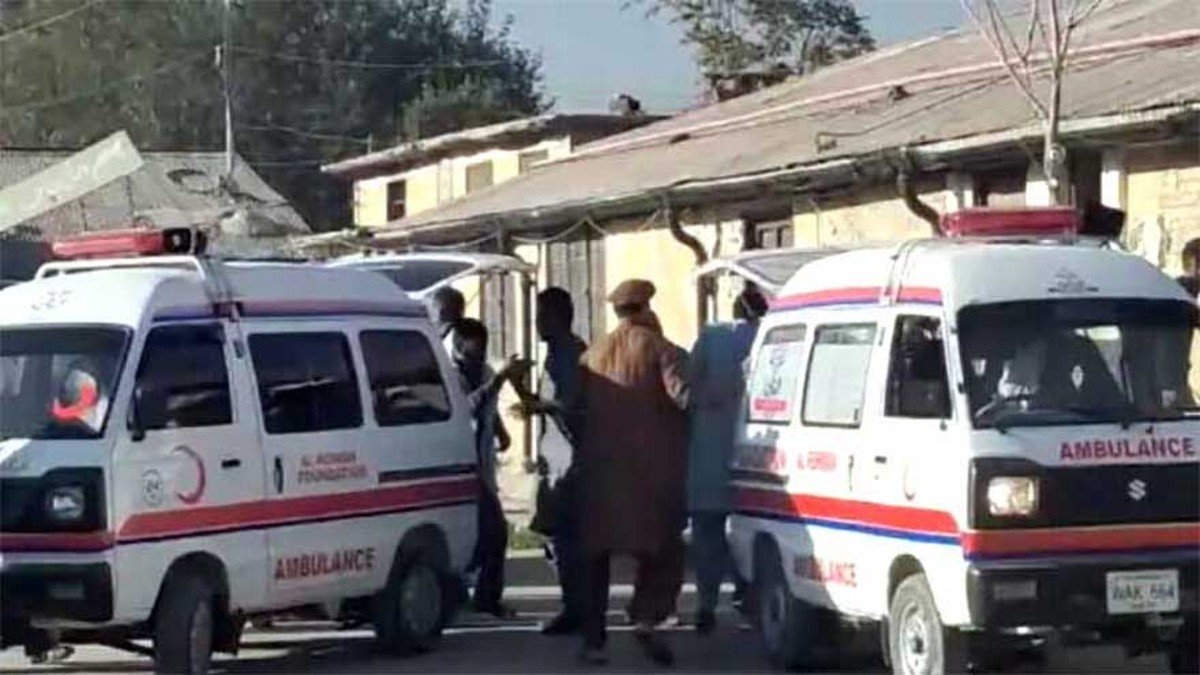
    Twelve people from the Bakrani area of Larkana district are in hospital after tea from a local shop left them seriously ill. The group, which includes women and children, was rushed for treatment after drinking the contaminated tea, and five women among them are reported to be in a critical condition.

    The affected people were admitted to Taluka Hospital Bakrani and Chandka Medical College Hospital in Larkana, where doctors are treating them. According to hospital sources, the remaining patients are out of danger, while the five women in a critical condition are receiving medical treatment and all possible assistance. Doctors are continuing to monitor the five women closely, while the other patients are being kept under observation as they recover.

    Rescue teams reached the scene quickly and shifted the victims to hospital. Police also arrived at the spot, collected samples of the contaminated tea and began an investigation into how the drink became unsafe. The tea shopkeeper who prepared the tea has been arrested.

    What exactly contaminated the tea has not yet been established. Police have collected samples of the tea as part of their investigation, and no official cause has been announced so far. The inquiry will now focus on the tea itself, including where its ingredients came from, how it was prepared and stored, and whether anything was added to it by mistake. Until those findings are known, officials have not said what caused the contamination. The names of the victims and the shopkeeper have not been released.

    The two hospitals shared the sudden load between them, with some of the victims taken to the taluka hospital in Bakrani and others moved to the larger medical college hospital in Larkana city. Doctors at both facilities said the victims were affected by the contaminated tea and are being provided with medical care.

    For the families in Bakrani, the immediate concern is the recovery of those still in hospital, five of them in a serious condition. Police say their investigation will establish how the tea became contaminated and whether anyone else bears responsibility for what happened.

  • Tharparkar Calamity-Hit as Drought Wipes Out 90% of Crops

    Tharparkar Calamity-Hit as Drought Wipes Out 90% of Crops

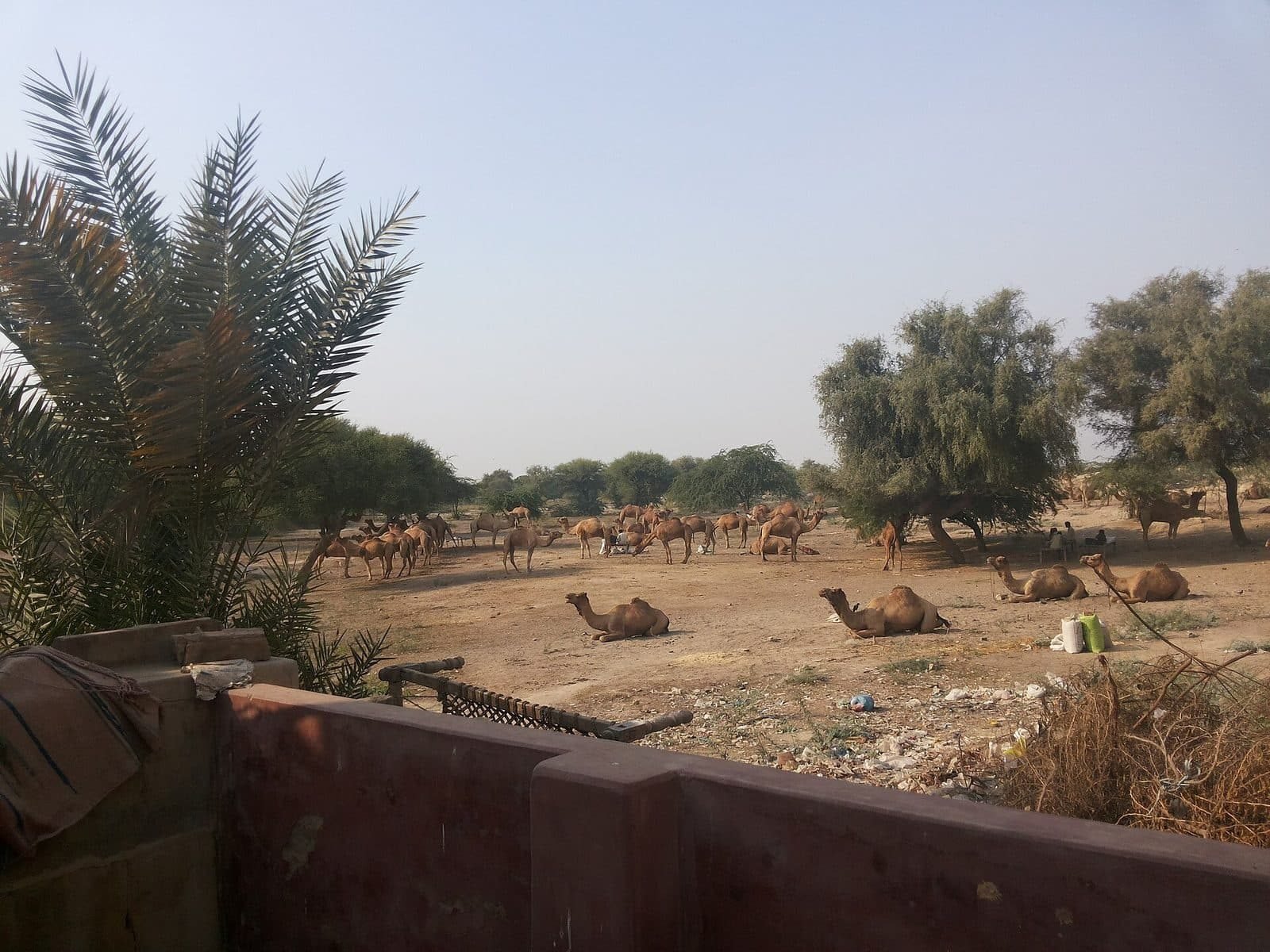
    The Sindh government has decided to declare Tharparkar a calamity-hit district after drought destroyed most of its crops, leaving farming families across the desert district facing a severe crisis.

    Chief Minister Syed Murad Ali Shah took the decision at a meeting at the Chief Minister’s House on Saturday, after a detailed briefing on the drought-like conditions gripping all seven talukas of the district. He directed the departments concerned to start relief measures at once and to ensure drinking water and essential supplies reach the affected population.

    The briefing revealed that around 85 to 90 per cent of cultivated crops in Tharparkar had either been destroyed or rendered unproductive. The agriculture extension department assessed the crop loss at about 90 per cent, while field reports from assistant commissioners and mukhtiarkars confirmed that only 10 to 15 per cent of crops had survived.

    Rainfall far below what crops needed

    Officials told the chief minister that rainfall during the 2026 monsoon season had been unevenly distributed. Although seasonal rainfall totals ranged between 181 and 273 millimetres across the seven talukas, September rainfall remained particularly low, ranging from just 1 to 36 millimetres. As a result, crops and natural grass dried out before they could mature.

    The chief minister expressed serious concern over the impact of the poor and uneven rainfall on agriculture, livestock and the livelihoods of the people of Tharparkar. He observed that the situation required immediate government intervention, particularly to protect livestock, which remains a major source of income for families in the desert district.

    Directing the chief secretary to take immediate action, he ordered that all non-functional reverse osmosis plants be repaired and restored on a priority basis. He also directed the authorities to identify faults in existing water supply sources and make them fully functional, so that local communities have uninterrupted access to drinking water.

    Long-term water plan for Mithi

    The chief minister directed the chief secretary to assess the feasibility of laying a dedicated water supply line from Naukot to Mithi, to ensure a sustainable and reliable supply of drinking water to the people of Mithi. He emphasised that all necessary technical and administrative requirements should be examined on a priority basis, so that a long-term solution to the area’s water shortage could be developed.

    He also stressed the need for urgent arrangements to deal with the shortage of fodder and to protect livestock from the effects of the drought, directing the departments concerned to coordinate their efforts and ensure relief reaches the affected areas without delay.

    “We will not leave the affected people of Tharparkar alone; the Sindh government will provide them all possible help,” the chief minister said, according to reports of his remarks. He directed the administration to remain vigilant, closely monitor the situation and ensure no affected community was left without essential support.

    The meeting was attended by MNA Dr Mahesh Malani, MPAs Dost Muhammad Rahimoon, Qasim Soomro, Faqeer Sher Muhammad Bilalani and Arbab Lutfullah, Chief Secretary Asif Hyder Shah, Board of Revenue Senior Member Khalid Hyder Shah and other senior officials.

  • Tharparkar Calamity-Hit as Drought Destroys 90% of Crops

    Tharparkar Calamity-Hit as Drought Destroys 90% of Crops

    The Sindh government has decided to declare Tharparkar a calamity-hit district after a severe drought destroyed most of this season’s crops, prompting Chief Minister Murad Ali Shah to order urgent relief measures for the desert district’s residents.

    At a meeting in Karachi, the chief minister was told that all seven talukas of Tharparkar are facing drought-like conditions. According to the briefing, between 85 and 90 per cent of crops in the district have been destroyed or rendered unproductive, while the agriculture extension department estimated the damage at about 90 per cent.

    Officials linked the crop failure to the lack of rain. Only 1 to 36 millimetres of rain was recorded across the seven talukas in September 2026, and the rainfall that did arrive was uneven. As a result, crops and the natural grass that livestock depend on dried up before they could mature.

    Tharparkar is a desert district where farming and grazing depend almost entirely on monsoon rain. Its rain-fed crops include millet, cluster bean and green gram, and when the rains fail, both harvests and fodder disappear at the same time, leaving farming families and herders in difficulty.

    The chief minister directed officials to make sure drinking water reaches the people of Tharparkar. He ordered the immediate repair of reverse osmosis plants that are not working and the restoration of all existing water supply sources without delay.

    He also asked the chief secretary to examine whether a water pipeline can be laid from Naukot to Mithi, the district headquarters, and called for long-term planning to secure the area’s water supply. On livestock, he sought recommendations on measures to protect animals affected by the drought.

    Relief work in the affected areas will be monitored continuously, officials said. The chief minister said the provincial government would not leave the people of Tharparkar alone and would provide every possible assistance. The government’s stated priorities are drinking water, protecting livestock and relief for affected families.

    The declaration as a calamity-hit district is expected to unlock formal relief measures for the district, where the loss of the harvest has hit household incomes and the local food supply. For now, the administration’s immediate task is to keep water flowing, keep animals alive and reach families whose crops have failed.

  • Bilawal Urges Dialogue to Ease Economic Crisis

    Bilawal Urges Dialogue to Ease Economic Crisis

    Pakistan Peoples Party chairman Bilawal Bhutto-Zardari has called for political dialogue to address the economic crisis and the hardships faced by the public, saying all political parties must sit together to find a way forward.

    Bilawal was speaking at the inauguration of the 600-bed Sindh Institute of Urology and Transplantation in Larkana. Addressing the gathering, he said dialogue was necessary to deal with the economic difficulties facing the country and the problems of ordinary people.

    He said all parties must sit together and that dialogue was in the interest of the country, of democratic institutions and of the public. His message was that the economic crisis cannot be resolved by one party alone, and that a shared approach is needed at a time when households are under pressure.

    The PPP chairman criticised the previous federal government for failing to provide relief to farmers and the poor. He said the federal government had neglected health and education, two areas he described as central to the welfare of the people.

    He praised the Sindh government’s services in health and education, pointing to the new 600-bed institute in Larkana as an example of the province’s investment in public services. The institute adds a major specialist facility to the city, offering urology and transplantation services to patients from across the region.

    The call for dialogue comes at a time of political division, with parties often speaking past each other rather than engaging directly. Bilawal’s argument is that the economic crisis, rising costs and public hardship affect supporters of every party, and that the response should therefore be worked out jointly.

    Whether other parties take up the call remains to be seen. Dialogue of the kind Bilawal described would require rival parties to set aside their differences and agree on common economic measures, something that has proved difficult in the past.

    For the people of Larkana, the day’s news was also the opening of a large new hospital, a concrete addition to the city’s health services. Bilawal linked the two themes in his address, presenting investment in health and education as part of the same responsibility as easing the economic burden on the public.

    His remarks underline the PPP’s position that political engagement, rather than confrontation, is the way to deal with the country’s economic problems. The coming days will show whether the call for all parties to sit together finds any takers.

  • Sindh Youth Card: 100,000 young people to get benefits

    Sindh Youth Card: 100,000 young people to get benefits

    The Sindh government has completed preparations for the Sindh Youth Card, which Pakistan Peoples Party Chairman Bilawal Bhutto Zardari is scheduled to inaugurate this month, officials have said.

    A meeting chaired by Sindh Minister for Sports and Youth Affairs Sardar Muhammad Bakhsh Mahar reviewed the arrangements for the launch. In the first phase, one hundred thousand young people aged sixteen to twenty-nine from all thirty districts of Sindh will receive the card.

    The card will bring services from thirteen government departments onto a shared digital platform. Holders will be able to access scholarships and internships, along with discounted public transport on the Green Line, the Orange Line and the People’s Bus Service.

    A proposed twenty-five percent discount on all Pakistan Railways routes is also part of the package, along with special discounts on domestic air travel. Women entrepreneurs will be eligible for special grants and financial assistance under the scheme, according to the plan.

    The Youth Card is aimed at giving young people in Sindh a single route into education, work and travel support, rather than requiring them to apply separately to each department. Officials say the digital platform behind the card will link the participating departments so that benefits can be delivered through one system.

    No date within the month has been announced for the inauguration itself, and details of how young people can apply for the first phase are expected to be shared at the launch. The scheme is one of the provincial government’s flagship youth initiatives, and its first phase will test demand before any wider rollout.

    The transport benefits alone could make a real difference for students and young workers who travel daily. Discounted fares on city bus services and the proposed rail discount would cut the cost of getting to college, university and work, while the air travel discounts are aimed at young people who need to fly within the country for study or family reasons.

    For young women, the scheme adds a further layer of support. Special grants and financial assistance for women entrepreneurs are designed to help women who want to start small businesses but struggle to raise starting capital, and the inclusion of scholarships and internships is meant to open a clearer path from education into paid work.

    Officials say covering all thirty districts in the first phase matters because young people outside Karachi and the larger cities often have the least access to government services. By putting thirteen departments on one digital platform, the province hopes that a young person in a smaller district will be able to reach the same benefits as someone in a major city, without travelling between offices or filing separate applications.

  • Mpox in Sindh: 7 Hospitalised as Tally Hits 98

    Mpox in Sindh: 7 Hospitalised as Tally Hits 98

    Seven more mpox patients, including an infant, have been hospitalised in Karachi over the past week, prompting health authorities in Sindh to tighten surveillance and order strict enforcement of infection-control measures at hospitals across the province.

    The patients, all residents of Karachi, are under treatment at the Sindh Infectious Diseases Hospital and Research Centre (SIDH&RC), according to sources quoted by Dawn. The hospital reported its second infant case of the disease on Friday.

    The first infant, admitted a week earlier, is in critical condition after developing other infections alongside a decline in oral intake, a doctor told the newspaper on condition of anonymity. The adult patients are reported to be in stable condition.

    The two infants, both under two months old, had been circumcised at the same Malir hospital — the Ibn-i-Hassan Hospital at Malir 15 — which the Sindh Healthcare Commission (SHCC) has since sealed, following a laboratory report confirming an mpox case in one of the infants and concerns over infection prevention and control practices.

    Among the inpatients is also an employee of the SIDH&RC who worked in the hospital’s food supply and distribution service and is suspected to have contracted the infection inside the facility. Two other patients worked at the fruit and vegetable market on Superhighway, pointing to possible community-level transmission.

    The patients, including two women, are residents of Gulistan-i-Jauhar, Sachal Goth, Landhi, Saudabad and other neighbourhoods of the city. With the latest admissions, the number of mpox cases treated at the SIDH&RC this year has reached 29.

    The provincial tally now stands at 98 cases with 11 deaths recorded this year, according to data released by the Provincial Disease Surveillance and Response Unit. The Express Tribune reported that seven cases were detected within a single week, and the health department has stepped up contact tracing and surveillance.

    In response, the provincial health department said the government had strengthened surveillance, contact tracing and case management, and directed health facilities to strictly implement infection-control measures and use personal protective equipment where indicated. Officials maintained there was no need for “undue” concern and that the situation was being managed through established public health protocols.

    The department urged the public to maintain good hand hygiene, exercise caution in crowded places — particularly health facilities — and avoid direct contact with the skin lesions, rashes or personal belongings of suspected or confirmed cases. It described mpox as “a preventable and manageable public health concern”, and advised anyone developing an unusual rash or blisters to seek prompt medical assessment and avoid close contact with others until evaluated.

    The latest hospitalisations follow an earlier outbreak in April in Khairpur, where the virus — previously restricted to patients with a history of foreign travel — was reported locally, claiming the lives of several newborns who were under treatment in the intensive care units of two hospitals, reportedly due to a lack of infection-control measures.