Lahore — Punjab has reported a sharp fall in smog-related illness this year, with patients across five smog-related diseases down 43 per cent in the first ten months of 2026 compared with the same period last year, according to the provincial government.
A total of 7,029,291 patients were reported across the five diseases between January and October 2026, and Lahore recorded its cleanest October in five years, the report said.
Outpatient numbers for respiratory illness, the largest of the smog-related categories, have fallen steadily over four years. They stood at 22.87 million in January to October 2023, fell to 19.93 million in the same period of 2024 and 12.39 million in 2025, and reached about 7 million in 2026 — a reduction of around 69 per cent compared with 2023.
The province attributes the improvement to its ten-year smog mitigation plan. Under the plan, 1,100 electric buses are operating across 28 districts, about 1.2 million vehicle emission tests have been carried out, and more than 14,000 emission-control systems have been fitted. All 8,000 brick kilns in the province have been converted to zigzag technology, which burns fuel more cleanly than the older design.
Farmers have received more than 10,045 super seeders at a 60 per cent subsidy, machines that let them sow wheat without burning crop residue. Crop-fire incidents fell 65 per cent in 2025 compared with 2024, according to the report. The province has also installed 80 air quality monitors to track pollution levels across its districts.
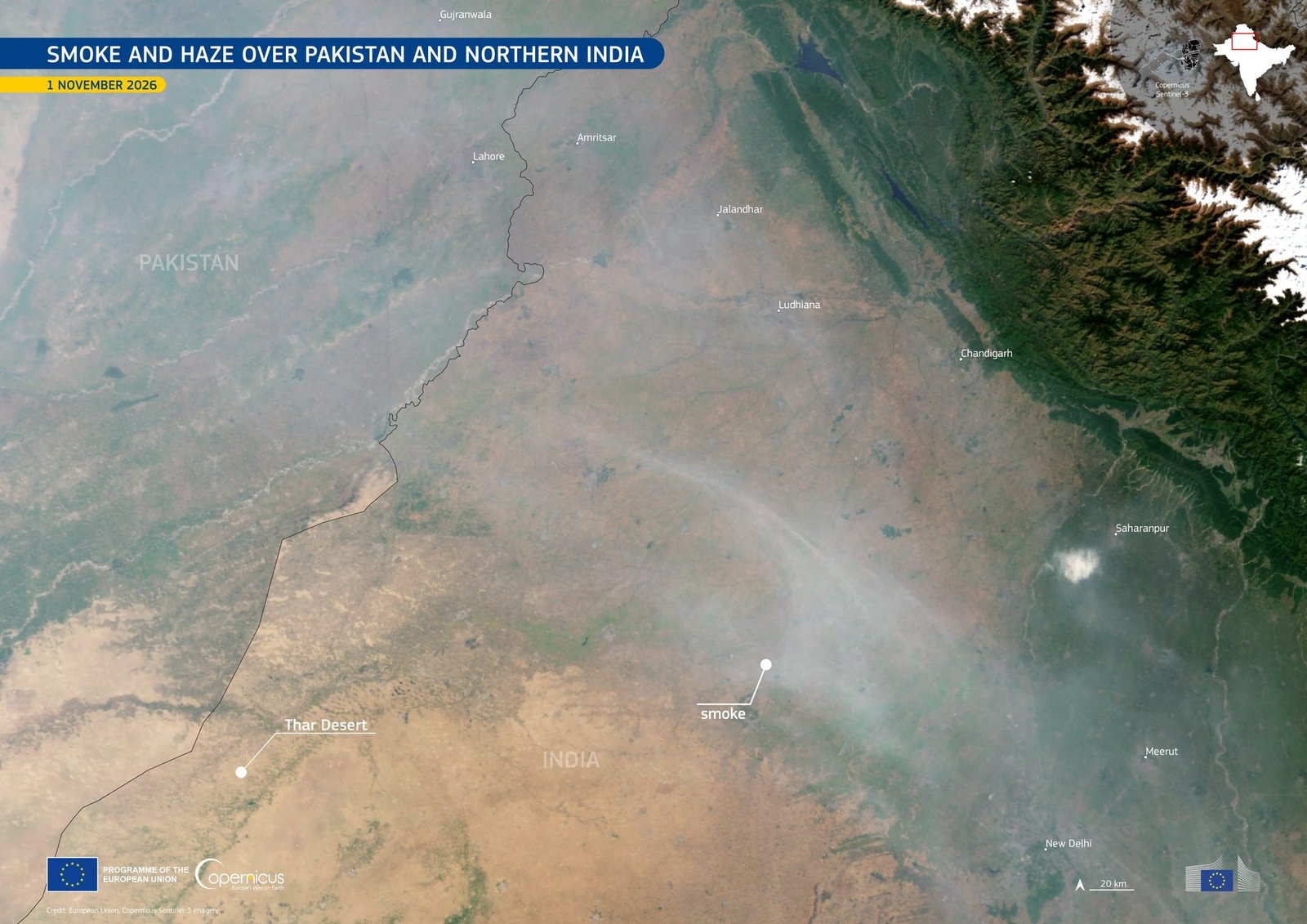
The report itself cautions that healthcare statistics alone cannot establish a direct causal link between the mitigation measures and the fall in patients, and that the smog challenge is far from over. Smog in Punjab is driven by a mix of vehicle emissions, industrial pollution, brick kilns and crop burning, as well as weather conditions that trap pollutants close to the ground in winter.
The progress report comes in a week when Lahore’s air has again been among the worst in the world. Earlier this week the city ranked second globally for air pollution, and last week its air quality index crossed 500, a level classified as hazardous. The National Disaster Management Authority has also warned of severe smog across Punjab over the coming days.
Health experts say the long-term trend in hospital visits is encouraging, but that the province will need several more years of sustained measures before smog seasons stop overwhelming hospitals. The government says its ten-year plan will continue, with more electric buses, stricter emission checks and further support for farmers to stop crop burning.
Leave a Reply