Language: English

  • Pakistan’s air campaign in Afghanistan: conflicting claims over casualties

    Pakistan’s air campaign in Afghanistan: conflicting claims over casualties

    KABUL/ISLAMABAD: Pakistani aircraft carried out strikes in Afghanistan’s eastern Kunar and southern Helmand provinces before dawn on October 1, with sharply conflicting claims about the casualties from both sides.

    Taliban government spokesperson Zabihullah Mujahid claimed nine civilians, including women and children, were killed, 11 others wounded and three homes destroyed. He condemned the attacks as “an aggression and crime in violation of all accepted principles”.

    Pakistan, however, presented a different account. Islamabad said the strikes targeted hideouts used by armed groups, including the Pakistani Taliban (TTP) and the Balochistan Liberation Army (BLA). Pakistan’s Ministry of Information described the operation as based on “credible intelligence” and said 22 militants had been killed while weapons and ammunition caches were destroyed.

    Reports emerging from the affected Afghan communities painted a starkly different picture. In Kunar province, local sources said a strike hit a civilian home in the Chaugam area of Shultan district, where six people, including four children, were killed and three others injured. The victims belonged to a poor shepherd family, according to local journalists. Resident Musafer Khan said the attack happened around 3 a.m. and that livestock were also killed.

    Daily Hayat could not independently verify the conflicting claims. The strikes come amid ongoing tensions across the Durand Line, with both sides trading allegations over civilian casualties.
  • HEC opens NRPU 2026 research grants; proposals due October 30

    HEC opens NRPU 2026 research grants; proposals due October 30

    The Higher Education Commission (HEC) has opened the National Research Programme for Universities (NRPU) 2026 call for proposals. Principal investigators must submit their project outlines through the online portal by Friday, October 30, 2026.

    Applicants must pay a non-refundable application fee of Rs5,000 through 1Link or 1Bill invoice services via mobile or internet banking.

    Evaluation follows two stages: initial outlines are reviewed first, and only shortlisted researchers are invited to submit full, detailed proposals in the second stage.

    HEC has warned that any university holding more than five delayed or unsettled research cases will be automatically disqualified from applying.

    The commission actively encourages joint proposals connecting local scholars with foreign institutions. Preferred international partners include Saudi Arabia, Türkiye, China, the USA, the UK, the European Union, Central Asian states, Japan, New Zealand, Australia, South Korea and Singapore, with a focus on solution-oriented research tailored to industrial needs.

    Researchers with questions can call 051-90401904 for assistance.

  • ‘Sheroes’ opens in cinemas today as Pakistani cinema eyes an October revival

    ‘Sheroes’ opens in cinemas today as Pakistani cinema eyes an October revival

    Pakistani cinemas get a local release today, October 2, as the Urdu anthology drama “Sheroes” opens nationwide — the only Pakistani film with a confirmed release date on cinema-chain listings this month.

    The film arrives in an unusually quiet autumn for local cinema. No Eid falls in the October-to-December window this year — Eid ul Fitr and Eid ul Adha were observed in March and May, when studios traditionally release their biggest titles — and no Pakistani film is yet dated for November or December.

    The only other dated local release on the horizon is the Punjabi action comedy “Mango Jutt”, reported for October 16, whose trailer was released on September 16.

    Industry commentators, including veteran journalist Omair Alavi, have argued that October could prove a turning point for Pakistani cinema if the two releases draw audiences back to theatres and revive the local film business after a lean stretch.

    Anthology films remain a rarity in Pakistan, and “Sheroes” — released as an Urdu drama — will be watched closely as a test of whether mid-scale local storytelling can find space on the big screen between the big Eid releases.

  • Pakistan’s economy: the long road from stabilisation to growth

    Pakistan’s economy: the long road from stabilisation to growth

    Pakistan’s economic managers deserve credit where it is due: each crisis has eventually been steadied. But steadied is not the same as transformed, and the difference matters enormously.

    Consider exports. For an economy of this size, the export-to-GDP ratio remains strikingly low. Textiles dominate, and within textiles, low value-addition dominates. Moving up the value chain — into technical textiles, finished garments, IT services — is discussed in every policy document and achieved in few.

    Agriculture, which employs a huge share of the workforce, operates far below its potential. Water-intensive crops, outdated practices and weak value chains mean Pakistan exports raw commodities and imports finished food products. This is a choice, not a fate.

    The IT sector offers a genuine counter-story. Freelancers and software firms have built export revenue with minimal state support. Imagine what targeted infrastructure — reliable internet, payment gateways, tech parks — could unlock.

    Then there is the state’s own footprint. Loss-making state enterprises drain the exchequer year after year while privatisation stalls on political objections. Every year of delay has a fiscal cost, paid by taxpayers who receive nothing in return.

    Tax reform remains the third rail of Pakistani politics. The undocumented economy is not a secret; it is visible in every commercial market. Bringing it into the net requires not just enforcement but a simpler, fairer system that small traders can actually comply with.

    Energy is the binding constraint on industry. Unreliable and expensive power makes Pakistani manufacturers uncompetitive before they even reach the market. Fixing distribution losses and theft is unglamorous work — which is precisely why it keeps getting postponed.

    None of these are mysteries. The policy prescriptions have been written, by Pakistani economists, many times over. The missing ingredient is sustained political ownership — reforms that survive changes of government.

    Growth that lasts is built on productivity, not patronage. Until that lesson is institutionalised, Pakistan will keep walking the long road from one stabilisation to the next.

  • Pakistan to face India in Asian Games gold-medal clash on October 3

    Pakistan to face India in Asian Games gold-medal clash on October 3

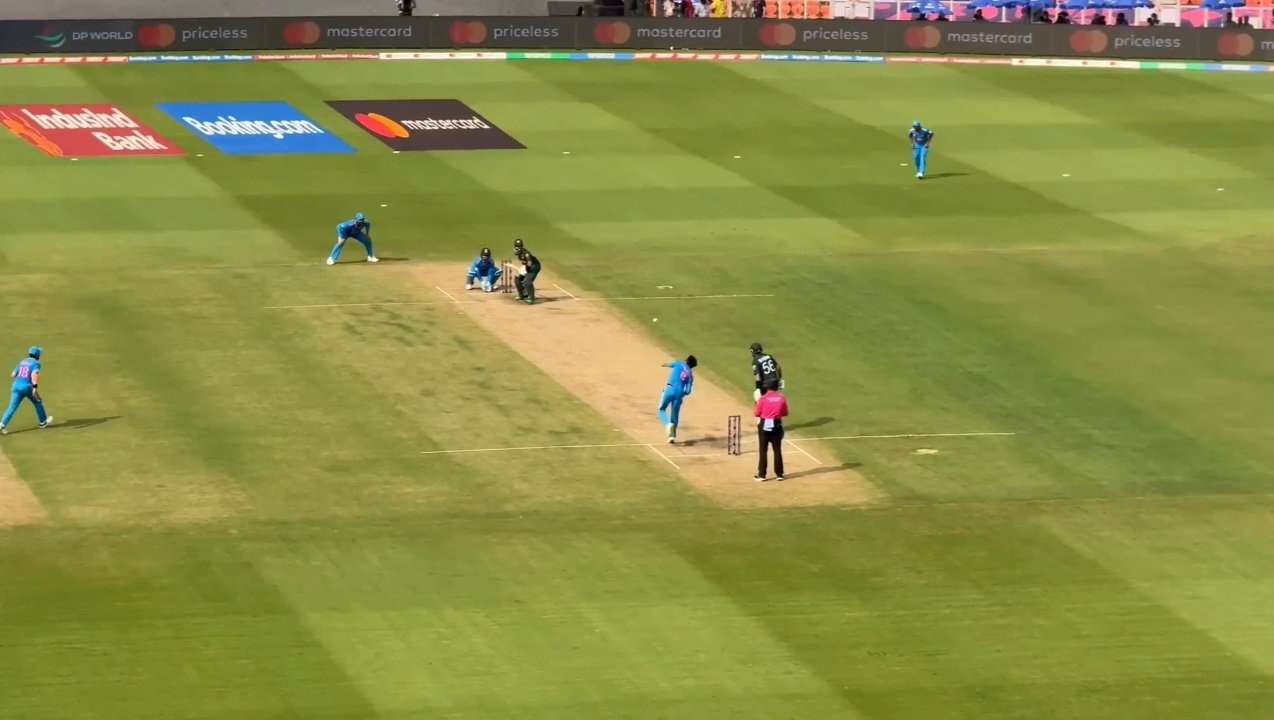
    A dream final is on the cards at the Asian Games 2026 as Pakistan and India won their semi-finals in contrasting fashion to reach the men’s cricket gold-medal match on Saturday, October 3.

    Defending champions India booked their place with a commanding 124-run victory over Sri Lanka at Korogi Sports Park. Batting first, India posted 169 for seven, led by an unbeaten 80 from Ishan Kishan off 46 balls, while teenager Vaibhav Sooryavanshi contributed 38 off 21.

    India’s bowlers then ran riot. Jasprit Bumrah struck twice in the opening over, three run-outs piled on the pressure, and Sri Lanka collapsed to 45 all out in 9.5 overs. Abhishek Sharma picked up two wickets in five balls.

    Earlier, Pakistan edged past Bangladesh by six wickets in a rain-reduced 13-over semi-final, chasing 112 with seven balls to spare behind Abdul Samad’s unbeaten 30 and Sufyan Moqim’s three for 26.

    The final will be the first meeting between the two nations in men’s cricket at the Asian Games and gives India the chance to defend the title won in 2023, while Pakistan are guaranteed at least silver — their best result at the Games. Sri Lanka and Bangladesh will contest the bronze-medal match on the same day.

  • Govt raises petrol price by Rs3.26 to Rs390.66 per litre; diesel cut by Rs1.01

    Govt raises petrol price by Rs3.26 to Rs390.66 per litre; diesel cut by Rs1.01

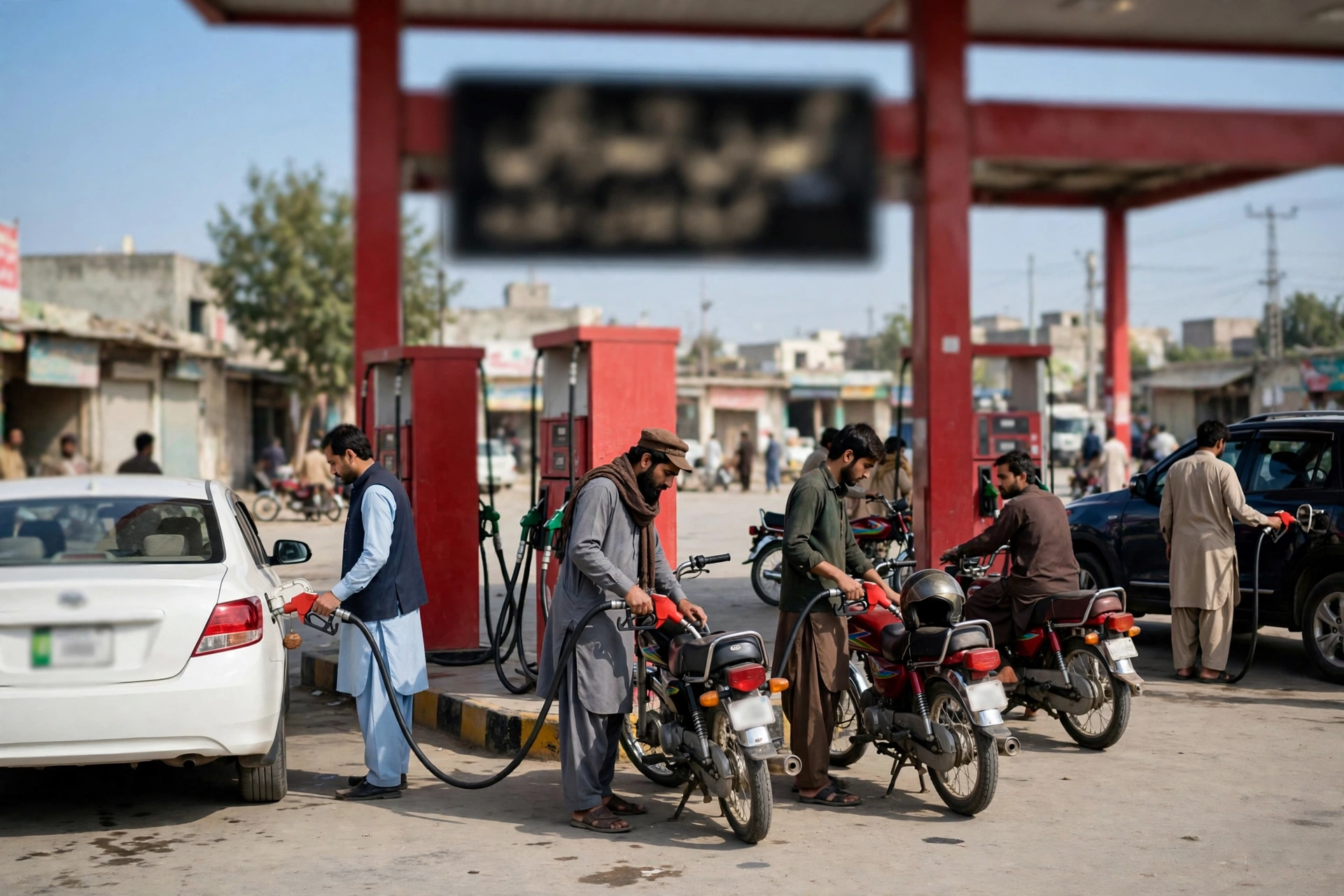
    ISLAMABAD: The federal government on Thursday increased the price of petrol by Rs3.26 per litre while reducing the price of high-speed diesel (HSD) by Rs1.01 per litre. The revised rates are effective from Friday, October 2.

    According to the Petroleum Division notification, petrol has risen from Rs387.40 to Rs390.66 per litre, while high-speed diesel has been fixed at Rs399.34 per litre, down from Rs400.35.

    The adjustment was made under Pakistan’s daily petroleum pricing mechanism, in which the Oil and Gas Regulatory Authority (OGRA) sets fuel prices based on movements in international oil prices and related import costs. The new mechanism uses a rolling seven-day average of international petroleum prices.

    According to Petroleum Minister Ali Pervaiz Malik, the daily price fixation mechanism was introduced to pass on the impact of global market movements to consumers more quickly and transparently. Current reporting puts taxes and duties at around Rs114 per litre on petrol and Rs100 per litre on diesel.

    The latest increase reverses the small relief announced for October 1, when petrol was reduced by just 14 paisas to Rs387.40. International oil markets remain volatile amid Middle East tensions.

  • HEC Best University Teacher Award 2026: nominations close October 7

    HEC Best University Teacher Award 2026: nominations close October 7

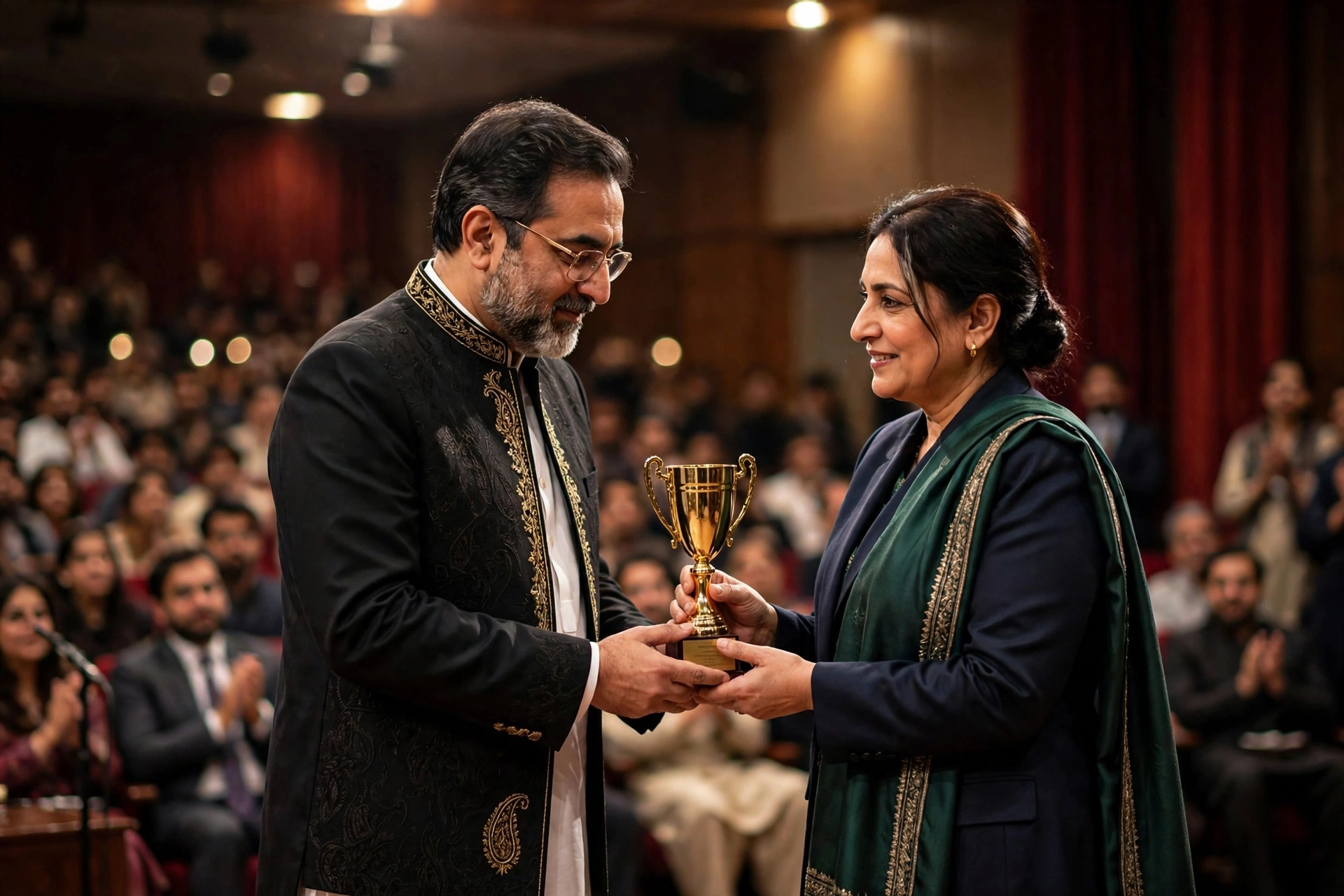
    The Higher Education Commission (HEC) has invited universities across Pakistan to nominate outstanding faculty members for the HEC Best University Teacher Award 2026. The award will recognise teachers who have made notable contributions to teaching, student learning, innovation and academic development.

    Both public and private higher education institutions recognised by HEC can take part in the nomination process. Each eligible institution may nominate one faculty member through its university-level committee.

    Universities must submit their nominations by October 7, 2026. Complete nomination documents should reach the office of the Director General (Academics), HEC, Islamabad before the deadline.

    The submission should include the complete nomination dossier of the selected teacher, minutes of the university-level committee meeting approving the nomination, a soft copy of the dossier, and other documents required under the HEC award framework.

    Universities are expected to select teachers who have demonstrated strong performance in teaching and made meaningful contributions to academic development and student learning.

  • Ali Zafar to return to television drama after 20 years in ‘Lahu’ with Sajal Aly, Bilal Abbas Khan

    Ali Zafar to return to television drama after 20 years in ‘Lahu’ with Sajal Aly, Bilal Abbas Khan

    Ali Zafar is set to return to television dramas after a gap of more than two decades, joining Sajal Aly and Bilal Abbas Khan in the upcoming serial “Lahu” — a casting announcement that has electrified fans on social media.

    “Lahu” is penned by Saqlain Abbas and directed by Syed Wajahat Hussain. Details of Zafar’s character remain under wraps, but his pairing with two of the industry’s biggest stars signals a substantial role.

    Zafar began his acting journey in the early 2000s with the television serial “College Jeans” before crossing over to Bollywood films and building a parallel career as a singer and painter. His last major acting project was the hit Pakistani film “Teefa in Trouble”.

    Since news of the comeback broke, fan comments ranging from “welcome back to dramas” to celebratory messages have flooded social platforms, reflecting the anticipation around his small-screen return.

    The drama’s premiere date has not yet been announced. Industry watchers say the casting — uniting three marquee names — positions “Lahu” among the most anticipated television projects of the coming season.

  • Digital media has democratised news — now it must mature

    Digital media has democratised news — now it must mature

    A decade ago, breaking news in Pakistan belonged to television studios. Today it belongs to whoever posts first on social media. This democratisation has been genuinely empowering: citizen journalists have exposed stories that newsrooms missed, and marginalised voices have found audiences.

    But the same architecture that empowers also endangers. A rumour can travel across WhatsApp groups faster than any newsroom can verify it, and the consequences — mob violence, market panic, communal tension — are not theoretical. Pakistan has seen all three.

    The core problem is economic as much as ethical. Outrage and sensationalism are rewarded by engagement algorithms; careful verification is not. Digital creators who chase virality learn quickly that a shocking claim outperforms a corrected one.

    Traditional media is not blameless either. The race to match social media’s speed has led established outlets to air unverified footage and unconfirmed casualty figures, eroding the very trust that distinguishes them from anonymous accounts.

    What would maturity look like? First, a norm that being second but right beats being first but wrong — and audiences that reward it. Second, transparent corrections: digital outlets should correct errors as visibly as they published them. Third, media literacy in schools, so the next generation treats forwarded messages with scepticism.

    Regulation has a role, but a limited one. Heavy-handed controls risk silencing the same citizen voices that make digital media valuable. The better path is co-regulation: clear standards developed with journalists and platforms, enforced transparently.

    Pakistan’s digital public sphere is still young. Its direction is not fixed. If creators, platforms and audiences choose accuracy over virality, the microphone that everyone now holds can become an instrument of accountability rather than chaos.

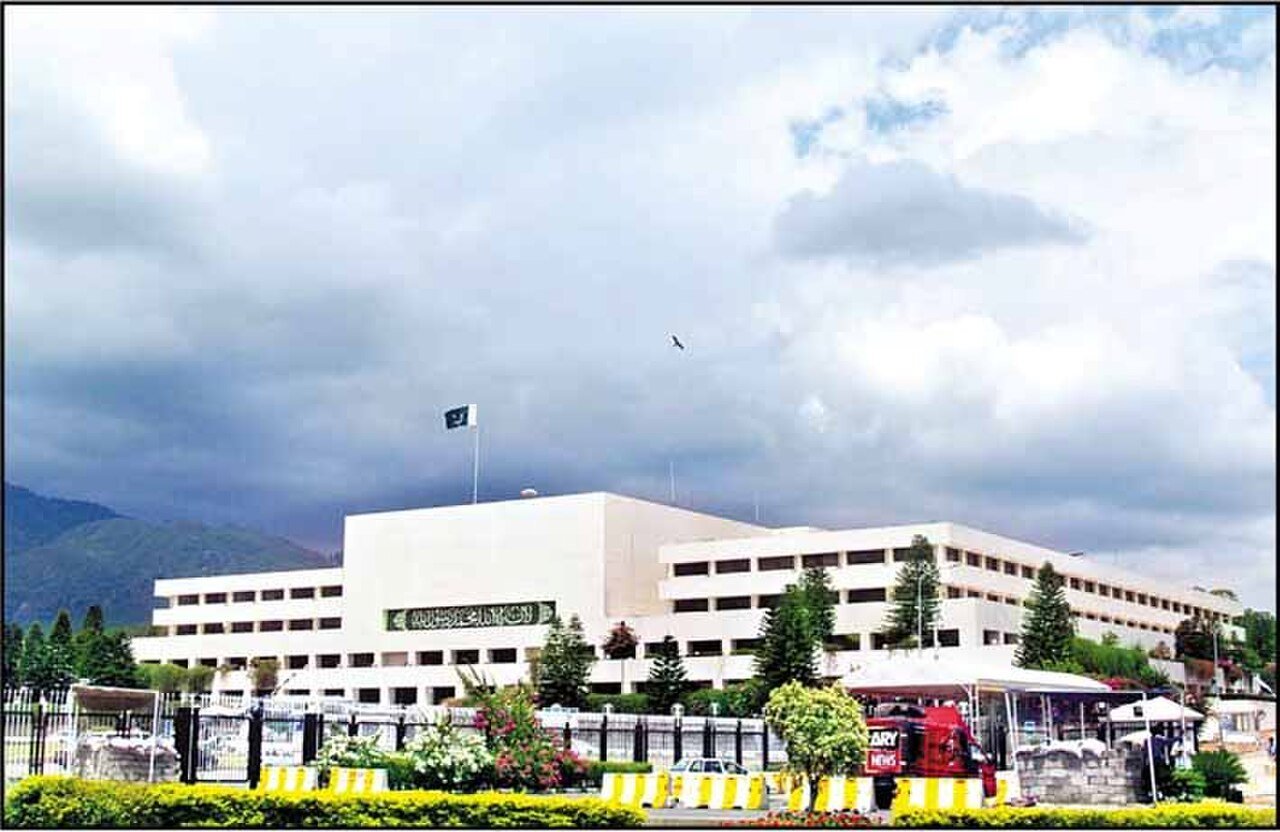
  • Government, Opposition Hold Talks in NA Speaker’s Chamber, Exchange Demands

    Government, Opposition Hold Talks in NA Speaker’s Chamber, Exchange Demands

    Sources said the government side raised the law-and-order situation and security arrangements, while the opposition spoke about the constitutional right to peaceful protest and its demands.

    Reports indicate that direct contact has been established between the government and the opposition, and a joint federal government-PPP delegation is also scheduled to meet PTI leaders on Friday.

    Political observers say the talks in the Speaker’s chamber are a significant attempt to lower tensions before the long march, though it remains unclear whether the two sides will reach a final understanding.

    Meanwhile, tight security arrangements continue in Islamabad, with containers placed on major routes leading to the federal capital.