Category: National News

Pakistan national news — top stories from across the country. قومی خبریں۔

  • SC: Ombudsman Cannot Decide Complex Property Disputes

    SC: Ombudsman Cannot Decide Complex Property Disputes

    The Supreme Court of Pakistan has ruled that the ombudsman does not have the authority to make final decisions in complex property disputes, declaring that contested matters involving ownership and inheritance must be resolved by civil courts.

    A two-member bench comprising Justice Ayesha A. Malik and Justice Mohammad Shafi Siddiqui delivered the ruling in an eight-page judgment authored by Justice Malik. The court set aside the decisions of the ombudsman and the Peshawar High Court in a case concerning women’s property rights, and ordered that the disputed property matter be sent to the competent civil court.

    The case concerned about 39 kanals of land at Mandai Khas, Alam Gudder, near Dogra Hospital in Bara, District Khyber. The court held that under the Khyber Pakhtunkhwa Enforcement of Women’s Property Rights Act, 2019, the ombudsman’s jurisdiction is strictly summary in nature and limited to the restoration of clear, undisputed ownership.

    Where a case involves complex questions of title, intricate legal issues or disputed facts that require detailed investigation and the recording of evidence, the court said, it falls outside the ombudsman’s summary domain. In such circumstances, Section 6 of the Act requires the ombudsman to refer the matter as a formal reference to the competent civil court, to be tried as a regular civil suit.

    The court observed that both the ombudsman and the Peshawar High Court had failed to apply this requirement properly, despite the presence of several complex disputes in the case. It outlined four main reasons why the matter was unfit for summary proceedings, including competing claims over the property and questions that could only be settled after evidence had been recorded.

    The Supreme Court directed that the ombudsman transfer all records, applications and reports to the court of Civil Judge-1 Bara, where a civil suit over the same land is already pending. The civil court will consolidate the reference under Section 6 of the Act with the pending suit and treat it as the petitioners’ formal claim, resolving the title dispute after recording regular evidence.

    The court also directed the civil court to issue notices to the parties to appear within 15 days and to dispose of the case within a reasonable period, without unnecessary delay.

    In its judgment, the court observed that the 2019 Act provides important legal protection for women, and that prompt and effective legal action is necessary against the unlawful deprivation of women’s property. But it stressed that the Act is an enforcement mechanism for established or easily determinable titles, not a forum for adjudicating complex, unproven property claims.

    The ruling clarifies the limits of the ombudsman’s powers in property cases and is expected to guide similar disputes, ensuring that contested ownership and inheritance matters are decided by civil courts after a full trial rather than through summary proceedings.

  • Supreme Court Sets 8 Rules for Cancelling Bail

    Supreme Court Sets 8 Rules for Cancelling Bail

    The Supreme Court has laid down eight principles for cancelling an accused person’s bail, ruling that bail may be revoked if the order granting it is prima facie illegal or unjust.

    According to the court’s judgment, authored by Justice Muhammad Ali Mazhar, the eight grounds on which bail may be cancelled are: first, that the order granting bail is prima facie illegal or unjust; second, that the accused misuses the concession of bail; third, that the accused attempts to influence prosecution witnesses; fourth, that the accused tampers with evidence or obstructs the judicial process; fifth, that the accused is likely to abscond beyond the court’s jurisdiction; sixth, that the accused interferes with a fair investigation; seventh, that the accused misuses his freedom to commit another offence of a similar nature; and eighth, that fresh facts or evidence emerge during an investigation indicating the accused’s involvement in the offence.

    The ruling sets out a clear framework for trial courts and high courts when they are asked to cancel bail already granted. It makes clear that bail is a concession that can be withdrawn when the conditions on which it was granted are breached, or when new material comes to light that changes the basis on which it was allowed.

    The Supreme Court upheld the Sindh High Court’s decision in a case concerning a petition for cancellation of an accused person’s bail. It observed that a nine-month delay in registering the FIR and the accused’s alleged role required further investigation.

    According to the case record, the incident occurred on March 3, 2024, within the jurisdiction of Rahmatpur Police Station in Larkana. Noor Hussain died after an electricity wire broke while power was being supplied to shops through an illegally drawn connection from a disposal phase’s special line.

    On January 30, 2025, the Larkana sessions court rejected the pre-arrest bail application of accused Ali Asghar Khokhar. However, on October 20, 2025, the Sindh High Court’s Larkana circuit bench granted him bail, citing the nine-month delay in registration of the FIR and other grounds. The decision was subsequently challenged before the Supreme Court.

    The Supreme Court also directed that a copy of the decision be sent to the WAPDA chairman for information. The court observed that WAPDA and the relevant utility company should examine the role of individuals involved in illegal electricity supply, power theft and private siphoning.

  • ECP Sets Dec 31 Deadline for Lawmakers to Declare Assets

    ECP Sets Dec 31 Deadline for Lawmakers to Declare Assets

    The Election Commission of Pakistan (ECP) has directed members of Parliament and provincial assembly lawmakers to submit their annual statements of assets and liabilities for the fiscal year 2025-26 by December 31, 2026.

    The direction was issued on Friday. Lawmakers who miss the initial deadline will have a final grace period until January 15, 2027, to file their declarations.

    The statements must declare all assets, possessions and liabilities held as of June 30, 2026. The declarations must also include details for the lawmakers’ spouses and dependent children, making the disclosure a full picture of the family’s holdings.

    The submissions must be filled out on Form B, the prescribed form for annual asset declarations by elected representatives.

    The Election Commission has said it will publish the names of all non-compliant lawmakers on January 1, 2027. Any member who fails to submit the declaration by the January 15 grace period will face immediate suspension of their assembly or Senate membership on January 16, and the suspension will remain in force until the statement is filed.

    Annual asset declarations are a long-standing legal requirement for elected representatives in Pakistan. The exercise is meant to keep a public record of what lawmakers own and owe, and to allow voters and institutions to track changes in their wealth while they hold public office.

    The December 31 deadline gives lawmakers the rest of the year to put their returns together, while the January 15 grace period offers a short window for late filers. The publication of names on January 1 is designed to make the process visible, and the suspension from January 16 is the penalty for those who still do not comply.

    Lawmakers who hold seats in the National Assembly, the Senate or a provincial assembly are all covered by the direction. The commission’s timetable leaves no room for open-ended delay: the names go public first, and membership is suspended next for anyone who remains in default.

    The commission’s announcement sets the calendar for the coming weeks: names published on January 1, the grace period running until January 15, and suspension from January 16. Lawmakers who file on time face no action, while those who do not will first be named publicly and then lose their membership until they comply.

  • Pakistan, UK to Deepen Security and Cybercrime Ties

    Pakistan, UK to Deepen Security and Cybercrime Ties

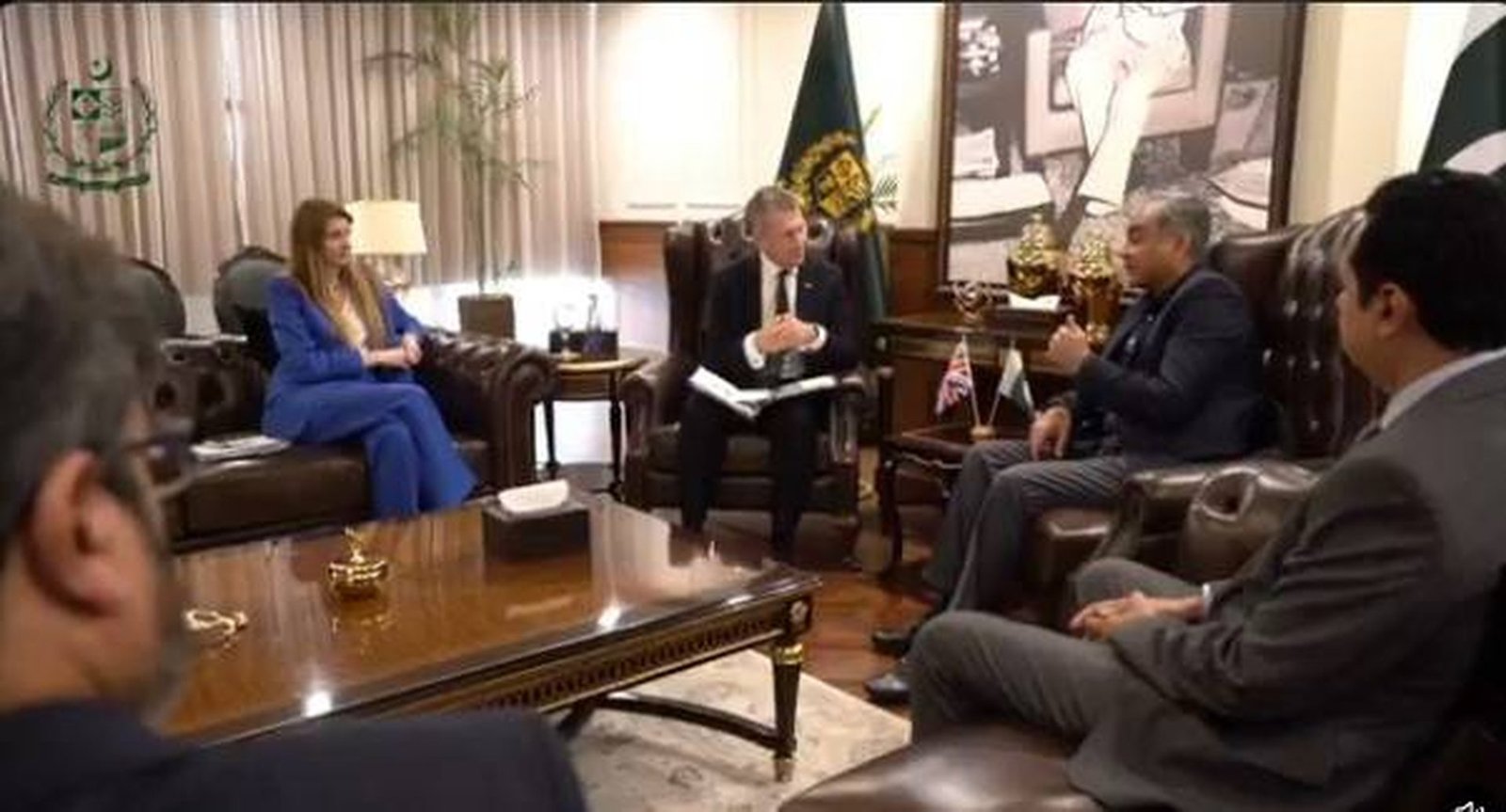
    Pakistan and Britain have agreed to deepen their cooperation on security, counter-terrorism and cybercrime, following detailed talks in Islamabad on Friday between Interior Minister Mohsin Naqvi and British Minister of State for Security Dan Jarvis.

    The understanding was reached during Mr Jarvis’s visit to the Interior Ministry, where he held delegation-level talks with Mr Naqvi and Minister of State for Interior Talal Chaudhry, according to 24NewsHD.

    During the meeting, the two sides agreed to enhance cooperation in counter-terrorism, counter-narcotics, cybercrime, immigration and coast guards, as well as in the work of NADRA, the national identity registration authority.

    Mr Jarvis praised the Federal Investigation Agency for its work in preventing illegal immigration. He said cybercrime was an international problem and that all countries needed to work together to combat it.

    The British minister said there was excellent cooperation between Pakistan and the United Kingdom in various sectors and that both countries wanted to expand it further. He also acknowledged Pakistan’s sacrifices and efforts in the war against terrorism.

    Both sides decided to soon finalise a memorandum of understanding on counter-narcotics. Cooperation between the UK’s National Crime Agency and Pakistan’s Anti-Narcotics Force is also to be strengthened under the agreement.

    There was consensus at the meeting to convene soon a meeting of the Working Group established between the Pakistan and UK Home Ministries, so that follow-up on the agreed areas of cooperation can move ahead.

    Mr Naqvi appreciated the progress made under the Upskill Project, saying it was proving extremely important in enhancing the capacity of Pakistani institutions.

    The discussions covered a broad range of shared concerns, from tackling terrorism and drug trafficking to curbing cybercrime and unlawful migration. Both sides agreed that closer coordination between their law enforcement and border agencies would help them respond more effectively to challenges that cross national borders, and that the planned memorandum of understanding and the Working Group meeting would provide a practical framework for taking the agreed cooperation forward.

    Mr Jarvis is on a visit to Islamabad, during which he met Foreign Minister Ishaq Dar on Thursday before holding talks at the Interior Ministry on Friday. Officials said the discussions reflected the shared interest of both countries in closer practical cooperation on security, migration and organised crime.

  • Federal Cabinet Approves New Currency Note Designs

    Federal Cabinet Approves New Currency Note Designs

    Islamabad: The Federal Cabinet has approved new designs for currency notes and the introduction of a Rs10 coin to replace the existing banknote of the same denomination. The decisions were taken during a cabinet meeting chaired by Prime Minister Shehbaz Sharif in Islamabad.

    According to officials, the cabinet approved the new banknote designs on the recommendation of the Ministry of Finance. The government had invited design proposals from artists and designers across Pakistan, and a cabinet committee formed by the prime minister held detailed consultations with relevant stakeholders before finalising the designs.

    The meeting was informed that the new banknotes will feature enhanced security measures and modern materials to make counterfeiting more difficult and improve their durability. The cabinet also approved the introduction of a Rs10 coin, which will replace the existing Rs10 banknote in circulation.

    Rs160 Billion Package for Khyber Pakhtunkhwa

    The prime minister told the meeting that a development and security package worth Rs160 billion had been finalised for Khyber Pakhtunkhwa. He described peace and security in the province as the government’s foremost priority and reaffirmed his commitment to eliminating terrorism through cooperation among the armed forces, the provincial government and the federal government.

    During the meeting, the Federal Cabinet also approved the transfer of powers delegated to the Khyber Pakhtunkhwa chief minister to the provincial governor for day-to-day administrative affairs during the emergency period in the province. The governor will submit a monthly report to the Federal Cabinet reviewing the exercise of these powers.

    The cabinet expressed the hope that the Khyber Pakhtunkhwa Advisory Council, working under the governor’s leadership, would focus on public welfare, provincial development and the restoration of law and order.

    Defence Agreement with Kuwait Ratified

    The cabinet ratified the Defence Cooperation Agreement between Pakistan and Kuwait, which was signed on June 11, 2023. The agreement aims to strengthen cooperation between the two countries in the defence sector. The Kuwaiti government had ratified the agreement on July 19, 2023.

    The meeting also discussed regional peace efforts and energy supplies. The prime minister said Pakistan was continuing diplomatic efforts to promote regional peace, noting that a Pakistani delegation had visited Tehran twice over the previous two to three weeks to discuss reducing regional tensions and strengthening cooperation.

    Fuel Prices and Energy Supplies

    Prime Minister Shehbaz Sharif also addressed the impact of regional tensions on domestic fuel prices. He said the government had prevented an additional burden of Rs15 per litre on petrol from being passed on to consumers after engaging with refineries and asking them to share their windfall profits. He appreciated the Ministry of Petroleum for its efforts in this regard.

    The prime minister said the fuel subsidy scheme was being implemented transparently and had benefited 15 million people. He said the government had spent Rs28 billion on the programme, which would continue at least until the end of next month. He added that a new mechanism had improved transparency in LPG supply and distribution, bringing an end to what he described as the era of the LPG mafia.

    Despite challenges affecting shipping routes, the government would make every effort to maintain supplies of LNG, LPG and other energy sources during the winter season, the prime minister said, adding that the authorities would work to limit the impact of higher energy prices on consumers.

  • Constitutional court bars PHC from 3-MPO detention cases

    Constitutional court bars PHC from 3-MPO detention cases

    The Federal Constitutional Court has restrained the Peshawar High Court from hearing cases concerning arrests under Section 3 of the Maintenance of Public Order Ordinance in Khyber Pakhtunkhwa.

    A two-member bench of the court, headed by Chief Justice Aminuddin Khan, heard the case on Thursday. The Khyber Pakhtunkhwa government had challenged several orders of the high court that had restrained arrests under the ordinance, known as 3-MPO.

    The high court had earlier issued orders restraining the authorities from making arrests under Section 3 of the ordinance. It had also ordered the release of 28 workers of Pakistan Tehreek-e-Insaf who had been detained in various districts of the province.

    The provincial government challenged those orders before the Federal Constitutional Court, arguing that the high court could not interfere in areas where the army is deployed under Article 245 of the Constitution.

    The Khyber Pakhtunkhwa advocate general argued that the high court could not exercise its jurisdiction under Article 199 in such matters. The court’s written order states that proceedings under Article 199 filed in the Peshawar High Court on or after 12 October 2026 shall remain suspended under Article 245(4) of the Constitution.

    The court suspended the challenged orders passed by different benches of the Peshawar High Court and issued notices to the parties in the matter. After issuing the directives, the court adjourned further proceedings indefinitely.

    Justice Aamer Farooq observed during the hearing that the high court received several cases under Article 199 on a daily basis. He asked whether the high court would not hear cases that came before it every day.

    Former additional advocate general Shah Faisal Ilyas appeared on behalf of the parties and asked the court to hear the parties before issuing an interim injunction. He argued that the provincial government’s three objections could not be sustained.

    Responding to the arguments, Chief Justice Khan said the parties could file their objections after examining the court’s order. The court also sought a report from the advocate general within seven days regarding the deployment of the army and the areas where it is no longer required.

    The case arises from the situation in Khyber Pakhtunkhwa, where the President proclaimed emergency and governor’s rule in the province on 11 October 2026 under Articles 232 and 234 of the Constitution. Preventive detentions under the Maintenance of Public Order Ordinance followed.

    The dispute between the two courts turns on whether the high court can hear challenges to those detentions while the army is deployed under Article 245. The Federal Constitutional Court’s order, for now, says it cannot, and that cases filed on or after 12 October will remain suspended.

    The court’s decision is an interim one, and the parties will have a chance to file objections. But it is already a significant ruling, because it limits the high court’s role in detention cases in the province at a time when dozens of workers have been detained.

  • Margalla Road extension to open within weeks, Naqvi says

    Margalla Road extension to open within weeks, Naqvi says

    Interior Minister Mohsin Naqvi has said the Margalla Road extension in Islamabad should be completed within the next few weeks, after he visited the site on Thursday night to review the pace of construction.

    Naqvi visited the area near Sangjani, where he inspected work on the Margalla Road extension and the Sangjani Interchange. The extension will connect Iran Avenue to the motorway, giving the capital another direct route to the motorway network.

    According to the report, the Sangjani Interchange is expected to make travel easier for residents of Khyber Pakhtunkhwa and for passengers heading to the airport. The minister directed the authorities concerned to speed up the construction work so the project can be finished on the revised timeline.

    The project had originally been targeted for completion in April, but work is still under way. Naqvi said he hopes the extension will be ready within the next few weeks, and he pressed officials to accelerate the remaining work.

    The Margalla Road extension is one of the main road projects under way in the capital, and its completion is expected to ease traffic pressure on the existing routes used by commuters travelling between Islamabad, the motorway and Khyber Pakhtunkhwa.

    During the visit, Naqvi also reviewed the restoration of the Shakarparian forest, where thousands of trees have been planted around the Margalla Road extension and the adjoining areas. The plantation is part of efforts to restore green cover around the new road.

    A Safari Park is also being constructed in Islamabad, and officials say it will attract visitors from across Pakistan as well as international tourists. Foreign tourists visiting the park could spend one or two days there, according to the report.

    The park is expected to become a popular destination for families and tourists, and officials believe it will reduce the need for Pakistanis to travel abroad for similar recreational experiences.

    The minister’s visit comes as the government pushes to complete the road project quickly, with the interchange seen as an important link for daily commuters and airport traffic.

    No new completion date was announced beyond the minister’s hope that the work would be finished within weeks. Officials have been asked to step up construction so the extension can open to traffic as soon as possible.

    Once completed, the extension is expected to shorten journey times for people travelling from the capital towards the motorway, and to give Khyber Pakhtunkhwa residents a smoother route into and out of Islamabad.

    The plantation drive around the road is continuing alongside the construction work, with thousands of trees already planted in the area around the extension and the Shakarparian forest.

    For now, commuters will have to wait for the final phase of construction to finish before the new link opens. The minister’s remarks suggest the wait may not be long, with the project now in its final stages.

  • Federal government announces major bureaucratic reshuffle

    Federal government announces major bureaucratic reshuffle

    The federal government has announced a series of transfer and posting orders for officers, with formal notifications issued by the Establishment Division on Thursday.

    Aziz Ahmed Jamali, Secretary WAPDA Lahore, has been transferred and appointed Member Disaster Risk Reduction at the National Disaster Management Authority (NDMA).

    Khawaja Muhammad Sikandar Zeeshan, a Grade-19 officer of the Pakistan Administrative Service, had his transfer to the Khyber Pakhtunkhwa government cancelled and was directed to continue serving under the Punjab government.

    Tehmina Kausar, a Section Officer, has been transferred from the Economic Affairs Division to the Information Technology Division.

    Muhammad Adeel Akbar, an officer awaiting posting, has been appointed Section Officer in the Parliamentary Affairs Division.

    Dr Tehreem Afzal, a medical officer at the Federal Government Polyclinic Hospital in Islamabad, has had her services placed at the disposal of the Punjab government on deputation for three years, and was subsequently appointed Senior Medical Officer at the Gujranwala Teaching Hospital.

    The notifications cover officers from different services and divisions, reflecting routine administrative adjustments within the federal bureaucracy.

    Such postings and transfers are issued by the Establishment Division, which manages the placement of civil servants across federal ministries and divisions.

    The officers named in the notifications are expected to take charge of their new assignments in line with the orders issued.

    No further changes were announced in the notifications reported on Thursday.

    The Establishment Division is the federal body responsible for the management of civil servants, including their appointments, transfers and postings across ministries and divisions.

    Officers of the Pakistan Administrative Service serve in both federal and provincial governments, and their transfers between the two are a routine feature of the service.

    The NDMA is the national body that coordinates disaster preparedness and response, and the Member Disaster Risk Reduction role deals with measures to reduce the risks posed by natural disasters.

    Section officers handle the day-to-day work of their divisions, and their movement between divisions is part of the normal rotation of federal government staff.

    Deputation allows an officer to serve in another government for a fixed period, after which the officer normally returns to the parent department.

  • Kashmir Chowk underpass opens after just 27 days

    Kashmir Chowk underpass opens after just 27 days

    Prime Minister Shehbaz Sharif inaugurated the Kashmir Chowk underpass on Thursday and praised Interior Minister Mohsin Naqvi for completing the project in a record 27 days.

    Addressing the inauguration ceremony, the prime minister said he had never witnessed a mega-project completed at such speed during his entire political career. He said the underpass, its connecting roads and extensive landscaping, including the planting of trees and flowers, had been completed in just 27 days.

    Sharif said another significant feature of the project was that its contract had been awarded through a transparent process using the electronic Public Procurement system, known as e-PAD. He said the project had also been completed at a cost lower than the initial estimate.

    The prime minister said the project was not just a 500-metre underpass, but also a network of roads spanning four kilometres around it. The work is expected to ease traffic flow at one of the capital’s busiest junctions and improve the journey for thousands of commuters every day.

    Sharif said more development projects were being planned ahead of next year’s Shanghai Cooperation Organisation summit, which Pakistan is preparing to host. He asked Mohsin Naqvi to further beautify Islamabad with flowers and greenery.

    Mr Mohsin Naqvi, please adorn Islamabad with flowers; the fragrance of these blooms will delight both the residents of Islamabad and the visiting guests, the prime minister said at the ceremony.

    Naqvi said the government would also seek help from international experts to establish a Safari Park in the city. He added that One Constitution Avenue would be turned into a five-star hotel very soon.

    The speedy completion of the underpass has drawn attention as a rare example of a public project finishing ahead of the usual pace. Officials say the use of electronic procurement and close monitoring helped keep the work on schedule and within budget.

    For daily commuters, the value of the project lies in the roads around the underpass as much as in the structure itself. Four kilometres of connecting roads were rebuilt and landscaped as part of the work, which officials say should cut waiting times at the junction and make the flow of traffic smoother in both directions.

    The project also fits into a wider effort to prepare the capital for next year’s Shanghai Cooperation Organisation summit. The prime minister linked the underpass to that programme of works, saying more projects were being planned, and he pressed for the city to be made greener and more attractive for residents and visiting delegations alike.

  • Munir becomes Pakistan’s first Chief of Defence Forces

    Munir becomes Pakistan’s first Chief of Defence Forces

    Field Marshal Syed Asim Munir has become Pakistan’s first Chief of Defence Forces, after the president approved his appointment to the newly created post on Thursday evening.

    According to the Prime Minister’s Office, Prime Minister Shehbaz Sharif approved a summary appointing Field Marshal Munir as Chief of Army Staff and concurrently as Chief of Defence Forces, and sent it to the Presidency for approval. President Asif Ali Zardari then approved the appointment, confirming Munir’s expanded role.

    The appointment is for a period of five years. Field Marshal Munir will continue as Chief of Army Staff while also holding the new post, making him the first officer in the country’s history to lead the armed forces in this combined role.

    The post of Chief of Defence Forces was created through the 27th Constitutional Amendment, passed by parliament last year, which was designed to improve coordination among the army, navy and air force. Under the new arrangement, the Chief of Defence Forces oversees all three services, replacing the earlier system in which a separate chairman led the Joint Chiefs of Staff Committee.

    The prime minister also approved a two-year extension in the service of Chief of Air Staff Air Chief Marshal Zaheer Ahmed Baber Sidhu. The extension will take effect when his present five-year tenure ends in March 2026.

    In its statement, the Prime Minister’s Office said the appointment would strengthen coordination between the services at a time when the armed forces face complex security challenges on several fronts. The president extended his best wishes to Field Marshal Munir and to the air chief for their tenures.

    Field Marshal Munir was promoted to the rank of field marshal earlier this year, and his appointment as Chief of Defence Forces marks another milestone in a career that has already seen him lead the army through a period of intense regional tension.

    The creation of the post has been the subject of debate in parliament and in the media, with supporters arguing that a single commander for the three services will improve planning and decision-making, while critics have questioned the concentration of military authority in one office.

    For now, the formal process is complete: the prime minister’s summary has been approved by the president, and the appointment stands for five years. The formal notification will follow the approval process, as is customary for senior military appointments.

    The development comes as Pakistan’s armed forces continue to deal with security threats along the western border and tensions in the wider region, and the new command structure is expected to shape how the three services work together in the years ahead.

    Observers will now watch how the new role is defined in practice, including the division of responsibilities between the Chief of Defence Forces and the individual service chiefs, and how the change affects the day-to-day running of the armed forces.