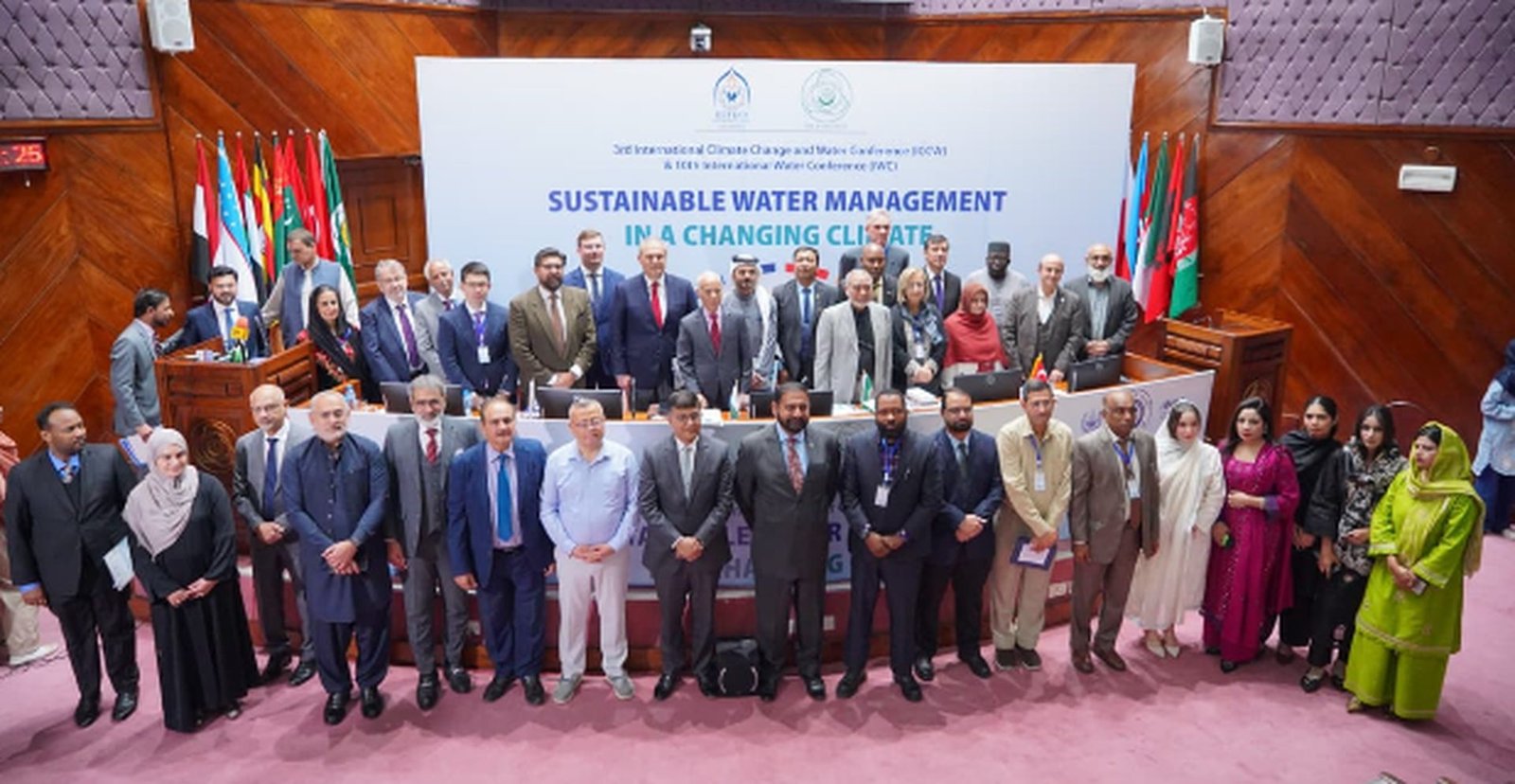
Scientists, policymakers and water experts have called for practical, science-based solutions to growing water insecurity as a two-day international climate and water conference opened at the OIC-COMSTECH Secretariat in Islamabad on Wednesday.
The 3rd International Climate Change and Water Conference and the 10th International Water Conference are being held jointly by OIC-COMSTECH and Riphah International University under the theme “Sustainable Water Management in a Changing Climate”. The conference runs on November 25 and 26 and brings together experts from Pakistan and abroad.
Addressing the inaugural session, Coordinator General OIC-COMSTECH Prof. Dr. M. Iqbal Choudhary said climate change was placing unprecedented pressure on water availability, food security, agriculture and ecosystems. He said many OIC member states were facing water scarcity, groundwater depletion, inadequate infrastructure, transboundary challenges and climate-induced disasters.
He said the challenges required greater investment in modern water technologies, research, skilled human resources and climate-resilient infrastructure, and that water, agriculture, energy and environmental sustainability must be addressed together through efficient water use, smart irrigation and integrated water-resource management.
Prof. Choudhary said COMSTECH was strengthening cooperation across the 57 OIC member states through research, fellowships, training and the COMSTECH Forum on Environment and Ecosystem Restoration, while encouraging stronger partnerships among universities, governments, water institutions and international organisations.
Director General of the Pakistan Council of Research in Water Resources, Dr. Hifza Rasheed, warned that climate change was reshaping the water cycle, with heavier floods, longer droughts and increasingly unpredictable water supplies. She said Pakistan’s population could reach around 288 million by 2030, when annual water availability may fall to about 795 cubic metres per person, well below the recognised water-scarcity threshold.
She said Pakistan must develop its own water agenda rather than wait for external solutions, and highlighted more than 110 recharge and soakaway sites in Islamabad, with real-time monitoring of groundwater and surface water in Islamabad and Sindh planned from 2027, alongside future use of integrated data systems and artificial intelligence.
Dr. Muhammad Ashraf, Country Representative of the International Water Management Institute in Pakistan, highlighted the close link between water, food security and climate resilience, stressing efficient irrigation, greater attention to dryland agriculture, stronger policy coordination and better use of research in decision-making. Riphah International University Chancellor Hassan Muhammad Khan said universities had an important responsibility to generate research that responds to climate and water challenges.
Leave a Reply