Tag: United States

  • Infant dies of measles in Wisconsin, first in 36 years

    Infant dies of measles in Wisconsin, first in 36 years

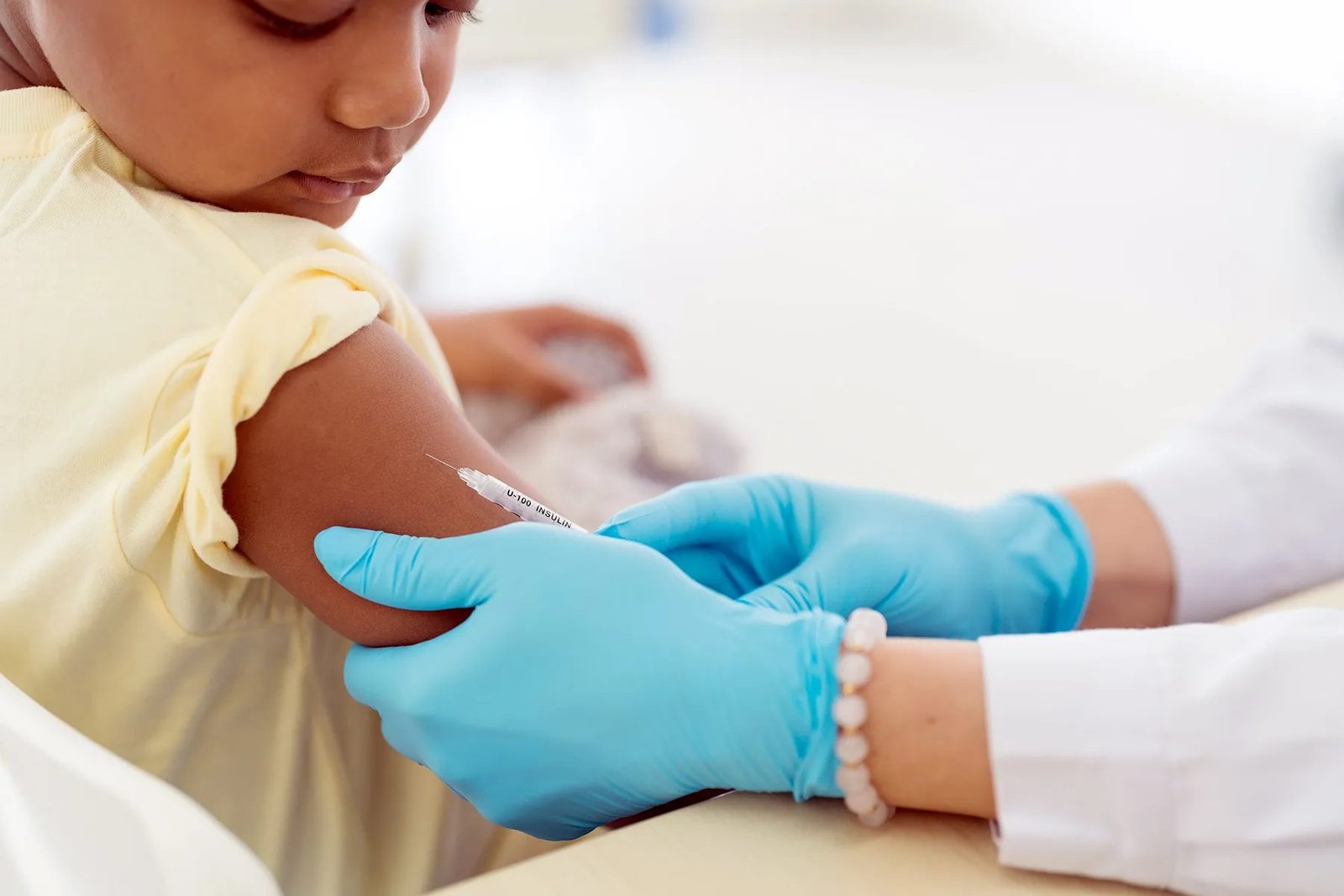
    An infant in southwestern Wisconsin has died of measles, the first measles death in the state in 36 years, the Wisconsin Department of Health Services announced on Thursday.

    The coroner listed measles as the immediate cause of death, according to the department. Officials said they would not release any further details about the child, including age or vaccination status, to protect the family’s privacy.

    “My heart is broken for the family,” said Kirsten Johnson, secretary of the Wisconsin Department of Health Services. “Any death of a child is a tragedy and even more so when it is related to a vaccine-preventable disease.”

    The death is the third measles-related death reported in the United States this week. An infant died in New York on Monday, and a resident of Pennsylvania died on Wednesday, according to state health departments.

    Wisconsin is in the middle of its largest measles outbreak in more than three decades. As of November 3, the state had recorded 431 cases across 13 counties this year, the highest count in over 35 years. Nine people have been hospitalised, and all but three of the cases were in people who had not been vaccinated.

    Transmission has mainly occurred in Amish and Mennonite communities in the southwest of the state, with the largest case counts reported in Grant, Lafayette and Iowa counties. Cases were first reported to the public in early August, although health officials say people began showing symptoms in early July.

    Two doses of the measles vaccine are 97 percent effective at preventing infection, health officials say. On November 3, the department recommended that babies aged six months and older who are likely to be exposed to measles receive an early “zero dose” of the measles, mumps and rubella vaccine, before their first regular dose between 12 and 15 months of age.

    Between 500 and 600 of those early doses have been given to Wisconsin infants since August, according to the department’s immunisation programme manager, Stephanie Schauer. More than 42,000 doses of the measles vaccine have been administered across the state since August, and the department has delivered more than 2,000 doses to local health departments responding to the outbreak.

    Nationally, the US Centers for Disease Control and Prevention has confirmed 4,852 measles cases this year, the most since 1991. The CDC’s official death toll stands at four, although state health departments have reported a higher number of deaths.

    Health officials in Wisconsin are urging families to make sure children and adults are up to date with their measles vaccination and to recognise the symptoms early. Measles symptoms usually begin a week or two after infection with a high fever, cough, runny nose and red, watery eyes, followed a few days later by a rash that starts on the face and spreads across the body.

    “If we do things right, we can have a world where no one dies of measles,” said Dr Ryan Westergaard, the state’s chief medical officer and epidemiologist. “That’s what we’re aiming at.”

  • Trump: no immediate Iran strike, US ready if needed

    Trump: no immediate Iran strike, US ready if needed

    United States President Donald Trump has said the US has no immediate plan to strike Iran, while warning that American forces remain fully prepared to act if necessary. The remarks came in a telephone interview with the Financial Times on Tuesday, 3 November, given hours before midterm polling stations closed.

    According to reports of the interview, Trump said Washington was getting what it wanted from the current stand-off with Tehran. Asked about remarks by Israeli Prime Minister Benjamin Netanyahu suggesting that an attack could come soon, possibly this weekend, Trump replied that he was ready and American forces were ready, but there might be no reason to act.

    The interview, reported to have lasted about six minutes, was Trump’s clearest public statement yet on the next phase of the confrontation, which has lasted for months. Trump said the US was not really in a war on the scale of other major conflicts, pointing to earlier American strikes, including the use of B-2 bombers against Iranian nuclear capability and a later operation, while arguing that the current situation did not amount to a full-scale war.

    Trump also confirmed that indirect discussions with Iran were continuing, and said those talks would be allowed to run their course. Reports said the discussions cover Iran’s stockpile of enriched uranium, and that no deadline had been set for a deal. The president said he would not disclose any attack plans in advance, leaving open the possibility of further military action even while ruling out an immediate strike.

    The timing of the interview gave it added weight. It came after reports that the US military was preparing for a possible fresh strike as early as Wednesday, and after Netanyahu was reported to be pressing for strikes soon after the midterms. By saying there was no immediate plan, Trump appeared to push back against expectations of an attack in the days immediately following the vote.

    Iranian officials responded the same day, according to reports, with a senior security official saying Washington must address Iran’s conditions fully before Tehran would reopen the Strait of Hormuz. Mediators in Qatar were also reported to be seeking an interim agreement to build confidence between the sides, underlining that diplomacy remains active alongside the military warnings.

    For now, the message from Washington is deliberately two-sided: reassurance that no attack is imminent, paired with an unmistakable warning that one remains possible. Whether that balance holds will depend on the course of the talks and on events in the region in the days after the election.

  • Greenland set to ratify US Arctic security deal

    Greenland set to ratify US Arctic security deal

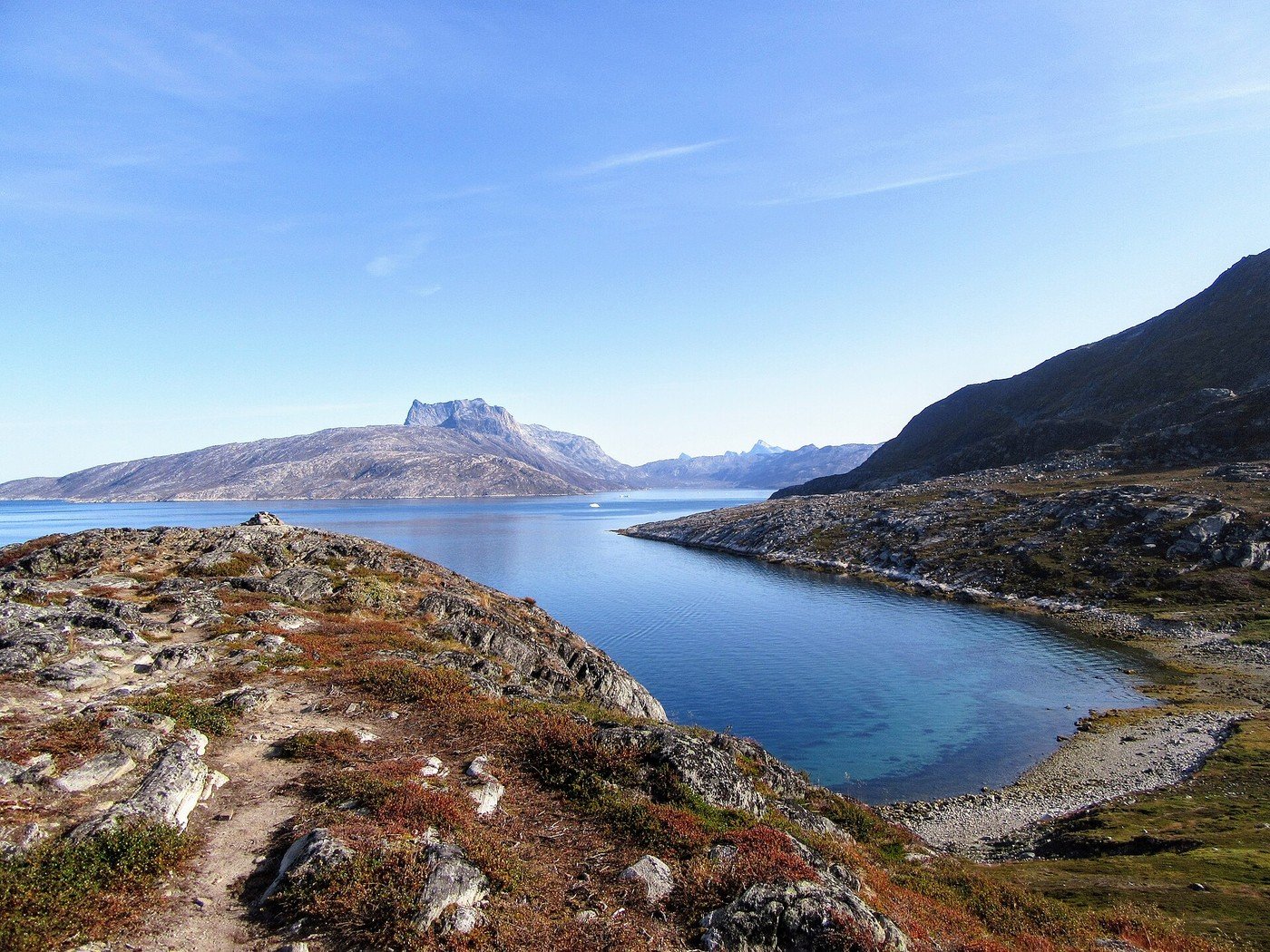
    Greenland’s parliament is preparing to formally approve a sweeping security agreement with the United States and Denmark, a deal that would significantly expand the American military presence in the Arctic. Lawmakers are positioned to ratify the framework, which has been described as a turning point for politics in the far north.

    The agreement was signed in September by the United States, Denmark and Greenland after months of diplomatic effort. It followed a period of serious tension, during which Trump repeatedly raised the idea of taking control of Greenland, a self-governing Danish territory that is both strategically located and rich in minerals. The new pact is presented as a way of ending that dispute while giving all three sides something they can accept.

    Under the deal, the American military role in Greenland would grow. Two new military bases are planned, and the agreement also opens the way for elements of Trump’s proposed Golden Dome missile defence system to be linked to the island. For Washington, Greenland’s position between North America and Europe, and its proximity to Arctic shipping routes, makes it a valuable location for surveillance, early warning and rapid response.

    At the same time, the agreement reaffirms two principles that matter deeply in Greenland and Denmark. Danish sovereignty over the island is confirmed, and the right of Greenlanders to decide their own future is also restated. Those assurances are central to the deal’s acceptance in Nuuk, where any suggestion of a loss of self-determination would be politically explosive.

    The timing is also significant for Arctic geopolitics more broadly. As ice retreats and new shipping lanes open, competition for influence in the region has intensified, involving not only the United States and its allies but also Russia and China. A formal security framework in Greenland gives Washington a clearer and more permanent footing in that contest, while tying it to Danish and Greenlandic consent.

    What the report does not yet provide is equally important. No vote date, vote count, base locations or cost figures were given, and ratification is framed as something parliament is preparing to do rather than something already completed. Readers should therefore treat the deal as agreed in principle and heading for formal approval, not as a finished process.

    If ratification goes ahead, the next questions will be practical ones: where the new bases will be sited, how they will be staffed, what environmental and community safeguards will apply, and how the missile defence element will operate. Those details will determine how the agreement is felt on the ground in Greenland, well beyond the diplomatic language of the signing ceremony.

    For now, the significance lies in the direction of travel. A dispute that once threatened to damage relations between close allies appears to have been channelled into a structured agreement, with a larger American footprint balanced by explicit recognition of Danish sovereignty and Greenlandic self-determination. Whether that balance holds will be tested in the months ahead, as parliament votes and implementation begins.

  • Iran says US talks intensive but no deal yet to avert war

    Iran says US talks intensive but no deal yet to avert war

    Iran’s foreign minister, Abbas Araghchi, has described the country’s talks with the United States as intensive and productive, while making clear that no agreement has yet been reached. The comments, reported on Monday, present diplomacy as still in progress, with the two sides talking seriously but not yet close enough to announce a deal.

    The talks are being watched closely because they are framed as an effort to avoid a wider conflict. A breakdown in diplomacy between Iran and the United States carries risks that go beyond the two countries, affecting the wider Middle East, energy markets and global security. That is why even the tone of the discussions, described as intensive, is treated as significant news in itself.

    At the heart of the disagreement is uranium enrichment. According to the reports, Iran insists on its right to enrich uranium for peaceful purposes, while the United States is reported to want enrichment to end. That gap is not a minor technical detail. Enrichment is the process at the centre of long-running concerns about Iran’s nuclear programme, and the two positions point in opposite directions, which helps explain why the talks have been difficult.

    Oman has been reported as a mediator in the process, a role the Gulf state has played in earlier rounds of diplomacy between Washington and Tehran. Mediation of this kind matters because direct communication between the two sides has often been limited. A trusted intermediary can carry messages, test ideas and help both sides understand where the other might be willing to move, without either side having to make a public concession first.

    Regional governments are also following the talks with concern. Countries across the Middle East would be affected by any escalation, whether through security risks, economic disruption or pressure on shipping and energy routes. At the same time, many of them have their own relationships with both Washington and Tehran, and they have an interest in a diplomatic outcome that reduces tension rather than raising it.

    Signals from Washington have not all pointed in the same direction, according to the reports. Different statements about the chances of a deal have created uncertainty about how close the two sides really are. That mixed messaging is common in sensitive negotiations, where public comments are often aimed at domestic audiences as well as at the other side of the table, but it also makes it harder for outside observers to judge the state of play.

    For now, the most reliable reading of the situation is a cautious one. The talks are continuing, they are described by Iran’s foreign minister as intensive and productive, and they have not yet produced an agreement. Neither side has announced a breakthrough, and the core disagreement over enrichment remains unresolved in public.

    What comes next will depend on whether the two sides can narrow that gap in private. A deal would need to address enrichment in a way both governments can present as acceptable at home, while also giving the wider region confidence that escalation has been avoided. Until that happens, diplomacy continues against a background of tension, with the risk of conflict still present even as the talks themselves are described in positive terms.

  • UAE Hopes for Iran-US Breakthrough, Braced for Worst

    UAE Hopes for Iran-US Breakthrough, Braced for Worst

    The United Arab Emirates is hoping for a breakthrough in negotiations between Iran and the United States while also preparing for the worst, a senior Emirati official said on Sunday, as renewed threats of a return to war in the Middle East raised concern across the region.

    Anwar Gargash, diplomatic adviser to the Emirati president, made the remarks during a conference in Manama. He said it was not in the region’s interest to go through another round of conflict, while adding that the UAE, as it had shown before, was braced for the worst.

    His comments came after a week of diplomatic movement alongside renewed warnings from Washington. A Qatari delegation visited Tehran during the week, and Iran dispatched envoys to the Gulf country to continue consultations as part of indirect negotiations with the United States aimed at ending the war.

    United States President Donald Trump reiterated his threats on Saturday, saying the United States still had to take care of one or two targets in Iran. The remarks kept alive the possibility of fresh strikes, even as diplomatic efforts continued in parallel.

    Speaking at the same Manama conference, Donald Blome, the US assistant secretary for Near Eastern affairs, was among the officials addressing the situation. US Secretary of State Marco Rubio said on Saturday that Mr Trump had not made a decision about fresh strikes on Iran and that the United States would be open to a diplomatic solution.

    The war began on 28 February with joint US-Israeli strikes on Iran, which retaliated by targeting, among others, Gulf countries allied with Washington. That history, officials and analysts note, is why Gulf states have been closely watching both the negotiating track and the military signals coming from Washington.

    For the UAE and its neighbours, the stakes of another round are high. A return to open conflict would threaten shipping, energy infrastructure and civilian life across the Gulf, while a negotiated outcome could restore a measure of stability to a region that has already borne the costs of months of war.

    Mr Gargash’s message therefore carried two parts: hope for a diplomatic breakthrough, and readiness if diplomacy fails. The combination reflects the position of Gulf states that have sought to keep channels open with all sides while preparing their own defences.

    Whether the current consultations can produce an agreement remains uncertain. Iran has said the outcome depends on the answers provided by the United States to what it has described as Iranian questions, while Washington has said it remains open to diplomacy but has not ruled out further military action.

    For now, the region waits on the next moves from Tehran and Washington. The UAE’s public position, as set out in Manama, is that diplomacy should be given every chance, but that no one in the region should assume the worst has passed.

  • US warns of credible threat at Moscow museum

    US warns of credible threat at Moscow museum

    The United States Embassy in Moscow warned on 31 October 2026 of a credible threat of a mass casualty event that day at the Tsaritsyno Museum Reserve in Moscow, and advised Americans to avoid the site and the surrounding area. The embassy said the United States government was coordinating with appropriate Russian authorities on a response.

    In its security alert, the embassy gave the address as Dolskaya Ulitsa 1, Moscow, and urged people to stay alert, avoid crowds, keep mobile phones charged and carry identification. It also advised Americans to review their personal security plans, monitor local media and enrol in the State Department’s Smart Traveler Enrollment Program for health and security updates. The alert did not name any suspected perpetrator or describe the nature or source of the threat.

    Russia’s Federal Security Service later confirmed that it had received information from the United States about preparations for a terrorist attack in Moscow, according to reports by Reuters, RIA Novosti and TASS. The service said it had received the information through established partner channels and that appropriate measures were being taken. It did not publicly name Tsaritsyno, identify any suspect or describe what the information contained.

    Reports citing Russian law enforcement agencies said the Tsaritsyno Museum Reserve was temporarily closed and access to its park was restricted after the warning. The reserve, a historic palace and park complex in southern Moscow founded in 1775 as Empress Catherine II’s summer home, is a popular tourist destination. Its grounds cover a large area south of the capital and have attracted millions of visitors in recent years.

    As of Saturday evening, no incident, detention or casualty at the site had been reported, and no date had been given for the museum to reopen. The episode was a threat warning, not a confirmed attack, and neither government publicly linked the shared information to a specific group or method.

    The warning drew attention because of a previous alert in March 2024, when the United States Embassy warned that extremists had imminent plans to target large gatherings in Moscow, including concerts. That warning came about two weeks before the attack on Crocus City Hall on 22 March 2024, in which more than 140 people were killed and hundreds more were wounded.

    The United States currently lists Russia at Level 4, or Do Not Travel, citing terrorism among other risks. The embassy’s alert for 31 October was limited to that day and to the named location, and it advised Americans in Russia to remain vigilant and to follow guidance from local authorities while the situation was assessed.

  • US Bans DeepSeek AI From Federal Agency Systems

    US Bans DeepSeek AI From Federal Agency Systems

    Washington: The United States Department of Homeland Security (DHS) has ordered federal civilian agencies to remove all products developed by Chinese artificial intelligence company DeepSeek from their information technology systems and barred them from buying such products in the future.

    The directive, issued as Exclusion and Removal Order No. 2026-01, was signed by the DHS secretary on July 24, 2026, with the formal notice filed for public inspection on October 19 and scheduled for publication in the Federal Register on October 20. It applies to IT products and services developed by Hangzhou DeepSeek Artificial Intelligence Co., its affiliated entities, and any third-party products or services built using DeepSeek implementations.

    The order was issued under the Federal Acquisition Supply Chain Security Act of 2018 following a review of a recommendation by the Federal Acquisition Security Council. It covers civilian executive branch agencies and their procurements, but does not extend to the Department of Defense or national security systems, nor does it impose a general ban on private businesses or individuals using DeepSeek products.

    DHS said DeepSeek models present “multiple threat vectors” for federal systems. The department warned that their use could lead to the transfer of sensitive data to China if used by US government employees or vendors, and could “produce actionable intelligence on US persons and/or government agencies.” The notice also cautions that the models themselves may contain malware or other security vulnerabilities.

    A July memo made public on Monday further instructed federal agencies to monitor data traffic flowing to and from government websites to address potential risks associated with DeepSeek. The order includes an exception process, with agencies required to submit written requests carrying a compelling justification and proposed safeguards within 60 days of the order’s issuance.

    The federal move follows earlier restrictions by individual agencies: the Department of Commerce and the US Navy have already banned DeepSeek from government devices, while several states, including New York, Tennessee and Virginia, have taken similar steps.

    South Korea moved earlier as well: in February 2025, its foreign, trade and defence ministries blocked access to DeepSeek on government computers over concerns about user data collection and potential information leaks.

    The ban lands amid a broader US crackdown on Chinese technology suppliers. DeepSeek drew global attention in early 2025 when its low-cost AI model rattled US technology stocks and raised questions about American dominance in artificial intelligence.

  • Oregon school shooting: four killed, gunman shot dead

    Oregon school shooting: four killed, gunman shot dead

    Bend police have identified the 16-year-old gunman who opened fire at Silver Rail Elementary School in Bend, Oregon, on Thursday as Griffin J. John II, a former special-needs student at the school, according to details released by investigators on Friday. Police said the teenager attacked a classroom of special-needs students, shooting his way through locked doors with a 12-gauge shotgun and firing as many as 15 shots. He still had about 44 rounds of ammunition left when he was killed.

    Three children aged five, eight and 11, and 25-year-old teacher Meghan Lambert were killed in the attack, police confirmed. A seven-year-old child and a 54-year-old teacher were taken to hospital in critical condition. The shooting began shortly before 1pm local time: dispatch received a call about a shot fired into a car at 12:59pm, an alert tone went out to all officers at 1pm, and officers arrived at the school by 1:02pm. Police said multiple emergency calls poured in within two minutes, and officers from every available unit responded to the scene.

    The gunman was fatally shot by a community member before police arrived. Bend Police Chief Mike Krantz said 36-year-old Kaylub Giamanco, a father of two children at the school, saw the teenager entering the building, followed him inside and engaged him in a short gun battle. Moments earlier, a teacher had thrown her phone at the gunman and then tackled and fought him, likely saving lives; Krantz called her actions heroic and said she was not injured. US President Donald Trump later called Giamanco a “great hero”, saying a man with a gun who knew how to use it had prevented further tragedy.

    A prayer vigil organised by a dozen churches at Drake Park in Bend drew thousands on Friday evening as the community mourned the victims. All schools in the Bend-La Pine district were closed on Friday, with classes and extracurricular and athletic events cancelled. Oregon Governor Tina Kotek praised the first responders, school staff and the community member she said had stopped “further loss of life”. The FBI and the Bureau of Alcohol, Tobacco, Firearms and Explosives are assisting local authorities in the investigation. The shooting is the 28th mass killing in the United States this year, according to a database maintained by the Associated Press, USA Today and Northeastern University.

    Silver Rail Elementary had 459 students in the 2024-2025 school year and opened in 2015, according to state education records. Police said every Bend police officer had completed a full day of active shooter training in August. The gunman’s mother spoke publicly outside her apartment, telling reporters she was deeply sorry and wished she could have done something. Police said they were still working to determine how the teenager obtained the shotgun, noting that under Oregon law a minor may possess a shotgun if it is provided by a parent or with a parent’s consent.

  • Trump Calls Nobel Pick ‘Disgraceful’ After Pillay Win

    Trump Calls Nobel Pick ‘Disgraceful’ After Pillay Win

    US President Donald Trump has launched a fresh attack on the Norwegian Nobel Committee after South African judge Navi Pillay was named the winner of the 2026 Nobel Peace Prize, calling the decision “disgraceful” and insisting the award should have gone to him.

    Addressing supporters at a rally in Syracuse, New York on Friday, Trump said he had “never heard of” Pillay before her victory was announced. “The United States of America, represented by me as your president, should have received the Nobel Peace Prize, but didn’t,” he said, according to international media reports, describing the committee’s choice as “a disgraceful and embarrassing decision” that left “an indelible stain on the country of Norway”.

    Pillay, one of South Africa’s most prominent jurists, was honoured on Friday for her decades of work against war crimes and crimes against humanity. She headed the international tribunal that prosecuted those accused in the Rwanda genocide and last year presided over a United Nations commission that accused Israel of genocide in Gaza. She currently sits as a judge in a case before the International Court of Justice in which Myanmar stands accused of genocide.

    The chairman of the Norwegian Nobel Committee, Jorgen Watne Frydnes, said Pillay had been “instrumental in ensuring that war crimes, crimes against humanity, and genocide are prosecuted”. The prize comes with a gold medal, a diploma and prize money of $1.2 million.

    Trump has made little secret of his desire for the prize since returning to the White House in January 2025. Experts in Oslo, quoted by international outlets before the announcement, argued that his war on Iran, his territorial ambitions over Greenland, his hard line on migration and his attacks on multilateral institutions and the press had disqualified him.

    In a lighter moment after the announcement, Pillay joked to an applauding crowd that she might share the prize with Trump if they clapped a little more — an apparent reference to Venezuelan opposition leader Maria Corina Machado, who presented her own Nobel gold medal to Trump after winning the prize last year.

    The controversy unfolded as the Trump administration also moved to sanction the International Criminal Court in the wake of the Nobel announcement, a step the court condemned as an “assault on the rule of law and on the very foundations of the international legal order”, The News reported. Pillay, who has spent her career defending international justice, is seen by supporters as a figure the award places squarely at the centre of the global debate on accountability.

  • US Slaps Fresh Sanctions on Iranian Oil Trade, Five Indian Nationals Among Targets

    US Slaps Fresh Sanctions on Iranian Oil Trade, Five Indian Nationals Among Targets

    Dubai: The United States has announced fresh sanctions targeting trade in Iranian oil and petrochemical products, with five Indian nationals among those caught in the net.

    According to the US State Department, the sanctions apply to companies, individuals and vessels linked to the United Arab Emirates, India, Turkiye, Iran and the United Kingdom.

    The five Indian nationals on the list include Dhawani Nisarg Vora and Nisarg Samir Vora, directors of the Indian firm ‘SSPL Solutions’, while Ketan Manohar Kochikar, Bhupinder Singh Dhal Singh Sahoo and Harish Yam Hari Haran Chandakatel are directors of ‘Samudra Marine Services’. The State Department says these companies played a role in trading or importing Iranian petrochemical products.

    Turkish national Saeed Ahmed Noorzad has also been sanctioned. He is the director and chief executive of the Turkish company ‘Noorzad Petrochemia’, which US officials say purchased around $3.8 million worth of Iranian petrochemical products.

    The UAE-based ‘Arabian Pro Materials’ stands accused of exporting around $2 million worth of Iranian petrochemical products. UAE-based ‘Horizon Ship Management’ and ‘Hesonite Ship Management’ have likewise been sanctioned, with US officials saying vessels linked to these firms transported Iranian oil and gas products.

    According to the State Department, the move is part of Washington’s ongoing effort to curtail the revenue Tehran earns from its oil and petrochemical trade.