Tag: United States

  • Pakistan Conveys Iran’s Message to US, Awaits Response: Dar

    Pakistan Conveys Iran’s Message to US, Awaits Response: Dar

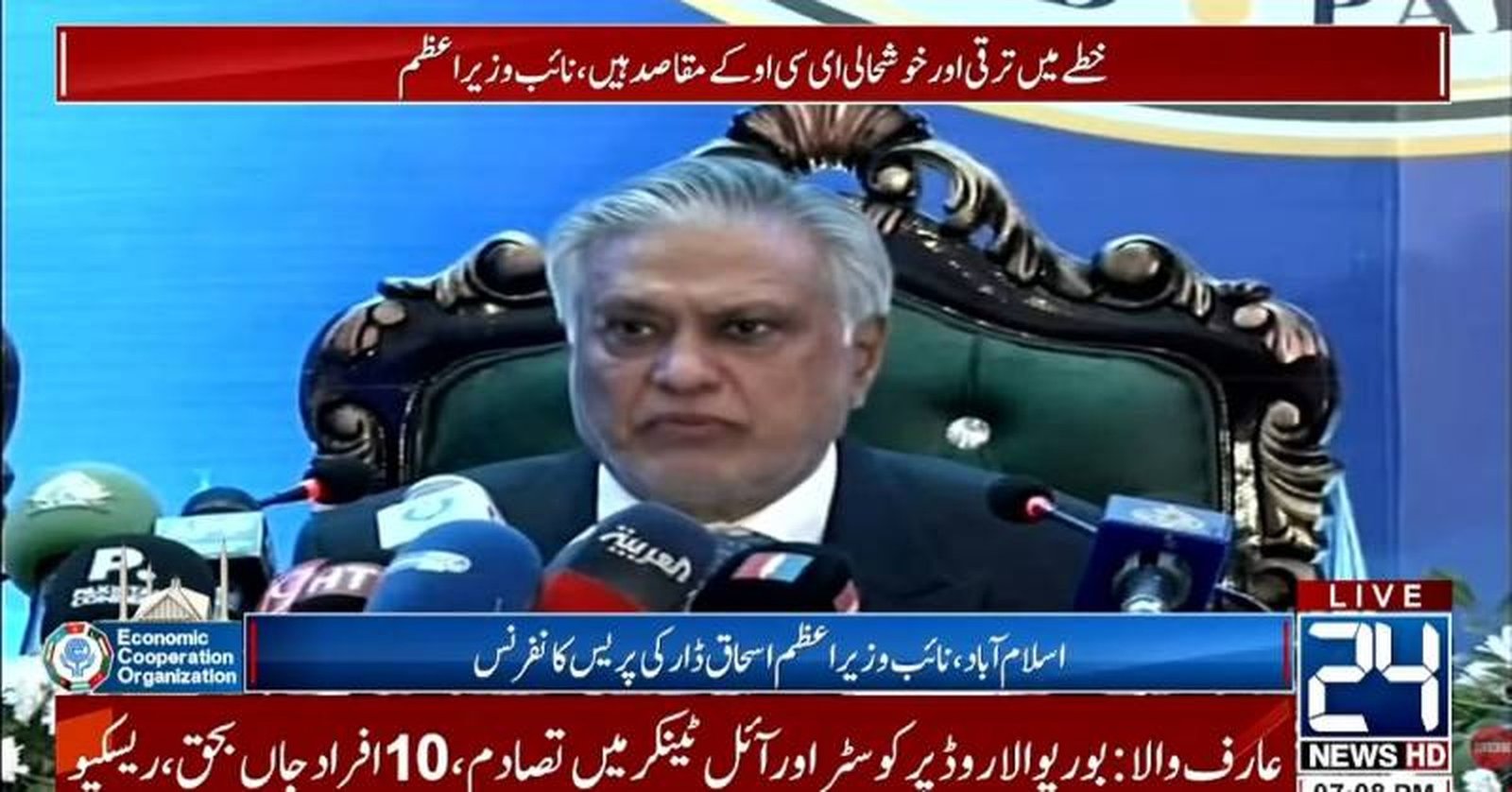
    Deputy Prime Minister and Foreign Minister Ishaq Dar has said Pakistan has conveyed a message from Iran to the United States and is awaiting a response from Washington, reaffirming Pakistan’s commitment to diplomatic engagement despite international sanctions on Iran.

    Dar was speaking at a joint press conference after the Economic Cooperation Organisation (ECO) Council of Foreign Ministers meeting in Islamabad, also attended by ECO Secretary-General Asad Majeed Khan and Information Minister Attaullah Tarar, according to the report.

    Dar said Pakistan had not abandoned hope regarding cooperation with Iran and remained committed to implementing the Islamabad Understanding. He said sanctions would not remain in place forever and expressed hope that cooperation and economic activities would resume fully once the restrictions were lifted.

    The deputy prime minister said Pakistan had consistently adhered to international law and the United Nations Charter while pursuing regional cooperation.

    Relations with Afghanistan

    Turning to relations with Afghanistan, Dar said Pakistan had no dispute with the Afghan people, but terrorist groups operating from Afghan territory remained a serious concern. “We have no issue with Afghanistan or the Afghan people. Our issue is solely with terrorists, wherever they may be,” he said.

    Dar said the Tehreek-e-Taliban Pakistan (TTP) and other terrorist organisations posed genuine security threats. He said a Pakistani delegation had visited Afghanistan in April 2025 for detailed discussions on security, making it clear that Afghan territory must not be used against any neighbouring country, including Pakistan.

    He said diplomatic efforts by Turkiye, Saudi Arabia and China following the visit had failed to produce the desired results. Despite the security concerns, Dar said, Pakistan had continued facilitating humanitarian assistance to Afghanistan.

    The deputy prime minister said Pakistan allowed 1,000 containers of humanitarian aid to enter Afghanistan following a request from the United Nations. He said Pakistan had also worked to facilitate the CASA-1000 electricity transmission project, whose financial support was suspended following the Taliban’s return to power.

    Discussing regional security, Dar called for the establishment of a regional security architecture, describing the Makkah Joint Defence Agreement as a step towards strengthening collective security. He said the agreement was fully consistent with the United Nations Charter and that greater participation by regional countries would help strengthen cooperation.

    The deputy prime minister said the agreement’s apex committee, the SPDC, would meet in Islamabad later this month.

    Responding to a question about Afghanistan’s absence from the ECO meeting, Dar said the country’s membership was currently suspended. He said the former democratic government remained the recognised member, while the current Afghan administration could not be invited, and that was why Afghanistan was not represented.

    On the outcome of the ECO meeting, Dar announced that member states had approved the Strategic Goals for Economic Cooperation 2035 and adopted the Islamabad Declaration to strengthen regional economic integration. He said Pakistan had assumed the chairmanship of the ECO Council of Ministers for a two-year term under the theme “Revitalising Regionalism for a Resilient ECO”.

    Dar also referred to Pakistan’s role in facilitating the adoption of United Nations Security Council Resolution 2788 last year, saying the resolution had subsequently been used in efforts to halt the conflict between Cambodia and Thailand. He said Pakistan would continue promoting regional cooperation and diplomatic engagement in accordance with international law and the United Nations Charter.

  • Political Fallout Widens in Nvidia Spy Scandal

    Political Fallout Widens in Nvidia Spy Scandal

    The political fallout from the Nvidia spy scandal has reached President Donald Trump’s cabinet, with Treasury Secretary Scott Bessent publicly blaming the Commerce Department for failing to blacklist a Singapore company suspected of funnelling powerful Nvidia AI chips to China.

    Bessent’s criticism, a rare public rebuke of one department by another, has put fresh pressure on Commerce Secretary Howard Lutnick. Lutnick has agreed to testify before the Senate as questions grow over his department’s handling of export controls.

    The scandal led Nvidia chief executive Jensen Huang to resign on Thursday. It has raised concerns that high-end Nvidia chips reached China, the United States’ main rival in artificial intelligence, in breach of Washington’s export restrictions. It has also prompted questions about whether senior officials in the Trump administration turned a blind eye to Nvidia’s dealings with Chinese-linked companies.

    As head of the department that oversees US export controls, Lutnick is ultimately responsible for enforcing the rules meant to keep advanced Nvidia processors out of Chinese hands. Lutnick, a billionaire investor, is a close friend of Trump, who had made Huang one of his closest advisers on artificial intelligence.

    Speaking on CNBC, Bessent said the Treasury, the Defence Department, the US Trade Representative’s office and the State Department had backed adding the Singapore company, Megaspeed, to Washington’s trade blacklist for months. But, he said, Commerce holds the pen on the decision. He said he was frustrated because Trump had made it very clear that China should not receive any Nvidia chips above the H100 model. Any leakage, he said, hurts American companies and hands China an advantage in the AI race.

    Lutnick is also facing pressure from Congress. Senator Jim Banks, an Indiana Republican, told Fox News he wanted Lutnick to testify before the Senate Banking Committee as soon as possible, pointing to bipartisan questions about what happened over the past year. A Commerce Department spokesperson, Kristen Eichamer, told US media on Thursday that Lutnick had agreed to testify.

    News outlet Axios reported on Wednesday that Trump had approved action against suspected diversions of Nvidia chips to China on at least three occasions this year, but that Lutnick did not act on the requests.

    Megaspeed is suspected of helping Chinese firms get around US export controls by buying Nvidia chips for its data centres in Southeast Asia and routing them on to China. The company reportedly traded more than four billion dollars’ worth of Nvidia chips over two years.

    This week, US media identified Megaspeed’s former director, Alice Huang, as an alleged Chinese intelligence asset who had a relationship with Jensen Huang. The two are not related. Beijing has denied the spying allegations. Jensen Huang acknowledged an extramarital affair in a letter to Nvidia employees on November 8, without naming the woman involved. Nvidia’s board has said it will investigate, and three congressional committee chairs have asked Jensen Huang to attend a closed-door briefing in Washington.

  • China: US Using ‘Spy’ Claims to Justify Tech Blockade

    China: US Using ‘Spy’ Claims to Justify Tech Blockade

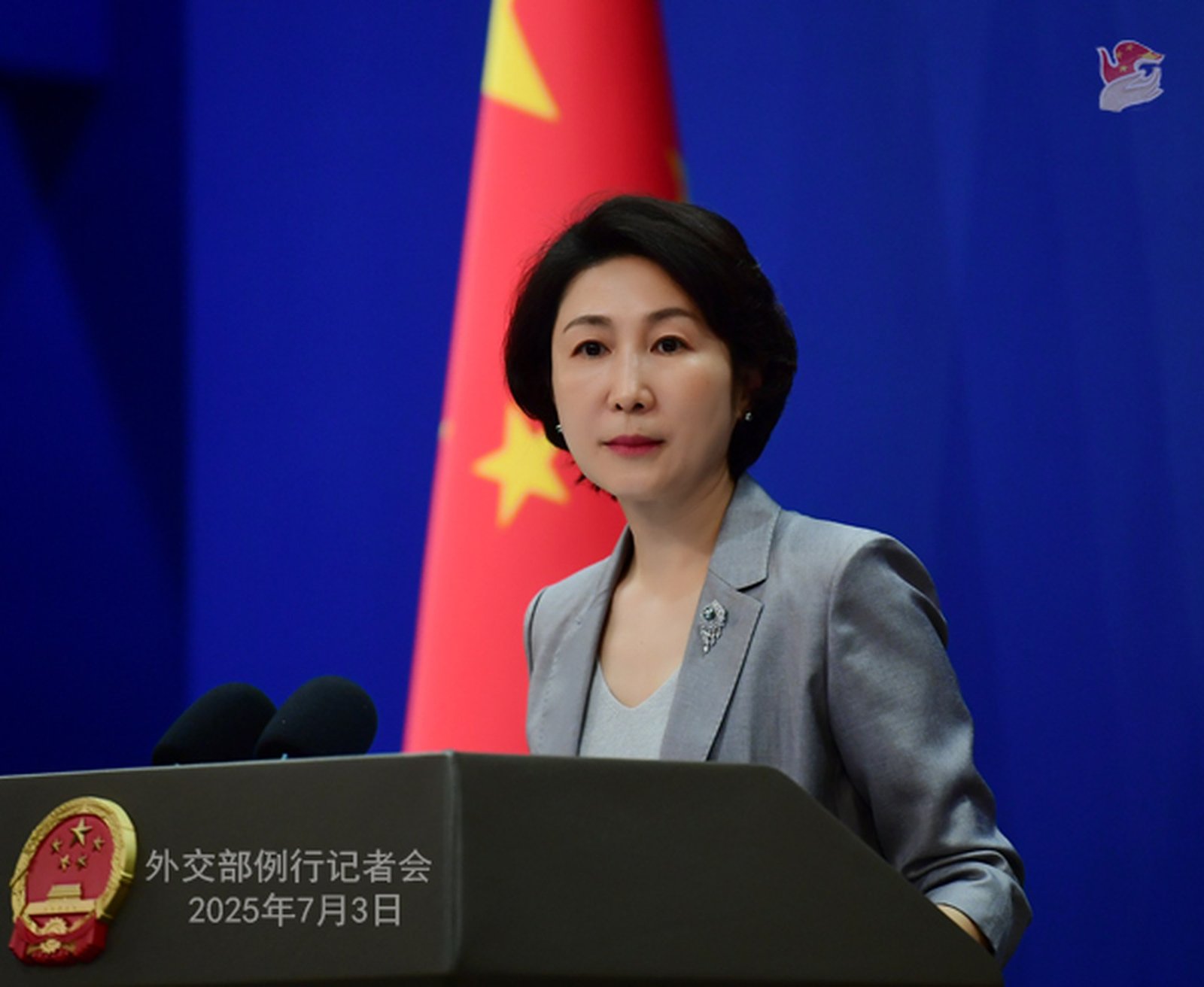
    China has accused the United States of using invented spying claims as an excuse to impose a technological blockade, hitting back at reports that Nvidia chief executive Jensen Huang was the target of a Chinese espionage plot. Speaking at a regular briefing in Beijing on Thursday, foreign ministry spokeswoman Mao Ning said Washington should stop fabricating what she called spy narratives to justify tightening its grip on advanced technology.

    Mao insisted that China’s technological progress was driven by its own innovation and open cooperation with the rest of the world, not by espionage. She dismissed the claims surrounding Huang as groundless speculation and an attempt to smear China, language Beijing has used repeatedly since the story first surfaced. Her remarks were the strongest public response yet from the Chinese government to a scandal that has shaken one of the world’s most valuable companies.

    The row centres on reports that Huang admitted to an extramarital affair with Alice Huang, a former executive at the Singapore-based data centre firm Megaspeed, whom United States officials suspect of having links to Chinese intelligence. Huang, who co-founded Nvidia and built it into the world’s leading supplier of the chips that power artificial intelligence, has spent years lobbying against American curbs on sales of advanced chips to China. Last year, President Donald Trump cleared Nvidia’s H200 chips for export to China, over the objections of hawks in both parties who fear Beijing winning the race to dominate AI.

    The affair and the espionage claims have already had serious consequences for Huang. Nvidia’s board has opened an independent review of the matter, and reports this week said directors were considering his future as chief executive. In Washington, the scandal has also revived pressure from lawmakers who want stricter controls on the export of advanced AI chips and on the cloud services that let Chinese customers access them from abroad.

    The diplomatic fallout comes at a sensitive moment. Trump and Chinese President Xi Jinping are due to meet next week at the APEC gathering in Shenzhen, where trade and technology are expected to dominate the agenda. Beijing’s message on Thursday was aimed squarely at that meeting, warning Washington not to use the Huang affair as fresh justification for restrictions. For now, neither side has produced public evidence to settle the spying claims, and the dispute looks set to run alongside the wider contest over who controls the technology of the future.

  • US may lose measles-free status as cases pass 5,200

    US may lose measles-free status as cases pass 5,200

    The United States is on the verge of losing a public health achievement it has held for a quarter of a century, as health experts prepare to decide whether the country can still call itself free of measles.

    Global health experts convened by the Pan American Health Organization are expected to rule in the coming days on whether America has lost its measles elimination status, a designation it has held since 2000. Many disease specialists believe that outcome is now likely, with the country battling its highest number of infections in more than three decades.

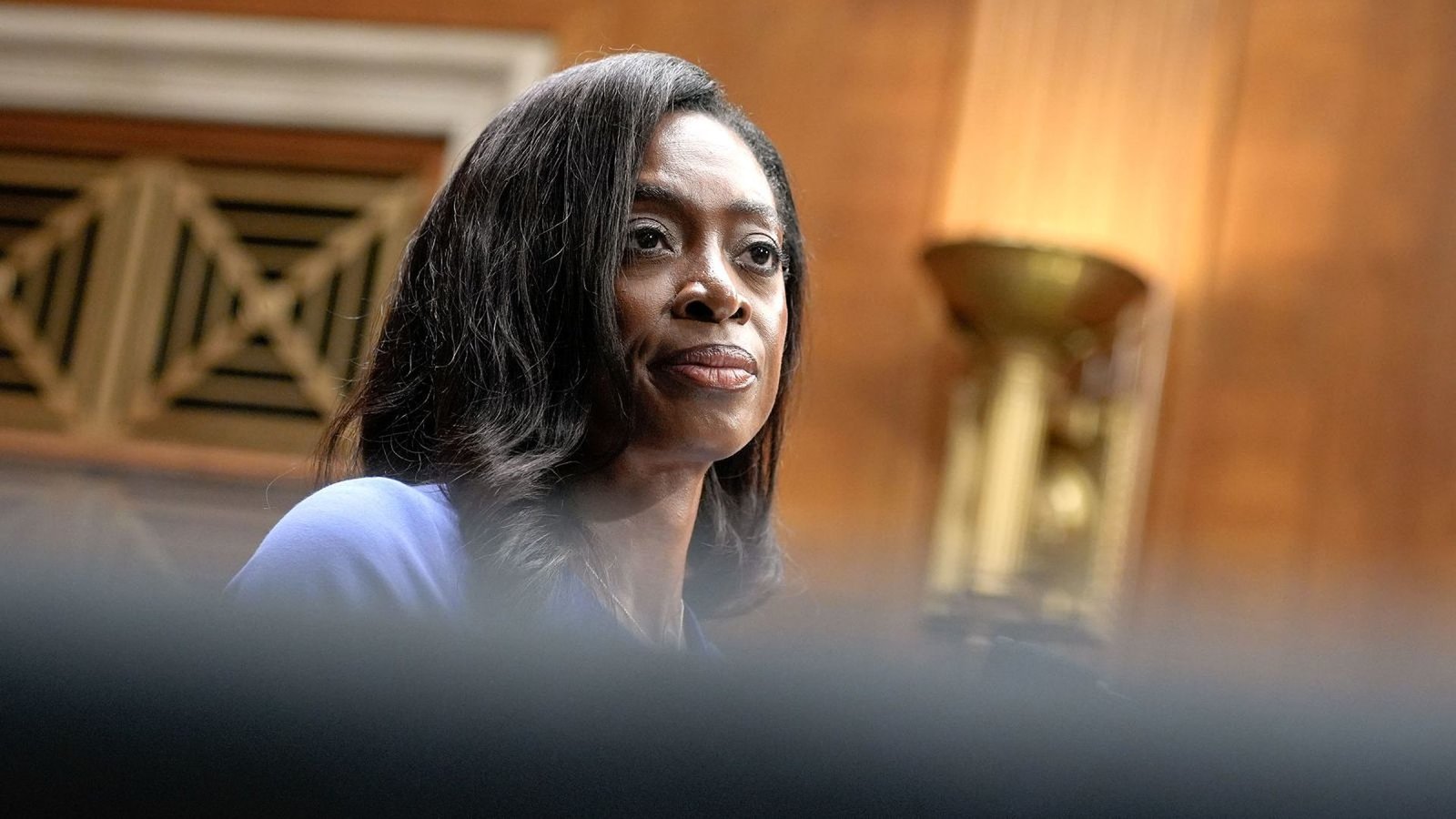
    Dr Erica Schwartz, director of the US Centers for Disease Control and Prevention, told Reuters on Tuesday that the agency would not fundamentally change its response even if the status is lost. She said the CDC would keep doing what it is doing now, working with state health departments to raise awareness and stress that the combined measles, mumps and rubella (MMR) vaccine is the best protection against the disease.

    The scale of the outbreak underlines why the decision matters. There have been nearly 5,200 confirmed measles cases in the United States so far in 2026, compared with 2,289 for the whole of 2025. State health departments have reported 11 deaths since early last year, with thousands of Americans catching measles since early 2025. A Wisconsin infant was reported this week as the country’s third measles-related death in a single week.

    Outbreaks centred on close-knit communities

    Dr Schwartz, who was confirmed as CDC director in August, said she expected the Pan American Health Organization to reach its decision by early next week. She pointed to closely knit communities as the main source of infection in the United States, noting that several outbreaks began among religious groups where vaccination rates are lower than in the general population, including the Amish community in Pennsylvania.

    She said many of these families made their decisions about the MMR vaccine 20 or 30 years ago, and the consequences are only now visible. The priority, she said, is to reach those communities and make sure they understand that the MMR vaccine is the most effective way to prevent measles.

    The outbreak has also become entangled in a wider debate about vaccines in America. Health and Human Services Secretary Robert F. Kennedy Jr, who oversees the CDC, has for years cast doubt on the safety and effectiveness of the MMR vaccine, and has sought to reduce the number of childhood immunisations. Medical experts have said his words and actions have contributed to falling vaccination rates.

    In August, shortly after Dr Schwartz was confirmed in her post, President Donald Trump and Mr Kennedy unveiled an executive order calling for the MMR vaccine to be broken up into three separate injections. Pharmaceutical companies said such a change could take years, while doctors warned it would sow confusion among families.

    Dr Schwartz also pushed back against reports that Mr Kennedy and his senior deputies had put pressure on her or the agency. She said she speaks with the health secretary every day, and that he has recognised she is the director of the CDC and that decisions about the agency’s direction rest on her shoulders. She added that he understands she is there because the CDC needs a leader.

  • Iran Warns It Will Hit Distant US Bases, Even in Europe

    Iran Warns It Will Hit Distant US Bases, Even in Europe

    Iran’s top security official has warned that Tehran would strike American military bases far beyond the Middle East if the United States attacks Iran again, including bases in European countries and on distant islands that Washington believes are out of range of Iranian missiles.

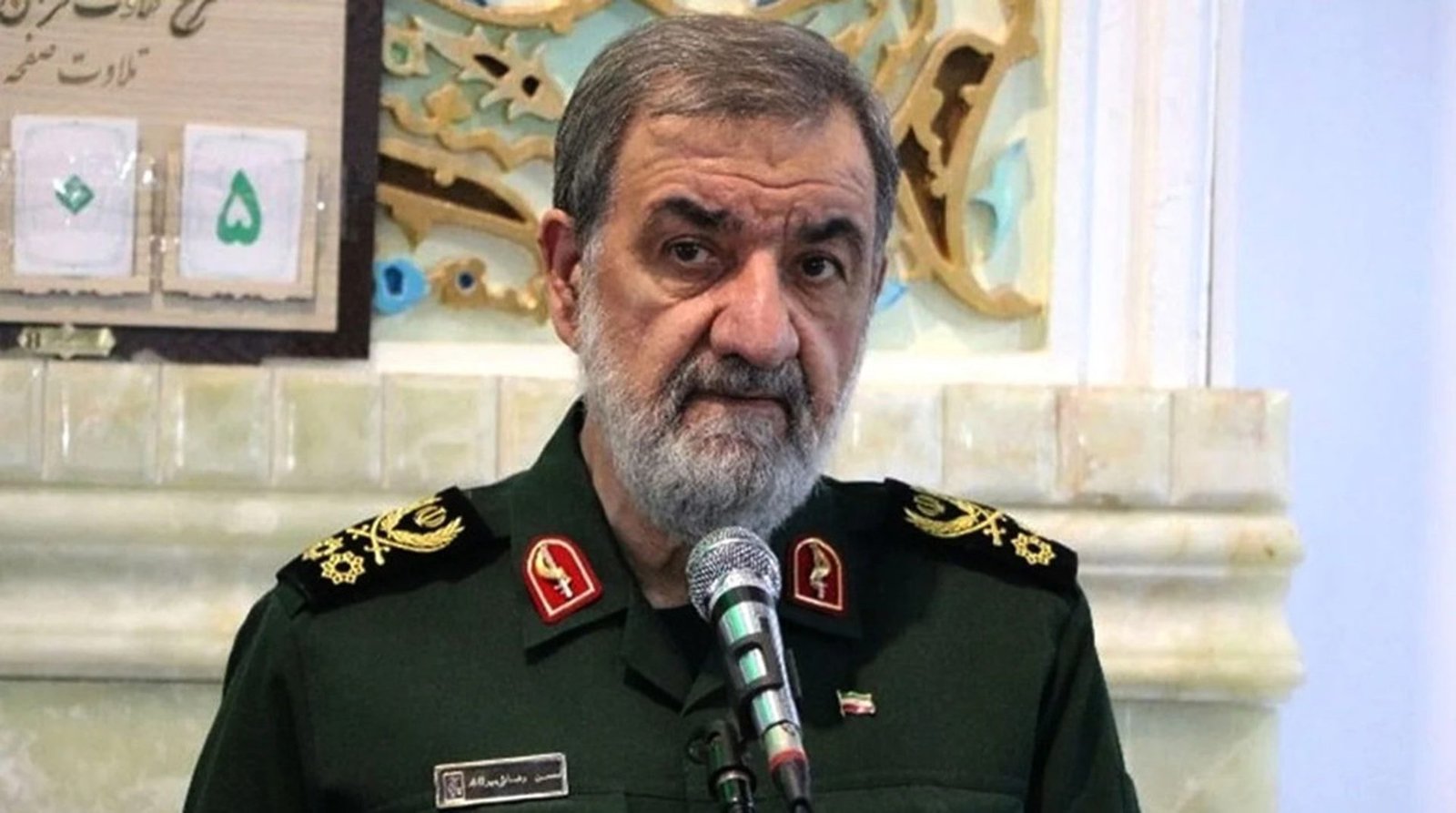
    Major General Mohsen Rezaei, secretary of Iran’s Supreme National Security Council, made the warning in an interview with Lebanon-based Al Mayadeen television on Wednesday. According to Iranian news agency ISNA, he said Iran would no longer limit any response to American installations in the region.

    “If the Americans make a mistake and attack us, we will not only target nearby bases; we will target all nearby bases, and we will also attack distant American bases,” he said. “We may also target some islands that they think our missiles cannot reach. We may even target some American military bases in European countries; if American planes take off from a distant military base and come to this country to bomb Iran, we will also target that base.”

    Mr Rezaei did not name any specific base. Some reports have suggested the reference to distant islands could point to Diego Garcia, the Indian Ocean base used by the United States, though no such target was identified in the interview itself. He warned countries hosting American forces not to assist any renewed offensive.

    Uranium stays in Iran, Hormuz stays shut

    Mr Rezaei also ruled out sending any of Iran’s enriched nuclear material abroad, saying the entire stockpile would remain in the country for domestic use, including nuclear-powered vessels and small modular reactor power plants. “Not a single particle, however insignificant, of the enriched material will leave Iran, and all of this material will remain in our own possession,” he said.

    On diplomacy, he said Iran was waiting for a clear American response to seven conditions it has set for further talks, and rejected reports that negotiations between the two countries were already under way. According to Al Jazeera, the conditions include lifting economic sanctions imposed after a recent memorandum of understanding, ending the US naval blockade, unfreezing restricted assets, and drawing down the regional American military footprint.

    He linked the talks to the Strait of Hormuz, saying Iran would not reopen the strategic waterway until its conditions are met. “We have announced our seven conditions, which are the rights of the Iranian nation. Until these conditions are implemented, the Strait of Hormuz will not open,” he said.

    On the same day, General Ali Abdollahi, chief of staff of Iran’s armed forces, also warned the United States and Israel against further military action, saying any entity threatening Iran would become a direct target of asymmetric operations.

    The warnings come as G7 foreign ministers, meeting in Paris on Wednesday, condemned Iran’s attacks against neighbouring countries and the disruption of trade and energy security caused by the obstruction of the Strait of Hormuz, calling on Tehran to stop what they described as persistent attacks on civilian vessels in the strait.

    Meanwhile, Iranian President Masoud Pezeshkian arrived in Turkey on Wednesday to attend the COP31 climate conference in Antalya, where he accused Washington of threatening global peace and security. The conflict began in late February 2026 after US and Israeli strikes on Iran, and tensions have remained high since.

  • Trump: US Won Iran War, Wants ‘Total Victory’

    Trump: US Won Iran War, Wants ‘Total Victory’

    President Donald Trump has declared that the United States has already won its war with Iran, but has insisted he will accept nothing less than what he called a total victory. Speaking at Arlington National Cemetery on Veterans Day, he told veterans and military families that the end of the conflict was now a matter of timing.

    “We won,” Mr Trump said during his address at the Memorial Amphitheater, after laying a wreath at the Tomb of the Unknown Soldier. “We want to make sure we have a total victory, not a 93% victory. It’s just a question of when we want to end it.”

    The president, who was joined by First Lady Melania Trump, Vice President JD Vance and Defence Secretary Pete Hegseth, recast the origins of the conflict, which began in February. “America did not start a war with Iran,” he said. “Iran has been waging war on America since 1979. This should have been taken care of a long time ago.”

    Mr Trump said American forces had inflicted heavy damage on Iran, claiming it would take Tehran 25 years to rebuild what had been destroyed, and said he hoped no further destruction would be needed. He said the operation had begun seven months ago and credited B-2 bombers with preventing Iran from obtaining a nuclear weapon.

    He also put the American death toll at 18 service members, a figure reporters have described as disputed, and compared it with the far higher losses of the Korean, Vietnam, Iraq and Afghanistan wars.

    Veterans honoured at Arlington

    Much of the speech was devoted to the veterans in the audience. Mr Trump honoured Marine veteran Dale Garner, a survivor of the 1983 bombing of a Marine barracks in Beirut that killed 241 American service members, an attack a US court later found Iran responsible for. He also recognised Jack Myers, 103, a Second World War gunner who fought in the Battle of the Bulge, and Colonel Douglas Moore, a Vietnam medevac pilot credited with 1,874 missions.

    Turning to veterans’ care, the president said his administration had cut the Department of Veterans Affairs claims backlog by 71% in less than two years and secured housing for nearly 100,000 homeless veterans, and he pledged to end veteran homelessness.

    Venezuela and the triumphal arch

    Mr Trump also pointed to the recent operation in Venezuela, saying the United States had won the war in 48 minutes, and repeated his claim that American forces had captured the country’s leader, Nicolás Maduro, who is now in custody in New York. “To the victor belong the spoils,” he said.

    Near the close of his address, he returned to his plan for a triumphal arch honouring the armed forces, saying it would soon be dedicated to veterans. The 250-foot gilded arch planned near the Lincoln Memorial has been approved by a planning body but is frozen by a temporary court order, with lawsuits pending, including one brought by the Kennedy family.

    The speech came a week after midterm elections in which Vice President Vance said the Iran conflict had contributed to Republican losses, a view Mr Trump did not dispute. He closed by promising veterans their service would be remembered. “And the nation you served, we will never, ever let it fail,” he said.

  • Russian Ambassador to US Alexander Darchiev Dies at 66

    Russian Ambassador to US Alexander Darchiev Dies at 66

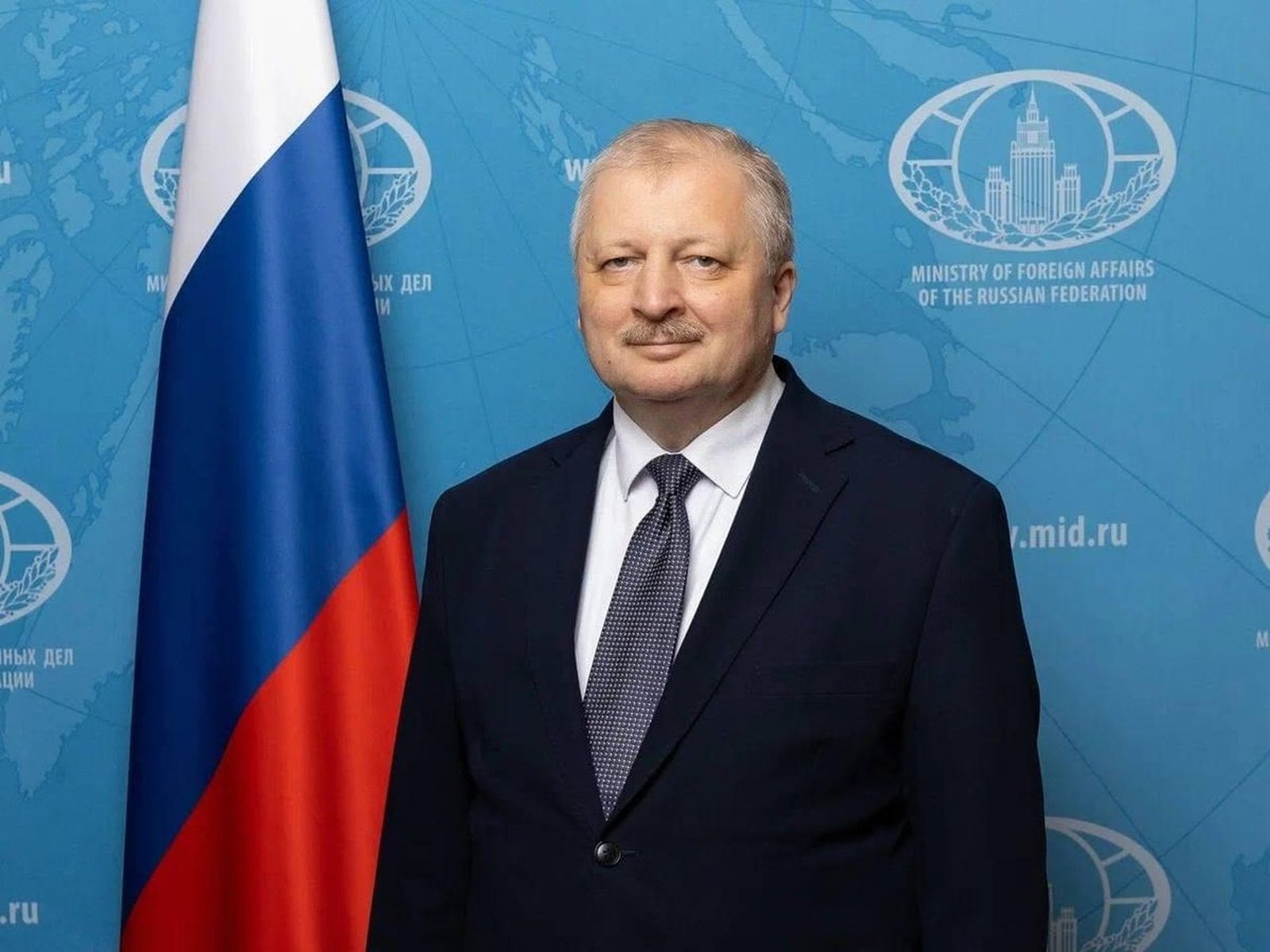
    Russia’s ambassador to the United States, Alexander Darchiev, has died suddenly at the age of 66, the Russian Foreign Ministry announced on Wednesday. The ministry said Mr Darchiev died on 11 November, describing him as an exceptional professional and an outstanding diplomat.

    In a statement, the ministry said it was announcing the death with profound sorrow and praised Mr Darchiev as an experienced leader, a kind colleague and a mentor. No cause of death was given. According to the ministry’s spokesperson, Maria Zakharova, the ambassador had been living with a chronic illness.

    Mr Darchiev had served as Moscow’s envoy in Washington since March 2025, when President Vladimir Putin appointed him to succeed Anatoly Antonov. He was a veteran diplomat who had spent much of his career in the foreign ministry and was known for his sharp public criticism of the West.

    The announcement was posted on the ministry’s official Telegram channel on Wednesday evening in Moscow and was also shared on X, where the ministry wrote that Mr Darchiev had passed away suddenly on 11 November, aged 66. Russian state news agencies carried the statement in full within the hour.

    Born in 1960, according to biographical notes published by the Russian Embassy in Washington, Mr Darchiev had held a series of senior posts inside the foreign ministry before he was chosen for Washington. His appointment was widely seen as part of a tentative attempt by both sides to restore a working relationship after years of deep strain.

    A posting at a difficult time

    He arrived in Washington at a moment of severe tension between the two countries, following Russia’s invasion of Ukraine in 2022, and was tasked with leading efforts to rebuild contact between Moscow and the administration of President Donald Trump. The Russian news agencies Interfax and RIA Novosti carried the ministry’s statement in full on Wednesday evening.

    His death comes as Moscow and Washington continue to struggle to restore relations that have deteriorated sharply since 2022, with disagreements over Ukraine still unresolved. No successor has yet been named, and the ambassador’s post is now listed as vacant. There was no immediate public comment from the White House or the US State Department.

  • US Soldier Held in UK on Suspicion of Spying for Russia

    US Soldier Held in UK on Suspicion of Spying for Russia

    A senior member of the United States Army has been arrested in Britain on suspicion of spying for Russia, British counter-terrorism police said on Tuesday. The 41-year-old man, whose name has not been released, was detained near Gloucester in the west of England and is being held at a police station in London.

    The soldier was arrested on suspicion of offences under sections 1 and 3 of the National Security Act 2023, which cover obtaining or disclosing protected information and assisting a foreign intelligence service. Police said the country to which the allegations relate is Russia, and that searches were carried out at two locations in Gloucestershire. No charge has been filed.

    The BBC reported that the soldier was based at Imjin Barracks in Innsworth, Gloucestershire, the headquarters of NATO’s Allied Rapid Reaction Corps, a multinational formation designed to respond quickly to crises. Police have not publicly confirmed the posting, although a senior NATO official confirmed to American media that the serviceman was assigned to the corps. No details of his role have been released.

    A joint investigation, and a denial from Moscow

    Deputy Assistant Commissioner Vicki Evans, Britain’s senior national coordinator for Counter Terrorism Policing, said the arrest and investigation were the result of close collaboration between UK and US authorities, and that the investigation was very much ongoing. FBI Director Kash Patel thanked British police and intelligence agencies, describing the case as an important arrest involving allegations of espionage of the utmost concern to the United States and its allies.

    Brigadier General Sean Stinchon, commanding general of the US Army’s Counterintelligence Command, said the alleged conduct of a senior soldier entrusted with sensitive information was a sobering reminder that insider threats are real and persistent. The Pentagon referred questions to the US Army, which did not immediately respond.

    On Wednesday, Kremlin spokesman Dmitry Peskov denied any Russian involvement, saying Moscow did not know what the arrest was connected to and had nothing to do with it. The allegations remain unproven, and police said the investigation was not linked to any other ongoing counter-terrorism inquiry.

    The case is the latest espionage allegation involving suspected Russian agents in Britain, a close ally of Ukraine, which Russia invaded in 2022. Relations between London and Moscow were frosty long before the war, marred by the poisoning of former Russian spy Alexander Litvinenko in London in 2006 and the attempted poisoning of double agent Sergei Skripal in Salisbury in 2018. In September, a British man appeared in court in London over allegations that he was preparing to sabotage a drone factory on behalf of Russian military intelligence. Reports described the arrest as believed to be the first time a serving US soldier has been suspected of spying for a foreign government while in Britain.

  • Rubio Rejects Iran’s Reparation Demand as ‘Absurd’

    Rubio Rejects Iran’s Reparation Demand as ‘Absurd’

    United States Secretary of State Marco Rubio has rejected Iran’s demand for reparations and said there is no need to resume major military strikes against Tehran while negotiations are still under way.

    Speaking to reporters in Paris on Tuesday, on the sidelines of a meeting of G7 foreign ministers, Rubio said Iran’s conditions for a deal were simply unacceptable and, in some cases, outrageous and ridiculous. He said the talks so far had not been very productive and that he would not say the two sides were on the verge of a breakthrough.

    Rubio was blunt about the demand for compensation. “Iran is demanding reparations. They should be the ones paying reparations because they’re the ones that have destabilised the region for long periods of time,” he said, adding that Washington would not take on Tehran’s proposals as the basis for negotiations.

    Economic pressure instead of strikes

    According to Rubio, the United States sees no immediate need for major combat operations against Iran, because sanctions and a naval blockade are already placing severe pressure on Tehran’s economy. He said that pressure would intensify over the coming months and that Iran’s remaining oil revenues would dry up as sanctions took hold.

    Iran has put forward a plan under which it would reopen the Strait of Hormuz if the United States ends its blockade of Iranian ports, lifts some sanctions and halts its bombing campaign. Tehran has set out seven conditions, including the return of its frozen funds, and its foreign ministry spokesman, Esmaeil Baghaei, has described the plan as the most reasonable proposal anyone has put forward.

    Washington and Tehran have signed a preliminary agreement to halt the conflict and have opened a 60-day negotiation period covering sanctions relief, Iran’s nuclear programme and the future of the strait. But Rubio made clear that the gap between the two sides remains wide, and President Donald Trump said on Monday that the conflict was effectively over from a military standpoint.

    Rubio said the administration still prefers diplomacy and would explore any real chance of a deal. For now, though, the message from Paris is that the United States will keep squeezing Iran’s economy rather than return to large-scale strikes, while rejecting the conditions Tehran has attached to talks.

  • Iran Rules Out US Talks, Hormuz Stays Shut

    Iran Rules Out US Talks, Hormuz Stays Shut

    Iran’s top security official has said there are currently no negotiations taking place between Tehran and Washington, rejecting American claims that talks are continuing through Qatari mediators. Major General Mohsen Rezaei, secretary of Iran’s Supreme National Security Council, made the remarks in an interview with Al-Mayadeen, a broadcaster close to Tehran’s allies, on Tuesday.

    General Rezaei said the Americans were fabricating claims about continuing negotiations or a meeting in Qatar, describing them as “pure lies” aimed at easing economic pressure and lowering global oil prices. “I emphasize that at the present moment, we are not conducting any negotiations with the Americans, and there are no negotiations between us and Washington,” he said.

    He said Iran had set out seven conditions in a June interim agreement and had asked the United States for a “clear and explicit” response, but had not yet received one. Until those conditions are fully met, he said, the Strait of Hormuz will not be reopened. The strait carries about one-fifth of the world’s oil under normal conditions and has been largely closed to commercial shipping since Iran declared it shut in late October.

    Iran’s foreign minister, Abbas Araghchi, also dismissed reports that General Rezaei could meet US Vice President JD Vance, calling them “baseless speculations”. “These speculations and media reports are entirely baseless, and there are no plans to hold such a meeting,” he told the state news agency IRNA on Tuesday.

    The Iranian statements came a day after President Donald Trump met Qatar’s prime minister, Mohammed bin Abdulrahman Al Thani, in Washington. Mr Trump said on Monday that the war on Iran was “effectively over” and that a resumption of American strikes was unlikely, although he warned that US forces remained ready to act if needed. The Qatari prime minister had expressed optimism about discussions aimed at restoring regional peace.

    Iran has put forward a two-day proposal, conveyed through Qatari mediators, that calls for reopening the strait to commercial shipping within 48 hours of Washington meeting Tehran’s conditions. For now, though, the two sides are describing the situation very differently. Pakistan’s military said last week it was “cautiously optimistic” about mediation efforts, after its army chief visited Tehran twice this month alongside Saudi and Turkish officials.