Tag: Donald Trump

  • Judge Blocks Trump’s 250-Foot Arch Hours After Approval

    Judge Blocks Trump’s 250-Foot Arch Hours After Approval

    A federal judge in the United States has temporarily blocked construction of President Donald Trump’s proposed 250-foot triumphal arch in Washington, in the latest legal setback for one of the president’s most ambitious building projects in the capital.

    US District Judge Tanya Chutkan issued a 14-day temporary restraining order on Thursday, hours after the National Capital Planning Commission voted 8-4 to approve the project. The order bars the administration from starting any construction, excavation or other ground work at the site while the court considers the case.

    The arch is planned for Memorial Circle, near the entrance to Arlington National Cemetery and across the Potomac River from the Lincoln Memorial. It is intended to mark the 250th anniversary of the signing of the Declaration of Independence, and the administration has described it as a triumphal arch honouring the nation’s history.

    The ruling followed a lawsuit brought by the District of Columbia and Virginia, who argue that the project lacks the specific congressional authorisation required for new monuments on federal land and that the administration bypassed environmental and historic-preservation reviews. The judge found that construction would likely cause the two governments significant costs that could not be recovered.

    The White House remains confident the legal issue will be resolved in the president’s favour, saying it is only a matter of time before the arch is completed. The administration contends that Congress authorised the structure more than a century ago, when it approved construction of a bridge across the Potomac, a claim the judge rejected for now.

    The project has faced sustained opposition from local officials, veterans and conservationists. Opponents raised concerns during a marathon public hearing about the arch’s effect on the Lincoln Memorial-Arlington Cemetery sightline, traffic, and nearby historic sites, including Arlington House and the cemetery itself.

    The National Park Service, which oversees the project, has acknowledged that the arch would have adverse effects on as many as 42 historic sites. The Justice Department had argued that the arch serves a national security purpose, but the judge described that assertion as belated and unsupported.

    With the restraining order in place, the court will now move quickly to consider whether a longer injunction is needed. The case will decide whether one of the most contested monuments in modern Washington can be built at all, and on what legal basis.
  • Democrats sweep US midterms, win Senate and House

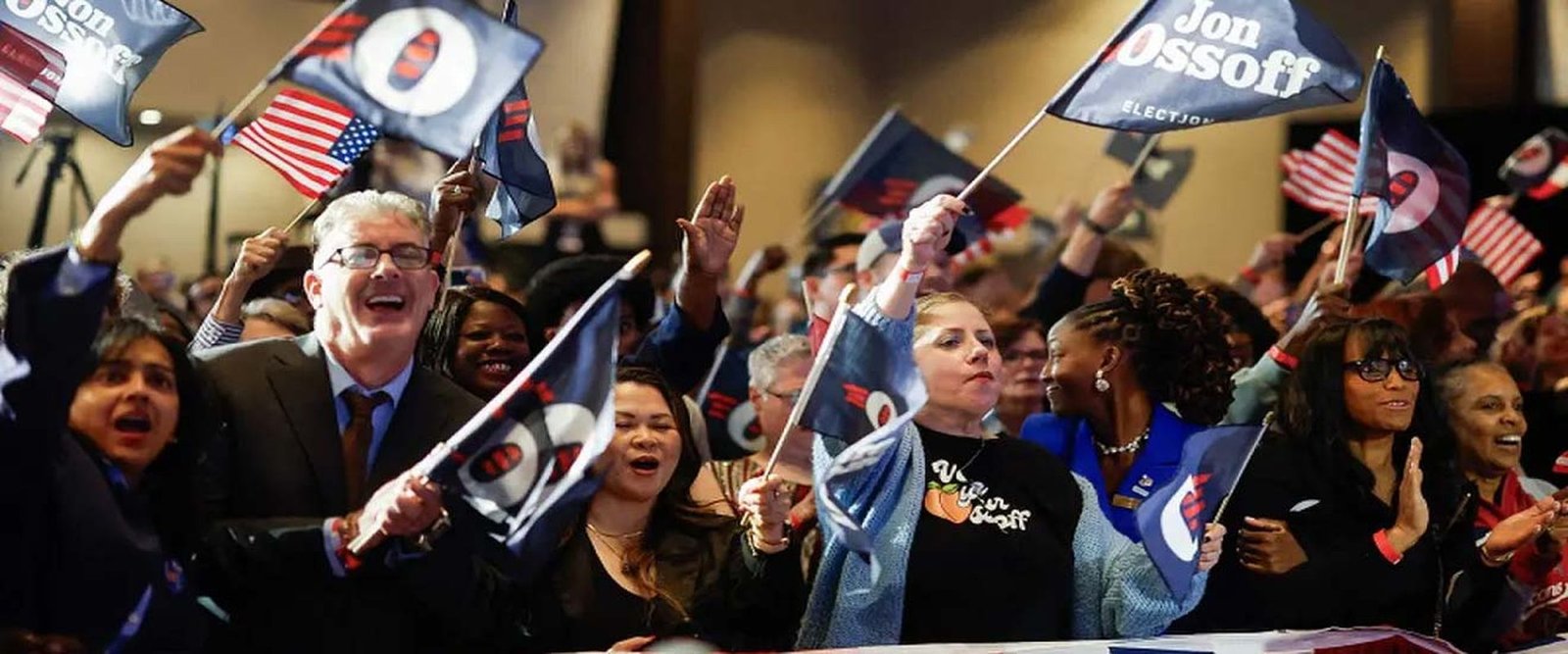
    Democrats sweep US midterms, win Senate and House

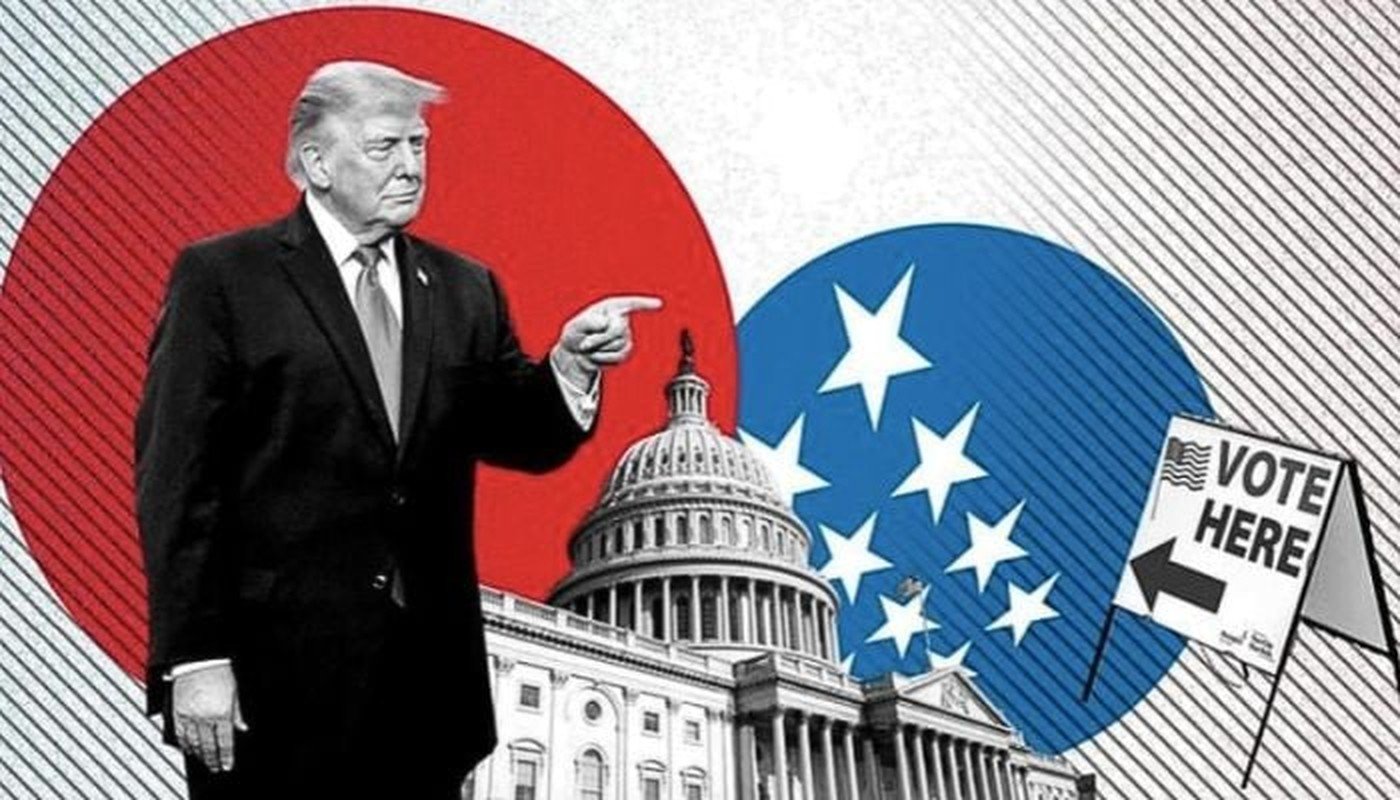
    The Democrats have won control of the United States Senate with 54 seats against 44 for the Republicans, and have also won the House of Representatives, in the 2026 midterm elections.

    According to live election coverage, the Democrats’ victory in both chambers marks a major shift in the balance of power in Washington. The party has vowed to rein in President Donald Trump after what it described as a resounding victory.

    President Trump has accepted the midterm results, blaming the Iran war and inflation for the defeat, according to the same coverage. The outcome comes after a campaign in which the cost of living and the war were central issues for voters.

    At least seven Muslims were elected to the US Congress in the midterm elections, a notable milestone in American politics. Democrats also lead the governor races, with 28 wins against 20 for the Republicans, according to the live results.

    Reactions to the outcome continued through the day. Turkish President Recep Tayyip Erdogan said he hoped the election results would promote regional peace. Meanwhile, with the midterms over, Democrats are turning to a wide-open race for their 2028 presidential nomination, with several contenders expected to emerge.

    Markets also responded to the outcome. The dollar edged lower as the election result cheered global markets, with investors weighing what a divided or Democrat-controlled Congress would mean for trade, spending and foreign policy.

    The results are being closely watched around the world, including in Pakistan and the wider region, because control of Congress shapes American policy on trade, aid and international affairs. Analysts say the new balance of power is likely to limit the president’s room to push through major legislation without bipartisan support.

    The White House has defended the president’s agenda and pledged to defy the odds after the losses, while Republican figures have debated the reasons for the defeat. Some have pointed to voter concerns about prices and the economy, while others have questioned campaign strategy.

    With counting in some races still under way, the final seat tallies may shift slightly, but the overall outcome is clear: the Democrats will control both the Senate and the House when the new Congress takes its seats.

  • Trump shrugs off midterm rout, congratulates Democrats

    Trump shrugs off midterm rout, congratulates Democrats

    United States President Donald Trump has brushed off the Republican Party’s heavy defeat in the midterm elections, congratulating Democrats on their victory and pledging to work with them in the remainder of his term.

    Democrats won control of both the House of Representatives and the Senate in Tuesday’s elections, in a result widely described as a blue wave. The outcome leaves Trump as a lame-duck president for the final two years of his presidency, with the opposition now able to block legislation and scrutinise his administration.

    Speaking to Fox News in a phone call after the results, Trump struck an unusually conciliatory note. He congratulated the Democrats, saying they had done a good job and fought hard, and said he looked forward to working with them. He also told the New York Times that he was willing to accept the results.

    At the same time, Trump sought to distance himself from his party’s showing, arguing that the outcome would have been different had he himself been on the ballot. He pointed to the size of his rallies and said his supporters had turned out for those events in huge numbers.

    Trump also acknowledged that the war with Iran had played a part in the defeat, while blaming high fuel costs as another driving factor behind the Republican losses. His vice president, JD Vance, had earlier said the Iran war was the reason for the defeat, a comment that set the tone for the party’s post-election soul-searching.

    In his first public appearance after the election, on Wednesday, Trump visited the construction site of the White House ballroom, where he spoke to workers as the project’s final beam was installed. He talked at length about the building work and only addressed the election results when reporters put questions to him afterwards.

    The Democratic victory, which included flipping seven Senate seats, gives the party control of Congress at a moment of deep voter anger over the cost of living and the Iran war. Democratic leaders are now expected to use their majorities to challenge the administration’s agenda, while Trump has signalled he is open to deals across the aisle.

  • Vance: ‘The reason we lost is the war’ after midterm rout

    Vance: ‘The reason we lost is the war’ after midterm rout

    Vice President JD Vance has blamed the war in Iran for the Republicans’ crushing defeat in the midterm elections, telling supporters in a post on Wednesday that the conflict was the decisive reason voters turned against his party. In unusually blunt language for a sitting vice president, Vance wrote that the reason Republicans lost was the war, and challenged anyone who disagreed to argue openly that losing the Senate for the next six years had been worth it.

    Vance’s remarks came only hours after Democrats swept races across the country, regaining control of both the House of Representatives and the Senate. The scale of the defeat stunned Republican leaders: voters in conservative strongholds who had propelled President Donald Trump to a second term two years ago swung dramatically toward Democrats, driven, according to early analysis, by deep frustration over the war, anxiety over the high cost of living, and anger at Trump’s stewardship of the country.

    In his post, Vance rejected the idea that weak Republican turnout explained the result. He said his party’s voters did show up, but that many of them voted for Democrats instead. Citing a pollster who had studied voters who backed Trump in 2024 but abandoned Republicans in 2026, Vance listed four issues those voters raised above all others: ending the war, focusing on the cost of living, putting America first, and changing the relationship with Israel.

    The vice president also sought to play down any rift with Trump, saying the president himself had acknowledged on election night that the Iran war cost Republicans the midterms. Trump’s own comments, however, were far more measured. He told the Wall Street Journal that Iran was a piece of the defeat, but insisted he had done the right thing by launching the war and would do it again.

    Exit polling underlined how heavily the war weighed on voters. According to an NBC News exit poll, 74 percent of respondents said the war with Iran was a crucial or major factor in their vote, while only 37 percent said the United States had made the right decision to take military action against Iran. An October poll from the Pew Research Center found 65 percent disapproving of the way Trump has handled the conflict.

    Tuesday’s wave also cost Republicans Vance’s old Senate seat in Ohio, where Democrat Sherrod Brown completed a political comeback by defeating former Lieutenant Governor Jon Husted, a race Vance had described as personal. Vance’s intervention now raises questions about the political direction of the administration, with officials telling reporters that Trump is still weighing whether to restart major combat operations against Iran. For a vice president widely seen as a leading contender for the 2028 Republican presidential nomination, the post reads as an attempt to draw a line under the war and to force an honest reckoning inside his own party about what went wrong.

  • Trump: no immediate Iran strike, US ready if needed

    Trump: no immediate Iran strike, US ready if needed

    United States President Donald Trump has said the US has no immediate plan to strike Iran, while warning that American forces remain fully prepared to act if necessary. The remarks came in a telephone interview with the Financial Times on Tuesday, 3 November, given hours before midterm polling stations closed.

    According to reports of the interview, Trump said Washington was getting what it wanted from the current stand-off with Tehran. Asked about remarks by Israeli Prime Minister Benjamin Netanyahu suggesting that an attack could come soon, possibly this weekend, Trump replied that he was ready and American forces were ready, but there might be no reason to act.

    The interview, reported to have lasted about six minutes, was Trump’s clearest public statement yet on the next phase of the confrontation, which has lasted for months. Trump said the US was not really in a war on the scale of other major conflicts, pointing to earlier American strikes, including the use of B-2 bombers against Iranian nuclear capability and a later operation, while arguing that the current situation did not amount to a full-scale war.

    Trump also confirmed that indirect discussions with Iran were continuing, and said those talks would be allowed to run their course. Reports said the discussions cover Iran’s stockpile of enriched uranium, and that no deadline had been set for a deal. The president said he would not disclose any attack plans in advance, leaving open the possibility of further military action even while ruling out an immediate strike.

    The timing of the interview gave it added weight. It came after reports that the US military was preparing for a possible fresh strike as early as Wednesday, and after Netanyahu was reported to be pressing for strikes soon after the midterms. By saying there was no immediate plan, Trump appeared to push back against expectations of an attack in the days immediately following the vote.

    Iranian officials responded the same day, according to reports, with a senior security official saying Washington must address Iran’s conditions fully before Tehran would reopen the Strait of Hormuz. Mediators in Qatar were also reported to be seeking an interim agreement to build confidence between the sides, underlining that diplomacy remains active alongside the military warnings.

    For now, the message from Washington is deliberately two-sided: reassurance that no attack is imminent, paired with an unmistakable warning that one remains possible. Whether that balance holds will depend on the course of the talks and on events in the region in the days after the election.

  • US midterms: Democrats flip North Carolina Senate seat

    US midterms: Democrats flip North Carolina Senate seat

    Early projections from the United States midterm elections point to an encouraging night for the Democrats, with the party flipping a Republican-held Senate seat in North Carolina while holding key seats in Georgia and New Hampshire. The results, projected by major American outlets on election night, still leave control of both chambers of Congress undecided, with counting continuing in the closest races.

    The night’s first major Senate flip came in North Carolina, where former Democratic governor Roy Cooper was projected to defeat Republican Michael Whatley, a former chairman of the Republican National Committee. The seat had been held by Republicans since 2015 and was vacated by Senator Thom Tillis. Cooper’s victory was described by commentators as one of the most consequential Democratic wins of the night, as the party fights to overturn the Republicans’ 53-47 Senate advantage.

    In Georgia, Democratic Senator Jon Ossoff was projected to hold his seat, defeating Republican challenger Mike Collins, while in New Hampshire, Democrat Chris Pappas was projected to win the Senate race against former Republican senator John Sununu. According to reports, Pappas becomes the first openly gay man elected to the United States Senate.

    Not every early result went the Democrats’ way. In Florida, Republican Senator Ashley Moody was projected to hold her seat against Democrat Angie Nixon, although the margin was reported to be closer than many had expected. In South Carolina, Democrat Annie Andrews was reported to be holding a slim lead over Republican Senator Darline Graham with around half of precincts counted.

    Democrats need a net gain of four Senate seats to take control of the chamber, and early counts showed that target still well out of reach. One live count in the early hours of Wednesday put the Senate at 36 to 31 including seats not contested this year, with neither chamber called. In the House of Representatives, where all 435 seats were contested, early called seats stood at 11 for the Democrats and 8 for the Republicans, with 218 seats needed for a majority.

    There were notable House results too. In North Carolina’s 11th Congressional District, Democrat Jamie Ager was reported to have flipped a seat Republicans had held for more than a decade, defeating Republican Jennifer Balkcom. Democrats also claimed victory in Florida’s 22nd Congressional District, an area closely associated with President Donald Trump. In New Jersey, Democratic Representative LaMonica McIver won re-election, and in Pennsylvania, Chris Rabb won the state’s 3rd Congressional District.

    In Illinois, NBC News and Fox News projected that Lieutenant Governor Juliana Stratton would become the state’s next senator. With many tight races still uncalled, officials and analysts cautioned that final control of Congress may not be known for days, as has happened in previous midterm elections.

  • Trump ends $4bn Israel aid: ‘rich enough’

    Trump ends $4bn Israel aid: ‘rich enough’

    The United States will no longer provide military aid to Israel after the end of this year, President Donald Trump has said, describing the change as an agreement reached with Israeli Prime Minister Benjamin Netanyahu. The announcement marks a sharp break in a funding relationship that has lasted for decades, and it immediately raised questions about how the timetable would work in practice.

    Trump explained the decision during an appearance on Fox News, where he argued that Israel no longer needed the assistance. He said some Democrats and left-wing politicians had been using American funding for Israel as a way to criticise Republicans, and he presented ending the aid as a way of removing that argument. In his words, Israel was wealthy enough to fund its own defence, and the sums involved were substantial.

    The president put the annual figure at about $4 billion, and he said the support would stop fairly quickly once the year ended. At the same time, he added a clear condition: if Israel were in trouble during a war, the United States would step in. He said assistance could be provided quickly in such a situation, and that Netanyahu was comfortable with the arrangement after the two leaders discussed it.

    That qualification matters because the two messages point in different directions. On one hand, regular military aid would come to an end. On the other, emergency help would remain available if a conflict created an urgent need. The distinction may become important in the coming months, as allies and critics alike try to work out whether the change is a clean break or a shift from routine funding to case-by-case support.

    The report also sets out the background to the existing arrangement. Israel currently receives $3.8 billion a year in military assistance from the United States under an agreement signed in 2016, and that agreement runs until 2028. The report does not explain how Trump’s end-of-year timetable fits alongside that longer agreement, leaving an obvious question unanswered for now.

    For Israel, the practical effect will depend on which figure and which timetable proves correct. If routine aid ends this year, Israel would need to cover a large part of its defence spending from its own budget sooner than previously planned. If the 2016 agreement continues to govern the relationship, the change may turn out to be more political than financial in the short term.

    For the United States, the move also carries domestic political weight. Funding for Israel has long been a sensitive issue in American politics, with supporters arguing it underpins a key alliance and critics questioning the scale of the spending. By framing the decision as both a saving and a response to political attacks, Trump has tied a foreign policy change directly to the domestic debate.

    What happens next is likely to be watched closely in both countries. Officials will need to clarify whether the end-of-year date is a firm deadline, how any emergency assistance would be decided, and whether the 2016 agreement will be formally revised or left in place. Until those details are published, the announcement should be read as a stated intention rather than a completed legal change.

  • Trump Calls Nobel Pick ‘Disgraceful’ After Pillay Win

    Trump Calls Nobel Pick ‘Disgraceful’ After Pillay Win

    US President Donald Trump has launched a fresh attack on the Norwegian Nobel Committee after South African judge Navi Pillay was named the winner of the 2026 Nobel Peace Prize, calling the decision “disgraceful” and insisting the award should have gone to him.

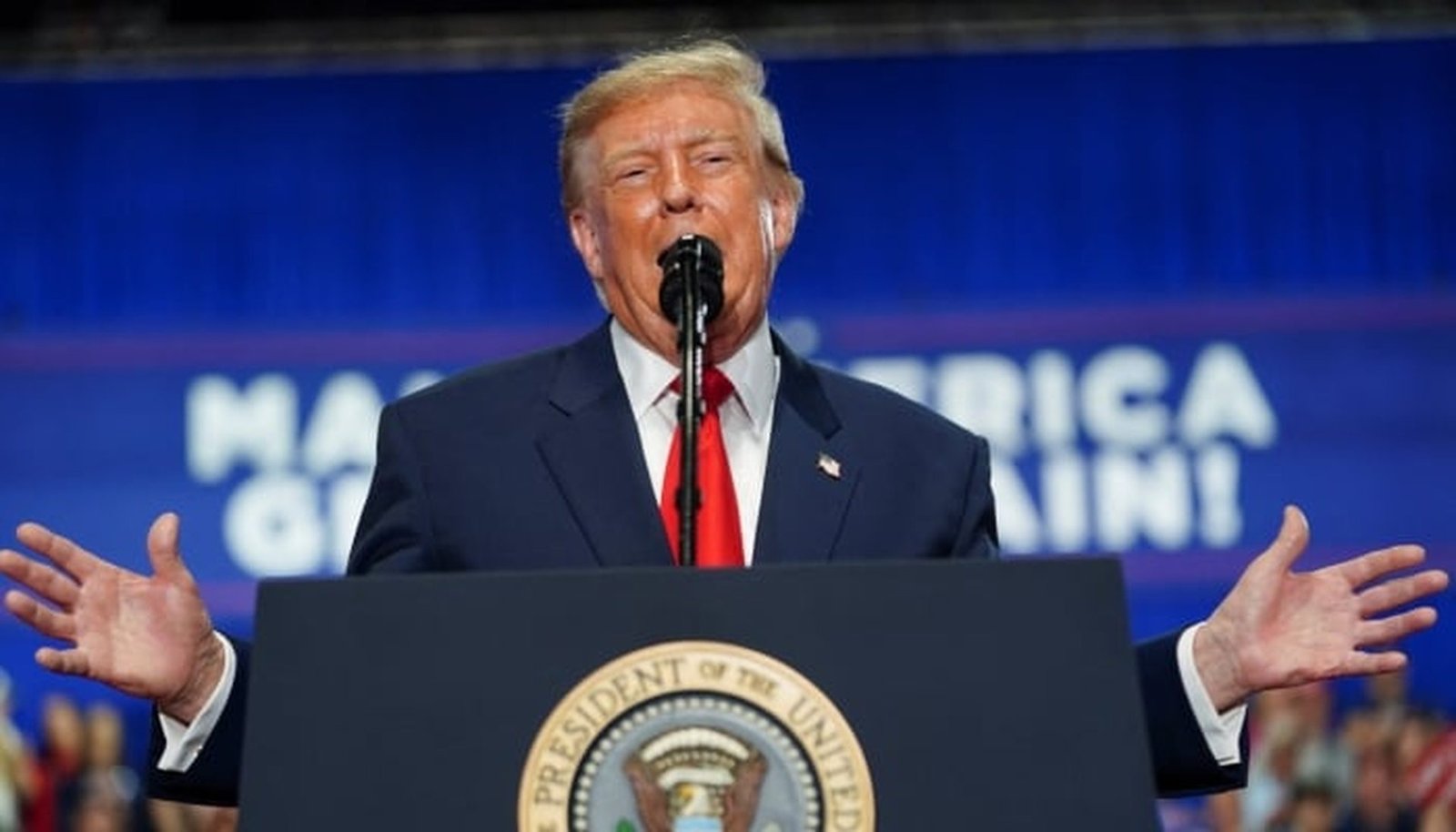
    Addressing supporters at a rally in Syracuse, New York on Friday, Trump said he had “never heard of” Pillay before her victory was announced. “The United States of America, represented by me as your president, should have received the Nobel Peace Prize, but didn’t,” he said, according to international media reports, describing the committee’s choice as “a disgraceful and embarrassing decision” that left “an indelible stain on the country of Norway”.

    Pillay, one of South Africa’s most prominent jurists, was honoured on Friday for her decades of work against war crimes and crimes against humanity. She headed the international tribunal that prosecuted those accused in the Rwanda genocide and last year presided over a United Nations commission that accused Israel of genocide in Gaza. She currently sits as a judge in a case before the International Court of Justice in which Myanmar stands accused of genocide.

    The chairman of the Norwegian Nobel Committee, Jorgen Watne Frydnes, said Pillay had been “instrumental in ensuring that war crimes, crimes against humanity, and genocide are prosecuted”. The prize comes with a gold medal, a diploma and prize money of $1.2 million.

    Trump has made little secret of his desire for the prize since returning to the White House in January 2025. Experts in Oslo, quoted by international outlets before the announcement, argued that his war on Iran, his territorial ambitions over Greenland, his hard line on migration and his attacks on multilateral institutions and the press had disqualified him.

    In a lighter moment after the announcement, Pillay joked to an applauding crowd that she might share the prize with Trump if they clapped a little more — an apparent reference to Venezuelan opposition leader Maria Corina Machado, who presented her own Nobel gold medal to Trump after winning the prize last year.

    The controversy unfolded as the Trump administration also moved to sanction the International Criminal Court in the wake of the Nobel announcement, a step the court condemned as an “assault on the rule of law and on the very foundations of the international legal order”, The News reported. Pillay, who has spent her career defending international justice, is seen by supporters as a figure the award places squarely at the centre of the global debate on accountability.

  • Trump Yet to Decide on Live Broadcast of Fort Hood Shooter’s Execution

    Trump Yet to Decide on Live Broadcast of Fort Hood Shooter’s Execution

    Pentagon announced the December 3 firing-squad execution would be livestreamed — VP Vance says he won’t watch

    US President Donald Trump has approved the death sentence for Fort Hood attacker Nidal Malik Hasan but says no final decision has been made on whether the execution will be shown live.

    Speaking to reporters, Trump confirmed the execution would go ahead via firing squad, adding that a determination on the live broadcast was still being made.

    Vice President JD Vance, meanwhile, expressed uncertainty about the Pentagon’s plans. He said he did not know whether the livestream would actually happen — and that he would not watch it even if it did.

    The Pentagon had earlier announced that the Fort Hood convict would be executed by firing squad on December 3 and that the execution would be broadcast live.

    Hasan was sentenced for the 2009 shooting at the Fort Hood military base in Texas, in which 13 people were killed and 32 others were wounded.