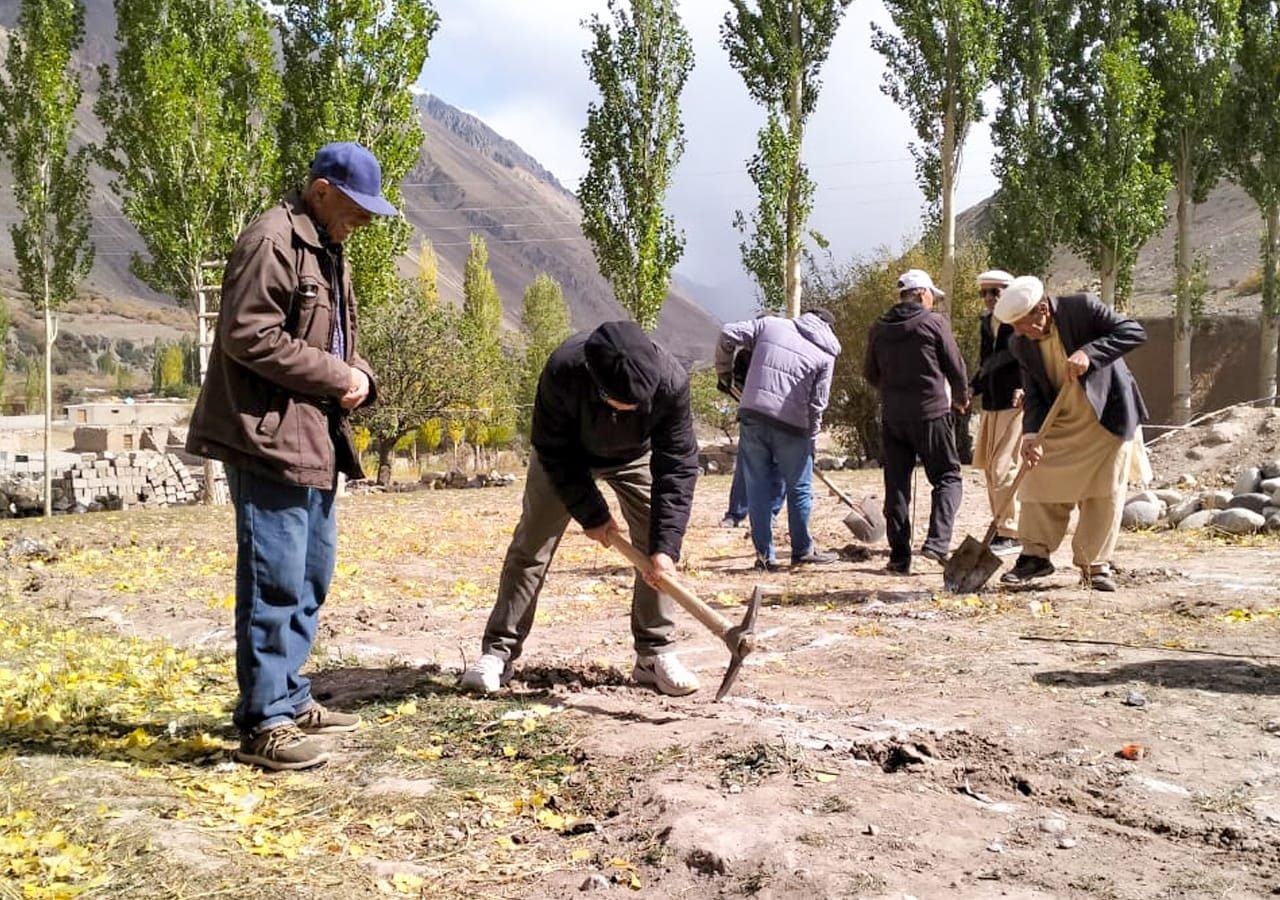
Families displaced by persistent seismic activity and a January earthquake in Gilgit-Baltistan’s Chipurson Valley are leading the construction of weather-resilient, thermally insulated homes ahead of the harsh mountain winter. The community-led effort is turning recovery into a practical model for disaster-resilient housing in mountainous regions.
After the earthquake, emergency relief including tents, food, bedding and water, sanitation and hygiene (WASH) support reached the affected families. Joint seismic assessments were then conducted with the Geological Survey of Pakistan to identify safer zones for reconstruction, so that new homes would not be built on vulnerable ground.
Under the “RUSHAN Chipurson 2026–2027” project, implemented by Focus Humanitarian Assistance Pakistan (FOCUS) along with the Ismaili Imamat, Ismaili Councils, government bodies and partner agencies, local residents are contributing labour and materials to build lightweight prefabricated shelters.
Construction began in October, and work has commenced on 98 shelter substructures within 45 days, with 76 reaching plinth level. Prefabricated components have been dispatched for on-site installation this week, alongside upgraded WASH facilities, livestock shelters and cold-weather support for vulnerable households.
The pace of work reflects the urgency of the mountain winter, when temperatures fall sharply and families need warm, secure shelter. By building the homes themselves, residents are shaping a recovery that fits the valley’s conditions and their own needs, rather than waiting for solutions designed elsewhere.
FOCUS Pakistan Chief Executive Officer Nusrat Nasab said communities were actively leading their own recovery, establishing a practical model for disaster-resilient housing in mountainous regions. She said the approach showed what could be achieved when affected people were given the tools and support to rebuild on their own terms.
Ismaili Council for Pakistan President Nizar Mewawalla emphasised that the priority remained helping displaced families restore their lives and build long-term resilience. He said the focus was not only on putting roofs over heads before winter, but on helping families return to normal life with dignity and security.
The project continues alongside wider support for the valley, including improved water and sanitation facilities and help for the most vulnerable households as winter sets in. For the families of Chipurson, the new shelters represent both protection from the cold and a step towards a more secure future in a valley that has learned to live with the mountains’ risks.
Leave a Reply