Category: Business

Business and economy news — markets, trade and finance. کاروباری خبریں۔

  • پاکستان اسٹاک ایکسچینج: کے ایس ای 100 میں 814 پوائنٹس کی کمی

    پاکستان اسٹاک ایکسچینج: کے ایس ای 100 میں 814 پوائنٹس کی کمی

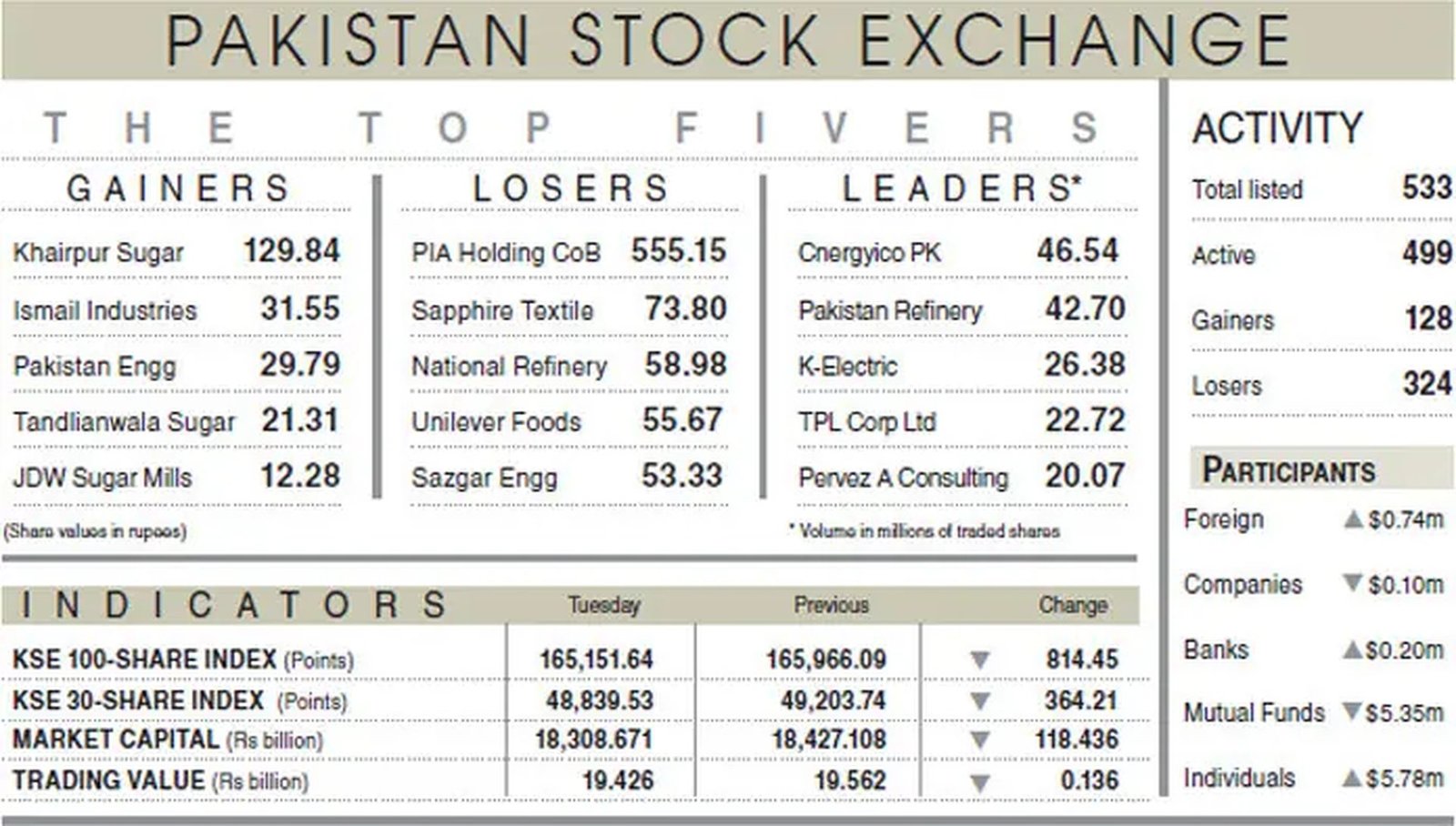
    کراچی: پاکستان اسٹاک ایکسچینج (پی ایس ایکس) میں منگل کو بھی فروخت کا دباؤ برقرار رہا اور بینچ مارک کے ایس ای 100 انڈیکس مسلسل دوسرے سیشن میں گراوٹ کا شکار رہا۔ بروکریج فرم ٹوپ لائن سیکیورٹیز لمیٹڈ کے مطابق انڈیکس 814.44 پوائنٹس یعنی 0.49 فیصد کی کمی سے 165,151.64 کی سطح پر بند ہوا۔

    سیشن کے دوران انڈیکس میں خاصی اتار چڑھاؤ دیکھی گئی اور یہ 165,111 سے 166,425 پوائنٹس کی رینج میں ٹریڈ ہوا۔ فروخت کا مسلسل دباؤ مارکیٹ کی مجموعی کارکردگی پر اثرانداز ہوتا رہا جبکہ سرمایہ کاروں کا رویہ احتیاط پر مبنی رہا۔

    ڈان کی رپورٹ کے مطابق مارکیٹ میں گراوٹ کی بنیادی وجہ مشرق وسطیٰ میں جاری تنازع کے باعث بین الاقوامی تیل کی بڑھتی قیمتوں اور خیبر پختونخوا میں گورنر راج اور ایمرجنسی کے نفاذ کے بعد پیدا ہونے والی سیاسی غیر یقینی صورتحال ہے۔ ان عوامل نے میکرو اکنامک استحکام کے حوالے سے شکوک و شبہات کو ہوا دی ہے، جبکہ بڑھتے ہوئے افراط زر کے دباؤ پر بھی تشویش پائی جاتی ہے۔

    انڈیکس میں کمی میں نمایاں کردار ادا کرنے والے اہم اسٹاکس میں اٹک ریفائنری، اینگرو ہولڈنگز، سسٹمز لمیٹڈ، حبیب بینک اور حب پاور شامل ہیں۔ ان پانچ اسٹاکس نے مل کر بینچ مارک کو تقریباً 348 پوائنٹس نیچے دھکیلا اور ان کی کمزوری نے مندی کے رجحان کو مزید تقویت دی۔

    عارف حبیب لمیٹڈ کے ڈپٹی ہیڈ آف ٹریڈنگ علی نجیب نے کہا کہ مارکیٹ کا آغاز مثبت ہوا تھا اور انڈیکس نے 166,426 کی انٹرا ڈے بلندی کو چھوا، لیکن بعد میں دباؤ بڑھا اور انڈیکس 165,111 کی کم ترین سطح تک آ گیا۔ ان کے مطابق بین الاقوامی تیل کی بڑھتی قیمتوں نے سرمایہ کاروں کے جذبات کو متاثر کیا اور دن بھر محتاط ٹریڈنگ دیکھنے میں آئی۔

    کارپوریٹ محاذ پر اٹک گروپ کی کمپنیوں نے مالی سال 2027 کی پہلی سہ ماہی کے نتائج کا اعلان کیا۔ پاکستان آئل فیلڈز نے 8.2 ارب روپے (فی حصص آمدنی 28.86 روپے) کا بعد از ٹیکس منافع ظاہر کیا، جو سال بہ سال 51 فیصد زیادہ ہے، جبکہ اٹک پیٹرولیم کی آمدنی 74 فیصد سالانہ بڑھ کر 6.64 ارب روپے (فی حصص آمدنی 53.36 روپے) ہو گئی، جس میں پٹرولیم کی بلند قیمتوں، انوینٹری گینز اور بہتر دیگر آمدنی کا کردار رہا۔ اٹک ریفائنری کا خالص منافع سالانہ بنیادوں پر تیرہ گنا بڑھ کر 18.6 ارب روپے تک پہنچ گیا، جو گزشتہ سال کی اسی مدت میں 1.45 ارب روپے تھا۔

    مارکیٹ کی سرگرمی میں قدرے بہتری دیکھی گئی اور ٹریڈنگ والیوم 20.46 فیصد بڑھ کر 446.84 ملین شیئرز ہو گیا، جبکہ کل ٹرن اوور 0.69 فیصد کی معمولی کمی سے 19.3 ارب روپے رہا۔ سینرجیکو پی کے 46.5 ملین شیئرز کے ساتھ والیوم چارٹ میں سرفہرست رہی۔

    ماہرین کے مطابق تیل کی بڑھتی قیمتوں اور سیاسی غیر یقینی صورتحال کے پیش نظر مارکیٹ میں اتار چڑھاؤ جاری رہ سکتا ہے۔ محتاط سرمایہ کاری کا رویہ اور منتخب خریداری بحالی میں مددگار ثابت ہو سکتی ہے، تاہم سرمایہ کاروں کو مضبوط بنیادوں والے اسٹاکس کو ترجیح دینی چاہیے اور عالمی پیش رفت پر نظر رکھنی چاہیے۔

  • Pakistan GDP Growth Revised Down to 3.65% for FY26

    Pakistan GDP Growth Revised Down to 3.65% for FY26

    Islamabad: The government has revised Pakistan’s gross domestic product growth slightly downward to 3.65 per cent for the fiscal year 2025-26, trimming the earlier provisional estimate of 3.70 per cent. The revision was approved on Monday at the 118th meeting of the National Accounts Committee (NAC), held at the Pakistan Bureau of Statistics (PBS) in Islamabad.

    According to the PBS, the revised national accounts place the size of Pakistan’s economy at Rs126.4 trillion, equivalent to $450.4 billion, in FY26, compared with Rs114.9 trillion or $408.7 billion in the previous fiscal year. Per capita income is estimated at Rs531,897, or $1,896, up from earlier dollar estimates, though it remains the lowest in the region.

    The committee attributed the downward adjustment to a mild slowdown in the industrial and services sectors. For FY26, agriculture growth was revised upward to 3.50 per cent from 2.89 per cent, while industry was lowered to 3.34 per cent from 3.51 per cent and services to 3.81 per cent from 4.09 per cent.

    Within agriculture, important crops improved from 0.65 per cent to 1.59 per cent on the back of wheat and maize, while other crops surged from 2.43 per cent to 4.28 per cent, helped by higher production of pulses (6.3pc), fruits (1.3pc), tomatoes (44pc), oilseeds (5.4pc) and green fodder (2.4pc). Livestock growth eased slightly to 3.71 per cent, while forestry expanded by 10.80 per cent and fishing by 1.39 per cent.

    Industry’s weaker reading reflects a decline in large-scale manufacturing from 6.11 per cent to 5.01 per cent. Automobiles posted a striking 57.77 per cent expansion, but pharmaceuticals, iron and steel, chemicals and leather products all contracted.

    The final quarter slowed sharply: GDP grew just 2 per cent in Q4 of FY26, far below the 6.07 per cent a year earlier, as industry contracted 4.70 per cent on a 33.19 per cent fall in electricity, gas and water supply. Earlier quarters were revised upward: Q1 to 3.89 per cent, Q2 to 4.31 per cent and Q3 to 4.42 per cent.

    The services sector, the largest part of the economy, saw growth trimmed to 3.81 per cent. Wholesale and retail trade fell to 2.37 per cent from 3.71 per cent on weaker manufacturing and imports, but transportation and storage improved to 3.23 per cent, information and communication jumped to 9.53 per cent and finance and insurance rose to 4.23 per cent.

    The committee also revised FY25 growth down to 3.11 per cent from 3.18 per cent. The NAC’s 3.65 per cent estimate sits close to the outlook of multilateral lenders: the International Monetary Fund has projected 3.6 per cent, while the World Bank and the Asian Development Bank each expect 3.7 per cent, and the State Bank of Pakistan sees growth near 3.7 per cent.

  • سیال پیرس 2026: پاکستانی مصنوعات کی دھوم، 37 کمپنیاں شریک

    سیال پیرس 2026: پاکستانی مصنوعات کی دھوم، 37 کمپنیاں شریک

    فرانس کے دارالحکومت پیرس میں دنیا کی معروف بین الاقوامی فوڈ نمائشوں میں سے ایک سیال پیرس 2026 کا آغاز ہو گیا ہے جو 17 سے 21 اکتوبر تک جاری رہے گی۔ بزنس ریکارڈر کے مطابق افتتاحی روز پاکستان نے نمایاں تاثر قائم کیا اور پاکستانی پویلین توجہ کا مرکز رہا۔

    فرانس میں پاکستان کی سفیر ممتاز زہرا بلوچ نے پاکستان پویلین کا افتتاح کیا اور اس موقع پر پاکستان کی صلاحیت کو اجاگر کیا کہ وہ بین الاقوامی منڈیوں میں معیاری غذائی اور زرعی مصنوعات کا مسابقتی سپلائر بن سکتا ہے۔

    ٹریڈ ڈویلپمنٹ اتھارٹی آف پاکستان (ٹی ڈی اے پی) کے زیراہتمام 37 پاکستانی کمپنیاں نمائش میں شریک ہیں، جو چاول، پراسیسڈ فوڈز، ہمالیائی گلابی نمک، مشروبات اور دیگر غذائی مصنوعات پیش کر رہی ہیں۔ ان میں سے 22 کمپنیوں کا تعلق چاول کے شعبے سے ہے، جو پاکستانی برآمدات میں باسمتی چاول کی اہمیت کو ظاہر کرتا ہے۔

    افتتاحی روز پکی ہوئی پاکستانی بریانی نمائش کی بڑی توجہ کا مرکز رہی، جس نے ملک کے مزیدار کھانوں کے ورثے، منفرد ذائقوں اور اعلیٰ معیار کے چاول کی طرف سیاحوں اور خریداروں کی توجہ مبذول کرائی۔

    پہلے روز کی ابتدائی آراء کے مطابق یورپی خریداروں کی جانب سے خاص طور پر پاکستانی باسمتی چاول کے حوالے سے حوصلہ افزا ردعمل سامنے آیا ہے۔ برآمدکنندگان نے آرڈرز کے امکانات کے حوالے سے مضبوط دلچسپی اور روشن تجارتی امکانات کی اطلاع دی ہے۔

    ٹی ڈی اے پی نے نمائش میں آزادانہ طور پر شریک پاکستانی کمپنیوں کے لیے ویزا کے انتظامات میں بھی سہولت فراہم کی، جس سے اس اہم بین الاقوامی پلیٹ فارم پر پاکستانی برآمدکنندگان کی وسیع تر شرکت ممکن ہوئی۔

    پاکستان کی اس نمائش میں شرکت نئی منڈیوں کی تلاش، بین الاقوامی خریداروں کے ساتھ روابط مضبوط بنانے اور ویلیو ایڈڈ اور روایتی غذائی مصنوعات کی برآمدات بڑھانے کی وسیع کوششوں کا حصہ ہے۔ سیال پیرس جیسی نمائش پاکستانی کمپنیوں کو یورپ اور دیگر خطوں کے درآمدکنندگان اور تقسیم کاروں کے ساتھ طویل مدتی تجارتی شراکت داریاں استوار کرنے کا اہم موقع فراہم کرتی ہے۔

  • PSX Loses Fourth Straight Week, KSE-100 Down 670 Points

    PSX Loses Fourth Straight Week, KSE-100 Down 670 Points

    KARACHI: The Pakistan Stock Exchange extended its losing streak to a fourth consecutive week as domestic political uncertainty and geopolitical tensions weighed on investor sentiment, amid inflation concerns and expectations of an interest rate hike.

    The benchmark KSE-100 index shed 670 points, or 0.4 per cent week-on-week, to close at 166,419, according to Arif Habib Ltd. Elevated crude oil prices, driven by US-Iran tensions, and expectations of monetary tightening by the State Bank of Pakistan ahead of its upcoming policy meeting added to the pressure on the market.

    According to AKD Securities, the index recorded its steepest sell-off on Monday, losing 1,965 points after emergency and governor’s rule were imposed in PTI-ruled Khyber Pakhtunkhwa. The market subsequently recovered some of the losses as the initial selling pressure eased.

    Oil prices and geopolitical drag

    Brent crude rose to $107 per barrel during the week amid disruptions to energy supplies through the Strait of Hormuz and renewed attacks on Saudi energy infrastructure, despite the International Energy Agency’s announcement of additional emergency oil reserve releases.

    Sector-wise, exploration and production companies led the decline, dragging the index down by 330 points, followed by banks at 319 points, cement at 136 points, investment banks at 109 points and power companies at 76 points. Among individual stocks, Oil and Gas Development Company contributed most to the decline, shedding 161 points, followed by United Bank with 136 points, Habib Bank and Pakistan Telecommunication Company with 111 points each, and Pakistan Oilfields with 95 points.

    Fertiliser stocks provided the biggest support, adding 171 points, followed by oil marketing companies with 63 points, refineries with 60 points, pharmaceuticals with 41 points and fast-moving consumer goods companies with 22 points. Fauji Fertiliser Company was the top individual contributor, adding 85 points, followed by Systems Ltd with 81 points, Pakistan State Oil with 62 points, Engro Fertilisers with 60 points and Attock Refinery with 44 points.

    Average daily trading volume rose 5.2 per cent to 449 million shares, while average value traded fell 1.5 per cent to $65 million week-on-week.

    Macroeconomic backdrop

    On the economic front, the country’s current account deficit swelled to $356 million in September from $73 million in August and a $123 million surplus a year earlier, driven by a widening trade gap, according to AKD Securities. The cumulative deficit for the first quarter of FY27 reached $874 million, up from $755 million a year ago.

    The trade deficit widened 5 per cent year-on-year and 7 per cent month-on-month to $3.53 billion in September. Exports rose 18 per cent year-on-year to $2.96 billion, while imports increased 11 per cent to $6.49 billion. In the first quarter, the trade gap widened 15 per cent to $10.77 billion, with exports at $8.45 billion and imports at $19.21 billion.

    Worker remittances increased 13 per cent year-on-year to $3.6 billion in September, while the State Bank’s foreign exchange reserves rose by $16 million to $21.47 billion as of October 9. The government raised Rs685.5 billion against a target of Rs550 billion in a treasury bills auction, with the three-month tenor attracting the largest amount at Rs310.1 billion.

    Automobile sales, including cars, light commercial vehicles, vans and jeeps, fell 3 per cent month-on-month and 12 per cent year-on-year to 15,104 units in September, according to the Pakistan Automotive Manufacturers Association. However, cumulative sales rose 19 per cent to 50,480 units in the first quarter. Large-scale manufacturing grew 0.7 per cent year-on-year in August but declined 5 per cent month-on-month.

    Pakistan’s real effective exchange rate rose to 108.93 in September from 107.92 in August, while the rupee appreciated marginally by 0.03 per cent to close at Rs276.91 against the dollar. According to Arif Habib Ltd, the PSX added a record 25,280 investor accounts in September, taking total unique identification numbers to 656,000, up 55 per cent from a year earlier. Meanwhile, gross inflows under the Roshan Digital Account scheme reached $14.16 billion by September.

    Analysts said geopolitical developments and the September-quarter results season, beginning next week, would remain key market drivers. The KSE-100 was trading at a price-to-earnings ratio of 7.4 times, with a dividend yield of 6.8 per cent, and they noted that improving economic indicators and easing inflation could support the market.

  • پی ایس ایکس: کے ایس ای 100 انڈیکس مثبت رجحان میں بند

    پی ایس ایکس: کے ایس ای 100 انڈیکس مثبت رجحان میں بند

    پاکستان اسٹاک ایکسچینج میں کاروباری ہفتہ مثبت نوٹ پر ختم ہوا، اور جمعہ کو بینچ مارک کے ایس ای 100 انڈیکس 233.55 پوائنٹس کے اضافے سے 166,419.72 پوائنٹس پر بند ہوا۔ دن کے دوران انڈیکس میں اتار چڑھاؤ دیکھا گیا، تاہم آخری گھنٹوں میں خریداری کے رجحان نے مارکیٹ کو مثبت زون میں پہنچا دیا۔

    کاروبار کا آغاز منفی رجحان کے ساتھ ہوا اور انڈیکس ایک موقع پر 165,956.51 پوائنٹس کی کم ترین سطح تک گر گیا، لیکن آخری سیشن میں تیزی دیکھی گئی جس سے ہفتے کا اختتام مثبت ہوا۔

    محدود دائرے میں کاروبار

    بروکریج ہاؤس ٹاپ لائن سیکیورٹیز کی رپورٹ کے مطابق محدود دائرے میں کاروبار کی وجہ محرکات کا فقدان اور خام تیل کی بلند قیمتیں ہوسکتی ہیں۔

    انڈیکس کو سب سے زیادہ سہارا ایس وائی ایس، یو بی ایل، ایم سی بی، بی اے ایچ ایل اور ای ایف ای آر ٹی کے حصص نے دیا، جنہوں نے مجموعی طور پر 269 پوائنٹس کا مثبت اضافہ کیا۔ دوسری جانب او جی ڈی سی، لکی سیمنٹ، ایم ای بی ایل، پی ٹی سی اور اینگرو ہولڈنگز کے حصص کی قدر میں کمی سے انڈیکس پر مجموعی طور پر 223 پوائنٹس کا منفی اثر پڑا۔

    جمعرات کو بھی مارکیٹ میں تیزی رہی تھی، جب بینچ مارک انڈیکس 768.66 پوائنٹس کے اضافے سے 166,186.17 پوائنٹس پر بند ہوا تھا۔ اس روز تقریباً 52 کروڑ حصص کا کاروبار ہوا جس کی مالیت 23 ارب روپے سے زائد رہی، جبکہ مارکیٹ کی مجموعی مالیت میں 83 ارب روپے کا اضافہ ہوا تھا۔

    ایف بی آر نے گوشواروں کی آخری تاریخ بڑھا دی

    کاروبار کے دوران ایک اہم پیش رفت میں فیڈرل بورڈ آف ریونیو (ایف بی آر) نے ٹیکس سال 2026 کے انکم ٹیکس گوشوارے جمع کرانے کی آخری تاریخ میں مزید توسیع کرتے ہوئے اسے 31 اکتوبر 2026 کردیا۔ اس فیصلے سے ٹیکس دہندگان کو گوشوارے جمع کرانے کے لیے مزید دو ہفتوں کی مہلت مل گئی ہے۔

    جمعہ کو حصص بازار میں مجموعی طور پر 498 کمپنیوں کے حصص کا کاروبار ہوا، جن میں سے 211 کی قیمتوں میں اضافہ، 254 میں کمی ہوئی، جبکہ 33 کمپنیوں کے حصص کی قیمتیں مستحکم رہیں۔ حجم کے لحاظ سے پاکستان ریفائنری 3 کروڑ 84 لاکھ 20 ہزار حصص کے ساتھ سرفہرست رہی، جبکہ سنرجیکو پاکستان کے 3 کروڑ 71 لاکھ 40 ہزار اور کے الیکٹرک کے 2 کروڑ 79 لاکھ 80 ہزار حصص کا کاروبار ہوا۔

    عالمی منڈیوں کی صورت حال

    عالمی منڈیوں میں جمعہ کو ایشیائی اسٹاک مارکیٹوں میں بحالی دیکھی گئی، جہاں ایک روز قبل ٹیکنالوجی کمپنیوں کے حصص میں بھاری فروخت ہوئی تھی۔ جاپان کے نکیئی انڈیکس میں 1.8 فیصد، جنوبی کوریا کے کوسپی انڈیکس میں 2.8 فیصد اور ہانگ کانگ کے ہینگ سینگ انڈیکس میں 1.1 فیصد اضافہ ہوا۔

    امریکی اسٹاک فیوچرز میں کمی رہی جبکہ سونے کی قیمت جمعرات کی بلند ترین سطح سے نیچے آگئی اور برینٹ خام تیل کی قیمت 105 ڈالر فی بیرل کے قریب رہی۔ انٹر بینک مارکیٹ میں پاکستانی روپے کی امریکی ڈالر کے مقابلے میں قدر میں معمولی بہتری ہوئی، اور مقامی کرنسی ایک پیسے کے اضافے سے 276.91 روپے فی ڈالر پر بند ہوئی۔

  • Textile Exports Grow 5.26pc to $5.026bn in First Quarter

    Textile Exports Grow 5.26pc to $5.026bn in First Quarter

    Pakistan’s textile and clothing exports rose 5.26 per cent to $5.026 billion in the first quarter of 2026-27 from $4.775 billion in the same period last year, according to foreign trade data released by the Pakistan Bureau of Statistics on Thursday.

    The modest rise in export proceeds came despite elevated input costs that have eroded exporters’ competitiveness and external shocks that disrupted shipments. Readymade garments led the growth, surging 15.69 per cent in value and 17.38 per cent in quantity during July-September FY27. Cotton yarn exports jumped 24.47 per cent to $227.1 million, while knitwear rose 4.14 per cent in value to $1.483 billion but fell 0.46 per cent in quantity.

    Towels posted a 10 per cent increase to $291.56 million, and made-up articles, excluding towels and bedwear, grew 7.89 per cent to $223.12 million. On the weaker side, cotton cloth exports declined 5.34 per cent to $425.3 million, bedwear dipped 0.07 per cent in value, and tents, canvas and tarpaulin fell 35.29 per cent to $25.7 million.

    Textile exporters have already warned the government that exports could slow further in the second quarter if no corrective measures are taken. Two major setbacks have weighed on shipments: the suspension of trade with Afghanistan since October 2025 and falling exports to the Middle East amid the prevailing war in the region, especially to the United Arab Emirates.

    The broader export picture showed improvement beyond textiles. Total exports in September reached $2.961 billion on a provisional basis, up 16.94 per cent over August and 18.5 per cent over September 2025. For the full July-September quarter, total exports stood at $8.445 billion, an increase of 11.13 per cent over the corresponding period last year.

    Imports rose faster, however. September imports stood at $6.492 billion, and imports during the first quarter reached $19.213 billion, up 13.20 per cent year on year, keeping pressure on the trade balance. Pakistan’s oil import bill alone rose 6.50 per cent in the quarter to $4.02 billion, driven by higher international oil prices.

    Industry representatives say the momentum in value-added segments such as garments and knitwear is encouraging, but sustained growth will depend on easing energy and input costs, stable access to raw materials, and support for exporters navigating disrupted regional markets.

  • PSX Rebounds 641 Points as Refinery Stocks Lead Oct 14 Rally

    PSX Rebounds 641 Points as Refinery Stocks Lead Oct 14 Rally

    The Pakistan Stock Exchange staged a rebound on Wednesday, October 14, as buying interest in refinery stocks and other energy shares lifted the benchmark KSE-100 Index back above the 165,000-point level it had lost a day earlier, according to Business Recorder.

    The benchmark KSE-100 Index advanced by 641.07 points, or 0.39 percent, to close at 165,417.51 points against the previous session’s 164,776.44 points. During the session, the index touched an intraday high of 165,629.35 points and a low of 164,060.34 points, reflecting fluctuations in trading before the market settled in positive territory.

    Nawaz Ali of JS Global Capital Limited noted that the session’s positive performance was driven primarily by buying interest in refinery stocks, while overall participation remained subdued. He observed that investors continued to adopt a cautious stance because of the absence of fresh market triggers and persistent geopolitical uncertainty. Pakistan Refinery Limited led the rally, closing at Rs99.19 against the previous session’s Rs93.19, gaining Rs6.00 on turnover of 42.297 million shares. Cnergyico PK also advanced, closing at Rs12.71 compared with Rs12.29 previously, an increase of Rs0.42 on 41.183 million shares traded.

    Market participation increased substantially in the ready market. Total turnover rose to 585.895 million shares from 383.747 million shares in the previous session, an increase of 202.148 million shares, or 52.68 percent. Traded value climbed to Rs20.074 billion from Rs13.105 billion, increasing by Rs6.969 billion, or 53.18 percent. WorldCall Telecom led ready-market turnover with 87.348 million shares, closing unchanged.

    Total market capitalisation increased by Rs65.753 billion to Rs18.391 trillion from Rs18.326 trillion in the preceding session. Market breadth remained positive, with 256 companies advancing, 200 declining and 45 closing unchanged out of 501 active issues. In terms of ready-market price movements, PIA Holding Company Limited-B recorded the largest gain, rising by Rs487.50 to close at Rs14,487.50, while Unilever Pakistan Foods Limited followed, gaining Rs417.18 to settle at Rs25,444.18. On the declining side, Rafhan Maize Products Company Limited recorded the largest fall, shedding Rs38.95 to close at Rs8,535.93, and Blessed Textiles Limited declined by Rs35.65 to settle at Rs794.35.

    Analysts said selective buying in energy and refinery stocks could continue to provide support to the market, but a broader and sustained recovery would depend on the emergence of fresh macroeconomic catalysts and an easing of geopolitical pressures.

  • PSX Falls Below 165,000 as Political Turmoil Jolts Investors

    PSX Falls Below 165,000 as Political Turmoil Jolts Investors

    The Pakistan Stock Exchange continued its downward slide on Tuesday as nervous investors offloaded positions, dragging the benchmark KSE-100 index below the key 165,000 level amid political turmoil following the imposition of governor’s rule and an emergency in PTI-ruled Khyber Pakhtunkhwa.

    According to Topline Securities, the index fell 347.97 points, or 0.21 percent, to close at 164,776.44. The benchmark remained range-bound throughout the session, reflecting cautious investor sentiment and persistent selling pressure on index-heavy stocks.

    Investor unease persisted despite the finance minister’s optimism that GDP growth would exceed four percent this fiscal year, even with the oil shock. Economic concerns kept buyers on the sidelines as the political outlook stayed uncertain.

    Pakistan Telecommunication Company, United Bank, Habib Bank, Lucky Cement and Mari Energies emerged as the major laggards, collectively wiping out 343 points and weighing heavily on overall market performance.

    Investor participation improved on the day, with trading volume rising 5.72 percent to 384 million shares, though traded value dipped 9.67 percent to Rs13.1 billion. Out of 500 companies that traded in the ready market, 223 posted gains, 226 suffered losses, while 51 remained unchanged, reflecting the bearish tilt of the session.

    Volatile session

    Ali Najib, Deputy Head of Trading at Arif Habib Ltd, said the PSX recorded a mixed and volatile session, opening higher after the previous day’s selloff and climbing to an intraday high of 166,071. However, profit-taking at higher levels curtailed the recovery, pushing the benchmark into negative territory and resulting in a lower close.

    On the sectoral front, auto sales for cars, LCVs, vans and jeeps fell 3 percent month-on-month and 12 percent year-on-year to 15,100 units in September. Nevertheless, cumulative sales in the first quarter of FY27 rose 19 percent to 50,500 units.

    Analysts expect the market to remain volatile amid domestic political uncertainty. Selective value buying may offset further downside risks, but investors are advised to remain cautious, prioritise fundamentally strong stocks and avoid aggressive positions until sentiment stabilises.

    Near-term market direction is likely to hinge on developments in key economic indicators, institutional activity and investor positioning as the political situation in Khyber Pakhtunkhwa continues to unfold.

  • Pakistan growth over 4pc, $1bn privatisation push planned

    Pakistan growth over 4pc, $1bn privatisation push planned

    Finance Minister Muhammad Aurangzeb expects Pakistan’s economy to grow by more than 4 per cent this fiscal year despite elevated oil prices, while the government pushes ahead with the privatisation of five to six state-owned entities that could raise upwards of $1 billion.

    The minister made the remarks in an interview with Reuters on Monday, October 12, held on the sidelines of the annual meetings of the International Monetary Fund and the World Bank in Bangkok.

    Pakistan’s economy is considered highly vulnerable to a prolonged Middle East conflict given its dependence on Gulf energy imports, remittances and financing support from the region, even as the country remains reliant on external financing to bolster its foreign exchange reserves and meet debt repayments.

    Aurangzeb said the country had been able to procure adequate quantities of fuel, avoiding any shortages, and that critical sectors such as agriculture were holding up. “So I’m still quite clear that we should clock north of 4%,” he said, adding that the government was keeping inflation under close watch. “On the inflation side, obviously, we are keeping a very close eye because it does have a knock-on impact in terms of the commodity prices.”

    The finance minister’s assessment reflects an economy that has recovered some of its footing after severe turmoil exacerbated by the Covid-19 pandemic, supported by a $7 billion, 37-month IMF loan programme known as the Extended Fund Facility signed in 2024, which includes tough measures such as raising tax revenue on farm income.

    Privatisation pipeline

    Following the privatisation of flag carrier Pakistan International Airlines last year, Aurangzeb said the government had around another dozen entities in the privatisation pipeline, including state-owned power distribution companies and the outsourcing of airport operations.

    “I expect about five or six of these to go through during this fiscal year,” he said, adding that they could raise more than $1 billion. Privatisation has been seen as a key test of Pakistan’s reform credibility with the IMF, with officials previously underlining that failure to offload loss-making state firms risked renewed pressure on public finances.

    “We are quite clear that we want the private sector to lead the country,” Aurangzeb said. “So our role is to help support, assist any way we can in terms of the ecosystem.”

    Exchange stabilisation facility

    Pakistan, which reached a staff-level agreement with the IMF last week that could unlock about $1.21 billion in financing under the Extended Fund Facility and a climate programme, is continuing discussions with the United States for a proposed $10 billion exchange stabilisation facility, Aurangzeb said.

    He declined to provide a time frame for the conclusion of the negotiations. “If it comes through, this will be a great help for us,” he said of the facility, which is in addition to ongoing talks with the Export-Import Bank of the United States and the US International Development Finance Corporation. “If it doesn’t come through, this does not, you know, create any problem for us in terms of access to market.”

    The US-Israeli-led war with Iran, now in its eighth month, and the inflation and hardship it has caused, will dominate the agenda and sidelining conversations during the meetings, which are being held outside Washington for the first time in three years.

  • KSE-100 Falls 1,066 Points in Week as Oil Tops $100

    KSE-100 Falls 1,066 Points in Week as Oil Tops $100

    The Pakistan Stock Exchange endured a volatile week as escalating geopolitical tensions, oil prices above $100 a barrel and rising bond yields overwhelmed the optimism generated by Pakistan’s staff-level agreement with the International Monetary Fund.

    The benchmark KSE-100 index shed 0.6 per cent week-on-week to close at 167,089, losing 1,066 points, according to Arif Habib Ltd.

    Market sentiment remained subdued amid attacks on key shipping routes, with Yemen’s Houthis expanding their targets to Saudi Arabia’s civilian infrastructure and energy facilities, while Ukrainian drone strikes on Russian refineries and concerns over US energy supplies kept Brent crude elevated, according to AKD Securities.

    IMF agreement

    The staff-level agreement on the fourth review of the Extended Fund Facility and the third review of the Resilience and Sustainability Facility provided some support. The agreement paves the way for $1.2 billion in disbursements under the two programmes, subject to approval by the IMF Executive Board, which would take total disbursements to about $5.7 billion.

    However, concerns over the widening trade deficit, inflation and the future path of interest rates continued to weigh on investors.

    According to Arif Habib, the government raised Rs381 billion against a Rs350 billion target in its latest Pakistan Investment Bonds auction. Cut-off yields rose 26 to 41 basis points across three-, five- and ten-year tenors, while the two-year yield fell 19 basis points; bids for 15-year bonds were rejected. The rise fuelled expectations of a possible policy rate hike at the next monetary policy announcement.

    Pakistan’s foreign exchange reserves held by the State Bank rose by $15 million to $21.5 billion as of Oct 2, while the rupee edged up 0.03 per cent to close at Rs277 against the dollar. Central government debt stood at Rs82.95 trillion at the end of August, up 7.1 per cent year-on-year but down 0.5 per cent month-on-month.

    Sector performance

    Sector-wise, banks were the biggest drag on the benchmark, shedding 566 points, followed by fertiliser companies with 234 points, automobile assemblers with 97, cement with 75 and textile composite firms with 43 points.

    Habib Bank, MCB Bank and United Bank were the largest individual negative contributors, accounting for a combined 388 points of the decline, while Fatima Fertiliser and Fauji Fertiliser also weighed on the index.

    On the positive side, oil marketing companies added 110 points and power companies 36. Pakistan State Oil was the largest single contributor, adding 113 points, with Hub Power, Pakistan Oilfields, Engro Holdings and Mari Energies also supporting the market.

    Trading activity weakened: average daily volume fell 18.6 per cent week-on-week to 427 million shares, while the average traded value stood at $67 million, down 2 per cent.

    Cement dispatches rose 6 per cent year-on-year to 4.62 million tonnes in September on a 7 per cent rise in domestic sales, while banking deposits grew 14 per cent year-on-year to Rs39.2 trillion at end-August.

    Petrol prices rose 2.1 per cent to Rs398.96 per litre while high-speed diesel fell 0.9 per cent to Rs395.72. Analysts expect quarterly earnings and geopolitical developments to shape sentiment; easing inflation and any Middle East de-escalation could support monetary easing, but persistent uncertainty is likely to constrain gains.