Islamabad: Afghanistan was not invited to the Economic Cooperation Organisation (ECO) Council of Foreign Ministers meeting in Islamabad because Pakistan does not recognise the incumbent Taliban regime in Kabul, the Foreign Office said on Friday.
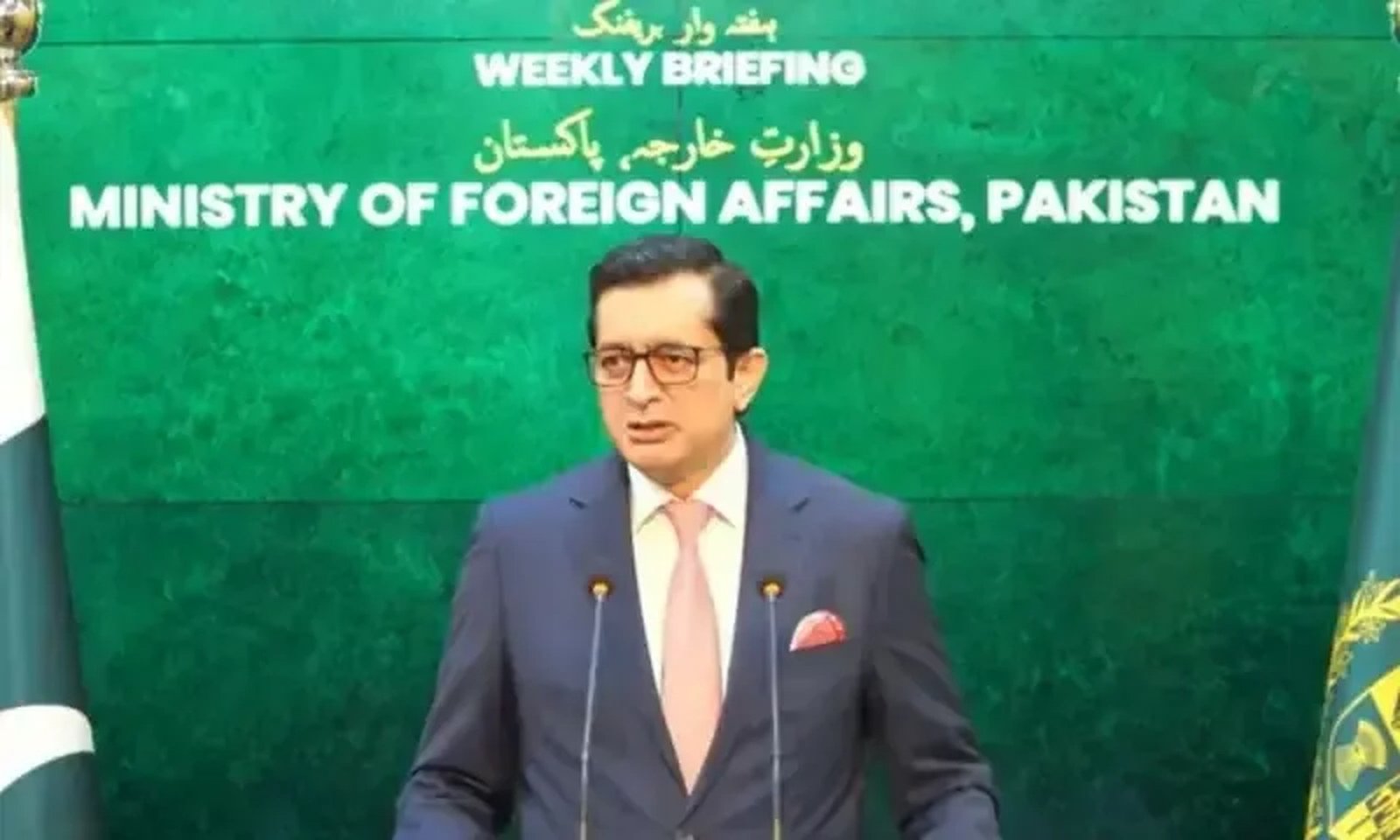
Addressing his weekly press briefing, Foreign Office spokesperson Sajjad Haider Khan said Afghanistan’s membership of the organisation remained suspended by the ECO Secretariat. He added that under the organisation’s procedures, participation in ministerial-level meetings was subject to the host country’s discretion.
“Afghanistan was not invited to join the ECO meeting in Islamabad as Pakistan has not recognised the incumbent regime,” the spokesperson said.
He said the flag displayed at the meeting was that of the former Afghan government rather than the incumbent administration, adding that he did not know the exact date on which Afghanistan’s membership was suspended.
The question was raised during the briefing about how Pakistan reconciled its commitment to regional connectivity with Afghanistan’s exclusion, given the country’s position as a geographical link between Central and South Asia.
Afghanistan is one of the ECO’s ten member states, alongside Pakistan, Iran, Türkiye, Azerbaijan, Kazakhstan, Kyrgyzstan, Tajikistan, Turkmenistan and Uzbekistan. Its absence from the Islamabad meeting underlined the strain in relations between Islamabad and the Taliban administration, with Pakistan alleging that militant groups, including the Tehreek-i-Taliban Pakistan, operate from Afghan territory.
The 30th meeting of the ECO Council of Ministers was held in Islamabad on 15 and 16 November, with Pakistan assuming the organisation’s chairmanship for 2026-27.
The spokesperson said Pakistan attached great importance to strong regional cooperation, connectivity and economic integration. He said this commitment also informed Pakistan’s approach towards Afghanistan, which it wanted to see as a peaceful, prosperous and stable country, fully integrated within the ECO framework and at peace with itself as well as with all its neighbours.
At the same time, he said, meaningful progress required the Afghan authorities to address the legitimate security concerns of neighbouring countries, particularly the threat of terrorism emanating from Afghan soil, in the interest of sustainable regional peace, stability and development.
The spokesperson also confirmed that Pakistan’s borders with Afghanistan remained closed and bilateral trade was not taking place.
Leave a Reply