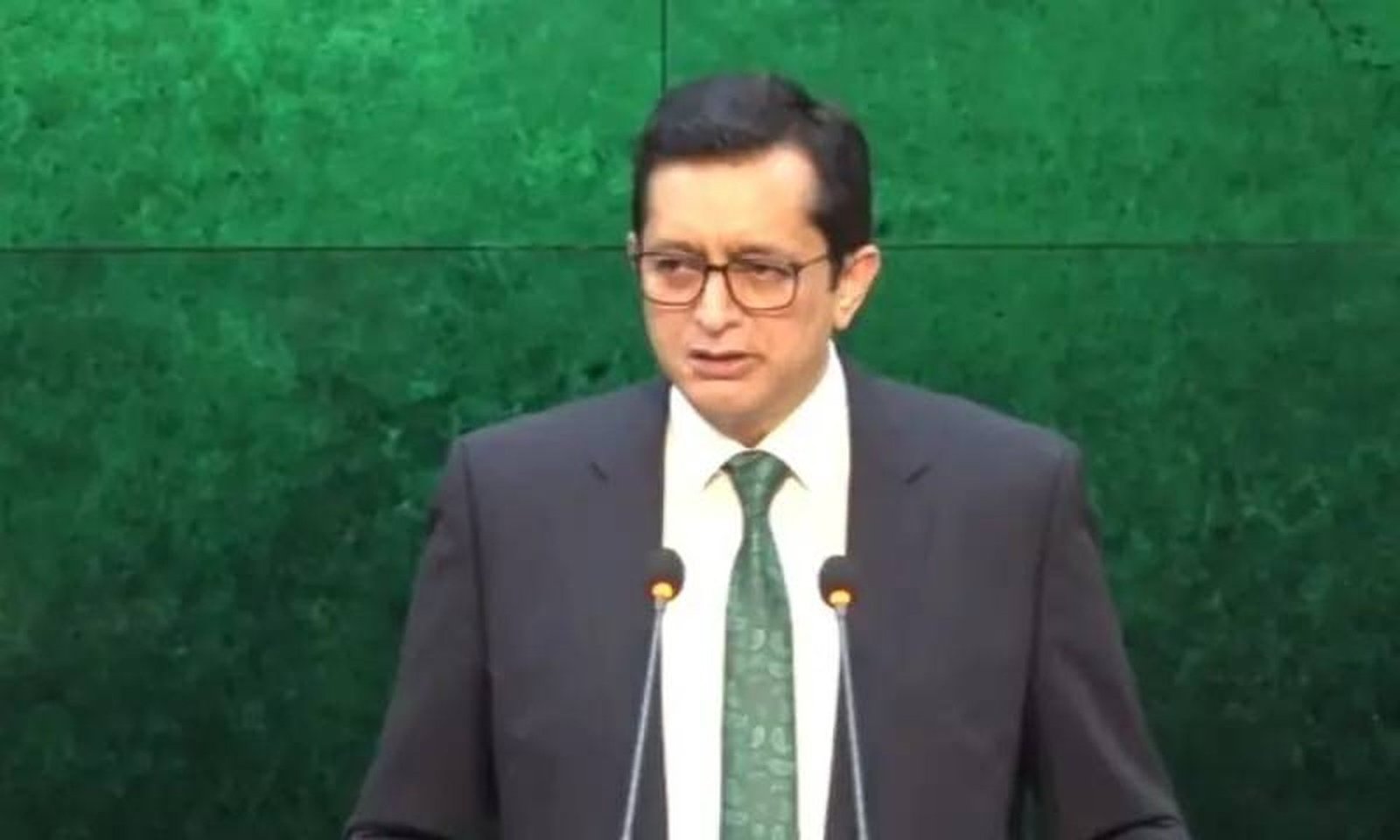
Tag: Foreign Office

  • Pakistan, 17 Nations Condemn Israeli Strike on Gaza Hospital

    Pakistan, 17 Nations Condemn Israeli Strike on Gaza Hospital

    Pakistan, along with 16 other countries, has strongly condemned an Israeli airstrike on the Nasser Medical Complex in Khan Younis, Gaza, which caused casualties among patients and healthcare workers. In a joint statement issued on Saturday, the foreign ministers of the 17 countries described the attack as a violation of international humanitarian law, which affords special protection to medical facilities and healthcare personnel.

    According to Pakistan’s Foreign Office, the joint statement was issued by the foreign ministers of Pakistan, Egypt, Saudi Arabia, Turkiye, Jordan, Qatar, the United Arab Emirates, Indonesia, Palestine, Algeria, Mauritania, Sudan, Libya, Djibouti, Somalia, Lebanon and Oman. The ministers stressed that hospitals and medical staff must be protected under international law, and that attacks on them cannot be justified under any circumstances.

    The statement also denounced continued Israeli attacks on Palestinian civilians, including strikes targeting tents and other locations sheltering displaced people. The foreign ministers warned that such attacks undermine the ceasefire and the ongoing efforts to restore security and stability in Gaza, and that they are inconsistent with United States President Donald Trump’s Comprehensive Plan for the territory.

    The ministers expressed grave concern over Israel’s continued restrictions on humanitarian assistance, including shelter materials such as tents, caravans and mobile homes, as well as essential medical supplies. They warned that these restrictions are worsening the humanitarian crisis in Gaza as winter approaches, at a time when many families are already living in damaged or makeshift shelter.

    According to the statement, inadequate shelter and deteriorating water, sanitation and healthcare services pose serious threats to civilian lives, particularly children and infants, who face the risk of dying from exposure to freezing temperatures. The foreign ministers said the situation required urgent action to ensure that aid reaches those who need it most.

    The foreign ministers urged Israel to uphold the ceasefire, ensure the uninterrupted delivery of humanitarian aid and fulfil its obligations under the Sharm El-Sheikh Agreement, Trump’s Comprehensive Plan and United Nations Security Council Resolution 2803 (2025). They also called for unrestricted access for United Nations agencies and humanitarian organisations so that they can carry out their mandates in Gaza.

    Reaffirming their commitment to working with regional and international partners, the ministers pledged to consolidate the ceasefire, implement all phases of the plan and expand humanitarian assistance to ease the suffering of the Palestinian people. Pakistan’s Foreign Office said Pakistan would continue to raise its voice for the protection of civilians and for a just and lasting peace in the region.

  • Pakistan Condemns Houthi Attacks on Saudi Arabia

    Pakistan Condemns Houthi Attacks on Saudi Arabia

    Pakistan has condemned the continued Houthi attacks against Saudi Arabia and reaffirmed its support for Yemen’s sovereignty, independence, unity and territorial integrity. The position was set out by Pakistan’s Permanent Representative to the United Nations, Ambassador Syed Haider Shah, in New York after the United Nations Security Council adopted a resolution renewing the sanctions measures established under resolution 2140 (2014) and extending the mandate of the Panel of Experts supporting the 2140 Committee.

    Ambassador Shah condemned in the strongest terms the continued Houthi attacks against Saudi Arabia. He expressed Pakistan’s full and unwavering solidarity with the leadership, government and brotherly people of Saudi Arabia, and reaffirmed Pakistan’s resolute support for the Kingdom’s sovereignty, territorial integrity, security and stability.

    He underscored Saudi Arabia’s legitimate right to defend its territory and to protect its citizens and residents in accordance with the UN Charter and international law, and called for an immediate and unconditional end to what he described as the reprehensible Houthi attacks.

    Support for UN-led peace efforts

    Ambassador Shah welcomed the Security Council resolution and underscored the importance of the 2140 Committee’s work in promoting peace, security and stability in Yemen. He appreciated the constructive efforts of the United Kingdom, as the penholder, during the negotiations leading to the adoption of the resolution, and said Pakistan had voted in favour of it to reaffirm the importance it attached to the Committee’s work.

    He emphasised that holding accountable individuals and entities threatening Yemen’s peace, security and stability was essential to creating conditions for durable peace. On the implementation of the sanctions regime, he stressed the importance of upholding the institutional framework established by the Security Council, and said the Panel of Experts must discharge its responsibilities strictly in accordance with its mandate, with professionalism, impartiality and consistency.

    Call for a political settlement in Yemen

    Reaffirming Pakistan’s commitment to peace and stability in Yemen, Ambassador Shah underscored the importance of UN-led efforts to advance an inclusive political process that is Yemeni-owned and Yemeni-led. He reiterated Pakistan’s readiness to support all efforts aimed at restoring peace, stability and security in Yemen and alleviating the humanitarian suffering of its people.

    The statement comes days after Pakistan’s Foreign Office strongly condemned an attempted Houthi attack on a Saudi Aramco administrative building in Riyadh, in which no casualties were reported. The Saudi-led coalition said its air defences had intercepted two ballistic missiles launched towards Riyadh. Reports this week have also pointed to Houthi attacks on Saudi targets, including infrastructure and shipping, underlining the wider regional security concerns raised by Pakistan at the United Nations.

  • Pakistan Condemns Houthi Attack on Saudi Aramco Building

    Pakistan Condemns Houthi Attack on Saudi Aramco Building

    Islamabad has issued a firm condemnation after Houthi fighters struck an administrative building belonging to the Saudi energy company Aramco in Riyadh, describing the incident as an unjustified and unprovoked act of aggression against civilian infrastructure.

    The Foreign Office said Pakistan stood firmly behind Saudi Arabia at a moment when the safety of its people and territory had been challenged, and it pledged full support for every step the kingdom takes to protect its security and sovereignty.

    Foreign Office spokesperson Sajjad Haider Khan said no one was hurt in the attack, but he stressed that aiming at civilian facilities showed a complete disregard for human life and for stability across the region.

    He called on the Houthis to halt all attacks against Saudi Arabia immediately and without conditions, and he praised the Saudi authorities for what he described as a quick and alert response to the incident.

    Pakistan also expressed full solidarity with the Saudi leadership and the Saudi people, reaffirming that the security of the kingdom carries great importance for Pakistan and that its commitment to the safety, security and well-being of its Saudi brothers and sisters remained firm and unwavering.

    The statement comes against the backdrop of repeated Houthi attacks on Saudi targets, which Pakistan has condemned in the past as threats to regional peace. Islamabad has consistently maintained that disputes in the region should be settled through dialogue rather than through strikes on civilian sites.

    Officials in Islamabad said Pakistan would continue to work with Riyadh and other regional partners to support efforts aimed at reducing tensions and protecting civilian life.

    Pakistan and Saudi Arabia share a close and longstanding relationship, built on defence cooperation, trade and the presence of a large Pakistani community working in the kingdom. Islamabad has repeatedly described the security of Saudi Arabia as closely linked to its own, and the two countries consult regularly on regional security matters.

    Aramco, formally the Saudi Arabian Oil Company, is one of the largest energy companies in the world, and its facilities have been targeted before. Attacks on its plants in 2019 briefly disrupted global oil supplies and drew wide international condemnation, underlining why strikes on civilian energy infrastructure are treated as a serious threat to regional stability.

    The Houthis, who control large parts of Yemen, have carried out repeated cross-border attacks on Saudi Arabia during the conflict in Yemen. Pakistan has consistently condemned such attacks and has called for a political settlement in Yemen, arguing that the conflict can only be ended through dialogue and negotiation.

  • India Invites Pakistan to SCO Summit in New Delhi

    India Invites Pakistan to SCO Summit in New Delhi

    Islamabad: Pakistan has received an invitation from India to attend the Shanghai Cooperation Organisation (SCO) summit in New Delhi, the Foreign Office confirmed on Friday, saying a decision on participation will be taken by the country’s leadership after consultations.

    The Foreign Office spokesperson confirmed at the weekly briefing in Islamabad that the summit, the SCO Civilisational Dialogue Forum, will be held in the Indian capital from November 20 to 22. He said the decision on Pakistan’s participation would follow institutional consultations and the completion of established procedures.

    India formally invited all ten SCO member states to the forum on October 28. The event is being organised jointly by India’s Ministry of External Affairs and its Ministry of Culture, and aims to deepen cultural engagement, encourage people-to-people contact and promote greater mutual understanding among member countries.

    According to reports, Pakistan’s Minister for National Heritage and Culture, Aurangzeb Khan Khichi, has been invited to attend the forum. If Pakistan accepts, it would be one of the highest-level Pakistani visits to India since the confrontation between the two countries in May 2025, when India launched Operation Sindoor following the Pahalgam attack.

    First formal outreach since May 2025

    The invitation has drawn attention because it marks the first formal outreach from New Delhi to Islamabad since the May 2025 confrontation. Indian officials have clarified, however, that all ten SCO member states received invitations and that the arrangement is a multilateral initiative which should not be confused with India-Pakistan bilateral relations.

    The concept of the forum was put forward by Indian Prime Minister Narendra Modi at the SCO summit in Tianjin in 2025 and subsequently endorsed by the organisation. The forum was announced by Indian Defence Minister Rajnath Singh during the SCO Council of Heads of Government meeting in Dushanbe, Tajikistan, on October 20.

    Pakistan currently holds the rotating chairmanship of the SCO Council of Heads of State for the 2026-27 term, having assumed the position on September 1 following the summit in Bishkek. Pakistan is scheduled to host the SCO summit in Islamabad in 2027.

    Kartarpur Corridor and Sikh pilgrims

    At the same briefing, the Foreign Office spokesperson said Pakistan had not imposed any visa restrictions on Indian citizens and had issued visas to an additional 4,000 Sikh pilgrims during the first six months of 2026. In 2025, Pakistan granted 9,318 visas to Indian pilgrims, while 9,000 Sikh and 248 Hindu pilgrims visited the country.

    He said India had kept pilgrim movement through the Kartarpur Corridor suspended since May 2025, adding that Pakistan was ready to welcome and facilitate Sikh pilgrims as soon as India lifted the restrictions. Islamabad was also looking forward to receiving Sikh pilgrims for celebrations marking the 557th birth anniversary of Baba Guru Nanak Dev Ji.

    The spokesperson also discussed Pakistan’s diplomatic efforts to promote regional stability, particularly its role in facilitating dialogue between Iran and the United States. He said Pakistan had acted as a sincere mediator in the Iran-US dispute, bringing two countries that had not held direct talks for 47 years to the negotiating table under one roof, and that Pakistan would continue its efforts to promote peace and stability in the region.

  • Pakistan Invited to SCO Summit, Kartarpur Open for Pilgrims

    Pakistan Invited to SCO Summit, Kartarpur Open for Pilgrims

    Pakistan has received an invitation from India to attend the Shanghai Cooperation Organisation’s Council of Heads of Government meeting in New Delhi, the Foreign Office said on Friday, while confirming that the country is ready to welcome Sikh pilgrims through the Kartarpur Corridor.

    Foreign Office spokesperson Tahir Hussain Andrabi shared the details at his weekly press briefing in Islamabad. He said India had invited Pakistan to the SCO meeting, which is scheduled to take place in New Delhi from November 20 to 22, and that Pakistan had received the invitation.

    A decision on whether Pakistan will attend is still pending. According to the spokesperson, the decision will be taken keeping national interest and regional priorities in view, leaving the question open for now while the government weighs its options.

    On the Kartarpur Corridor, the spokesperson said Pakistan is ready to welcome Sikh pilgrims. India has suspended movement through the corridor since May 2025, so the crossing has not been in use for pilgrims travelling from the Indian side.

    Pakistan issued 9,318 visas to Sikh pilgrims in 2025 and 4,000 in the first six months of 2026, according to the Foreign Office. The corridor can handle more than 5,000 pilgrims a day, and preparations are under way for the 557th birth anniversary of Guru Nanak Dev, one of the most important occasions in the Sikh calendar.

    The Kartarpur Corridor links the Gurdwara Darbar Sahib in Pakistan with the Indian border, allowing Sikh pilgrims to visit one of their holiest sites without a visa. Its readiness matters to pilgrims hoping to attend the birth anniversary commemorations, and Pakistan’s statement signals that the facilities on its side are prepared to receive them.

    The SCO invitation and the Kartarpur message came in the same briefing, touching two separate strands of Pakistan’s regional engagement. The SCO meeting brings together the heads of government of member states to discuss economic and regional cooperation, while the corridor concerns the religious and people-to-people ties between Pakistan and the Sikh community.

    Separately, the spokesperson said a vessel from the Marshall Islands was attacked near the coast of Yemen in international waters. All 25 people aboard are safe, and a Pakistani ship is carrying out the rescue, according to the Foreign Office.

    Attention will now turn to Pakistan’s decision on the SCO meeting in the days ahead, and to whether movement through the Kartarpur Corridor resumes in time for the Guru Nanak birth anniversary celebrations.

  • Pakistan, Iran discuss region as Dar calls Araghchi

    Pakistan, Iran discuss region as Dar calls Araghchi

    Deputy Prime Minister and Foreign Minister Mohammad Ishaq Dar held a telephone conversation with his Iranian counterpart, Foreign Minister Seyyed Abbas Araghchi, on Thursday to discuss the evolving regional situation.

    According to the Foreign Office, the two foreign ministers exchanged views on recent developments across the region, with particular emphasis on the importance of continued diplomatic engagement to address outstanding issues.

    Dar reiterated that sustained dialogue and diplomacy are essential to resolving differences and promoting regional peace. He stressed that all parties should remain constructively engaged and maintain communication channels.

    He said active and sustained diplomatic efforts are necessary to ensure lasting peace, security and stability in the region, and that continued dialogue was the most appropriate means of addressing outstanding issues, managing developments and preventing further tensions.

    Dar urged all parties to remain positively engaged and pursue constructive approaches, according to the Foreign Office statement.

    The statement did not name any specific country, dispute or incident beyond the evolving regional situation and recent developments.

    The conversation comes at a time of heightened attention on regional diplomacy, with Pakistan maintaining contact with neighbouring countries on matters affecting peace and stability.

    Pakistan and Iran share a long border and have regularly discussed regional security, trade and border management in their diplomatic exchanges.

    Diplomatic engagement between the two countries has continued through regular contacts between their foreign ministers and other officials.

    Further details of the conversation were not immediately available, and the Foreign Office statement gave no indication of any specific agreement or joint announcement following the call.

    Pakistan has long favoured resolving regional differences through talks rather than confrontation, a position its leaders have repeated in contacts with neighbouring countries and at international forums.

    Diplomatic observers note that telephone conversations between foreign ministers are a routine way for countries to exchange views quickly when regional developments require coordination.

    The call also reflects the continuing channel of communication between Islamabad and Tehran, which both sides have used to discuss matters of mutual interest.

    For now, the Foreign Office statement is the only public account of the conversation, and it frames the exchange around the shared goal of lasting peace, security and stability in the region.

  • Pakistan, UK unite against Afghanistan-based terror

    Pakistan, UK unite against Afghanistan-based terror

    Pakistan and the United Kingdom have expressed shared concern over the continuing threat posed by terrorist groups operating in and from Afghanistan, the Foreign Office has said.

    The concern was voiced on Wednesday during the two countries’ annual bilateral dialogue on counter-terrorism, held in Islamabad. The dialogue reviewed bilateral and multilateral cooperation and reaffirmed a commitment to combating terrorism in all its forms.

    Both sides agreed to strengthen counter-terrorism cooperation, according to the Foreign Office. They also agreed to strengthen institutional ties and to maintain regular engagement to advance shared counter-terrorism objectives.

    The Foreign Office said both sides acknowledged Pakistan’s contributions to regional stability and security. That acknowledgement matters to Islamabad, which has long argued that it has borne a heavy cost in the fight against terrorism, in lives lost and in damage to its economy and internal security.

    Afghanistan has remained a central concern in regional security discussions since the change of government there in 2021. Pakistan has repeatedly said that groups based across its western border carry out attacks inside Pakistan, and it has pressed for action against those groups. The United Kingdom, which has its own counter-terrorism interests in the region, has shared concerns about Afghanistan becoming a base for groups with international reach.

    Annual dialogues of this kind serve several purposes. They allow officials to exchange assessments of the threat, to review practical cooperation such as information-sharing and capacity-building, and to signal publicly that the two governments are aligned. They also provide a forum for raising concerns privately, away from the headlines.

    The agreement to maintain regular engagement suggests that counter-terrorism will remain a standing item in the Pakistan-UK relationship, rather than a subject raised only after major incidents. Institutional ties, in this context, mean established channels between officials and agencies that can be used quickly when a threat emerges.

    For Pakistan, closer cooperation with the United Kingdom also carries diplomatic value. It underlines that Islamabad’s counter-terrorism concerns are recognised by a major Western partner, and it keeps open a channel for discussing security issues alongside trade, migration and other parts of the bilateral relationship.

    For the United Kingdom, the dialogue is part of a wider effort to manage risks emanating from Afghanistan and the surrounding region, including the movement of fighters, the financing of groups, and the potential for attacks beyond the region.

    The statements issued after the dialogue were general in nature, and no specific new operations, designations or agreements were announced in the accounts published so far. The practical test of the commitments made in Islamabad will be in the cooperation that follows, and in whether the shared concern translates into concrete steps against the groups named in private discussions.

    Further details may emerge in the Foreign Office’s formal statement on the dialogue, but the central message from Wednesday’s meeting is clear: both governments see the threat from Afghanistan-based groups as continuing, and both say they intend to work together more closely against it.

  • Dar reaffirms Pakistan’s commitment to stronger Iran ties

    Dar reaffirms Pakistan’s commitment to stronger Iran ties

    Deputy Prime Minister and Foreign Minister Ishaq Dar has reaffirmed Pakistan’s commitment to further strengthening its close and brotherly ties with Iran, during a meeting with Tehran’s envoy in Islamabad.

    Iran’s Ambassador to Pakistan, Reza Amiri Moghadam, called on Dar at the Ministry of Foreign Affairs on Wednesday, according to an official statement. The two sides discussed bilateral relations and matters of mutual interest, reviewing the state of cooperation between the neighbouring countries.

    During the meeting, Dar underscored Pakistan’s firm commitment to deepening engagement with Iran and making cooperation between the two countries more effective and result-oriented. He also stressed the importance of dialogue and diplomacy in promoting peace and stability in the region.

    Pakistan and Iran share a long border and deep historical, cultural and religious links, and their relationship spans trade, energy, border management and people-to-people exchanges. Both sides have repeatedly described the relationship as brotherly, even as regional tensions have tested the wider neighbourhood.

    The meeting comes as Pakistan continues to balance its relationships across the region, with Islamabad keen to keep channels of dialogue open with all its neighbours. Officials in Islamabad have consistently argued that diplomacy, rather than confrontation, offers the only durable route to regional stability.

    No detailed announcements emerged from Wednesday’s meeting, which was described as a review of ongoing cooperation and mutual interests. But the public reaffirmation from Pakistan’s deputy prime minister signals that strengthening ties with Iran remains a stated priority for the government, alongside its wider diplomatic engagements in the region.

    Dar holds the dual portfolios of deputy prime minister and foreign minister, and his meetings with foreign envoys are closely watched as a signal of the government’s diplomatic priorities. The Foreign Office in Islamabad, where Wednesday’s meeting took place, is the usual venue for such calls, which typically review the full range of the bilateral agenda before any formal announcements are made.

    Cooperation between Pakistan and Iran covers a wide sweep of practical issues. Trade and energy links, management of their shared border, security cooperation and exchanges between ordinary citizens have all featured in recent discussions between the two sides, and officials on both sides have spoken of making that cooperation more effective and focused on results.

    Wednesday’s reaffirmation fits that pattern: a public restatement of commitment, rather than a new agreement, but one that underlines that the relationship with Iran remains an active part of Pakistan’s foreign policy at a time of heightened tensions across the wider region.

  • Pakistan Rules Out Unconditional Talks With Afghanistan

    Pakistan Rules Out Unconditional Talks With Afghanistan

    ISLAMABAD: Pakistan has ruled out unconditional talks with Afghanistan, insisting that any future dialogue must be tied to a verifiable mechanism that guarantees an end to terrorist activities launched from Afghan soil.

    Addressing the weekly media briefing on Friday, Foreign Office spokesperson Sajjad Haider Khan said Pakistan was not avoiding engagement but would only join discussions that produced tangible results. According to him, Pakistan would welcome sincere efforts by friendly countries to help resolve the long-running dispute and promote regional peace.

    The statement came as Russia renewed its readiness to mediate between the two neighbours. The spokesperson said he was not aware of any separate, formal Russian mediation initiative currently under discussion, while stressing that Islamabad remained open to engagement that delivered concrete outcomes. Russia is the only country to have formally recognised the Taliban government, and Moscow’s special envoy for Afghanistan, Zamir Kabulov, had earlier renewed the offer to facilitate a settlement if both sides sought it.

    Moscow Format ends without agreement

    The spokesperson said the failure of the latest round of the Moscow Format consultations on October 5 to issue a joint communique highlighted the central obstacle to normalising relations. According to him, the Afghan delegation was unwilling to accept language on terrorist networks operating from Afghanistan that had been acceptable in the previous year’s document.

    “The fact that no joint communique was issued after the Moscow Format is self-evident that Afghanistan did not accept the formulation which had been acceptable until last year, particularly about the presence of terrorist networks in Afghanistan,” Mr Khan said.

    Pakistan’s core demand, he reiterated, is action against the Tehreek-i-Taliban Pakistan and other militant groups that Islamabad says use Afghan territory to launch attacks across the border. The Taliban authorities have rejected these allegations and have avoided taking a categorical position on the banned outfit.

    The spokesperson recalled that previous mediation attempts had also failed to produce a lasting settlement. Qatar and Turkiye helped broker a ceasefire last October, but the subsequent round of talks did not hold. Saudi Arabia separately hosted discussions, while China held talks between the two sides in Urumqi in April. None of these efforts, he noted, resolved the disagreement over terrorist groups and the measures needed to prevent cross-border attacks.

    Warning to India

    On a separate note, the spokesperson rejected what he called provocative remarks by Indian Defence Minister Rajnath Singh, who had threatened a bigger strike in response to any future terrorist attacks while speaking at the National Defence Conclave 2026 in Delhi. Mr Singh had recalled Operation Sindoor, describing it as a decisive response to terrorism.

    “We reject and condemn the Indian Defence Minister’s provocative remarks entailing a threat of Indian aggression against Pakistan,” Mr Khan said, adding that such statements reflected a hegemonistic mindset and posed risks to regional peace and stability in South Asia.

    He reminded New Delhi of what he described as the consequences of its military aggression in May last year, when Pakistan, according to him, demonstrated both its capability and resolve to defend its sovereignty and territorial integrity. Any future aggression, he warned, would be met with an even stronger response, and he urged India to abandon what he termed its belligerent posture and act responsibly for lasting peace in the region.