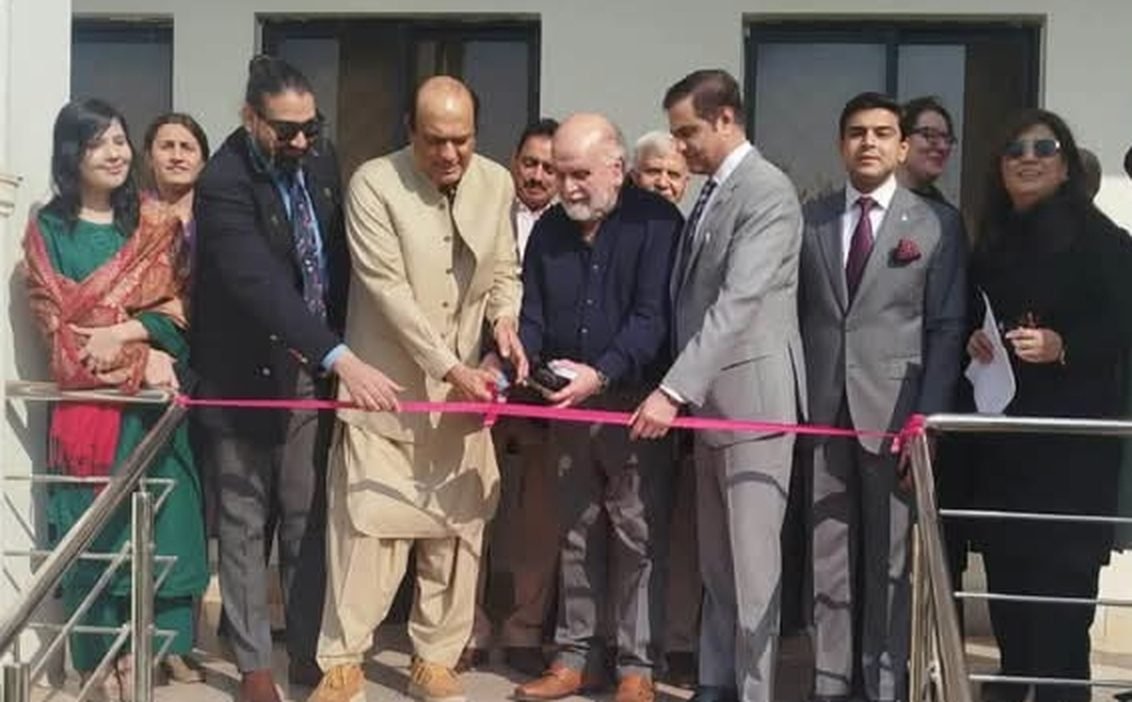
The Health Services Academy (HSA) has joined hands with the Pakistan National Council of the Arts (PNCA) to bring expressive arts into public health education, launching arts-based activities for its students in Islamabad. The initiative explores how creativity can strengthen the way health messages reach people and communities.
Under the programme, students will use visual arts, performance and other creative mediums to strengthen health communication and community awareness. The idea is to move beyond lectures and leaflets, and to let future public health professionals practise conveying health messages through forms of expression that people connect with more easily.
As part of the initiative, HSA has welcomed Farrukh Seir as its first Professor of Expressive Arts in Public Health. His appointment marks a new step towards incorporating creative approaches into public health training, bringing an artist’s perspective into a field traditionally shaped by medicine and statistics.
The initiative aims to develop practical models for integrating various forms of expressive arts into public health activities. Students will work on using art, theatre and performance to explain health issues, encourage healthy behaviour and build trust between health workers and the communities they serve.
Through creative engagement, students will explore innovative ways of conveying health messages, encouraging community participation and addressing public health challenges. A play, a mural or a song can sometimes carry a message further than a pamphlet, particularly in communities where formal health information is hard to reach.
The collaboration reflects HSA’s efforts to promote innovative approaches in public health education by combining artistic expression with health communication and community engagement. It brings together two institutions from very different worlds, the classroom of public health and the stage and studio of the arts, around a shared goal.
Public health teaching in Pakistan has long relied on classroom instruction and field visits. By adding expressive arts to the curriculum, the academy hopes its graduates will be better equipped to listen to communities, understand their concerns and communicate in ways that are understood, remembered and acted upon.
Leave a Reply