
Tag: Wins

  • Lula wins fourth term in Brazil runoff

    Lula wins fourth term in Brazil runoff

    Brazil’s President Luiz Inácio Lula da Silva has won re-election in a presidential runoff, securing a fourth non-consecutive term after defeating right-wing Senator Flávio Bolsonaro, the country’s electoral authority said on Sunday.

    According to the Associated Press, with all votes counted, Lula took 51.8 percent of the vote, leading his rival by nearly 4.4 million votes. His new term is due to begin on January 5, 2027.

    The result makes the 80-year-old leftist leader the first Brazilian president to be elected to the office four times. It also marks the first time since the return of direct presidential elections in 1989 that a candidate has won the presidency after finishing second in the first round.

    In the first round on October 4, Bolsonaro secured about 47 percent of the vote to Lula’s 45 percent, according to Brazil’s Superior Electoral Court, a margin of around 2.2 million votes. Neither candidate reached the majority needed to win outright, forcing the runoff.

    Disputed finish and a legal challenge

    Bolsonaro said he would not accept the result and would seek to have the election annulled. Speaking to supporters in the capital, Brasília, he said: “It is impossible to recognize the election result given how these events unfolded. We will take legal action. We will ask for this election to be annulled.”

    His objection centres on a decision to extend voting by two hours on election day. Brazilian Supreme Court Justice Cristiano Zanin granted the extension after last-minute pleas from both campaigns. Lula’s campaign cited incidents affecting buses transporting voters in several states, while Bolsonaro’s campaign pointed to difficulties voters faced reaching polling stations because of heavy rain.

    The extension order came at around 5 p.m. in Brasília, just as polls were scheduled to close.

    A campaign dominated by prices, crime and corruption

    The runoff capped a deeply polarised race dominated by concerns over the cost of living, crime and corruption. A September survey by Quaest/Pax found that 28 percent of Brazilians saw violence as the country’s biggest problem, followed by corruption at 22 percent and the economy at 19 percent.

    Women, who account for nearly 53 percent of registered voters, were a crucial group in the contest. An October 15 Datafolha survey put Lula ahead among women by 49 percent to 40 percent, while Bolsonaro led among men by 52 percent to 40 percent.

    Lula’s victory stands out against a broader rightward shift across Latin America, where presidential elections since April 2025 in Ecuador, Bolivia, Honduras, Chile, Costa Rica, Colombia and Peru have produced victories for right-wing or centre-right candidates.

    Leaders from across the region congratulated Lula, including the presidents of Mexico, Paraguay, Uruguay, Bolivia and Cuba, who praised what they described as a democratic celebration and a victory for the Brazilian people.

    He had praised Flávio Bolsonaro’s first-round performance but stopped short of formally endorsing him. Lula, who has frequently criticised the US administration, has emphasised Brazil’s sovereignty and closer ties with the Global South and China, Brazil’s largest export market.

    After his victory was declared, Lula said his campaign had convinced people that voting was extremely important to safeguard democracy in Brazil, adding: “Brazil is no one’s backyard.”

    With a more conservative Congress and a narrow margin of victory, Lula now faces the task of governing a country that remains deeply divided.
  • Francis Halzen Wins 2026 Nobel Prize in Physics for Founding Neutrino Astronomy

    Francis Halzen Wins 2026 Nobel Prize in Physics for Founding Neutrino Astronomy

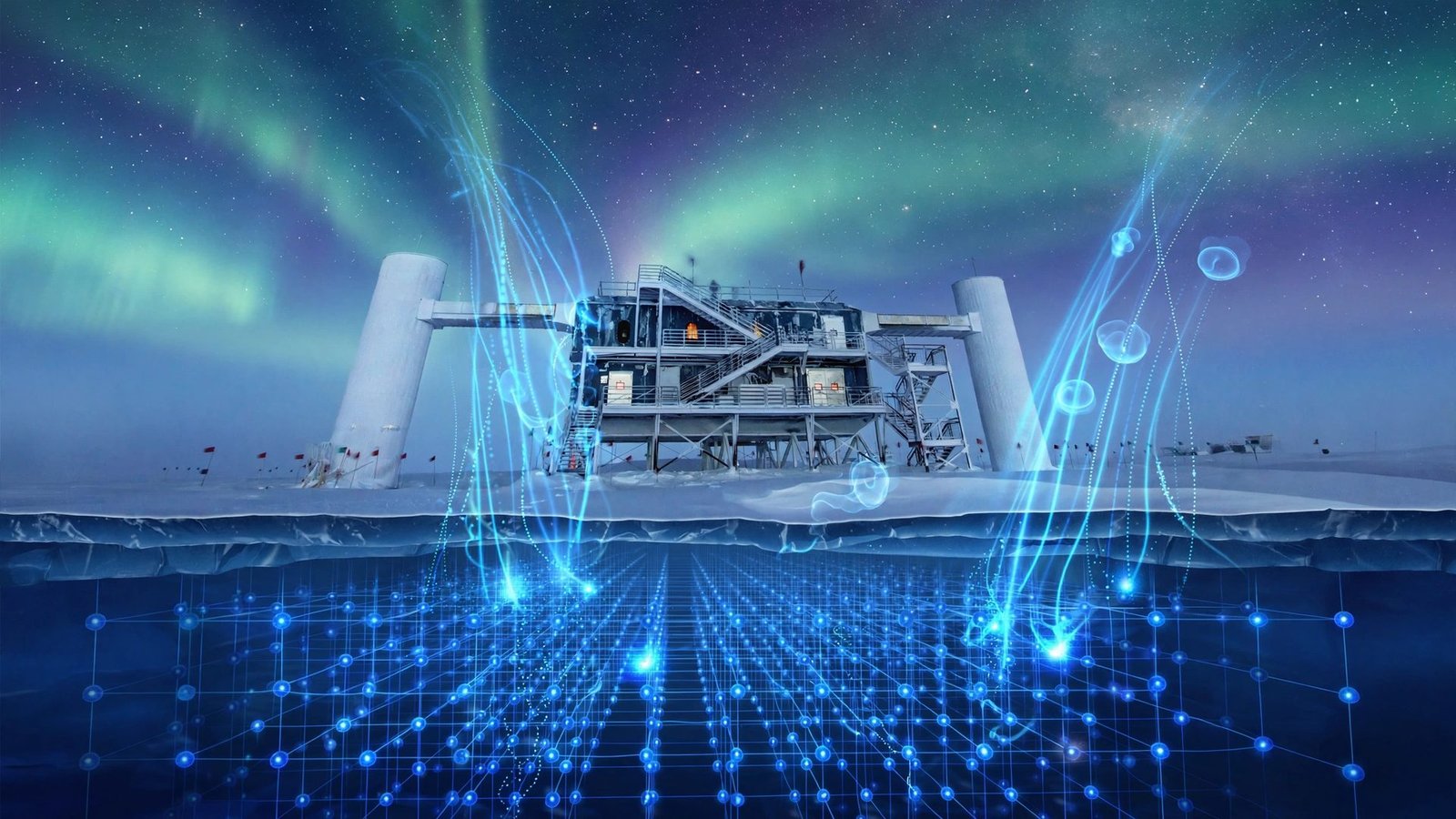
    STOCKHOLM: The Royal Swedish Academy of Sciences announced on Tuesday that the 2026 Nobel Prize in Physics has been awarded to Francis Halzen, the Belgian astrophysicist whose vision led to the IceCube Neutrino Observatory at the South Pole and the discovery of high-energy neutrinos arriving from deep space.

    The Academy honoured Halzen, 82, for what it described as his decisive contributions to the IceCube Neutrino Observatory and the discovery of high-energy neutrinos of astrophysical origin. Nobel committee chair Mark Pearce said in a statement that Halzen had led an international team of researchers and engineers who had provided a fantastic instrument, adding that his tenacity and scientific vision had paved the way for a new kind of astronomy.

    Halzen, who is based at the University of Wisconsin–Madison, first presented plans for the observatory in 1988, convinced that the clear ice at the South Pole could be turned into a giant detector for neutrinos — subatomic particles often called “ghost particles” because they pass through almost any kind of matter without a trace. Neutrinos have almost no mass and no electrical charge, and trillions of them stream through our bodies every second.

    Researchers drilled kilometre-deep holes into the Antarctic ice and lowered strings of light sensors into them, exploiting the fact that neutrinos occasionally collide with atomic nuclei and produce tiny flashes of light that can be tracked. IceCube’s predecessor, AMANDA, was completed in 2000 but failed to capture the high-energy neutrinos Halzen was hunting. Construction then began on IceCube itself — a full cubic kilometre of ice equipped with 5,160 light sensors hung on 86 cables — which reached its full size in 2011.

    In 2013, the research team reported the first evidence supporting the detection of cosmic neutrinos, and within a couple of years had gathered enough data to be certain of the discovery. Unlike the billions of neutrinos that stream from the Sun, these high-energy particles come from the far reaches of the cosmos and carry information about distant galaxies, exploding stars and distant objects such as black holes that are otherwise hidden behind dust clouds.

    Nobel committee member Eva Olsson told the award presentation in Stockholm that the particles bring information from the cosmos, opening doors to distant galaxies and revealing the processes of exploding stars. The committee noted that IceCube would take neutrino astronomy to a new level, and a planned expansion would allow the observatory to monitor eight cubic kilometres of ice.

    Speaking to the committee by telephone from Italy, Halzen called the prize a great surprise and a pleasure. Reflecting on the decades-long project, he recalled that when the work began, few people — including himself — believed it would succeed, describing it as an adventure whose outcome was never guaranteed. It took a team of hundreds of people to build it, Richard Fitzgerald, editor-in-chief of Physics Today, told CNN, adding that it all started with one person.

    The physics prize was the second Nobel announced this week, following Monday’s physiology or medicine prize. The awards continue on Wednesday with chemistry, followed by literature on Thursday, peace on Friday, and the economic sciences prize on October 12. The physics award carries a cash prize of 12 million Swedish kronor, worth about $1.2 million.