Tag: US midterms

  • Germany Warns US Tariffs Could Hit Exporters in 2027

    Germany Warns US Tariffs Could Hit Exporters in 2027

    Germany’s exporters face a fresh bout of trade uncertainty after the United States midterm elections, with one of Berlin’s top economic advisers warning that Washington’s tariff risks could rise rather than fall in the months ahead.

    Gabriel Felbermayr, a member of the German Council of Economic Experts, said the outcome of the midterms was unlikely to soften the US administration’s protectionist trade stance. Instead, he warned, uncertainty around tariffs may grow, particularly as key trade deadlines approach early next year.

    Speaking in Berlin during the presentation of the five-member council’s annual report on Wednesday, Felbermayr said the pressure could build quickly. “This could come to a head as early as the beginning of next year, particularly with regard to China, as certain deadlines are set to expire,” he said.

    The warning matters because the United States is Germany’s most important export market outside Europe. German manufacturers selling machinery, cars, chemicals and industrial equipment into the US have already spent the past year adjusting to higher American tariffs, and any further escalation would squeeze margins and orders.

    US market cooling could follow AI-driven boost

    Felbermayr noted that German exports to the United States had actually improved over the last two or three months, helped in part by strong global demand linked to the artificial intelligence boom. Factories supplying AI infrastructure, data-centre equipment and related technology have benefited from the surge in spending.

    But that improvement may not last, he cautioned. “For the German export sector, this means that the US market — which had shown improvement over the last two or three months, with Germany partly benefiting from the AI boom — could see a cooling off,” Felbermayr said.

    Analysts say the risk is not only about tariffs on German goods directly. If Washington tightens trade measures against China early next year, the knock-on effects could ripple through global supply chains, raising costs and disrupting orders for European firms that sit in the middle of those networks.

    Gridlock may push trade policy to executive action

    One reason the midterm result offers little comfort to exporters is the shape of American politics after the vote. With Congress divided, major trade decisions may increasingly be taken through presidential executive orders rather than legislation, making policy harder to predict and harder to challenge.

    German economic institutes increasingly view the shift towards “America First” industrial policy as a lasting change rather than a passing phase, according to the council’s assessment. That has pushed calls for German and European exporters to spread their risks, diversify into new markets and build more resilient supply chains.

    For now, the adviser’s message is a warning rather than a forecast of a specific tariff rise. Felbermayr did not name which measures might change or predict an exact increase. But his central point was clear: German exporters should not expect the midterms to bring relief, and they should prepare for a bumpier trade environment at the start of next year.
  • Texas Newcomer Talarico Crashes SNL After Historic Win

    Texas Newcomer Talarico Crashes SNL After Historic Win

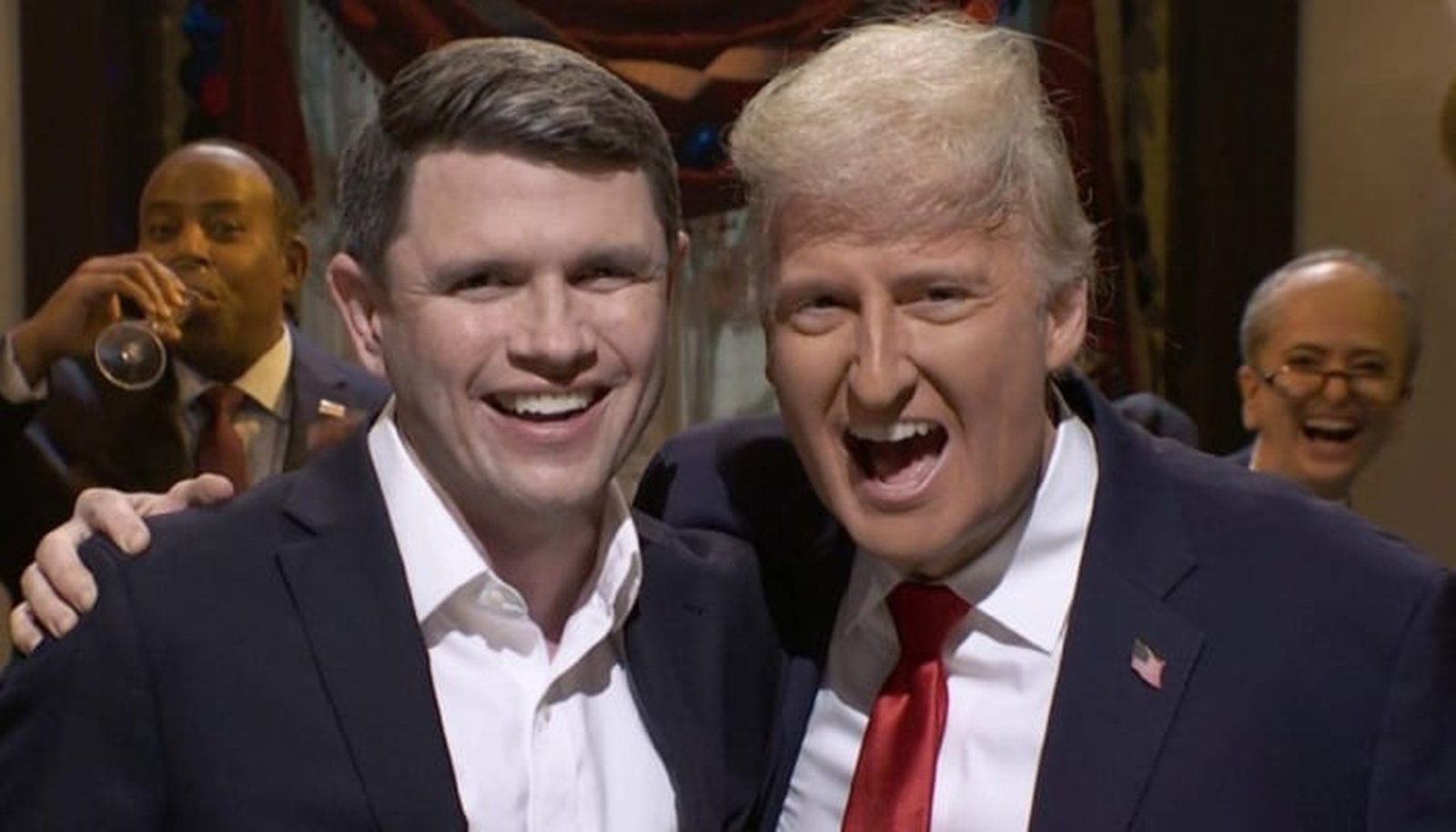
    James Talarico has gone from the campaign trail to the comedy stage in a matter of days. The Texas Democratic Senator-elect made a surprise appearance on Saturday Night Live, days after his historic election victory over Republican Ken Paxton, stepping into the show’s opening sketch to a roaring crowd.

    According to NBC News, Talarico appeared during the cold open, which celebrated Democrats winning control of both chambers of Congress in Tuesday’s midterm elections. He walked on stage alongside James Austin Johnson, performing as Donald Trump, and Colin Jost, performing as Ken Paxton.

    Introducing himself to the audience, he said: “Hi, America. I’m James Talarico, the guy who’s been texting you every day asking for $5.” Moments later he added: “It’s clear people want something new. They want something different. I’m talking, of course, about ‘SNL’s’ cold opens.” The jokes landed with a crowd that had followed his campaign closely.

    A campaign built on small donations

    The appearance also drew attention to the way Talarico’s campaign was funded. Rather than relying on large donors, his team built its war chest from small grassroots contributions — the very $5 text-message appeals he joked about on stage.

    Beyond the comedy, his win marked a major shift in Texas politics. Talarico was elected to the US Senate, becoming the first Democrat to win a statewide election in Texas in more than 30 years and the first Democratic senator from the state since 1993. His victory was considered one of the biggest surprises of the 2026 midterm elections.

    For a politician who built his name on small donations and town-hall meetings, the SNL stage was an unlikely next stop — and exactly the kind of national spotlight that turns a state-level upset into a household name. Whether the laughs translate into lasting political capital will be tested when he takes his seat in the Senate.

    During the campaign, he often criticised Paxton, accusing him of abusing his office and using it for personal gain. Paxton has served as Texas attorney general since 2015. The episode itself was part of SNL’s 51st season, hosted by comedian Nikki Glaser with musical guest Jack White — but it was the freshman senator-elect who stole the night.

  • Stocks surge, oil plunges over 8% after US vote

    Stocks surge, oil plunges over 8% after US vote

    Wall Street shares surged and oil prices tumbled on Wednesday as financial markets reacted to the outcome of the United States midterm elections, with investors betting that the result could hasten an end to the US war with Iran.

    Democrats seized control of both houses of Congress in Tuesday’s vote, according to the reports, giving them power to block legislation, open investigations into the Trump administration, and influence government spending, including the Pentagon budget.

    Heading into the vote, some investors had feared that a decisive Democratic win would trouble share prices, in part because of concern about the rapid build-out of artificial intelligence data centres. On the day, however, that worry was outweighed by relief that the election outcome was clear and that President Donald Trump did not contest the result.

    Oil prices were under pressure throughout the session. The selling intensified after Vice President JD Vance said in a social media post that the Republican defeat reflected the unpopularity of the Iran war, which has pushed up fuel and other staple prices.

    Crude finished down more than 8%, with both major contracts closing below 100 dollars a barrel. Brent North Sea crude fell 8.7% to 94.62 dollars a barrel, while West Texas Intermediate dropped 8.3% to 88.12 dollars a barrel.

    Andy Lipow of Lipow Oil Associates was quoted as saying the election might lead the market to conclude that Mr Trump could now be inclined to make a deal, and that with Democrats controlling the Senate and House they might restrict funding for the war, forcing an end to the conflict.

    The fall in oil added momentum to Wall Street, which opened higher after positive sessions on leading European exchanges. All three major US indices finished solidly higher. The Dow ended up 3%, or more than 1,500 points, at 53,356.12, the S and P 500 rose 1.6% to 7,688.62, and the Nasdaq Composite gained 1.4% to 25,736.51.

    Opposition to data centres had fuelled campaigns in key states such as Texas, Georgia and Ohio, where Democrats won governorships previously held by Republicans. Gains by Microsoft, Amazon and other large technology companies suggested markets might see an upside in constraints that deter overbuilding, according to Steve Sosnick of Interactive Brokers, who was quoted as saying that at some level people were happy the industry might be saved from its own worst instincts. Nvidia and other chipmakers, by contrast, fell.

    Both of Elon Musk’s publicly traded companies fell after his large political donations failed to stop the Democratic tide, with SpaceX down 3.8% and Tesla down 3.3%. Lockheed Martin, which fell 6.9%, was among defence companies that retreated, while First Solar jumped 4.6% as the election lifted prospects for renewable energy.

    In Europe, the main indices finished with gains of around 2%, despite official data showing eurozone inflation reached a three-year high of 4.0% in October. London’s FTSE 100 rose 1.8% to 10,829.21, Paris’s CAC 40 gained 2.0% to 8,177.89, and Frankfurt’s DAX climbed 2.2% to 26,437.67.

    Markets across Asia also performed strongly, although Tokyo ended lower as its technology sector struggled. Hong Kong’s Hang Seng Index rose 1.7% to 23,919.50 and Shanghai’s Composite gained 2.2% to 3,686.17, while Tokyo’s Nikkei 225 fell 1.4% to 62,188.63.

  • Trump shrugs off midterm rout, congratulates Democrats

    Trump shrugs off midterm rout, congratulates Democrats

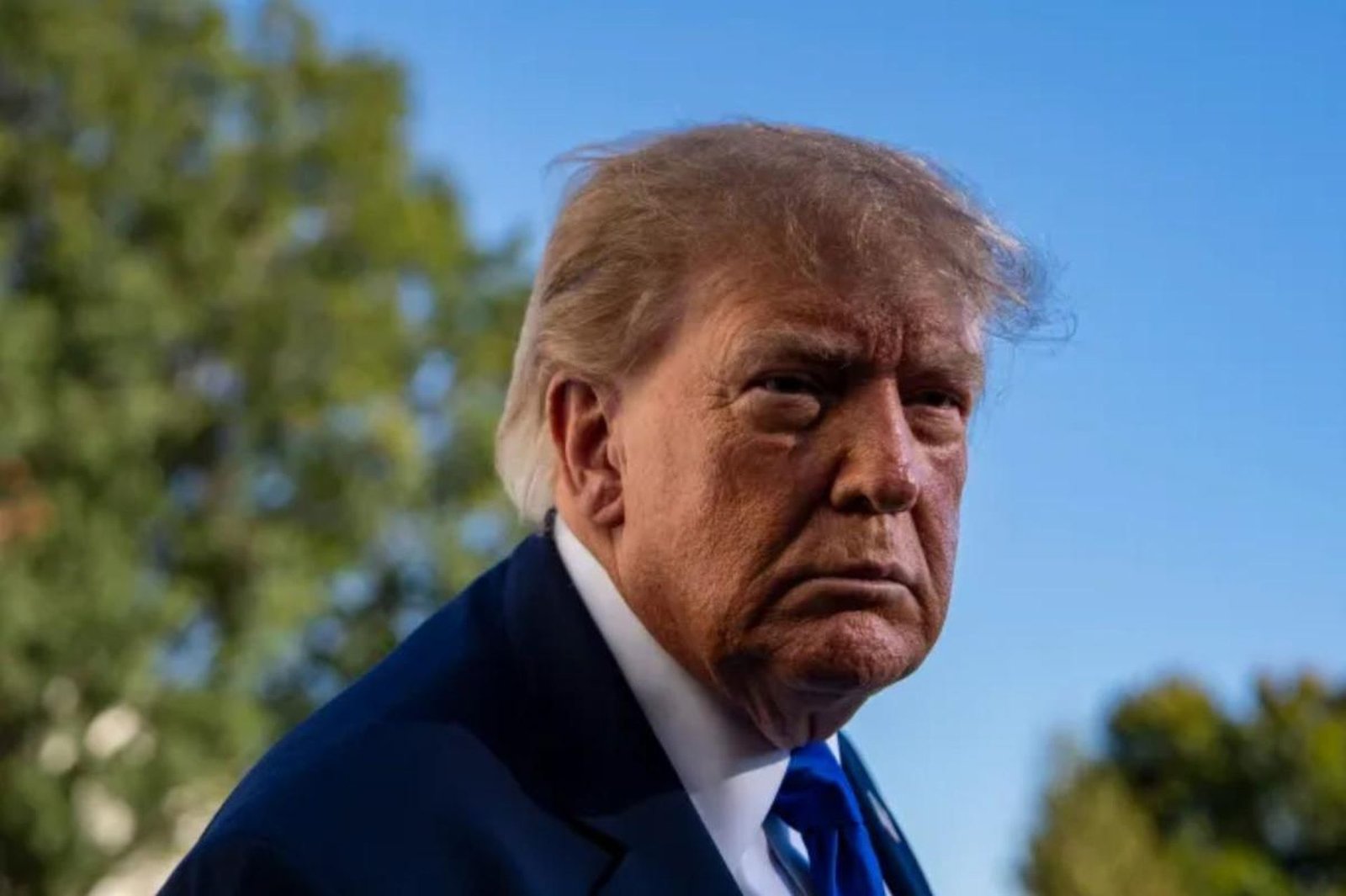
    United States President Donald Trump has brushed off the Republican Party’s heavy defeat in the midterm elections, congratulating Democrats on their victory and pledging to work with them in the remainder of his term.

    Democrats won control of both the House of Representatives and the Senate in Tuesday’s elections, in a result widely described as a blue wave. The outcome leaves Trump as a lame-duck president for the final two years of his presidency, with the opposition now able to block legislation and scrutinise his administration.

    Speaking to Fox News in a phone call after the results, Trump struck an unusually conciliatory note. He congratulated the Democrats, saying they had done a good job and fought hard, and said he looked forward to working with them. He also told the New York Times that he was willing to accept the results.

    At the same time, Trump sought to distance himself from his party’s showing, arguing that the outcome would have been different had he himself been on the ballot. He pointed to the size of his rallies and said his supporters had turned out for those events in huge numbers.

    Trump also acknowledged that the war with Iran had played a part in the defeat, while blaming high fuel costs as another driving factor behind the Republican losses. His vice president, JD Vance, had earlier said the Iran war was the reason for the defeat, a comment that set the tone for the party’s post-election soul-searching.

    In his first public appearance after the election, on Wednesday, Trump visited the construction site of the White House ballroom, where he spoke to workers as the project’s final beam was installed. He talked at length about the building work and only addressed the election results when reporters put questions to him afterwards.

    The Democratic victory, which included flipping seven Senate seats, gives the party control of Congress at a moment of deep voter anger over the cost of living and the Iran war. Democratic leaders are now expected to use their majorities to challenge the administration’s agenda, while Trump has signalled he is open to deals across the aisle.

  • US midterms: Democrats flip North Carolina Senate seat

    US midterms: Democrats flip North Carolina Senate seat

    Early projections from the United States midterm elections point to an encouraging night for the Democrats, with the party flipping a Republican-held Senate seat in North Carolina while holding key seats in Georgia and New Hampshire. The results, projected by major American outlets on election night, still leave control of both chambers of Congress undecided, with counting continuing in the closest races.

    The night’s first major Senate flip came in North Carolina, where former Democratic governor Roy Cooper was projected to defeat Republican Michael Whatley, a former chairman of the Republican National Committee. The seat had been held by Republicans since 2015 and was vacated by Senator Thom Tillis. Cooper’s victory was described by commentators as one of the most consequential Democratic wins of the night, as the party fights to overturn the Republicans’ 53-47 Senate advantage.

    In Georgia, Democratic Senator Jon Ossoff was projected to hold his seat, defeating Republican challenger Mike Collins, while in New Hampshire, Democrat Chris Pappas was projected to win the Senate race against former Republican senator John Sununu. According to reports, Pappas becomes the first openly gay man elected to the United States Senate.

    Not every early result went the Democrats’ way. In Florida, Republican Senator Ashley Moody was projected to hold her seat against Democrat Angie Nixon, although the margin was reported to be closer than many had expected. In South Carolina, Democrat Annie Andrews was reported to be holding a slim lead over Republican Senator Darline Graham with around half of precincts counted.

    Democrats need a net gain of four Senate seats to take control of the chamber, and early counts showed that target still well out of reach. One live count in the early hours of Wednesday put the Senate at 36 to 31 including seats not contested this year, with neither chamber called. In the House of Representatives, where all 435 seats were contested, early called seats stood at 11 for the Democrats and 8 for the Republicans, with 218 seats needed for a majority.

    There were notable House results too. In North Carolina’s 11th Congressional District, Democrat Jamie Ager was reported to have flipped a seat Republicans had held for more than a decade, defeating Republican Jennifer Balkcom. Democrats also claimed victory in Florida’s 22nd Congressional District, an area closely associated with President Donald Trump. In New Jersey, Democratic Representative LaMonica McIver won re-election, and in Pennsylvania, Chris Rabb won the state’s 3rd Congressional District.

    In Illinois, NBC News and Fox News projected that Lieutenant Governor Juliana Stratton would become the state’s next senator. With many tight races still uncalled, officials and analysts cautioned that final control of Congress may not be known for days, as has happened in previous midterm elections.