Tag: Ukraine

  • Russia Launches Biggest Attack of the Year on Ukraine as Missiles Fall in Poland

    Russia Launches Biggest Attack of the Year on Ukraine as Missiles Fall in Poland

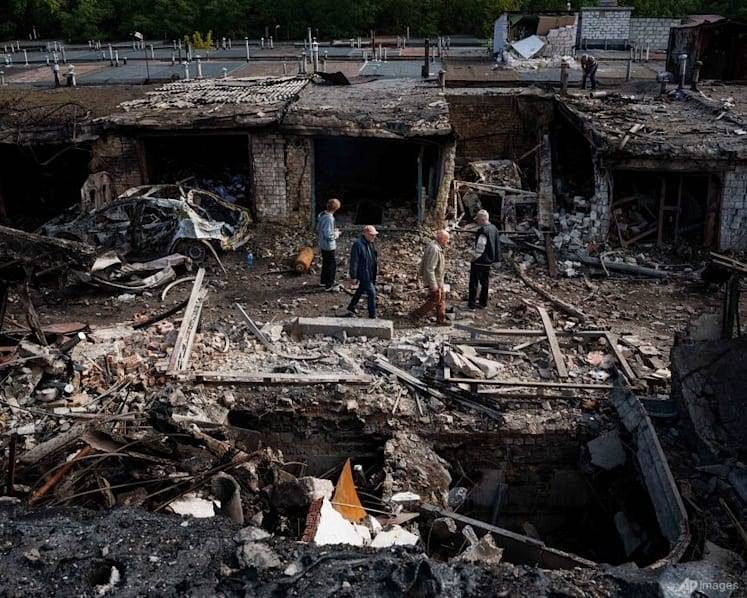
    Russia launched one of its largest aerial attacks of the war on Ukraine overnight, firing more than 400 drones and over 110 missiles at cities across the country and killing at least nine people, according to Ukrainian authorities.

    Ukrainian President Volodymyr Zelensky described the assault, which lasted more than ten hours, as the biggest attack this year. Ukraine’s air force said Russia fired 84 cruise missiles and 404 drones, while Zelensky said 27 ballistic missiles were also launched, some carrying cluster warheads.

    At least nine people were killed and at least 28 injured, Ukrainian authorities said. Six of the dead were in the capital, Kyiv, where three bridges over the Dnipro River were damaged and several districts were left without electricity, heating and water. Kyiv Mayor Vitali Klitschko said the Podilsko-Voskresenskyi, Southern and Darnytskyi bridges were hit, halting transport links between the two sides of the capital.

    Strikes were also reported in the Kharkiv, Dnipropetrovsk, Lviv, Vinnytsia, Sumy and Chernihiv regions. Ukrainian officials said a hospital in Kharkiv and residential buildings were among the targets, and a seven-year-old boy was among those killed in a separate missile strike on the city of Kryvyi Rih.

    Russia’s defence ministry said it had launched a massive strike using high-precision weapons and drones against Ukrainian military and energy facilities, port infrastructure in the Odesa region and transport infrastructure in Kyiv. It said it had also hit a facility where missiles are assembled, a plant making components for rocket fuel and a drone assembly facility.

    The attack came hours after Russian President Vladimir Putin left China, where he had held trilateral talks with United States President Donald Trump and Chinese leader Xi Jinping in the city of Shenzhen. The three leaders had presented themselves as a force for peace. Putin had earlier vowed retaliation after Ukrainian strikes damaged the bridge linking occupied Crimea with the Russian mainland.

    During the assault, two Russian missiles and a suspected drone also came down on Polish territory, Polish officials said. Prime Minister Donald Tusk said the incident appeared to be a deliberate provocation, noting that it coincided with a European military exercise taking place in south-eastern Poland.

    Polish Defence Minister Wladyslaw Kosiniak-Kamysz said a Russian Kh-101 cruise missile crashed near Nowy Lipowiec, a second missile came down near Rudnik nad Sanem, and a jet-powered drone fell near Molodycz. Polish and NATO fighter jets were scrambled and Patriot air defence systems were activated. Officials said none of the three crashes caused casualties or substantial damage.

    Zelensky said only three of the 27 ballistic missiles fired overnight were intercepted, reflecting what he described as Ukraine’s critical shortage of missiles for its US-made Patriot air defence system. He said the pauses of 20 to 30 minutes between waves of missiles made it harder to put out fires, clear rubble and carry out repairs.

    The attack has renewed pressure on Ukraine’s allies to speed up air defence supplies, as winter approaches and Russia continues to target the country’s energy network.

  • یوکرین مذاکرات: امریکی ایلچیوں کی پیوٹن سے ملاقات

    یوکرین مذاکرات: امریکی ایلچیوں کی پیوٹن سے ملاقات

    امریکہ کے دو سینئر ایلچی جمعرات کو روس کے دارالحکومت ماسکو پہنچے، جہاں انہوں نے روسی صدر ولادیمیر پیوٹن سے یوکرین میں امن کے لیے نئے دور کی بات چیت کی۔ یہ ملاقات ابوظہبی میں روس اور یوکرین کے درمیان امریکہ کی ثالثی میں ہونے والے دو روزہ مذاکرات کے بعد ہوئی۔

    امریکی وفد میں خصوصی ایلچی اسٹیو وٹکوف اور امریکی صدر ڈونلڈ ٹرمپ کے داماد جیرڈ کشنر شامل تھے۔ رپورٹوں کے مطابق یہ دسویں مرتبہ تھا کہ وٹکوف نے پیوٹن سے ملاقات کی۔ ماسکو پہنچنے پر روسی صدر کے خصوصی ایلچی کرل دمتریف نے ان کا استقبال کیا۔

    اس سے پہلے ابوظہبی میں روس اور یوکرین کے درمیان دو روز تک سہ فریقی مذاکرات ہوئے جو بدھ کو ختم ہوئے۔ یہ نو ماہ میں پہلی مرتبہ تھا کہ دونوں فریق امریکہ کی ثالثی میں براہ راست میز پر بیٹھے۔ اختتام پر قیدیوں کے ایک بڑے تبادلے کا اعلان ہوا، تاہم جنگ کے خاتمے پر کوئی واضح پیش رفت نہ ہو سکی۔ یہ جنگ چار سال سے زیادہ عرصے سے جاری ہے۔

    کریملن میں ہونے والی ملاقات میں پیوٹن نے واضح کیا کہ روس اپنے بنیادی مطالبات سے پیچھے نہیں ہٹے گا۔ رپورٹوں کے مطابق انہوں نے کہا کہ ماسکو یوکرین کے ان علاقوں پر اپنے دعوے سے دستبردار نہیں ہوگا جنہیں روس نے اپنا حصہ قرار دیا ہے، اور یوکرین میں غیر ملکی امن فوج کی تعیناتی کو بھی مسترد کر دیا، جسے انہوں نے جنگ کا تسلسل قرار دیا۔

    تاہم پیوٹن نے ایک انسانی ہمدردی کی تجویز بھی پیش کی۔ خبر رساں ادارے انٹرفیکس کے مطابق انہوں نے مشرقی یوکرین کے شہر کوستیانتینیوکا کے لیے روس اور یوکرین کے مشترکہ مشن کی تجویز دی، جہاں ان کے بقول چار سو سے پانچ سو عام شہری اب بھی موجود ہیں۔ انہوں نے کہا کہ یہ مشن اسی طرز پر ہو سکتا ہے جس کے تحت گزشتہ ماہ کے آخر میں جنوب مشرقی یوکرین کے قصبے اولیشکی سے رہائشیوں کو نکلنے کا موقع ملا تھا۔ رپورٹوں کے مطابق امریکی ایلچیوں نے اس تجویز کی حمایت کی۔

    بات چیت میں یہ سوال بھی اہم رہا کہ آیا یورپی ممالک اگلے دور میں شامل ہوں گے۔ وٹکوف نے کہا کہ پیوٹن نے یورپی نمائندوں کی شرکت پر اتفاق کیا ہے، تاہم ماسکو نے اس کی تصدیق نہیں کی۔ صدر زیلنسکی نے بھی اعلان کیا کہ یورپ کو اگلی ملاقات میں مدعو کیا جائے گا، اور اسے اہم لمحہ قرار دیا۔

    کریملن سے نکلنے کے بعد وٹکوف اور کشنر جمعرات کی دوپہر ڈبلن روانہ ہوئے، جہاں انہوں نے یورپی سیاسی برادری کے سربراہی اجلاس کے موقع پر زیلنسکی سے ملاقات کی۔ اس فورم کے نویں اجلاس میں تقریباً چالیس یورپی رہنما شریک ہوئے تھے، جو 2022 میں یوکرین پر روس کے حملے کے بعد قائم کیا گیا تھا۔

    کریملن کے معاون یوری اوشاکوف نے کہا کہ روس امریکہ کے ساتھ یورپ میں سلامتی کے نئے ڈھانچے پر بات چیت کے لیے تیار ہے۔ انہوں نے بتایا کہ پیوٹن اور ٹرمپ اگلے ہفتے چین میں سربراہی اجلاس کے موقع پر یوکرین پر بات جاری رکھیں گے۔ اگلے دور کی کوئی تاریخ سامنے نہیں آئی، اور معاہدے کی شرائط پر دونوں فریقوں میں اب بھی بڑا فرق ہے، حالانکہ زیلنسکی کا کہنا ہے کہ 2027 سے پہلے نتیجہ حاصل کرنے کا موقع موجود ہے۔

  • US Envoys Meet Putin in Moscow for Ukraine Peace Talks

    US Envoys Meet Putin in Moscow for Ukraine Peace Talks

    Two senior American envoys arrived in Moscow on Thursday for a fresh round of talks with Russian President Vladimir Putin, carrying the outcome of two days of United States-mediated discussions between Russia and Ukraine in Abu Dhabi.

    The envoys are Steve Witkoff, the United States special envoy, and Jared Kushner, the son-in-law of US President Donald Trump. According to reports, the Kremlin meeting was the tenth time Witkoff has met Putin. The two men were received by Kirill Dmitriev, a special envoy of the Russian president, after landing in the Russian capital, and were accompanied by him to central Moscow ahead of the talks.

    The visit followed two days of trilateral negotiations in Abu Dhabi, the capital of the United Arab Emirates, which ended on Wednesday. Those sessions were the first direct talks between Russia and Ukraine mediated by the United States in nine months. They ended with an announcement of another large-scale prisoner exchange, though they produced no visible breakthrough on the wider question of ending the war, which has now lasted more than four years.

    During the Kremlin meeting, Putin signalled that Russia would not soften its central demands. According to reports, he said Moscow would not give ground on its claim to parts of Ukraine that Russia says it has annexed, and he ruled out the deployment of foreign peacekeeping troops in Ukraine, describing such a move as a continuation of the war.

    Putin did, however, put forward a humanitarian proposal. According to the Interfax news agency, he suggested a joint Russian-Ukrainian mission to the city of Kostiantynivka in eastern Ukraine, where he said between 400 and 500 civilians remained. He said the mission could be modelled on a similar effort that allowed residents to leave the town of Oleshky in south-eastern Ukraine at the end of last month. The American envoys supported the proposal, according to reports.

    Much of the discussion also centred on whether European countries should take part in the next round of negotiations. Witkoff said after the meeting that Putin had agreed to let European representatives join the next round, although Moscow has not confirmed that agreement. Ukrainian President Volodymyr Zelensky, meanwhile, announced that Europeans would be invited to the next meeting, calling it an important moment because they are Ukraine’s partners.

    After leaving the Kremlin on Thursday afternoon, Witkoff and Kushner travelled to Dublin, where they met Zelensky on the sidelines of a summit of the European Political Community. Around 40 European leaders had gathered there for the ninth session of the forum, which was set up after Russia’s invasion of Ukraine in 2022.

    Kremlin aide Yury Ushakov said after the Moscow talks that Russia was ready to begin discussing proposals for a new security architecture in Europe together with the United States. He added that Putin and Trump would continue discussing a settlement in Ukraine during their planned meeting at the Asia-Pacific Economic Cooperation summit in China next week. No date has been disclosed for the next round of US-Russia-Ukraine talks, and the two sides remain far apart on the terms of any settlement, even as Zelensky has said there is a window of opportunity to reach a result before 2027.

  • Kushner and Witkoff Land in Moscow for 10th Putin Peace Talks

    Kushner and Witkoff Land in Moscow for 10th Putin Peace Talks

    United States envoys Jared Kushner and Steve Witkoff arrived in Moscow on Thursday for talks with Russian President Vladimir Putin, in the latest American push to secure a peace deal in Ukraine. The Kremlin meeting, expected in the first half of the day, will be the tenth time Mr Witkoff has met Mr Putin in person.

    The two envoys were met off their plane by Kirill Dmitriev, Mr Putin’s special envoy, who accompanied them to central Moscow in wet snow. Their visit follows two days of trilateral peace talks in Abu Dhabi, which ended on Wednesday with the announcement of another large planned prisoner exchange but no public breakthrough on the wider negotiations.

    The Abu Dhabi talks were the first face-to-face peace talks brokered by the United States in nine months. Envoys from both sides reported only limited headway in efforts to end a conflict now in its fourth and a half year, and the American delegation has since been trying to shift the discussion towards long-term security guarantees and post-war recovery.

    Deadlock over Donbas

    Kyiv has firmly rejected Mr Putin’s demand that Ukraine surrender the whole of the eastern Donbas region in return for peace. With the negotiations stalled over territory, the United States has attempted to redirect them towards security pledges that could reassure Ukraine without settling the land question first.

    President Donald Trump has spoken publicly with optimism about the chances of a deal, but meaningful compromises have yet to materialise. The gap between the two sides remains wide: Moscow continues to insist on territorial concessions, while Kyiv says it will not trade land for a ceasefire.

    Separately, a senior Russian diplomat said on Wednesday that Moscow was prepared to conclude non-aggression pacts with NATO member states as part of a new security framework for Europe. Many European lawmakers have argued against negotiating the continent’s defence arrangements until tangible progress, such as a truce in Ukraine, has been achieved.

    The Moscow visit comes at a delicate moment for the American effort. The Abu Dhabi round showed that the two sides can still sit at the same table and agree on humanitarian steps such as prisoner swaps, but it also showed how far apart they remain on the central questions of territory and security. Whether the Kremlin talks move the process forward will become clearer once the envoys report back to Washington.

  • Ukraine Strikes Cut Russia’s Oil Refining by 30%

    Ukraine Strikes Cut Russia’s Oil Refining by 30%

    Ukraine’s renewed drone campaign against Russian oil refineries has cut about 30 percent of Russia’s oil refining capacity, according to two industry sources cited by Reuters, in the sharpest blow yet to Moscow’s fuel sector since the attacks stepped up late last month.

    The strikes have disrupted operations and caused emergency situations at nine of Russia’s 35 major refineries over the past week, the sources said. The plants hit since late October, including three large facilities in central Russia, have a combined nameplate capacity of around 300,000 metric tons of crude a day, or about 2.2 million barrels, against Russia’s total primary refining capacity of roughly 930,000 tons a day.

    That headline figure does not translate directly into lost output, because refineries rarely run at full capacity. The sources estimated that the actual fall in crude processing could reach up to 200,000 tons a day. At the end of October, Russian refineries were processing about 700,000 tons, or five million barrels, of crude daily.

    Key plants hit across central Russia

    Among the facilities affected are refineries in Ryazan, Yaroslavl and the Volga region. On Monday, a Ukrainian drone struck the Kirishi refinery, Russia’s second largest, in an overnight attack that set the plant on fire, the governor of the Leningrad region said, adding that one woman had been killed in the attack.

    Ukraine has stepped up strikes on Russian refineries since the end of October, when a ceasefire on attacks against energy facilities announced by US President Donald Trump failed to take hold. Kyiv has said it is continuing to target assets linked to Russia’s oil sector, while Russia has kept up its own strikes on Ukraine’s power grid and cities.

    The damage is adding to Moscow’s difficulties in keeping fuel supplies flowing at home. Russia has extended a temporary ban on exports of petrol, diesel and other fuels until 31 January 2027, and major energy companies have restricted domestic fuel sales as shortages bite in some regions.

    The diplomatic fallout continued on Tuesday, when Russian Foreign Minister Sergei Lavrov wrote in the Russian newspaper Kommersant that Ukraine was ignoring Mr Trump’s calls to stop striking energy targets. Ukrainian President Volodymyr Zelenskiy said last week that Kyiv would keep hitting targets associated with Russia’s oil industry.

    With winter approaching and both sides still trading blows against energy infrastructure, the refinery campaign has become one of the most consequential fronts of the war, hitting Russia’s revenues and its ability to supply its own motorists at the same time.

  • Drone Strike Kills Zaporizhzhia Nuclear Plant Worker

    Drone Strike Kills Zaporizhzhia Nuclear Plant Worker

    A worker at the Zaporizhzhia nuclear power plant in Ukraine has been killed in a drone attack, the International Atomic Energy Agency said on Monday, in the latest deadly incident at Europe’s largest nuclear facility.

    The IAEA, the United Nations nuclear watchdog, said one employee of the plant in Russian-held south-eastern Ukraine was killed in a drone attack on Monday. The agency also said that an employee of the nearby Zaporizhzhia thermal power plant had been killed by a drone on Monday in a separate attack.

    Director General Rafael Grossi strongly condemned the deadly attacks, saying they represented unacceptable attacks that violated the indispensable pillars of nuclear safety. The IAEA said it had been informed that an employee was killed in the drone attack, in the latest incident affecting plant staff and further endangering nuclear safety and security during the military conflict.

    The agency’s chief emphasised that the attack came only a few days after another member of staff had also died in a drone attack. On October 29, a drone attack reportedly killed a welder working at the plant’s centralised repair workshop, according to the IAEA. On October 3, the agency reported a series of drone attacks that damaged transformers at the nearby thermal power plant, threatening the nuclear facility’s external electricity supply. In August, a drone explosion at a bus stop used by plant personnel killed one person and injured 15 others.

    The plant, located near the city of Enerhodar in southern Ukraine, has six pressurised water reactors and is the largest in Europe. It has been controlled by the Russian army since the early weeks of the full-scale invasion in 2022, and sits near the front line in a part of south-eastern Ukraine captured early in the war. Both sides have repeatedly accused each other of putting it in jeopardy.

    The killing came a day after the plant lost access to all off-site power for several hours on November 8, forcing it to rely on emergency diesel generators for cooling and safety functions. The IAEA announced the outage around noon local time, and about ten hours later confirmed that power had been restored. Mr Grossi called it the 27th such event of the war, and the agency said the exact cause and location of the disconnection were not yet known. The plant’s spent fuel pools and reactor vessels require continuous cooling power regardless of shutdown status, and the IAEA has repeatedly warned that sustained diesel-dependent operation creates radiological risk.

    The agency has maintained a permanent monitoring presence at the Russian-occupied facility since September 2022 over concerns about the risk of a nuclear accident, and its teams at the site continue to hear explosions, at times nearby. Mr Grossi has called on all parties to exercise maximum restraint and halt attacks that could threaten nuclear plants, their personnel or supporting infrastructure. The deaths on Monday underlined how the danger is not only to the reactors themselves, but to the workers who keep them safe.

  • Europe to Join Ukraine Peace Talks in Abu Dhabi

    Europe to Join Ukraine Peace Talks in Abu Dhabi

    European countries will take part in the US-mediated talks between Ukraine and Russia in Abu Dhabi next week, French Foreign Minister Jean-Noel Barrot said on Sunday, in a change to the format first announced for the meeting.

    “The Europeans will be well represented; France will be in Abu Dhabi to take part in these discussions,” Barrot told French radio station RTL. He said he could not yet say who would represent France, and he is not expected to attend the talks himself.

    The talks are scheduled for 10 and 11 November. US envoy Steve Witkoff said Washington would bring Ukrainian and Russian delegations together in Abu Dhabi to discuss ending the war, post-war security agreements and de-escalation.

    Until now, the meeting had been presented as a trilateral negotiation at official level, bringing together Ukraine, Russia and the United States. The identities of the participants have not been made public, and the Kremlin has said its delegation will be led by presidential aide Vladimir Medinsky.

    Ukrainian President Volodymyr Zelensky has long argued that European allies should have a seat at the table, while Russia had suggested there would be no place for European representatives. Barrot said the Europeans had told the American mediators that no discussion about the continent’s future could ignore their expectations and demands. He said France would be there to ensure that Europe’s voice is heard.

    Officials from the United States, Europe, Ukraine and NATO met in Brussels on Thursday to prepare for the Abu Dhabi talks, in a sign of the coordination under way before the delegations gather.

    The dispute over Europe’s role reflects a wider disagreement about who should shape any settlement. European governments have argued that a deal on the continent’s security cannot be struck without them, while Moscow has favoured a narrower format. The announcement from Paris suggests Washington has accepted, at least for this round, that Europe will have a presence in Abu Dhabi.

    Barrot said the Europeans had made clear to the American mediators that no discussion about the continent’s future could ignore their expectations and demands. With the war now in its fifth year, the question of who sits at the table has become almost as contested as the terms of any settlement itself, and Sunday’s announcement suggests Europe will not be left outside the room this time.

  • Zaporizhzhia Plant Loses Power Again, Fuel for 2 Weeks

    Zaporizhzhia Plant Loses Power Again, Fuel for 2 Weeks

    Europe’s largest nuclear power plant has lost its connection to the electricity grid once again, forcing it to run on emergency diesel generators while the United Nations nuclear watchdog warns that fuel reserves will last only about two weeks.

    The Zaporizhzhia Nuclear Power Plant in south-eastern Ukraine lost its last remaining external power line, the 330-kilovolt Ferosplavna-1 line, early on Sunday morning. The line went offline at 02:36 local time, and an attempt to reconnect it automatically failed, according to Ukraine’s nuclear operator Energoatom.

    The International Atomic Energy Agency (IAEA) confirmed the outage in a statement on Sunday, saying the plant was now relying on emergency diesel generators to cool its reactors and run other essential safety systems. The agency said the cause and the exact location of the disconnection were not yet known.

    “The cause and location of the latest disconnection are not yet known,” the IAEA said, adding that the plant currently has sufficient fuel reserves to operate a limited number of emergency diesel generators for about two weeks.

    Energoatom said this was the 16th time the plant had completely lost external power since the start of 2026, and reports citing the IAEA put the total at 27 such losses since the conflict began. The plant’s main Dniprovska power line has also been unavailable since at least 23 October, the IAEA said.

    Why the outage matters

    Zaporizhzhia produces no electricity itself. Its six reactors have been in cold shutdown since 2022, but the plant still needs a constant supply of power from outside to keep nuclear fuel cool and to run safety systems. Without it, the diesel generators are the only thing standing between the site and a loss of cooling.

    Energoatom warned that “operating in blackout mode creates a direct risk of failure of life-support systems and nuclear fuel cooling in the event that diesel generators break down or exhaust their fuel reserves, which could lead to a radiation accident.”

    IAEA Director General Rafael Grossi stressed the urgency of restoring the grid connection and building up diesel stocks to avoid any risk to nuclear safety. An IAEA team is stationed at the plant and continues to monitor conditions there.

    The plant, near the town of Energodar, is under Russian control and sits close to the front line of the war. Power for its vital cooling systems is supplied through lines that pass through Ukrainian-controlled territory, leaving them exposed to fighting and to strikes on energy infrastructure.

    Russian forces also attacked Ukrainian energy infrastructure overnight and on Sunday, causing new power outages across several regions, according to Ukrainian officials. The repeated loss of power at Zaporizhzhia has become one of the most persistent nuclear safety concerns of the war, with the IAEA raising the alarm each time the plant is cut off from the grid.

  • 40 dead as aid-centre bombing rocks Ukraine village

    40 dead as aid-centre bombing rocks Ukraine village

    The death toll from a Russian bombing of an aid distribution point in southeastern Ukraine has risen to 40, with dozens of people still missing, officials have said, in one of the deadliest strikes on civilians this year. The attack hit the village of Komyshuvakha in the Zaporizhzhia region on Monday, as residents gathered at a school building being used as a shelter and a humanitarian aid centre.

    Ukrainian President Volodymyr Zelensky has said Russian forces first dropped aerial bombs on the underground school building as people arrived to collect aid, and then struck the shelter again with more bombs. The building, whose classes have long been suspended because of its closeness to the front line, about 17 kilometres from the nearest Russian positions, handed out humanitarian aid every Monday and served as a shelter for local residents.

    The scale of the destruction has made the rescue effort painfully slow. Local governor Mykhailo Semikin said the victims were sheltering in a newly built, EU-funded reinforced basement designed to withstand most strikes, but the force of the bombs caused the concrete structure to collapse and a fire broke out. Two days after the attack, recovery work was still under way, and officials said only some of the bodies recovered had been identified, with further identification likely to require DNA testing.

    Among the dead were two members of a rescue crew and four police officers, according to emergency services. Police said the officers had been helping residents take shelter in the underground school when a follow-up strike trapped those trying to escape. The co-head of the Zaporizhzhia Regional Defense Council, Ivan Fedorov, wrote on Telegram that 59 people were missing.

    Russia’s Defence Ministry said the attack targeted Ukrainian military units around Komyshuvakha and two other settlements, and that up to 25 Ukrainian servicemen were killed. Both Russia and Ukraine deny deliberately targeting civilians. The World Central Kitchen charity, which delivers food and water to the community, said the facility that was hit was a humanitarian and administrative centre for local people.

    The United Nations Human Rights Monitoring Mission in Ukraine noted that the attack took place just as civilians had gathered to receive aid, and that the timing and location of the distribution were well publicised. The strike came a day after a brief US-brokered local ceasefire expired, and less than a week before the United States is due to bring Ukrainian and Russian delegations together in Abu Dhabi on November 10 and 11 for talks on ending a war now in its fifth year. For the families still waiting for news from Komyshuvakha, those talks will come too late.

  • Hackers send fake nuclear alerts to phones across Ukraine

    Hackers send fake nuclear alerts to phones across Ukraine

    Hackers broke into Ukraine’s nationwide air raid alert app on Sunday night and sent false warnings of nuclear and chemical attacks to people across the country, causing alarm in Kyiv and other cities before the service was suspended.

    The false alerts began shortly before eleven o’clock local time on Sunday 1 November. Users received a warning of a radiation threat in Kyiv, followed by messages in Russian claiming a nuclear alert would cover all of Ukraine and referring to the Oreshnik missile. Further alerts warned of a chemical attack on Kyiv and of street fighting in the capital, telling people not to go outside.

    Ukraine’s air force said on Telegram that the application had probably been subjected to hostile interference, telling users there was no radiation threat and urging them to stay calm and follow official updates. The app’s team later said third parties had carried out unauthorised interference, and it disabled push notifications and temporarily suspended the service. In the western Lviv region, a radiation hazard signal was briefly played on loudspeakers because of the app, although officials confirmed there was no radiation danger.

    The app is a lifeline for Ukrainians, warning them in real time of incoming missile and drone attacks and often giving them only minutes to reach shelter. Its temporary shutdown therefore carried serious risks, and officials urged people to rely on sirens, loudspeakers and official channels while it was being restored. The service was gradually brought back during Monday, according to the project’s team.

    Ukraine’s Centre for Strategic Communications blamed Russia for the hack, but responsibility has not been independently established. A hacking group calling itself Hitcore was reported to have claimed responsibility, though that claim could not be verified. Ukraine’s emergency services said there were no reports of casualties or damage from the false alerts, and an investigation is under way.

    Hours later, Russia’s own emergencies ministry said its mobile app had also suffered a massive cyberattack, sending false information to users in thirty-three regions. It said the app’s full functionality would be restored by the end of Monday. It is not clear whether the two attacks were linked, and neither side’s claims about the incidents have been independently confirmed.

    The episode has raised fresh questions about the safety of the digital systems civilians depend on during wartime. Air force spokesman Yurii Ihnat told Ukrainian television that the cyberattack had no impact on Ukraine’s security and defence operations, because the alert app is separate from military command systems.