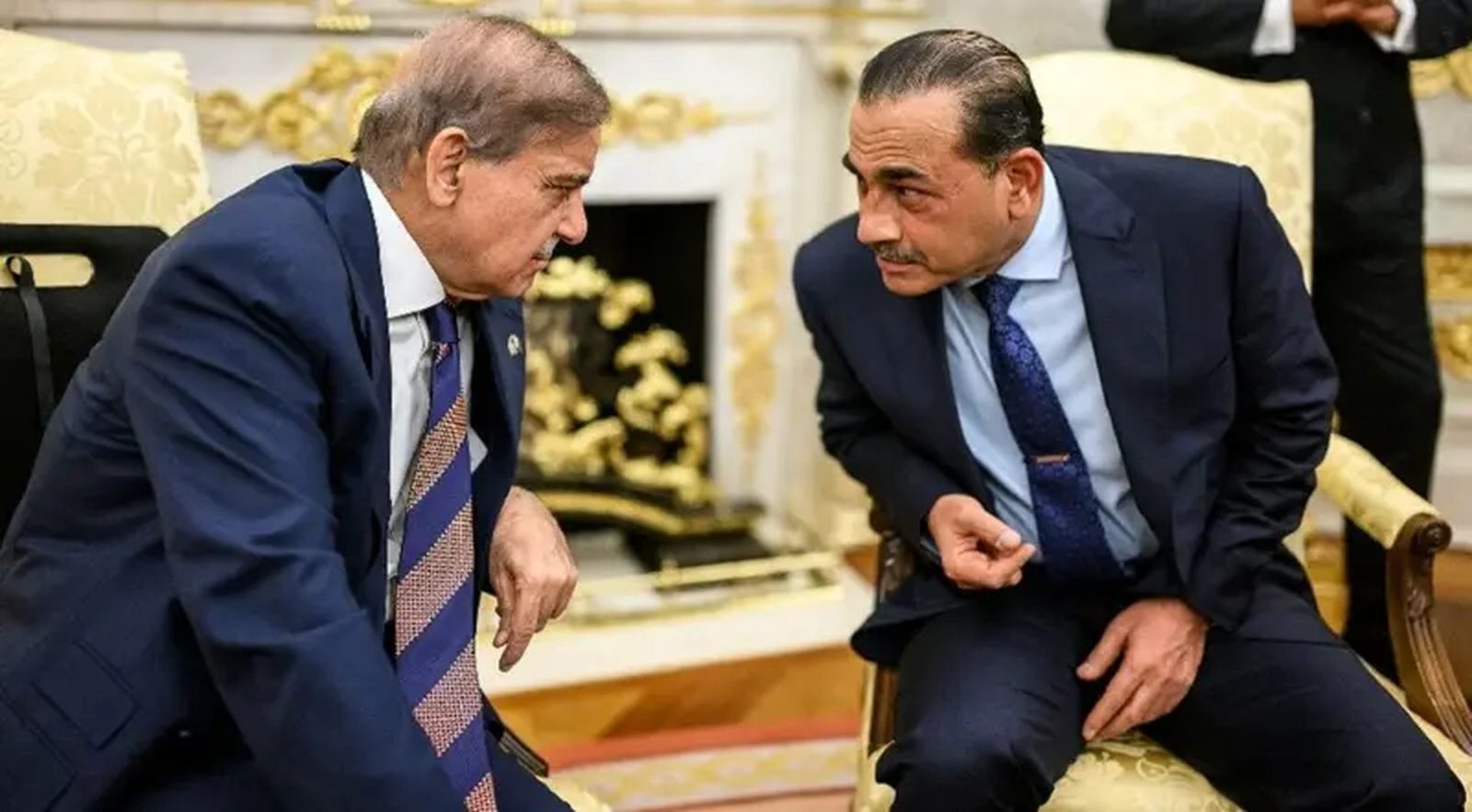
An emergency huddle in Riyadh, a blunt Turkish red line, and Islamabad’s calculated silence — experts weigh in
Rising clashes between Saudi Arabia and Yemen’s Houthi movement have dragged two key capitals — Islamabad and Ankara — into an uncomfortable debate: under the shadow of the Mecca defence pact, will Pakistan and Turkey become active parties to the conflict, or will their role stay confined to defence cooperation?
The question gained urgency on October 5, when the Political and Defence Strategic Committee held an emergency session in Riyadh. Its joint statement stressed translating collective-defence obligations into action, expanding military capabilities, and the rapid deployment of forces within the framework of member states’ national laws.
Turkey, however, drew a clear line the same week. Its foreign minister said the agreement was purely defensive in nature and that Ankara would not dispatch troops to attack another country.
Islamabad, for its part, has struck a cautious but committed tone. Pakistani officials describe the Mecca pact as now “operational.” Deputy Prime Minister and Foreign Minister Ishaq Dar confirmed he had discussed the matter with his Iranian counterpart Abbas Araghchi, adding that Tehran was distancing itself from the Houthis and Iraqi groups.
What remains undisclosed is what Pakistan is actually doing for Saudi Arabia’s defence. Officials insist the pact’s operational details cannot be made public.
In an interview with CNN, the Pakistan Army spokesperson did acknowledge that Pakistani contingents have been stationed in Saudi Arabia for decades. The Mecca alliance, he said, was no sudden development but a continuation of long-standing diplomatic, political and military ties between Pakistan, Saudi Arabia and Turkey.
Meanwhile, The New York Times, citing a senior military source, claimed Pakistani fighter jets were being used in air operations against the Houthis. Pakistan’s information ministry dismissed the report as “false and fabricated,” urging the media to avoid speculative reporting and noting that any such deployment would be announced by the relevant authorities.
On social media, the debate is heated. Many voices have cautioned the government against wading into Yemen’s war, drawing a distinction between protecting the holy sites and joining an offensive campaign.
Against this backdrop, defence and diplomatic experts have offered their assessments. Umar Karim, a Middle East specialist associated with the University of Birmingham, argues that Saudi security is now inseparable from the Yemen conflict — so even without direct involvement, some degree of indirect Pakistani role is likely to persist. In his view, the government is keeping media coverage on a tight leash and will probably continue its policy of denials, though facts on the ground could take a different turn.
It is worth recalling that in 2015, Pakistan’s parliament voted against joining the Yemen conflict. Former ambassador Maleeha Lodhi maintains that any decision must serve Pakistan’s national interest — not that of another country, however close — and, as in 2015, should follow parliamentary debate and approval.
Karim, though, believes circumstances have changed since 2015. Given the current state of civil-military relations, he says, it is not hard to see where real authority lies; neither the bilateral agreement with Riyadh nor the trilateral Mecca pact was debated in parliament beforehand, making a meaningful parliamentary role unlikely this time either.
Barbara Slavin of the Stimson Center, a US think tank, says Saudi Arabia feels cornered. According to her, the Trump administration has made it clear that beyond intelligence and limited technical support, Riyadh will have to rely on its own resources — a reality that raises the stakes for cooperation from Pakistan and Turkey.
Lodhi warns that Pakistan is already stretched: border tensions with India and Afghanistan, plus internal militancy. Opening another front, she says, would not be wise.
Former diplomat Mansoor Khan cautions that foreign military entanglements can haunt countries for decades, pointing to Afghanistan and Iraq. While the Mecca pact obliges Pakistan and Turkey to assist Saudi Arabia if it is attacked, he argues every effort must be made to avoid direct intervention in a third country. Diplomacy and negotiations, he says, are the better strategy. Pakistan could instead help Riyadh with strategic planning and stronger air and missile defences.
Khan further warns that Pakistan — already battling the TTP, BLA, ISIS and Al-Qaeda along its western border, fuelling instability in Balochistan and Khyber Pakhtunkhwa — has every reason to avoid adding a Houthi dimension to its troubles.
Karim offers a different lens: rather than a crude transaction, Pakistan is honouring sovereign commitments it freely undertook. The more visible its contribution, he notes, the clearer it will become what Islamabad expects from Riyadh regarding its own defence and security.
The Iran angle matters too. Pakistan’s foreign minister says Iran’s president and foreign minister have disassociated themselves from the Houthis — yet experts note that a Pakistani role in Yemen could strain ties with Tehran and dent Islamabad’s credibility as a mediator between Iran and Washington.