Tag: trade

  • پاکستان کی برآمدات 11.4 ارب ڈالر کی ریکارڈ سطح پر

    پاکستان کی برآمدات 11.4 ارب ڈالر کی ریکارڈ سطح پر

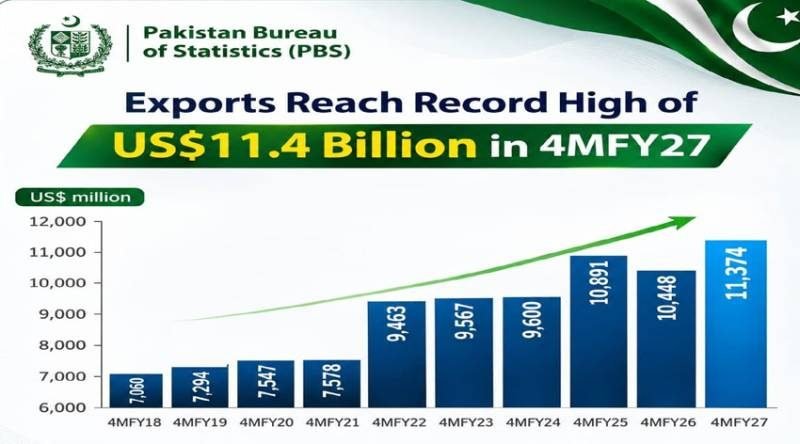
    پاکستان کی اشیا کی برآمدات جاری مالی سال 2026-27 کے پہلے چار ماہ، جولائی سے اکتوبر کے دوران، 11.4 ارب ڈالر کی ریکارڈ سطح پر پہنچ گئی ہیں۔ یہ اعداد و شمار 15 نومبر کو جاری ہونے والے سرکاری اعداد و شمار کے مطابق ہیں۔ گزشتہ سال اسی عرصے میں برآمدات 10.4 ارب ڈالر تھیں، اس لیے اس بار ان میں 8.8 فیصد اضافہ ہوا ہے، اور حکومت نے اس نتیجے کو جولائی تا اکتوبر کے عرصے کے لیے ایک ریکارڈ قرار دیا ہے۔

    یہ مرکزی اعداد و شمار حکومت کے اعداد و شمار ہیں۔ پاکستان بیورو آف سٹیٹسٹکس نے اپنی شائع شدہ خلاصہ رپورٹ میں جولائی تا اکتوبر کی برآمدات 11.336 ارب ڈالر بتائی ہیں، جو ایک سال پہلے کے 10,446 ملین ڈالر کے مقابلے میں 8.52 فیصد زیادہ ہیں۔ دونوں اعداد و شمار ایک دوسرے کے قریب ہیں، لیکن ایک جیسے نہیں ہیں۔

    بیورو کی خلاصہ رپورٹ میں ماہانہ صورتحال بھی دی گئی ہے۔ صرف اکتوبر میں برآمدات 2,929 ملین ڈالر رہیں، جبکہ اکتوبر 2025 میں یہ 2,848 ملین ڈالر تھیں۔ بیورو نے اکتوبر کے اعداد و شمار کو عارضی قرار دیا ہے، جس کا مطلب یہ ہے کہ بعد میں جاری ہونے والی رپورٹوں میں ان میں تبدیلی ہو سکتی ہے۔

    حکومت کی جانب سے جن اقدامات کا ذکر کیا گیا

    حکومت نے برآمدات میں بہتری کا سہرا بجٹ میں کیے گئے اقدامات کے سر باندھا ہے۔ سرکاری بیان کے مطابق ان اقدامات میں برآمدکنندگان کے لیے کم ٹیکس اور سرچارج، تیزی سے ریفنڈ، برآمدی ترقیاتی فنڈز کا بہتر استعمال، اور برآمدات کے لیے سستی مالی معاونت شامل تھی۔

    حکومت نے کہا کہ ان میں سے ہر قدم کا مقصد برآمدکنندگان پر لاگت اور نقد رقم کے دباؤ کو کم کرنا تھا۔ کم ٹیکس اور سرچارج سے ان کے چارجز کم ہوتے ہیں، تیز ریفنڈ سے رقم جلد واپس ملتی ہے، اور سستی مالی معاونت سے برآمدی آرڈرز کی فنڈنگ سستی ہوتی ہے۔

    وزیراعظم شہباز شریف نے حکام کو 2029 تک برآمدات 60 ارب ڈالر تک بڑھانے کا ہدف دیا ہے۔ یہ ایک طویل مدتی ہدف ہے، جو برآمدات کی موجودہ سطح سے بہت زیادہ ہے، اور آنے والے برسوں کے لیے ایک مشکل ہدف مقرر کرتا ہے۔ جاری مالی سال کے لیے حکومت نے اشیا کی برآمدات کا ہدف 34 ارب ڈالر مقرر کیا ہے۔

    جولائی تا اکتوبر کا نتیجہ حکومت کو سالانہ ہدف کی طرف جزوی طور پر آگے لے جاتا ہے، اور مالی سال کے ابھی آٹھ ماہ باقی ہیں۔ پہلے چار ماہ کی رفتار برقرار رہتی ہے یا نہیں، یہی طے کرے گا کہ سال کے اختتام تک برآمدات 34 ارب ڈالر کے کتنا قریب پہنچتی ہیں۔

    یہ اعداد و شمار 15 نومبر کو سرکاری اعداد و شمار کے طور پر جاری کیے گئے تھے۔ حکومت کی جانب سے پیش کردہ ریکارڈ، بیورو کی اپنی خلاصہ رپورٹ کے ساتھ مل کر، مالی سال کے ابتدائی مہینوں میں اضافے کی طرف اشارہ کرتا ہے، لیکن اس اضافے کا درست پیمانہ اس بات پر منحصر ہے کہ شائع شدہ دونوں اعداد و شمار میں سے کون سا استعمال کیا جائے۔

  • پاکستان کی برآمدات 11.4 ارب ڈالر کی ریکارڈ سطح پر پہنچ گئیں

    پاکستان کی برآمدات 11.4 ارب ڈالر کی ریکارڈ سطح پر پہنچ گئیں

    مالی سال 2026-27 کے پہلے چار ماہ (جولائی تا اکتوبر) میں پاکستان کی اشیا کی برآمدات 11.4 ارب ڈالر کی ریکارڈ سطح پر پہنچ گئیں، جو گزشتہ سال کی اسی مدت کے مقابلے میں 8.8 فیصد زیادہ ہیں۔

    گزشتہ مالی سال کے جولائی تا اکتوبر کے دوران برآمدات 10.4 ارب ڈالر تھیں، اور تازہ اعداد و شمار اس مدت کے لیے اب تک کی سب سے زیادہ چار ماہ کی برآمدات ہیں۔

    آزاد اردو نے بھی انہی اعداد و شمار کی خبر دی اور اس اضافے کو معیشت کے لیے اہم پیش رفت قرار دیا، جس سے ظاہر ہوتا ہے کہ مالی سال کے ابتدائی مہینوں میں برآمدات میں مسلسل بہتری آئی ہے۔

    حکومت نے اس اضافے کو وزیر اعظم شہباز شریف کی جانب سے وفاقی بجٹ میں متعارف کرائے گئے اقدامات اور کاروبار و صنعت کی مدد کے لیے فنانس ٹیم اور دیگر سرکاری اداروں کی مربوط کوششوں سے جوڑا ہے۔

    حکومت کے مطابق ان اقدامات میں کاروبار و صنعت، خصوصاً برآمد کنندگان کے لیے ٹیکس اور سرچارجز میں کمی، ٹیکس ریفنڈز کی تیز تر ادائیگی، اور برآمدات کی ترقی کے لیے مختص فنڈز کا بہتر استعمال شامل ہے۔

    حکومت نے برآمد کنندگان کے لیے رعایتی قرضوں تک رسائی بھی بڑھائی ہے اور چھوٹے و درمیانے درجے کے برآمد کنندگان کے لیے خصوصی مالی معاونت متعارف کرائی ہے، جس میں خرد و چھوٹے کاروباروں پر خصوصی توجہ دی گئی ہے۔

    حکام کا کہنا ہے کہ یہ اقدامات اور اداروں کی مربوط کوششیں کاروبار کے لیے سازگار ماحول پیدا کرنے اور علاقائی و عالمی چیلنجز کے باوجود پاکستان کی برآمدی صلاحیت مضبوط کرنے میں مدد کر رہی ہیں۔

    حکومت نے کہا ہے کہ وہ مسابقتی پالیسی ماحول، مالیات تک بہتر رسائی اور پائیدار اصلاحات کے ذریعے کاروبار، صنعت اور سرمایہ کاروں کو مزید سہولتیں دینے کے لیے پرعزم ہے، اور سمت مضبوط برآمدات، زیادہ سرمایہ کاری اور نجی شعبے کی قیادت میں برآمدات پر مبنی پائیدار ترقی کی طرف ہے۔

    اشیا کی برآمدات پاکستان کے لیے زرمبادلہ کے اہم ذرائع میں سے ایک ہیں، اور ان کی کارکردگی پر گہری نظر رکھی جاتی ہے کیونکہ ملک اپنی بیرونی پوزیشن مضبوط کرنے کی کوشش کر رہا ہے۔ جولائی تا اکتوبر کی مدت مالی سال کے پہلے چار ماہ پر محیط ہے، جس کا آغاز یکم جولائی سے ہوا تھا۔

  • Pakistan Exports Hit Record $11.4 Billion in July-October

    Pakistan Exports Hit Record $11.4 Billion in July-October

    Pakistan’s goods exports reached a record $11.4 billion in the first four months of the current fiscal year 2026-27, rising 8.8 per cent compared with the same period last year, 24News reported on Sunday.

    Exports stood at $10.4 billion during July to October of the previous fiscal year, and the latest figures mark the highest four-month total ever recorded for the period, according to the report.

    The figures were also reported by Azaad Urdu, which described the rise as a significant development for the economy, with exports growing steadily in the opening months of the fiscal year.

    The government has linked the growth to measures introduced by Prime Minister Shehbaz Sharif in the federal budget, along with a coordinated approach by the Finance Team and other government institutions to support businesses and industry.

    According to the government, the steps include reduced taxes and surcharges for businesses and industry, particularly exporters, faster tax refunds, and better use of funds set aside for export development.

    The government has also increased access to low-cost financing for exporters and introduced dedicated financing support for small and medium-sized exporters, with a particular focus on micro and small enterprises.

    Officials said these measures, together with coordinated institutional efforts, are helping to create a more enabling business environment and to strengthen Pakistan’s export capacity despite persistent regional and global challenges.

    The government said it remains committed to further facilitating businesses, industry and investors through a more competitive policy environment, improved access to finance and sustained structural reforms, with the direction set towards stronger exports, greater investment and private-sector-led, export-driven and sustainable growth.

    Goods exports are one of Pakistan’s main sources of foreign exchange, and their performance is closely watched as the country works to strengthen its external position. The July to October window covers the first four months of the fiscal year, which began on 1 July.

    The figures were shared in a government social media post, which said the record performance reflected the impact of the measures introduced in the federal budget and the coordinated approach of the Finance Team and government institutions.

    The post also said the government remains committed to facilitating businesses, industry and investors, and to building a private-sector-driven, export-led growth path, even as regional and global conditions remain difficult for exporters.

  • Iraq Reopens Key Iran Border Crossing After 3-Week Closure

    Iraq Reopens Key Iran Border Crossing After 3-Week Closure

    Iraq reopened the Sheeb border crossing with Iran on Tuesday morning after a closure of nearly three weeks, restoring a key route for travellers and trade between the two countries, while announcing that another crossing will shut temporarily later in the week.

    The Sheeb crossing, in the eastern province of Maysan, resumed operations at 8am local time after Iraq’s Border Ports Authority said the technical requirements and procedures needed to restart it had been completed. The crossing faces Iran’s Chazabeh crossing in Khuzestan province and is one of the main routes for passengers and goods moving between the two neighbours.

    The government had shut Sheeb on 21 October to review security arrangements and install detection equipment aimed at stopping smuggling. The closure had disrupted travel for traders and for pilgrims, as Sheeb is the only land crossing approved for Pakistani pilgrims travelling by road to Iraq through Iran.

    Mandali crossing to close from Friday

    At the same time, the border authority announced that the Mandali crossing in Diyala province will close temporarily from 8am on Friday, 13 November, for maintenance and preparatory work ahead of the rainy season. Officials did not say when Mandali would reopen, saying only that a date would be announced once the work is finished.

    The head of the Border Ports Authority, Omar al-Waeli, said in a statement carried by the state news agency INA that the aim was to keep travellers and goods moving smoothly. He said the technical work at Sheeb had been completed and the crossing was ready to operate normally again.

    The reopening comes days after Iraq’s Foreign Minister Fuad Hussein said the United States Treasury had asked Baghdad to close all of its border crossings with Iran except for two, as part of Washington’s efforts to increase economic pressure on Tehran. It was not immediately clear whether the decision to reopen Sheeb or to close Mandali temporarily was connected to that request, according to reports of the announcement.

    For travellers, the reopening is welcome news after three weeks in which the busy crossing stood closed. Pilgrims and traders who had been forced to find other routes, including flights to Baghdad and Najaf, can once again cross by land at Sheeb, while officials say the temporary closure at Mandali is a planned maintenance step rather than a security measure.

  • China Extends Rare Earth Controls Pause Until January

    China Extends Rare Earth Controls Pause Until January

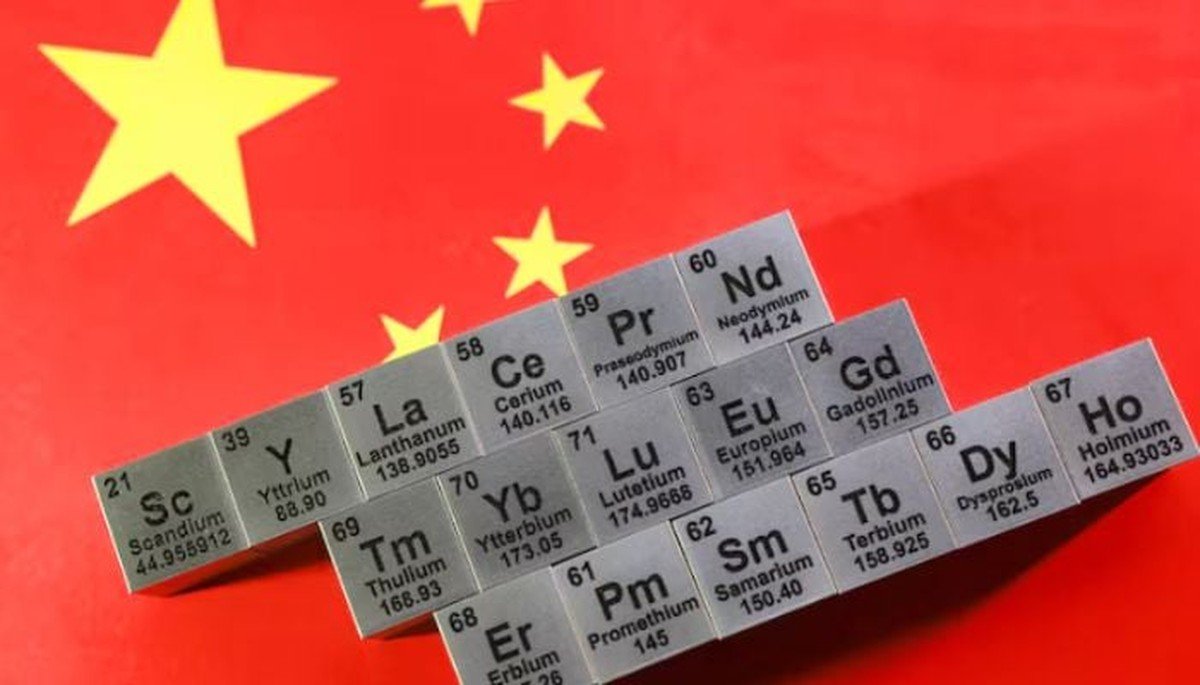
    China has extended its pause on new rare earth export controls by two months, until January 10, easing fears of fresh disruption to global supply chains.

    China’s Ministry of Commerce announced the extension on Monday, in a short statement that gave no further details. The waivers had been due to expire this month, and the extension preserves part of a wide-ranging deal struck after a summit between Presidents Xi Jinping and Donald Trump.

    China introduced export controls on certain rare earths in April 2025, then expanded them further in October of that year, widening their scope and adding new controls on certain diamonds with industrial applications and lithium battery technology. The measures were then paused for one year last November after a summit between Xi and Trump in South Korea.

    The pause traces back to the meeting between Xi and Trump in South Korea last November, where the two leaders agreed to hold off on a series of trade measures while talks continued. Monday’s announcement extends that truce by two months, keeping the door open for a broader agreement between the world’s two largest economies.

    The extension is part of a broader suspension of trade countermeasures and tariffs announced by China on Monday as it negotiates with Washington over an enduring trade deal. The pause runs alongside ongoing holds on certain United States tariffs and port fees, as the two economic superpowers work towards a more durable agreement.

    The delay offers temporary relief for international technology, automotive and defence supply chains that depend heavily on Chinese-processed critical minerals, preventing an immediate escalation in supply restrictions. Rare earths are essential components in products ranging from electric vehicles and wind turbines to smartphones and military equipment, which is why any tightening of controls is watched closely around the world.

    The extension covers the pause on the expanded controls; it is not a repeal of the underlying restrictions. If no further agreement is reached, the controls could be reactivated when the new deadline arrives, leaving the January date as the next marker in the long-running trade negotiation between Beijing and Washington.

  • Saudi-Pakistan Fund Launches, 75% of Capital for Pakistan

    Saudi-Pakistan Fund Launches, 75% of Capital for Pakistan

    Investors from Saudi Arabia and Pakistan have signed an agreement to set up a joint private equity fund, in a move aimed at deepening private-sector trade and investment between the two countries.

    The Saudi-Pakistan Joint Business Council, formed by the governments of both countries, signed a memorandum of understanding in Karachi on Monday to establish the fund. Its initial size is described as several hundred million dollars, and it is expected to grow as new opportunities arise.

    Under the plan, about 75 percent of the fund will be invested in Pakistan, while the remaining 25 percent will go to projects in Saudi Arabia. Investors from the two countries are expected to contribute equal shares to the fund.

    The fund will target fast-growing private businesses in sectors including agriculture, mining and construction. It will also look at projects linked to the Pakistani government’s plan to commercialise public land and assets, including airports, motorways, ports and maritime development. In Saudi Arabia, it will consider commercial ventures across the country, including in the holy cities.

    The agreement also allows institutions from both countries to take part in the equity of the fund management company, opening the door to wider participation by financial and corporate institutions.

    Prince Mansour bin Mohammed Al Saud, speaking at the signing ceremony, said Saudi investors were actively looking for reliable partners in Pakistan and described the country as a natural partner for the Kingdom. Arif Habib, a leading Pakistani businessman, said the fund was a first step towards restoring the confidence of Saudi and other foreign investors in Pakistan.

    Fawad Mukhtar, the council’s co-chairman from Pakistan and chairman of Fatima Group, attended the ceremony virtually, while council members from both countries were present in Karachi.

    The launch comes at a time when Islamabad and Riyadh are deepening longstanding ties, especially in defence. Any establishment of the fund and its later investments will remain subject to regulatory approvals in both countries, and the final structure and first investments are expected to be confirmed only after the necessary clearances are secured.

  • £5.1bn prize as UK-EU draft food deal agreed

    £5.1bn prize as UK-EU draft food deal agreed

    Britain and the European Union have agreed a draft deal that would remove most post-Brexit border checks on food and farm goods, in what is being described as the most significant part of the wider reset in relations between London and Brussels. The UK government estimates the deal will eventually be worth £5.1 billion a year to the economy.

    According to the BBC, which first reported the agreement, a draft text of around 200 pages covering sanitary and phytosanitary rules has been circulated to EU member states for consideration at a meeting of EU ambassadors on Wednesday. The rules govern animal health, plant health and food safety in trade.

    For exporters, the practical change would be sweeping. The draft would remove the need for export health certificates costing around £200 each, phytosanitary certificates priced at about £25, and a range of related charges including inspector fees, organic certification costs, some port fees and sampling fees. Checks that have slowed shipments since Britain left the EU’s single market would fall away for trade in both directions.

    Several product lines blocked since the new border regime took effect would be able to resume. Under the draft, UK exports of fresh sausages and burgers, shellfish from domestic waters and seed potatoes to the EU could restart. The agreement would also bring back pet passports for animals travelling from Britain into the EU, ending a system that has required fresh veterinary documents for each trip.

    In return, Britain would commit to following and adapting to existing EU rules on plant, animal and food trade standards, a system known as dynamic alignment. The King’s Speech in May 2026 announced a European Partnership Bill to give ministers the powers to do so, and a Commons committee report expects the food and carbon deals to be running by mid-2027.

    The food deal has particular significance for Northern Ireland, whose post-Brexit arrangement kept it inside the EU’s single market for goods. Food products from elsewhere in the UK currently need paperwork and some physical checks when they arrive at Northern Irish ports, and the new agreement would radically reduce that burden.

    The draft sits alongside separate texts on linking emissions trading systems and on a youth travel and work scheme, plus a draft joint statement for leaders. The next checkpoint is Wednesday’s meeting of EU ambassadors, and the wider reset will be tested at leader level at a UK-EU summit later this month.

    Business groups have broadly welcomed the direction of travel, arguing that the paperwork costs of the current system fall hardest on small exporters. The deal is not yet final, and the details published so far are subject to negotiation, but if it clears the ambassador stage and the summit, it would mark the biggest easing of post-Brexit food trade barriers since Britain left the single market.

  • Government, PTI trade blame after dialogue fails to break deadlock

    Government, PTI trade blame after dialogue fails to break deadlock

    The federal government and the Pakistan Tehreek-e-Insaf traded blame on Sunday after hours-long negotiations failed to end the political deadlock, with both sides accusing each other of unwillingness to compromise.

    According to Dawn, Interior Minister Mohsin Naqvi said there had been no request from the PTI side for the long march to be postponed. He said the PTI had been given the option to hold a protest, but the government would not allow what he described as an attempt to create a disturbance in Islamabad. Naqvi warned that those supporting the PTI leader in violation of court orders would be committing contempt of court, adding that the government would take legal action “to every possible extent”.

    “We gave them this option. Now, if they violate the orders, whether they are workers or politicians, whether they are protesting within KP or outside KP, we will pursue them one by one,” Naqvi said, adding that the government wanted to ensure that “this repeated episode of creating a disturbance in Islamabad comes to an end”.

    Ministers accuse PTI of double standards

    Information Minister Attaullah Tarar said the PTI representatives had come for talks but were unwilling to abandon their “double standards and hypocrisy”. Tarar alleged that the provincial government’s policy was effectively promoting terrorism, and said the PTI leadership would have to decide whether it stood with Pakistan or Afghanistan. He blamed what he called the PTI government’s “double policy” for the loss of lives in the province.

    Defence Minister Khawaja Asif alleged that the PTI had been facilitating terrorism in Khyber Pakhtunkhwa, claiming this had resulted in insecurity in the province. In a statement posted on his social media account, he said the nation would “hold the KP government accountable” for the martyrdom of civilians and military personnel.

    The PTI, for its part, has maintained that its march is a constitutional and political struggle, with its leadership saying the party wants court decisions regarding its founder implemented. The second round of talks was held at Parliament House under the chairmanship of National Assembly Speaker Ayaz Sadiq, but concluded without agreement.

    The second round of talks was chaired by National Assembly Speaker Ayaz Sadiq at Parliament House, with the government side including Interior Minister Mohsin Naqvi and PPP Senator Sherry Rehman, and the opposition represented by PTI Chairman Barrister Gohar Ali Khan and Secretary General Salman Akram Raja, among others.