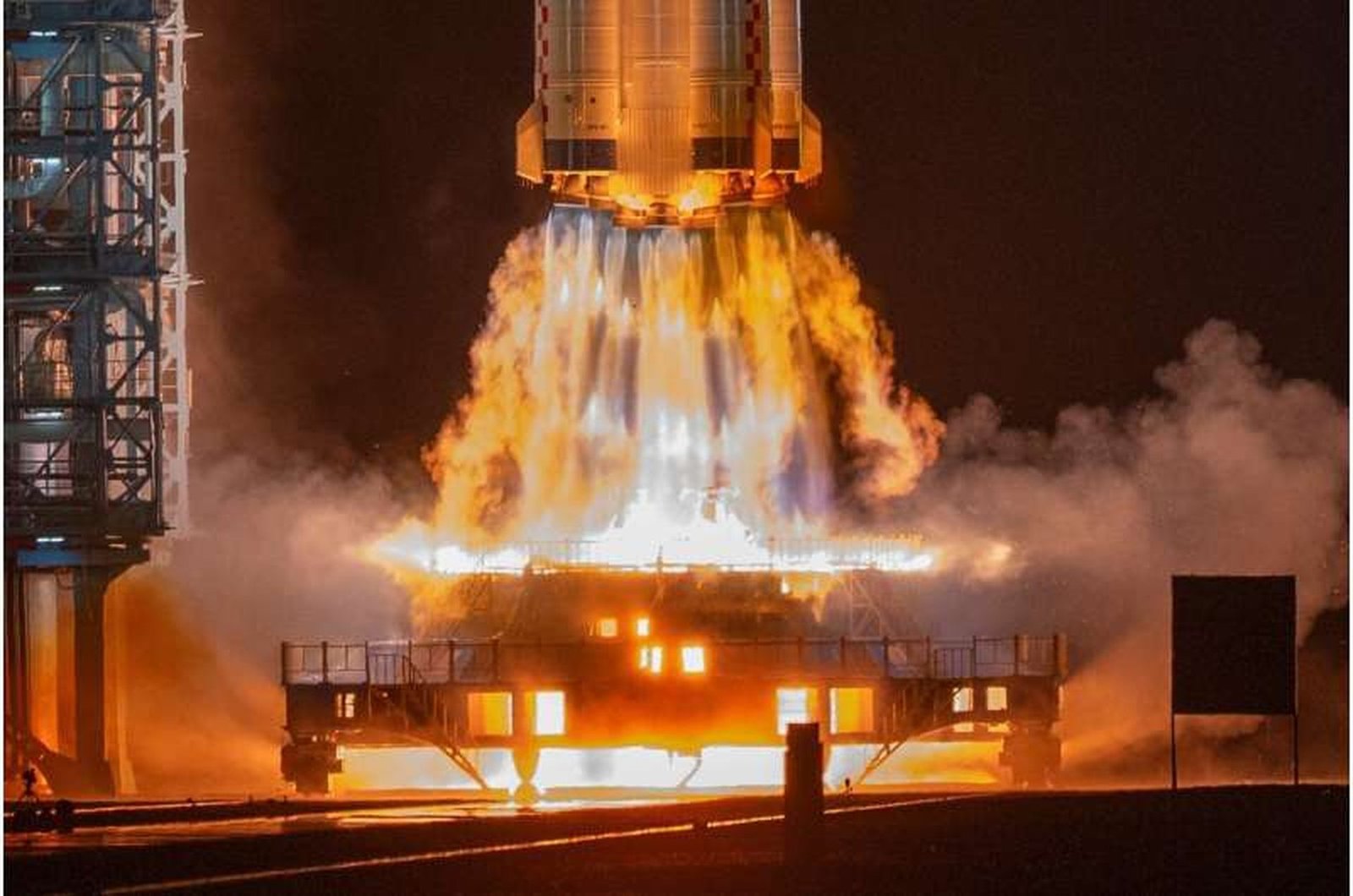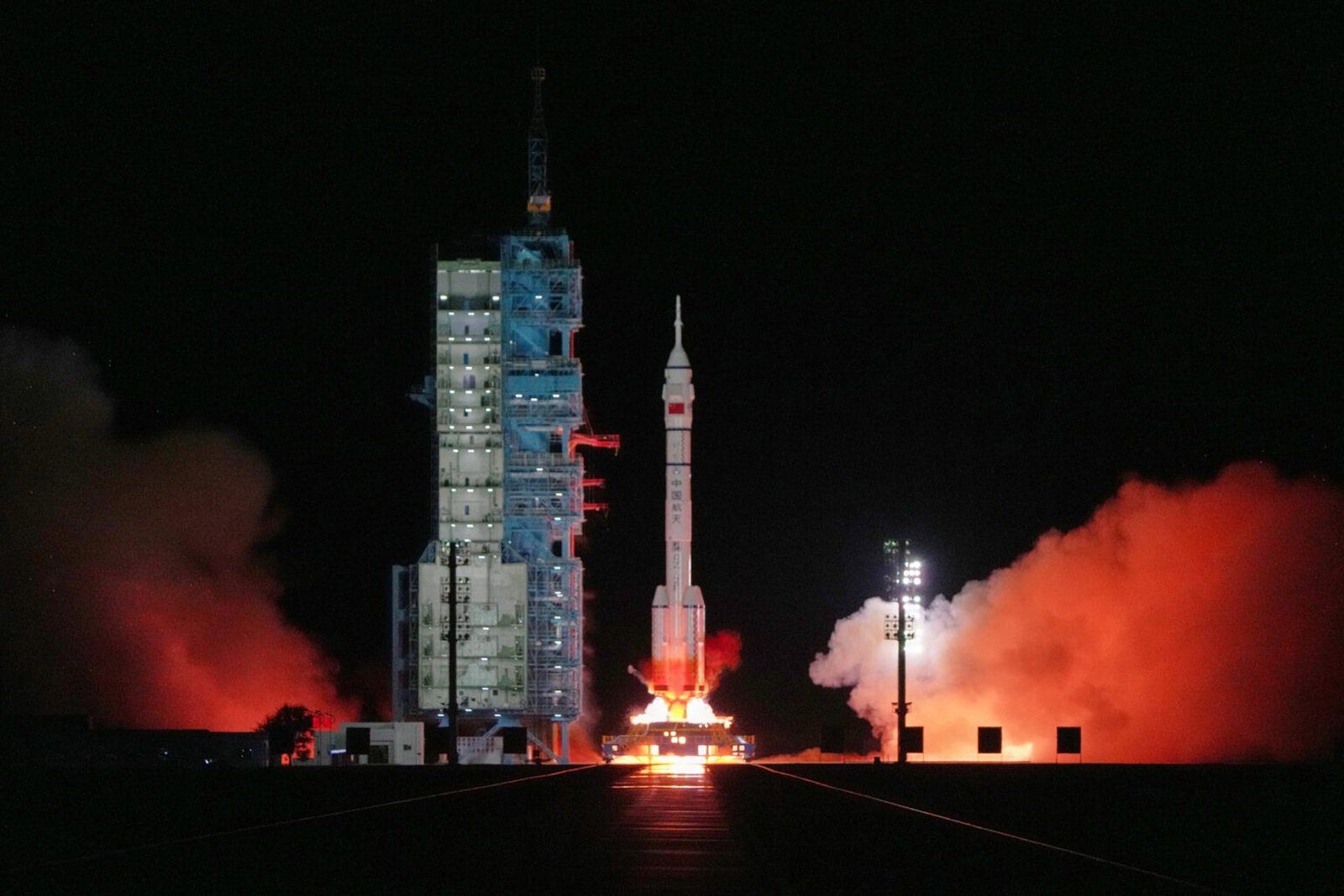
China has confirmed that a Pakistani astronaut will fly to its Tiangong space station, in a mission that will make him the first foreign national ever to visit the Chinese outpost. The China Manned Space Agency announced on Saturday, November 7, that the astronaut will travel aboard the Shenzhou-24 spacecraft as a payload specialist, marking the first time China’s crewed space programme has flown a foreign astronaut.
According to China’s official news agency Xinhua, the astronaut will spend a short period in orbit carrying out scientific work before returning to Earth aboard the Shenzhou-23 spacecraft, which has been docked at the station since May. Reports suggest the stay will last about a week, although the agency has not given an exact duration.
China has not yet named the astronaut who will make the flight. Two Pakistani pilots have been training for the mission in Beijing: Muhammad Zeeshan Ali, a Pakistan Air Force pilot, and Khurram Daud, a Pakistan Navy pilot. The pair were selected in April after a three-stage selection process and have been training at the China Astronaut Research and Training Center, where their programme has included intensive Chinese language instruction alongside hands-on operational training.
The flight follows a cooperation agreement signed by China and Pakistan in February 2025, under which Pakistan’s space agency, SUPARCO, and the China Manned Space Agency agreed to work together on astronaut selection, training and participation in Chinese space station missions. Pakistan became the first foreign country to take part in the programme in this way.
No launch date has been confirmed by Beijing. Pakistan’s Planning Minister, Ahsan Iqbal, has pointed to November 25 as the target date, but Chinese officials have not confirmed it. The mission is expected to take place before the end of the year.
The Pakistani astronaut will carry out scientific experiments during the stay. According to Pakistani space officials, four biotechnology experiments were selected from more than 300 proposals submitted by universities in Karachi, Lahore and Islamabad. Pakistan’s first lunar satellite, ICUBE-Q, flew aboard China’s Chang’e-6 mission in 2024, and the crewed flight is the next step in a space partnership that has grown steadily in recent years.
For Pakistan, the mission is a historic first: no Pakistani citizen has flown into orbit before. For China, it is the first time a foreign astronaut has joined one of its crewed missions, a milestone that comes as Beijing prepares for its first crewed landing on the Moon by 2030.