Tag: Space

  • Pakistan’s First Astronaut Heads to Space with China

    Pakistan’s First Astronaut Heads to Space with China

    China has said it is ready to deepen its cooperation with Pakistan in space and other fields, just days after confirming that a Pakistani astronaut will fly aboard one of its crewed space missions.

    The message came from Chinese Foreign Ministry spokesman Guo Jiakun, who told a regular press briefing in Beijing that China stood ready to work with the Pakistani side to carry forward the two countries’ traditional friendship and take bilateral relations to new heights.

    “We stand ready to work with the Pakistani side to carry forward our traditional friendship, deepen cooperation in space and other fields, and bring bilateral relations to new heights,” Guo said at the briefing, according to reports of his remarks.

    The announcement that a Pakistani astronaut will join the Shenzhou-24 mission crew as a payload specialist, complete a short flight in orbit and then return to Earth aboard the Shenzhou-23 spacecraft, has put the partnership in the spotlight. According to Chinese officials, it will be the first joint flight involving Chinese and foreign astronauts in the history of China’s manned space programme, and the first time a foreign astronaut visits China’s Tiangong space station.

    Two Pakistani pilots, Muhammad Zeeshan Ali and Khurram Daud, were chosen to train in China for the mission. Which of the two will make the flight has not yet been announced.

    A partnership reaching beyond Earth

    The flight follows an agreement signed in Islamabad in February 2025 between Pakistan’s space agency, the Space and Upper Atmosphere Research Commission, and the China Manned Space Agency, covering astronaut selection, training and participation in Chinese space station missions. The two candidates have been training at the China Astronaut Research and Training Centre in Beijing.

    Guo also underlined that China supports the peaceful use of outer space and active international cooperation there, describing the exploration of the universe as a shared pursuit of humanity. He noted that China and Pakistan are all-weather strategic cooperative partners, and called the coming flight yet another key outcome of bilateral cooperation in the year marking the 75th anniversary of diplomatic ties between the two countries.

    Space cooperation between the two countries already extends well beyond the astronaut programme. Pakistan has flown payloads on Chinese lunar missions, and the two sides are working together on a Pakistani-built lunar rover planned for China’s Chang’e-8 mission, expected around 2028. Pakistan’s planning minister, Ahsan Iqbal, has also said the country aims to land on the Moon by 2035, with Chinese cooperation helping to advance that ambition.

    China, meanwhile, has invested heavily in its space programme in recent years and aims to land its own astronauts on the Moon by 2030. For Pakistan, the coming mission offers a chance to send a person, along with home-grown research, to a working laboratory in orbit. Pakistan’s planning minister has pointed to a launch later in November, although the Chinese space agency has not confirmed a date, saying only that the flight is expected before the end of the year.

  • Pakistani astronaut to join China’s Shenzhou-24 mission

    Pakistani astronaut to join China’s Shenzhou-24 mission

    A Pakistani astronaut will join China’s Shenzhou-24 crewed mission to the country’s space station, becoming the first foreign visitor to the station, the China Manned Space Agency said on Saturday.

    The astronaut will take part in the mission as a payload specialist, according to Chinese state broadcaster CCTV, citing the agency. After completing a short-term flight in orbit, the astronaut will return to Earth aboard the Shenzhou-23 spacecraft.

    The mission will mark the first joint flight involving Chinese and foreign astronauts in the history of China’s crewed space programme, the agency said. It is being carried out as part of bilateral cooperation under Beijing’s Belt and Road Initiative, Chinese state media reported.

    China has not identified the astronaut who will make the flight, and Beijing has not announced a date for the mission. The announcement on Saturday confirmed that a Pakistani astronaut would take part, but did not name the individual or give a launch schedule.

    Two Pakistani pilots, Zeeshan Ali and Khurram Daud, have spent months training at the China Astronaut Research and Training Center in Beijing for a mission, a Pakistani space agency official told Reuters in September. Neither the Chinese agency nor the Pakistani side has said which of the two will fly.

    Selection began under a 2025 agreement

    The flight follows a cooperation agreement signed by China and Pakistan in February 2025 in Islamabad, covering the selection and training of Pakistani astronauts and their participation in Chinese space station missions. The agreement formally launched the selection process in Pakistan.

    After a three-stage selection and assessment process, two Pakistani reserve astronauts were chosen, according to the China Manned Space Agency. Both completed their training in China and passed the required evaluation. One of them will carry out the crewed flight, while the other will serve as a backup, the agency said.

    The arrangement makes Pakistan the first country to send an astronaut to China’s space station under the cooperation programme. The station, known as Tiangong, has previously been visited only by Chinese astronauts.

    As a payload specialist, the Pakistani astronaut will work alongside the Chinese crew during the short stay in orbit. The Chinese agency has not published further details of the work planned for the flight, or of how long the stay in orbit will last beyond describing it as short-term.

    The announcement was reported by Chinese state media on Saturday, and was also carried by the Xinhua news agency.

  • NASA’s 22-year Swift telescope burns up over Indonesia

    NASA’s 22-year Swift telescope burns up over Indonesia

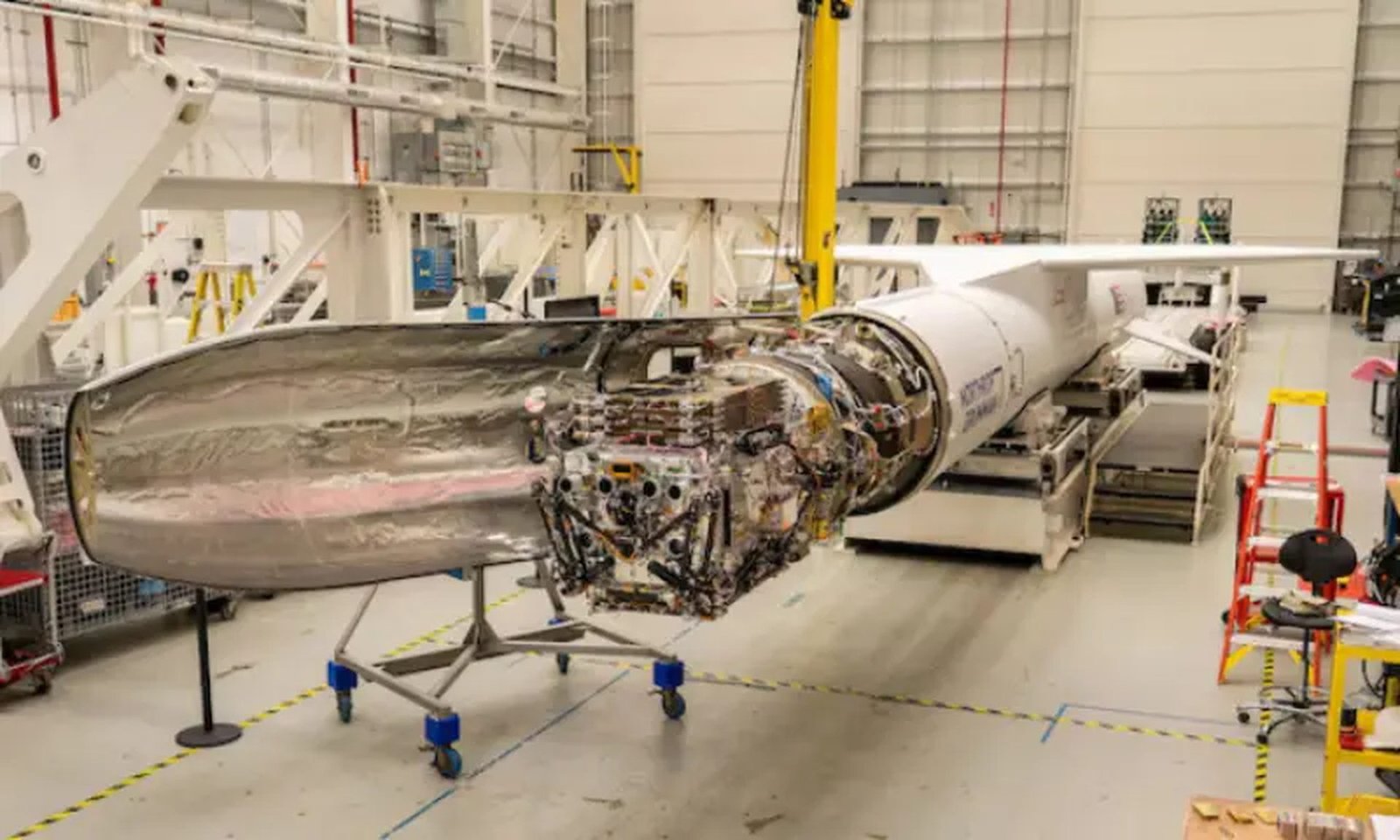
    NASA’s Swift satellite telescope, which spent two decades studying the most powerful cosmic explosions, has tumbled out of orbit and burned up in Earth’s atmosphere over Indonesia.

    The spacecraft fell from orbit as expected on Wednesday, 4 November, according to the reports, ending a mission that had lasted far longer than anyone had planned. Swift was launched in 2004 on what was meant to be a two-year mission, but it kept working for twenty years beyond that, outliving its planned lifespan by two decades.

    Swift was 5.6 metres long and weighed 1,470 kilograms. Its job was to watch for gamma-ray bursts, the most powerful explosions in the universe, and to study them in detail. Over its long life, it detected more than 1,600 gamma-ray bursts and observed about 4,000 blazars, the bright cores of distant galaxies.

    The telescope also observed about 1,200 supernovae, the violent deaths of stars, and more than 1,000 flaring stars. It discovered about 800 gamma-ray bursts with unknown origins, which NASA said could be among the highest-energy supernovae ever found.

    The end of the mission had been expected for some time. NASA lost contact with Swift in December 2025, and in January 2026 the agency said it was no longer possible to control the satellite. From that point, its fall back to Earth was a matter of time, and scientists had predicted it would burn up in the atmosphere rather than reaching the ground.

    That is what happened on Wednesday, when the spacecraft tumbled out of orbit and burned up over Indonesia. Satellites that re-enter the atmosphere at high speed heat up and break apart, and in Swift’s case the whole spacecraft was destroyed in the fall.

    Swift’s long career made it one of the most productive space telescopes ever flown. Gamma-ray bursts last only seconds, and catching them needs a telescope that can turn quickly to look at the right part of the sky. Swift was designed to do exactly that, and it sent alerts to telescopes on the ground so they could study the afterglow of each burst.

    The data it collected helped astronomers understand where gamma-ray bursts come from and how they are linked to the deaths of massive stars and the collision of dense objects in space. Its observations of supernovae and blazars added to that picture, building a record that scientists will keep studying for years.

    The mission also showed how much extra value can be got from a spacecraft that keeps working beyond its planned life. Swift was built for two years and delivered twenty-two, a return that NASA has pointed to as an example of what a well-built observatory can achieve.

    With the telescope now gone, its legacy lives on in the catalogue of bursts, supernovae and other objects it recorded, and in the scientists who learned their trade working with its data. The fiery end over Indonesia closes the story of a mission that was meant to be brief and turned out to be one of NASA’s longest-running successes.

  • After 378 Days, NASA’s Simulated Mars Crew Steps Out

    After 378 Days, NASA’s Simulated Mars Crew Steps Out

    After 378 days sealed inside a simulated Mars habitat, a four-person crew has emerged from NASA’s second CHAPEA mission at the Johnson Space Center, completing one of the longest ground-based tests yet of life on another planet. The crew lived and worked inside Mars Dune Alpha, a 1,700-square-foot habitat built with 3D-printing technology, designed to feel as close as possible to a real base on Mars.

    The crew entered the habitat on 19 October 2025 and spent more than a year cut off from normal daily life. Their mission was to test how people cope with isolation, limited space, and the practical routines of a Mars expedition, so that NASA can learn what a real crew would need before anyone travels to the red planet.

    The four crew members were mission commander Ross Elder, science officer Matthew Montgomery, flight engineer James Spicer, and medical officer Ellen Ellis. Each had a defined role, mirroring the way a real Mars crew would divide responsibilities between command, science, engineering, and medicine.

    During their time inside, the crew grew crops in simulated Martian soil, carried out simulated Mars walks, and worked with NASA under communication delays similar to those that would affect messages between Earth and Mars. Because a signal takes many minutes to travel between the two planets, the crew had to plan their work carefully and solve problems without instant help from mission control.

    Daily life in the habitat was tightly structured. The crew followed exercise routines, maintained equipment, ran science experiments, and kept to a schedule designed to protect both their physical health and their mental wellbeing during more than a year of confinement with the same three colleagues.

    Speaking after emerging, the crew described the experience as a step towards a real human mission to Mars. Elder said the goal of putting people on Mars was achievable and, in his view, rather inevitable, while Ellis spoke about the importance of maintaining American leadership in space exploration.

    NASA says the lessons from CHAPEA will feed directly into planning for future deep-space missions. The agency aims to send astronauts to Mars as early as the 2030s, after first returning astronauts to the Moon for the first time since 1972. Missions like CHAPEA help engineers test habitats, food systems, and crew routines on Earth, where problems can be studied safely.

    The crew will now take part in two weeks of post-mission evaluations and debriefing, during which doctors and researchers will study how the year in isolation affected their health, sleep, teamwork, and performance. Those findings will shape the design of future habitats and the selection and training of crews for missions far beyond the Moon.