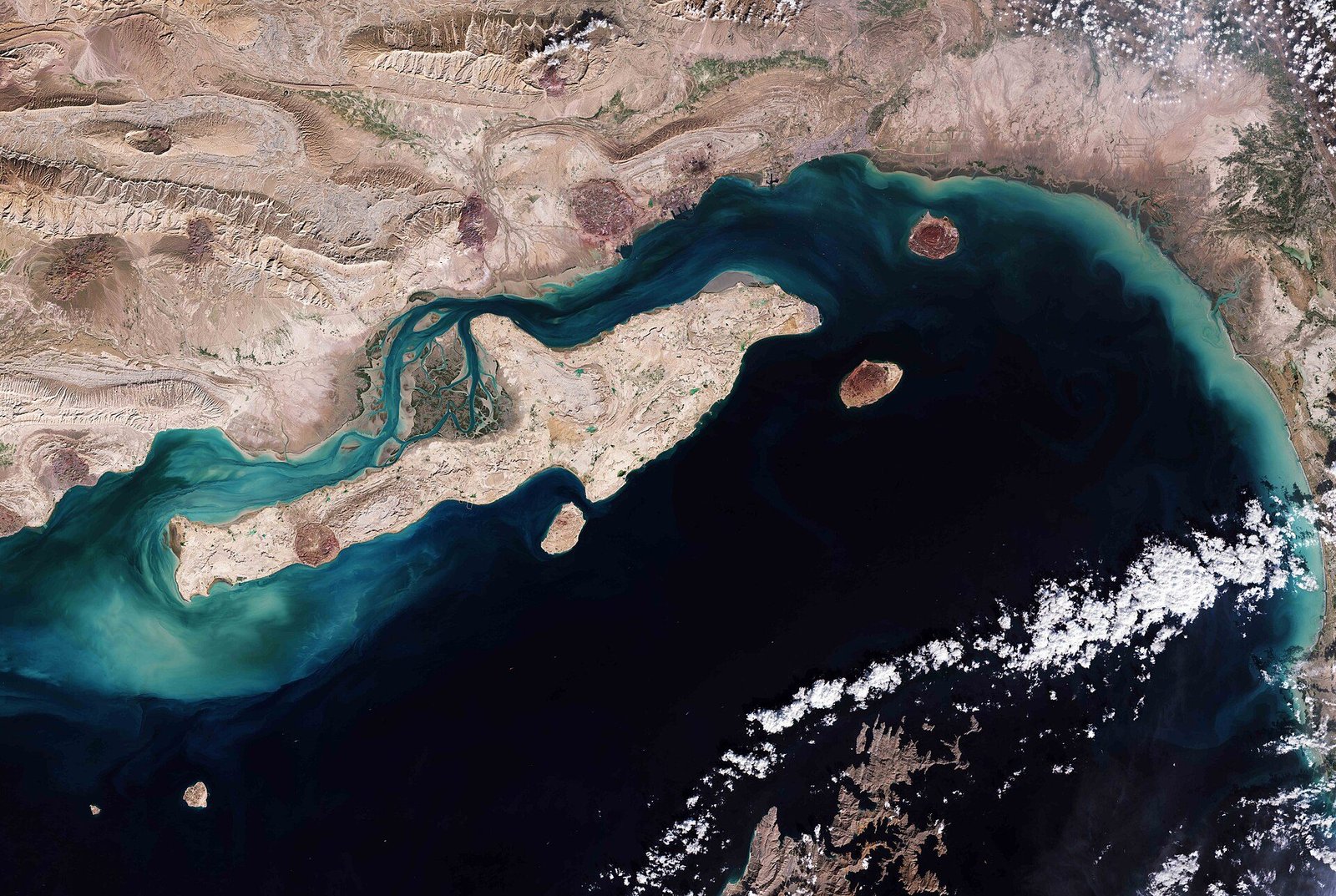
Tag: Qeshm Island

  • Trump Says US Hit Iran’s Air Defences as Missiles Strike Qeshm Island

    Trump Says US Hit Iran’s Air Defences as Missiles Strike Qeshm Island

    President Donald Trump has said the United States military carried out new limited strikes on Iran early on Saturday, targeting the country’s air defence systems, hours after Iranian state media reported explosions on Qeshm Island in the Strait of Hormuz.

    Iran’s semi-official Tasnim news agency said initial reports indicated that two missiles had struck Qeshm Island, adding that there was no official information on possible damage, according to Reuters. The state news agency IRNA had earlier reported that local witnesses said two projectiles had struck the Suza area of the island after the sound of an aircraft was heard overhead.

    Speaking to reporters shortly after arriving in West Palm Beach, Florida, on Friday evening, Trump described the military action as minor. He said Iran had built a small anti-aircraft device and that US forces had knocked it out in about 15 minutes, according to reports of his remarks.

    Iranian media, citing the Islamic Revolutionary Guard Corps, also said earlier on Friday night that the country’s air defences had destroyed a US MQ-1 Predator drone over Qeshm Island.

    The US military had previously reported carrying out what it described as defensive strikes on Monday. Explosions were heard on the islands of Qeshm and Hengam in the strategic Strait of Hormuz, and in the nearby mainland area of Bandar Abbas.

    Saturday’s strikes are the first since Trump’s Republican Party lost control of both chambers of Congress in Tuesday’s midterm elections. The result was driven in part, according to reports, by voter dissatisfaction with the handling of the conflict and by elevated fuel prices linked to the war, which is now in its ninth month.

    At the same time, diplomatic efforts continued. Qatar on Saturday dismissed as false and misleading online reports claiming that Prime Minister and Foreign Minister Sheikh Mohammed bin Abdulrahman Al-Thani had said the United States and Iran had failed to reach an agreement. Qatar’s International Media Office said his remarks had been deliberately distorted, and that he had in fact said both sides were continuing to work towards a deal.

    Two Middle East government officials said on Friday that Iran was reviewing proposals presented by chief mediator Qatar aimed at addressing differences with the United States over Tehran’s nuclear programme. One of the officials stressed that Iran, at least for now, remains unwilling to engage in negotiations with the Trump administration over its atomic activities until the US agrees to several core conditions, including ending the blockade on Iran’s ports, lifting sanctions, unfreezing its assets and paying compensation for war damage.

    According to regional officials, mediators and Iran have also discussed a possible bridge deal under which trust-building measures would be implemented over two days. The proposal would see the US blockade lifted and some of Iran’s frozen funds released, in return for Tehran allowing inspectors from the International Atomic Energy Agency into sites bombed by the US and Israel. On the second day, Iran would reopen the Strait of Hormuz under a modified agreement it has reached with Oman on the waterway.

    Iran has long maintained that its nuclear programme is peaceful. According to the International Atomic Energy Agency, Iran holds 440.9 kilograms of uranium enriched to 60 percent purity, a short technical step from weapons-grade levels of 90 percent.

    Separately, Saudi Arabia’s air defences shot down a drone in the Riyadh area late on Friday, and two ballistic missiles targeting the Najran province were shot down on Friday morning, with another drone intercepted in the Makkah region. The attacks were attributed to the Houthi militia in Yemen, which has been targeting civilian facilities in Saudi Arabia.

  • Iran warns new US strikes would widen Middle East war

    Iran warns new US strikes would widen Middle East war

    Iran’s Supreme Leader, Ayatollah Ali Khamenei, has warned that if the United States resumes attacks on Iran, the scope of the Middle East war would widen, according to a written statement reported by The News.

    Khamenei dismissed hopes that the results of the US midterm elections would change Washington’s policy towards Iran. The Democrats won the 3 November midterms, stripping President Donald Trump’s Republicans of control of Congress, and Trump acknowledged that the Iran conflict may have played a part in the defeat.

    On Tuesday, the United States launched strikes on Qeshm Island in the Strait of Hormuz. Iranian state media reported five explosions in rapid succession. Trump described the operation as a minor attack and said the United States had hit a newly built anti-aircraft facility.

    Iran’s Revolutionary Guards said a US MQ-1 drone was intercepted and destroyed over Qeshm Island. There was no confirmation of that claim from the United States side.

    Trump said he still had to take care of one or two targets, including Pickaxe Mountain in central Iran, a site the United States suspects of being linked to Iran’s nuclear programme. Tehran denies that the site is a nuclear facility. Trump also told the Financial Times that a full-scale resumption of war may not be necessary.

    President Masoud Pezeshkian said on Tuesday that his government was still trying to resolve the crisis through dialogue. Qatar, which has acted as a mediator, said it remained hopeful of an interim deal, while China said avoiding a return to hostilities was a top priority.

    The war was triggered in February 2026, when the United States and Israel struck Iran. Since then, the conflict has gone through rounds of fighting and fragile pauses, with regional states and outside powers pressing for a settlement.

    Khamenei’s warning is the latest sign that Tehran sees the confrontation as far from over. His statement made clear that Iran would treat any new American attack as an escalation that could draw in a wider war across the region.

    The strike on Qeshm Island, at the mouth of the Strait of Hormuz, is particularly sensitive because the strait carries a large share of the world’s seaborne oil. Any sustained fighting there would threaten shipping and push up energy prices worldwide.

    The exchange of claims over the drone also underlines how hard it is to verify what is happening in the conflict zone. Iran says it destroyed an American drone, while Washington has not confirmed the loss, leaving the episode unresolved.

    Diplomats in the region say the coming days will show whether the latest strikes were a limited action or the start of a new round of fighting. Qatar’s mediation effort continues, but both sides have so far shown little sign of stepping back from their positions.

    For now, the situation remains tense. Iran has warned of a wider war, the United States has signalled that more targets remain, and the countries caught between them are urging restraint before the conflict spreads further.

  • Iran claims three US drones downed near Hormuz

    Iran claims three US drones downed near Hormuz

    Iran’s Islamic Revolutionary Guard Corps has claimed that its forces shot down three United States drones near the Strait of Hormuz. The claims were carried by Iranian state media and reported by international outlets on Tuesday, November 3, 2026.

    According to the IRGC Aerospace Force, two US MQM-170 reconnaissance drones were brought down south of Qeshm Island using electronic warfare systems. The force said the two aircraft brought to four the total number of drones of that type it had seized.

    In a separate statement, the IRGC said its Aerospace Force had tracked and destroyed a US MQ-9 drone east of the Strait of Hormuz using a newly developed air defence system. The statement described the aircraft as the 55th MQ-9 its forces had brought down, operating under what it called the country’s unified air defence network.

    The claims came as Iranian state news agency IRNA reported five explosions heard in rapid succession on Qeshm Island, in southern Iran near the strategically important Strait of Hormuz. Witnesses also reported aircraft in the sky over the island, and blasts were reported in the nearby city of Bandar Lengeh.

    The United States military had not confirmed the Iranian claims at the time of reporting. The claims could not be independently verified, and no wreckage or other evidence was publicly presented alongside the statements.

    Separately, a US official told the Associated Press that American forces had carried out what were described as limited defensive strikes against Iranian targets in the Strait of Hormuz, after Iranian forces used surface-to-air missiles against US assets. US media reports said the strikes targeted assets involved in launching missiles at American military hardware.

    The Strait of Hormuz is one of the world’s most important shipping chokepoints, carrying a large share of global oil trade between the Gulf and the open sea. Tensions in the waterway have repeatedly raised concerns about the safety of commercial shipping and the risk of a wider confrontation.

    The competing accounts underline how difficult it is to establish facts quickly in a fast-moving military standoff. Iran’s claims rest on statements from its own armed forces, while the US account, as reported, focuses on defensive strikes rather than on the fate of any aircraft. Until independent evidence emerges, the downing claims remain claims, not confirmed events, and the situation around Qeshm Island will continue to be watched closely by governments and shipping operators alike.