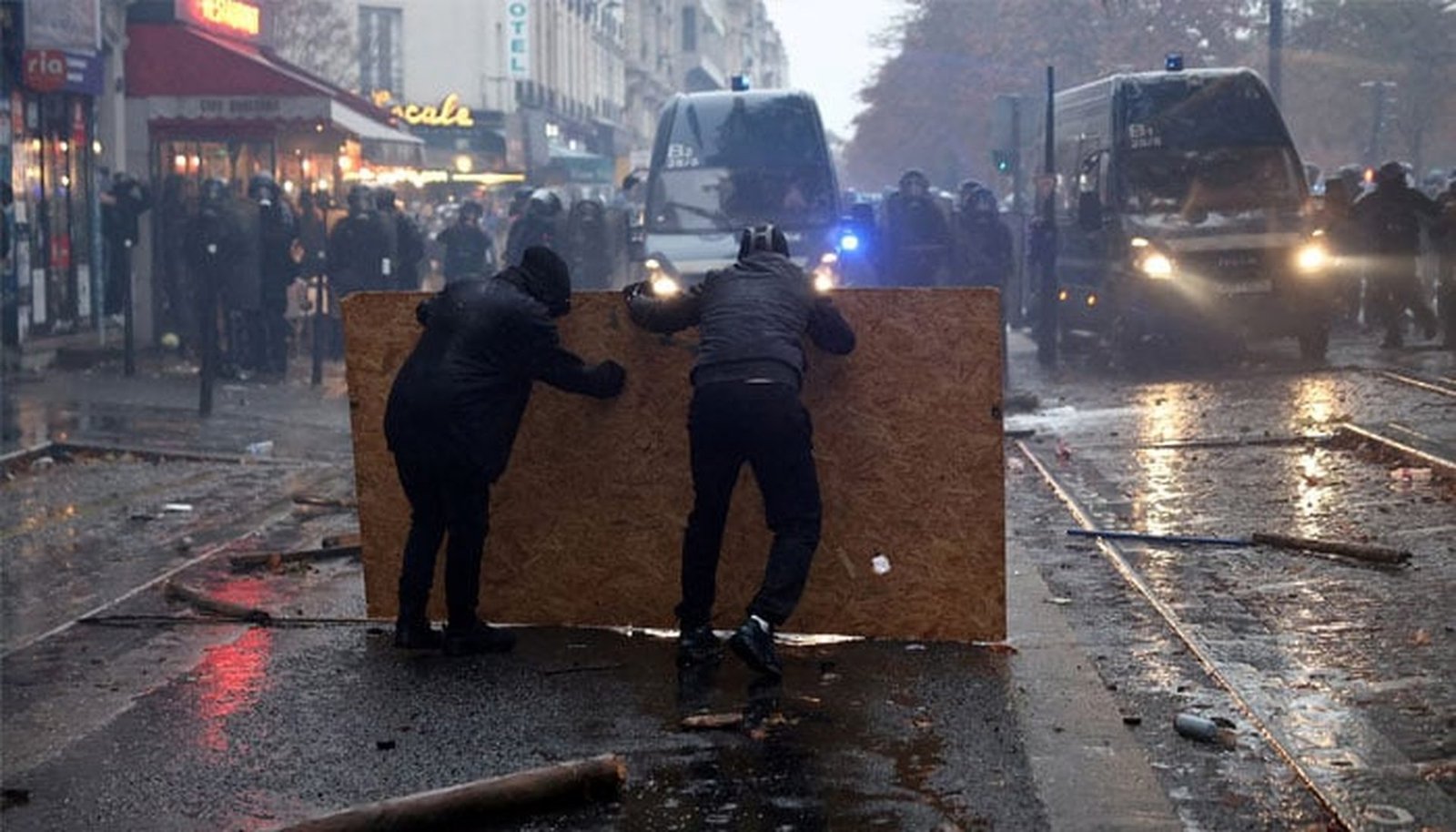
Hundreds of thousands of protesters are expected to take to the streets in France on Thursday, in a fresh test for President Emmanuel Macron only days after he named a new prime minister.
The mobilisation has been called by trade unions, including the left-wing CGT, and backed by student groups, according to Reuters. The protests are over living costs, public services and education, issues that triggered the worst civil unrest France has seen in years.
The demonstration comes at a sensitive moment for the French government. Macron named former defence minister Sebastien Lecornu as prime minister on Wednesday, 4 November, after three months of political wrangling over who should lead the government.
Lecornu had already served as prime minister in September before resigning in October, and his new government is described as virtually the same as his previous administration. His return has done little to calm the political tensions that have been building for months.
The protest also comes ahead of presidential elections, with Macron’s successor due to be elected in April 2027, five months from now. The campaign for that election is already under way in practice, and the scale of Thursday’s demonstrations will be read as a measure of the public mood.
Interior Minister Bruno Retailleau has warned about the risk of radical protests, saying that the authorities hope for a demonstration on Thursday that will not degenerate. Speaking to Franceinfo radio, he said there were some who, as in October, came simply to break things and to attack the police and gendarmes.
The warning reflects the experience of recent protests in France, where largely peaceful demonstrations have at times been accompanied by violence from small groups. The authorities will be deploying large numbers of police to manage the crowds and to protect property.
In September, more than 110,000 police and gendarmes were deployed across France, including 9,500 in Paris, for a previous day of protests. A similar scale of deployment is expected for Thursday’s mobilisation.
For Macron, the protests are the latest in a series of challenges to his authority. His government has been shaken by months of political instability, and the appointment of Lecornu, his third prime minister in a short period, has not settled the question of how the country will be governed until the presidential election.
The unions behind the mobilisation say their concerns are about the everyday cost of living and the state of public services, from schools to hospitals. Those are issues that affect millions of French households, and the unions are hoping for a large turnout to press their case.
Student groups have also backed the call, adding younger protesters to a movement that has already drawn support across the country. The combination of unions and students is one reason the expected numbers are so high.
What happens on Thursday will be watched closely in Paris and beyond. A large, peaceful demonstration would show the strength of feeling against the government, while any violence would shift attention to the question of public order. Either way, the day is set to be a significant moment in a turbulent period for French politics.
