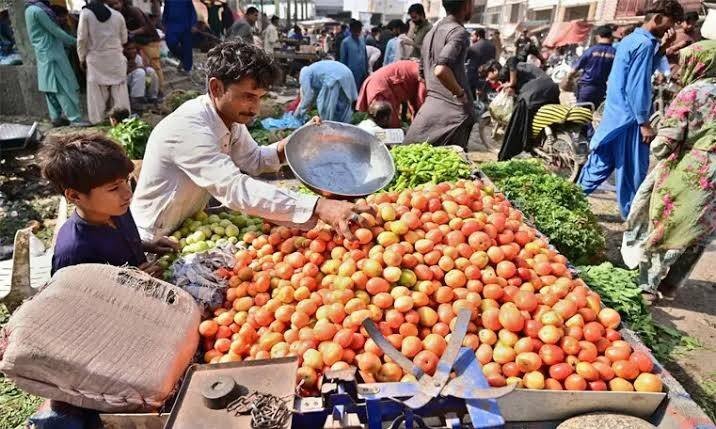
Tag: prices

  • Inflation eases to 9.61% in October, back in single digits

    Inflation eases to 9.61% in October, back in single digits

    Pakistan’s annual inflation rate fell to 9.61 per cent in October 2026, returning to single digits after two months above 10 per cent, according to data released by the Pakistan Bureau of Statistics. The figure marks the first single-digit annual reading since July, offering some relief after a summer in which price pressures had picked up again.

    The bureau’s monthly report showed the annual rate easing from 10.3 per cent in September to 9.61 per cent in October. Inflation had climbed above 10 per cent in August and stayed there in September, so the October decline breaks that run, even though the rate remains well above the State Bank’s target range of 5 to 7 per cent. For households, the direction of travel matters, but the level still means prices are rising much faster than policymakers would like.

    The improvement in the annual rate did not mean prices stopped rising. Consumer prices increased by 1.1 per cent in October compared with September, showing that month-on-month pressures continued. Rural areas felt that monthly increase more sharply, with prices up 1.5 per cent on the month, against 0.8 per cent in urban areas. On an annual basis, rural inflation stood at about 9.8 per cent in October, compared with 9.5 per cent in urban areas.

    The broader picture for the fiscal year remains less comfortable. Average inflation during the first four months of the current fiscal year, from July to October 2026, remained in double digits at 10.05 per cent. That average reflects the higher readings in August and September, and it shows that a single month of cooling does not by itself undo the pressure built up over the summer.

    Food provided some of the relief in October. Food inflation eased to 7.74 per cent from 8.2 per cent in September, helped by a fall in perishable food prices, which dropped 2.35 per cent on the month after a sharp rise the month before. At the same time, price growth in transport quickened further, reaching 28.61 per cent from 27.43 per cent, a reminder that energy and fuel costs continue to feed through to household budgets.

    The comparison with a year ago underlines how much has changed. Inflation in October 2026, at 9.61 per cent, was considerably higher than the 6.2 per cent recorded in October 2025. The Finance Division had projected October inflation in a range of 9.5 to 10.5 per cent, so the official figure landed comfortably inside that forecast, but at a level far above last year’s.

    What happens next will depend heavily on international energy prices, food supplies and base effects, the factors the Finance Division itself flagged as risks to the outlook. The State Bank raised its policy rate to 12 per cent in late October to guard against second-round price effects, a move that raises borrowing costs but is intended to anchor expectations.

    For now, October’s data gives the government a welcome headline: inflation back in single digits. Whether that becomes a sustained trend, rather than a one-month pause, will be decided by the November figures and by whether the monthly price increases that continued in October begin to fade.
  • Pakistan inflation to stay at 9.5-10.5% in October

    Pakistan inflation to stay at 9.5-10.5% in October

    Pakistan’s inflation is expected to stay elevated in October, with the Finance Division projecting a range of 9.5 to 10.5 per cent for the month. In its Monthly Economic Update and Outlook for October 2026, the division described rising inflation as a key downside risk to the country’s economic outlook, pointing to persistent geopolitical tensions, recurring conflicts in the Gulf region, volatile international oil prices, trade disruptions and rising global inflationary pressures.

    According to the report, headline inflation eased to 10.3 per cent in September from 11.1 per cent in August, but the future path remains vulnerable to movements in international energy prices, food supplies and base effects. Average headline Consumer Price Index inflation stood at 10.2 per cent during July to September of the current fiscal year, compared with 4.3 per cent in the corresponding period of the previous year.

    Energy costs were a major driver. Brent crude averaged 116.8 dollars per barrel in September, registering a 28.4 per cent increase over August, while natural gas prices also moved upward. The Food and Agriculture Organisation’s Food Price Index increased by 1.5 per cent to 136 points, and rising palm oil and fertiliser prices further increased import costs and agricultural input expenses.

    The pressure on households was visible in September’s price data. Transport prices recorded a year-on-year increase of 27.4 per cent, while housing, water, electricity, gas and fuel costs rose by 12.4 per cent. Perishable food prices increased by 11.8 per cent, whereas non-perishable food prices went up by 7.6 per cent.

    Growth, industry and the external account

    Revised national accounts data placed economic growth at 3.65 per cent for the last fiscal year, slightly below the earlier estimate of 3.70 per cent. Agriculture recorded growth of 3.50 per cent, while industry and services expanded by 3.34 per cent and 3.81 per cent respectively. Large-scale manufacturing grew by 1.9 per cent during July and August, considerably lower than the 4.8 per cent growth registered in the same period last year, and output in August rose by 0.7 per cent year on year but fell by 5 per cent compared with July.

    On the external front, the current account deficit widened to 874 million dollars during July to September, compared with 755 million dollars a year earlier, mainly because imports increased faster than exports. Goods imports rose by 14.3 per cent to 17.8 billion dollars, while exports increased by 7.7 per cent to 8.5 billion dollars. Workers’ remittances provided significant support, growing by 14 per cent to 10.9 billion dollars. By October 16, the State Bank of Pakistan’s liquid reserves stood at 21.5 billion dollars, while total liquid reserves reached 26.8 billion dollars.

    The report also noted a 3 billion dollar Eurobond issuance in September and tax collection up by 7 per cent to 3,086.2 billion rupees. The Monetary Policy Committee increased the policy rate by 50 basis points to 12 per cent, effective October 27, in response to rising inflationary risks linked to Middle East tensions and persistently high international energy prices. The Finance Division concluded that while improved agricultural output, reserves, remittances and international financing should support activity, continued progress in tax administration, energy efficiency and reforms of state-owned enterprises will be critical to sustaining growth and containing inflation.

  • PPP rallies in Lahore over LPG shortage and rising prices

    PPP rallies in Lahore over LPG shortage and rising prices

    LAHORE: The Pakistan Peoples Party (PPP) staged a protest rally in Lahore on Sunday against the shortage of liquefied petroleum gas (LPG) and rising flour and fuel prices, warning that it would stage a sit-in outside the head office of Sui Northern Gas Pipelines Ltd (SNGPL) if gas outages continue.

    Addressing the rally, PPP Lahore President Faisal Mir said ordinary people could not be left to face inflation and illegal profiteers on their own. He accused some sellers of creating an artificial LPG shortage in order to sell fuel at arbitrary prices, and blamed SNGPL for poor planning, saying gas outages were adding to the hardships of citizens.

    Mir said the government was placing a further financial burden on the public by raising petrol prices, at a time when inflation had already made life difficult for working people and the salaried classes. He demanded an uninterrupted LPG supply, prices set in line with the purchasing power of the public, and relief for domestic consumers.

    He also expressed concern that the authorities were targeting small shopkeepers instead of big hoarders. He urged the government to act without discrimination against what he called the LPG mafia, hoarders and illegal profiteers, and to ensure an uninterrupted gas supply at full pressure.

    Other party leaders present at the rally included Majeed Ghori, Amir Naseer Butt, Afraz Naqvi, Waris Joiya, Anisa Bano and Abbas Shah. Ghori described the artificial shortage and arbitrary pricing as an injustice to the working class, and said the PPP would continue to raise its voice at every forum to protect the rights of the people.

    The protest comes against a wider LPG supply disruption reported across the country. According to reports in The Express Tribune, LPG dealers shut around 5,500 to 6,000 outlets in Lahore and other cities in protest against enforcement action, leaving many households struggling to obtain cooking fuel. With LPG unavailable, many consumers turned to coal and dry firewood, pushing up the price of coal from about Rs40 per kilogram to between Rs50 and Rs60 per kilogram.

    The government, meanwhile, has sought to play down fears of a wider fuel crisis. Finance Minister Muhammad Aurangzeb said on Saturday that the country’s crude oil and other energy supplies remained satisfactory, that arrangements were in place to meet energy requirements until November, and that preparations for winter were continuing. The remarks followed a Senate debate in which PPP Senator Sherry Rehman questioned whether petrol would remain available through December, noted that around 70 per cent of LPG requirements were met through imports and 30 per cent through domestic production, and called for a clear supply plan.

    Mir repeated the warning that the party would stage a protest and sit-in in front of the SNGPL head office if load-shedding does not end, keeping the focus of the rally firmly on an uninterrupted and affordable gas supply for households.