Tag: Paris

  • Houellebecq Charged in France Over Remarks on Muslims

    Houellebecq Charged in France Over Remarks on Muslims

    French writer Michel Houellebecq has been charged in France over remarks about Muslims made in a magazine interview four years ago, in a case that revives the country’s long-running debate over free speech and hate-speech law.

    Mr Houellebecq was indicted on Tuesday by an investigating judge in Nanterre, in the Paris region, for complicity in incitement to discrimination, hatred or violence against a group of people on account of their origin, ethnicity, nationality, race or religion, the French newspaper Le Monde reported.

    The case dates back to an interview published on 20 November 2022 in Front Populaire, a magazine founded by the philosopher Michel Onfray. In the interview, Mr Houellebecq spoke about Muslims and the possibility of acts of violence in France, saying among other things that some of them should leave, and describing the so-called great replacement as a fact rather than a theory, according to reports of the case.

    The remarks caused fierce controversy at the time. Complaints were filed by the Union of Mosques of France and the Movement against Racism and for Friendship between Peoples, known as MRAP. The rector of the Grand Mosque of Paris, Chems-Eddine Hafiz, also filed a complaint but later withdrew it after meeting the writer in January 2023.

    Mr Houellebecq disputes the charge. His lawyers argue that the remarks contain no incitement to violence, not even implicitly, and therefore fall within the bounds of freedom of opinion and expression. He published a book in May 2023, titled Quelques mois dans ma vie, in which he corrected some of the remarks he had made, describing them as clumsy, in order to clarify his thinking.

    If convicted, the writer faces up to one year in prison and a fine of 45,000 euros. The charge of complicity in incitement is one of the most serious in French hate-speech law, and cases of this kind against prominent authors are rare.

    Mr Houellebecq, 70, is one of France’s best-known living novelists, the author of Atomised and Platform, and a winner of the Prix Goncourt, France’s most prestigious literary prize. He has long been a controversial figure, and his books and public statements have repeatedly divided French opinion.

    This is not the first time his remarks about Islam have brought him before the courts. In 2002 he was tried, and acquitted, after calling Islam the stupidest religion in an interview about his novel Platform. The court then ruled that while he had expressed hostility towards Islam as a religion, he had not expressed hatred towards Muslims or encouraged others to act against them. The new case, which concerns remarks made two decades later, will test whether French courts draw the same line today.
  • France braces for hundreds of thousands to protest Macron

    France braces for hundreds of thousands to protest Macron

    Hundreds of thousands of protesters are expected to take to the streets in France on Thursday, in a fresh test for President Emmanuel Macron only days after he named a new prime minister.

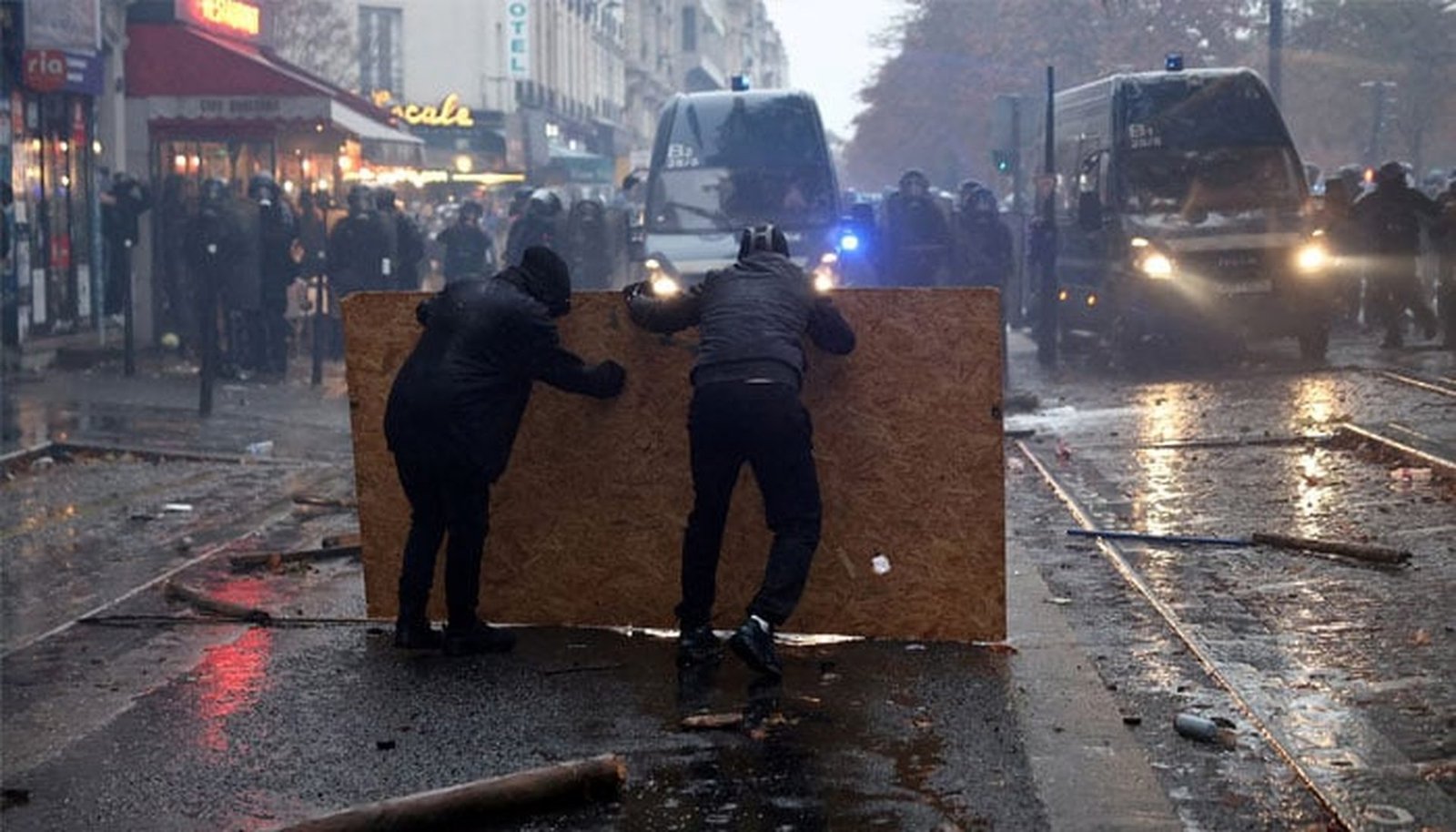
    The mobilisation has been called by trade unions, including the left-wing CGT, and backed by student groups, according to Reuters. The protests are over living costs, public services and education, issues that triggered the worst civil unrest France has seen in years.

    The demonstration comes at a sensitive moment for the French government. Macron named former defence minister Sebastien Lecornu as prime minister on Wednesday, 4 November, after three months of political wrangling over who should lead the government.

    Lecornu had already served as prime minister in September before resigning in October, and his new government is described as virtually the same as his previous administration. His return has done little to calm the political tensions that have been building for months.

    The protest also comes ahead of presidential elections, with Macron’s successor due to be elected in April 2027, five months from now. The campaign for that election is already under way in practice, and the scale of Thursday’s demonstrations will be read as a measure of the public mood.

    Interior Minister Bruno Retailleau has warned about the risk of radical protests, saying that the authorities hope for a demonstration on Thursday that will not degenerate. Speaking to Franceinfo radio, he said there were some who, as in October, came simply to break things and to attack the police and gendarmes.

    The warning reflects the experience of recent protests in France, where largely peaceful demonstrations have at times been accompanied by violence from small groups. The authorities will be deploying large numbers of police to manage the crowds and to protect property.

    In September, more than 110,000 police and gendarmes were deployed across France, including 9,500 in Paris, for a previous day of protests. A similar scale of deployment is expected for Thursday’s mobilisation.

    For Macron, the protests are the latest in a series of challenges to his authority. His government has been shaken by months of political instability, and the appointment of Lecornu, his third prime minister in a short period, has not settled the question of how the country will be governed until the presidential election.

    The unions behind the mobilisation say their concerns are about the everyday cost of living and the state of public services, from schools to hospitals. Those are issues that affect millions of French households, and the unions are hoping for a large turnout to press their case.

    Student groups have also backed the call, adding younger protesters to a movement that has already drawn support across the country. The combination of unions and students is one reason the expected numbers are so high.

    What happens on Thursday will be watched closely in Paris and beyond. A large, peaceful demonstration would show the strength of feeling against the government, while any violence would shift attention to the question of public order. Either way, the day is set to be a significant moment in a turbulent period for French politics.