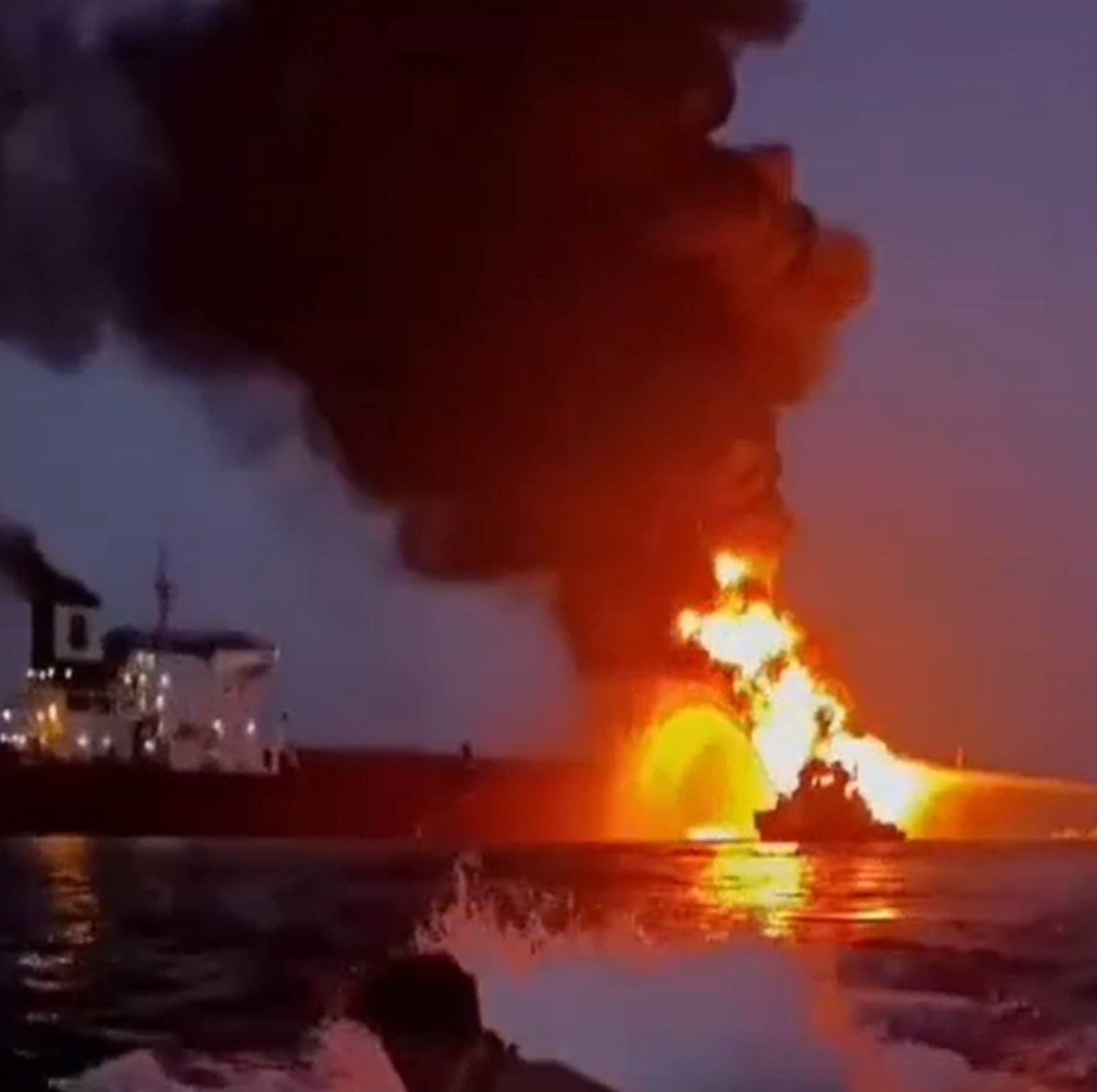
Two supertankers carrying more than four million barrels of oil between them have been disabled by massive explosions in the Strait of Hormuz, Iran’s Revolutionary Guards Navy said on Thursday. The vessels were left burning after the blasts on Wednesday night, in the latest escalation in the eight-month war between the United States, Israel and Iran.
According to the Guards, the two tankers were sailing through what Tehran calls an unauthorised southern route when the incident happened. The statement said the vessels had ignored repeated warnings from the Guards’ traffic control centre that the route was not authorised and was unsafe, and that the incident ended in what it described as a violent explosion.
Iranian state media later said the tankers had exploded after hitting naval mines, although the Guards’ own statement did not specify the cause of the explosions. No independent confirmation of what caused the blasts was available, and the names, flags and crews of the two tankers had not been publicly identified.
A strait under tight control
Since the war began in February, Tehran has heavily restricted traffic through the strategic waterway, insisting that vessels use only routes it has approved. Iran has declared the southern shipping lanes of the strait, near Omani waters, off limits and mined, confining safe passage to designated northern corridors that require prior authorisation from its forces.
The United States has responded by imposing a naval blockade on Iranian ports and helping tankers travel through the strait, which normally carries about one-fifth of the world’s oil. The Guards blamed the incident on what it called blind trust in the American military, a claim that has not been independently verified.
Iranian forces have made several announcements in recent weeks of ships catching fire while attempting to use routes that Tehran considers off limits. Tehran has often said the vessels struck mines, but the US military recently claimed that all mines had been cleared from the strait. In several cases, the United Kingdom Maritime Trade Operations agency has said tankers in the strait were struck by unknown projectiles.
The incident underlines how dangerous one of the world’s most important shipping routes has become. With the strait carrying such a large share of global oil supplies, any disruption there carries consequences far beyond the region, and the conflicting accounts of what happened to the two tankers show how hard it has become to establish the facts in the middle of an active conflict.