Tag: oil prices

  • Oil Prices Set for Second Weekly Decline

    Oil Prices Set for Second Weekly Decline

    Oil prices were mixed on Friday, 13 November, but remained on course for a second consecutive weekly decline, as the United States signalled it would keep its blockade on Iran in place, easing fears of a renewed large-scale conflict that could disrupt oil supplies from the Middle East.

    Brent crude futures were little changed, down just 1 cent at $95.41 a barrel at 0242 GMT, while US West Texas Intermediate crude fell 20 cents, or 0.25 percent, to $88.52 a barrel, according to Reuters.

    Brent was set for a 2.4 percent drop over the week, after plunging 16 percent the previous week, while WTI was heading for a 2.5 percent weekly decline after falling 13 percent last week.

    Blockade set to stay, Trump signals

    US President Donald Trump said on his Truth Social platform that no deal with Iran was needed to end the war, a message traders read as a signal that the blockade would continue. Friday’s declines reversed two days of gains in the oil market.

    The prospect of the blockade staying in place has reduced the chance of renewed large-scale fighting that could disrupt supplies from the region. However, attacks on shipping remain a danger, keeping traders cautious about the outlook for Middle East supplies.

    US stockpiles rise sharply

    Fresh data from the US Energy Information Administration also weighed on prices. US crude inventories rose by 4.7 million barrels to 414.4 million barrels in the week ended 6 November, while analysts had expected a draw of 1.1 million barrels.

    The bigger-than-expected build in stockpiles pointed to softer demand in the world’s largest oil consumer and added to the pressure on prices, which had already fallen steeply over the past two weeks.

    What it means for Pakistan

    For Pakistan, the fall in global prices could bring some relief at the pump. Petrol is currently priced at Rs332 per litre and diesel at Rs360 per litre, according to Daily Hayat’s earlier report today.

    Azaad Urdu reports that the government has been cutting petrol and diesel prices in recent weeks and that further relief is possible if global prices keep falling. Any change in local fuel prices, however, will depend on the government’s next fortnightly review and on the rupee’s movement against the dollar.

    Traders will now watch whether the blockade holds and whether shipping through the region stays safe, as both factors will shape where oil prices head in the coming weeks.
  • Oil prices drop over $1 as peace talks lift hopes

    Oil prices drop over $1 as peace talks lift hopes

    Oil prices fell by more than $1 a barrel on Thursday as hopes for progress in peace talks over the Middle East and the war in Ukraine eased concerns about supply, Reuters reported.

    Brent crude futures lost $1.14, or 1.2 percent, to $91.62 a barrel by 0141 GMT, while US West Texas Intermediate crude fell $1.04, or 1.2 percent, to $85.49 a barrel.

    Traders were encouraged by signs of movement on two fronts. In Abu Dhabi, negotiators at two days of US-mediated talks between Russia and Ukraine agreed a major prisoner exchange before the sessions ended on Wednesday, although American mediators cautioned that deep differences remained on other issues, including territory. US envoys Jared Kushner and Steve Witkoff are now taking the framework to separate capitals to brief the Russian leadership and coordinate further steps with Ukrainian and European partners.

    Hiroyuki Kikukawa, chief strategist at Nissan Securities Investment, told Reuters that markets were falling on expectations that behind-the-scenes efforts were under way to secure a ceasefire between Russia and Ukraine, and that the war in Iran was unlikely to escalate ahead of a US-China summit next week.

    In the Middle East, Iranian security chief Mohsen Rezaei has said he will not allow even a single particle of enriched nuclear material to leave the country, and warned there would be consequences if the United States launched new strikes. Washington, for its part, says nuclear issues must be part of any initial negotiations with Iran, while US officials have played down the need for further military action.

    Russia’s chief negotiator, Vladimir Medinsky, said mutual understanding had been reached on some issues, including groundwork for a prisoner exchange involving more than 1,000 captives from each side, while stressing that major differences remained. Moscow has also questioned the need for an immediate European role in the talks, while Kyiv and its European allies insist Europe must have a seat at every stage of real diplomacy.

    The fall followed gains in the previous session, when Brent rose about 1.4 percent and WTI about 0.6 percent. Official stockpile data from the US Energy Information Administration is due later on Thursday, delayed by a day because of a US national holiday on Wednesday.

  • Hormuz Tankers Still Burning Despite Talk of Calm

    Hormuz Tankers Still Burning Despite Talk of Calm

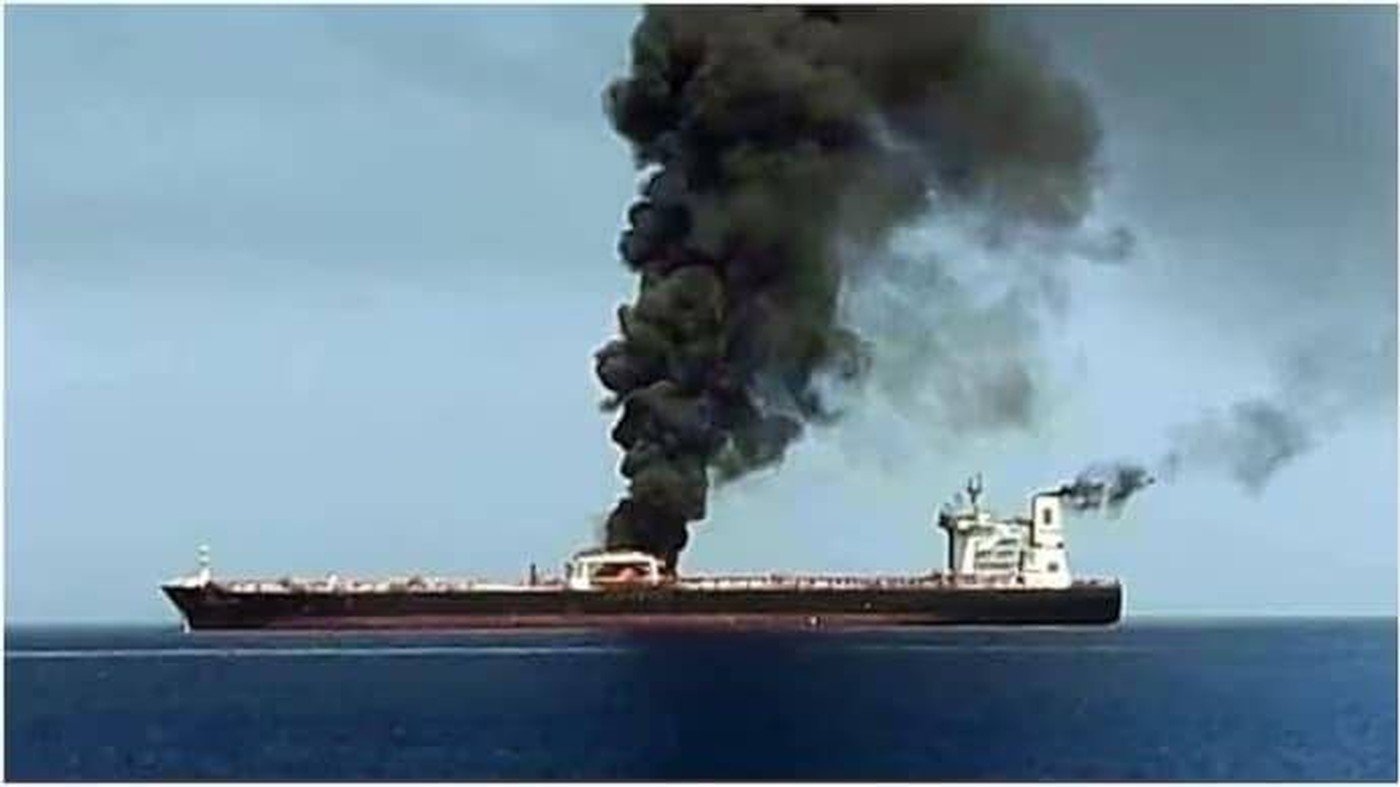
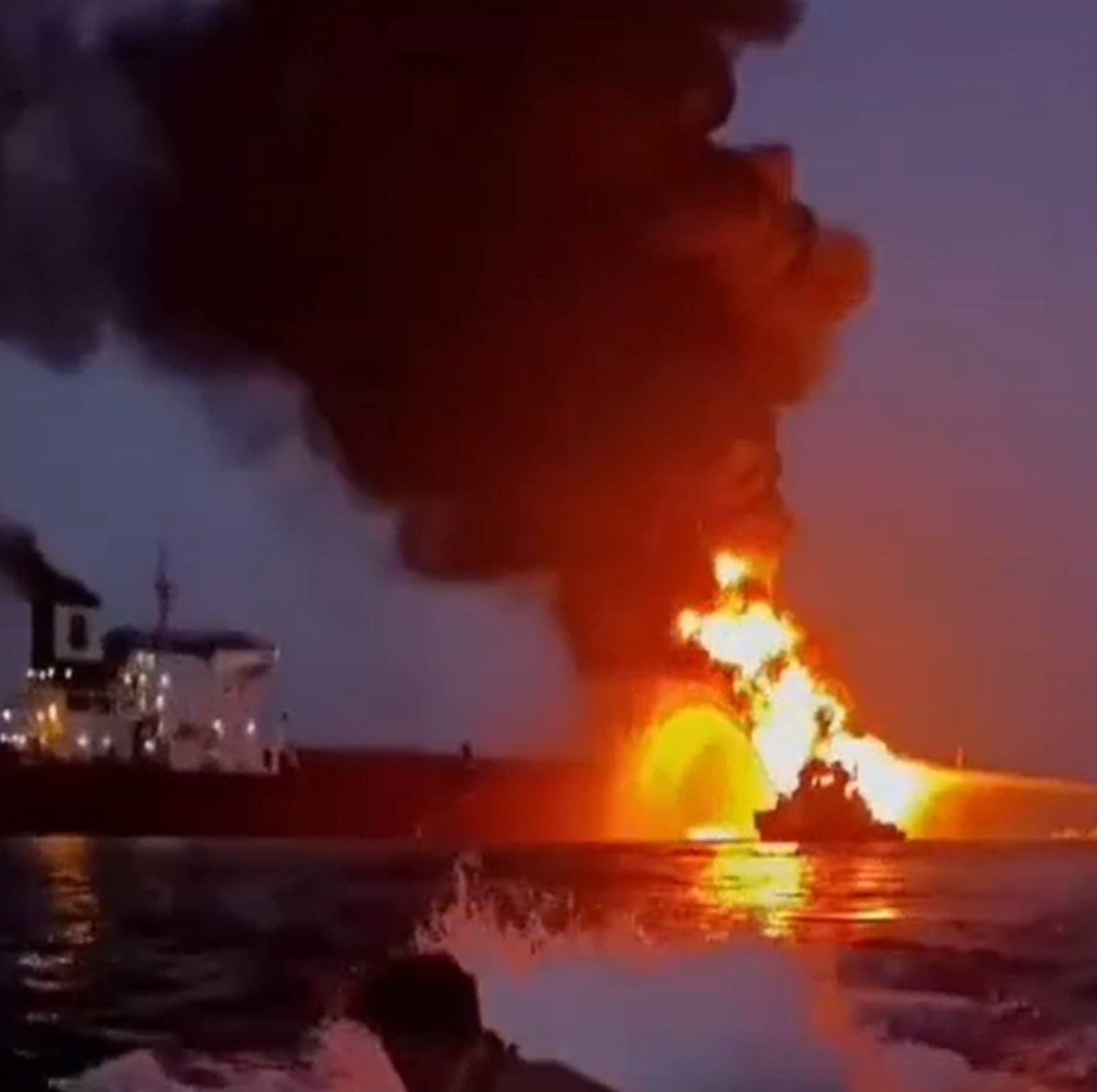
    Oil tankers are still catching fire in the Strait of Hormuz, even as financial markets bet that the war involving Iran may be easing. Fresh evidence gathered over the past few days points to more strikes on ships passing through the narrow waterway, along with attacks on energy facilities elsewhere in the region, according to a report by Reuters on Tuesday, 10 November.

    Videos posted on social media on Sunday and verified by Reuters showed a tanker managed by Navig8, a shipping company majority owned by ADNOC Logistics and Services, burning near the coast of Oman. A satellite image taken by the European Union’s Copernicus Sentinel-2 satellite on the same day showed a large cloud of black smoke at the same location. Iranian state broadcaster IRIB, citing the Islamic Revolutionary Guard Corps Navy, reported that it was one of three tankers hit on Sunday for using what Iran calls unauthorised routes through the strait.

    The attacks did not stop there. Another tanker was struck northeast of Lima, a port town in Oman’s Musandam region, on Tuesday, according to the United Kingdom Maritime Trade Operations agency, which did not say who carried out the strike. In a separate statement, the Revolutionary Guards Navy said two tankers caught fire after hitting naval mines on the unauthorised route.

    The scale of the campaign at sea is striking. Thirty-seven ships were attacked in October, the highest monthly total since the conflict began in late February, according to data from the Washington Institute for Near East Policy. The International Maritime Organization has confirmed 130 incidents, most of them attacks, in the region since the fighting started, with at least 25 seafarers killed.

    The strikes are also causing environmental damage. Oil has been leaking from damaged tankers, and a video shared on Monday and verified by Reuters showed oil reaching the shores of Oman, while satellite images showed spills off the coasts of Oman and the United Arab Emirates. The Omani government did not respond to a Reuters request for comment on the video.

    Energy infrastructure on land has come under attack as well. Video verified by Reuters showed damage to an office building belonging to Saudi Aramco, the world’s largest oil company, in Riyadh, following missile strikes claimed by Yemen’s Houthis on 8 November. The Saudi Energy Ministry said the building had been targeted in an attempted attack, with debris causing limited damage and no injuries or deaths.

    At the same time, United States forces have continued to enforce a naval blockade of Iranian ports. In the latest incident, an American military aircraft fired on and disabled a cargo vessel flying the flag of St Kitts and Nevis that tried to leave regional waters after visiting an Iranian port on Saturday, according to US Central Command.

    Despite the violence at sea, crude oil prices fell to two-month lows on Tuesday after US officials played down the need for further military action against Iran. Analysts noted that President Donald Trump has struck a more conciliatory tone since the Republicans’ defeat in the 3 November midterm elections. For shipping crews and insurers, however, the message from the strait is unchanged: the world’s most important oil chokepoint remains dangerous, and the attacks show little sign of stopping.

  • Two Gulf Tankers Attacked, Sailor Killed as Oil Prices Jump

    Two Gulf Tankers Attacked, Sailor Killed as Oil Prices Jump

    Two oil tankers were attacked in the Gulf on Friday, killing one sailor and leaving two others missing, in an escalation that sent oil prices higher and put regional forces on alert.

    According to Iranian state media, the Greek-owned, Marshall Islands-flagged tanker Velos Sapphire was hit by a missile and caught fire near the Strait of Hormuz. One crew member was killed, two are missing and two were injured. The crew of 23 abandoned ship, and the naval force of Iran’s Islamic Revolutionary Guard Corps rescued most of them.

    About four hours later, a second tanker, the Panama-flagged Talara, was also hit. No injuries were reported aboard the second vessel. The attacks have not been claimed by anyone, and the Iranian government has condemned them and called for a thorough investigation.

    The incident was confirmed by maritime security sources, which reported that the Velos Sapphire was struck while sailing towards Bahrain and later reached the Bahraini port of Khalifa Bin Salman after the fire was brought under control.

    Oil prices jumped after the attacks, with Brent crude rising above 72 dollars a barrel. The Strait of Hormuz is one of the world’s most important oil shipping routes, and any disruption there is watched closely by energy markets around the world.

    US President Donald Trump said the United States was closely monitoring the situation and was ready to respond if necessary. A US military spokesperson gave the same message, saying forces in the region were watching developments and prepared to act. Iran’s foreign minister said his country would not hesitate to take defensive measures if necessary, and the Iranian armed forces have been put on alert.

    The attacks come at a time of heightened tension in the region, with the United States building up its military presence and pressing Iran to reach an agreement. The two countries have been locked in a standoff over Iran’s nuclear programme and its regional activities.

    Investigations into who carried out the attacks are continuing. Until responsibility is established, shipping companies and insurers will be watching the Gulf closely, and the safety of crews passing through one of the world’s busiest waterways remains the immediate concern.

  • Stocks surge, oil plunges over 8% after US vote

    Stocks surge, oil plunges over 8% after US vote

    Wall Street shares surged and oil prices tumbled on Wednesday as financial markets reacted to the outcome of the United States midterm elections, with investors betting that the result could hasten an end to the US war with Iran.

    Democrats seized control of both houses of Congress in Tuesday’s vote, according to the reports, giving them power to block legislation, open investigations into the Trump administration, and influence government spending, including the Pentagon budget.

    Heading into the vote, some investors had feared that a decisive Democratic win would trouble share prices, in part because of concern about the rapid build-out of artificial intelligence data centres. On the day, however, that worry was outweighed by relief that the election outcome was clear and that President Donald Trump did not contest the result.

    Oil prices were under pressure throughout the session. The selling intensified after Vice President JD Vance said in a social media post that the Republican defeat reflected the unpopularity of the Iran war, which has pushed up fuel and other staple prices.

    Crude finished down more than 8%, with both major contracts closing below 100 dollars a barrel. Brent North Sea crude fell 8.7% to 94.62 dollars a barrel, while West Texas Intermediate dropped 8.3% to 88.12 dollars a barrel.

    Andy Lipow of Lipow Oil Associates was quoted as saying the election might lead the market to conclude that Mr Trump could now be inclined to make a deal, and that with Democrats controlling the Senate and House they might restrict funding for the war, forcing an end to the conflict.

    The fall in oil added momentum to Wall Street, which opened higher after positive sessions on leading European exchanges. All three major US indices finished solidly higher. The Dow ended up 3%, or more than 1,500 points, at 53,356.12, the S and P 500 rose 1.6% to 7,688.62, and the Nasdaq Composite gained 1.4% to 25,736.51.

    Opposition to data centres had fuelled campaigns in key states such as Texas, Georgia and Ohio, where Democrats won governorships previously held by Republicans. Gains by Microsoft, Amazon and other large technology companies suggested markets might see an upside in constraints that deter overbuilding, according to Steve Sosnick of Interactive Brokers, who was quoted as saying that at some level people were happy the industry might be saved from its own worst instincts. Nvidia and other chipmakers, by contrast, fell.

    Both of Elon Musk’s publicly traded companies fell after his large political donations failed to stop the Democratic tide, with SpaceX down 3.8% and Tesla down 3.3%. Lockheed Martin, which fell 6.9%, was among defence companies that retreated, while First Solar jumped 4.6% as the election lifted prospects for renewable energy.

    In Europe, the main indices finished with gains of around 2%, despite official data showing eurozone inflation reached a three-year high of 4.0% in October. London’s FTSE 100 rose 1.8% to 10,829.21, Paris’s CAC 40 gained 2.0% to 8,177.89, and Frankfurt’s DAX climbed 2.2% to 26,437.67.

    Markets across Asia also performed strongly, although Tokyo ended lower as its technology sector struggled. Hong Kong’s Hang Seng Index rose 1.7% to 23,919.50 and Shanghai’s Composite gained 2.2% to 3,686.17, while Tokyo’s Nikkei 225 fell 1.4% to 62,188.63.

  • Gold edges higher to $3,931 as oil prices ease

    Gold edges higher to $3,931 as oil prices ease

    Gold prices edged higher in early trading on Wednesday, as falling oil prices eased immediate worries about inflation and investors waited for clearer signals from the United States. Spot gold was up 0.1 percent at 3,931.24 US dollars per ounce by 0306 GMT, while US gold futures for December delivery steadied at 3,941.40 dollars.

    Earlier in the Asian session, the metal had traded slightly higher still, with spot gold up 0.2 percent at 3,934.75 dollars per ounce by 0024 GMT and December futures up 0.1 percent at 3,943.20 dollars. The small difference between those readings reflects normal movement through the morning rather than a sharp change of direction, with gold holding broadly steady after a turbulent recent run.

    Two forces were pulling in gold’s favour. Oil prices eased by about 1 percent on Tuesday to their lowest level in nearly four weeks, as traders weighed talks aimed at ending wars in Ukraine and the Middle East against worries that recent attacks could still disrupt supplies. Lower oil prices tend to cool inflation expectations, which in turn reduces pressure on central banks to keep interest rates high for longer, and that helps gold, which pays no interest of its own.

    The dollar also softened against most major currencies ahead of the outcome of the US midterm elections, with the dollar index trading around 101.57 in early Wednesday trade. A weaker dollar makes gold cheaper for buyers using other currencies, adding a further modest support to the price.

    Investors were also looking ahead to key labour market data later in the week. US non-farm payrolls figures due on Friday are expected to give fresh clues about the path of Federal Reserve policy, and traders were reluctant to take large positions before that release. The midterm results themselves were another reason for caution, with markets watching for any shift that could affect spending, trade or fiscal policy.

    Elsewhere in the gold market, demand in India, one of the world’s largest gold-consuming nations, is expected to fall to a six-year low in 2026, according to the World Gold Council, as high prices weigh on jewellery sales and investment demand moderates. That softer demand outlook helps explain why the recovery in prices has so far been cautious rather than strong.

    Gold has swung sharply in recent sessions, rising nearly 2 percent on 2 November before easing back the following day, and Wednesday’s small gain fits that pattern of a market searching for direction. With oil lower, the dollar softer and major US data still to come, traders are likely to keep watching energy prices, currency moves and the jobs report for the next clear signal.

  • PSX plunges 2,006 points as Middle East tensions jolt market

    PSX plunges 2,006 points as Middle East tensions jolt market

    The Pakistan Stock Exchange failed to hold its overnight recovery on Thursday as escalating tensions in the Middle East shattered investor confidence, raising fears of prolonged conflict, surging oil prices and rising inflation that threaten macroeconomic stability.

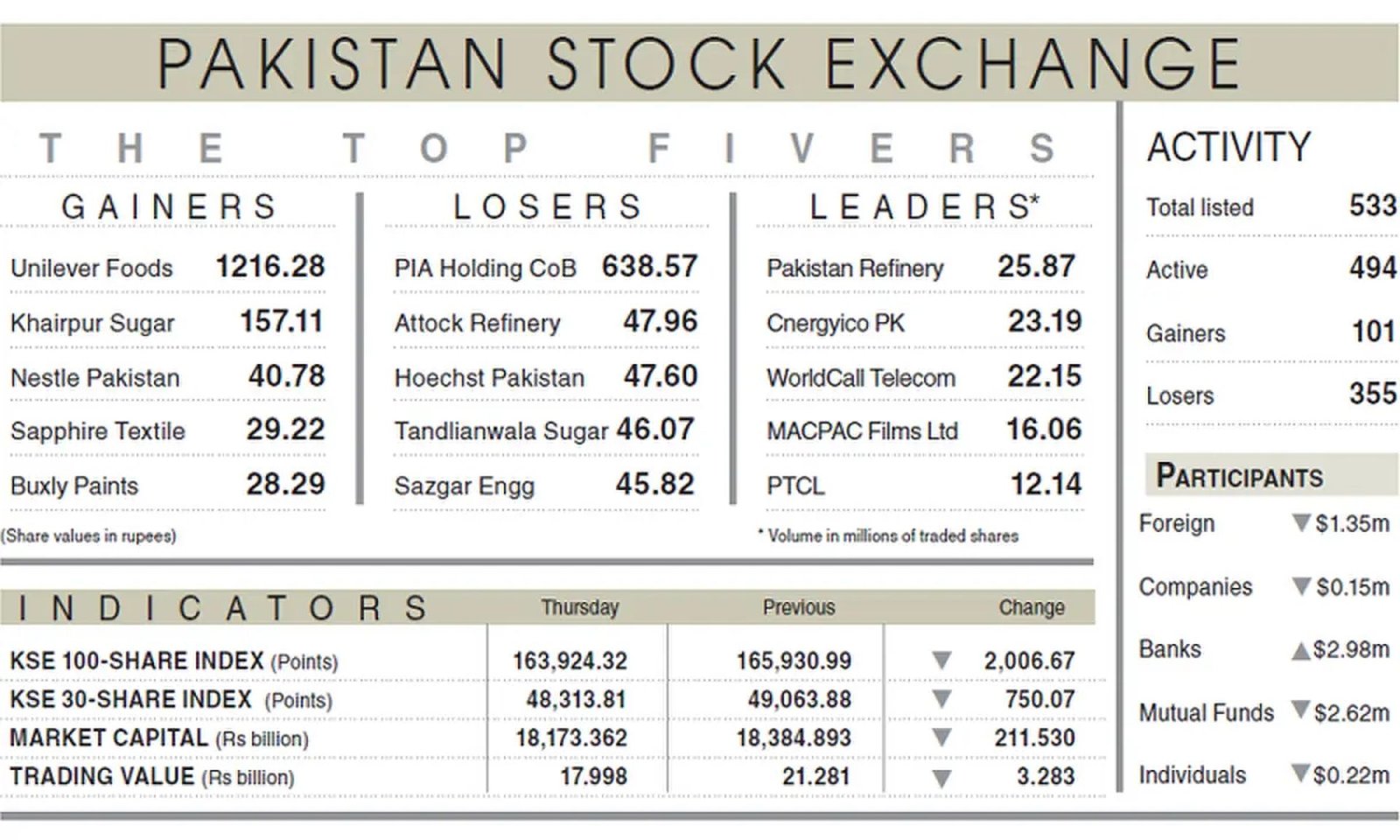
    According to Topline Securities, the benchmark KSE-100 index witnessed a sharp sell-off, shedding 2,006.67 points, or 1.21 per cent, to close at 163,924.32. The index initially touched an intraday high of 166,180.32, gaining 249 points, before plunging to a low of 163,782.42 — losing 2,148 points in a session marked by heightened volatility and mounting selling pressure.

    Persistent geopolitical uncertainty, along with concerns over rising oil prices and their potential impact on Pakistan’s economic outlook, kept investors on the defensive. The absence of positive catalysts further dampened sentiment, and selling pressure intensified as the session progressed.

    Heavyweight stocks drag the market

    Engro Holdings, United Bank, Hub Power, Habib Bank, Pakistan Telecommunication Company, Lucky Cement, Fauji Fertiliser, Attock Refinery, National Bank and Pakistan Petroleum emerged as the major laggards, collectively dragging the benchmark down by about 1,151 points and intensifying the market’s downward momentum.

    Ali Najib, Deputy Head of Trading at Arif Habib Ltd, said international oil prices surged amid heightened geopolitical tensions after fresh Houthi attacks in Saudi Arabia. Fears of a broader regional conflict and prolonged disruptions to Middle Eastern energy supplies weighed on investor sentiment, raising concerns over a higher energy import bill and mounting pressure on the country’s external account.

    Bank results on the corporate front

    On the corporate front, key banks announced their 9MCY26 results, with Habib Bank, Meezan Bank and MCB Bank reporting earnings per share of Rs36.84, Rs41.02 and Rs37.26, respectively.

    Investor participation remained moderate, with total trading volume dipping 3.37 per cent to 367 million shares and turnover falling 15.42 per cent to Rs17.9 billion. Pakistan Refinery led the volume charts with 25.8 million shares.

    Analysts expect the market to remain sensitive to geopolitical developments and international oil price movements, with investors likely to stay cautious until greater clarity emerges.

    Earlier in the week, the finance ministry had said Pakistan had procured enough energy supplies to last through November and was planning for the winter months, even as attacks on Gulf energy infrastructure posed risks to the country’s economic outlook. Market watchers said that assurance had done little to calm nerves on Thursday, as crude prices continued to climb and regional shipping routes stayed under threat.

  • Asian Stocks Edge Up as Chip Selloff Eases Before US CPI

    Asian Stocks Edge Up as Chip Selloff Eases Before US CPI

    Asian shares inched higher on Wednesday as stocks linked to artificial intelligence found some respite after a sharp selloff, though gains were tempered by elevated oil prices and caution ahead of US inflation data later in the global day.

    Among firms in the AI supply chain, chipmakers Samsung Electronics and SK Hynix rose more than 2 percent in South Korea, while Kioxia was steady in Japan, recovering some of the previous session’s losses. The moves offered relief after Tuesday’s chip-led rout rattled markets across the region.

    MSCI’s broadest index of Asia-Pacific shares outside Japan was up 0.5 percent after US stocks ended the previous session with a mild loss. Japan’s Nikkei rose 0.2 percent and South Korea’s Kospi added 1.8 percent.

    Sentiment remained cautious, however, with oil prices elevated as concern over energy supplies intensified following Houthi missile and drone attacks on Saudi Arabia. US crude ticked up 0.8 percent to $94.96 a barrel, while Brent crude rose to $106.6.

    “After yesterday’s chip-led sell-off in the region, market participants will be gauging whether shakiness across major indices eases,” said Kyle Rodda, an analyst at Capital.com. “The geopolitical situation globally and the impact on energy markets won’t help,” he added.

    In another sign of risk aversion, longer-dated bonds rallied as investors sought safety. The yield on the benchmark 10-year Treasury note was steady at 5.221 percent after touching its lowest level in nearly two weeks, while the 30-year yield held at 5.569 percent following a three-day decline.

    On Wall Street overnight, US bank stocks lost ground after mixed quarterly earnings results from Citigroup and peers, weighing on broader markets. US stock futures pointed to a flat open, with S&P 500 e-minis up 0.04 percent at 7,858.8.

    Inflation test awaited

    Market participants were awaiting the US consumer price index report on Wednesday, hoping to extract clues on the Federal Reserve’s interest-rate outlook. Economists on average estimated that headline inflation accelerated to an annual 3.6 percent in September on rebounding energy prices, with core CPI rising 0.2 percent on a monthly basis.

    “The risk is the core CPI surprises to the upside because of strong consumer demand and higher costs, pushing up market pricing of an October Fed hike and the USD,” said Carol Kong, a currency strategist at Commonwealth Bank of Australia.

    Investors priced in a 22 percent chance of an October interest-rate hike ahead of the CPI data, according to the CME FedWatch Tool. New York Federal Reserve President John Williams said the Fed may need to raise its policy rate once more this year to slow inflation, but that he sees no need for hikes in 2027.

    The dollar index, which tracks the greenback against the currencies of major trading partners, was down at 102.17, while the euro was little changed at $1.1202. Market participants were also awaiting Chinese inflation data on Wednesday, looking for signs of reviving domestic demand amid deflationary pressure.

  • KSE-100 Falls 1,066 Points in Week as Oil Tops $100

    KSE-100 Falls 1,066 Points in Week as Oil Tops $100

    The Pakistan Stock Exchange endured a volatile week as escalating geopolitical tensions, oil prices above $100 a barrel and rising bond yields overwhelmed the optimism generated by Pakistan’s staff-level agreement with the International Monetary Fund.

    The benchmark KSE-100 index shed 0.6 per cent week-on-week to close at 167,089, losing 1,066 points, according to Arif Habib Ltd.

    Market sentiment remained subdued amid attacks on key shipping routes, with Yemen’s Houthis expanding their targets to Saudi Arabia’s civilian infrastructure and energy facilities, while Ukrainian drone strikes on Russian refineries and concerns over US energy supplies kept Brent crude elevated, according to AKD Securities.

    IMF agreement

    The staff-level agreement on the fourth review of the Extended Fund Facility and the third review of the Resilience and Sustainability Facility provided some support. The agreement paves the way for $1.2 billion in disbursements under the two programmes, subject to approval by the IMF Executive Board, which would take total disbursements to about $5.7 billion.

    However, concerns over the widening trade deficit, inflation and the future path of interest rates continued to weigh on investors.

    According to Arif Habib, the government raised Rs381 billion against a Rs350 billion target in its latest Pakistan Investment Bonds auction. Cut-off yields rose 26 to 41 basis points across three-, five- and ten-year tenors, while the two-year yield fell 19 basis points; bids for 15-year bonds were rejected. The rise fuelled expectations of a possible policy rate hike at the next monetary policy announcement.

    Pakistan’s foreign exchange reserves held by the State Bank rose by $15 million to $21.5 billion as of Oct 2, while the rupee edged up 0.03 per cent to close at Rs277 against the dollar. Central government debt stood at Rs82.95 trillion at the end of August, up 7.1 per cent year-on-year but down 0.5 per cent month-on-month.

    Sector performance

    Sector-wise, banks were the biggest drag on the benchmark, shedding 566 points, followed by fertiliser companies with 234 points, automobile assemblers with 97, cement with 75 and textile composite firms with 43 points.

    Habib Bank, MCB Bank and United Bank were the largest individual negative contributors, accounting for a combined 388 points of the decline, while Fatima Fertiliser and Fauji Fertiliser also weighed on the index.

    On the positive side, oil marketing companies added 110 points and power companies 36. Pakistan State Oil was the largest single contributor, adding 113 points, with Hub Power, Pakistan Oilfields, Engro Holdings and Mari Energies also supporting the market.

    Trading activity weakened: average daily volume fell 18.6 per cent week-on-week to 427 million shares, while the average traded value stood at $67 million, down 2 per cent.

    Cement dispatches rose 6 per cent year-on-year to 4.62 million tonnes in September on a 7 per cent rise in domestic sales, while banking deposits grew 14 per cent year-on-year to Rs39.2 trillion at end-August.

    Petrol prices rose 2.1 per cent to Rs398.96 per litre while high-speed diesel fell 0.9 per cent to Rs395.72. Analysts expect quarterly earnings and geopolitical developments to shape sentiment; easing inflation and any Middle East de-escalation could support monetary easing, but persistent uncertainty is likely to constrain gains.