12-day assessment praises robust physical protection; experts visit KANUPP decommissioning project
Islamabad: Pakistan’s nuclear security regime for the physical protection of nuclear materials and facilities has been found robust by an expert team of the International Atomic Energy Agency (IAEA) after a comprehensive 12-day review.
The IAEA’s International Physical Protection Advisory Service (IPPAS) mission carried out the first-ever evaluation of Pakistan’s legislative and regulatory framework for nuclear security covering nuclear materials and facilities. The mission found the security framework appropriately implemented at the nuclear facility visited by the experts.
According to an IAEA press release, the regime is continuously refined through periodic reviews, while Pakistan’s well-established capacity-building infrastructure actively supports nuclear security expertise at the national, regional and international levels.
The seven-member team was headed by Khammar Mrabit, former director general of the Moroccan Agency for Nuclear and Radiological Safety and Security, and included specialists from China, Romania, the Russian Federation and Slovakia, along with two IAEA staff members.
Following the assessment, the experts offered recommendations to further strengthen Pakistan’s nuclear security regime and its procedures, while also identifying several good practices at both the regulatory and facility levels.
“The first IPPAS mission in Pakistan is completed successfully, marking the country’s commitment in further enhancing regulatory and operational aspects of its well-established nuclear security regime,” said Karine Herviou, IAEA deputy director general and head of the Department of Nuclear Safety and Security, at the closing ceremony.
“Pakistan’s contribution to building the skills of the nuclear security workforce is commendable and has a far-reaching impact.”
The mission was hosted by the Pakistan Nuclear Regulatory Authority (PNRA) at the government’s request.
“Hosting the IPPAS mission underscores Pakistan’s unwavering commitment to maintaining a robust nuclear security regime across facilities and activities,” said PNRA Chairman Zia Hussain Shah.
“The valuable insights provided by the international experts’ team not only validate our robust physical protection measures but also offer an excellent baseline to further strengthen our legal and regulatory framework, national nuclear security regime, including facility-level practices.”
IPPAS missions offer peer guidance on implementing international instruments and IAEA recommendations on safeguarding nuclear materials. During such missions, international specialists examine a country’s physical protection arrangements, benchmark them against global good practices and suggest improvements at both the national and facility levels.
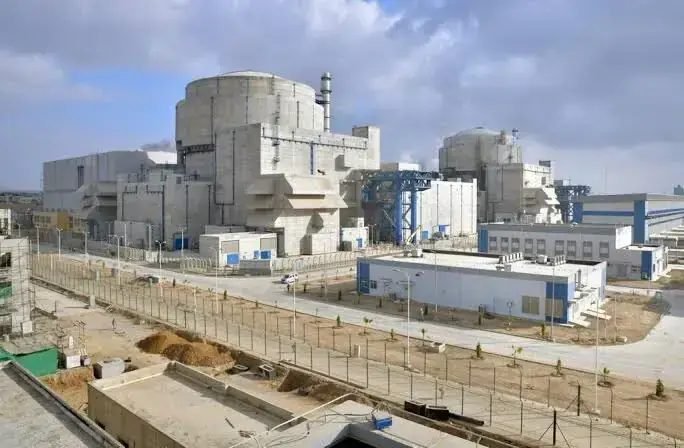
The team held meetings with officials from the PNRA, the Pakistan Atomic Energy Commission and other national stakeholders, and visited the Kanupp Decommissioning Project at the Karachi Nuclear Power Generating Station — Pakistan’s first nuclear power plant.
The Canadian Deuterium Uranium reactor ran from 1971 until its permanent shutdown in 2021. The visit gave the team a look at the ongoing decommissioning work and spent fuel storage.
Pakistan is a signatory to the Convention on the Physical Protection of Nuclear Material and ratified its 2005 amendment in 2016, which greatly expands the original scope by requiring physical protection of all peaceful nuclear facilities and materials during domestic use, storage and transport.
In a related development, the PNRA, together with the IAEA, wrapped up a five-day National Workshop on Commercial Grade Item Dedication for nuclear safety-related applications.
Organised by the National Institute of Safety and Security, an IAEA Collaboration Centre, the workshop brought together regulatory personnel, plant operators and supply-chain stakeholders to deliberate on the process for qualifying commercially produced items for safety-related use.
PNRA Executive Member Shahid Rashid underlined the importance of dependable, qualified equipment for the safe running of nuclear installations.
“Factors such as technological advancement, equipment obsolescence and the evolving global supply chain can affect the availability of specialised nuclear-grade components,” he said.
“Commercial Grade Item Dedication provides an important mechanism for establishing confidence that commercially available items can meet the requirements for intended use in nuclear installations.”
The PNRA said the workshop helped reinforce Pakistan’s nuclear safety and supply-chain oversight capabilities, in strict alignment with applicable requirements and international good practices.