Tag: North Korea

  • North Korea tests new air-defence missile system

    North Korea tests new air-defence missile system

    North Korea has test-fired a newly designed air-defence missile system, with leader Kim Jong Un watching the launch, according to state media.

    The test took place on Wednesday and was reported on Thursday by the Korean Central News Agency (KCNA), North Korea’s state news agency. The stated purpose of the test was to confirm the new system’s technical specifications and reliability.

    The test was carried out by North Korea’s Missile Administration. Alongside the air-defence system, the test also involved the launch of long-range strategic cruise missiles.

    KCNA was quoted as saying the test was a success and that the new system was confirmed to be highly reliable and effective. The agency described the test as an important step in enhancing the country’s air-defence capabilities.

    Kim Jong Un was reported as saying the tests demonstrated the country’s defensive capabilities and that the new system would be deployed to key strategic areas.

    The test took place at a time of heightened tensions on the Korean Peninsula. South Korea and the United States have been conducting joint military exercises, which North Korea has regularly criticised.

    North Korea has carried out a series of missile tests in recent years as it develops its weapons programmes, and its state media usually reports such tests a day after they take place, with photographs and descriptions of the systems involved.

    Air-defence systems are designed to shoot down incoming aircraft and missiles, and North Korea has presented the new system as a defensive weapon. Outside analysts often study the images and technical details released by Pyongyang to assess how advanced its systems have become.

    The launch of long-range strategic cruise missiles alongside the air-defence test adds a further element to the exercise. Cruise missiles fly at low altitude and can be harder to detect than ballistic missiles, and North Korea has been working on them as part of its wider weapons development.

    For South Korea and the United States, the test is the latest in a pattern of North Korean weapons activity that they monitor closely. Joint exercises between the two allies are presented by them as defensive, while Pyongyang describes them as preparations for an attack.

    The reaction from neighbouring countries and from the United Nations is likely to follow the usual pattern, with calls for restraint and for a return to dialogue over the Korean Peninsula’s nuclear and missile programmes.

    Further details about the system, including its range and the number of missiles involved in the test, have not been released. What is confirmed is that the test took place, that Kim Jong Un observed it, and that North Korea’s state media has declared it a success.

  • North Korea’s cluster warhead test can wipe out 12 hectares

    North Korea’s cluster warhead test can wipe out 12 hectares

    North Korea has tested a new cluster warhead for its tactical ballistic missiles, according to its state news agency, in a trial that Pyongyang says proved the weapon can devastate a wide area in a single strike.

    The Korean Central News Agency reported on 1 November that the country’s Missile Administration carried out the test on 31 October to assess how effectively the warhead works in combat. The agency said the test confirmed that the Standard Type 2 cluster warhead can destroy a target area of 12 to 13 hectares at its highest density of fire.

    A cluster warhead opens in mid-air and scatters many smaller munitions over a wide area, rather than striking a single point. That design makes it effective against dispersed targets such as troops, vehicles, artillery positions and airfields, according to defence analysts who have described how such weapons work.

    South Korea’s Joint Chiefs of Staff said it had detected a missile fired from the Jongju area in North Pyongan Province toward the West Sea, also known as the Yellow Sea. The South Korean military said it had been tracking related activity in close cooperation with the United States before the launch and maintained a readiness posture.

    According to Yonhap News Agency, South Korea’s military did not announce the launch on the day it happened, a break from its usual practice of reporting North Korean ballistic missile launches in real time. Yonhap reported that the military wanted to complete its analysis first, because the missile appeared to have flown a short range at a low altitude for a warhead test.

    The test was overseen by Full General Kim Jong Sik, a member of the Central Military Commission of the ruling Workers’ Party of Korea, according to the state media report. The Ballistic Missile System Institute and the Warhead Institute of the Missile Administration were reported to have taken part in assessing the result.

    North Korea’s Missile Administration said four types of cluster warheads will be available for its military units to use before the end of the year, depending on their operational needs and the nature of their targets. State media did not give the missile’s flight distance, launch site or time, and leader Kim Jong Un was not reported to have attended the test.

    Shin Jong-woo, secretary-general of the Seoul-based Korea Defence and Security Forum, was reported as identifying the missile as the Hwasong-11Na, known as KN-24 and described as North Korea’s version of the United States ATACMS system. Photos released by state media showed the missile launching, the warhead bursting in mid-air and explosions across a target area, according to Yonhap.

    The test follows an earlier trial in April, when North Korea said it had tested cluster munitions mounted on a Hwasong-11 Ra tactical ballistic missile. It also came days after North Korea fired around 10 short-range ballistic missiles from its east coast toward the sea, in a demonstration linked to a drone exhibition.

    The test was reported as South Korea, the United States and Japan reaffirmed their commitment to the complete denuclearisation of the Korean Peninsula.

  • North Korea rejects FBI blame for $6.3bn Binance heist

    North Korea rejects FBI blame for $6.3bn Binance heist

    North Korea has rejected claims by the FBI and other United States intelligence agencies linking state-backed hackers to the record-breaking $6.3 billion breach at cryptocurrency exchange Binance. In a statement issued through the official Korean Central News Agency, Pyongyang dismissed the accusations as absurd rhetoric and a complete fabrication.

    The breach has been described as the largest digital asset theft of its kind, and US intelligence attributions have pointed to North Korea’s military hacking units as being behind it. Those claims have now been met with a sharp denial from Pyongyang, which insists it had no involvement in the incident and rejects the attribution outright.

    The exchange of claims and denials reflects a familiar pattern in disputes over major cyberattacks. American agencies have repeatedly attributed large-scale hacking operations to North Korean state-backed groups, while Pyongyang has routinely denied any role. In this case, the scale of the reported loss, $6.3 billion in digital assets, has made the attribution especially high profile.

    For the cryptocurrency industry, the dispute matters beyond the politics. A breach of this size raises questions about the security of large exchanges, the protection of customer assets, and the ability of authorities to trace and recover stolen funds. When the alleged perpetrators are said to be state-backed, those questions become harder still, because recovery and enforcement across borders are far more complex.

    North Korea’s statement, carried by its state news agency, did not accept any part of the US account. Instead, it framed the accusations as fabricated, a position that leaves the two sides’ accounts directly opposed. No independent adjudication of the competing claims has been presented in the reporting of the denial.

    The disagreement is likely to continue, as both Washington and Pyongyang have strong reasons to hold their positions. For now, what is confirmed is the denial itself, the scale of the breach as reported, and the fact that the attribution remains contested rather than settled.

    Attribution in major cyber incidents is often disputed in this way. Governments typically base their claims on technical evidence and intelligence assessments, while the accused party may reject those findings outright, leaving the public with two conflicting accounts. In cases involving very large sums, that dispute tends to attract even more attention, because exchanges, investors and regulators all want to know how the breach happened and whether stolen assets can be traced or recovered.

  • North Korea fires around 10 missiles into East Sea

    North Korea fires around 10 missiles into East Sea

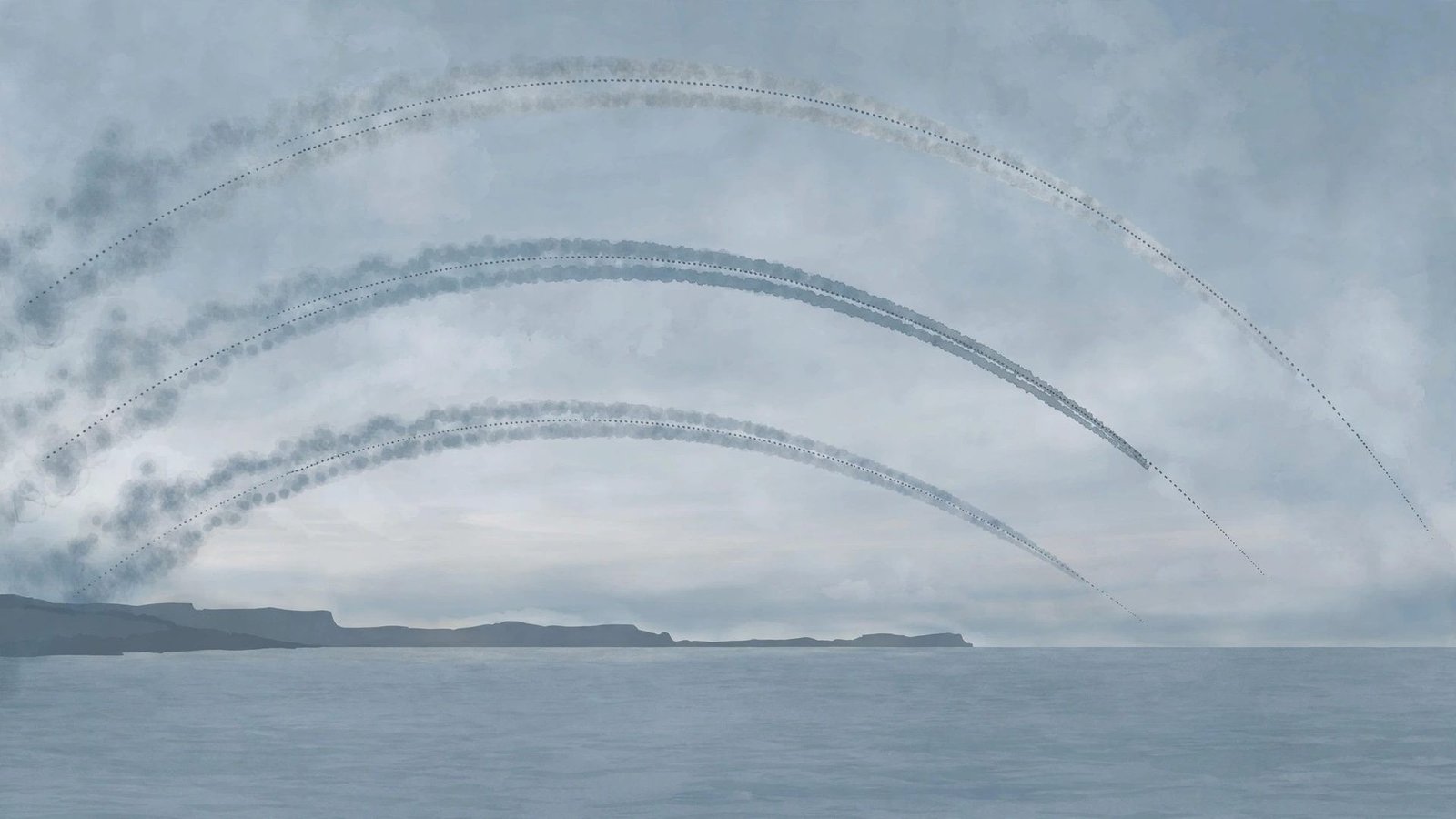
    North Korea fired around 10 short-range ballistic missiles toward the sea off its east coast on Thursday, South Korea’s military said, amid sharply rising tensions along the heavily armed inter-Korean border. The missiles were launched at around 12:30 p.m. local time from the area around Wonsan, on North Korea’s eastern coast, and flew about 250 kilometres toward the East Sea, also known as the Sea of Japan, according to South Korea’s Joint Chiefs of Staff.

    South Korea’s military said it was strengthening surveillance and maintaining readiness for any additional launches, while sharing information closely with the United States and Japan. Japan’s Defence Ministry said North Korea had launched what could have been a ballistic missile and that it did not appear to have landed within Japan’s Exclusive Economic Zone, according to reports. No damage to aircraft or ships around Japan was confirmed.

    South Korea’s presidential National Security Office convened an emergency meeting to assess the security implications of the launches. In a statement, the presidential office urged North Korea to halt its repeated ballistic missile launches, describing them as a serious violation of United Nations Security Council resolutions. Officials in Seoul said further analysis of the missiles’ specifications was under way in coordination with the United States.

    Border tensions behind the launch

    The launch came as tensions along the border have risen sharply since two mine explosions in the Demilitarized Zone on September 21 wounded three South Korean soldiers. Seoul says the mines were planted by North Korean forces and has called the incident an armistice violation, demanding an apology. Pyongyang has denied responsibility and accused Seoul of fabricating the incident, according to reports.

    The latest test also followed Seoul’s proposal, made days earlier, for military talks with Pyongyang to address differences over border demarcation. Kim Yo Jong, the influential sister of North Korean leader Kim Jong Un, had announced that Pyongyang would place loudspeakers capable of broadcasting anti-South Korean propaganda on standby across the border, saying they would be ready along the entire border by the end of October, although analysts in Seoul questioned whether the devices would be activated.

    South Korea’s military also said earlier on Thursday that North Korean artillery batteries visible from across the border appeared largely intended for show. Joint Chiefs of Staff spokesperson Jang Do-young told a briefing that the exposure of older weapon systems should be understood as being for show, while the Defence Ministry said placing artillery where it could be easily seen made little tactical sense. North Korean soldiers were also seen erecting fences inside the Demilitarized Zone.

    Analysts quoted in reporting on the launch said it was difficult to say the border situation directly prompted the missile test, but that it formed part of a broader series of North Korean shows of force. Kim Yong-hyun, a professor of North Korean Studies at Seoul’s Dongguk University, said the launch also appeared intended to demonstrate North Korea’s increasingly advanced ballistic missile capabilities to the United States, Japan and the broader international community. North Korea last fired ballistic missiles on October 12, and has conducted missile tests on more than 10 occasions this year, according to South Korea’s military. Seoul said it was still awaiting a response to its proposals for military talks and had urged Pyongyang to return to dialogue.