Tag: Mohsin Naqvi

  • President House: No Provinces Talk in Zardari-Naqvi Meeting

    President House: No Provinces Talk in Zardari-Naqvi Meeting

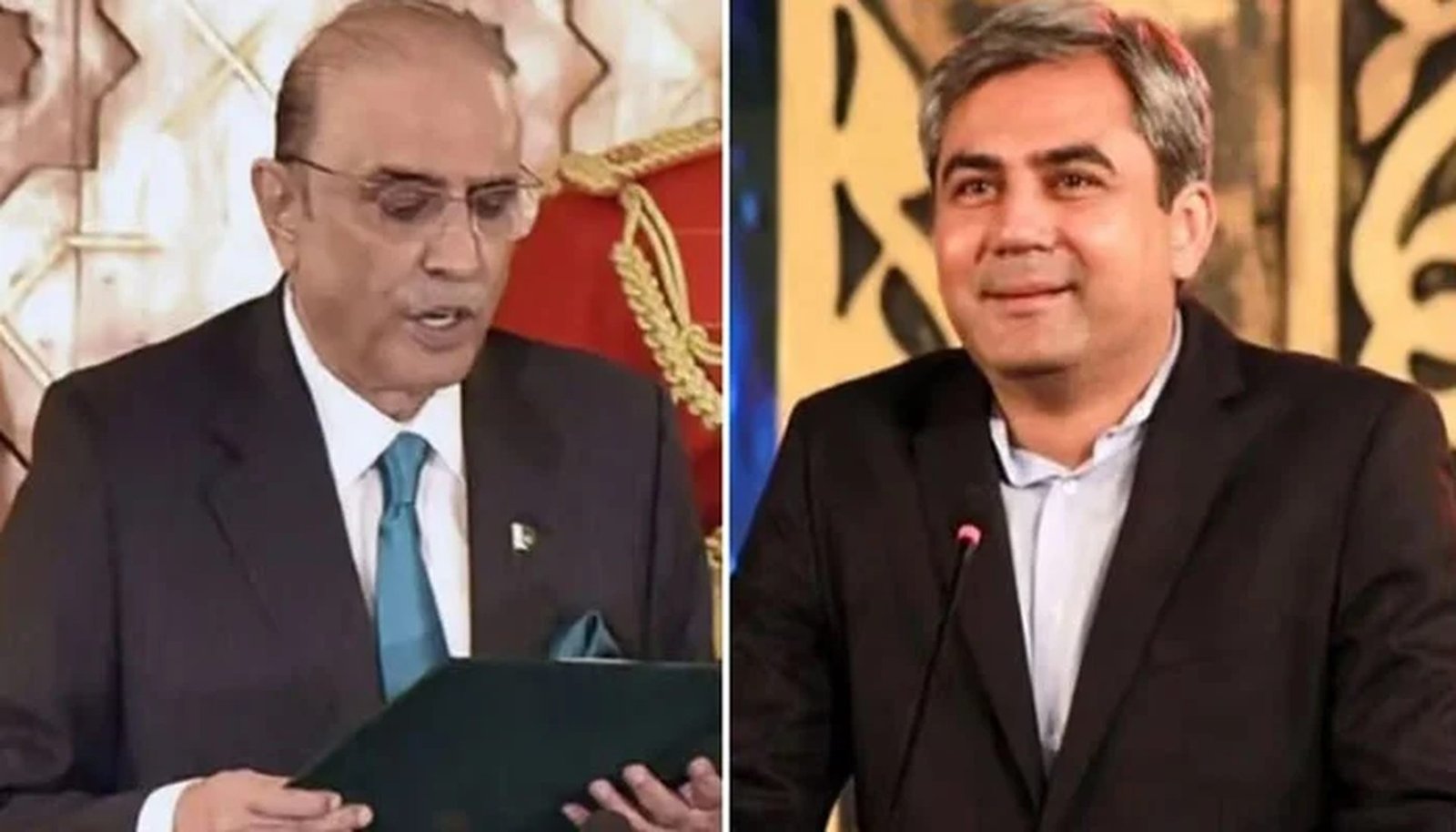
    The President House on Friday rejected media reports that President Asif Ali Zardari and Interior Minister Mohsin Naqvi discussed the creation of new provinces during their meeting in Nawabshah a day earlier, saying the talks focused on national security and the regional situation.

    In a statement, the President House said the reports suggesting that provincial matters were discussed during the meeting were incorrect. “Matters concerning national security and the regional situation were discussed during the meeting. However, no discussion took place on matters related to provinces,” the statement said.

    The clarification came after several media reports claimed that the president and the interior minister had discussed the possibility of creating new provinces during their meeting at Zardari House in Nawabshah on Thursday night. No official handout had been issued following the meeting, which fuelled speculation about what was discussed.

    Naqvi had travelled to Nawabshah on a special aircraft for the meeting, which reportedly lasted nearly an hour. He flew in hours after publicly calling for a referendum on the creation of new provinces, saying surveys and public discussion appeared to indicate support for the idea and that the people should formally settle the question.

    The debate over creating new provinces as part of a broader restructuring of the system gained momentum on July 31, when Naqvi called for additional administrative units or provinces to overhaul what he described as the country’s outdated governance system. The proposal has since drawn sharply divided reactions from political parties.

    The Pakistan Peoples Party, which the president belongs to, has opposed any division of Sindh, while other parties have either backed a referendum or called for the matter to be decided through parliament. A referendum alone cannot create a province under the Constitution, and any change would require a constitutional amendment passed by parliament.

    The President House statement gave no further details of the discussion on national security and the regional situation, and it did not mention the referendum proposal. The meeting had taken place against the backdrop of the interior minister’s renewed push for a public vote on new administrative units, which he has argued would improve governance and bring administration closer to the people.

    Officials familiar with the meeting had earlier told reporters that the two leaders discussed matters of mutual interest, but the absence of an official statement after the talks led to conflicting accounts in the media about whether the provinces issue came up. Friday’s clarification put the presidency’s position on record, stating plainly that no discussion relating to provinces took place.

  • Islamabad to Become Pakistan’s First Cashless City by Dec 31

    Islamabad to Become Pakistan’s First Cashless City by Dec 31

    The government has decided to make Islamabad Pakistan’s first fully cashless city, setting a final deadline of December 31, 2026, to bring all merchants and business centres in the federal capital into the digital payment system.

    A meeting on implementing the Cashless Islamabad project was held under the chairmanship of Minister of State for Interior Talal Chaudhry, attended by the chairman of the Capital Development Authority (CDA), representatives of the banking sector and senior government officials, Geo News and Pakistan Point reported on Friday. The banking sector representatives assured the meeting of their full cooperation for the success of the project.

    Chaudhry said that after November 30, no department of the Islamabad Capital Territory (ICT) administration or the CDA would accept cash payments from citizens or applicants, and all official transactions would be conducted through digital payment channels. The second phase aims to bring all small and large businesses in the federal capital into the cashless system by December 31, with digital payment facilities made available from street vendors to major commercial centres.

    He said 26,000 merchants in Islamabad had already been connected to the digital payment system. He added that the cashless system would improve financial transparency, tax monitoring and the overall transaction system, and that consultation and suggestions from all stakeholders were important for the project’s success.

    According to Chaudhry, Interior Minister Mohsin Naqvi had promised the prime minister that Islamabad would become Pakistan’s first cashless city. The government aims to make it the world’s first cashless capital, with no cash payments being received in any government department and all traders brought into a cashless system, he said. Work on the initiative was progressing rapidly on the special instructions of the prime minister and the interior minister, he added.

    The cashless push builds on steps already taken in the capital. The Islamabad district administration introduced QR code payments for fines earlier this week, making all assistant commissioners’ offices cashless, and the facility has also been implemented across the Deputy Commissioner Complex. The H-9 weekly bazaar became Pakistan’s first fully cashless market, and Islamabad International Airport has already transitioned to a fully cashless environment, becoming the first airport in the country to eliminate physical currency across its premises.

    Officials say the initiative is part of wider efforts to promote digital payments, modernise public services and make official payments more transparent. The CDA has already fast-tracked the expansion of QR-based payment systems across the city, with the cashless system functioning in weekly bazaars, the CDA’s One-Window Facilitation Centre and the metro and electric bus services. The government says the aim is for no citizen in Islamabad to need to carry cash, with all transactions facilitated through digital means.

    The deadline gives the administration and traders about seven weeks to complete the transition. The meeting decided that the project would be implemented in phases, with government departments going cashless first, followed by the city’s markets, shopping centres, hospitals, hotels, restaurants and other commercial areas.

  • Parliament to Decide on New Provinces Even if Referendum Held: Rana Sanaullah

    Parliament to Decide on New Provinces Even if Referendum Held: Rana Sanaullah

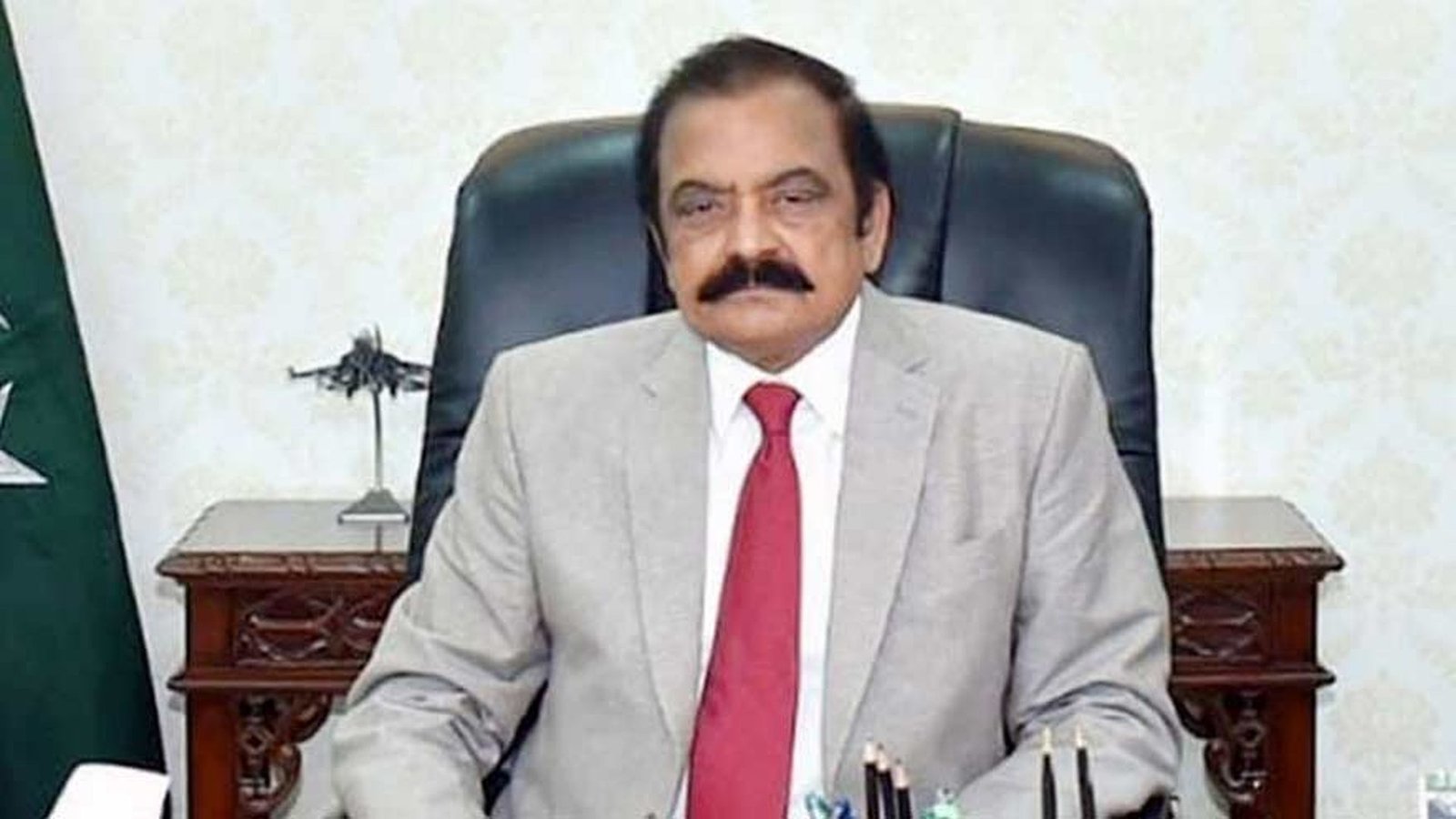
    Prime Minister’s Adviser Rana Sanaullah has said that parliament would have the final say on the creation of new provinces, even if a referendum was held on the issue, according to a Dunya News report published on Friday.

    Speaking to a private television channel, Sanaullah said the question of who would hold such a referendum also remained unresolved, adding that the process would have to be conducted by parliament.

    He said the issue had not yet been taken up by parliament. Once it was brought before the house, he said, a policy statement would be issued, followed by a debate on the matter.

    Sanaullah has made the same point in television appearances earlier in the week, telling Geo News that parliament was the appropriate forum to decide whether a referendum was necessary and what question would be put before voters. His remarks come after Interior Minister Mohsin Naqvi called for a referendum on the creation of new provinces, a proposal linked in media reports to a possible 28th Constitutional Amendment.

    Meetings with Imran Khan

    Commenting on meetings with Pakistan Tehreek-i-Insaf (PTI) founder Imran Khan, Sanaullah said both of the former prime minister’s lawyers had met him, but their conduct in the coming days would determine whether further meetings could take place.

    He said the lawyers had spoken about political matters after their meeting, a development that could complicate arrangements for future meetings. The Islamabad High Court has directed Imran Khan’s lawyers to avoid political discussions after jail meetings, and the matter has been reported separately.

    Sanaullah said the PTI had announced a long march and that efforts had been made to persuade the party, with assurances given on various matters. He added that restrictions on meetings with Imran Khan had been imposed because the party was using them for political purposes.

    No constitutional amendment on new provinces has been tabled, and no referendum has been scheduled. The proposal remains at the discussion stage, with the government saying any decision would have to go through parliament.

  • Naqvi Meets Zardari in Nawabshah Amid Political Reset Talk

    Naqvi Meets Zardari in Nawabshah Amid Political Reset Talk

    NAWABSHAH: Federal Interior Minister Mohsin Naqvi held a nearly hour-long, one-on-one meeting with President Asif Ali Zardari at Zardari House in Nawabshah on Thursday night, as speculation grows about a possible political “reset” in the country.

    According to sources familiar with the meeting, the two leaders held detailed discussions on the creation of new administrative units and the possibility of a 28th Constitutional Amendment, the two issues that have dominated political debate in recent days.

    The meeting also covered the PTI founder’s recent meeting with his lawyers and the release of his sisters, and the possible political implications of these developments. President Zardari, according to the sources, stressed the need for negotiations with opposition parties to resolve outstanding political issues.

    The prevailing political and law-and-order situation in Khyber Pakhtunkhwa also came under discussion. Naqvi briefed the president on the measures being taken to maintain peace and security in the country.

    Why the meeting matters

    The meeting is being seen as significant because it came only hours after Naqvi’s media talk in Lahore, where he proposed holding a public referendum on the creation of new provinces and said the people, not political parties alone, should decide the question.

    PPP Chairman Bilawal Bhutto Zardari had called for a “political reset” rather than new provinces during an address in Larkana on Monday, arguing that the country’s economic hardships made such a course necessary. The PPP strongly opposes the creation of new provinces in Sindh, and the Sindh Assembly has passed a resolution rejecting any division of the province.

    Reports have also suggested that a proposal to reorganise Pakistan into 12 provinces is under consideration, with a nationwide referendum envisaged ahead of a possible 28th Amendment. Under the reported plan, Punjab could be divided into four provinces, Khyber Pakhtunkhwa and Balochistan into three each, and Sindh into two, although no final decision has been taken.

    Reports also said the Nawabshah meeting touched on possible action against the Jamiat Ulema-e-Islam-Fazl (JUI-F), although no details of any decision emerged. No official statement was issued about the meeting, and the specific outcomes of the discussion could not be independently confirmed.

    Naqvi travelled to Nawabshah on a special aircraft for the unscheduled visit and left Zardari House after the meeting, according to reports. Both leaders are expected to remain in contact as consultations on the political situation continue.

  • Naqvi Proposes Referendum on New Provinces in Pakistan

    Naqvi Proposes Referendum on New Provinces in Pakistan

    LAHORE: Federal Interior Minister Mohsin Naqvi has proposed holding a public referendum on the creation of new provinces in Pakistan, saying the decision should rest with the people rather than with political parties alone.

    Speaking to the media at the National Cyber Crime Investigation Agency (NCCIA) in Lahore on Thursday, 12 November, Naqvi said seeking public opinion was the “best solution” to the debate over new provinces, and that the views of all political parties were necessary. “If the people say new provinces should not be created, then I am with the people,” he said.

    The interior minister said surveys were being conducted on the issue and, according to him, people were demanding new provinces. He said that since all sides spoke of democracy and the supremacy of the people, the question should be put to a public vote. “Let us hold a referendum and give people what they want. The people are supreme,” he said.

    Naqvi and Bilawal ‘on the same page’ on a reset

    Referring to his discussions with Pakistan Peoples Party (PPP) Chairman Bilawal Bhutto Zardari, Naqvi said both were on the same page regarding the need for fundamental changes in the existing system, although their approaches differed. “Bilawal spoke about resetting political matters, whereas I am proposing a reset of the entire system,” he said.

    Bilawal had addressed a ceremony in Larkana on Monday, where he called for a “political reset” rather than new provinces amid the country’s prevailing economic hardships. The PPP strongly opposes the creation of new provinces in Sindh, and the Sindh Assembly has passed a resolution rejecting any division of the province. Naqvi said all parties, including the PPP and the Pakistan Muslim League-Nawaz (PML-N), were important for the government, and nothing would be decided through disagreement.

    The 12-province proposal

    Naqvi’s remarks come amid reports that a proposal to reorganise Pakistan into 12 provinces is under consideration, with a nationwide referendum envisaged ahead of a possible 28th Constitutional Amendment. The News reported that the proposed arrangement could see Punjab divided into four provinces, Khyber Pakhtunkhwa and Balochistan into three each, and Sindh into two.

    Sources familiar with the proposal said the amendment could be considered in the first half of 2027. However, no final decision has been taken regarding provincial boundaries, administrative structures or the constitutional process. The report said the aim was better governance, decentralised authority and a more equitable distribution of development resources.

    Earlier, Defence Minister Khawaja Asif had backed the creation of new provinces, saying even 12 could be considered, provided they are established on administrative rather than ethnic or political grounds. He said in Sialkot on Sunday that the proposal had been under discussion for two months.

    NCCIA measures announced

    Naqvi was speaking during a visit to the NCCIA, where he also announced measures to strengthen the agency. He said its complaint cell is being moved onto the Pak ID platform, that he would brief the prime minister on the agency’s resources next week, and that staff numbers will be increased — the agency has only 61 personnel in Punjab. He said the NCCIA had arrested 15 suspects over the past month in operations against online pornography, and had uncovered an alleged international examination fraud. He added there was zero tolerance for those who blackmail girls online.

  • Referendum on New Provinces? Naqvi Says Let the People Decide

    Referendum on New Provinces? Naqvi Says Let the People Decide

    Interior Minister Mohsin Naqvi has called for a referendum on the creation of new provinces in Pakistan, saying the decision should rest with the people rather than with politicians alone. Speaking to the media in Islamabad on Thursday, he said that if the public did not support the proposal, he would oppose it himself.

    Naqvi urged political parties to look at public opinion surveys on the issue, arguing that the polls point to growing support for new provinces. He did not cite any specific survey or share figures, but said the direction of public opinion was clear enough for political parties to take the question seriously.

    The creation of new provinces has been debated in Pakistan for years. Supporters of the idea argue that smaller administrative units are easier to govern and bring government closer to the people, while critics warn about the cost and complexity of redrawing provincial boundaries. No government has so far put the question to a public vote.

    Naqvi also commented on Pakistan Peoples Party Chairman Bilawal Bhutto-Zardari’s recent remarks about the need for a political reset in the country. The interior minister said he personally believed that all aspects of the system needed to be set right. “My opinion is the same as Mr Bilawal Bhutto’s. The entire system needs to be put right,” he said.

    On the issuance of notices to people associated with Jamiat Ulema-e-Islam (JUI-F), Naqvi said notices had so far been issued to six or seven people. He clarified that JUI-F chief Maulana Fazlur Rehman had not received any notice.

    Addressing concerns about corruption, the interior minister said it would be wrong to claim that corruption did not exist in the country. “With due respect, corruption does exist. Wherever corruption is found, it must be acknowledged and addressed,” he said.

    Naqvi also gave an assurance about Pakistan Tehreek-e-Insaf founder Imran Khan, saying he would be granted all the legal rights to which he was entitled.

    The interior minister did not announce any date or formal process for a referendum. His remarks put the question of new provinces back into public debate, but any such vote would require a political consensus and a legal framework before it could take place.

  • No Leniency for Anti-State Speeches, Vandalism: Naqvi

    No Leniency for Anti-State Speeches, Vandalism: Naqvi

    Federal Interior Minister Mohsin Naqvi has warned that those making anti-state speeches or engaging in vandalism will face no leniency, pledging that the rule of law will be ensured at all costs. He was speaking at a passing-out ceremony in Shabqadar, where a new batch of Federal Constabulary personnel completed their training.

    At the ceremony, 983 personnel from all four provinces, Azad Jammu and Kashmir and Gilgit-Baltistan completed their training and joined the newly established Special Protection Wing and Anti-Riot Wing of the force. The minister said the Federal Constabulary has always been at the forefront of maintaining peace and performs its law-and-order duties with courage and bravery.

    One notable feature of the ceremony was the extensive participation of young people from all four provinces, including women, a sign, the minister suggested, of the force’s broadening appeal. Addressing the new graduates, Naqvi said they were assuming responsibility for the country’s security and that the nation had high expectations of them.

    Naqvi also praised the services of the Federal Constabulary, saying the force had consistently stood on the front line in difficult times. The two new wings, he indicated, will strengthen the force’s ability to protect important sites and to deal with rioting and public disorder.

    His warning on anti-state speeches and vandalism was the sharpest part of the address. The minister reiterated his resolve to ensure the rule of law at all costs, a message aimed at those who, in his words, work against the state. The ceremony, part celebration and part warning, underlined the government’s harder line on law and order.

    The passing-out parade brought together recruits from every part of the country, and the minister’s presence signalled the importance the government attaches to the force. As the new personnel take up their duties, the focus will be on whether the new wings live up to the expectations set out for them in Shabqadar.

    The ceremony also highlighted the changing face of the force, with young recruits from every province and territory taking part, including women in significant numbers. Their presence reflects a broader effort to open the constabulary to a new generation. As the new wings begin their work, the minister’s message was clear: the force will be judged on how firmly it upholds the law.

  • Pakistan, Sudan Agree to Boost Security, Cybercrime Ties

    Pakistan, Sudan Agree to Boost Security, Cybercrime Ties

    Pakistan and Sudan have agreed to enhance bilateral cooperation in various fields, including security, internal affairs, cybercrime, police training and institutional cooperation, officials said on Saturday.

    Sudanese Interior Minister Lt-General (Police) Babiker Samra Mustafa Ali met Interior Minister Mohsin Naqvi and Minister of State for Interior Talal Chaudhry in Islamabad on Saturday. Both interior ministers also led delegation-level talks at the Interior Ministry.

    During the bilateral meeting, it was decided to sign a memorandum of understanding to enhance cooperation in the field of cybercrime. The Sudanese interior minister said he wanted to benefit from Pakistan’s expertise and experience in the field of cybercrime, and Naqvi said Pakistan was ready to provide professional training to Sudanese police officers.

    Naqvi said Pakistan was ready to provide all kinds of support to the peace and reconstruction process in Sudan. He also highlighted the role of Pakistan’s National Database and Registration Authority (NADRA) in Sudan’s civil registration system, saying that with NADRA’s cooperation, 36 million citizenship cards, 9 million national identity cards, 18 million birth certificates and 500,000 death certificates had been issued in Sudan. He added that NADRA was always ready to cooperate in the civil registration process in future.

    On the inquiry of the Sudanese interior minister, Naqvi also issued orders to immediately resolve the visa issues of married Sudanese women residing in Pakistan. He said Sudanese citizens could benefit from medical facilities in Pakistan and would be provided with every possible facility in the health sector.

    The Sudanese interior minister said Pakistan was a brotherly country and that Sudan attached great importance to cooperation with Pakistan in all sectors. He expressed his desire to promote bilateral cooperation in various sectors and thanked Pakistan for its cooperation.

    The Sudanese minister also called on Field Marshal Syed Asim Munir, Chief of Army Staff and Chief of Defence Forces, at General Headquarters in Rawalpindi. According to the military’s media wing, the two sides discussed matters of mutual interest, evolving regional and global security dynamics and opportunities to enhance bilateral cooperation, with particular emphasis on security, counterterrorism and institutional cooperation.

    The meeting was also attended by the Federal Secretary Interior, Special Secretary and Additional Secretaries Interior, Chairman NADRA, the directors general of the FIA, Anti-Narcotics Force, National Forensic Agency, National Cyber Crime Investigation Agency and Immigration and Passports, the Inspector General of the Federal Constabulary, the Commandant of the National Police Academy, the Chairman of the Social Media Regulatory Authority, and the Chief Commissioner and Inspector General of Islamabad Police.

  • Pakistan, UK to Deepen Security and Cybercrime Ties

    Pakistan, UK to Deepen Security and Cybercrime Ties

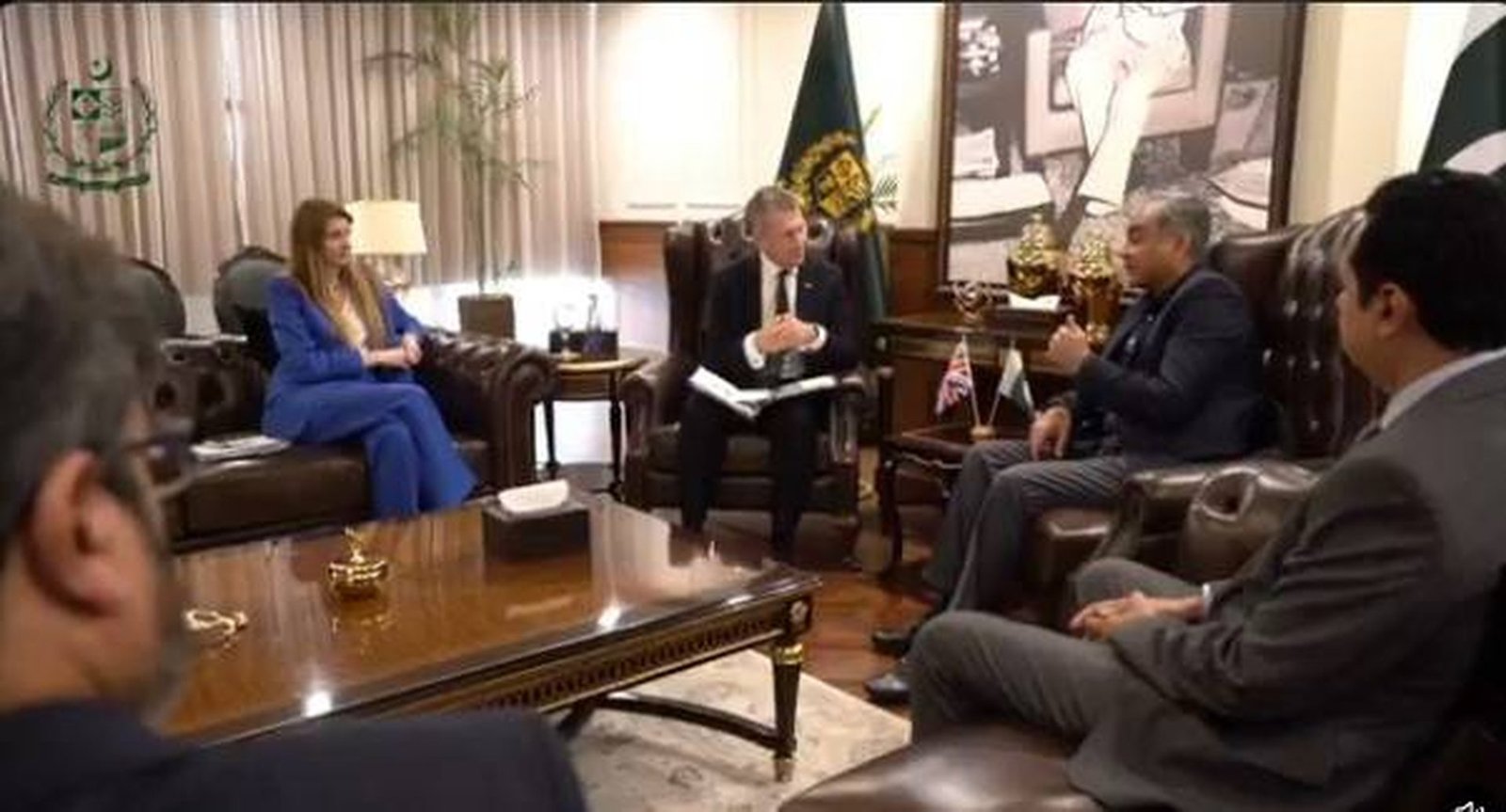
    Pakistan and Britain have agreed to deepen their cooperation on security, counter-terrorism and cybercrime, following detailed talks in Islamabad on Friday between Interior Minister Mohsin Naqvi and British Minister of State for Security Dan Jarvis.

    The understanding was reached during Mr Jarvis’s visit to the Interior Ministry, where he held delegation-level talks with Mr Naqvi and Minister of State for Interior Talal Chaudhry, according to 24NewsHD.

    During the meeting, the two sides agreed to enhance cooperation in counter-terrorism, counter-narcotics, cybercrime, immigration and coast guards, as well as in the work of NADRA, the national identity registration authority.

    Mr Jarvis praised the Federal Investigation Agency for its work in preventing illegal immigration. He said cybercrime was an international problem and that all countries needed to work together to combat it.

    The British minister said there was excellent cooperation between Pakistan and the United Kingdom in various sectors and that both countries wanted to expand it further. He also acknowledged Pakistan’s sacrifices and efforts in the war against terrorism.

    Both sides decided to soon finalise a memorandum of understanding on counter-narcotics. Cooperation between the UK’s National Crime Agency and Pakistan’s Anti-Narcotics Force is also to be strengthened under the agreement.

    There was consensus at the meeting to convene soon a meeting of the Working Group established between the Pakistan and UK Home Ministries, so that follow-up on the agreed areas of cooperation can move ahead.

    Mr Naqvi appreciated the progress made under the Upskill Project, saying it was proving extremely important in enhancing the capacity of Pakistani institutions.

    The discussions covered a broad range of shared concerns, from tackling terrorism and drug trafficking to curbing cybercrime and unlawful migration. Both sides agreed that closer coordination between their law enforcement and border agencies would help them respond more effectively to challenges that cross national borders, and that the planned memorandum of understanding and the Working Group meeting would provide a practical framework for taking the agreed cooperation forward.

    Mr Jarvis is on a visit to Islamabad, during which he met Foreign Minister Ishaq Dar on Thursday before holding talks at the Interior Ministry on Friday. Officials said the discussions reflected the shared interest of both countries in closer practical cooperation on security, migration and organised crime.

  • Margalla Road extension to open within weeks, Naqvi says

    Margalla Road extension to open within weeks, Naqvi says

    Interior Minister Mohsin Naqvi has said the Margalla Road extension in Islamabad should be completed within the next few weeks, after he visited the site on Thursday night to review the pace of construction.

    Naqvi visited the area near Sangjani, where he inspected work on the Margalla Road extension and the Sangjani Interchange. The extension will connect Iran Avenue to the motorway, giving the capital another direct route to the motorway network.

    According to the report, the Sangjani Interchange is expected to make travel easier for residents of Khyber Pakhtunkhwa and for passengers heading to the airport. The minister directed the authorities concerned to speed up the construction work so the project can be finished on the revised timeline.

    The project had originally been targeted for completion in April, but work is still under way. Naqvi said he hopes the extension will be ready within the next few weeks, and he pressed officials to accelerate the remaining work.

    The Margalla Road extension is one of the main road projects under way in the capital, and its completion is expected to ease traffic pressure on the existing routes used by commuters travelling between Islamabad, the motorway and Khyber Pakhtunkhwa.

    During the visit, Naqvi also reviewed the restoration of the Shakarparian forest, where thousands of trees have been planted around the Margalla Road extension and the adjoining areas. The plantation is part of efforts to restore green cover around the new road.

    A Safari Park is also being constructed in Islamabad, and officials say it will attract visitors from across Pakistan as well as international tourists. Foreign tourists visiting the park could spend one or two days there, according to the report.

    The park is expected to become a popular destination for families and tourists, and officials believe it will reduce the need for Pakistanis to travel abroad for similar recreational experiences.

    The minister’s visit comes as the government pushes to complete the road project quickly, with the interchange seen as an important link for daily commuters and airport traffic.

    No new completion date was announced beyond the minister’s hope that the work would be finished within weeks. Officials have been asked to step up construction so the extension can open to traffic as soon as possible.

    Once completed, the extension is expected to shorten journey times for people travelling from the capital towards the motorway, and to give Khyber Pakhtunkhwa residents a smoother route into and out of Islamabad.

    The plantation drive around the road is continuing alongside the construction work, with thousands of trees already planted in the area around the extension and the Shakarparian forest.

    For now, commuters will have to wait for the final phase of construction to finish before the new link opens. The minister’s remarks suggest the wait may not be long, with the project now in its final stages.