Tag: mining

  • Pakistan’s $8tr Minerals Can Lift Exports by 10pc: Minister

    Pakistan’s $8tr Minerals Can Lift Exports by 10pc: Minister

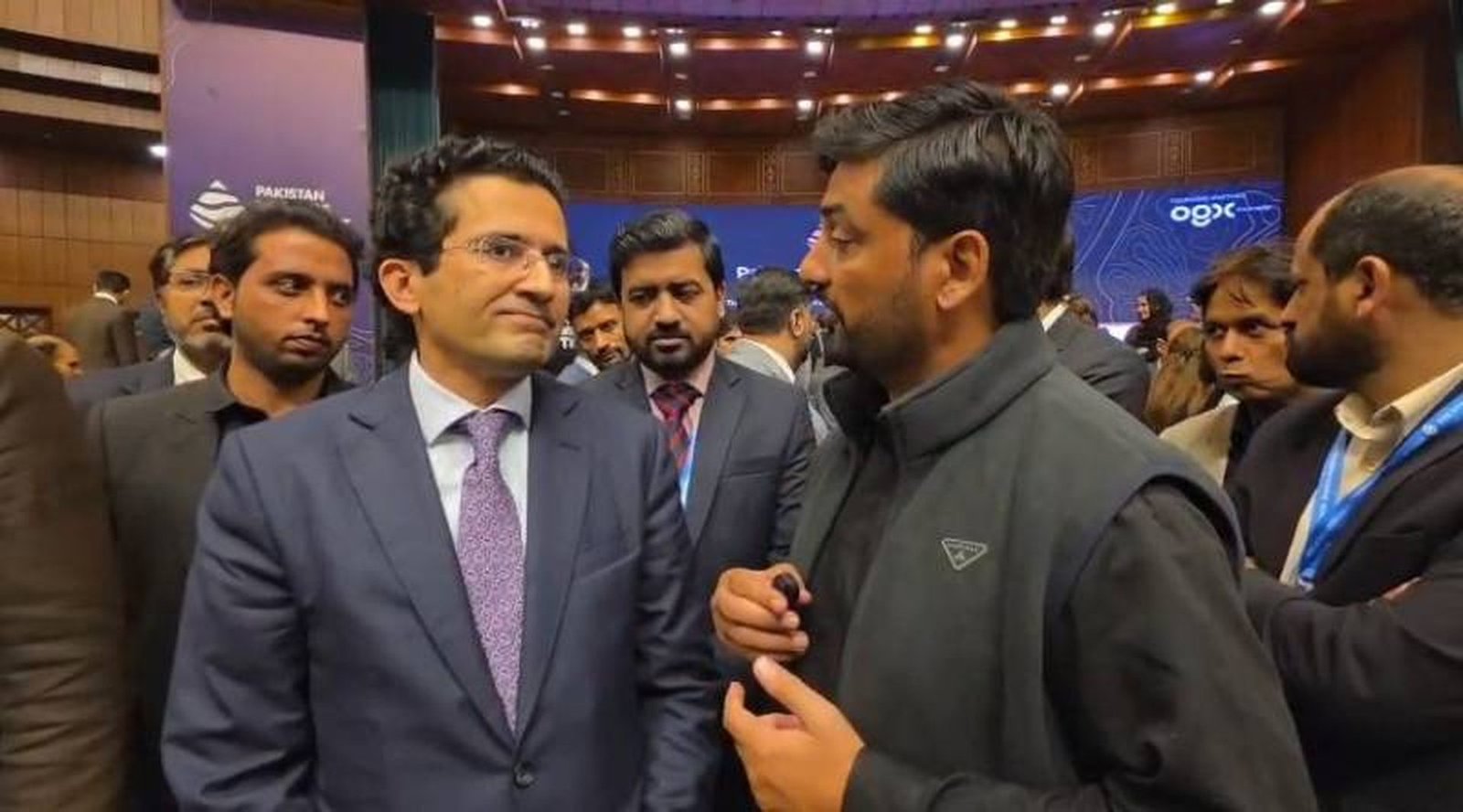
    Pakistan’s estimated $8 trillion mineral wealth could become a major source of economic growth, with one major project alone capable of increasing the country’s exports by around 10 per cent, Federal Minister for Petroleum Ali Pervaiz Malik has said.

    In an interview with 24NewsHD on Friday, Malik said the first phase of the project could bring in $3 billion in exports, while Pakistan’s total exports currently stand at around $30 billion to $32 billion.

    Pakistan’s mineral reserves are estimated at around $8 trillion, spread across about 600,000 square kilometres, according to a report by the Oil and Gas Development Company (OGDCL) and the Institute of Cost and Management Accountants of Pakistan. The country has 92 known minerals, 52 of which are commercially exploited, yet mining has historically contributed less than 3 per cent to gross domestic product.

    The report suggests that with effective policies and greater investment, annual mineral exports could rise from about $3 billion to $8 billion. Reko Diq, the flagship copper and gold project in Balochistan, is targeting first production by the end of 2028, according to project reports, with first-year shipments projected to generate export revenues of about $2.8 billion.

    Malik said the government was working to improve the mining sector, simplify rules and attract foreign investors to develop the country’s mineral resources. He said mining had long been carried out using outdated methods, and irresponsible use of explosives had led to the loss of nearly half of valuable mineral resources.

    He said the government wanted to simplify rules and procedures so investors could start mining projects without having to deal with several different laws and departments. Mineral resources belonged to the provinces, he said, while the federal government could support mining projects by providing roads, other infrastructure and electricity. Provincial chief ministers had also been invited to join the national mining development plan.

    The minister was speaking on the sidelines of the Pakistan Minerals Investment Forum, held in Islamabad on November 12 and 13. He said the exhibition area was three to four times larger than at the previous event, with major mining companies from Turkiye, Canada, the United Kingdom and other countries taking part, including Barrick, one of the world’s largest mining companies.

    Malik said agreements and memorandums of understanding had been signed at the previous forum, while new agreements were also reached this time. However, he said the real challenge was to turn these commitments into working projects, expressing hope that some projects could become reality within two years, while others might take three years.

    He said the Petroleum Ministry had a separate minerals directorate to manage the work and improve cooperation with international partners. The government planned to launch two or three pilot projects to show how mining could be carried out according to international standards and to discourage illegal extraction.

    Malik stressed that local communities must also receive direct benefits from mining projects, saying this would help prevent illegal mining. The forum also heard calls from the country’s military leadership to turn mineral wealth into economic prosperity.

  • Pakistan Pledges Security, Clear Terms for Mining Investors

    Pakistan Pledges Security, Clear Terms for Mining Investors

    Pakistan has pledged to provide security for mines, clear and uniform fiscal terms for investors, and better geological data as it seeks to turn its mineral sector into a competitive industry, Petroleum Minister Ali Pervaiz Malik told the Pakistan Minerals Investment Forum in Islamabad on Friday.

    Addressing the second day of the two-day Pakistan Minerals Investment Forum 2026, Malik said the government was committed to ensuring security and safety at mine sites, along logistics routes and, above all, for trained human resources, so that mining operations could continue without interruption. Special arrangements had been made to strengthen the security framework for the sector, he said, according to Dunya News, the Express Tribune and Arab News.

    Malik said Pakistan would offer investors clear and uniform fiscal terms for mining projects, without requiring negotiations on special arrangements case by case. “Our aim is straightforward. We want clear fiscal terms available to every responsible company without the need to negotiate special arrangements on a case-to-case basis,” he said, as reported by the Express Tribune.

    He said the government of Prime Minister Shehbaz Sharif was investing in improving geological data through the Geological Survey of Pakistan, recognising that investors could not accurately assess project risks without reliable scientific information. The government was strengthening the scientific foundation of the sector through accelerated geological mapping, including detailed surveys at a scale of 1:50,000, modern geochemical and geophysical surveys, exploratory drilling and upgraded geoscience laboratories, he said.

    More than 40 mineral exploration licences had recently been granted in the Chagai and Khuzdar districts of Balochistan alone, reflecting growing private sector participation in strategic and critical minerals, the minister said. Exploration efforts were increasingly focusing on minerals of strategic importance to global investors, including copper and gold in Chagai and western Balochistan, lithium, tin and tungsten in Gilgit-Baltistan, and antimony and base metals in Khyber Pakhtunkhwa.

    Malik said Pakistan had traditionally exported raw ore and concentrates while importing finished products, and the government was now advancing copper smelting to capture greater value across the supply chain, from mining to finished metal. International technical cooperation, including the UK-Pakistan Geoscience Capacity Building Programme, was helping strengthen expertise in digital mapping, airborne surveys and mineral assessment, and decades of geological information were being digitised for investors, he said.

    He said discovering a mineral deposit was only the beginning, as commercially viable mining projects required power, water, roads, railways and access to international markets. The government was developing road connectivity between Chagai’s mineral-rich belt and Gwadar Port, linking Thar coal resources with power plants, and upgrading the Rohri-Nokundi Railway Corridor, connectivity to Port Qasim and supporting infrastructure around Reko Diq, he said.

    “Our objective is very clear: to build not just individual mines, but an integrated, competitive and sustainable mineral industry,” Malik said. He said the government wanted investment, wherever commercially and technically viable, to support processing, refining, downstream industries, technology transfer and integration into global value chains, and that the sector should strengthen Pakistani capabilities through technical skills, vocational training and career opportunities for young people, including women entering the sector.

    He stressed that the development of the mineral industry must also benefit communities in producing regions through improved livelihoods, skills, services and local opportunities, and that environmental management, safety standards and transparent community engagement were essential requirements for responsible mining. Addressing international investors, including Barrick, Ivanhoe and Minmetals, he said Pakistan was open to long-term mining investment and hoped to earn their confidence through practical delivery and effective follow-up after the forum.

    The minister’s address came on the same day Field Marshal Asim Munir told the forum that Pakistan aimed to become a competitive destination for long-term mineral investment, with all possible measures being taken to ensure the security of the entire mining ecosystem. Arab News noted that Pakistan’s security situation had unsettled global mining firms, including Barrick Mining Corporation, which announced in April that it would slow down development of the Reko Diq copper-gold mine.

  • Field Marshal: Turn Mineral Wealth into Prosperity

    Field Marshal: Turn Mineral Wealth into Prosperity

    Chief of Defence Forces and Chief of Army Staff Field Marshal Syed Asim Munir has called for transforming Pakistan’s vast mineral wealth into a source of national development and economic prosperity, stressing that the country must move beyond exporting raw minerals and build the complete value chain at home.

    Addressing the Pakistan Minerals Investment Forum in Islamabad on Friday, the field marshal said Pakistan needed a coordinated strategy to unlock the full potential of its mineral sector, with a focus on refining, processing and manufacturing so that the country captures the maximum economic benefit from its natural resources. The forum, held at the Jinnah Convention Centre on November 12 and 13, brought together more than 5,000 investors, international mining executives, financial institutions, technical experts and senior government officials, according to the forum’s background material reported by Dunya News and Capital News Point.

    Field Marshal Munir said making effective use of Pakistan’s mineral resources was a shared national objective, and that development gains must reach the communities living in the areas where those resources are found. He emphasised that the success of the mineral sector should not be measured only by extraction or export figures, but by the positive changes it brings to local populations.

    “People living in mineral-rich areas must be included in the development process and should be able to see clear improvements in their living standards,” he said, adding that tangible improvements in the lives of local communities were essential. He said Pakistan must move “from potential to productivity, from promises to practical action, and from exporting raw minerals towards value-added economic development.”

    According to the forum’s background material, Pakistan’s mineral resources have an estimated potential value of six to eight trillion dollars, spread across about 600,000 square kilometres. The country has 92 identified minerals, of which 52 are commercially utilised. The mining sector currently contributes about 3.2 per cent to Pakistan’s gross domestic product, the forum material said.

    The Reko Diq copper and gold project in Balochistan’s Chagai district was one of the main attractions at the forum. According to the forum briefing, Reko Diq contains about three billion tonnes of ore, with an estimated 15 million tonnes of copper and 26 million ounces of gold, and is expected to attract investment of about 8.8 to 9.1 billion dollars. The project, in which Barrick Gold holds a 50 per cent stake, is expected to generate about 7,500 jobs during construction and 4,000 permanent jobs during operations.

    The field marshal’s address came days after new gold and copper reserves were reported in Chagai district, adding fresh momentum to the government’s push to develop the mineral sector. He said Pakistan wanted to promote long-term partnerships that could generate sustainable economic value for the country and its international partners, and that the country needed to make effective use of its available resources and capitalise on investment opportunities in mining and minerals.

    He also expressed confidence in the capabilities and determination of the Pakistani people, describing them as hardworking and courageous, with the potential to turn their aspirations into reality. Developing the minerals sector as a driver of economic stability, industrial expansion and public prosperity had become essential, he said, adding that the country’s natural resources presented significant opportunities that could only be realised through the hard work and skills of its people.

  • Pakistan Minerals Forum Opens: $8 Trillion Treasure Hunt

    Pakistan Minerals Forum Opens: $8 Trillion Treasure Hunt

    Islamabad is hosting some of the biggest names in global mining this week as the two-day Pakistan Minerals Investment Forum 2026 opened at the Jinnah Convention Centre on Thursday, putting the country’s vast underground wealth firmly in the international spotlight.

    The forum, which runs on 12 and 13 November, has drawn more than 5,000 delegates from over 50 countries, according to the organisers, including mining executives, financiers, engineers and government officials. It is organised by the Government of Pakistan with the support of the Special Investment Facilitation Council, with the Oil and Gas Development Company as its founding partner.

    Deputy Prime Minister Ishaq Dar inaugurated the event, while Prime Minister Shehbaz Sharif is scheduled to chair the concluding session on Friday. The gathering is the third edition of the forum, following earlier events in 2023 and 2025, but this year’s edition is being pitched as a shift from talk to execution, with a sharper focus on project financing, production timelines and getting Pakistani minerals into global supply chains.

    What is on the table

    At the heart of the discussions is a striking claim from the forum’s background material: Pakistan’s mineral resources carry an estimated potential value of between $6 trillion and $8 trillion. The showcase project held up as the model is the Reko Diq copper and gold mine in Balochistan, led by Barrick Gold, which organisers present as proof that large-scale mining can work in Pakistan.

    Sessions over the two days cover exploration and new mining projects, early-stage financing, and the technology needed to process minerals at home rather than exporting raw ore. An international exhibition of mining technology and ventures is running alongside the conference, and senior figures from global mining houses, including Barrick chairman John L. Thornton and Ivanhoe Mines founder Robert Friedland, are among the headline speakers.

    Forum president Ahmed Hayat Lak, who is also the managing director and chief executive of OGDCL, is leading the event, with energy consultancy Wood Mackenzie acting as the lead conference producer. Chief ministers from the provinces are also taking part in a session on turning provincial mineral potential into prosperity, a recognition that much of the country’s mineral wealth sits in Balochistan, Khyber Pakhtunkhwa and Gilgit-Baltistan.

    High hopes, and a note of caution

    For the government, the forum is a chance to present Pakistan as the next destination for critical minerals, at a time when the world is scrambling for copper, lithium and rare earths to power electric vehicles and clean energy. Copper, lithium, rare earths, industrial minerals and gemstones are all on the agenda, and officials hope the event will convert interest into signed deals and investment commitments.

    Not everyone is cheering. The Baloch National Movement, a Baloch rights group, has raised concerns about the forum, arguing that the mineral wealth of Balochistan should first benefit the people of the province. The group described the event as an attempt to turn local resources into an international business without addressing local deprivation, a reminder that the politics of who owns and benefits from the minerals will run alongside the investment pitches.

    Investors, for their part, will be watching for more than warm words. As analysts note, forums can open doors, but long-term stability, clear rules and reliable infrastructure decide whether money actually flows. Whether this week’s gathering produces concrete agreements or simply another round of promises will become clear when the concluding session wraps up on Friday.