Tag: Midterm elections

  • Mississippi Senate: Colom flips seat in historic upset

    Mississippi Senate: Colom flips seat in historic upset

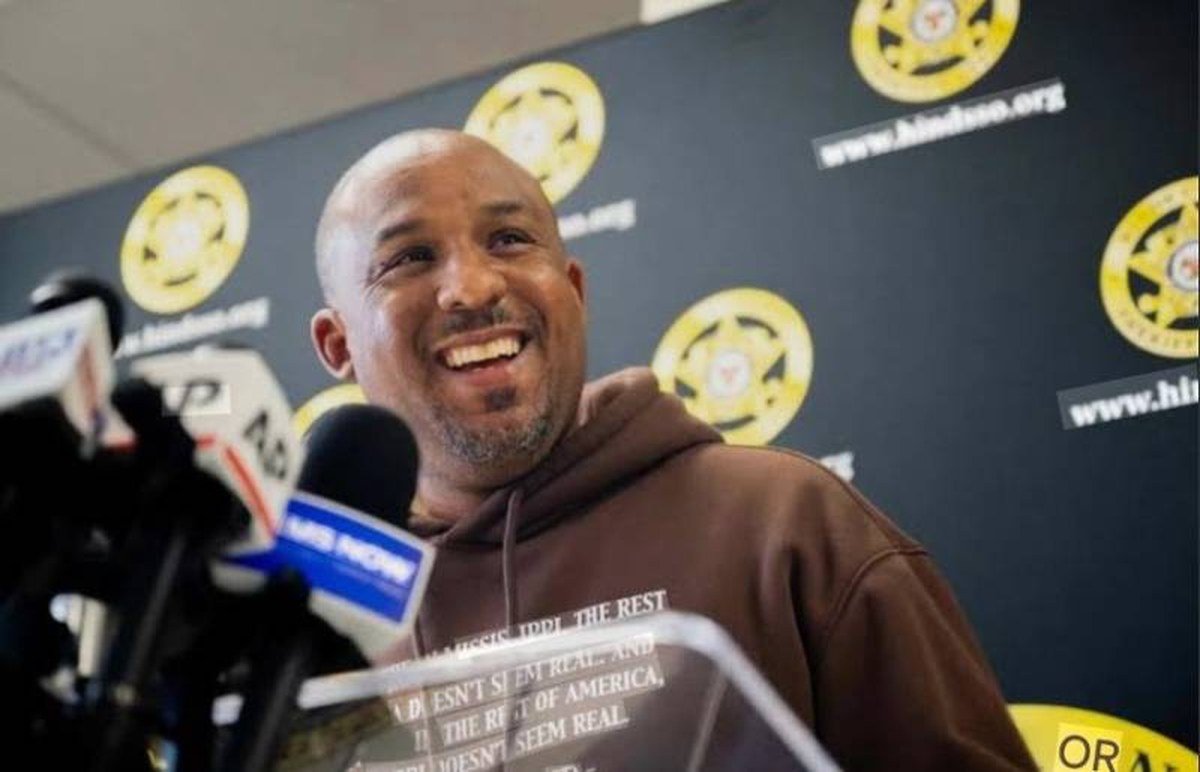
    Democrat Scott Colom has won the United States Senate race in Mississippi, defeating Republican incumbent Cindy Hyde-Smith in a result called on Wednesday after more than a week of counting, according to projections by the Associated Press, CNN and NBC News.

    Colom, a 43-year-old district attorney, becomes the first Black senator from Mississippi since the Reconstruction era that followed the US Civil War, and the first Democrat to win one of the state’s Senate seats since John Stennis in 1982. With about 99 percent of the vote counted, he led Hyde-Smith by 49.2 percent to 48.7 percent, a margin of roughly 4,585 votes out of more than 950,000 cast.

    Hyde-Smith, 67, who had held the seat since 2018, conceded in a video message posted on social media, congratulating Colom and saying she respected the decision of Mississippi voters. Colom’s campaign said she had also telephoned him to concede earlier in the day.

    The result gives Democrats an eighth Senate seat flipped from Republicans in this year’s midterm elections, taking their tally in the 100-member chamber to 55 seats, made up of 53 Democrats plus two independents who caucus with them, against 44 for Republicans, with the race in Alaska still to be called.

    The outcome was one of the last to be decided from the November 3 midterm elections, in which Democrats won control of both chambers of Congress, according to Reuters. The count in Mississippi dragged on for eight days as election workers tallied absentee and provisional ballots, with Colom’s lead growing steadily as the count went on.

    The upset stunned political observers. Hyde-Smith had consistently led in opinion polls, and President Donald Trump had carried Mississippi by nearly 23 points in the 2024 election. Colom, a seventh-generation Mississippian, campaigned on the cost of living and health care for residents of the state. It was the closest Senate race in the country, according to the Associated Press, decided by just a few thousand votes after days of counting.

    Colom celebrated the win on Wednesday night at Tougaloo College, a historically Black university, opening his victory address with a tribute to Hiram Revels, the first Black US senator, who also represented Mississippi. The state is due to certify the results on December 3.

  • Thune Re-Elected Senate GOP Leader After Midterm Rout

    Thune Re-Elected Senate GOP Leader After Midterm Rout

    Senate Republicans have re-elected John Thune as their leader, tapping the South Dakota senator for a second two-year term on Tuesday despite the party’s heavy losses in last week’s midterm elections.

    Thune, 65, drew no opposition and was elected by acclamation, with no ballots cast against him, according to his spokesman. Before choosing a leader, the conference voted 31–15 to press ahead with the election rather than postpone it, after hours of closed-door meetings that stretched across the day.

    Thune has led Senate Republicans since January 2025, when he succeeded longtime leader Mitch McConnell. He will now lead the party as minority leader when the new Congress convenes on 3 January, after Democrats flipped at least seven Republican-held seats in the midterms and took control of the chamber.

    A smaller, harder job ahead

    Republicans will hold a minority of no more than 46 seats in the next Senate. Democrats flipped seats in Iowa, Kansas, Maine, North Carolina, Ohio, South Carolina and Texas, while two further races, in Alaska and Mississippi, remained uncalled when the leadership vote took place.

    Thune had made clear before the meeting that he wanted a full and frank discussion about the party’s future, telling colleagues they would have a robust conversation about where to go from here and then see what the consensus was. Senators emerged from the morning session after two hours with no resolution, and the conference reconvened in the afternoon before finally re-electing him.

    President Donald Trump, who hosted Thune and his family at the White House in October, called him a very fine man on Monday, while adding that the choice was up to the Senate. Thune has spent much of his first two years as leader navigating a sometimes difficult relationship with the president, who has often been at odds with the chamber.

    No senator publicly challenged Thune for the post, and he remains popular among his colleagues. His task now is to hold together a diminished minority and rebuild after an election that cost his party control of both chambers of Congress.

  • House Kills Hegseth Impeachment Bid in 211–204 Vote

    House Kills Hegseth Impeachment Bid in 211–204 Vote

    The United States House of Representatives has killed the attempt to impeach Defence Secretary Pete Hegseth, voting 211–204 on Tuesday to refer the charges to the House Judiciary Committee, a step that effectively ends the push to remove him from office.

    The vote came after Republican congressman Thomas Massie of Kentucky, who filed eight articles of impeachment against Hegseth in September, forced the House to act on his resolution when lawmakers returned from the midterm elections. Massie was the only Republican to vote against sending the resolution to committee, joining Democrats who opposed the referral. Eleven Democrats and seven Republicans did not vote at all.

    The articles accused Hegseth of abusing the powers of the Department of Defence, principally by ordering strikes on Iran without congressional authorisation. The resolution also raised his role in military operations in Yemen and Venezuela. Hegseth has rejected the accusations, calling the impeachment attempt a farce at a news conference earlier on Tuesday, and Vice President JD Vance described the idea that he had committed impeachable offences as absurd.

    Why the vote matters

    President Donald Trump has stood by his defence secretary, saying he is doing a very good job and ruling out replacing him. House Speaker Mike Johnson led the effort to shelve the resolution, and every Republican except Massie backed sending it to committee, where it is expected to go no further.

    The vote was the first real test of Hegseth’s standing since the midterm elections on 3 November, in which Democrats won control of both chambers of Congress. Democrats are due to take control in January, when the new Congress convenes, and could revisit the matter then. But the current articles expire when the present Congress ends on 3 January 2027, so any fresh effort would have to start from scratch.

    Massie, who lost his primary this year to a Trump-backed challenger, leaves Congress at the end of the year. His resolution had been filed as a privileged measure, forcing the House to deal with it, after Republican leaders cancelled votes and sent members home for a seven-week recess in September rather than allow a vote before the election.

    For now, the immediate danger to Hegseth is over and he keeps his job. The argument over the war secretary’s conduct, however, is far from settled, and with a Democratic majority arriving in January, the fight is likely to return in a new form.

  • Jim Jordan Wins House GOP Leadership Race 106-73

    Jim Jordan Wins House GOP Leadership Race 106-73

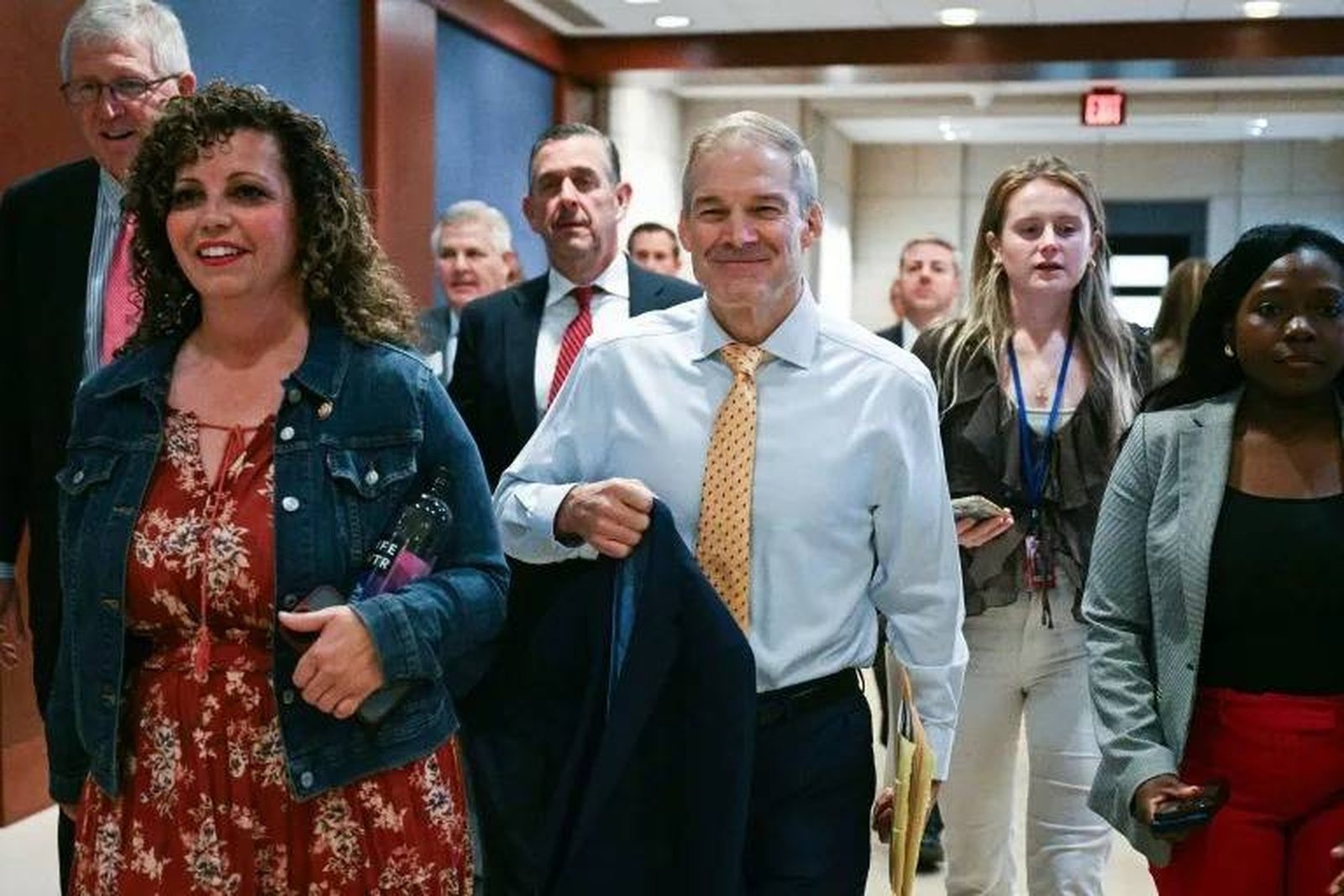
    House Republicans have elected Jim Jordan of Ohio to lead their party in the next Congress, choosing one of President Donald Trump’s closest allies to guide a diminished conference into the minority. Mr Jordan defeated Steve Scalise of Louisiana, the outgoing House majority leader, by 106 votes to 73 in a closed-door secret ballot on Tuesday.

    The contest was called after Republicans lost control of both chambers of Congress in the midterm elections on 3 November, a defeat that cost the party more than 40 House seats, according to US media reports. Speaker Mike Johnson, also of Louisiana, decided not to seek the minority leader’s post after the losses, leaving the race to Mr Jordan and Mr Scalise.

    Mr Jordan, 62, is the chairman of the House Judiciary Committee and a co-founder of the ultraconservative House Freedom Caucus, which he led as its first chairman. He has served in the House since 2007 and built his reputation as one of the most combative figures in the Republican Party, frequently clashing with Democratic administrations and party leaders alike.

    Mr Scalise, 61, has held senior Republican leadership posts since 2014, serving first as party whip and then as majority leader since 2023. He was widely praised by colleagues, including by Mr Trump, after recovering from serious injuries sustained in a shooting at a congressional baseball practice in 2017. The two men had faced each other before, when both sought the speakership after Kevin McCarthy was removed from the post a little more than three years ago.

    Mr Trump said he was staying out of the leadership race. Mr Jordan’s victory is nevertheless seen as a sign that the party’s base wants a confrontational approach as Democrats prepare to take control of the House in January and to investigate the Trump administration during the president’s final two years in office.

    Republicans also elected Tom Emmer of Minnesota as whip, the number two position in the party’s House leadership. Democrats are due to hold their own leadership elections next week. Hakeem Jeffries of New York, the current Democratic leader, is expected to become the next Speaker, with Democrats holding 258 confirmed seats.

    Mr Jordan will inherit a historically small Republican conference that is only beginning to come to terms with its loss of power. His central task will be to hold the party together in opposition and to lead the effort to win back the House majority in the 2028 elections, a steep climb given the scale of the Democratic victories in the midterms.

  • Trump Approval Stuck at 32%, Near Career Low

    Trump Approval Stuck at 32%, Near Career Low

    President Donald Trump’s approval rating has held at 32 percent, near the lowest level of his political career, according to a new Reuters/Ipsos poll completed on Monday. The rating was unchanged from two earlier Reuters/Ipsos polls conducted between late October and early November, and stood just one point above the 31 percent recorded in mid-October, the lowest of his career.

    The poll, conducted online across the United States from 6 to 9 November, gathered responses from 1,705 adults and had a margin of error of about two percentage points. It found deep public concern about rising prices, which the report said had damaged Mr Trump’s Republican Party in last week’s midterm elections.

    On 3 November, Republicans lost control of both chambers of Congress in the midterm elections. Democrats scored their biggest victory in the House of Representatives since at least 2008 and flipped Senate seats in traditionally conservative states, including Kansas, South Carolina and Texas, although some races were still undecided when the poll was published.

    The poll showed just 21 percent of Americans approving of Mr Trump’s handling of the cost of living. His rating on economic stewardship stood at 25 percent, considerably lower than the 38 percent who approved of his immigration policy. The war he launched on Iran in February has raised fuel prices sharply and weighed on household finances, according to the report, and his low rating on living costs has also hurt his allies in Congress.

    Among Republicans, 81 percent supported Mr Trump’s approach to immigration, compared with 50 percent who backed him on the cost of living. Since returning to the White House in January 2025, Mr Trump has sharply increased deportations of immigrants, and last week he promoted Stephen Miller, a key architect of those policies, to White House chief of staff.

    The findings underline how far the cost of living has come to dominate voters’ judgment of the president. Immigration, long his strongest issue, still draws far more support than his handling of the economy, but the gap has not been enough to lift his overall standing, which has now been flat across three consecutive national polls.

  • Washington Voters Back Trans Athlete Ban by 57%

    Washington Voters Back Trans Athlete Ban by 57%

    Voters in Washington state have approved a ballot measure barring transgender girls from playing on girls’ school sports teams, a major defeat for LGBTQ advocates in a state that normally votes Democratic.

    With about 80 per cent of ballots counted on Friday, approximately 57 per cent of voters had approved Initiative 638, while 43 per cent voted against it, and opponents conceded that the gap was too large to overcome. The Associated Press had called the race on November 4.

    The initiative, known as the Defending Equity in Interscholastic Sports Act, will require the prohibition of transgender girls from competing with and against female students in public school sports. It applies to elementary, middle and high school athletics.

    Under the measure, girls who want to play school sports must submit a statement from a healthcare provider verifying their biological sex, through reproductive anatomy, genetic makeup or naturally produced testosterone levels.

    The political action committee behind the measure, Let’s Go Washington, which is bankrolled by conservative hedge fund manager Brian Heywood, called its passage a huge win for girls in Washington state. Similar ballot measures restricting transgender athletes also passed this week in Arizona, Colorado and Nebraska.

    The Washington Interscholastic Activities Association, which governs school-linked youth sports in the state, said earlier this year it was aware of just 10 transgender middle and high school students playing sports, out of some 200,000 students competing statewide.

    Opponents of the measure included doctors who said it was not backed by clinical guidelines and would create unwarranted stress and harm for young girls. Civil rights advocates argued the campaign scapegoated a very small group of people, most of them children, who already face discrimination and bullying.

    Libby Watson, campaign manager of the group No Hate WA State, which campaigned against the measure, called the initiative deceptive and said the fight was not over. The measure is expected to face legal challenges, with civil rights groups warning it could run afoul of the state constitution’s Equal Rights Amendment and the Washington Law Against Discrimination.

    The initiative is due to take effect on December 3, 2026, when election results are certified. In June, the US Supreme Court ruled that states can ban transgender girls and women from female sports teams, and more than half of US states have enacted laws in recent years restricting the participation of transgender students in sports.

  • Three Top Justice Dept Officials Quit After Midterm Rout

    Three Top Justice Dept Officials Quit After Midterm Rout

    Three senior US Justice Department officials have resigned in the days since Democrats swept the midterm elections, in a rapid shake-up at the top of the department.

    Attorney General Todd Blanche, a former personal lawyer for President Donald Trump, announced on Thursday that he had accepted the resignation of Harmeet Dhillon, the assistant attorney general for civil rights. On Friday he announced the resignations of John Eisenberg, the assistant attorney general for national security, and Jason Reding Quinones, the US attorney for the Southern District of Florida.

    Dhillon said in her resignation letter, cited by US media outlets, that she had submitted it in October and agreed to remain in her position until the election was over. In the role she had been directly involved in unsuccessful attempts to obtain voter registration lists from some 30 states ahead of the midterms.

    Quinones oversaw an investigation into former intelligence officials whom Trump accused of seeking to remove him from power, a probe the president’s allies have called the grand conspiracy investigation. He announced his own resignation in a social media post on Friday. According to sources cited by CNN, he stepped down under pressure from department leadership.

    Eisenberg, who was sworn in as assistant attorney general in charge of the National Security Division in June 2025, oversaw cases involving espionage, terrorism, export controls and cybercrime. The reasons for his and Quinones’ resignations were not clear, Reuters reported.

    The departures came after Democrats won control of both chambers of Congress in Tuesday’s midterm elections. According to reports, the result was driven in part by voter dissatisfaction with the handling of the conflict in the Middle East and by elevated fuel prices. The new Democratic majorities are expected to step up scrutiny of the Justice Department.

    The department under Trump has pursued cases against a number of perceived enemies, and several prosecutors have lost their jobs over their reluctance or inability to bring charges. In one high-profile case brought by the department, James Comey, the former director of the FBI, was indicted in April.

    Blanche announced both Friday departures in social media posts, saying the department was grateful for Quinones’ leadership. The three resignations leave the department without leaders for two of its most prominent divisions and one of its largest prosecutor’s offices.

  • Trump Blames Democrats for $2.5 Trillion Market Crash

    Trump Blames Democrats for $2.5 Trillion Market Crash

    United States President Donald Trump has blamed the Democratic Party for a sharp sell-off on Wall Street that wiped trillions of dollars from American stock markets on Thursday, a day after Democrats swept to victory in the midterm elections.

    The technology-heavy Nasdaq Composite fell 5.52 percent to close at 24,315.00, its worst session since April 2025, while the Dow Jones Industrial Average plunged 1,833 points, or 3.44 percent, to 51,523.06, and the S&P 500 dropped 4.36 percent to 7,353.73, according to figures reported by the Associated Press. The sell-off erased about $2.5 trillion in market value from Nasdaq-listed companies and about $2.9 trillion from firms in the S&P 500, both described as single-day records.

    Writing on Truth Social, Trump linked the losses directly to the election outcome. He said the market had suffered one of the worst days in its history because of the results, and warned that retirement savings had been hit. In an earlier post he wrote that the market had crashed because the Democrats had a big Tuesday, telling voters they only had themselves to blame.

    The president insisted the losses were not the fault of his party, writing that it was not the Republicans but the Democrats who were responsible, and he predicted that markets would recover and become bigger and stronger than ever before.

    The sharp reversal came a day after US markets had rallied strongly following the Democrats’ victories in the November 3 midterm elections, in which they won control of both the House of Representatives and the Senate. Thursday’s plunge wiped out those gains and pushed the Nasdaq into correction territory, more than 10 percent below its October record.

    Market analysts, however, pointed to other forces behind the sell-off. Reports cited growing concern over heavy spending on artificial intelligence, doubts about the returns from data-centre investment, and worries that a Democratic-controlled Congress could restrict the AI industry. Technology shares led the decline, with chipmaker Nvidia falling about 9 percent and the Philadelphia Semiconductor Index dropping around 12 percent.

    According to Reuters, the scale of the fall reflected a rapid reassessment by investors of the outlook for technology companies after the election. Traders who had celebrated the results on Wednesday turned to selling on Thursday as they weighed what Democratic control of Congress could mean for regulation of the fast-growing AI sector.

    Trump’s intervention underlined how quickly the midterm results have become a political battleground over the economy. The president has long treated the stock market as a measure of his economic record, and his posts sought to pin the blame for the losses on his opponents while reassuring investors that a recovery would follow.

    For now, the figures tell their own story. A market that had climbed to record highs in October has suffered one of its sharpest single-day reversals, and the debate over whether politics or the AI boom’s excesses caused the fall is set to continue as trading resumes.

  • Vance: ‘The reason we lost is the war’ after midterm rout

    Vance: ‘The reason we lost is the war’ after midterm rout

    Vice President JD Vance has blamed the war in Iran for the Republicans’ crushing defeat in the midterm elections, telling supporters in a post on Wednesday that the conflict was the decisive reason voters turned against his party. In unusually blunt language for a sitting vice president, Vance wrote that the reason Republicans lost was the war, and challenged anyone who disagreed to argue openly that losing the Senate for the next six years had been worth it.

    Vance’s remarks came only hours after Democrats swept races across the country, regaining control of both the House of Representatives and the Senate. The scale of the defeat stunned Republican leaders: voters in conservative strongholds who had propelled President Donald Trump to a second term two years ago swung dramatically toward Democrats, driven, according to early analysis, by deep frustration over the war, anxiety over the high cost of living, and anger at Trump’s stewardship of the country.

    In his post, Vance rejected the idea that weak Republican turnout explained the result. He said his party’s voters did show up, but that many of them voted for Democrats instead. Citing a pollster who had studied voters who backed Trump in 2024 but abandoned Republicans in 2026, Vance listed four issues those voters raised above all others: ending the war, focusing on the cost of living, putting America first, and changing the relationship with Israel.

    The vice president also sought to play down any rift with Trump, saying the president himself had acknowledged on election night that the Iran war cost Republicans the midterms. Trump’s own comments, however, were far more measured. He told the Wall Street Journal that Iran was a piece of the defeat, but insisted he had done the right thing by launching the war and would do it again.

    Exit polling underlined how heavily the war weighed on voters. According to an NBC News exit poll, 74 percent of respondents said the war with Iran was a crucial or major factor in their vote, while only 37 percent said the United States had made the right decision to take military action against Iran. An October poll from the Pew Research Center found 65 percent disapproving of the way Trump has handled the conflict.

    Tuesday’s wave also cost Republicans Vance’s old Senate seat in Ohio, where Democrat Sherrod Brown completed a political comeback by defeating former Lieutenant Governor Jon Husted, a race Vance had described as personal. Vance’s intervention now raises questions about the political direction of the administration, with officials telling reporters that Trump is still weighing whether to restart major combat operations against Iran. For a vice president widely seen as a leading contender for the 2028 Republican presidential nomination, the post reads as an attempt to draw a line under the war and to force an honest reckoning inside his own party about what went wrong.

  • Johnson steps aside after midterm wipeout shakes GOP

    Johnson steps aside after midterm wipeout shakes GOP

    House Speaker Mike Johnson will step aside from Republican leadership after his party’s heavy defeat in the midterm elections, declining to seek support to stay on as House minority leader in the new Congress. According to people familiar with his decision, Johnson told his staff on Wednesday morning that he would not run for the top Republican post, a move that closes a turbulent three-year run in the speaker’s chair.

    The decision follows an election night in which Democrats swept to the House majority, leaving Johnson without a path to power. Johnson had spent the campaign insisting that Republicans could defy the usual midterm pattern, in which voters punish the party holding the White House. Instead, the party was trounced across the country, and Johnson conceded the House majority at a watch party in Shreveport, Louisiana, on election night.

    Johnson is expected to remain in the House as a rank-and-file member from Louisiana when the new Congress convenes in January, having won re-election in his district on Tuesday. What he is giving up is the leadership itself. With Democrats in the majority, the speaker’s gavel is expected to pass to House Democratic Leader Hakeem Jeffries of New York, who Democrats are preparing to nominate for the job. The election of the speaker is among the first votes of the new Congress, scheduled for January 3, 2027.

    His departure sets up an immediate contest inside the Republican conference. House Republicans are expected to elect their new leader when members-elect gather in Washington next week, and the race is likely to feature two familiar names: Majority Leader Steve Scalise of Louisiana and Judiciary Committee Chairman Jim Jordan of Ohio. Both men reached for the top job before, when Johnson emerged as the consensus choice after weeks of deadlock.

    Johnson first won the speaker’s gavel in 2023, after his colleagues ousted the previous Republican speaker, Kevin McCarthy, in a first-of-its-kind vote in House history. A lower-level member of the leadership at the time, Johnson in many ways fell into the job after Republicans could not agree on a successor. He went on to lead the House through a period of razor-thin majorities, drawing close to President Donald Trump and steering the party’s signature package of tax breaks and social services cuts into law.

    His tenure also showed how fragile that grip had become. Johnson protected the president and his administration from difficult votes, at times by sending lawmakers home, but he could not prevent the midterm rout that has now cost him the leadership. The contest to replace him will test whether the party’s conservative and hard-right wings can unite behind a single leader, or whether the divisions that produced Johnson’s accidental rise will return in the race to succeed him.