Tag: Lahore AQI

  • Lahore AQI Hits 463 as Smog Chokes Punjab Cities

    Lahore AQI Hits 463 as Smog Chokes Punjab Cities

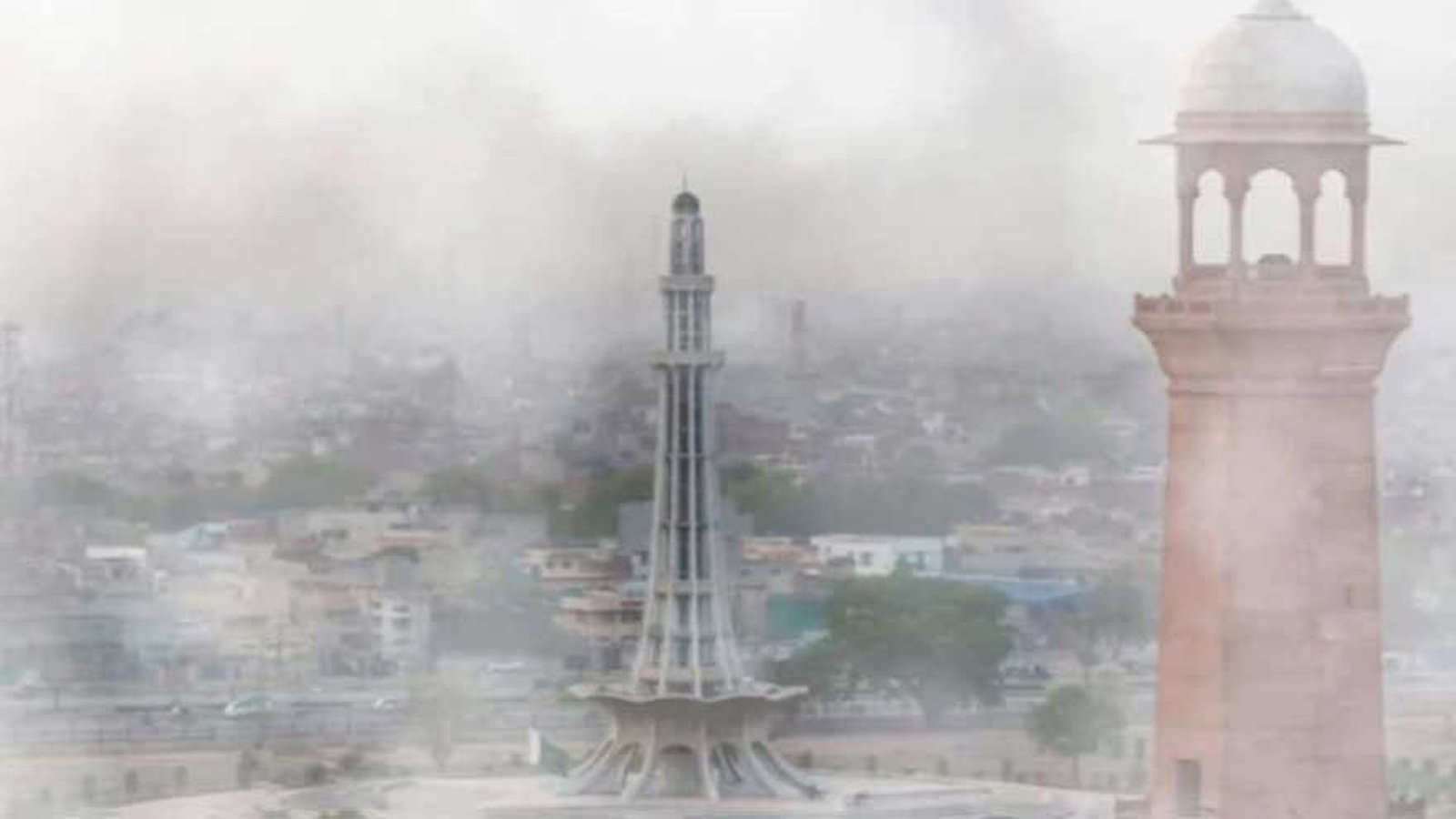
    Air pollution remained severe across Punjab on Sunday, 29 November 2026, with Lahore recording an average Air Quality Index (AQI) of 463, placing the provincial capital deep inside the hazardous range and leaving residents struggling to breathe as smog continued to blanket the province.

    According to air quality data reported by Dunya News, Sargodha recorded the highest AQI among the listed cities at 485, even worse than Lahore. Faisalabad followed with an average AQI of 368, Multan recorded 365, and Muzaffargarh stood at 326. Every one of these readings falls in the hazardous category, meaning the air poses a serious health risk to the general public, not only to people with existing medical conditions.

    The deteriorating air quality is likely to cause breathing difficulties and other health problems, particularly among people with respiratory conditions. Doctors say prolonged exposure to such polluted air can trigger coughing, irritation of the eyes and throat, asthma attacks and worsening chest conditions, and they warn that children and older people face the greatest danger during smoggy spells.

    Medical experts have advised citizens to avoid unnecessary outdoor activities while smog persists and to wear masks when they must go outside. They urged residents to take extra precautions to protect children, elderly people and those suffering from respiratory illnesses, and to limit their exposure to polluted air as much as possible until conditions improve.

    Health specialists also recommend keeping windows and doors closed during peak smog hours, avoiding morning walks and outdoor exercise when visibility is poor, and seeking medical advice promptly if breathing problems, persistent coughing or chest discomfort develop. People with asthma or other lung conditions have been advised to keep their prescribed medicines with them and to follow their doctor’s guidance.

    Smog has become a recurring winter problem across Punjab, returning each year as cooler weather traps pollutants close to the ground. With several major cities reporting hazardous readings at the same time, health experts say public awareness and simple precautions remain the most effective protection for families until the air clears.

  • Lahore AQI 458: World’s Most Polluted City as Smog Worsens

    Lahore AQI 458: World’s Most Polluted City as Smog Worsens

    Lahore woke to another grey morning on Friday as thick smog settled over the city and pushed its air pollution to the top of the world ranking once again, with readings far above the levels considered safe to breathe.

    According to IQAir, the Swiss air quality monitoring group, Lahore recorded an air quality index (AQI) of 458, the highest among the world’s major cities. The figure was reported by Express News and Nawa-i-Waqt, and it placed the Punjab capital ahead of New Delhi, which stood second on the global list with an AQI of 244, followed by Kolkata at 235.

    The pollution was not limited to Lahore. Multan recorded an even higher AQI of 719, while Kahna Nau reached 655 and Kasur 462, according to the Punjab air quality index. Within Lahore itself, monitors reported severe readings across several neighbourhoods, including the CERP Office at 611, Barki Road Paragon at 609 and Allama Iqbal Town at 583. The Punjab index showed Lahore at 430 at 7am, around 70 points higher than the previous day.

    Readings vary between monitoring networks because they use different stations and methods, but every measure pointed in the same direction. Daily Pakistan reported Lahore’s average smog level at 338, with readings of 508 near FC College, 548 in Paragon Society and 414 in Model Town. On the IQAir scale, any reading above 300 is classed as hazardous.

    Why the air has turned so toxic

    Air pollution becomes a severe problem across the region at this time of year, when cold, dense air traps smoke and dust close to the ground. According to Reuters, emissions from vehicles, construction sites and crop waste burning are among the main contributors, and the seasonal smog usually worsens as winter approaches.

    Earlier in the week, Lahore had already topped the global ranking. On Tuesday morning, IQAir put the city’s AQI at 447, and its concentration of PM2.5, the fine particulate matter most dangerous to human health, was 60 times higher than the World Health Organization’s annual exposure guideline. An AQI reading of up to 50 is considered good, with little or no health risk.

    Officials in Punjab have linked the build-up to a temperature inversion, in which a layer of warmer air sits above colder air at ground level and traps pollution beneath it. Abdullah Nayyar Sheikh, director general of Punjab’s Environment Protection Department, told Reuters that falling temperatures since early November had created those conditions. On Wednesday morning, wind speed in Lahore was close to dead calm, with humidity at 86 per cent.

    The provincial government has launched a cleanliness and dust-suppression campaign called Chamkta Lahore, under which roads are being washed daily in an effort to cut dust in the air. The National Disaster Management Authority’s seasonal outlook expects smog risk to rise from mid-November into December, when nights grow colder and inversions become stronger.

    Health experts and news reports have advised residents to avoid unnecessary outdoor trips and to wear masks when going out, as the pollution poses serious health risks, particularly for children, older people and those with breathing problems. The Meteorological Department has forecast a minimum temperature of 17 degrees Celsius and a maximum of 30 degrees in Lahore over the next 24 hours, with no rainfall expected to clear the air.