Tag: Islamabad

  • Entry Banned After Three Islamabad Schools Found Unsafe

    Entry Banned After Three Islamabad Schools Found Unsafe

    The Federal Education Secretary has ordered an immediate ban on students’ entry into unsafe classrooms and buildings after three out of four educational institutions inspected in rural areas of Islamabad were found to have dangerous structures, 24NewsHD TV reported.

    During the visit on Tuesday, the secretary inspected four educational institutions and directed the Federal Directorate of Education (FDE) to make immediate alternative arrangements for students studying in the affected schools.

    The secretary strictly instructed the FDE administration to ensure that no student enters classrooms or buildings declared unsafe. He also stressed the need to identify schools requiring repairs and take necessary safety measures.

    During the inspection, the secretary also visited computer, Matric Tech and science laboratories. He encouraged schools to make better use of modern educational facilities and interactive boards to improve the quality of education.

    He said that, in line with the Prime Minister and the government’s commitment, efforts are being made to identify schools in need of repairs and ensure the safety of students.

    “Providing students with a safe learning environment is our top priority. No dangerous building will be allowed to remain in use,” the secretary said.

  • Aimal Wali Says Reports of Haripur Being Merged into Islamabad Raise Constitutional Questions

    Aimal Wali Says Reports of Haripur Being Merged into Islamabad Raise Constitutional Questions

    Awami National Party (ANP) central president Senator Aimal Wali Khan has said there are reports that Haripur may be separated from Khyber Pakhtunkhwa and included in Islamabad, warning that such a move would raise serious constitutional questions.

    According to Geo News, Aimal Wali Khan said in a statement from Peshawar that separating Haripur would not be merely an administrative change, but a serious question about the constitutional rights of the province.

    He said Haripur and Swabi were both geographically linked to the Tarbela Dam, and the power generation installations of Tarbela were located on both banks of the Indus River. The effects of separating Haripur must therefore be made clear first, he said.

    Aimal Wali Khan said it must be clarified what effect the move would have on Khyber Pakhtunkhwa’s right to net hydel profit under Article 161(2) of the Constitution, and what effect the change would have on the province’s share in the National Finance Commission (NFC) award.

    Assembly approval required

    The ANP president said a change in the geographical limits of Khyber Pakhtunkhwa was not possible without the approval of the provincial assembly. He said Article 239(4) of the Constitution was clear on this point.

    He said administrative reforms should be for the convenience of the people and better governance, and for the fair distribution of resources, not for making the rights of the provinces uncertain.

    Aimal Wali Khan advised the federal government to place the details of any such proposal before parliament, and to put its legal basis and its full financial and constitutional effects before the public.

    He said the protection of Khyber Pakhtunkhwa’s land, resources and constitutional rights was a collective responsibility, and no decision on rights could be taken by ignoring the people of the province and their constitutional representatives.

    The reports about Haripur relate to a government plan, reported on November 15, to grant Islamabad a special administrative status, under which the capital’s boundaries could be expanded to include parts of Rawalpindi and areas of Haripur district in Khyber Pakhtunkhwa. The proposals are still at the planning stage, and no final decision or timeline has been announced.

    The ANP has already opposed any move to divide Khyber Pakhtunkhwa. In a statement issued on Saturday, the party said it would resist any attempt to alter the province’s constitutional, geographical or administrative identity. The Khyber Pakhtunkhwa Assembly had also passed a resolution in August rejecting any proposal to include Haripur and Abbottabad within the territorial limits of Islamabad.

    The debate over new provinces and changes to provincial boundaries has been under way for some time, with the government considering a referendum on creating new provinces. The ANP has questioned the constitutional basis of such a referendum, saying any change to the provinces must follow the route laid down in the Constitution itself.

  • Man Rescued After Climbing High-Voltage Tower in Islamabad

    Man Rescued After Climbing High-Voltage Tower in Islamabad

    A 32-year-old man was safely rescued after climbing a high-voltage electricity tower near Rawal Dam Chowk in Islamabad, police said.

    According to police, the man, identified as Mohsin Ali, is a resident of Chak Shahzad. He climbed the high-tension tower after becoming upset over his family circumstances, police said.

    As soon as officials received information about the incident, police and Rescue 1122 teams rushed to the spot and launched an operation to bring him down safely.

    Crowd gathers at the scene

    A large number of people also gathered at the scene to watch the rescue operation, as the man remained perched on the tower while the teams worked to persuade him to come down.

    After joint efforts, police and rescue workers successfully brought Mohsin Ali down safely, preventing what officials said could have been a tragedy. He was not reported to have been injured.

    High-voltage electricity towers carry extremely dangerous currents, and climbing them can be fatal even without touching a live wire, as electricity can arc across a gap. Rescue teams in such situations usually try to talk the person down first, while keeping onlookers at a safe distance and, where possible, arranging for the power supply to the line to be switched off.

    Rescue 1122 is the emergency service that responds to accidents and emergencies across the country, working alongside police and other departments. Its teams are trained in rescue operations, including bringing people down safely from heights and dealing with incidents involving electricity and other hazards.

    Rawal Dam Chowk is a busy junction in Islamabad, close to Rawal Dam and the road leading towards Chak Shahzad and the surrounding areas. Incidents at busy public places such as this often draw large crowds, which can make the work of rescue teams more difficult.

    Police have not said whether any further action will be taken in the matter. The man was brought down safely and the operation ended without any casualty, officials said.

    Incidents of people climbing towers and other tall structures are not uncommon, and they often end only after long negotiations. Police and rescue officials say that in such cases the priority is always the safety of the person on the structure and of the people on the ground, and that teams are trained to stay patient and keep talking until the person agrees to come down.

  • PM Shehbaz Meets OIC Secretary General in Islamabad

    PM Shehbaz Meets OIC Secretary General in Islamabad

    Prime Minister Shehbaz Sharif met Organisation of Islamic Cooperation (OIC) Secretary General Ismail Ould Cheikh Ahmed in Islamabad on Monday, 24News reported. The meeting took place as the OIC secretary general is in the federal capital to attend the 30th meeting of the Economic Cooperation Organisation (ECO) Council of Ministers.

    During the meeting, the prime minister welcomed the OIC secretary general on his first visit to Islamabad since assuming office. He said his unanimous election by OIC member states reflected their confidence in his leadership, according to the report.

    OIC secretary general in Islamabad for ECO meeting

    The OIC secretary general is among the representatives of regional organisations attending the two-day ECO ministerial meeting in Islamabad on 15 and 16 November, which Pakistan is hosting under its 2026-27 chairmanship of the organisation. The meeting brings together foreign ministers from the ECO’s member states, including Iranian Foreign Minister Abbas Araghchi, Tajikistan’s Foreign Minister Sirojiddin Muhriddin and Turkmenistan’s Foreign Minister Rashid Meredov, along with representatives of the OIC and the Shanghai Cooperation Organisation.

    On the sidelines of the ECO meeting, Deputy Prime Minister and Foreign Minister Ishaq Dar also held meetings with the ECO secretary general and the OIC secretary general to reaffirm Pakistan’s priorities and its pledge to host the ECO Summit in 2027, according to reports. The OIC secretary general also visited COMSTECH in Islamabad during his stay, where he reaffirmed the organisation’s support and continued cooperation.

    Pakistan has long worked closely with the OIC, the world’s second-largest intergovernmental organisation after the United Nations, on issues of concern to Muslim countries, including Palestine, Kashmir and the protection of Muslim minorities. The prime minister’s meeting with the OIC secretary general came as Pakistan hosted the ECO ministerial session, where the foreign ministers of member states discussed trade, connectivity and regional cooperation, and where Pakistan took over the organisation’s rotating chairmanship for 2026-27. Officials said the discussions reflected Pakistan’s efforts to keep its engagement with regional and Muslim-world institutions active and coordinated.

    Further details of the meeting between the prime minister and the OIC secretary general were not immediately shared in the report. The OIC secretary general’s visit to Islamabad coincides with a busy diplomatic week in the capital, with the ECO ministerial meeting bringing together foreign ministers and senior officials from across the region to discuss economic cooperation and the organisation’s future direction.

  • PM Shehbaz Urges ECO States to Turn Vision into Action

    PM Shehbaz Urges ECO States to Turn Vision into Action

    Prime Minister Shehbaz Sharif has called for stronger regional cooperation, improved trade links and economic integration among the member countries of the Economic Cooperation Organisation (ECO), 24News reported on Monday. He made the remarks during a meeting with foreign ministers and heads of delegations from ECO member states in Islamabad.

    The visiting officials are in Pakistan to attend the 30th meeting of the ECO Council of Ministers, which is being held in Islamabad on 15 and 16 November. Pakistan holds the organisation’s rotating chairmanship for 2026-27, and Deputy Prime Minister and Foreign Minister Ishaq Dar is chairing the two-day ministerial session, Aaj News reported.

    Turning vision into action

    According to Aaj News, the prime minister urged the ECO member states to turn their shared vision into action, stressing that regional cooperation must move beyond statements and produce practical results. He told the visiting foreign ministers and heads of delegations that closer economic ties, better trade connectivity and joint work on energy and transport would benefit the whole region.

    The ECO Council of Ministers brings together the foreign ministers of the organisation’s ten member states — Pakistan, Iran, Turkiye, Afghanistan, Azerbaijan, Kazakhstan, Kyrgyzstan, Tajikistan, Turkmenistan and Uzbekistan — to discuss trade, investment, transport networks and energy cooperation. The meeting is being held under the theme “Reviving Regionalism for a Resilient ECO”, and is expected to approve the ECO Strategic Goals 2035 and the Islamabad Declaration, Dunya News reported.

    Earlier in the day, Dar told a joint press conference after the ministerial session that Pakistan had conveyed a message from Iran to the United States and was awaiting a response from Washington. He also said Pakistan had conveyed Iran’s message and reaffirmed Pakistan’s commitment to implementing the Islamabad Understanding and to pursuing regional cooperation in line with international law and the United Nations Charter. Dar also held a bilateral meeting with Iranian Foreign Minister Seyed Abbas Araghchi on the sidelines of the session, where the two sides agreed to strengthen bilateral cooperation and maintain close diplomatic engagement.

    In his closing remarks at the ministerial meeting, Dar called on member countries to translate their commitments into concrete action, thanking the member states, the ECO secretary general and the organisation’s permanent representatives for their support. Officials said the two-day session also reviewed the ECO’s cooperation with regional and international institutions, including the Organisation of Islamic Cooperation and the Shanghai Cooperation Organisation, whose representatives attended the meeting in Islamabad.

  • 42 Doctors Selected for Senior Registrar Posts at PIMS

    42 Doctors Selected for Senior Registrar Posts at PIMS

    The Federal Public Service Commission (FPSC) has recommended 42 candidates for senior registrar (BS-18) posts at the Pakistan Institute of Medical Sciences (PIMS) in Islamabad, 24News reported on Monday. The recommendations followed the commission’s selection process for appointments at the federal capital’s largest public teaching hospital.

    According to the FPSC results, the successful candidates have been recommended for appointment in several medical and surgical departments, including Obstetrics and Gynaecology, General Medicine, Paediatric Medicine and Paediatric Surgery. Candidates were also recommended for Cardiology, Neurosurgery, Neurology, Orthopaedics, Radiology, Pulmonology, Psychiatry, Urology, Nephrology, Cardiac Surgery, Plastic Surgery and ENT.

    Ten posts remain vacant

    However, ten positions remained vacant in different departments and provincial quotas because no suitable candidates could be found, the report said. No suitable candidates could be recommended against three vacancies under the Punjab quota, four under the Sindh (Rural) quota, two under the Sindh (Urban) quota and one under the former FATA quota.

    The commission also declared three posts in Anaesthesia, one in Burn Surgery and two in Dental Surgery vacant. Similarly, one post in Emergency Medicine, two in General Surgery and one in Infectious Diseases could not be filled, according to the report.

    The FPSC has sent the details of all unfilled positions to the Ministry of National Health Services and has requested a fresh requisition so that the recruitment process can begin again. The appointments, once finalised, are expected to strengthen specialist care at PIMS, which serves patients from Islamabad and from across the country.

    Senior registrars play a central role in teaching hospitals, combining specialist clinical work with the training of postgraduate doctors. The new appointments cover a wide spread of specialties, reflecting the hospital’s need for senior medical staff across its departments. Hospital officials have long pointed to shortages of senior faculty in several specialties, and the new inductions are expected to ease pressure on existing staff. The commission’s recommendations now go to the appointing authority for final approval and notification, after which the selected doctors will join their respective departments.

  • OIC Secretary-General Visits COMSTECH, Reaffirms Support

    OIC Secretary-General Visits COMSTECH, Reaffirms Support

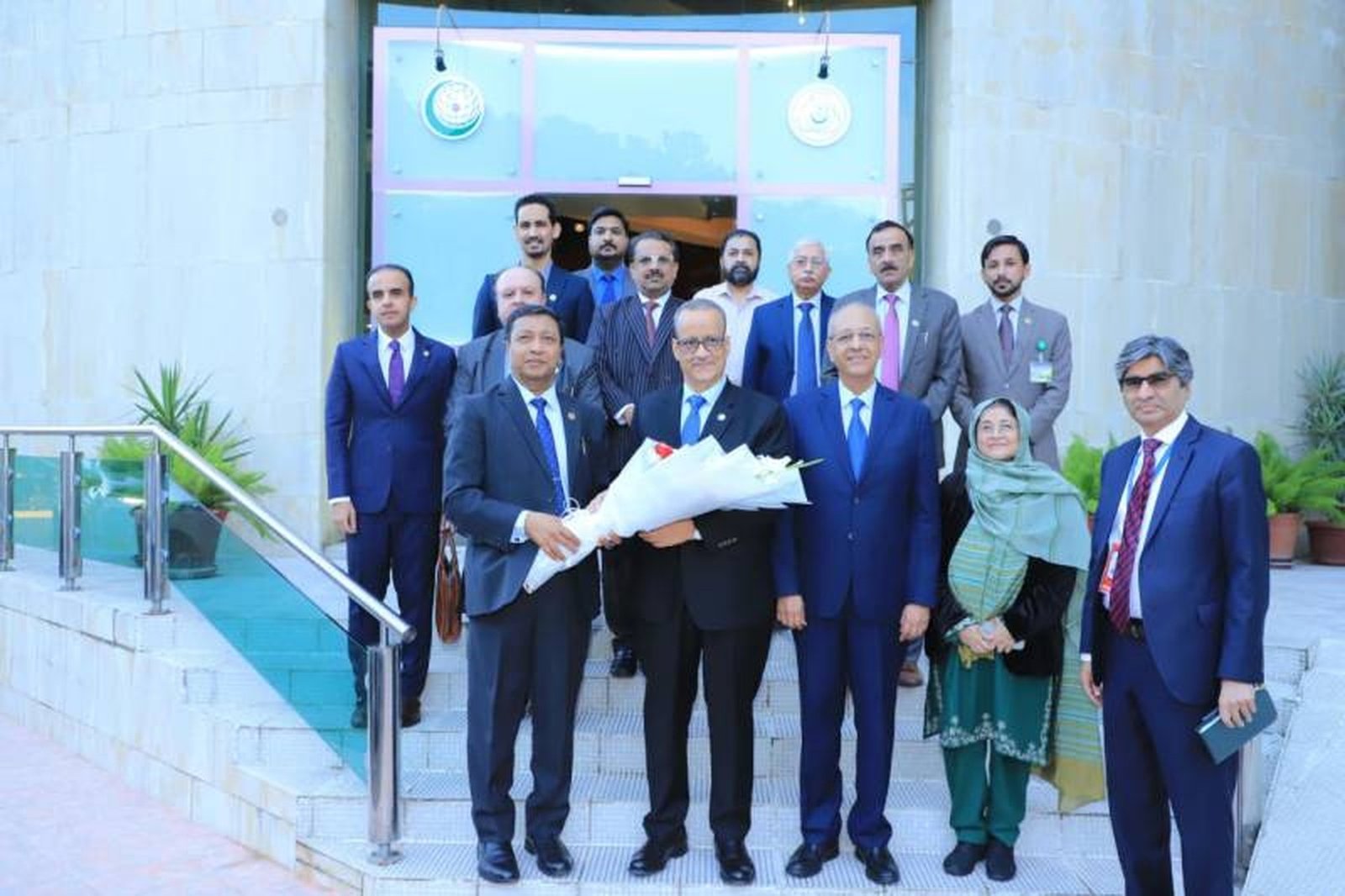
    The Secretary-General of the Organization of Islamic Cooperation (OIC), Ismail Ould Cheikh Ahmed, has paid an official visit to the Secretariat of the OIC Standing Committee on Scientific and Technological Cooperation (COMSTECH) in Islamabad, where he reaffirmed the General Secretariat’s continued support for the committee’s work.

    The Coordinator General of COMSTECH, Prof Dr Muhammad Iqbal Choudhary, and senior officials received the visiting delegation at the Secretariat, according to the report. The visit marked the Secretary-General’s first engagement with a standing committee of the OIC system.

    During the visit, Prof Choudhary presented an overview of COMSTECH’s organisational structure and functions, along with its most prominent training programmes, scientific fellowships and projects. According to the report, the programmes and projects are implemented for the benefit of scientists, researchers and academic institutions in OIC member states.

    Addressing the occasion, the OIC Secretary-General shared his vision based on six pillars and stressed the need for more strategic partnerships to make the OIC a more vibrant organisation. He underlined the importance of building stronger cooperation across the organisation’s membership.

    He noted that the OIC represents 57 countries across four continents, with a population of more than two billion people and around 25 per cent of global GDP. The figures were presented by the Secretary-General to illustrate the scale and potential of the organisation.

    He underlined the importance of science and technology in overcoming the challenges facing the Muslim Ummah, adding that COMSTECH has a significant role to play in this regard. According to the report, that is why COMSTECH was the first standing committee he visited within the OIC system.

    The Secretary-General also highlighted the importance of creating more opportunities for women, stressing that their participation in science and technology should be expanded across member states.

    He reaffirmed the OIC General Secretariat’s commitment to continued support for the committee’s work and to removing all obstacles to expanding its projects. According to the report, the aim is to strengthen scientific and technological integration among member states and to consolidate the OIC’s position in science and innovation.

    Appreciating the initiatives and contributions of COMSTECH, he assured his full cooperation and support for the effective implementation of the committee’s programmes across OIC member states, the report said.

    Earlier, in his welcome remarks, Prof Choudhary warmly welcomed the Secretary-General and the delegates. He said the world stands at a crossroads, with artificial intelligence reshaping economies and knowledge itself, a digital divide threatening to leave half of humanity outside the future, and climate change putting the Sustainable Development Goals at risk as their deadline nears.

    He emphasised that humanity’s success rests on two conditions: science must become the common heritage of all humankind, and the governance of technology must be just, shaped together with the Global South rather than imposed upon it. He concluded with the Quranic verse “My Lord, increase me in knowledge,” which he said captures the mission of the organisation.

  • اے ٹی سی نے عاصم طارق قتل کیس میں درخواست مسترد کر دی

    اے ٹی سی نے عاصم طارق قتل کیس میں درخواست مسترد کر دی

    اسلام آباد کی انسداد دہشت گردی کی عدالت نے گروپ کیپٹن عاصم طارق کے قتل کے مقدمے سے بعض قانونی دفعات ہٹانے کی درخواست مسترد کر دی ہے۔ عدالت نے یہ فیصلہ استغاثہ کے دلائل سننے کے بعد سنایا، جس نے درخواست کی مخالفت کی اور عدالت سے اسے مسترد کرنے کی استدعا کی۔

    انسداد دہشت گردی کی عدالت کے جج ابو الحسنات محمد ذوالقرنین نے مقدمے کی سماعت کی۔ پراسیکیوٹر راجہ نوید حسین استغاثہ کی جانب سے عدالت میں پیش ہوئے اور درخواست کے خلاف دلائل پیش کیے۔

    سماعت کے دوران پراسیکیوٹر نے عدالت کو بتایا کہ ملزم مقدمے کی کارروائی میں تاخیر کے لیے غیر متعلقہ درخواستیں دائر کر رہا ہے۔ ان کا کہنا تھا کہ ایسی درخواستوں کا مقدمے کے اصل معاملے سے کوئی تعلق نہیں اور انہیں کارروائی کو سست کرنے کے لیے استعمال کیا جا رہا ہے۔

    پراسیکیوٹر نے مزید کہا کہ مقدمے میں لگائی گئی قانونی دفعات چارج شیٹ میں درج الزامات کے مطابق ہیں۔ ان کا موقف تھا کہ یہ دفعات ملزم کے خلاف عائد کیے گئے الزامات کی نوعیت کی عکاسی کرتی ہیں اور انہیں مقدمے کے ریکارڈ میں درج الزامات سے الگ نہیں کیا جا سکتا۔

    پراسیکیوٹر نے عدالت کی توجہ مقدمے کی سابقہ کارروائی کی جانب بھی مبذول کرائی۔ انہوں نے بتایا کہ اسی عدالت نے اس سے قبل دہشت گردی سے متعلقہ دفعات ہٹانے کی درخواست بھی مسترد کر دی تھی۔ ان کا کہنا تھا کہ موجودہ درخواست میں بھی اسی نوعیت کی استدعا کی گئی ہے جس پر عدالت پہلے ہی غور کر کے فیصلہ سنا چکی ہے۔

    دلائل سننے کے بعد عدالت نے استغاثہ کے موقف کو تسلیم کرتے ہوئے درخواست مسترد کر دی۔ اس فیصلے کے بعد ملزم کی جانب سے چیلنج کی گئی قانونی دفعات مقدمے کا حصہ برقرار رہیں گی اور قتل کا مقدمہ چارج شیٹ میں درج الزامات کی بنیاد پر آگے بڑھے گا۔

    درخواست کے مسترد ہونے کا مطلب یہ ہے کہ دفاع کو مقدمے کا سامنا انہی الزامات کی بنیاد پر کرنا ہوگا۔ استغاثہ کا موقف، جسے عدالت نے تسلیم کیا، یہ تھا کہ زیر اعتراض دفعات درست طور پر لگائی گئی ہیں اور کارروائی کے اس مرحلے پر انہیں ہٹانے کی کوئی بنیاد موجود نہیں۔

    عدالت کے اس حکم سے مقدمے میں لگائی گئی قانونی دفعات کے خلاف تازہ ترین چیلنج ختم ہو گیا ہے۔ اب کارروائی انسداد دہشت گردی کی عدالت میں جاری رہے گی، جہاں گروپ کیپٹن عاصم طارق کے قتل کا مقدمہ زیر التوا ہے اور مقدمے کی سماعت قانون کے مطابق آگے بڑھے گی۔

  • Islamabad ATC Rejects Plea in Asim Tariq Murder Case

    Islamabad ATC Rejects Plea in Asim Tariq Murder Case

    An anti-terrorism court (ATC) in Islamabad has dismissed an application seeking the removal of certain legal provisions from the murder case of Group Captain Asim Tariq. The court announced its decision after hearing the prosecution, which opposed the plea and urged the court to reject it.

    ATC Judge Abul Hasnat Muhammad Zulqarnain heard the case. Prosecutor Raja Naveed Hussain appeared before the court on behalf of the prosecution and presented arguments against the application.

    During the hearing, the prosecutor submitted that the accused was filing irrelevant applications in an attempt to delay the trial. He argued that such applications had no bearing on the merits of the case and were being used to slow down the proceedings.

    The prosecutor further submitted that the legal provisions applied in the case were consistent with the allegations contained in the charge sheet. He maintained that the provisions reflected the nature of the charges framed against the accused and could not be detached from the allegations set out in the case record.

    The prosecutor also drew the court’s attention to the earlier history of the case. He submitted that the same court had previously dismissed an application seeking the removal of terrorism-related provisions from the case. He argued that the present application raised a similar request that had already been considered and decided by the court.

    After hearing the arguments, the court accepted the prosecution’s submissions and dismissed the application. The legal provisions challenged by the accused therefore remain part of the case, and the murder trial will proceed on the basis of the charges as framed in the charge sheet.

    The dismissal of the application means that the defence will have to contest the case on the charges as they stand. The prosecution’s position, which the court accepted, was that the provisions under challenge were properly applied and that there was no ground for their removal at this stage of the proceedings.

    The court’s order settles the latest challenge to the legal provisions applied in the case. The proceedings will now continue before the anti-terrorism court, where the murder case of Group Captain Asim Tariq remains pending and the trial will move forward in accordance with the law.

  • Iran Trusts Pakistan’s Mediation, Says Araghchi at ECO

    Iran Trusts Pakistan’s Mediation, Says Araghchi at ECO

    Iranian Foreign Minister Abbas Araghchi said on Monday that Iran trusts Pakistan’s efforts to mediate between Tehran and Washington, while acknowledging the difficulties involved in reaching a peace agreement. He was addressing the 30th meeting of the Council of Ministers of the Economic Cooperation Organisation (ECO) in Islamabad, which was chaired by Pakistan’s Deputy Prime Minister Ishaq Dar.

    In a television interview during his visit, Araghchi said: “We trust Pakistan as a good friend.” His remarks came as Pakistan has been engaged in efforts to ease tensions between Iran and the United States, a role that Tehran publicly acknowledged at the ECO meeting.

    Araghchi said the territory, airspace and installations of any country in the region should not be used to launch attacks against another country. He stressed that Iran’s defensive actions were directed only at the military targets of aggressors, and not at neighbouring states.

    He said insecurity in the Strait of Hormuz and the Persian Gulf was the result of what he described as aggressive policies by the United States and Israel against Iran. He thanked Pakistan and its Foreign Ministry for hosting the ECO meeting, and expressed gratitude to countries that had condemned aggression against Iran’s territorial integrity and shown solidarity with its people.

    Araghchi said the ECO should serve as an effective platform for collective action, stronger cooperation and a common strategy among member states. He identified trade, transport and energy as the three key strategic pillars of cooperation within the organisation.

    He welcomed the establishment of a technical negotiating committee to review the ECO Trade Agreement, and called on member countries to take part in negotiations aimed at developing a new and effective trade agreement.

    Araghchi said Iran remained committed to the principles of the United Nations Charter and international law, and had pursued diplomatic engagement and the peaceful resolution of disputes over the past two years. However, he accused the United States of resorting to aggression, threats, targeted killings, economic pressure and blockades, describing these actions as clear violations of international law and the UN Charter.

    He said Iran had always sought friendly relations with neighbouring countries. Following the start of what he described as a US-Israeli war against Iran, he said, Tehran had targeted only military bases and installations in countries involved in aggression against it. He stressed that Iran’s actions should not be interpreted as attacks against the governments or people of neighbouring countries.

    The Iranian foreign minister called for a regional strategy based on non-aggression and dialogue, saying the territory, airspace and installations of regional countries must not be used against one another. He also said sanctions against Iran had strengthened the Iranian people’s determination to defend their rights, while calling for a reliable and sustainable framework to safeguard regional energy security.

    Turning to the situation in occupied Palestine, Araghchi described it as a disgrace to humanity. He said Gaza had been facing what he termed a genocide for the past three years, and called for an end to the Israeli blockade to ensure the uninterrupted delivery of humanitarian assistance. He also urged the international community to pay attention to the plight of around 10,000 Palestinians held in Israeli prisons.