Tag: IRGC

  • Two Supertankers Carrying 4 Million Barrels of Oil Explode in Strait of Hormuz

    Two Supertankers Carrying 4 Million Barrels of Oil Explode in Strait of Hormuz

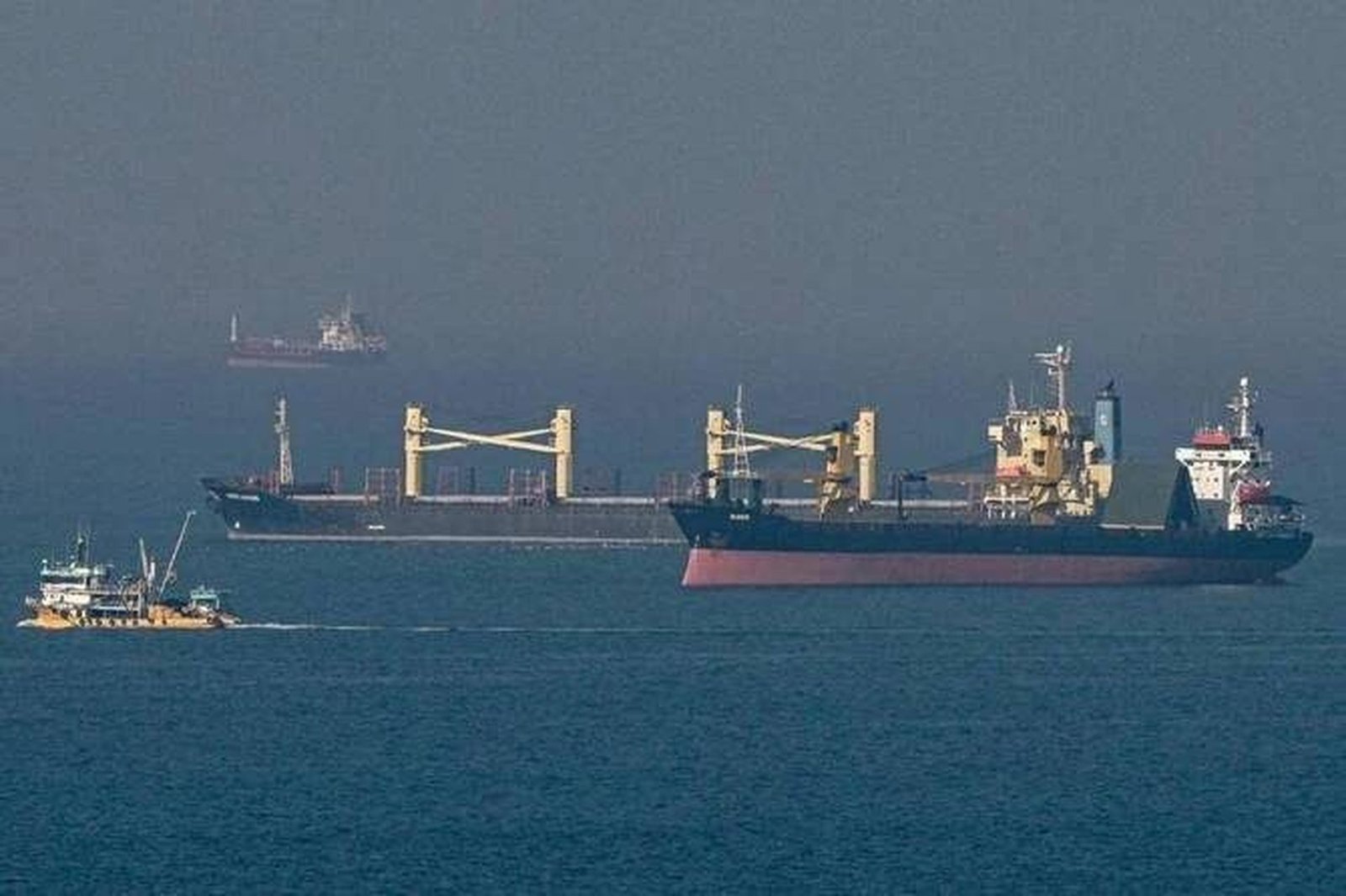
    Two supertankers carrying more than four million barrels of oil between them have been disabled by massive explosions in the Strait of Hormuz, Iran’s Revolutionary Guards Navy said on Thursday. The vessels were left burning after the blasts on Wednesday night, in the latest escalation in the eight-month war between the United States, Israel and Iran.

    According to the Guards, the two tankers were sailing through what Tehran calls an unauthorised southern route when the incident happened. The statement said the vessels had ignored repeated warnings from the Guards’ traffic control centre that the route was not authorised and was unsafe, and that the incident ended in what it described as a violent explosion.

    Iranian state media later said the tankers had exploded after hitting naval mines, although the Guards’ own statement did not specify the cause of the explosions. No independent confirmation of what caused the blasts was available, and the names, flags and crews of the two tankers had not been publicly identified.

    A strait under tight control

    Since the war began in February, Tehran has heavily restricted traffic through the strategic waterway, insisting that vessels use only routes it has approved. Iran has declared the southern shipping lanes of the strait, near Omani waters, off limits and mined, confining safe passage to designated northern corridors that require prior authorisation from its forces.

    The United States has responded by imposing a naval blockade on Iranian ports and helping tankers travel through the strait, which normally carries about one-fifth of the world’s oil. The Guards blamed the incident on what it called blind trust in the American military, a claim that has not been independently verified.

    Iranian forces have made several announcements in recent weeks of ships catching fire while attempting to use routes that Tehran considers off limits. Tehran has often said the vessels struck mines, but the US military recently claimed that all mines had been cleared from the strait. In several cases, the United Kingdom Maritime Trade Operations agency has said tankers in the strait were struck by unknown projectiles.

    The incident underlines how dangerous one of the world’s most important shipping routes has become. With the strait carrying such a large share of global oil supplies, any disruption there carries consequences far beyond the region, and the conflicting accounts of what happened to the two tankers show how hard it has become to establish the facts in the middle of an active conflict.

  • France Blames Iran for Hacking 700 Supermarket Fridges

    France Blames Iran for Hacking 700 Supermarket Fridges

    France has accused Iran’s Revolutionary Guards of carrying out a cyberattack that sabotaged refrigeration systems at around 700 supermarkets across the country last month, in what Paris is calling the first large-scale cyber sabotage operation on French soil.

    Foreign Minister Jean-Noël Barrot made the accusation on Monday, 9 November, on the sidelines of a meeting of G7 foreign ministers in Paris. He said the attack was “unprecedented in both its scale and its level of aggression” and vowed that it would not go unanswered. France has summoned Iran’s ambassador to Paris and says it will pursue sanctions against those responsible at a European level.

    The attacks took place overnight on 11 and 12 October. According to France’s national cybersecurity agency, ANSSI, hackers took control of refrigeration controllers at roughly 700 retail sites, from supermarkets to butcher shops, and raised temperatures in the middle of the night by hijacking the units’ defrost function. In some cases temperatures climbed to 50 degrees Celsius, spoiling large quantities of perishable food and causing equipment damage and fires.

    ANSSI attributed the operation to Shahid Kaveh, a cyber-offensive unit affiliated with the Electronic and Cyber Centre of Iran’s Islamic Revolutionary Guard Corps. French investigators pointed to technical indicators including the use of Persian language in the attack infrastructure and internet addresses linked to devices in Iran. The unit is also known in the cyber world as CyberAv3ng3rs. The Paris prosecutor’s office has opened a judicial investigation into the head of the unit and his two deputies, and is seeking international arrest warrants.

    Major French grocery chains were among those affected. Intermarché reported that at least 300 of its stores and its Netto brand locations were hit, while more than 100 Coopérative U supermarkets were affected. Carrefour, Monoprix and E.Leclerc were also targeted. ANSSI’s director general told French senators last month that the intrusions had been made possible by basic security flaws, including weak passwords on internet-connected equipment.

    There was no immediate comment from Tehran on the French allegations. Iran has previously denied conducting malicious cyber operations. The French accusation nevertheless marks a sharp escalation, moving the matter from a technical investigation to direct diplomatic action against Tehran.

    Speaking on Tuesday, Barrot said France ruled out nothing and would take all measures it deemed proportionate and necessary to deter further attacks, including steps it might not disclose publicly. Similar refrigeration failures were reported at supermarkets in Sweden, Belgium and Ireland earlier this month, though French officials said it remains unclear whether those incidents are linked to the French case.

  • Iran Drops Its 2,000 km Missile Range Limit

    Iran Drops Its 2,000 km Missile Range Limit

    Iran’s Revolutionary Guard has said it has lifted a self-imposed limit of about 2,000 kilometres on the range of its ballistic missiles, raising the prospect of Tehran developing weapons able to reach more distant targets.

    Brigadier General Hossein Mohebbi, the Guard’s spokesman, told a press conference in Tehran on Saturday, held to mark Aerospace Week, that the restriction “has been lifted for us”, according to state-linked outlets including Tasnim and Mehr.

    The 2,000 km ceiling dated from 2017 and was intended to keep Iran’s missiles regional in reach. Its removal suggests Tehran may now seek longer-range capability, although no evidence was presented of operational missiles able to fly beyond the former limit.

    Mohebbi cautioned that Iran must demonstrate the expanded capability in practice rather than merely announce it. “Our duty is to show our capabilities on the battlefield,” he said.

    Wider military signals

    The remarks followed comments by the supreme leader ordering an immediate and effective response to any threat without geographical limits, alongside a broader update of military target lists covering US and Israeli assets.

    Mohebbi also said Iran would prepare for a shift in nuclear doctrine if ordered — a conditional statement, not a decision to change doctrine or to build a weapon.

    He further claimed advances in air defences and underground missile production after recent fighting, including the downing of enemy aircraft and drones. Those claims could not be independently verified.

    The announcement comes as talks between the United States and Iran remain stalled and fears of renewed strikes grow across the region, days after US strikes on Qeshm Island. Any move to field longer-range missiles would mark a significant escalation in the military standoff.

    The Guard’s statement is likely to draw close attention in Washington, Tel Aviv and European capitals, where officials have long treated the 2,000 km limit as an informal red line. For years, Tehran presented the ceiling as proof that its missile programme was defensive and regional. Removing it signals a different posture — even if, for now, the longer-range capability itself remains unproven.

  • Two tankers and tugboat ablaze in Strait of Hormuz

    Two tankers and tugboat ablaze in Strait of Hormuz

    Two oil tankers and a tugboat have caught fire in the Strait of Hormuz, Iran’s Islamic Revolutionary Guard Corps (IRGC) said on Thursday, in separate incidents in one of the world’s most important shipping routes.

    According to the IRGC, a large tanker struck a naval mine while trying to pass through a route south of the strait that Iran considers illegal, and caught fire and came to a halt. In a second incident, another supertanker caught fire as it was leaving the same route in the eastern part of the waterway, and a tugboat that approached it to help put out the flames also caught fire.

    The IRGC said the vessels had been using a passage it had not authorised. Its statement, carried by Iranian state media, said its naval forces continued to control the management of the strait. The claims have not been independently verified, and the IRGC did not give details of any casualties or of the extent of the damage.

    The incidents follow a similar claim on Wednesday, when the IRGC said four oil tankers had been destroyed after striking naval mines while using the prohibited route south of the strait, and that two other vessels had been seized. United States Central Command has previously rejected earlier Iranian claims of mine strikes in the strait as inaccurate.

    Separately, the United Kingdom Maritime Trade Operations centre reported that a tanker was struck by two unidentified projectiles about 50 nautical miles north of Madinat ash Shamal in Qatar, in an incident dated to late on Wednesday night. The agency said the status of the crew and the damage to the vessel were unconfirmed.

    The Strait of Hormuz, between Iran and Oman, is one of the world’s most strategically important maritime routes, carrying large volumes of oil and gas exports from Gulf countries to international markets. Any disruption there is watched closely by energy markets around the world.

    The latest fires come at a time of intense tension over shipping through the strait, with Iran asserting control over which vessels may use particular routes and warning that ships using unauthorised passages face consequences.

    Iran has also said its forces intercepted and brought down two uncrewed aircraft during the incidents, a claim that has likewise not been independently confirmed.

    For now, the full picture remains unclear. With the Iranian account unverified and no independent confirmation of the fires, the scale of the damage and the fate of the crews are still to be established.

    What is certain is that the strait, through which a large share of the world’s seaborne oil passes, remains a flashpoint, and that the latest incidents will add to concerns about the safety of shipping in the Gulf.

    Energy markets and shipping companies will be watching closely in the coming days for any further incidents, and for any independent confirmation of what happened to the vessels involved.

  • Iran claims three US drones downed near Hormuz

    Iran claims three US drones downed near Hormuz

    Iran’s Islamic Revolutionary Guard Corps has claimed that its forces shot down three United States drones near the Strait of Hormuz. The claims were carried by Iranian state media and reported by international outlets on Tuesday, November 3, 2026.

    According to the IRGC Aerospace Force, two US MQM-170 reconnaissance drones were brought down south of Qeshm Island using electronic warfare systems. The force said the two aircraft brought to four the total number of drones of that type it had seized.

    In a separate statement, the IRGC said its Aerospace Force had tracked and destroyed a US MQ-9 drone east of the Strait of Hormuz using a newly developed air defence system. The statement described the aircraft as the 55th MQ-9 its forces had brought down, operating under what it called the country’s unified air defence network.

    The claims came as Iranian state news agency IRNA reported five explosions heard in rapid succession on Qeshm Island, in southern Iran near the strategically important Strait of Hormuz. Witnesses also reported aircraft in the sky over the island, and blasts were reported in the nearby city of Bandar Lengeh.

    The United States military had not confirmed the Iranian claims at the time of reporting. The claims could not be independently verified, and no wreckage or other evidence was publicly presented alongside the statements.

    Separately, a US official told the Associated Press that American forces had carried out what were described as limited defensive strikes against Iranian targets in the Strait of Hormuz, after Iranian forces used surface-to-air missiles against US assets. US media reports said the strikes targeted assets involved in launching missiles at American military hardware.

    The Strait of Hormuz is one of the world’s most important shipping chokepoints, carrying a large share of global oil trade between the Gulf and the open sea. Tensions in the waterway have repeatedly raised concerns about the safety of commercial shipping and the risk of a wider confrontation.

    The competing accounts underline how difficult it is to establish facts quickly in a fast-moving military standoff. Iran’s claims rest on statements from its own armed forces, while the US account, as reported, focuses on defensive strikes rather than on the fate of any aircraft. Until independent evidence emerges, the downing claims remain claims, not confirmed events, and the situation around Qeshm Island will continue to be watched closely by governments and shipping operators alike.