Tag: humanitarian aid

  • Hamilton Visits Rafah Crossing to See Gaza Aid Effort

    Hamilton Visits Rafah Crossing to See Gaza Aid Effort

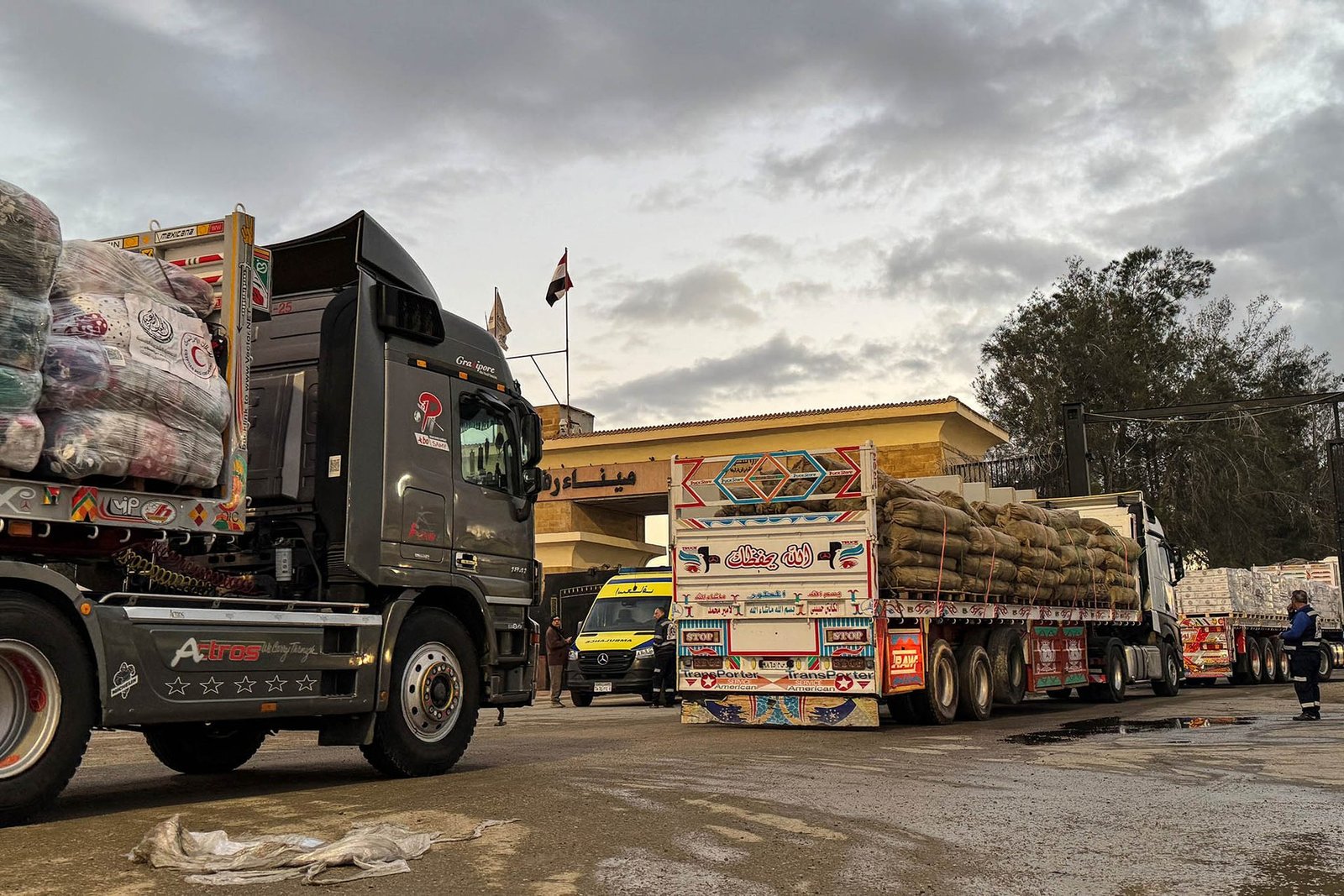
    Seven-time Formula One world champion Lewis Hamilton arrived in Egypt’s El Arish on Tuesday, 10 November 2026, to see for himself how humanitarian and relief aid bound for the Gaza Strip is received, prepared and moved towards the border.

    According to the North Sinai governorate, the visit included a tour of the Rafah border crossing between Egypt and Gaza and a visit to the Egyptian Red Crescent’s aid warehouses in El Arish, where relief supplies are gathered before they are sent into Gaza.

    North Sinai Governor Khaled Megawer welcomed the 41-year-old British driver, who races for Ferrari, and showed him the warehouses where aid is stored and prepared. Hamilton was briefed on how humanitarian and relief aid is prepared and coordinated before it is sent across the border into Gaza.

    El Arish, the main city of North Sinai, has become a staging point for the relief effort, with supplies arriving there before they are checked, sorted and sent on to the crossing. The briefing covered the work that has to happen before a consignment of aid can be sent across the border, from preparation in the warehouses to coordination at Rafah itself.

    Questions for the aid workers

    During the visit, Hamilton was seen greeting aid workers and asking them how often they are able to enter Gaza through the Rafah crossing. The crossing links Egypt with Gaza, and the flow of relief supplies through it has been central to efforts to support people inside the territory.

    Hamilton’s visit drew wide attention because of his standing as one of the most successful drivers in the history of Formula One, with seven world championship titles to his name. Away from racing, he is known as an advocate for humanitarian and charitable causes.

    In 2021, he founded Mission 44, a charity aimed at supporting young people and improving their access to education and employment opportunities. His visit to El Arish and Rafah follows that record of charitable work, bringing a global sporting figure face to face with the people organising relief for Gaza.

    The visit came after heavy rain and floods in Gaza this week killed at least five people, including four children. The severe weather added to the difficulties facing families in Gaza, where the need for shelter, food and medical supplies remains urgent.

    The governorate shared details of the visit on its official Facebook page, including the tour of the crossing and the warehouses, as aid workers continue their efforts to prepare and coordinate relief for Gaza.

  • Gaza Rains Flood Thousands of Tents, PM Urges Relief

    Gaza Rains Flood Thousands of Tents, PM Urges Relief

    Prime Minister Shehbaz Sharif has called for an urgent increase in humanitarian assistance for Gaza after heavy rainfall flooded thousands of makeshift shelters, leaving displaced families exposed to cold and hunger.

    According to the details shared by the prime minister, around 70,000 tents were damaged in the rain, affecting around 350,000 displaced Palestinians who have been sheltering in temporary structures. He described rain-soaked tents, displaced children without shelter, and families struggling with extreme cold and hunger as deeply distressing.

    The prime minister strongly condemned Israel’s continued aggression, repeated ceasefire violations and breaches of international law, saying Palestinians were being deprived of essential humanitarian assistance. He directed the Ministry of Foreign Affairs to use all possible channels to ensure an immediate increase in relief supplies for the people of Gaza.

    The scale of the damage underlines how exposed displaced families are. Tents offer little protection against heavy rain, and when thousands of shelters are damaged at once, families are left without a dry place to sleep. For children and the elderly, the combination of cold, wet conditions and limited food makes the situation worse, and aid workers have repeatedly warned that temporary shelter cannot cope with winter weather.

    Hamas, meanwhile, attributed the worsening situation to Israel’s blockade, saying restrictions on the entry of aid had aggravated the crisis for displaced families. The group said families urgently need safe shelters instead of temporary tents, and accused Israel of obstructing the entry of emergency shelters, heating equipment and materials needed to repair damaged structures.

    According to Hamas, Gaza needs around 300,000 tents, and it urged mediators and guarantor countries to ensure the uninterrupted delivery of humanitarian assistance. The appeal comes as winter conditions add to the hardship of hundreds of thousands of people already displaced, with aid agencies warning that temporary shelters offer little protection against rain and cold.

    The prime minister’s call adds to the growing international concern over the humanitarian situation in Gaza, where displaced families continue to rely on tents and temporary shelter while access to relief supplies remains limited. The Foreign Ministry has now been asked to press every available channel so that more relief can reach the people who need it.

  • 40 dead as aid-centre bombing rocks Ukraine village

    40 dead as aid-centre bombing rocks Ukraine village

    The death toll from a Russian bombing of an aid distribution point in southeastern Ukraine has risen to 40, with dozens of people still missing, officials have said, in one of the deadliest strikes on civilians this year. The attack hit the village of Komyshuvakha in the Zaporizhzhia region on Monday, as residents gathered at a school building being used as a shelter and a humanitarian aid centre.

    Ukrainian President Volodymyr Zelensky has said Russian forces first dropped aerial bombs on the underground school building as people arrived to collect aid, and then struck the shelter again with more bombs. The building, whose classes have long been suspended because of its closeness to the front line, about 17 kilometres from the nearest Russian positions, handed out humanitarian aid every Monday and served as a shelter for local residents.

    The scale of the destruction has made the rescue effort painfully slow. Local governor Mykhailo Semikin said the victims were sheltering in a newly built, EU-funded reinforced basement designed to withstand most strikes, but the force of the bombs caused the concrete structure to collapse and a fire broke out. Two days after the attack, recovery work was still under way, and officials said only some of the bodies recovered had been identified, with further identification likely to require DNA testing.

    Among the dead were two members of a rescue crew and four police officers, according to emergency services. Police said the officers had been helping residents take shelter in the underground school when a follow-up strike trapped those trying to escape. The co-head of the Zaporizhzhia Regional Defense Council, Ivan Fedorov, wrote on Telegram that 59 people were missing.

    Russia’s Defence Ministry said the attack targeted Ukrainian military units around Komyshuvakha and two other settlements, and that up to 25 Ukrainian servicemen were killed. Both Russia and Ukraine deny deliberately targeting civilians. The World Central Kitchen charity, which delivers food and water to the community, said the facility that was hit was a humanitarian and administrative centre for local people.

    The United Nations Human Rights Monitoring Mission in Ukraine noted that the attack took place just as civilians had gathered to receive aid, and that the timing and location of the distribution were well publicised. The strike came a day after a brief US-brokered local ceasefire expired, and less than a week before the United States is due to bring Ukrainian and Russian delegations together in Abu Dhabi on November 10 and 11 for talks on ending a war now in its fifth year. For the families still waiting for news from Komyshuvakha, those talks will come too late.

  • Israel to Resume Gaza Commercial Shipments After Fee Row

    Israel to Resume Gaza Commercial Shipments After Fee Row

    CAIRO: Israel said on Monday it would resume allowing commercial goods shipments into Gaza after a days-long halt over a tax dispute involving Hamas and merchants, restoring a key route for food and other essentials to the aid-dependent enclave, Reuters reported.

    COGAT, the Israeli military agency overseeing humanitarian affairs in Gaza, said it made the decision after merchants reported that Hamas authorities had withdrawn demands for payments of 10,000 shekels ($3,225) per truck.

    “The resumption of coordination is being carried out in accordance with Israel’s commitment to the humanitarian provisions of the ceasefire agreement,” COGAT said, according to Reuters.

    COGAT said the merchants’ accounts had not been independently verified, and that shipments would resume gradually, with priority given to essential goods ahead of winter.

    Oversight would be tightened to ensure payments are made and received only through documented bank transfers, with any merchant found to have paid Hamas facing exclusion from the system.

    Hamas said the 10,000-shekel fee was a voluntary contribution by better-off Gazans to a national fund supporting people in need in the war-ravaged territory.

    Most Gazans remain dependent on aid after three years of war, repeated displacement and severe restrictions on aid deliveries. While last year’s US-brokered ceasefire halted the heaviest fighting, it has not ended Israeli attacks.

    Local health officials said on Monday that at least five Palestinians, including a 14-year-old boy, were killed in separate Israeli strikes in Gaza City and Khan Younis. The Israeli military did not immediately comment, according to Reuters.

    Israel says Hamas has continued to rearm and carry out attacks in violation of the ceasefire, while Hamas accuses Israel of undermining the agreement.

    Gaza health officials say about 1,500 Palestinians have been killed by Israeli fire since the October 2025 ceasefire, while Israel says four of its soldiers have been killed by militants in Gaza over the same period, Reuters reported.

    The halt in commercial shipments had raised concerns among aid agencies about food prices and availability in the enclave, where commercial goods supplement the limited humanitarian aid entering through the crossings.

    The dispute over the truck fee is the latest friction point in the fragile ceasefire arrangement, which has faced repeated strains since it took effect last October.